How Minoxidil 5% Actually Works on Hair Follicles
Hair loss affects millions of people worldwide, and the emotional toll can be just as real as the physical changes. Studies show that androgenetic alopecia—commonly known as hereditary hair loss—impacts up to 50% of men by age 50, making it one of the most common dermatological concerns today. Yet here's the encouraging part: clinically proven treatments exist, and they're more accessible than ever before.
Minoxidil 5% has emerged as a game-changing topical solution for anyone serious about combating hair loss and stimulating regrowth. Unlike invasive procedures or expensive supplements with questionable results, this FDA-approved medication offers a straightforward, non-invasive approach that fits seamlessly into your existing routine. Whether you're experiencing early-stage thinning or looking to prevent further loss, understanding how minoxidil works—and which formulation suits your lifestyle—can make all the difference in your treatment success.
Explore minoxidil 5% options on 24Pharma (BE) today and take control of your hair loss treatment.
Mechanism of Action: Vasodilation and Increased Blood Flow
The active ingredient in minoxidil works by widening blood vessels in the scalp, a process called vasodilation. This expansion increases blood flow directly to hair follicles, delivering more oxygen and nutrients to cells responsible for hair growth. Think of it as opening the floodgates to your scalp's nutrient supply—follicles that were starving for resources suddenly gain access to everything they need to function optimally.
The Role of Growth Phases: Anagen and Telogen
Hair growth operates in cycles. The anagen phase is when hair actively grows, while the telogen phase is the resting period when hair eventually sheds. Minoxidil shortens the telogen phase and extends the anagen phase, meaning your hair spends more time growing and less time resting. This fundamental shift in your hair's natural cycle is what drives visible regrowth.
Why 5% Concentration Outperforms 2% Solutions
Clinical studies consistently demonstrate that minoxidil 5% delivers approximately 45% more regrowth compared to the 2% concentration. This higher potency makes a measurable difference, particularly for individuals with moderate hair loss. The increased concentration works more aggressively on hair follicles, accelerating both the vasodilation process and the extension of growth phases.
Active Ingredient Effectiveness for Androgenetic Alopecia
Androgenetic alopecia—hereditary hair loss caused by genetic sensitivity to DHT—responds particularly well to minoxidil treatment. The medication targets the follicles affected by this condition, helping to reverse miniaturization (the process where follicles shrink and produce thinner hair). For this specific type of hair loss, minoxidil addresses the physical symptoms directly, even though it doesn't eliminate the underlying hormonal cause.
Timeline for Cellular Changes Before Visible Results
Your follicles begin responding to minoxidil within weeks, though you won't see these changes with your eyes. At the cellular level, blood vessels expand, nutrient delivery increases, and hair growth cycles begin shifting almost immediately. These invisible changes happen first—the visible results follow as your hair actually grows longer and thicker.
How Minoxidil Extends Hair Growth Cycles and Increases Follicle Size
As the anagen phase lengthens, individual hairs remain on your head for longer periods, accumulating more length and thickness. Simultaneously, minoxidil stimulates follicles to produce slightly larger hair shafts. These dual effects—longer growth periods combined with thicker strands—create the noticeable density improvements users report after several months of consistent application.
Liquid vs. Foam: Which Formulation Is Right for Your Needs
Absorption Rates and Effectiveness Comparison
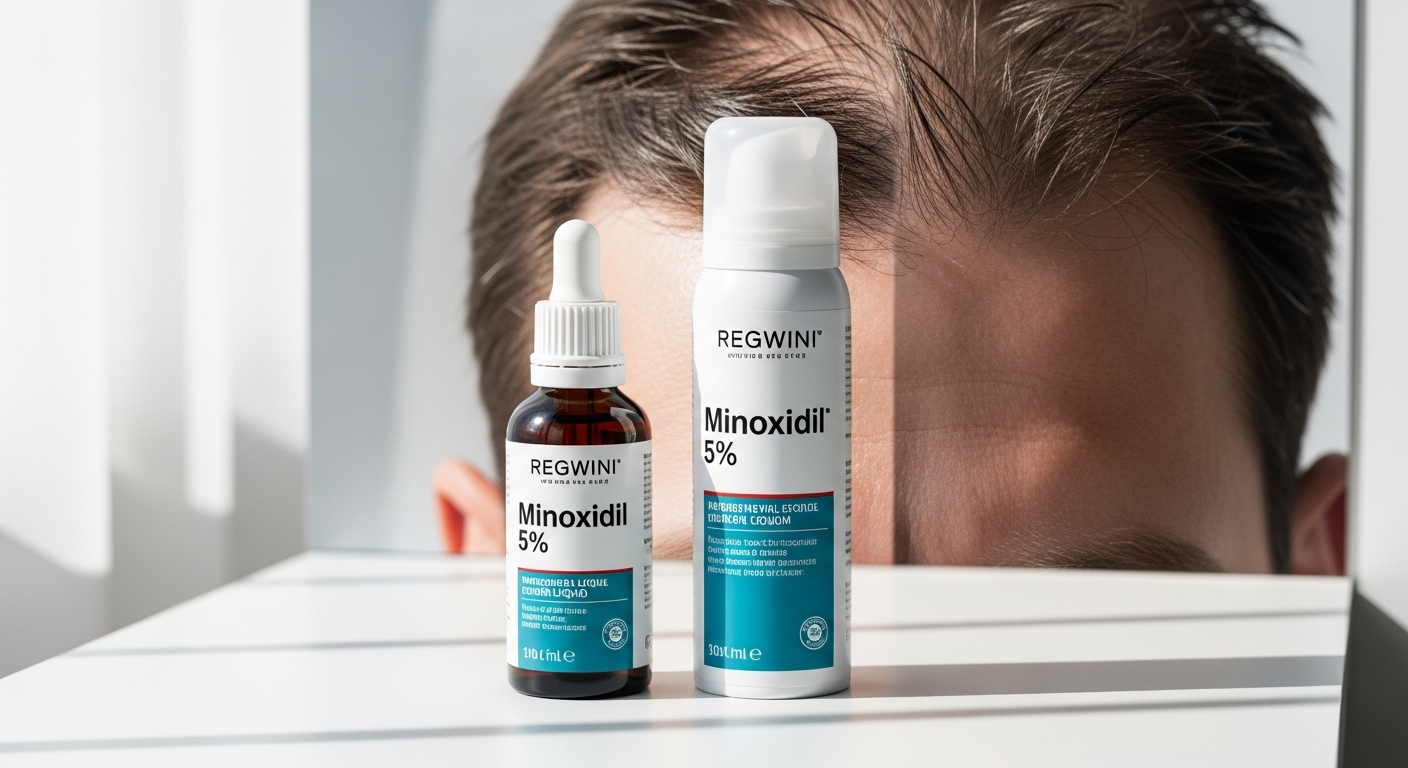
Both liquid and foam formulations contain the same 5% minoxidil concentration and deliver comparable results when used consistently. The primary difference lies in how quickly each formulation absorbs into your scalp. The liquid version typically penetrates faster, while the foam provides a slightly more gradual absorption. For most users, this distinction has minimal impact on overall effectiveness, making the choice more about personal preference and scalp compatibility.
Application Ease and Daily Routine Integration
Foam formulations win points for convenience. They dry faster, leaving no visible residue on your hair or clothing, making morning application more practical before work. Liquid solutions require more patience—you'll need to wait several minutes for complete drying. If you're rushing through your morning routine, foam's quick-drying nature might be the better fit.
Scalp Irritation Concerns with Propylene Glycol
The liquid formulation contains propylene glycol, a carrier that helps the active ingredient penetrate the scalp but can cause irritation in sensitive individuals. If you've experienced reactions to other topical products or have a naturally sensitive scalp, this becomes an important consideration. Foam formulations typically cause less irritation since they often use different carriers.
Drying Time Differences and Lifestyle Compatibility
Liquid minoxidil takes 5-15 minutes to fully dry, while foam dries in 2-5 minutes. For evening applications before bed, liquid works fine. For morning applications when you're heading to the shower or out the door, foam's quick-dry advantage becomes significant. Consider your daily schedule when selecting between formulations.
Cost Variations Between Formulations on 24Pharma (BE)
Single 60ml bottles typically range from €20.10 to €25.08, with minimal price differences between liquid and foam. The 3x60ml multi-packs offer better value at €34.16 to €39.90 per bundle. Both formulations maintain similar pricing, so cost shouldn't be your deciding factor—comfort and consistency matter more.
Dermatologist Recommendations Based on Scalp Sensitivity
Dermatologists frequently recommend foam to patients with sensitive skin or existing scalp conditions like eczema or psoriasis. The reduced propylene glycol exposure minimizes irritation risk. If you have healthy, resilient skin, either formulation works equally well. Your dermatologist can assess your specific scalp condition and recommend accordingly.
Residue and Residual Odor Considerations
Liquid minoxidil can leave a slight residue and faint odor on your hair, particularly noticeable if you apply it before bed. Some users report that this residue affects how their hair looks or feels the next morning. Foam avoids this issue entirely, drying cleanly without any noticeable odor or residue. For those concerned about appearance or scent, foam proves more discreet.
Best Practices for Each Formulation Type
For liquid applications, part your hair into sections, apply directly to dry scalp, and massage gently for even distribution. Allow 10-15 minutes drying time before styling. For foam, dispense the appropriate amount into your palm, part your hair, apply directly to the scalp, and massage thoroughly. Both require that you don't wash your hair immediately after application—wait at least 4 hours for optimal absorption.
Realistic Results Timeline: What to Expect in Your First Year
The 3-4 Month Waiting Period Before Visible Improvements
Patience becomes your greatest asset when starting minoxidil. Most users notice tangible improvements between months 3 and 4, though some require up to 6 months. This timeline isn't arbitrary—it reflects how long hair growth cycles take to shift noticeably. Your follicles respond immediately at the cellular level, but visible results require actual hair to grow longer and thicker, a process measured in months rather than weeks.
What Happens During Months 1-2: Shedding Phase and Initial Adjustments
Many users experience increased shedding during the first 4-8 weeks. This phenomenon, called "minoxidil shedding," actually indicates that the medication is working. Your follicles are transitioning resting hairs (which were scheduled to fall out anyway) into the growth phase more quickly. You're essentially accelerating natural hair loss to make room for thicker, healthier regrowth. This temporary increase in shedding can be discouraging, but it's a positive sign of follicle activity.
Months 3-6: When Most Users Notice Tangible Regrowth
Around month 3, the visible magic begins. You'll likely notice new, finer hairs appearing at your hairline or areas of thinning. These "baby hairs" gradually thicken and lengthen throughout months 4-6. By month 6, most consistent users report noticeable improvements in hair density, with darker, more robust hair covering previously sparse areas. This is the breakthrough period that keeps people committed to their twice-daily routine.
Months 6-12: Continued Thickening and Density Improvements
The improvements don't stop at month 6. Months 7-12 bring continued thickening as those fine hairs mature and individual strand diameter increases. Your overall hair density continues improving, though at a slower pace than the initial breakthrough. By the one-year mark, many users achieve the maximum results minoxidil can deliver for their specific situation.
Individual Variation Factors: Age, Genetics, and Baseline Severity
Your timeline depends on several personal factors. Younger individuals typically see faster results than older users. Your genetic predisposition affects both how aggressive your hair loss is and how responsive your follicles are to minoxidil. Someone with mild thinning may see results faster than someone with advanced androgenetic alopecia. Additionally, people who started treatment earlier generally achieve better outcomes than those who waited until significant hair loss occurred.
Tracking Progress with Photography and Scalp Assessments
Consistent self-monitoring prevents discouragement. Take baseline photos of your hair from multiple angles before starting treatment. Repeat this every month, ensuring consistent lighting and hair positioning. These photos reveal progress that daily mirror checks might miss. Many users underestimate their improvements because they see their hair every day—monthly photographic evidence provides objective proof of positive change.
When to Reassess if Results Aren't Meeting Expectations
If you've reached month 6 with minimal visible improvement, reassess your approach. Common reasons for suboptimal results include inconsistent application (missing doses significantly reduces effectiveness), using expired medication, or having a hair loss type that minoxidil doesn't address effectively. Consider whether you're applying the correct dose and allowing adequate drying time. If you've been consistently applying minoxidil for 6+ months without improvement, consult a dermatologist about alternative treatments or combination therapies.
Side Effects and Scalp Health Considerations
Common Side Effects: Scalp Irritation, Dermatitis, and Headaches
The most frequently reported side effect is scalp irritation, occurring in roughly 5-10% of users. This typically appears as redness, itching, or mild burning at the application site. Dermatitis—more severe inflammation—affects fewer users but causes greater discomfort. Some individuals report headaches, though whether minoxidil directly causes these or they coincide by chance remains debated. Most irritation resolves within weeks as your scalp adjusts to the medication.
Hypertrichosis: Unwanted Hair Growth and Where It Typically Occurs
Hypertrichosis—unexpected hair growth in unintended areas—affects 5-14% of minoxidil users. This occurs when minoxidil spreads beyond your scalp to nearby skin. Fine hair may appear on your forehead, cheeks, or ears. While not dangerous, it understandably concerns users. Careful application technique and washing your hands immediately after application significantly reduces this risk. For most people experiencing hypertrichosis, discontinuing use or improved application method resolves the issue.
Managing Irritation with Sensitive Skin or Existing Scalp Conditions
If you have sensitive skin, eczema, or psoriasis, you have options. Start with the lowest frequency possible—applying once daily instead of twice—and gradually increase if tolerated. Switching to foam formulation reduces propylene glycol exposure. Applying a thin layer of non-comedogenic moisturizer to your scalp before minoxidil application can buffer irritation. If irritation persists despite these strategies, discontinue use and consult your dermatologist about whether minoxidil remains appropriate for you.
Propylene Glycol Sensitivity and Switching Between Formulations
Propylene glycol sensitivity manifests as persistent scalp irritation specifically with liquid formulations. If you experience this, switching to foam eliminates the irritant while maintaining the same active ingredient concentration. Alternatively, some specialized minoxidil solutions use different carriers to avoid propylene glycol entirely. Identifying that propylene glycol is your trigger allows you to continue minoxidil treatment without the irritation.
Rare but Serious Cardiovascular Considerations
While topical minoxidil is applied directly to your scalp, small amounts can be absorbed systemically. People with existing cardiovascular conditions, hypertension, or those taking certain medications should consult their doctor before starting minoxidil. Symptoms like chest pain, irregular heartbeat, or unusual shortness of breath warrant immediate medical attention. For most healthy individuals, topical minoxidil poses minimal cardiovascular risk, but people with preexisting conditions deserve professional evaluation.
Discontinuation Effects: What Happens When You Stop Using Minoxidil
This represents perhaps the most critical limitation: stopping minoxidil reverses your gains. Hair regrown through minoxidil treatment depends on continued medication to persist. Within 3-4 months of discontinuing use, you'll typically return to your baseline hair loss state. This means minoxidil becomes a long-term commitment rather than a temporary fix. Users must weigh whether indefinite application aligns with their lifestyle and goals.
Safety for Different Age Groups and Health Profiles
Minoxidil is approved for adults 18 and older. Its safety in teenagers and young adults is less established, making professional consultation advisable for younger users. People with heart conditions, kidney disease, or those taking blood pressure medications need dermatologist approval before starting treatment. Pregnant or breastfeeding women should avoid minoxidil entirely, as safety in these conditions hasn't been adequately studied. Your health profile determines whether minoxidil represents an appropriate option.
When to Consult a Dermatologist About Adverse Reactions
Contact a dermatologist if you experience severe scalp irritation that doesn't improve within two weeks, persistent headaches coinciding with application, signs of hypertrichosis beyond your scalp, or any cardiovascular symptoms. You should also seek professional guidance if you're unsure whether your hair loss type responds to minoxidil or if you have underlying health conditions making treatment risky.
Pricing and Availability on 24Pharma (BE)
Single 60ml Bottle Pricing
Individual 60ml bottles range from €20.10 to €25.08 on 24Pharma (BE), making monthly treatment costs reasonable for most budgets. This single-bottle option works well for testing whether you tolerate minoxidil before committing to larger quantities. However, single bottles represent the least economical way to purchase long-term treatment.
Multi-Pack Savings: 3x60ml Bundles
The 3x60ml packs offer significantly better value at €34.16 to €39.90 per bundle. This represents savings of approximately 25-35% compared to purchasing three individual bottles. For someone committed to long-term minoxidil treatment, buying multi-packs every few months provides substantial cost reductions while ensuring you never run out of medication.
Brand Comparison: Minoxidil Biorga vs. Minoxidil Leman
Both Minoxidil Biorga and Minoxidil Leman are available on 24Pharma (BE), offering 5% minoxidil concentrations with comparable effectiveness. Brand choice typically comes down to personal preference regarding formulation type (liquid vs. foam), application experience, and any minor price variations. Both are legitimate, quality products—neither brand demonstrates superior efficacy based on clinical evidence.
Cost-Per-Month Analysis for Budget Planning
A single 60ml bottle provides approximately one month of twice-daily application. Monthly costs range from €20.10 to €25.08 with single purchases, or approximately €11.39 to €13.30 per month when buying 3x60ml bundles. Over a year, committing to minoxidil costs between €136 and €300 depending on purchase strategy. For most people, this represents a reasonable investment in hair loss treatment compared to alternative options.
Prescription vs. Over-the-Counter Availability in Belgium
Minoxidil 5% is available over-the-counter in Belgium without requiring a prescription, making it accessible directly through 24Pharma (BE) and other retailers. This accessibility removes barriers to starting treatment—you don't need to navigate the healthcare system or pay for expensive doctor visits to obtain minoxidil. Simply purchasing directly keeps your treatment straightforward and private.
Generic vs. Branded Options and Quality Assurance
Generic minoxidil products contain identical active ingredients and concentrations as branded versions. 24Pharma (BE) stocks both generic and branded minoxidil, with prices reflecting these differences. Quality assurance remains consistent across both categories—all minoxidil sold in Belgium meets pharmaceutical standards. Choosing generic over branded simply provides cost savings without sacrificing efficacy or safety.
Bulk Purchasing Strategies for Long-Term Treatment
For serious, long-term minoxidil users, buying in larger quantities saves money. If you're confident minoxidil works for you after 6 months, purchasing 6-month supplies provides better per-unit pricing. Storage requirements are minimal—keep minoxidil in a cool, dry place away from direct sunlight. Proper storage ensures medication remains effective throughout your supply.
The Limitations You Need to Know Before Starting
Minoxidil Doesn't Address DHT: The Hormonal Cause
Minoxidil treats the symptom—weak hair growth—but not the underlying cause of androgenetic alopecia. DHT (dihydrotestosterone), a hormone derived from testosterone, drives male pattern baldness in genetically predisposed men. Minoxidil can't prevent DHT from attacking hair follicles; it can only compensate by strengthening follicle output. This is why some people combine minoxidil with finasteride (which does block DHT), creating a more comprehensive treatment approach.
Ineffectiveness for Certain Hair Loss Types
Minoxidil performs excellently for androgenetic alopecia but fails to address other hair loss conditions. Alopecia areata (an autoimmune condition causing patchy hair loss) doesn't respond to minoxidil—immunosuppressive treatments prove more appropriate. Telogen effluvium (stress-related hair shedding) resolves naturally as stress decreases, making minoxidil unnecessary. Scarring alopecia (permanent hair loss from skin damage) won't benefit from minoxidil since destroyed follicles can't regrow. Accurate hair loss diagnosis before starting treatment ensures you're not wasting time and money on an ineffective solution.
Continuous Use Requirement and Dependency
Minoxidil creates a dependency cycle. Start treatment, your hair improves, then stop treatment, and your hair reverts. This indefinite commitment suits some people but frustrates others. You must accept that minoxidil becomes a permanent part of your routine if you want to maintain results. For someone seeking a temporary fix or solution, minoxidil disappoints.
Hair Loss Reversal If Treatment Is Discontinued
Within 3-4 months of stopping minoxidil, newly regrown hair begins shedding again. Any density improvements reverse to your pre-treatment baseline. This isn't a temporary setback—it's a complete reversal. Users who pause minoxidil for financial reasons or life circumstances will lose their regrowth. This reality demands serious consideration before starting treatment.
Unsuitable for Women with Certain Conditions
Women of childbearing age should avoid minoxidil unless actively using contraception, as the medication isn't safe during pregnancy. Pregnant women and those breastfeeding must discontinue minoxidil entirely. For women already experiencing hair loss, minoxidil offers hope, but reproductive considerations create complications that don't affect most male users.
Limited Effectiveness for Advanced or Complete Baldness
Minoxidil works best on existing follicles that have miniaturized but haven't permanently disappeared. Once follicles completely die and leave only smooth scalp, minoxidil can't resurrect them. Someone with advanced baldness covering 50% of their scalp might see 20-30% improvement rather than restoration of all lost hair. Effectiveness depends on having viable follicles remaining to stimulate.
Why Minoxidil Works Best as Part of a Comprehensive Strategy
For optimal results, consider minoxidil as one component of a broader hair loss management approach rather than a standalone solution. This might include finasteride to address DHT, dermarolling to enhance absorption and stimulate collagen production, nutritional optimization, stress management, and appropriate hair care. Combining approaches targets hair loss from multiple angles, potentially achieving better results than minoxidil alone.
Combining with Other Treatments: Finasteride and Dermarolling
Minoxidil and finasteride complement each other—minoxidil strengthens weak follicles while finasteride protects them from DHT damage. This combination produces superior results compared to either treatment alone. Dermarolling (using a device with tiny needles to create micro-injuries) enhances minoxidil absorption and stimulates collagen remodeling. Some users add biotin, iron, or zinc supplementation if deficiencies exist. Comprehensive treatment approaches require dermatologist guidance to ensure safety and appropriate combinations.
Integration Into Your Daily Hair Care Routine
Optimal Application Timing: Morning and Evening Schedules
Most users apply minoxidil twice daily, approximately 12 hours apart. A morning application followed by an evening application works well for most schedules. Morning application should occur after showering when your hair is clean and dry. Evening application before bed ensures the medication has hours to absorb before you wash your hair the next morning. Consistency matters more than exact timing, so choose application times you can maintain indefinitely.
Scalp Preparation and Cleansing Before Application
Apply minoxidil only to clean, dry scalp. Wash your hair with your regular shampoo at least 4 hours before minoxidil application to allow natural oils to return. These scalp oils actually aid minoxidil absorption, so don't over-wash your scalp trying to achieve pristine cleanliness. Part your hair into sections, expose the scalp clearly, and apply minoxidil directly to skin rather than to hair. This direct scalp application ensures the medication reaches follicles rather than being absorbed by your hair strands.
Avoiding Common Application Mistakes That Reduce Effectiveness
The most damaging mistake is applying minoxidil to wet scalp or wet hair. Water dilutes the medication and compromises absorption. Never wash your hair immediately after application—wait at least 4 hours. Applying too much medication doesn't increase results and wastes product; stick to the recommended dose (usually 1ml per application). Don't massage excessively; gentle rubbing distributes the medication without creating irritation. Avoid applying minoxidil and immediately putting on a hat or covering your head—allow drying time first.
Compatibility with Other Hair Products and Styling Routines
Minoxidil works alongside most hair products. However, apply minoxidil first, allow complete drying, then apply other products. Using volumizing shampoos, conditioners, and styling products won't interfere with minoxidil effectiveness. If you use medicated scalp treatments for conditions like dandruff or psoriasis, space these at least 4 hours apart from minoxidil to avoid interactions. Hair dyes, perms, and relaxers are fine—they don't conflict with minoxidil, though maintaining scalp health matters more during these chemical treatments.
Waiting Periods Between Minoxidil and Other Treatments
If using multiple scalp treatments, stagger them throughout the day. Apply minoxidil in the morning, wait 4+ hours, then apply dermarolling or other treatments in the evening. Combining multiple scalp treatments simultaneously increases irritation risk without improving results. Spacing treatments allows your scalp to absorb and recover from each one. Your dermatologist can recommend specific spacing based on which treatments you're combining.
Travel-Friendly Application Tips for Consistency
Maintaining twice-daily application while traveling requires planning. Pack extra minoxidil bottles to account for potential loss or spills. Liquid formulations pack more securely than foam, which can leak under pressure. Travel-size containers work well for weekend trips, though you'll need full bottles for extended travels. Set phone reminders for application times, especially when adjusting to different time zones. Many users maintain consistency better by applying minoxidil immediately after morning coffee or brushing teeth—habit stacking with existing routines eliminates forgotten doses.
Building Sustainable Habits for Long-Term Adherence
Treat minoxidil application like brushing your teeth—a non-negotiable part of your routine. Link applications to existing habits: apply minoxidil immediately after showering in the morning and before bed at night. Create environmental cues by keeping your minoxidil bottle in a visible location. Consistency directly correlates with results; users who miss doses frequently achieve worse outcomes than those with perfect adherence. Remember that visible results require months of consistent application, so early patience prevents early quitting.
Reminders and Tracking Systems to Maintain Twice-Daily Application
Phone alarms or notification apps serve as excellent reminders, particularly for evening applications when busy schedules create forgotten doses. Some users mark off daily applications on a calendar, providing visual confirmation of consistency. Habit-tracking apps designed for medication adherence help maintain focus on long-term commitment. Even the simplest tracking method—marking an X on a calendar daily—reinforces the habit and reveals missed doses before they accumulate.
Making Your Final Decision: Is Minoxidil 5% Right for You?
Self-Assessment Questions for Candidacy Evaluation
Before committing to minoxidil, honestly answer several questions: Do you have hereditary hair loss (androgenetic alopecia) confirmed by a dermatologist? Are you willing to apply medication twice daily indefinitely? Can you afford €150-300 annually? Do you have a healthy scalp without conditions that contraindicate minoxidil? Are you emotionally prepared for a 3-4 month waiting period before seeing results? Are you at an age (18+) where minoxidil is appropriate? If you answered yes to most questions, minoxidil represents a viable option worth pursuing.
Comparing Minoxidil to Alternative Hair Loss Treatments
Finasteride (Propecia) addresses hormonal causes but requires daily pills and carries potential sexual side effects in 1-2% of users. Hair transplant surgery offers permanent results but costs €4,000-15,000 and requires surgical recovery. Low-level laser therapy claims to stimulate growth but lacks strong clinical evidence and costs €1,500-3,000 for devices. PRP (platelet-rich plasma) injections show promise but cost €500-1,500 per session with unclear long-term results. Minoxidil offers the best cost-to-evidence ratio for most people experiencing early-to-moderate hereditary hair loss.
Cost-Benefit Analysis Over 6, 12, and 24-Month Periods
Six months of minoxidil costs €120-150 with bundle purchasing, potentially delivering noticeable regrowth for those who respond well. Twelve months costs €136-300, a timeframe where most responders see substantial improvements. Over 24 months, costs reach €272-600, reflecting a long-term commitment but still cheaper than most alternative treatments. Compare these costs against hair transplant surgery (€8,000-15,000), professional treatments (monthly fees), or the psychological cost of worsening hair loss without intervention.
Consulting with Healthcare Providers Before Starting
Before beginning minoxidil, discuss your plans with a dermatologist or primary care physician. They'll confirm your hair loss diagnosis, assess whether minoxidil suits your specific situation, review any health conditions or medications that might interact, and establish baseline expectations. This professional guidance prevents wasted effort on inappropriate treatments and identifies combination therapies that might enhance results. Even though minoxidil is available over-the-counter, professional input optimizes your outcomes.
Red Flags That Suggest You Should Seek Professional Guidance
Seek professional advice if you have unexplained hair loss (sudden onset, patchy patterns, severe shedding), underlying health conditions affecting the scalp, cardiovascular concerns, or existing reactions to topical medications. If you're taking medications that might interact with minoxidil, professional guidance is essential. Young users (teenagers) should consult professionals before starting treatment. Women of childbearing age should discuss minoxidil's safety relative to their reproductive plans. These situations warrant professional input rather than self-treatment.
Success Rate Expectations Based on Your Specific Hair Loss Pattern
Early-stage hair loss shows the highest success rates—up to 65% of users see noticeable regrowth when beginning minoxidil with mild-to-moderate thinning. Advanced hair loss affecting more than 50% of the scalp shows lower success rates, perhaps 30-40%. Your age matters—younger users typically achieve better results. Time since hair loss began affects responsiveness; longer-standing hair loss may indicate more permanent follicle damage. Your genetic predisposition influences results—some families respond better to minoxidil than others. Realistic expectations based on your specific situation prevent disappointment.
Building Realistic Expectations to Avoid Disappointment
Minoxidil won't restore a full head of hair if you've experienced significant loss. It will thicken existing hair, slow further loss, and potentially regrow some hair in thinning areas. Results manifest gradually over months, not weeks. Your results won't match dramatic before-and-after photos you see online—those often represent best-case scenarios or use image editing. Expect 20-40% improvement for most responders, with some achieving better results and others seeing minimal change. Setting realistic expectations prevents the discouragement that leads to treatment abandonment.
Moving Forward With Confidence
Minoxidil 5% represents one of the most accessible, clinically validated solutions for hereditary hair loss available today. Whether you choose the liquid or foam formulation, the science is clear: consistent application over 3-4 months can deliver measurable regrowth and thicker hair density for many users. What matters most is understanding your own situation—your hair loss pattern, scalp sensitivity, lifestyle preferences, and long-term commitment level.
The products available on 24Pharma (BE), from Minoxidil Biorga to Minoxidil Leman, offer affordable entry points into evidence-based hair loss treatment. Yes, there are limitations and side effects to consider. Yes, you'll need to commit to twice-daily application indefinitely. But for someone ready to take action against hair loss, minoxidil 5% offers a concrete path forward that doesn't require invasive procedures or unproven supplements.
Your baseline assessment begins with confirming that you have androgenetic alopecia rather than another hair loss type. Next, evaluate which formulation aligns with your lifestyle—foam for convenience and sensitivity concerns, liquid for faster absorption. Then consider whether you're genuinely prepared for indefinite application and the financial commitment it requires. Finally, consult a healthcare provider if you have any underlying health conditions or medication interactions to consider.
The regrowth journey possible with minoxidil starts with a single decision: to try evidence-based treatment rather than accept hair loss as inevitable. With realistic expectations, proper application technique, and consistent adherence, minoxidil delivers results for many people experiencing hereditary hair loss.
Leave a Reply