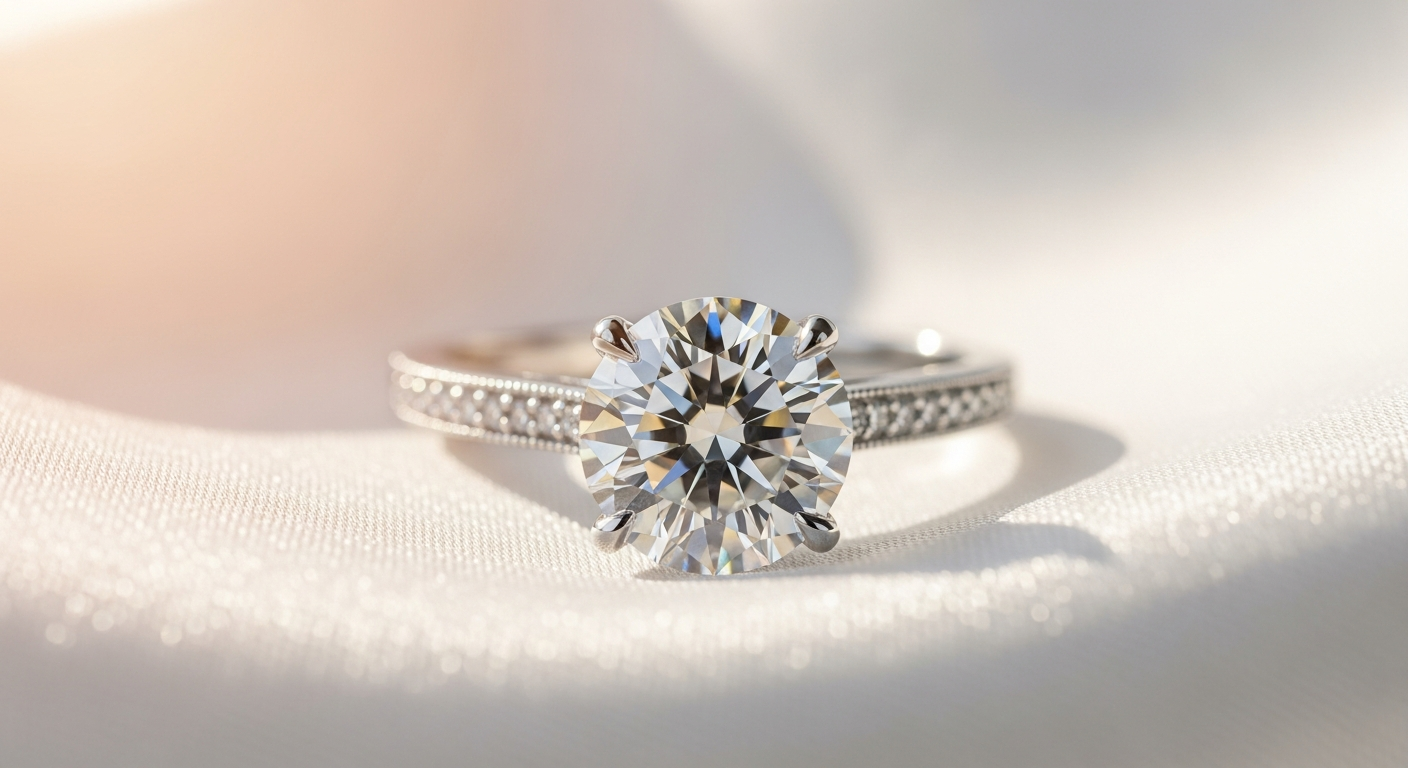
A Classic Solitaire Lab Diamond Ring puts one center diamond at the focus of the design, making diamond quality, setting construction, and proportions especially important when you compare options.
If you are shopping for an engagement ring or another meaningful piece, checking the diamond documentation and ring details can help you understand what you are paying for.
Laboratory-grown diamonds have essentially the same chemical, physical, and optical properties as natural diamonds, although they are produced using technological processes rather than forming naturally underground.
What Is a Classic Solitaire Lab Diamond Ring?
A Classic Solitaire Lab Diamond Ring typically features a single laboratory-grown center diamond as the main visual element. A solitaire design keeps attention on that stone rather than surrounding it with several accent diamonds.
For shoppers researching a lab grown diamond engagement ring, this type of design can make comparisons relatively straightforward because you can focus closely on the center diamond and its setting.
The FTC advises sellers to clearly identify laboratory-created diamonds as laboratory-grown, laboratory-created, or through comparable terminology that communicates that the stone is not mined.
The agency also states that laboratory-grown terminology should apply to products having essentially the same optical, physical, and chemical properties as the named natural stone.
That distinction matters when you compare product listings. A laboratory-grown diamond should not be confused with a diamond simulant.
Why Buyers Often Research Solitaire Designs
The defining feature of a solitaire engagement ring is its single primary stone. With fewer decorative elements competing for attention, the center diamond’s shape, proportions, and setting become especially noticeable.
This construction can suit shoppers who prefer a restrained design, yet appearance should not be your only buying criterion.
Look at:
- Center diamond documentation
- Diamond weight and dimensions
- Setting construction
- Prong arrangement
- Band dimensions
- Metal type and purity
- Ring size options
- Resizing policy
- Warranty or service terms
- Return conditions
Product details differ between sellers, so verify these specifications on the listing before ordering.
Start With the Diamond Quality Information
Diamond quality has traditionally been evaluated through four factors: cut, color, clarity, and carat weight. GIA identifies these as the 4Cs of diamond quality.
Cut
Cut relates to how effectively a diamond’s facets interact with light. For standard round brilliant diamonds, factors such as proportions, polish, and symmetry influence visual performance. GIA notes that its cut grading system for standard round brilliants evaluates appearance as well as design and workmanship.
When comparing rings, do not confuse diamond shape with cut quality. “Round” describes a shape, while cut quality evaluates how effectively the faceting and proportions work together.
Color
Color grading evaluates the presence or absence of body color. GIA’s traditional D-to-Z scale progresses from colorless toward increasing visible color.
Your preferred grade can depend on the ring design, metal, diamond shape, and your sensitivity to subtle differences in color.
Clarity
Clarity assesses internal inclusions and external blemishes according to factors including their size, number, nature, relief, and location. GIA’s clarity system ranges from Flawless through Included grades.
A higher clarity grade does not automatically mean you will see a dramatic difference without magnification. Compare the actual stone, photographs, video, and documentation whenever those resources are provided.
Carat Weight
Carat describes weight rather than physical dimensions. One metric carat equals 200 milligrams. Diamonds with the same carat weight can have different visible dimensions because shape and proportions affect how their weight is distributed.
This distinction is useful when comparing rings online. Check the listed measurements alongside carat weight instead of assuming that two diamonds of equal weight will appear identical in size.
Why Diamond Documentation Deserves Attention
If a seller describes the center stone as a certified lab grown diamond, find out exactly which independent laboratory assessed it and what type of document accompanies it.
GIA currently provides laboratory-grown diamond assessment services that are formatted differently from reports issued for natural diamonds. GIA states that laboratory-grown diamonds it assesses have the girdle laser-inscribed with “Laboratory-Grown” and the applicable GIA assessment number.
GIA also states that its laboratory-grown diamond reports are digital and that an assessment can be authenticated through its Report Check service.
If documentation comes from another laboratory, check that organization’s verification system and understand what its grades and terminology mean before comparing them directly with another laboratory’s paperwork.
Should You Choose a Round Center Diamond?
A round cut lab grown diamond is one possible choice for a solitaire design, though solitaire rings can feature many diamond shapes.
For round brilliant diamonds specifically, cut quality deserves close attention. GIA explains that the interaction between facets and light affects brightness, fire, and scintillation.
When researching a round center stone, examine:
- Cut assessment
- Polish
- Symmetry
- Measurements
- Carat weight
- Color assessment
- Clarity assessment
- High-resolution images or video, when provided
A grading document gives you technical information, while images and video can help you assess appearance.
Check the Setting as Closely as the Diamond
The lab diamond ring setting determines how the center stone is secured and how the ring looks from different angles.
Solitaire settings may use several prongs or other mounting configurations. Rather than assuming one design is suitable for every wearer, examine how high the diamond sits, how exposed its edges are, and how the ring may interact with an accompanying band.
If you plan to wear the ring frequently, ask the seller about recommended inspection and maintenance practices.
Look at the Band Specifications
Band width and profile can change the appearance and feel of a solitaire ring. A narrow band may place greater visual emphasis on the center diamond, while a wider design creates a different proportion.
Check the actual measurements supplied by the retailer instead of judging thickness solely from enlarged product photographs.
Confirm the Metal
Check whether the ring is made from gold, platinum, or another disclosed material and verify the stated metal purity.
Also check whether the listing provides information about finishes, plating, or other treatments that could affect future maintenance.
Laboratory-Grown Diamond vs. Diamond Simulant
This distinction can prevent confusion while shopping.
Laboratory-grown diamonds possess essentially the same chemical composition, crystal structure, and optical and physical properties as natural diamonds. Materials used as diamond simulants imitate the appearance of diamond without having the same material properties.
The FTC accordingly advises marketers to distinguish laboratory-created diamonds from mined diamonds and to clearly identify imitation or simulated stones.
If a listing uses vague terminology, verify the actual material before purchasing.
Compare the Ring, Not Only the Center Stone
When researching lab grown diamond jewelry, buyers can easily focus entirely on carat weight or a single grading characteristic. A ring, however, needs to be evaluated as a complete piece.
Use a comparison checklist like this:
| Feature | What to Verify |
|---|---|
| Diamond origin | Clearly identified as laboratory-grown |
| Diamond documentation | Issuing laboratory and verification method |
| Diamond quality | Relevant cut, color, clarity, and carat information |
| Measurements | Actual dimensions of the center stone |
| Setting | Style, construction, and stone security |
| Metal | Type, purity, finish, and disclosed treatments |
| Ring dimensions | Band width and other listed measurements |
| Sizing | Available sizes and resizing terms |
| Returns | Time period, exclusions, and conditions |
| Warranty | Coverage, exclusions, and maintenance requirements |
These details can reveal meaningful differences between rings that look nearly identical in product photographs.
What About HPHT and CVD Diamonds?
HPHT and CVD are two principal methods used to produce laboratory-grown diamonds. HPHT refers to high pressure, high temperature, while CVD refers to chemical vapor deposition.
Growth method alone does not tell you everything about the finished diamond’s visual quality. Evaluate the individual stone using its documented characteristics rather than assuming that one production method automatically produces the appearance you prefer.
Questions to Ask Before Ordering
Is the center stone definitely laboratory-grown?
The product description should state this clearly. FTC guidance calls for disclosure that distinguishes laboratory-created diamonds from mined diamonds.
Can you verify the grading or assessment document?
Check the issuing organization and use its report-verification system when one is available.
What are the diamond’s actual measurements?
Carat is a measure of weight, so dimensions can provide useful context for how large the stone may appear face-up.
What metal is used?
Check the stated metal and purity rather than relying on color alone.
Can the ring be resized?
Resizing possibilities depend on construction, materials, and seller policies. Confirm the applicable terms before purchasing.
What happens if the ring does not fit or meet expectations?
Read the return, exchange, resizing, warranty, and service conditions carefully. Personalized or resized pieces may have different policies depending on the retailer.
How to Compare Two Similar Solitaire Rings
If two rings initially look alike, compare their documentation side by side.
Start with the center diamond’s measurements and quality information. Next, check the setting construction, metal specifications, band dimensions, and grading documentation. Finally, compare seller policies such as returns, resizing, warranty coverage, and maintenance requirements.
Avoid selecting a ring solely because one specification appears higher. The combination of diamond characteristics, construction, documentation, appearance, and seller terms determines how closely a particular ring matches your priorities.
If you are actively comparing options, view the current ring specifications and available styles from the retailer before making your selection.
Is a Classic Solitaire Lab Diamond Ring Right for You?
A Classic Solitaire Lab Diamond Ring may suit you if you prefer a design centered on one laboratory-grown diamond and want the stone to remain the main visual focus.
Independent assessment can provide useful information, while retailer policies determine practical matters such as returns, resizing, and after-sale service.
Taking those factors together gives you a clearer basis for comparing rings without relying on marketing language alone.
Leave a Reply