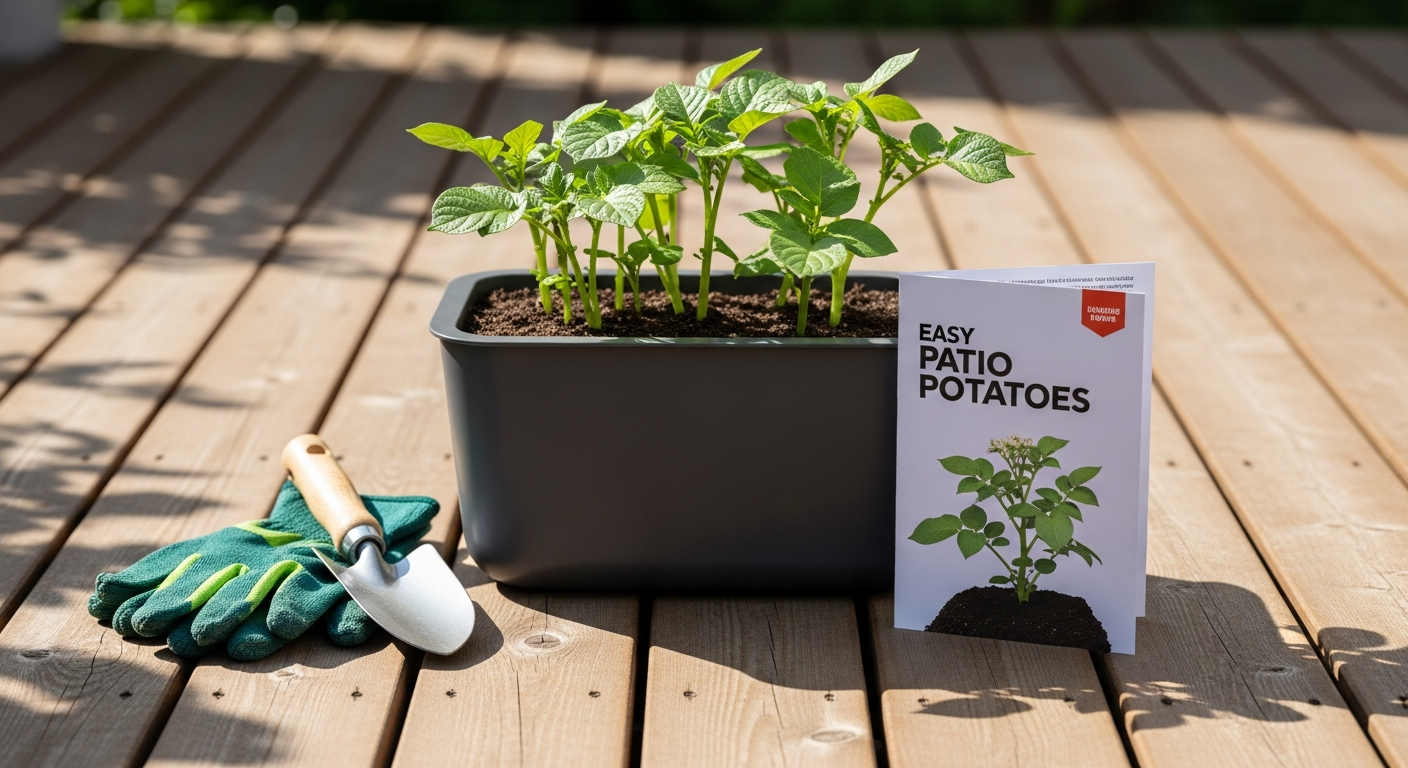
Over 2 million UK households now cultivate their own vegetables at home—and potatoes consistently rank among the top three crops for urban gardeners. The appeal is straightforward: there's nothing quite like the taste of potatoes you've grown yourself, yet most people assume they need sprawling gardens and considerable physical effort to make it happen. The YouGarden Complete Patio Potato Growing Kit shatters that assumption, offering a straightforward path to homegrown produce without the backbreaking labor of traditional digging.
This all-in-one solution removes the guesswork entirely. You get seed potatoes, grow containers, and organic fertilizer bundled together in a single, manageable package designed specifically for patios, balconies, and courtyards. No hunting through garden centers for individual components, no wondering whether you're buying the right varieties, no second-guessing yourself about fertilizer ratios.
What's Inside the YouGarden Complete Patio Potato Growing Kit
The kit's composition reflects genuine thoughtfulness about what beginners actually need. Three seed potato varieties arrive ready to plant: Swift, Charlotte, and Desiree. This mix isn't random—it's strategically selected to deliver staggered harvests across the entire season, meaning you'll enjoy fresh potatoes from early summer through late autumn rather than a single overwhelming glut.
The physical components consist of three heavy-duty 30-litre reusable grow pots, built to withstand multiple seasons of use. If pots don't suit your setup, the kit offers an alternative with green grow bags that provide the same functionality with a different aesthetic. Rounding out the package is 1kg of organic potato fertilizer formulated specifically to support healthy plant development throughout the growing cycle.
What you won't find in the box matters just as much: the kit requires you to source compost separately and provide water. This isn't a drawback—it actually gives you flexibility to choose compost that suits your local growing conditions and water quality preferences.
Understanding Your Potato Varieties and Harvest Timing
Swift potatoes serve as your early-season crop, typically ready 10–12 weeks after planting. They're the sprinters of the potato world—quick to mature, relatively compact plants, and perfect for those eager to taste homegrown results without a long wait. Their quick turnaround makes them ideal for testing whether container potato growing suits your lifestyle before committing to longer-season varieties.
Charlotte potatoes occupy the middle ground. These waxy potatoes have a distinctive character that makes them exceptional for salads and fresh consumption. They hold their shape beautifully when cooked, resisting the mushiness that can plague other varieties in certain preparations. Home gardeners frequently choose Charlotte for this very reason—you're not just growing potatoes, you're growing the specific type that performs brilliantly in your kitchen.
Desiree represents the maincrop category: larger yields per plant, robust storage capacity, and genuine versatility in the kitchen. These potatoes work equally well roasted, mashed, baked, or boiled. If you're imagining yourself with a winter supply of homegrown potatoes, Desiree is your variety. Plant timing becomes critical with maincrop potatoes since you want them fully mature before the first frost arrives.
Getting Started: Chitting and Planting Your Potatoes
Before anything goes into the soil, your seed potatoes need to undergo chitting—a process where you encourage them to sprout in controlled conditions. Place your seed potatoes in a cool, light room (15°C or so) for 2–3 weeks before planting. A bright windowsill in an unheated room works perfectly. You'll watch small shoots develop from the eyes, and these sprouted potatoes establish themselves far more reliably once planted.
When planting time arrives, fill your grow pots with compost to about one-third capacity, place your chitted seed potato on top, and cover with another few inches of compost. This isn't final—you'll add more compost as the plant grows, a technique called earthing up that encourages more tubers to develop along the buried stem.
Watering establishes healthy root systems immediately. Container-grown potatoes need consistent moisture without waterlogging. Aim for 2–3 waterings weekly during the active growing season, adjusting based on rainfall and temperature. Containers dry out faster than in-ground gardens, so regular checking prevents drought stress that would stunt growth.
Container Gardening Advantages for Patio Potato Growing
Space efficiency transforms gardening possibilities for urban dwellers and those with limited land. Traditional potato growing demands dedicated ground beds or at least substantial trenches. The YouGarden kit collapses this requirement entirely. A modest patio, a corner of a balcony, or even a sunny courtyard becomes viable growing space. Potatoes reach approximately 50cm in height and similar spread, with grow pods around 46cm high and 30cm square at the base—dimensions that fit genuinely small spaces.
The no-dig aspect cannot be overstated for anyone with mobility considerations or simply aversion to hard physical labor. Traditional potato cultivation involves considerable digging and earthing up with a spade. Container systems eliminate this entirely. You're adding compost, not excavating soil, which makes the entire process more accessible to people of varying ages and physical capabilities.
Mobility represents another overlooked advantage. Container-grown potatoes can be repositioned as the sun shifts seasonally, moved away from unexpected frosts, or transported to sheltered locations during storms. This flexibility means you're not locked into a single growing location—you're working with a dynamic system that responds to actual conditions rather than fixed garden infrastructure.
Maximizing Your Harvest: Care and Maintenance Tips
Consistent watering drives healthy yields. During active growing season, aim for 2–3 waterings weekly, but adjust based on rainfall and container drainage. Containers warm up faster and dry out quicker than in-ground gardens, so regular checking prevents missed watering cycles that compromise yields.
The included organic fertilizer deserves strategic application. Rather than dumping the entire kilogram at planting, split applications every 3–4 weeks from early growth through flowering deliver sustained nutrient availability. This steadier approach prevents the nitrogen overload that produces leafy growth at the expense of tubers.
Earthing up happens progressively as your potatoes grow. When plants reach about 20cm tall, add several inches of compost to partially bury the lower stem. Repeat this as the plant extends. This technique encourages tuber formation along the buried section, substantially increasing your overall yield. It's a straightforward task that takes minutes and makes measurable difference in harvest size.
Harvesting and Storage: From Container to Kitchen
Timing your harvest correctly separates modest yields from genuinely satisfying ones. Watch for flowering as one signal—early varieties like Swift are typically ready to harvest around the time flowers appear. Another key indicator is yellowing lower leaves, suggesting the plant has redirected energy from growth into tuber development. The general window spans July to October depending on planting date and variety, with Swift arriving earliest and Desiree latest.
Extraction requires gentleness despite the heavy-duty pots. Tip the pot carefully, and as the compost tumbles out, sort through it gradually rather than violently dumping everything. Newly harvested potatoes have delicate skin that bruises easily—bruised potatoes deteriorate rapidly in storage. A few minutes of careful work during harvest pays dividends during your storage period.
Storage depends on your variety. Early potatoes like Swift should be consumed relatively quickly, within a few weeks. Charlotte stores moderately well, typically 2–3 months in cool, dark conditions. Desiree, your maincrop variety, genuinely stores well for 4–6 months when kept in darkness at around 5–10°C. A cool cupboard, basement, or unheated garage provides ideal conditions far better than a standard refrigerator.
Ready to Grow Your Own Patio Potatoes
The YouGarden Complete Patio Potato Growing Kit genuinely delivers on its promise to democratize potato cultivation. Whether you're working with a modest balcony, a compact courtyard, or simply prefer avoiding the physical demands of traditional gardening, this kit removes the barriers that typically prevent people from growing their own produce. The three included varieties ensure you'll experience the full spectrum of potato flavors and textures—from delicate early varieties to hearty maincrop potatoes perfect for winter storage.
What sets this kit apart isn't just convenience; it's the tangible satisfaction of harvesting potatoes you've nurtured yourself. That moment when you tip over a container and discover a collection of perfectly formed tubers you grew from scratch produces genuine joy that supermarket potatoes simply cannot match. If limited space has kept you from gardening, or if you've wanted to try potato cultivation without committing to a full garden overhaul, this kit removes your excuses.
Start your order today and plan your first harvest for summer.
Leave a Reply