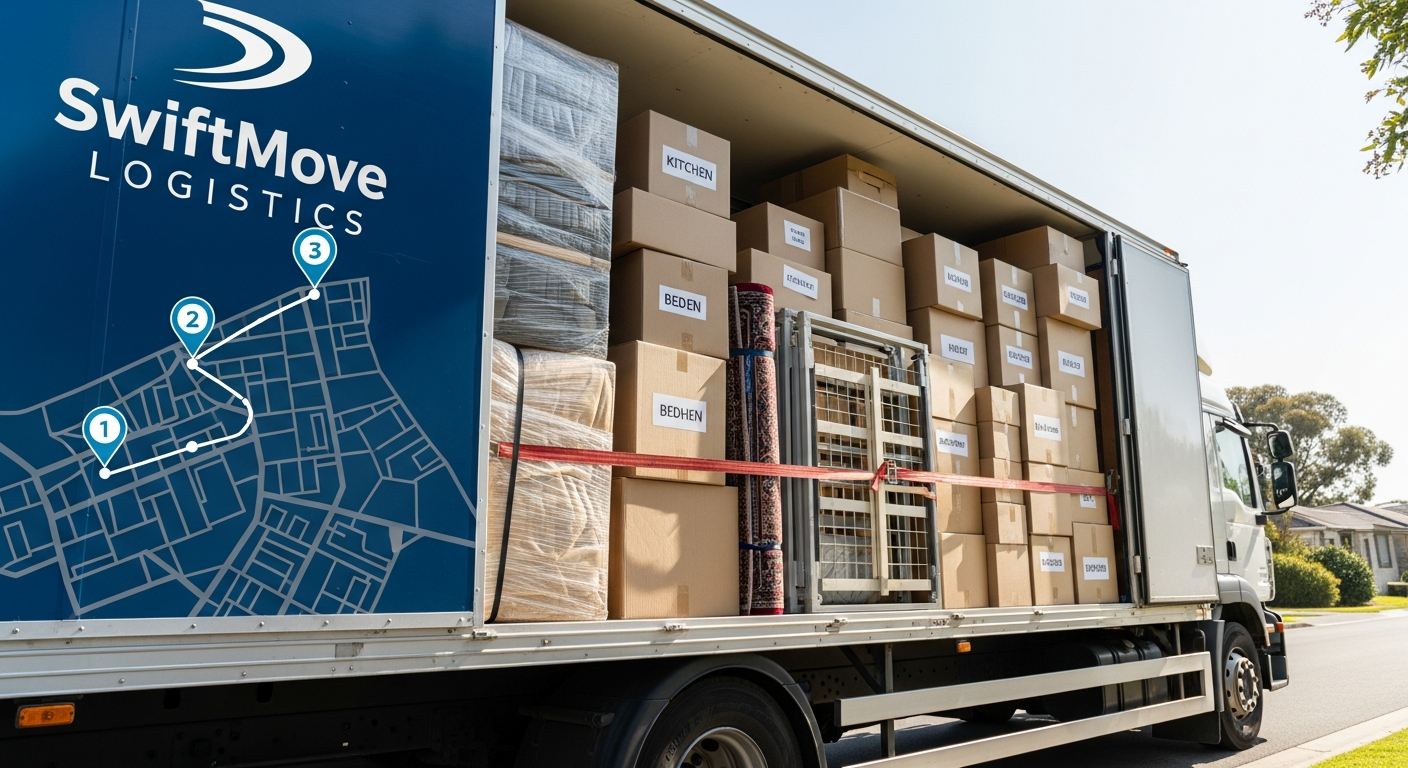
Moving isn't always straightforward. Whether you're relocating from a family home with stops at a storage facility, then to your new place, or coordinating pickups from multiple locations, traditional removal companies often charge premium rates for these complex logistics. Anyvan processes over 25,000 moves monthly, and a significant portion of these involve customers juggling multiple stops—yet many people don't realize this service exists or how to navigate it effectively.
Anyvan operates as a managed marketplace connecting customers with over 5,000 vetted transport providers across the UK and internationally. Unlike traditional removal companies with fixed overhead costs, Anyvan leverages spare van capacity and existing routes to offer competitive pricing. This flexibility means the platform can accommodate scenarios that would typically be complicated or expensive with conventional movers—from collecting items from your parents' house before moving into your new apartment, to dropping items at multiple locations in a single journey.
Get your instant Anyvan quote for multi-stop moves today.
Understanding Multi-Stop Moves on Anyvan's Marketplace Model
How Anyvan's broker-based system accommodates multiple pickup and drop-off locations
Anyvan's marketplace model fundamentally differs from traditional removal companies. Rather than maintaining a fleet of vans and employees, Anyvan connects you with independent transport providers who have existing routes and spare capacity. This creates an opportunity for multi-stop moves that would otherwise be prohibitively expensive. A driver heading from Manchester to London might already have a partial load and available space—your multi-stop move could fit perfectly into their planned route, dramatically reducing the cost you'd pay.
The difference between sequential stops and consolidated moves in terms of pricing and logistics
Sequential stops occur when items are picked up and dropped off in a specific order, often geographically spread out. Consolidated moves, by contrast, involve collecting items from multiple locations and dropping them all at one destination. Sequential stops generally cost more because they require more driving time and coordination. However, Anyvan's marketplace model can sometimes make sequential stops cheaper than you'd expect with traditional movers, since they're fitting your route into existing journeys rather than charging you for the entire van's time.
Why multi-stop moves can be more affordable on Anyvan than with traditional removal companies
Traditional removal firms charge based on the van size, hourly labor, and distance traveled—typically for exclusive use of the vehicle. Anyvan's model flips this: you're paying only for the portion of a journey you actually need. If a driver is already traveling your route with spare capacity, you're benefiting from their existing efficiency. This shared-route approach, combined with over 5,000 providers competing for your business, creates genuine downward pressure on pricing.
Real-world scenarios where multi-stop moves make sense
Inheriting furniture from a parent and combining it with your own move, staging a relocation over several weeks with intermediate storage, or downsizing by distributing items to family members across different cities—these situations are perfect for multi-stop moves. Each scenario would be expensive with traditional movers but becomes manageable on Anyvan, where you're not paying for exclusive van access.
How Anyvan's 5,000+ provider network enables flexibility that larger companies can't match
A traditional removal company with twenty vans can't accommodate every possible route configuration. Anyvan's extensive network of independent providers means someone is almost always traveling between your required locations. This diversity of drivers and routes creates flexibility that larger, centralized operations simply can't replicate.
Getting Accurate Quotes for Multi-Stop Journeys
Step-by-step process for entering multiple locations into Anyvan's online quote system
Start by accessing Anyvan's quote tool and entering your first pickup location. The system will then prompt you for your destination. At this stage, you'll indicate you have multiple stops. You'll then add your additional pickup and drop-off locations in sequence, specifying the order in which they need to occur. The tool asks about item volume and type, which affects both space requirements and handling considerations. Once you've entered all locations and details, the system generates instant quotes from available providers.
How distance, item volume, and stop complexity affect your final quote
Distance remains a primary driver of cost—the further between stops, the more you'll pay. Item volume affects van size requirements; more items mean larger vehicles and higher base costs. Stop complexity refers to the number of stops and their geographic spread. Three stops clustered within two miles costs far less than three stops spread across thirty miles. Some providers quote lower initial figures but may add charges for complex routing, so clarity upfront matters significantly.
Understanding the difference between instant online quotes and custom estimates for complex moves
Instant online quotes are generated automatically based on the information you've entered. Custom estimates are provided by individual drivers who may account for factors the algorithm missed—tight access at one location, or time windows that require specific scheduling. For truly complex moves, requesting custom estimates from multiple providers gives you more accurate pricing and allows drivers to flag potential complications before they occur.
Common pricing variables that customers miss when booking multi-stop moves
Many people focus only on distance and forget about wait times. If you're collecting items from one location but the property access is limited to specific hours, your driver may need to wait, and some drivers charge for this. Access difficulties—narrow stairwells, no parking nearby—can increase costs. Timing also matters: booking a Friday evening move costs more than a Tuesday morning move. The item type matters too; fragile items require more careful handling and sometimes incur additional fees.
Why some quotes include unexpected charges and how to identify them upfront
Unexpected charges often arise from communication gaps. A quote might assume ground-floor pickup, but if you're on the third floor without a lift, additional labor costs apply. Parking charges at certain locations get missed during quoting. Some providers add fuel surcharges or congestion charges. To identify these upfront, carefully read the quote breakdown and contact the provider directly with specifics about each stop—building type, parking availability, access restrictions, and any items requiring special handling.
Comparing Anyvan quotes against traditional removal companies for multi-stop scenarios
Request quotes from both Anyvan providers and traditional removal companies for your exact scenario. Anyvan's claim of up to 40% savings holds true for many multi-stop moves, particularly those with geographically logical routing. Traditional companies, however, sometimes offer better value for moves requiring substantial packing labor or for businesses needing guaranteed service levels. Comparing apples-to-apples—same stops, same timeline, same insurance coverage—reveals which platform actually saves you money.
Compare your moving costs with Anyvan's instant pricing tool.
Booking Strategy: Maximizing Savings Across Multiple Stops
Timing your booking to align with driver availability and route optimization
Booking during off-peak periods—mid-week and non-summer months—typically yields better pricing because drivers have more flexibility in their schedules. Booking further in advance sometimes helps, though Anyvan's same-week availability means you're not forced to plan months ahead. Consider timing your stops to align with natural driver routes; if you're moving from North to South, booking stops along that corridor costs less than stops that require backtracking.
How to structure your stops geographically to reduce driver mileage and costs
Sequence your stops logically. If you're collecting from your parents' house before moving to your apartment, and your parents live between your current home and new apartment, collect from them in between—not after you've already dropped items at your new place. This kind of route optimization directly reduces the miles your driver travels and therefore reduces your cost. When entering stops into Anyvan's system, consider whether reordering them could save money, then test different sequences using the quote tool.
Leveraging Anyvan's 48-hour cancellation policy for multi-stop moves
The 48-hour cancellation window allows you to book multiple provider options and choose the best one after reviewing their profiles and ratings. For complex moves, this is invaluable—you can test different stop sequences, see which providers quote lower, and then commit to the most favorable option. This policy also protects you if circumstances change; you can cancel guilt-free if your timeline shifts.
The benefits of booking during off-peak seasons or mid-week for complex journeys
Off-peak booking—roughly September through May, excluding major holidays—offers more driver availability and lower rates. Mid-week bookings (Tuesday through Thursday) are cheaper than weekends when demand peaks. For complex multi-stop moves, this difference compounds. A move that costs £400 on a Saturday might cost £280 on a Wednesday. Coordinating your move with off-peak timing, if possible, substantially reduces your total cost.
Negotiating or requesting adjustments for multi-stop itineraries before confirming
After receiving quotes, contact high-rated providers directly. Explain your specific scenario and ask if they can optimize the routing or offer flexibility on timing. Some drivers are willing to adjust their approach to accommodate your multi-stop needs more efficiently. This conversation also allows you to gauge their professionalism and communication style before committing. Providers who respond quickly and address your concerns in detail are generally more reliable on moving day.
Using Anyvan's instant quote feature to test different stop combinations and sequences
Spend time experimenting with your stop order in the quote tool. Test whether collecting from Location A before Location B costs more or less. See how pricing changes if you drop everything at one location versus spreading deliveries across two addresses. This exploration reveals the most cost-efficient routing without obligation, allowing you to make an informed decision about which sequence minimizes your expense.
Managing Communication Across Your Multi-Stop Move
How to provide clear, detailed instructions for each stop to minimize driver confusion
Create a written itinerary for each stop with specific details: exact address, contact name and number, parking instructions, access codes or buzzer numbers, time windows when access is available, and specific items being collected or dropped at that location. Include photos of items if relevant, and note any special handling requirements. Provide this to your driver at least 48 hours before moving day, allowing them to ask clarifying questions.
Setting expectations with Anyvan's customer service team about your specific route
Contact Anyvan's support team after booking and walk through your multi-stop scenario with them. Confirm they understand the complexity and have flagged it in the job details visible to assigned drivers. Discuss timing expectations—how long you anticipate spending at each stop and any constraints (access hours, waiting time limitations). This conversation ensures nothing gets lost in translation and gives you a contact point if issues arise.
Seven-day-a-week support availability and how to use it effectively for complex moves
Anyvan's customer support operates around the clock. For complex moves, don't wait until moving day to reach out with concerns. If you notice anything unclear in your quote, contact support immediately. If your driver seems unresponsive after assignment, escalate to customer service rather than assuming everything's fine. This proactive approach catches potential problems early.
Red flags in driver communication that suggest potential issues before moving day
A driver who doesn't confirm receipt of your detailed itinerary, who seems dismissive about your multi-stop requirements, or who suggests changes to your stops without legitimate reason—these are warning signs. A quality driver will ask clarifying questions, confirm they understand your route, and express confidence handling your specific scenario. Lack of communication or vague responses suggest potential problems on moving day.
Documentation and photos at each stop to protect yourself and the service provider
Take photos of items before loading at each stop and document their condition. If anything arrives at its destination damaged, photos establish whether damage occurred during your driver's transport or existed beforehand. For multi-stop moves, this documentation is particularly important because items change hands at multiple points. Keep your driver's contact information and confirm you have their phone number in writing.
Building a communication timeline from booking through final delivery
Create a checklist: booking confirmed (note date and driver name), detailed itinerary sent to driver, driver confirmation received, moving day confirmed 24 hours prior, driver contact before departure, updates at each stop, final delivery confirmation. This timeline keeps you organized and ensures nothing falls through the cracks across your multi-stop journey.
Real Driver Tracking and Accountability for Multi-Stop Moves
How Anyvan's real-time driver tracking works across multiple locations
Once your move is underway, Anyvan's app allows you to track your driver's location in real-time via GPS. You can see when they're en route to your first pickup, when they arrive, and when they depart. This visibility extends through each stop, allowing you to confirm your driver is following the planned route and timing. Real-time tracking transforms accountability from a promise into proof.
Using GPS tracking to verify your driver is following the planned route
Monitor the GPS track to confirm your driver is heading to stops in the correct sequence. If the map shows them deviating significantly from the route you planned, you can reach out immediately and clarify. This early intervention prevents problems from compounding—a wrong turn caught immediately is a minor inconvenience, but the same wrong turn discovered later might mean missed time windows or confused deliveries.
What to do if your driver deviates from the agreed-upon stops or sequence
Contact the driver immediately and confirm what's happening. There may be a legitimate reason—traffic leading them to adjust timing, or a customer request to modify the sequence. If the deviation seems unjustified, escalate to Anyvan's customer service while the move is still underway. Having GPS proof of the deviation gives you concrete evidence if you need to claim compensation or file a complaint.
The role of driver ratings (4.8-star average) in multi-stop move quality
Anyvan's network averages 4.8-star ratings with over 150,000 five-star reviews. When you're assigned a driver, check their individual rating immediately. Drivers with 4.9 or 5-star ratings have consistently delivered quality service, including on complex moves. Lower-rated drivers (3 or 4 stars) might still complete your move, but statistically have higher complaint rates. If you're offered a driver with notably lower ratings and haven't yet confirmed, contacting customer service to request alternatives is reasonable, particularly for complex moves.
Service variability across different drivers and how to minimize risk
Anyvan's marketplace model means service quality depends partly on your driver. Minimize this variability by booking higher-rated drivers, communicating clearly, and tracking actively. You can't eliminate variability entirely—different drivers have different styles and communication preferences—but you can stack the odds in your favor through smart selection and proactive management.
Documenting driver performance when issues arise with multi-stop logistics
If your driver misses a stop, doesn't follow your itinerary, or handles items carelessly, document everything. Take photos or video of the incident, note the exact time and what happened, get the driver's name and ID number, and contact Anyvan's customer service immediately. This documentation creates a record and strengthens any complaint or compensation claim. For multi-stop moves where coordination is critical, this documentation protects you if something goes wrong.
Handling Delays, Complications, and Service Issues
Common complications that arise during multi-stop moves and how to address them
Delayed arrivals at stops throw off your entire timeline. One customer at a pickup location taking longer than expected cascades to all subsequent stops. Drivers sometimes misunderstand which items go to which location, particularly on multi-stop moves. Access problems—locked buildings, restricted parking, unclear entry codes—create unexpected delays. Addressing these requires flexibility from you and responsiveness from your driver.
Anyvan's approach to delays at individual stops and impact on overall timeline
Anyvan doesn't typically charge you for delays caused by factors outside the driver's control, such as traffic or access issues at a customer's location. However, delays at one stop do impact subsequent stops. If your driver is running significantly behind, contact them to confirm they can still accommodate all stops within your required timeframe. If not, you may need to reschedule a stop or adjust your expectations.
What happens if a driver refuses to complete all stops or changes the route
If a driver refuses a stop after confirming it, or attempts to change your route without legitimate reason, this is a breach of the agreed service. Contact Anyvan's customer service immediately and explain the situation. Anyvan can intervene, reassign another driver, or address the issue directly with the refusing provider. Your detailed itinerary and earlier communications become crucial evidence here.
Insurance and liability considerations when items are in transit across multiple locations
Anyvan's standard coverage applies throughout your multi-stop move, but understanding the specifics matters. Items are technically in transit while moving between stops, and liability typically rests with the driver. However, responsibility for items can become murky when they're sitting at a storage location or awaiting pickup at a middle stop. Clarify coverage with Anyvan before booking, and consider additional insurance if you're moving particularly valuable items.
How to file complaints or request compensation for multi-stop move failures
Contact Anyvan's customer service with details of what went wrong, supported by your documentation. Explain the impact—a missed stop, for example, might require you to pay for a separate move to complete delivery. Most legitimate complaints are resolved through compensation or service credits. For significant failures, you may need to escalate beyond the first response to a manager. The key is acting quickly while details are fresh and you still have supporting evidence.
Learning from negative reviews: patterns in service failures for complex moves
Reviewing Anyvan's lower-rated feedback reveals patterns: drivers not showing up, drivers refusing to complete multi-stop itineraries, miscommunication about pickup and drop-off locations, and items being dropped in wrong locations. Most of these failures stem from inadequate communication or driver selection. Patterns also show that proactive communication and tracking catch issues early, preventing minor problems from becoming major disasters.
Sustainability and Cost-Efficiency: The Multi-Stop Advantage
How Anyvan's carbon-neutral UK operations benefit from multi-stop consolidation
Anyvan has achieved carbon-neutral status in the UK by optimizing routes and reducing wasted miles. Multi-stop moves exemplify this efficiency—instead of running half-full vans on separate journeys, multiple customers' items share vehicles traveling common routes. This consolidation directly reduces carbon emissions per move, making your multi-stop journey simultaneously cheaper and more environmentally responsible.
The environmental impact of filling spare van capacity versus traditional removal trucks
A traditional removal truck traveling from Manchester to London with your items occupies the entire vehicle, whether you fill it or not. That's environmental inefficiency built into the model. Anyvan's approach fills spare capacity in vans already traveling your route, reducing the number of journeys needed overall. Multi-stop moves amplify this benefit; each additional stop on a shared route eliminates the need for a separate vehicle trip.
Cost savings achieved by sharing routes with other customers on multi-stop journeys
When your multi-stop move shares a driver's route with other customers, you're splitting the vehicle cost. A van traveling from Birmingham to London with three different customers' items costs each customer roughly one-third of what they'd pay for exclusive use. Multi-stop moves on shared routes can achieve savings approaching the 40% figure Anyvan advertises—sometimes exceeding it when your route aligns perfectly with existing journeys.
Anyvan's commitment to reducing wasted miles and how this lowers your prices
Every wasted mile—driving with empty van space or taking inefficient routes—adds cost and emissions. Anyvan's technology optimizes routes to minimize this waste. Your multi-stop move, by consolidating multiple journeys into one efficient route, directly supports this goal. The algorithm finds drivers already traveling your corridors, filling space that would otherwise be empty. This commitment translates directly to lower prices for you.
The economics of the marketplace model versus fixed-price removal companies
Fixed-price removal companies absorb the cost of empty van miles, non-optimal routing, and idle capacity. They pass these costs to customers through higher prices. Anyvan's marketplace model avoids this inefficiency; drivers only take jobs that fit their existing routes, and prices reflect the actual marginal cost of adding your move to an already-planned journey. Multi-stop moves benefit disproportionately from this economic model.
Calculating your true cost savings when accounting for environmental benefits
Beyond direct financial savings, consider the carbon offset. Moving items across multiple stops using shared routes rather than separate traditional removal trucks saves roughly 50-70% of the carbon emissions you'd otherwise create. If you value environmental impact, that's tangible benefit beyond the direct savings on your moving cost.
Comparing Anyvan to Traditional Removal Companies for Complex Moves
Pricing comparison: Anyvan's up-to-40% savings claim on multi-stop scenarios
For multi-stop moves specifically, Anyvan's savings claim is legitimate. A traditional removal company quoting a three-stop move—parents' house to storage to apartment, for example—typically charges for all the driving as exclusive van time. The same move on Anyvan, if it aligns with existing routes, might cost 30-50% less. Pricing depends on your specific locations and timing, but multi-stop scenarios are where Anyvan's model excels compared to traditional companies.
Flexibility advantages of the marketplace model for non-standard moves
Traditional removal companies operate set processes and routes. They excel at standard, point-to-point relocations but struggle with non-standard requests. Anyvan's marketplace model accommodates nearly any routing scenario because you're drawing from a pool of thousands of independent providers. Collecting from six different locations before moving to one destination—a request that might puzzle a traditional mover—is routine for Anyvan.
Service consistency: marketplace variability versus guaranteed service levels
Traditional removal companies provide consistent service because they employ the same staff and maintain standardized processes. Anyvan's marketplace means variability—your experience depends on which driver you're matched with. However, higher-rated drivers are generally reliable. Trading absolute consistency for flexibility and cost savings is a reasonable trade-off for many customers, particularly when you're actively managing the booking and tracking the move.
Customer support responsiveness across different moving platforms
Anyvan provides seven-day-a-week support, which matches or exceeds traditional removal companies. Responsiveness and quality vary, but Anyvan generally handles customer service well. Traditional companies sometimes offer more handholding and personal attention, which some customers prefer. For complex moves, proactive support becomes more valuable; platforms that help you think through your routing and logistics prevent problems.
When Anyvan makes sense versus when traditional movers are worth the premium
Anyvan makes sense for cost-conscious customers with flexible timelines and complex routing needs. If your move is urgent and you need guaranteed service with no variability, a traditional company might be worth the premium. If you're moving valuable antiques requiring specialized handling, traditional companies often have better insurance and expertise. For most multi-stop moves, however, Anyvan's combination of cost savings, flexibility, and reasonable service quality proves compelling.
Real customer experiences with multi-stop moves on Anyvan versus competitors
Anyvan's 150,000+ five-star reviews include many praising multi-stop capability. Customers consistently note the cost advantage and flexibility. Complaints cluster around driver variability and communication issues—avoidable with the strategies outlined in this guide. Traditional removal company reviews praise consistency but note frustration with inflexible routing and premium pricing for anything non-standard. The trade-off is clear: Anyvan offers better economics and flexibility, traditional companies offer better predictability.
Preparing for Moving Day: Multi-Stop Logistics Checklist
Creating a detailed inventory for each stop to streamline the process
Before moving day, create a list of items being collected or dropped at each location. Include quantities, rough dimensions, and any special handling notes. This inventory serves multiple purposes: it helps your driver understand what to expect at each stop, it allows you to verify nothing gets left behind, and it documents your items in case of loss or damage. Digital format works best—photos of items at their origin location provide visual confirmation.
Packing and labeling strategies that work across multiple locations
Use color-coded labels or numbering to indicate which location each item goes to. For multi-stop moves, this prevents items destined for your parents' house from accidentally going to your new apartment. Pack items destined for the same location together when possible, though this isn't always practical. Fragile items should be clearly labeled across all boxes, and your driver should know which items require extra care regardless of destination.
Coordinating access and timing at each stop
Confirm access arrangements at each location. Does the parking area have restrictions? What time can your driver arrive? Are entry codes or keys needed? Document time windows—some locations might only allow access during specific hours. Provide this information to your driver in writing, and confirm they've received and understood it. Timing coordination is critical; if you plan a 30-minute pickup window but the location isn't accessible, your entire schedule collapses.
Preparing your driver with maps, contact numbers, and contingency plans
Provide your driver with a written itinerary including maps (Google Maps links work well), contact numbers for each location, parking information, and any local nuances. Include backup contact numbers if the primary contact is unavailable. Discuss contingencies: if access is denied at one location, what should the driver do? Can they reschedule that stop, or does everything need to proceed as planned? This preparation prevents your driver from making unilateral decisions when complications arise.
Managing unexpected obstacles at individual stops
Despite preparation, obstacles arise. Parking gets blocked, access codes don't work, a location contact is unexpectedly unavailable. Your driver should have authority and your permission to make reasonable adjustments—parking on an adjacent street, trying an alternate entrance, calling you for a backup code. The key is maintaining flexibility while staying in communication. If an obstacle can't be overcome, address it immediately rather than hoping it resolves itself.
Post-move verification and sign-off procedures for each location
At each stop, verify items have been delivered correctly before your driver leaves. Count boxes, confirm items match your itinerary, and check for visible damage. Sign off only after confirming everything is correct. This process takes extra time on multi-stop moves but prevents disputes later about whether items were delivered or what condition they arrived in. Obtain driver confirmation at each stop—photos or written notes—documenting completion.
Making the Most of Anyvan's Flexibility: Advanced Booking Tactics
Splitting large moves across multiple bookings to optimize pricing and driver availability
If your move is large but doesn't require exclusive van access, consider splitting it across multiple bookings on different days. Two smaller moves sometimes cost less combined than one large move, particularly if timing flexibility allows you to book the second move during off-peak periods. This tactic also reduces risk—if one move encounters issues, the other proceeds independently.
Using Anyvan for partial moves combined with self-packing to reduce costs
You don't need to use Anyvan for your entire move. Use them for the heavy furniture and large items, handle lighter items yourself, and pack your own boxes. This hybrid approach reduces the items your driver needs to transport, which lowers your cost significantly. For multi-stop moves in particular, reducing volume at each stop streamlines the process and minimizes timing issues.
Booking back-to-back moves if you're relocating in stages
If your relocation happens over weeks or months—perhaps you're downsizing and moving items gradually—book multiple Anyvan moves strategically. The first move might transport your main possessions; subsequent moves deliver items from storage or from relatives' houses where you'd temporarily stored them. Spacing these moves across different weeks captures off-peak pricing and allows you to adapt each move to what you've actually retained.
Negotiating with customer service for complex multi-stop scenarios
After receiving your initial quote, contact Anyvan's customer service directly. Explain your specific complexity and ask if they have suggestions for optimizing cost or logistics. Sometimes customer service can flag your booking as complex, prompting assignment of a driver experienced with multi-stop moves. They might also identify alternative routing or timing that reduces your cost. This conversation rarely takes more than ten minutes but can save money and prevent problems.
Understanding when to request a dedicated van versus shared capacity
For most multi-stop moves, shared capacity is appropriate and cost-effective. However, if your move requires exclusive access—if you need guaranteed timing or you're transporting items that can't coexist with other customers' goods—requesting dedicated van capacity makes sense. Dedicated vans cost more but eliminate variability and scheduling conflicts. Assess whether shared capacity's cost savings justify any timing uncertainty; for most customer, the answer is yes.
Building relationships with highly-rated drivers for repeat or ongoing moves
If you're doing multiple moves—relocation in stages, for example—try to book the same driver if possible. Highly-rated drivers become familiar with your needs and preferences, reducing miscommunication risk. After completing a move, if you're satisfied with your driver, ask Anyvan if you can request them for future bookings. This relationship-building creates continuity across multiple moves and typically results in better service than repeatedly adapting to new drivers.
Your Multi-Stop Move Awaits: Executing Complexity with Confidence
Multi-stop moves demand precision, clear communication, and a platform that can actually handle the complexity without charging you a premium for the privilege. Anyvan delivers on this front—its marketplace model, extensive driver network, and real-time tracking create genuine advantages for customers juggling multiple locations. The potential for up to 40% savings, combined with the flexibility to accommodate non-standard routes, makes it a compelling choice for anyone facing a complicated relocation scenario.
That said, success hinges on your preparation. Getting accurate quotes upfront, structuring your stops strategically, and maintaining crystal-clear communication with your assigned driver will dramatically improve your odds of a smooth experience. The service variability inherent in Anyvan's broker model means you're partly dependent on which driver you're matched with—but the 4.8-star average rating and 150,000+ five-star reviews suggest that most customers get solid results when they book thoughtfully.
Ready to tackle your multi-stop move? Start by entering your specific locations into Anyvan's quote system, compare the figures against traditional removal companies, and take advantage of that 48-hour cancellation window to test different route configurations. The platform's seven-day-a-week customer support is there if you hit snags, and the real-time tracking gives you visibility throughout the process. Your complex move doesn't have to be complicated—it just needs the right partner.
Book your multi-stop move with Anyvan and experience flexible, cost-effective moving.
Leave a Reply