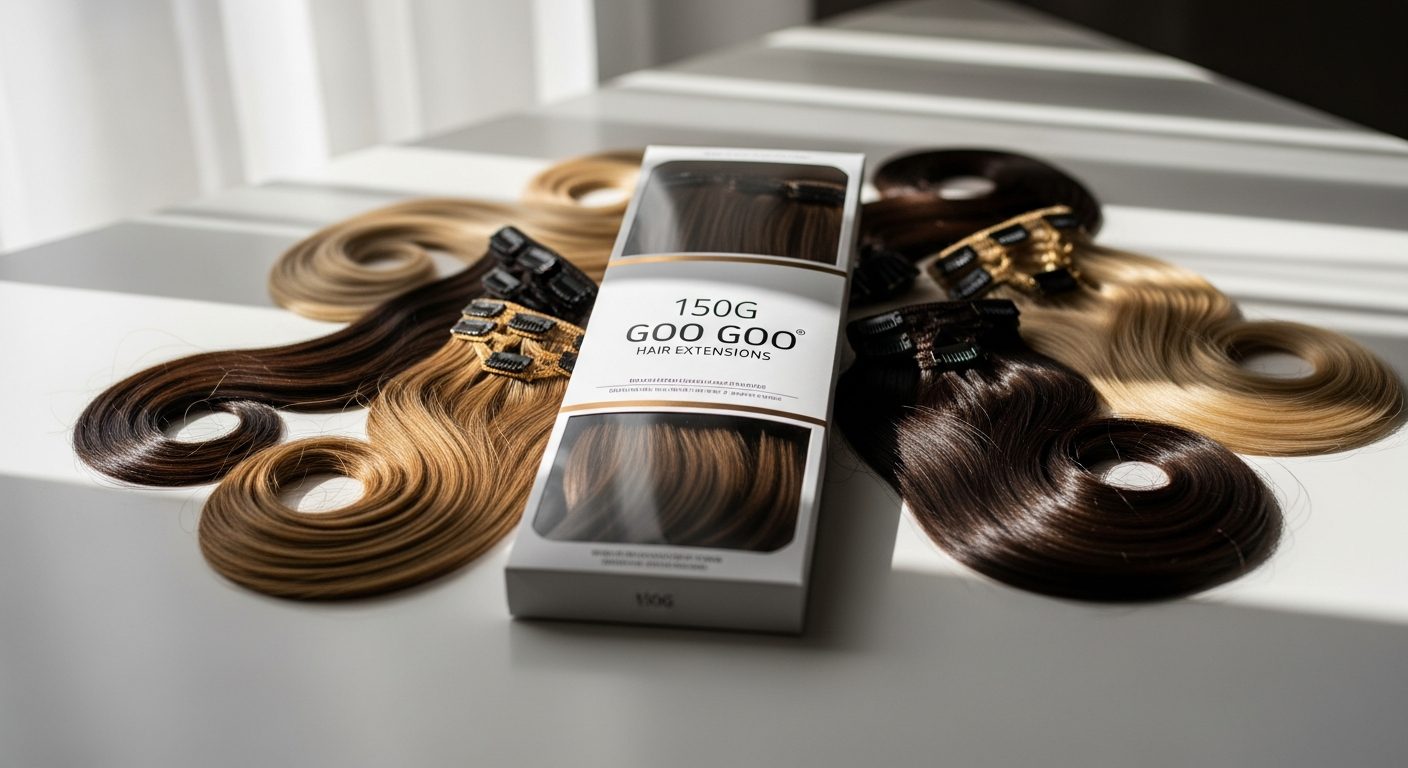
If you've ever watched someone with thick, voluminous hair breeze through a room while you struggled to make your fine strands cooperate, you're not alone. Over 70% of women battle thin, limp hair that refuses to hold volume, and many resort to damaging salon treatments in desperation—dropping $300 or more hoping for a quick fix that actually lasts.
The good news? You could add dramatic fullness and length in under five minutes, without heat damage, chemical treatments, or that hefty price tag. That's the promise GOO GOO 150G Clip-In Human Hair Extensions deliver to thousands of satisfied users monthly.
Clip-in hair extensions have revolutionized temporary enhancement, but quality varies dramatically across brands. Discover why GOO GOO's 150G set stands out from the competition.
Why Double-Drawn Construction Changes Everything
The first thing separating GOO GOO from budget extensions is their double-drawn construction. Single-drawn hair features varying thickness from root to tip—thicker at the roots, progressively thinner toward the ends. This creates that wispy, stringy appearance that screams "fake extensions" after a few wears.
Double-drawn hair is hand-sorted and processed so every strand maintains uniform density from root to tip. This means your extensions won't look sparse or thin, even after months of styling and wearing. The visual difference is striking: double-drawn extensions blend seamlessly with natural hair, while single-drawn alternatives develop a noticeably delicate, see-through quality over time.
GOO GOO's approach to this construction matters because it directly impacts longevity. With proper care, users consistently report their double-drawn sets lasting 1–2 years, whereas budget single-drawn extensions often need replacement within 6 months. When you calculate cost-per-wear, that mid-range pricing ($140–$240) actually delivers better value than repeatedly buying cheaper sets that deteriorate quickly.
The Color-Match Advantage: 30+ Shades Decoded
Finding extensions that match your hair is genuinely frustrating when brands offer limited options. GOO GOO's palette spans dark shades, rich browns, honey blondes, balayage blends, and highlight-friendly options—over 30 variations designed to serve diverse hair types and skin tones.
This matters because a poor color match forces you toward costly salon services: blending, dyeing, or toning services that add hundreds to your total investment. With such an extensive range, most users find their exact shade or a close enough match that minimal customization is needed.
Undertones are critical here. Warm-toned hair clashes with cool-toned extensions, creating an obviously mismatched look. Cold-toned hair paired with warm highlights looks equally disconnected. GOO GOO's diverse palette accounts for these subtleties—you're not limited to generic "blonde" or "brown," but rather specific undertone variations within each color family.
This inclusive approach has particular significance for multicultural audiences, who historically faced severely limited extension options from mainstream brands. A wider shade range means more people find a genuine match rather than settling for "close enough."
Application & Removal: A Beginner's Timeline
The clip-in process genuinely takes under five minutes once you practice. First, section your hair horizontally from ear to ear across the back of your head. Clip the lowest tier of extensions into this section, ensuring clips grip firmly against your natural hair—not loose, not so tight that they hurt.
Work upward, adding tiers of extensions as you move toward the crown. Most users find a 7-piece set distributes evenly across the head without creating visible gaps or bunching. The beauty of this method is simplicity: no glue, no heat, no professional installation required.
Common mistakes sabotage results, though. Clipping too close to the scalp creates visible extensions and discomfort. Clipping too far down means extensions slip during wear. Placement varies based on your natural hair thickness—finer hair needs lower clip placement to prevent slipping, while thicker hair can handle more variation.
Removal is equally straightforward but requires gentleness. Never yank clips open violently; ease them open slowly to avoid snagging your natural hair. Users who rush this process sometimes end up with torn natural hair strands or damaged clips. Taking 30 seconds per clip saves frustration later.
Styling Freedom: Heat Tools, Dyes & Transformations
One of the biggest advantages of 100% Remy human hair is its styling versatility. These extensions respond exactly like your natural hair: they curl with a curling iron, straighten with a flat iron, hold waves, and wave with a blow dryer.
Heat tool safety requires attention, though. Keep temperatures below 350°F (most professional stylists recommend 250–300°F for extensions). Always use heat protectant spray before applying hot tools—this creates a barrier that prevents moisture loss and heat damage. Even Remy hair can fry if subjected to extreme temperatures repeatedly.
Dyeing is possible with Remy extensions, opening creative possibilities beyond the 30+ stock shades. Some users customize their sets with ombre effects, bleach-out highlights, or color corrections that weren't available in the standard palette. The same rules apply as with natural hair: use quality dyes, perform strand tests, and avoid overlapping color on previously dyed sections.
However, certain chemical treatments damage hair integrity. Keratin treatments, some relaxers, and harsh lightening formulas can compromise the cuticle structure that makes Remy hair beautiful. Stick with gentler color processes and always consult with a stylist experienced in extension care.
Real Maintenance: What Actually Keeps Them Looking New
Here's the honest truth: these extensions require consistent care to maintain their quality. That doesn't mean high-maintenance, but it does mean intentional.
Sulfate-free shampoo and conditioner are non-negotiable. Sulfates strip natural oils from hair—on your head, that prompts oil production; on extensions, it accelerates drying, brittleness, and breakage. Sulfate-free products cost slightly more but dramatically extend the lifespan of your set.
Washing frequency sits around every 7–10 days with normal wear. More frequent washing accelerates deterioration; less frequent washing allows buildup that dulls shine. When you do wash, use cool or lukewarm water (hot water opens the hair cuticle, risking tangling), and always condition after shampooing.
Deep conditioning weekly or bi-weekly restores softness that repeated styling depletes. Masks designed for treated or damaged hair work beautifully on extensions. Leave the conditioner on for 10–15 minutes to allow moisture penetration.
Drying matters too. Air-drying is ideal, but when heat-drying is necessary, use a low heat setting and always apply heat protectant first. Never sleep with wet extensions—this promotes tangling and mildew growth.
Storage between wears should keep extensions in a cool, dry place. Some users store them on a wig head to maintain shape and prevent tangling. This small step meaningfully impacts how long they maintain their original texture.
Users consistently report their extensions lasting 1–2 years with this maintenance routine. Those who skip steps typically need replacement within 6 months.
Price-to-Quality Breakdown: Is $140–$240 Worth It?
The $140–$240 price range sits squarely between budget alternatives and salon-grade extensions. Budget clip-ins ($50–$80) use synthetic hair or low-quality human hair that looks noticeably fake and lasts 2–3 months. Professional salon clip-ins often run $300–$500 because salons charge installation fees and markup on already-expensive products.
Cost-per-wear analysis reveals the real picture. A $160 GOO GOO set worn 200 times over 18 months costs $0.80 per wear. A $70 budget set worn 50 times over three months costs $1.40 per wear—and you'll need to buy multiple sets annually. The math clearly favors quality.
You're investing in specific value points: 100% Remy human hair sourcing, double-drawn construction, extensive color selection, and quality control that prevents excessive shedding. These aren't premium extras—they're foundational features that separate extensions that look natural from obvious fakes.
Pricing varies across platforms. eBay, Amazon, and direct GOO GOO purchases sometimes offer different costs, and seasonal sales provide opportunities for discounts. Checking multiple retailers before purchasing can save $20–$40.
Who Benefits Most: Use Cases Beyond Special Events
Special occasions are obvious use cases, but everyday application reveals where these extensions truly shine. Women with naturally fine or thinning hair gain dramatic confidence wearing extensions daily. What once required constant styling workarounds becomes effortless volume.
Content creators, performers, and influencers rely on extensions for consistent appearance across content—maintaining the same look from video to video, post to post. This professional use case demands quality that won't deteriorate visibly over weeks of heavy styling.
Recovery scenarios represent another significant use case. Individuals post-chemotherapy, recovering from hair loss treatments, or addressing severe damage find extensions psychologically invaluable while their hair regrows. The ability to reclaim their appearance on their timeline matters tremendously.
Confidence-building applications shouldn't be underestimated. Hair directly influences self-perception for many people. Adding length and volume often catalyzes broader positive changes in confidence, social engagement, and life trajectory.
Success with the 150G set depends partly on hair type. Fine or thin natural hair achieves dramatic visual transformation with this weight. Thick, coarse natural hair benefits from the volume but might prefer heavier sets for proportional appearance. Shoulder-length natural hair creates different proportions than waist-length hair when paired with extensions.
Common Concerns: Sleeping, Comfort & Adjustment Period
Yes, you can safely sleep in clip-in extensions—many users wear them 14+ hours daily including bedtime. The adjustment period typically spans 1–2 weeks as your scalp acclimates to the additional weight and clip pressure. This doesn't indicate something's wrong; it's normal sensory adjustment.
Scalp tenderness diminishes as you optimize clip placement. Too-tight clipping creates pressure points; too-loose clipping creates a different kind of tension from shifting. Finding your personal sweet spot takes a few applications but becomes second nature quickly.
Breathability concerns are unfounded when clips are placed correctly. Clips don't restrict blood flow—they simply grip sections of hair. Your scalp remains fully accessible for normal oil production and air circulation. If you experience numbness or significant pain, your placement needs adjustment.
Sleeping precautions improve comfort: sleep on a silk or satin pillowcase (reduces tangling compared to cotton), and consider loosely braiding extensions before bed to prevent knots. Some long-term users wrap extensions in a silk scarf while sleeping.
The initial period where extensions feel noticeable usually passes within a week. Experienced users report extensions eventually feeling as natural as their own hair.
Explore the comfort and styling possibilities of GOO GOO extensions today.
Remy Hair vs. Synthetic: Why the Material Matters
"100% Remy human hair" means hair sourced from donors where the cuticles all run in the same direction—root to tip. This directional consistency prevents tangling, frizz, and matting that plague non-Remy hair where cuticles face random directions.
Non-Remy human hair is cheaper but lacks this cuticle alignment. It tangles readily, requires intensive conditioning, and often doesn't last beyond 2–3 months of regular wear. Synthetic hair never requires heat styling and costs less, but it looks plastic-like, can't be customized with heat or dye, and melts under temperatures above 180°F.
Remy hair's longevity stems directly from cuticle alignment. Proper care preserves cuticle integrity, allowing the hair to maintain softness and shine month after month. Non-Remy hair's random cuticle orientation means the protective barrier degrades faster.
Environmental and ethical considerations around human hair sourcing deserve acknowledgment. Most Remy hair comes from ethical donation programs where donors are fairly compensated. GOO GOO sources hair responsibly, contrasting with some brands that source through exploitative channels. Choosing ethically-sourced Remy hair means supporting fair trade practices.
This material quality directly determines whether extensions blend seamlessly or look conspicuously fake. Remy hair's natural movement, shine, and texture match real human hair so closely that people won't notice extensions unless told.
Long-Term Results: What Users Report After 6, 12 & 24 Months
Real user feedback reveals consistent patterns across extended use periods. Within the first 6 months, users report minimal shedding—a few strands occasionally, which is normal and doesn't impact appearance. Extensions maintain their original softness, shine, and texture when proper care is followed.
By month 12, color sometimes shows very subtle fading with repeated washing and styling, though this is minimal compared to natural hair color fade. Shedding remains minimal for users following the sulfate-free, less-frequent-washing routine. Most users at the one-year mark report their extensions still look 85–90% as fresh as day one.
The 24-month mark shows more variation based on usage intensity. Heavy daily wearers sometimes notice slight dulling and more frequent shedding by month 20–24. Occasional wearers report their sets looking nearly new at two years. This variation explains why users report anywhere from 12–24 month lifespan—it genuinely depends on wear frequency and care consistency.
Testimonials frequently mention confidence shifts and life changes attributed to having fuller, longer hair. People describe taking more photos, engaging socially, pursuing professional opportunities they previously avoided. These extensions deliver tangible psychological benefits beyond aesthetic transformation.
Users typically retire their sets when shedding increases noticeably, color fades visibly, or the hair develops a dull, brittle feel despite proper care. At that point, purchasing a fresh set feels justified because the investment has already returned significant value over 1–2 years.
The Unspoken Downsides: Maintenance Reality Check
The truth deserves stating clearly: clip-in extensions aren't truly "wash and go" despite their ease of application. They're low-maintenance compared to salon extensions, but they're not zero-maintenance.
The time commitment includes regular washing (every 7–10 days), conditioning, deep conditioning routines, careful drying, and storage. This adds maybe 20–30 minutes to a wash day, which matters if your routine is already tight.
The financial investment extends beyond purchase price. Sulfate-free shampoos and conditioners cost more than standard products. Heat protectant sprays, deep conditioning masks, and potentially leave-in conditioners add to the expense. Over a year, these specialty products might total $50–$100, but this cost is genuine and worth acknowledging upfront.
The learning curve for application shouldn't be dismissed. Your first few applications take 15–20 minutes and might produce visible clips or awkward placement. Achieving professional-looking, invisible placement typically requires 5–10 practice sessions. This learning period frustrates some users who expect immediate perfection.
Some users genuinely find the maintenance burden outweighs the convenience factor. If you prefer truly wash-and-go routines and minimal daily styling, clip-ins might frustrate rather than delight you. Honest self-assessment about your willingness to engage in this level of care prevents buyer's remorse.
Your Hair Transformation Starts Here
The GOO GOO 150G Clip-In Human Hair Extensions deliver exactly what their users praise: instant volume, natural appearance, and genuine versatility without damage or the salon price tag. The double-drawn construction ensures quality that won't compromise, the 30+ shade range means finding your perfect match, and the maintenance routine—while requiring consistency—is absolutely manageable for anyone committed to protecting their investment.
These extensions succeed because they're honest about what they are and aren't. They're not permanent, and they're not a "set it and forget it" solution. But for anyone seeking temporary enhancement, confidence restoration, or damage recovery, they represent exceptional value that few products at this price point match.
The real users praising these extensions aren't paid endorsers; they're people tired of expensive salon visits who discovered a smarter path to hair transformation on their own terms. Whether you're testing clip-ins for the first time or upgrading from a lower-quality set, GOO GOO's 150G option strikes that rare balance between affordability and genuine performance.
Take the leap and transform your hair today with GOO GOO's 150G Clip-In Extensions.
Leave a Reply