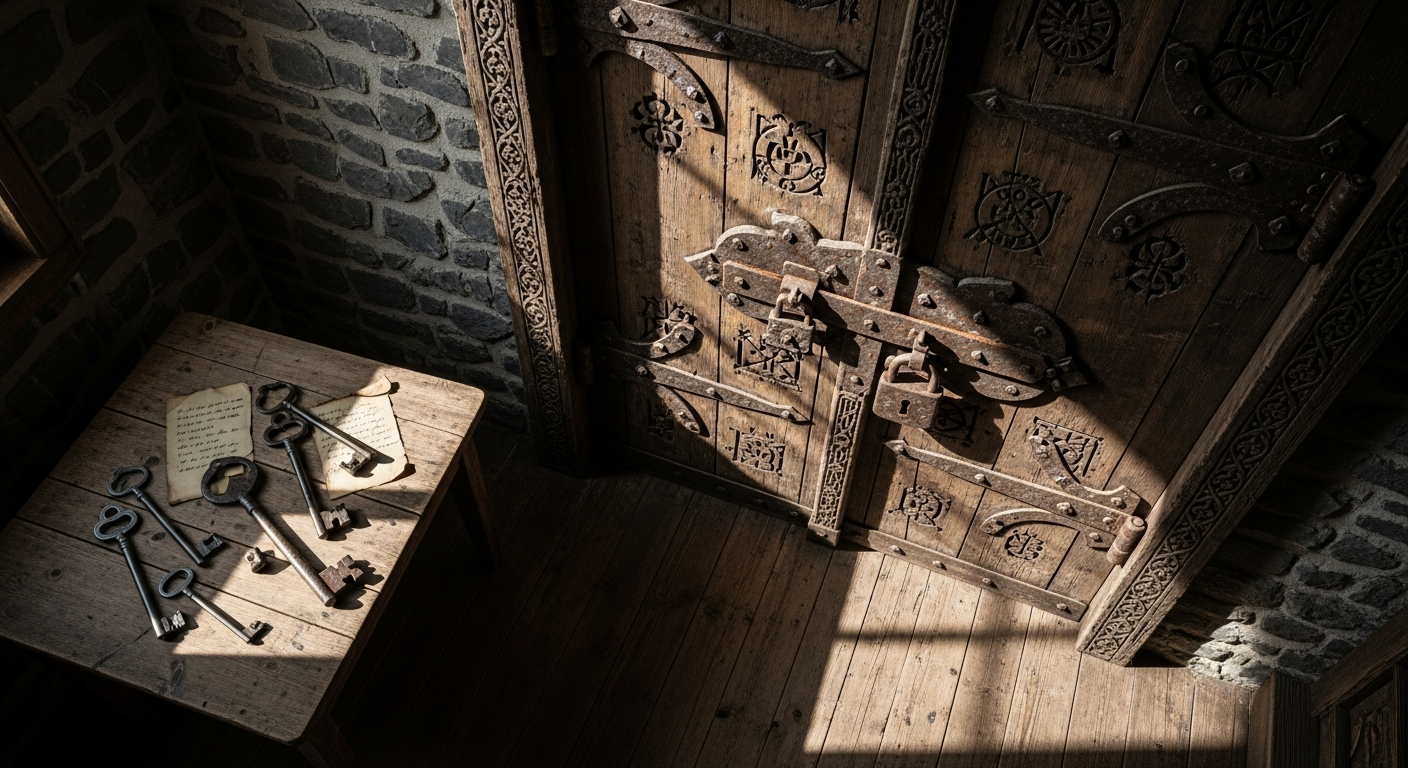
Imagine stepping into a supernatural nightmare where 60 minutes could feel like an eternity. The walls close in, live actors manifest from the shadows, and your only mission is to save a trapped soul before time runs out. This wasn't a typical escape room experience—this was The Unknown, NoWayOut Escape Games' masterpiece of immersive horror that redefined what terror could achieve within four walls.
NoWayOut Escape Games earned its reputation across Dubai by refusing to settle for standard puzzle boxes. Instead, the brand obsessed over cinematic storytelling, premium production values, and the kind of emotional intensity that lingered long after players stepped back into daylight. The Unknown represented the apex of this philosophy, merging supernatural narrative, live performer integration, and psychological horror into something genuinely unforgettable.
Discover what made NoWayOut's premium escape experiences legendary
The Narrative Architecture Behind The Unknown's Horror
The Astral Setting and Its Role in Creating an Otherworldly Atmosphere
The Astral wasn't merely a location—it was a psychological space designed to destabilize players' sense of reality. This supernatural dimension served as the backdrop for every challenge, every scare, and every moment of tension. The setting transcended typical dungeon or abandoned hospital aesthetics by creating something genuinely alien, a place where normal rules didn't apply and escape room conventions felt meaningless.
The Central Mission: Saving a Trapped Soul Within 60 Minutes
Players entered with a singular, emotionally resonant objective: rescue a trapped soul before time consumed everything. This narrative framework transformed the experience from a series of isolated puzzles into a cohesive quest. Every riddle solved, every obstacle overcome, moved players closer to salvation or deeper into despair. The stakes felt real because the story made them matter.
How the Narrative Framework Elevated the Experience Beyond Standard Puzzle Sequences
Traditional escape rooms often treat narrative as window dressing around disconnected logic challenges. The Unknown inverted this approach. The story wasn't decoration—it was the skeleton upon which every puzzle hung. Players encountered challenges that organically emerged from the Astral's mythology rather than feeling arbitrarily placed. A puzzle wasn't just a lock; it was a supernatural test demanding comprehension of otherworldly logic.
The Psychological Horror Elements That Made Players Question Reality
Beyond jump scares and grotesque imagery, The Unknown embedded subtle psychological destabilization throughout the experience. Spatial distortions, temporal inconsistencies, and sensory contradictions created genuine cognitive dissonance. Players found themselves uncertain whether they were solving puzzles or losing their minds. This psychological layer activated fear responses rooted in existential dread rather than simple startle reactions.
Integration of Lore and Environmental Storytelling Throughout the Room
Every prop, every detail, every shadow told part of The Unknown's larger mythology. Players who observed carefully discovered backstory written into the environment itself—mysterious symbols, cryptic journals, ritualistic remnants. Environmental storytelling allowed multiple narrative layers to exist simultaneously, rewarding observant players while maintaining immersion for those focusing primarily on survival.
Character-Driven Plot Elements That Unfolded as Players Progressed
The trapped soul wasn't abstract—it was a presence players could almost feel, a character whose fate hinged on their success. As the 60 minutes elapsed, fragmented information revealed more about this entity's predicament. Live actors embodied various supernatural forces and entities, each with distinct motivations and relationships to the central narrative. Character arcs developed in real-time, creating emotional investment beyond mechanical puzzle-solving.
Live Actors as Game-Changers in Immersive Horror
Why Live Actors Became the Defining Feature of NoWayOut's Premium Offering
This single element separated The Unknown from competitors charging significantly less. Live performers transformed the experience from a static puzzle environment into a dynamic, unpredictable scenario where human reaction and genuine emotion became core mechanics. Actors weren't decorative—they were essential infrastructure enabling authentic fear responses impossible to achieve through pre-recorded scares or mechanical triggers alone.
The Unpredictability Factor: How Performers Heightened Tension and Realism
Machines operate predictably. Humans don't. Actors possessed the intelligence to read player psychology, adjust intensity based on group dynamics, and create genuinely spontaneous moments. This unpredictability meant players couldn't develop defensive strategies through familiarity. Each encounter remained fresh because the human element introduced genuine variables. Performers could recognize when a player needed escalation or de-escalation, adapting in real-time.
Types of Actor Interactions: Jump Scares, Dialogue, Physical Presence, and Psychological Manipulation
Actor roles varied dramatically throughout The Unknown. Some encounters featured sudden, visceral jump scares—performers materializing from darkness to trigger physiological terror responses. Other interactions involved sustained dialogue, characters speaking cryptic warnings or taunting information relevant to puzzles. Physical presence alone created dread—an actor simply standing motionless in a corner, watching players work, generated psychological pressure. More sophisticated interactions employed conversational manipulation, where performers guided or misdirected players through dialogue.
Training and Choreography Behind the Performer's Role in The Unknown
NoWayOut's commitment to quality extended to actor preparation. Performers underwent extensive training in horror psychology, improvisation, and safety protocols. Choreography balanced genuine fear delivery with player wellbeing. Actors studied player body language, recognizing panic thresholds and adjusting accordingly. This professionalism meant scares felt authentic rather than reckless, terrifying rather than traumatizing.
How Live Actors Prevented the Experience from Feeling Like a Static Puzzle Game
Without performers, The Unknown would devolve into a sophisticated puzzle hunt—intellectually engaging but emotionally hollow. Live actors infused genuine fear into puzzle-solving. Players couldn't simply sit back and methodically work through challenges; they had to maintain awareness of environmental threats. This constant vigilance transformed puzzle-solving from leisurely thinking into survival-mode problem-solving, fundamentally altering cognitive and emotional experience.
The Emotional and Physiological Impact of Human Interaction in Horror Settings
Human fear responses activate most powerfully through human threats. An algorithm can't replicate the primal unease of encountering actual people in supernatural contexts. Actors triggered genuine adrenaline responses, elevated heart rates, and authentic screaming—not from gore or jumpscares alone, but from the awareness that conscious beings were actively trying to terrify you. This human-to-human dimension created emotional weight impossible in purely mechanical scenarios.
Experience the terror that only NoWayOut could deliver
Cinematic Design Elements That Created Pure Dread
Meticulously Crafted Sets Designed to Feel Like a Horror Film Location
The Unknown's physical space wasn't constructed—it was designed like a film production. Every surface, angle, and architectural choice served the narrative. Set designers understood how real estate manipulation creates psychological responses. Ceilings might feel uncomfortably low in certain sections, corridors could narrow unexpectedly, and spatial layouts subverted player expectations. The environment functioned as an active participant in horror rather than a neutral container.
Dynamic Lighting Systems That Shifted Mood and Created Psychological Unease
Static lighting would diminish horror impact. The Unknown employed sophisticated lighting systems that evolved throughout the experience. Sudden darkness created disorientation. Rapid strobing induced stress responses. Color shifts—from sickly greens to blood reds—triggered psychological associations. Lighting didn't simply illuminate; it manipulated perception and emotional state. Shadows became threats, darkness became suffocation, and illumination became momentary relief.
Chilling Sound Design and Its Role in Building Sustained Tension
Horror films taught audiences that sound design matters more than visuals. The Unknown internalized this principle. Ambient soundscapes created sustained dread—whispers just below intelligibility, distant screaming, inexplicable creaking. Strategic silence proved equally powerful, creating anticipatory anxiety as players waited for inevitable horror. Sudden audio assaults—piercing screams, deafening distortion—triggered physiological fear responses. Sound became invisible architecture shaping emotional experience.
Realistic Props and Environmental Details That Grounded the Horror Experience
Authenticity intensified immersion. Rather than obvious fake props, The Unknown incorporated meticulously detailed objects that players interacted with directly. Props felt tactile and real, grounding the supernatural narrative in physical sensations. This attention to detail extended to every element—textures, smells, temperature variations—creating multisensory immersion. The more realistic the environment felt, the more terrifying the supernatural elements became.
Color Psychology and Spatial Design Choices That Enhanced Fear Responses
Colors trigger psychological associations. The Unknown's designers understood that desaturated environments felt more threatening than vibrant ones. Spatial design incorporated principles of agoraphobia and claustrophobia depending on narrative needs. Disorienting layouts prevented intuitive navigation, making players feel lost within confined spaces. Asymmetrical architecture created visual unease. These design choices weren't accidental—they were deliberate fear architecture.
How the Physical Environment Told Its Own Story Independent of Puzzles
Observant players discovered narrative through environment exploration. The room's history, the supernatural events that transpired, the fate of previous inhabitants—all became apparent through environmental clues. This parallel storytelling allowed sophisticated narrative appreciation without requiring explicit exposition. Players could construct personal interpretations of events based on physical evidence, creating individual narrative experiences within the shared scenario.
Puzzle Design Meets Horror: The Intellectual Challenge
The Balance Between Complex Puzzles and Horror Immersion
Pure horror without intellectual engagement becomes sensation rather than experience. Pure puzzles without emotional stakes become academic exercises. The Unknown balanced these elements by embedding puzzles organically within the horror narrative. Intellectual challenges emerged from fear situations—players had to think clearly while terrified, balance analytical reasoning with emotional responses. This balance meant players couldn't achieve success through pure logic or pure nerve; they needed both simultaneously.
Types of Riddles and Challenges Players Encountered in The Unknown
Puzzle variety prevented monotony. Riddles required linguistic interpretation. Physical challenges demanded observation and dexterity. Symbolism-based puzzles connected to The Unknown's supernatural mythology. Pattern recognition challenged players to identify order within apparent chaos. Collaborative puzzles forced communication under pressure. Environmental puzzles required understanding how the Astral's impossible architecture functioned. This diversity meant different player strengths remained relevant throughout the experience.
How Puzzle Difficulty Scaled for Both Beginners and Experienced Escape Room Enthusiasts
Accessibility proved crucial for sustainable business. The Unknown offered difficulty modulation enabling novices and veterans to experience appropriate challenges. Hint systems existed, but clever design meant hints enhanced rather than diminished satisfaction. Certain puzzles contained multiple solution pathways, allowing different cognitive approaches to succeed. This scaling meant experienced players couldn't simply blast through challenges while beginners felt helpless.
The Cognitive Load of Solving Puzzles While Experiencing Genuine Fear
Terror impairs cognition. Players attempting puzzle-solving while physiologically activated by fear experienced genuine cognitive difficulty. This wasn't artificial handicapping—it reflected real fear psychology. Clear thinking becomes nearly impossible during genuine panic, yet The Unknown required exactly that. Players had to develop compartmentalization strategies, managing fear response while maintaining analytical function. This cognitive-emotional integration created the experience's unique psychological intensity.
Puzzle Progression That Mirrored the Narrative Arc of Saving the Trapped Soul
Puzzle sequences weren't random. Early challenges explored the Astral's basic nature. Mid-experience puzzles revealed the trapped soul's circumstances and plight. Final puzzles represented the actual rescue attempt—escalating difficulty mirroring escalating stakes. This progression meant puzzle difficulty's narrative justification felt organic. Players understood why challenges intensified; the supernatural stakes themselves demanded increasingly complex solutions.
Clue Systems and Hint Mechanics That Maintained Momentum Without Breaking Immersion
Traditional escape rooms pause narrative when players request hints. The Unknown integrated clue mechanics into the experience itself. Actors might offer cryptic guidance. Environmental details revealed hints when observed carefully. Supernatural entities could be bargained with for information. Hint systems functioned as narrative elements rather than meta-game mechanics. This integration meant requesting assistance felt like part of The Unknown's story rather than an acknowledgment of failure.
Group Dynamics and Capacity: Who Could Experience The Unknown
Optimal Group Sizing: 2 to 6 Players for Maximum Engagement
Group size dramatically affects escape room experience. Two-player teams created intimate terror—minimal options for psychological support from teammates. Larger groups enabled role specialization but introduced coordination challenges. The Unknown's optimal 2 to 6 player range reflected experience design balancing these factors. Groups of 4 to 5 players typically generated ideal combinations of collaborative problem-solving and individual fear responses.
Extended Capacity Options: Accommodating Groups Up to 8 Players
Some groups exceeded the optimal range. NoWayOut accommodated larger parties without sacrificing experience quality. Eight-player groups fragmented into smaller units, each experiencing semi-independent fear arcs while contributing to collective puzzle-solving. Larger groups meant more potential panic, more screaming, and more collective emotional amplification—which enhanced certain dimensions of the experience despite reducing individual terror intensity.
How Group Composition Affected Individual Fear Responses and Puzzle-Solving Ability
Mixed-composition groups—combining horror veterans with beginners, experienced puzzle-solvers with creative thinkers—created dynamic team chemistry. Veteran players sometimes anchored panicking teammates. Puzzle experts propelled progress while others managed environmental threats. Friend groups versus coworker groups generated different interaction patterns. Romantic couples experienced unique emotional intimacy within fear contexts. Family groups required careful intensity management to prevent genuinely traumatizing younger members.
Team Dynamics Under Pressure: Communication, Leadership, and Collective Problem-Solving
Crisis situations reveal character. The Unknown's pressure environment forced teams to develop communication strategies under stress. Natural leaders often emerged. Some players became thinkers while others became watchers. Successful teams established protocols—who manages which puzzle domains, how to signal danger, when to request help. Teams that failed to establish these patterns devolved into chaos. The experience functioned as an involuntary team-building exercise, sometimes strengthening relationships and sometimes exposing incompatibilities.
Solo Player Considerations Versus Group Experiences in Horror Settings
Solo players experienced The Unknown differently from groups. Solitary fear magnified considerably without emotional support. However, solo players avoided communication breakdowns and maintained singular focus. Some solo players thrived in this isolated intensity while others found it psychologically overwhelming. NoWayOut's group accommodation emphasis suggested the brand optimized for social horror experiences rather than solitary intensity maximization.
Family-Friendly Versus Adult-Oriented Group Configurations
The Unknown contained elements unsuitable for young children—psychological horror, intense scares, thematic darkness. Age recommendations existed but varied based on individual psychological resilience. Family groups required parental judgment regarding younger members' tolerance. Teen players often found the experience age-appropriate and transformatively intense. Adult groups engaged with psychological complexity and narrative depth that younger players might miss. This configuration diversity meant The Unknown could serve different audiences while maintaining core intensity.
Premium Pricing and What You Were Actually Paying For
AED 128 to 220 per Person Pricing Structure and Market Positioning
The Unknown commanded premium pricing—significantly higher than standard escape room experiences. This range reflected different group sizes and possible seasonal variation. Per-person costs escalated for smaller groups due to fixed operational expenses distributed across fewer participants. The pricing placed The Unknown at Dubai's premium entertainment tier, comparable to fine dining or exclusive club experiences rather than casual entertainment.
What Justified the Premium Cost: Live Actors, Cinematic Production, Narrative Depth
Price justified itself through exceptional production values. Live actor integration alone required trained, skilled performers—substantially more expensive than mechanical scares. Cinematic set design and maintenance demanded professional design, construction, and continuous upkeep. Sophisticated lighting and sound systems required specialized equipment and technical expertise. Narrative depth meant experienced writers, continuity maintenance, and sophisticated thematic development. These elements couldn't be cut without fundamentally degrading experience quality.
Comparison to Standard Escape Room Pricing in the Dubai Market
Standard Dubai escape rooms charged AED 80 to 120 per person. The Unknown's 128 to 220 range represented 25% to 100% premiums over competitors. This pricing differential didn't reflect arbitrary luxury markup; it reflected genuine operational cost differences. Live actors, superior set design, and sophisticated technology systems cost substantially more than basic puzzle-box installations. The pricing communicated: this isn't a standard escape room; this is professional entertainment.
ROI Perspective: Experience Value Versus Traditional Entertainment Options
Cost-per-minute analysis positioned The Unknown competitively against other premium experiences. A two-hour fine dining experience might cost AED 200 to 400 per person. A concert ticket ranged AED 150 to 500. The Unknown delivered 60 minutes of intense, emotionally resonant experience at AED 128 to 220 per person—comparable to or cheaper than alternative premium entertainment while offering uniqueness unavailable elsewhere. For memorable experiences, players viewed the cost as reasonable.
Seasonal Pricing Variations and Group Booking Discounts
Premium experiences typically implement seasonal pricing. The Unknown likely offered higher rates during peak tourism seasons and premium pricing for horror-oriented holidays. Group booking discounts possibly existed, incentivizing larger parties despite operational complexity from 8-player groups. Early booking discounts may have encouraged advanced reservations, enabling better staffing planning.
The Cost of Maintaining Cinematic Quality and Performer Standards
Maintaining excellence proves expensive. Actor salaries for trained, skilled performers exceed minimum wage considerably. Set maintenance—repairing damaged props, refreshing worn materials, maintaining lighting systems—created continuous costs. Regular training kept performers sharp and safety protocols current. Scripts and narrative elements required periodic refreshing to prevent seasoned players from memorizing responses. These maintenance costs directly translated to premium pricing necessity.
The Intensity Factor: Who Could Handle The Unknown
Jump Scares and Their Frequency Throughout the 60-Minute Experience
The Unknown incorporated jump scares strategically rather than excessively. Overusing jump scares diminishes their impact through habituation. Strategic placement meant fear responses remained elevated throughout rather than declining as players became accustomed to predictable scares. Actors timed scares to psychological states—delivering sudden frights when players felt safest proved most effective. Frequency distribution meant no player could achieve sustained calm; dread remained constant even between active scares.
Psychological Horror Versus Gore-Based Horror in the Design Approach
The Unknown emphasized psychological horror over graphic gore. Suggesting terror through implication proved more disturbing than explicit imagery. Supernatural threats proved more psychologically destabilizing than grotesque physical injuries. This design approach avoided the desensitization that accompany excessive gore while maintaining visceral fear responses. Psychological horror allowed viewers to construct personal interpretations of horrors, often more disturbing than explicit depictions.
Sensitivity Considerations: Who Thrived Versus Who Struggled with the Intensity
Horror veterans with extensive exposure thrived in The Unknown's intensity. Players with genuine phobias—arachnophobia, claustrophobia, trypophobia—risked triggering episodes. Individuals with trauma histories potentially experienced re-traumatization through psychological horror mechanics. Players with anxiety disorders sometimes found the sustained stress overwhelming. Mental health considerations weren't irrelevant; they significantly affected individual experience quality and psychological safety.
Physical Reactions Players Reported: Adrenaline, Screaming, Genuine Panic
Testimonials described intense physiological responses. Elevated heart rates continued hours after experience completion. Genuine screaming—not performative but authentically panic-driven—occurred frequently. Some players experienced genuine panic attacks within the environment. Others reported shaking, sweating, and emotional overwhelm. These weren't exaggerations; they reflected authentic fear responses triggering real physiological activation. The Unknown worked precisely because it generated these genuine reactions.
Age Recommendations and Psychological Readiness for Extreme Immersion
Psychological readiness varied by individual development. Teenagers around 16+ generally processed the experience appropriately, experiencing intense scares without lasting psychological damage. Younger adolescents sometimes exhibited genuine distress. Very young children should not experience The Unknown—the psychological intensity exceeded appropriate developmental exposure. Adult players possessed the psychological framework for processing extreme immersion. Age recommendations existed but individual resilience varied considerably within age groups.
Safe Words and Exit Protocols for Players Reaching Their Fear Threshold
Professional operators implement exit mechanisms. Safe words allowed players to signal distress, triggering immediate deescalation or experience termination. This safety architecture enabled pushing boundaries without risking psychological harm. Players could explore genuine terror knowing they possessed emergency options. The existence of safe words paradoxically enabled deeper fear experiences—players trusted they wouldn't be trapped in unbearable situations.
The Legacy of The Unknown After NoWayOut's 2026 Closure
Why The Unknown Remains Culturally Significant Despite Operational Closure
Memorable experiences transcend operational status. The Unknown represented a high-water mark for immersive horror entertainment—demonstrating what premium execution could achieve. Players who experienced it carry lasting memories and frequently reference it in horror entertainment discussions. The experience influenced competitive operators' design philosophies even after closure. Cultural significance doesn't require ongoing operation; it requires sufficient impact that absence feels like loss.
Player Testimonials and Lasting Impact on Dubai's Escape Room Community
Participants remembered The Unknown vividly—describing it as transformative experiences, sometimes life-changing in their emotional intensity. Horror enthusiasts cited it as benchmark-setting, establishing standards they pursued in subsequent experiences. Some players attempted replicating elements elsewhere, always finding original executions superior. The Unknown became shorthand for premium horror immersion, a reference point in escape room community conversations. Community memory preserved its significance despite closure.
The Gap Left in the Premium Horror Escape Room Market Post-Closure
NoWayOut's February 13, 2026 closure left Dubai's premium horror entertainment market significantly diminished. Competitors lacked The Unknown's combination of live actors, cinematic design, and narrative sophistication. Players seeking comparable experiences found themselves disappointed by available alternatives. The gap represented not merely lost operational capacity but lost artistic vision. No immediate successor emerged offering equivalent immersion, leaving market demand unmet.
Attempts to Recreate or Reimagine Similar Experiences Elsewhere
Other operators attempted replicating The Unknown's success with varying results. Some incorporated live actors into existing experiences with modest improvements. Others focused on cinematic design without actor integration. None achieved The Unknown's combination of elements in equivalent quality. Attempts taught industry lessons—live actors require specialized training, cinematic design demands substantial investment, and narrative sophistication can't be rushed. Failed recreations paradoxically emphasized The Unknown's uniqueness.
Digital Documentation and Community Memory Preservation Efforts
Horror entertainment communities documented The Unknown through reviews, testimonials, and memory-sharing online. Players created content describing their experiences, preserving institutional memory. While official operations ceased, the cultural artifact persisted through community preservation. Digital archives captured available information about the experience, preventing complete erasure from entertainment history. This digital legacy enabled subsequent generations to understand what made The Unknown exceptional.
What Players Lost When NoWayOut Ceased Operations on February 13, 2026
Closure meant finality. New players couldn't experience The Unknown at all; existing players couldn't revisit it. Unlike films or recorded media, escape rooms cannot be preserved; they exist only through operation. Players lost the opportunity to experience growth, to attempt the challenge again, to bring new friends. NoWayOut's closure wasn't merely a business failure; it was loss of an irreplaceable experience. Permanence transformed into archive.
Comparing The Unknown to Other Horror Escape Room Experiences
How The Unknown Stacked Against Other Dubai Escape Room Offerings
Dubai hosted numerous escape room operators, but The Unknown occupied premium positioning. Most competitors offered puzzle-focused experiences with minimal narrative or theatrical elements. Some incorporated atmospheric themes without genuine horror elements. Few invested in cinematic production quality at The Unknown's level. In comparative analysis, The Unknown dominated on immersion metrics while competitors sometimes offered superior puzzle design breadth. The Unknown prioritized emotional experience; competitors prioritized intellectual challenge.
Live Actor Integration: The Unknown's Competitive Advantage
Live actor integration represented The Unknown's decisive differentiation. Few competitors employed performers; most relied on mechanical scares or pre-recorded elements. This distinction created experiences fundamentally different from puzzle-centric competitors. Actors enabled real-time adaptation, genuine unpredictability, and authentic emotional engagement competitors simply couldn't match. This single element explained substantial pricing premium justification.
Narrative Complexity and Cinematic Production Quality Benchmarks
The Unknown's narrative sophistication exceeded most competitors' storytelling depth. Characters possessed development arcs, environmental narrative layering, and thematic coherence competitors rarely achieved. Cinematic production quality—professional lighting design, sophisticated sound systems, meticulously crafted sets—exceeded industry standards. Competitors' environments sometimes felt cobbled together from stock horror props; The Unknown felt like professional film production space-adapted for interactive entertainment. This production quality gap directly influenced pricing and perceived value.
Fear Factor Intensity Compared to Competitors
Intensity measurement varied by individual, but consistent observation suggested The Unknown generated greater fear responses than comparable experiences. This intensity stemmed from combination factors—live actors, psychological design sophistication, sustained narrative dread—rather than single elements. Competitors sometimes included individual intense moments, but The Unknown maintained consistent psychological pressure throughout the entire experience.
Pricing Positioning Within the Premium Escape Room Segment
The Unknown commanded premium pricing within premium market segment. Budget operators charged AED 60 to 80. Mid-tier competitors priced AED 80 to 128. The Unknown occupied AED 128 to 220 territory—luxury segment positioning. This pricing aligned with positioning as premium entertainment requiring premium investment. Competitors at lower price points offered reasonable value; The Unknown offered exclusive experience justifying premium cost.
Unique Elements That Made The Unknown Irreplaceable
Combination of sophisticated narrative, live actor integration, cinematic design, psychological horror expertise, and production investment created unreplicable synergy. Individual elements existed elsewhere; their cohesive integration didn't. NoWayOut's brand reputation enabled commanding premium pricing and attracting players seeking benchmark experiences. This combination proved irreplaceable—subsequent operators struggled capturing equivalent magic through partial replication.
The Unforgettable Terror That Defined a Generation of Escape Room Players
The Unknown transcended entertainment classification. It functioned as psychological event—a structured experience deliberately designed to trigger genuine fear responses within safe parameters. From initial exposure to the Astral's otherworldly logic through final moments attempting trapped soul rescue, every element synchronized toward singular purpose: creating authentic terror within controlled context.
Players didn't simply solve puzzles; they endured psychological challenges testing emotional resilience. Live actors transformed potential monotony into unpredictable encounters. Cinematic design immersed players in film-like environments impossible in standard escape rooms. Narrative sophistication provided emotional stakes elevating experience beyond mechanical puzzle satisfaction. The Unknown achieved what entertainment theorists describe as "flow state"—complete psychological absorption where time perception distorted, external awareness faded, and experience consumed complete consciousness.
Premium pricing reflected genuine premium value. Players weren't paying for branded gimmicks; they were investing in professional entertainment demonstrating what immersive horror could achieve with sufficient resources and artistic vision. AED 128 to 220 per person represented premium entertainment pricing for premium entertainment delivery. Competitors charging significantly less inevitably delivered lesser experiences—not through incompetence but through inevitable cost-benefit realities.
NoWayOut's February 13, 2026 closure marked genuine loss. Not merely business failure but disappearance of artistic vision unreplicated elsewhere. Players seeking comparable experiences discovered disappointment in alternatives. The Unknown demonstrated that escape rooms could function as sophisticated entertainment rivaling theater, cinema, and live performance—but only when operators invested appropriately and refused compromise on quality.
Subsequent operators learned lessons from The Unknown's success. Live actors matter. Cinematic design matters. Narrative sophistication matters. Psychological design expertise matters. These lessons influenced industry development, but replication proved difficult. The Unknown benefited from convergent factors—NoWayOut's brand reputation, Dubai's entertainment market, audience demographic receptiveness, and operator commitment to excellence—that competitors struggled recreating.
Players who experienced The Unknown carry lasting psychological imprints. Fear responses activated during the experience sometimes resurface during routine life, triggering memory recollection of intensity. Survivors often describe transformation—confronting genuine terror in controlled context altered fear perception permanently. The Unknown taught that terror could be survived, that psychological boundaries could be tested safely, that extraordinary experiences remained possible.
Learn what made NoWayOut the standard for immersive horror entertainment
Leave a Reply