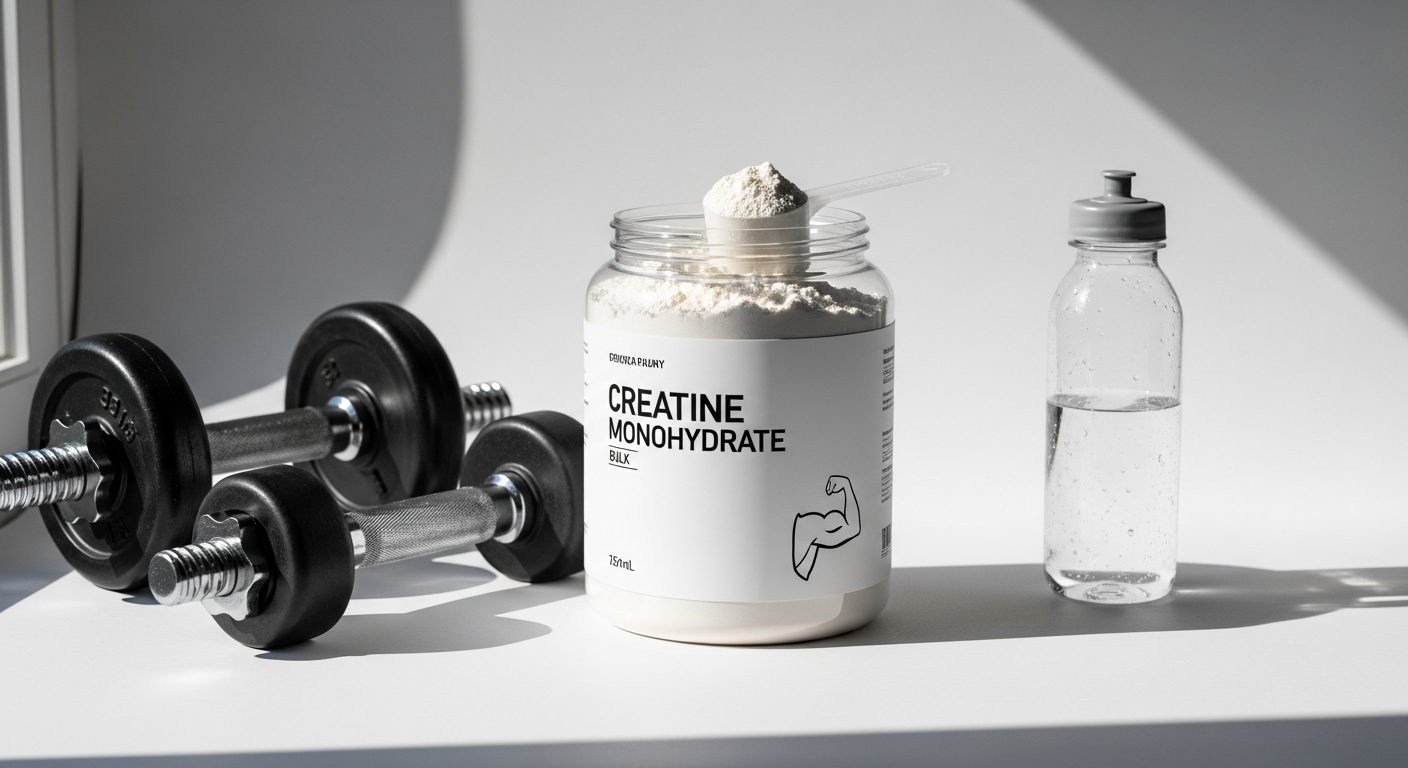
Over 70% of strength athletes and competitive weightlifters use creatine supplementation—yet most are overpaying for the same active ingredient. If you're spending £20+ monthly on branded creatine products loaded with marketing hype and unnecessary additives, you're leaving money on the table.
Bulk UK's Creatine Monohydrate Powder has quietly become a powerhouse in the UK supplement market, trusted by thousands of lifters, CrossFit athletes, and rugby players who demand results without the premium price tag. This unflavoured, micronised powder strips away the fluff and delivers pure, research-backed creatine monohydrate at a fraction of competitor costs.
Start your creatine supplementation journey with Bulk UK's proven formula today.
Understanding Micronised Creatine Monohydrate: Why Form Matters
What Micronisation Is and How It Improves Creatine Bioavailability
Micronisation refers to the mechanical breakdown of creatine monohydrate particles into significantly smaller sizes—typically around 200 microns compared to standard creatine at 500+ microns. This reduction in particle size dramatically improves the supplement's behaviour in liquid, enhancing dissolution and reducing the likelihood of visible residue at the bottom of your shaker bottle. The smaller particles present a greater surface area to surrounding liquid, allowing faster dispersion and more efficient absorption in the digestive system.
Why Creatine Monohydrate Remains the Gold-Standard Form Despite Newer Alternatives
Despite the emergence of numerous creatine derivatives over the past two decades—creatine ethyl ester, buffered creatine, liquid creatine—creatine monohydrate continues to dominate research and athlete preference. The reason is straightforward: it works. Decades of peer-reviewed studies demonstrate consistent, reproducible results in strength, power, and muscle mass gains. Newer forms often promise superior absorption or fewer side effects, but controlled trials reveal no meaningful advantage over the original compound. Bulk's commitment to micronised creatine monohydrate reflects this scientific consensus rather than chasing marketing trends.
How Micronised Particles Enhance Dissolution Compared to Standard Creatine Powder
Standard creatine powder frequently settles heavily in water, creating an unpleasant gritty texture that many users find off-putting. Micronised formulations significantly reduce this issue. The smaller particles distribute more evenly throughout liquid and dissolve more rapidly, particularly when aided by simple techniques like using warm water or mixing with protein shake bases. This practical improvement directly addresses one of the primary complaints voiced by creatine users, making consistent daily consumption far more tolerable.
The Science Behind Phosphocreatine Resynthesis During High-Intensity Exercise
Creatine's mechanism is elegantly simple. Your muscles store energy in the form of adenosine triphosphate (ATP). During explosive movements—heavy lifts, sprints, jumps—ATP depletes rapidly, particularly in anaerobic activities lasting 10-30 seconds. Supplemental creatine increases muscle phosphocreatine stores, accelerating ATP resynthesis during these critical seconds. This means more explosive power, more repetitions before fatigue sets in, and ultimately greater training stimulus for strength and muscle development. This isn't theoretical—it's measurable in real-world gym performance.
Why Bulk Chose Micronised Over Other Processing Methods
Bulk's selection of micronised creatine monohydrate reflects a commitment to delivering the most practical product to everyday athletes. Rather than pursuing novel processing techniques that complicate manufacturing and inflate costs, micronisation offers the optimal balance of efficacy, mixability, and affordability. The choice demonstrates Bulk's philosophy: prioritise substance over marketing, and pass cost savings directly to customers.
Absorption Rates and Muscle Uptake Timelines for Micronised Formulations
Creatine absorption occurs through both active and passive mechanisms in the digestive tract. Micronised formulations reach peak blood concentration approximately 60-90 minutes after consumption. Muscle tissue uptake is mediated by creatine transporters and occurs gradually over the first 4-6 weeks of supplementation, with loading protocols accelerating this timeline. This means expecting immediate strength improvements is unrealistic—creatine rewards consistency over weeks, not days.
Purity Testing & Quality Assurance: What 99%+ Actually Means
How Bulk Ensures Batch-to-Batch Consistency and Purity Standards
Bulk UK maintains rigorous quality control across production batches, with documented testing protocols ensuring consistency between different 500g containers purchased months apart. This batch-to-batch reliability matters because contamination or ingredient variance undermines both safety and efficacy. Purchasing creatine from manufacturers without transparent quality standards introduces unnecessary risk—paying for purity you cannot verify.
Third-Party Testing Protocols and What Independent Lab Results Reveal
Third-party laboratory testing provides objective verification of product composition independent of manufacturer claims. Bulk's creatine monohydrate regularly undergoes independent testing, with results often exceeding 99% purity. These lab reports confirm that what's printed on the label actually exists in the container at the stated concentration. This transparency is relatively rare in the supplement industry, where some manufacturers make purity claims without submitting to independent verification.
Contaminant Risks in Lower-Purity Creatine Products and Why They Matter
Lower-purity creatine products—those testing below 95% pure—contain undisclosed fillers and byproducts from the manufacturing process. These contaminants may include creatinine (creatine's degraded form), dicyandiamide, and other residual compounds. While individually present in small quantities, they accumulate across multiple daily doses. Contaminants can trigger digestive upset, reduce product efficacy, and introduce unknown substances into your body—a particularly concerning risk for drug-tested athletes.
The Difference Between Pharmaceutical-Grade and Standard Supplement-Grade Creatine
Pharmaceutical-grade creatine monohydrate adheres to standards originally established for medicines and medical ingredients—standards requiring greater purity, stricter manufacturing protocols, and more comprehensive testing. Standard supplement-grade creatine follows less rigorous standards. Bulk's 99%+ purity product approaches pharmaceutical standards while maintaining supplement-grade pricing, offering consumers the safety and efficacy benefits typically reserved for considerably more expensive options.
How to Verify Purity Claims When Comparing Brands
Simply reading "99% pure" on a label means nothing without supporting documentation. Request certificates of analysis (CoA) from manufacturers—these independent test reports provide specific purity percentages, contaminant screening results, and testing dates. Cross-reference the reported lot number on your product with the accompanying CoA. Legitimate manufacturers readily provide this documentation; those who cannot or will not are flagging themselves as untrustworthy.
Storage Conditions That Maintain Product Integrity and Prevent Degradation
Creatine monohydrate is remarkably stable but degrades more rapidly in humid environments or when exposed to temperature fluctuations. Store Bulk's product in a cool, dry location away from direct sunlight—a kitchen cupboard or pantry works perfectly. Avoid leaving the container open unnecessarily, as humidity absorption can introduce clumping. Properly stored, a 500g container maintains full potency for well over a year, ensuring consistent dosing throughout your supplementation period.
Dosing Protocols: From Loading Phases to Maintenance
Traditional Loading Phase Approach (20g Daily for 5-7 Days) and Its Benefits
The loading protocol involves consuming approximately 20g of creatine daily (typically divided into four 5g doses) for 5-7 consecutive days, followed by standard maintenance dosing. This approach saturates muscle tissues with creatine rapidly, allowing athletes to experience performance benefits within 7-10 days rather than waiting 4-6 weeks. For serious strength athletes competing or undergoing specific training blocks, the accelerated timeline justifies the slightly higher initial creatine intake. Loading is entirely optional but offers genuine practical advantages for time-sensitive goals.
Steady-State Dosing Strategy (3-5g Daily) for Consistent Results Without Loading
Foregoing the loading phase and consuming 3-5g creatine daily yields identical long-term results—just on a 4-6 week timeline rather than 7-10 days. This approach suits athletes unconcerned with rapid saturation, those with sensitive digestive systems who tolerate smaller daily doses better, or anyone preferring simplicity over optimisation. The steady-state method produces the same strength and power improvements; it simply requires patience.
Timing Considerations: Pre-Workout Versus Post-Workout Versus Anytime Effectiveness
Creatine's effectiveness is independent of timing. Unlike pre-workout nutrients that require proximity to exercise, creatine works through cumulative muscle tissue concentration over weeks. Consuming your daily dose with any meal containing carbohydrates and protein enhances absorption slightly through insulin-mediated transport, but the benefit is marginal compared to simply maintaining consistency. Choose timing that maximises adherence—morning with breakfast, post-workout with your shake, or evening with dinner. Consistency matters infinitely more than precision timing.
Individual Factors Affecting Optimal Dosage (Body Weight, Muscle Mass, Training Intensity)
Heavier athletes with greater muscle mass may benefit from slightly higher maintenance doses—5-6g daily rather than 3-4g—since absolute muscle tissue volume requiring saturation is greater. Conversely, lighter athletes under 70kg see excellent results from 3-4g daily. Training intensity influences required dosing as well; high-intensity strength and power athletes derive more noticeable benefits than aerobic endurance-focused competitors, potentially justifying the upper end of dosing ranges. Starting at 4g daily and adjusting based on individual response is a sensible middle ground.
Hydration Requirements When Supplementing with Creatine
Creatine increases intramuscular water retention, meaning supplemented athletes require elevated daily fluid intake. This isn't dangerous—it's simply a biological reality requiring acknowledgment. Increase water consumption by 500ml daily during creatine supplementation, ensuring you're genuinely hydrating rather than merely increasing total fluid intake with caffeinated beverages. Proper hydration supports creatine function, maintains performance, and minimises side effects like cramping that occasionally accompany inadequate fluid intake.
Timeline Expectations: When to Expect Noticeable Strength and Power Improvements
Loading protocols: expect measurable strength improvements by day 7-10. Steady-state dosing: expect initial improvements by week 3, with maximum benefits typically apparent by week 6-8. The improvements manifest as increased repetitions achievable at given weights, improved power output in explosive movements, and general reduction in fatigue accumulation during training. Tracking specific metrics—your 5-rep max on barbell lifts, vertical jump height, or rep maxes on exercises—provides objective measurement rather than relying on subjective feeling.
Mixability & Taste: Real-World Consumption Experience
Why Unflavoured Creatine Offers Superior Versatility for Stack Combinations
Flavoured creatine products force you into flavour pairings that may clash with other supplements or beverages. Vanilla creatine mixed with chocolate protein, for instance, creates undesirable taste combinations. Bulk's unflavoured formulation eliminates this constraint entirely. Mix with any beverage—orange juice, protein shake, plain water—without encountering unexpected flavour interactions. This versatility becomes particularly valuable when stacking multiple supplements, where individual flavours quickly compound into an unpleasant mixed drink.
Addressing the Grittiness Issue: Solutions Using Lukewarm Water Versus Cold
The most consistent complaint about creatine monohydrate—including Bulk's micronised version—involves slight grittiness when mixed in cold water. This occurs because cold water reduces dissolving capacity; particles suspend rather than fully dissolving. Simple solution: use lukewarm water (around 40-50°C) instead of cold. Lukewarm water dramatically improves dissolution, leaving virtually no residue. Allow the mixture to sit for 30 seconds after stirring, ensuring particles have time to fully dissolve. This single technique eliminates grittiness complaints in the vast majority of cases.
Mixing with Protein Shakes, Juice, and Other Beverages to Mask Texture
Creatine monohydrate mixes effortlessly into protein shakes, where the texture of the shake base effectively masks any subtle grittiness. Orange juice or apple juice similarly disguises texture while potentially improving palatability. When mixing with these beverages, use a shaker bottle and shake vigorously for 20-30 seconds, then allow it to sit for a minute before consuming. The flavoured base absorbs any minimal grittiness entirely, making the consumption experience virtually indistinguishable from a standard shake.
Solubility Improvements Through Proper Stirring and Water Temperature
Mechanical action—vigorous stirring or shaking—physically breaks apart particle clumps, accelerating dissolution. Combined with lukewarm water, proper stirring essentially eliminates solubility concerns entirely. Use a shaker bottle rather than a static cup; the mechanical action is superior. If using a cup and spoon, stir continuously for 30-60 seconds until no visible particles remain suspended. These simple techniques demonstrate that mixability complaints often reflect improper preparation rather than inherent product deficiencies.
Comparing Texture to Flavoured Creatine Alternatives
Flavoured creatine products sometimes market themselves as having superior mixability, but this claim typically reflects flavouring agents improving taste perception rather than genuinely superior dissolution. Micronised unflavoured creatine, prepared correctly, dissolves equally well. The trade-off is straightforward: flavoured products offer palatability at the cost of versatility and typically at 2-3x the price. Bulk's unflavoured approach demands minimal technique adjustment but eliminates flavour constraints and preserves budget.
Storage Tips to Prevent Clumping in Humid Environments
Humidity is creatine's primary enemy. Store Bulk's product in a tightly sealed container in a cool, dry location. Bathroom cabinets—common storage locations—are terrible choices due to shower humidity. Kitchen pantries, bedroom closets, or dry storage areas are superior. If you live in a consistently humid climate, consider adding a moisture-absorbing packet (desiccant) to your creatine container. Properly stored, the product remains free-flowing and dissolution-ready for many months past the use-by date.
Performance Benefits for Strength-Focused Athletes
Increased ATP Availability During Explosive Movements (Sprints, Jumps, Heavy Lifts)
Explosive athletic performance depends on rapid ATP regeneration during maximum-effort efforts lasting 10-30 seconds. Creatine monohydrate increases muscle phosphocreatine stores, facilitating faster ATP resynthesis across this precise window. For a powerlifter attempting a heavy single, a sprinter launching from the blocks, or a rugby player executing an explosive tackle, increased ATP availability directly translates to greater force production. This isn't marginal—it's a measurable, reproducible improvement across peer-reviewed research.
Strength Gains Data: Typical Improvements in 1RM and Rep Maxes Over 8-12 Weeks
Meta-analyses of creatine supplementation research demonstrate average strength improvements of 5-15% across 8-12 week training blocks in previously untrained or moderately trained populations. Elite strength athletes see more modest improvements (2-5%) since they're operating closer to genetic ceilings. Practically speaking, an athlete squatting 140kg might reasonably expect 147-150kg within 12 weeks of creatine supplementation combined with intelligent training. More impressive are rep maxes—the same athlete might add 3-5 additional repetitions at previous maximum weights.
Power Output Enhancements for Sports Requiring Short Bursts of Intensity
Power—force produced per unit time—directly determines performance in sports requiring explosive movements. Creatine supplementation increases the rate of force development in movements lasting 1-5 seconds, providing measurable advantages in jumping, sprinting, and throwing sports. Vertical jump improvements of 2-5cm within 6-8 weeks represent typical outcomes, translating to meaningful competitive advantage in sports like basketball or volleyball. This power enhancement distinguishes creatine from other performance supplements and explains its near-universal adoption in strength and power sports.
Muscle Hypertrophy Support Through Improved Training Capacity and Recovery
Creatine's hypertrophy benefits are indirect but substantial. By increasing ATP availability, supplemented athletes can perform additional repetitions, additional sets, or recover faster between sets, dramatically increasing total training volume. Greater training volume is the primary driver of muscle hypertrophy. Creatine doesn't directly build muscle, but it enables training intensity and volume increases that trigger hypertrophy. Additionally, creatine draws water into muscle cells, supporting anabolic signalling and protein synthesis processes.
Benefits for Anaerobic Athletes Versus Endurance-Focused Competitors
Creatine's performance benefits concentrate almost exclusively in anaerobic activities—strength, power, and short-duration high-intensity efforts. Endurance athletes relying on aerobic metabolism derive minimal benefit; long-distance runners and cyclists show negligible improvements. This specificity means creatine belongs in strength sports, CrossFit, rugby, American football, and sprint disciplines. Endurance athletes would allocate supplementation budgets more efficiently elsewhere, though creatine poses no harm and costs so little that even endurance athletes rarely avoid it entirely.
Real Athlete Testimonials and Case Studies from Bulk's Customer Base
Bulk's customer reviews frequently highlight strength improvements and increased training capacity. One recurring theme: lifters report improved rep maxes and greater training toleration after 4-6 weeks of supplementation. Testimonials from rugby players emphasize explosive tackle power and sprint performance improvements. CrossFit athletes note increased workout completion speed and greater intensity tolerance during metabolic conditioning. While individual results vary, the consistency of positive reports across diverse athlete populations validates creatine's effectiveness across strength, power, and team sport applications.
Value Proposition: Cost Per Serving Analysis
Price Breakdown: £12.99 for 500g and Cost Per Daily Dose
At £12.99 for 500g, assuming a 4g daily maintenance dose, a single container provides 125 days of supplementation. This calculates to approximately £0.10 per daily dose. Over a 12-month period, maintaining consistent creatine supplementation costs roughly £36.50—representing extraordinary value for a performance-enhancing supplement with decades of research supporting efficacy and safety.
Comparison with Premium Brands (Often 3-4x More Expensive for Identical Active Ingredient)
Premium supplement brands frequently charge £30-45 for 500g of creatine monohydrate—identical in chemical composition to Bulk's product. The price multiplier reflects marketing budgets, celebrity endorsements, and branding rather than any meaningful product differentiation. From a biochemical standpoint, creatine monohydrate is creatine monohydrate regardless of brand. Bulk's pricing reflects this reality, stripping away marketing expense and passing savings directly to consumers.
Long-Term Supplementation Costs Over 12 Months Versus Competitors
Bulk's annual creatine cost: approximately £36-50 (depending on sales frequency). Premium brands: £120-180 annually. Budget brands offering no third-party testing or purity verification: £20-30 but with unknown quality. The value calculation becomes obvious: Bulk delivers pharmaceutical-grade purity at budget-brand pricing, creating unmatched value. Over a 10-year supplementation period, choosing Bulk versus premium alternatives saves £800-1200 while maintaining identical or superior product quality.
Bulk's Frequent Sales and Discount Opportunities for Regular Customers
Bulk UK regularly offers loyalty discounts and promotional pricing on creatine monohydrate. Subscribe-and-save programs provide additional discounts (typically 10-15%) for regular customers establishing automatic reorders. These promotions further reduce already-competitive pricing, occasionally bringing cost per serving below £0.08. Setting up automatic deliveries transforms creatine supplementation into one of the cheapest recurring supplements available.
Value Retention: How Long a Single Container Lasts at Recommended Dosages
A 500g container lasts approximately 125 days at 4g daily (standard maintenance dose) or roughly 80-85 days at higher 6g daily doses. Athletes loading then maintaining typically consume one container every 3-4 months. This extended shelf life means bulk purchasing provides genuine economy without risk of product degradation, unlike supplements with shorter useful lifespans.
ROI Calculation: Cost Per Gram of Strength Gain Versus Alternative Supplements
Quantifying return on investment requires simple mathematics. If £12.99 produces 5-15% strength improvements over 12 weeks—potentially enabling a 140kg squatter to reach 155kg—the cost per kilogram of strength gain is negligible, roughly £0.08 per kg improvement. Competing performance supplements typically cost £40-60 per container with less substantial evidence base. Creatine monohydrate offers the lowest cost-per-benefit ratio of any evidence-backed performance supplement, justifying its status as the most popular supplementation choice across strength sports.
Safety Profile & Tolerance: What the Research Shows
Comprehensive Safety Data from Decades of Creatine Monohydrate Studies
Creatine monohydrate boasts perhaps the most extensive safety database of any supplement. Hundreds of peer-reviewed studies spanning over 30 years have investigated creatine's safety across diverse populations. The overwhelming consensus: creatine monohydrate is exceptionally safe at typical supplementation doses. Serious adverse events are virtually non-existent in the literature. This safety profile extends across age ranges, from adolescents to elderly populations, across sexes, and across varying baseline health statuses.
Kidney and Liver Function Concerns: Myth Versus Evidence-Based Findings
A persistent myth claims creatine damages kidneys or liver. This claim originates from flawed interpretation of early research and continues circulating despite contrary evidence. Creatine's metabolite, creatinine, appears in blood tests; some confused this with kidney damage. Decades of longitudinal studies demonstrate that creatine supplementation does not impair kidney or liver function in healthy individuals. Athletes with pre-existing kidney disease should consult healthcare providers before supplementing, but general population safety is established beyond reasonable question.
Hydration Status and Electrolyte Balance When Using Creatine
Creatine pulls water into muscle cells, necessitating increased fluid intake. Athletes failing to increase water consumption occasionally experience muscle cramps—not from creatine toxicity but from relative dehydration. This is entirely preventable through conscious hydration increases. Electrolyte status matters less than total fluid intake, though maintaining normal sodium and potassium consumption supports hydration homeostasis. Athletes already monitoring hydration during training face zero additional concerns.
Side Effects Profile: Water Retention, Digestive Comfort, and Individual Variations
The most common side effect is intramuscular water retention, detectable as 1-2kg weight gain within the first week. This occurs entirely within muscle tissue and contributes to performance improvements. Subcutaneous (under skin) bloating does not occur. Digestive upset occasionally occurs, particularly during loading phases, and is entirely dose-dependent; reducing daily intake eliminates the issue. Individual response varies; some athletes tolerate 20g daily without any gastrointestinal discomfort, while others feel better maintaining 3-5g daily. Starting conservatively and increasing gradually reveals individual tolerance thresholds.
Contraindications and Populations That Should Consult Healthcare Providers
Individuals with existing kidney disease, liver disease, or significant metabolic dysfunction should consult healthcare providers before beginning creatine supplementation. Athletes taking medications affecting kidney function similarly warrant medical consultation. Otherwise healthy individuals—including adolescents, females, and elderly populations—face no special contraindications. The risk of creatine supplementation is extraordinarily low for general populations, making it safer than many common over-the-counter supplements.
Long-Term Supplementation Safety for Athletes Using Creatine for Years
Long-term creatine supplementation safety is well-established. Studies tracking athletes supplementing continuously for 2+ years show no adverse effects on kidney function, liver function, blood chemistry, or any measured health markers. Some elite athletes have supplemented with creatine for 10+ consecutive years without health complications. This extended safety profile makes creatine one of the few supplements safe for indefinite long-term use, distinguishing it from numerous other performance supplements requiring cycling or periodic breaks.
Stacking Strategies: Combining Creatine with Other Supplements
Synergistic Combinations with Protein Powder, BCAAs, and Beta-Alanine
Creatine combines seamlessly with whey protein powder, creating a simple post-workout stack delivering muscle-building amino acids, carbohydrates, and creatine from a single shake. Beta-alanine, another evidence-backed supplement for strength and power, complements creatine's mechanisms—beta-alanine buffers lactic acid during moderate-intensity efforts while creatine accelerates ATP resynthesis during explosive movements. BCAAs provide minimal additional benefit in athletes consuming adequate total protein, but logistically stack conveniently with creatine. These combinations offer synergistic benefit without redundancy.
Timing Protocols for Multi-Supplement Routines
Creatine timing is flexible since it works through cumulative tissue saturation rather than acute effects. In contrast, post-workout protein and carbohydrates benefit from immediate post-exercise consumption. Practical protocol: consume your post-workout shake containing creatine, protein, and carbohydrates within 30-60 minutes of training. This single preparation handles multiple supplementation goals simultaneously, maximising convenience and adherence.
Avoiding Redundant Ingredients When Stacking Unflavoured Creatine
Bulk's unflavoured creatine simplifies stacking by eliminating ingredient duplication. Some pre-formulated stacks contain creatine alongside other ingredients, creating unnecessary complexity and expense. Purchasing unflavoured creatine and combining it with individual components (protein powder, beta-alanine, carbohydrate sources) allows complete customization while avoiding redundancy. This approach typically costs 20-30% less than comparable pre-made stacks while offering superior flexibility.
Budget-Friendly Stack Recommendations for Strength Athletes
Minimal effective stack for strength athletes: whey protein powder, creatine monohydrate, and basic carbohydrates (oats, rice, potatoes). Total monthly cost roughly £30-40 while delivering measurable performance improvements. More elaborate stacking—adding beta-alanine, citrulline malate, or nitrate sources—provides marginal additional benefits with substantially increased cost. For budget-conscious athletes, simplicity and consistency trump complexity.
Creatine's Compatibility with Pre-Workout Stimulants and Caffeine
Creatine shows no adverse interactions with caffeine or standard pre-workout stimulants. In fact, caffeine-containing pre-workouts can be consumed alongside creatine supplementation without any safety concerns or efficacy reduction. Athletes using pre-workout supplements daily while maintaining creatine supplementation show no elevated side effect profiles compared to creatine alone. The combination is entirely safe and logistically convenient.
Practical Mixing Ratios and Preparation Methods for Supplement Stacks
Simple post-workout shake: 25g whey protein powder, 5g creatine monohydrate, 50g carbohydrates (from oats or juice), 400ml water. Blend or shake vigorously until combined. This single preparation delivers post-workout carbohydrates and protein alongside daily creatine dose. Using unflavoured creatine allows flavouring flexibility through protein powder selection—vanilla protein with carbohydrates creates a pleasant tasting shake that incorporates creatine seamlessly. Mixing ratios remain flexible; adjust protein and carbohydrate quantities based on individual goals and body weight.
Who Benefits Most: Identifying Your Athlete Profile
Strength Sports Athletes (Powerlifting, Weightlifting, Strongman)
Strength sports athletes represent creatine's primary beneficiaries. Powerlifters and weightlifters competing in short-duration maximum-effort lifts see direct ATP availability improvements that translate to measurable strength increases. Strongman competitors performing explosive movement combinations benefit similarly. These athletes represent creatine's most researched population, with consistent evidence supporting 5-10% performance improvements. Nearly universal adoption in competitive strength sports reflects this efficacy.
Team Sport Competitors (Rugby, American Football, Hockey)
Rugby and American football athletes benefit substantially from creatine supplementation. These sports demand repeated explosive efforts separated by brief recovery periods—precisely the metabolic scenario where phosphocreatine resynthesis matters. Tackling power, sprint acceleration, and jump performance all improve measurably. Hockey players similarly benefit from increased explosive power and reduced fatigue accumulation during multi-shift competitions. Creatine represents one of the few supplements with universal acceptance in professional rugby and American football.
CrossFit Athletes and Functional Fitness Enthusiasts
CrossFit training combines strength, power, and metabolic conditioning—three domains where creatine provides benefits across different mechanisms. The explosive lifting components improve through increased ATP availability. The extended high-intensity conditioning improves through enhanced recovery between efforts. CrossFit athletes frequently report improved workout completion speed and intensity tolerance. Creatine aligns perfectly with CrossFit's diverse demands, explaining its popularity across competitive and recreational CrossFit communities.
Sprinters and Explosive Sport Athletes
Sprinters competing in 100-400m distances rely almost entirely on anaerobic energy systems where creatine provides maximum benefit. Track studies demonstrate measurable sprint time improvements in previously untrained athletes. Football (soccer) players performing repeated sprint efforts benefit similarly. Tennis players executing explosive court movements show improved power and reduced fatigue accumulation. Any sport emphasizing short-duration maximum-effort movements benefits from creatine supplementation.
Natural Bodybuilders and Physique Competitors
Bodybuilders supplementing with creatine benefit through improved training capacity and volume tolerance. The ability to perform additional repetitions or sets at given weights drives hypertrophy. Physique competitors using creatine show measurable increases in training tolerance and muscle fullness during competition. Natural bodybuilders without pharmaceutical enhancement particularly benefit since creatine represents one of the few evidence-backed, legal performance tools available to them.
Recreational Lifters Seeking Cost-Effective Performance Enhancement
Recreational strength athletes face the same challenge as elite athletes: limited supplementation budgets. Creatine's exceptional value proposition—£36 annually for measurable performance improvements—makes it the obvious first supplement choice. Recreational lifters add 5-10kg to major lifts over 12 weeks through consistent creatine supplementation, representing meaningful progress that justifies the minimal investment. For casual gym-goers, creatine delivers better return-on-investment than any competing supplement.
Bulk's Reputation & Customer Experience Beyond the Product
Customer Review Analysis and Satisfaction Ratings Across Platforms
Bulk UK maintains consistently high customer satisfaction ratings across independent review platforms. On Trustpilot and similar services, Bulk's creatine product typically earns 4.5-4.8 star ratings from hundreds of verified purchasers. Positive reviews emphasize product quality, value, and reliable delivery. Negative reviews—typically under 5% of total—focus on minor shipment timing issues rather than product quality concerns. The aggregate feedback demonstrates genuine customer satisfaction beyond typical supplement marketing claims.
Delivery Speed and Reliability Within the UK
Bulk UK's logistics infrastructure supports rapid UK delivery, with most orders arriving within 2-3 business days. This reliability matters for supplement purchasing—delayed delivery disrupts supplementation consistency. Long-term customer reviews frequently praise delivery speed and reliability as differentiating factors. For UK-based athletes, Bulk's logistical efficiency removes friction from consistent supplementation that sometimes plagues purchases from distant suppliers.
Customer Service Responsiveness and Return Policies
Bulk UK maintains responsive customer service with straightforward communication and reasonable return policies. Customers reporting damaged products or delayed shipments receive timely resolution. This support infrastructure matters less for purchasing creatine, where product defects are rare, but demonstrates Bulk's commitment to customer satisfaction extending beyond the product itself. Athletes who've experienced customer service issues with competing brands frequently cite Bulk's responsiveness as a differentiating factor in brand loyalty.
Brand Transparency Regarding Sourcing and Manufacturing
Bulk provides transparent information regarding creatine sourcing and manufacturing processes. Third-party testing results are available to customers requesting documentation. This transparency contrasts markedly with brands claiming purity without supporting documentation or obscuring manufacturing details. Bulk's openness invites scrutiny, suggesting confidence in product quality—a characteristic differentiating legitimate manufacturers from those relying on marketing rather than substance.
Community Feedback from Long-Term Repeat Customers
Long-term customers repeatedly purchasing from Bulk—often for years—provide authentic feedback regarding product consistency and value. These repeat customers frequently switch to competing brands experimentally, then return to Bulk after confirming comparable or superior quality at substantially lower cost. This pattern suggests genuine brand loyalty earned through reliable delivery and consistent product excellence rather than marketing strength. The willingness of cost-conscious athletes to return despite competing options speaks volumes about Bulk's actual product and service quality.
Comparison of Bulk's Reputation Against Premium Supplement Brands
Bulk's reputation prioritises substance and value over premium positioning. While premium brands emphasize marketing, celebrity endorsements, and lifestyle branding, Bulk focuses on product quality and affordability. Customers choosing between Bulk and premium alternatives report superior value satisfaction with Bulk, though they acknowledge premium brands' marketing appeal. From a pure performance and safety perspective, customers overwhelmingly conclude that Bulk's product delivers identical efficacy to premium alternatives at a fraction of the cost.
Practical Implementation: Your First 12 Weeks with Bulk Creatine
Week-by-Week Expectations During Initial Supplementation Phase
Weeks 1-2 (Loading Phase): If implementing a loading protocol (20g daily), expect 1-2kg weight gain from intramuscular water retention. You may notice slight digestive sensitivity; this typically resolves after 3-4 days. Muscle fullness increases noticeably. Strength improvements remain minimal during this phase.
Weeks 3-4: Measurable strength improvements begin appearing. Your working weights feel slightly lighter; rep maxes improve incrementally. Water retention stabilizes; the weight gain plateau represents creatine saturation within muscle tissue. Training tolerance increases—accumulating fatigue during sets reduces noticeably.
Weeks 5-8: Strength improvements accelerate
Leave a Reply