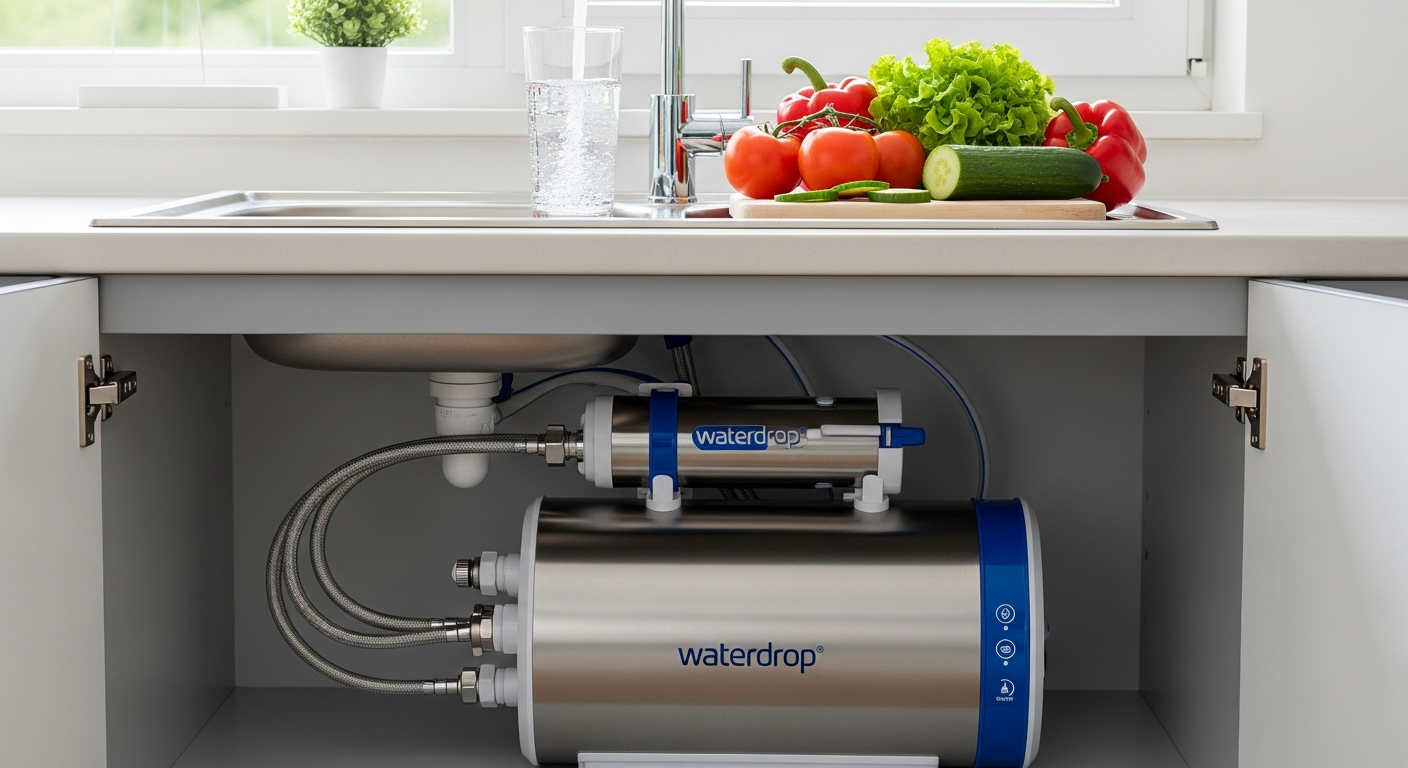
Water quality affects everything in your home—from the taste of your morning coffee to the health implications of what your family drinks daily. Yet most homeowners tolerate subpar water or settle for inconvenient filtration solutions simply because they don't realize better options exist. Your under-sink cabinet is cramped, your family's water tastes off, and you're tired of waiting for filtered water to dispense. These frustrations drive homeowners to seek a real solution, and the Waterdrop G3P800 Tankless RO System delivers on all three fronts simultaneously.
Reverse osmosis systems have dominated the premium water filtration market for decades, but traditional models come with a bulky tank that consumes precious storage space and introduces contamination risks. The G3P800 reimagines this technology with a tankless design that combines industrial-grade purification with the convenience modern kitchens demand. This isn't just another RO system—it's a space-conscious, intelligent alternative that's earned widespread recognition from both consumers and design experts.
Explore the Waterdrop G3P800 and experience the difference premium water filtration makes.
Why Tankless Design Changes Everything for Modern Kitchens
The tankless design represents a fundamental shift in how reverse osmosis systems work. Traditional RO systems rely on a storage tank—typically a 2-5 gallon vessel tucked beneath the sink—to hold purified water until you need it. This design approach creates two significant problems: wasted cabinet space and the potential for secondary contamination as water sits stagnant in the tank.
The G3P800 eliminates both issues by producing purified water on demand. No tank means no waiting for the tank to refill, no stagnant water sitting idle, and no risk of bacteria or minerals settling inside a closed container. The system maintains consistent water pressure without relying on tank gravity feed, ensuring you get the same quality water whether you're filling your first cup of the day or your tenth.
For apartment dwellers and homeowners with tight kitchen layouts, this difference is transformative. The G3P800 saves up to 70% of the under-sink cabinet space compared to traditional RO systems, instantly freeing room for cleaning supplies, storage containers, or simply giving you back the breathing room you've been missing. The compact footprint reduces overall system weight and simplifies installation complexity as well.
Beyond function, the system's aesthetic appeal matters too. The G3P800 won the Red Dot Design Award for its sleek, modern appearance—a recognition that acknowledges it's designed for kitchens where looks count as much as performance. This isn't industrial plumbing; it's an elegant addition to your kitchen that actually looks intentional.
The 8-Stage Filtration Process and Contaminant Removal
Understanding what happens inside the G3P800 reveals why it outperforms standard RO systems. The 8-stage filtration process works sequentially, with each stage targeting specific contaminants and preparing the water for the next level of purification.
The Multi-Stage Breakdown
The first stages handle sediment and larger particles—a crucial step that protects the more delicate components downstream. Carbon filtration stages follow, removing chlorine, chloramine, volatile organic compounds (VOCs), and odor-causing contaminants. This is where your water starts tasting noticeably better.
The centerpiece of the G3P800 is its 0.0001μm reverse osmosis membrane—incredibly small and phenomenally effective. To put this in perspective, a human hair is roughly 75 micrometers thick; the RO membrane's pore size is literally 750,000 times smaller. At this scale, the membrane catches virtually everything except water molecules themselves.
What Actually Gets Removed
The G3P800 eliminates Total Dissolved Solids (TDS), PFAS (forever chemicals increasingly found in municipal water), fluoride, chlorine, lead, arsenic, and other heavy metals. Real-world testing confirms TDS reduction rates that consistently meet or exceed industry standards. Users measuring before and after report dramatic improvements—often seeing TDS drop from 200-400+ parts per million down to single digits.
The system holds four NSF/ANSI certifications (42, 53, 58, and 372). NSF 42 confirms effectiveness in aesthetic contaminant reduction. NSF 53 validates performance for health-related contaminants including lead. NSF 58 certifies the RO membrane itself. NSF 372 guarantees lead-free construction throughout. These aren't marketing claims; they're third-party verifications that the system performs exactly as advertised.
The Mineral Trade-off
One consideration: reverse osmosis removes beneficial minerals along with contaminants. Some users prefer this stripped-down approach; others want those minerals back. The G3P800 supports optional remineralization filters for those who prefer mineralized water. This flexibility means you customize the system to your preferences rather than accepting a one-size-fits-all solution.
The RO filter lasts up to 24 months under normal usage conditions—an extended lifespan that reduces replacement frequency and long-term maintenance costs. When the time comes, filter changes are tool-free and take approximately 3 seconds, making maintenance genuinely simple.
Speed and Efficiency: The 800 GPD Advantage
The 800 Gallons Per Day capacity fundamentally changes your relationship with filtered water. Standard RO systems typically produce 50-75 GPD, meaning they slowly accumulate water over time and force you to plan around refill cycles. The G3P800 fills a cup in 6 seconds—immediate access to purified water without waiting or planning.
For reference, 800 GPD translates to enough water for a household of 4-5 people with normal consumption patterns, even accounting for peak-demand periods. You're not just getting purified water; you're getting it at the speed and volume your kitchen actually needs.
The 3:1 Pure-to-Drain Ratio
While the high capacity impresses, the 3:1 pure-to-drain ratio is what makes this system sustainable long-term. For every three cups of purified water produced, one cup goes down the drain as wastewater. Compare this to traditional RO systems that often operate at 1:1 or worse ratios, and the efficiency becomes obvious.
Real-world testing suggests automatic flushing cycles sometimes push the actual ratio slightly higher than advertised, but the G3P800 still maintains exceptional efficiency compared to alternatives. Over time, this efficiency translates to lower water bills and reduced environmental impact—meaningful benefits that compound year after year.
See how the G3P800's efficient 3:1 ratio saves money and water compared to traditional systems.
Smart Monitoring and User-Friendly Operation
The integrated smart display faucet transforms how you interact with your water system. Rather than wondering about water quality or guessing when filters need replacement, you get real-time information displayed right at the tap.
The TDS level monitoring shows you exactly what's in your water at any moment. Users quickly learn what their baseline number means and can spot changes instantly. Filter life indicators count down the remaining months on your current RO filter, eliminating surprise maintenance needs. When replacement time approaches, the system alerts you in advance, ensuring you never run out of purified water.
The tool-free filter replacement process—that 3-second swap time—removes friction from maintenance. No wrenches, no complicated steps, no calling a technician. You simply pop out the old filter and click in the new one. This simplicity matters because it means maintenance actually happens on schedule rather than being deferred indefinitely.
Some models feature mobile app connectivity and smart home integration, allowing you to monitor water quality remotely and receive notifications on your phone. For non-technical homeowners, this accessibility eliminates the learning curve that often comes with premium appliances. The system speaks your language rather than forcing you to learn its technical dialect.
Troubleshooting common alerts becomes straightforward when the display identifies specific issues—whether it's a filter that needs replacement, low water pressure, or other concerns. Seasonal care requirements are minimal, mostly involving basic checks that the documentation walks you through clearly.
Installation Considerations and Space Planning
Before purchasing the G3P800, assess whether your kitchen setup accommodates the system's requirements. A pre-installation evaluation examines water line access, available under-sink space, and electrical requirements for the smart faucet display.
Space and Technical Requirements
Dimensional specifications vary slightly by configuration, but the tankless design typically requires far less under-sink real estate than traditional RO systems. Measure your available cabinet space and compare it against the system specifications to confirm fit. Water line connection points integrate with your existing shut-off valve—a straightforward process in most installations, though older plumbing may require modifications.
The smart faucet display requires access to an electrical outlet, ideally within a few feet of the sink. Kitchens with outlets nearby make this simple; others might require an electrician to install a dedicated outlet. This is worth factoring into your installation planning.
DIY vs. Professional Installation
Many homeowners successfully install the G3P800 themselves if they're comfortable with basic plumbing and follow instructions carefully. The system comes with clear documentation and support materials. For those less confident with tools or in situations where plumbing modifications are needed, professional installation costs typically range from $150-$300 and provides peace of mind that the system is set up correctly.
Common installation challenges usually involve tight cabinet spaces requiring creative pipe routing or older shut-off valves needing replacement. These situations are manageable but require problem-solving; professional installers handle them routinely.
Warranty coverage from Waterdrop includes installation support—you can contact them with questions during setup, and they provide guidance to help you troubleshoot issues. This support network transforms installation from a potentially stressful process into a guided experience.
The Investment Breakdown: Cost vs. Long-Term Value
The Waterdrop G3P800 typically retails between $700 and $1,000, though promotional sales frequently bring prices down to $750-$850. This upfront investment represents the most significant barrier to purchase for many homeowners.
Context matters here. A premium traditional RO system with a storage tank costs roughly $600-$900. You're paying a modest premium—typically $100-$150 more—for the tankless design, superior filtration, and smart monitoring features. That's a reasonable trade-off for what you're gaining.
Long-Term Cost Considerations
Filter replacement costs affect total ownership expense. The RO filter replacement runs roughly $50-$70 every 24 months. Pre-filters (which support the main RO membrane and extend its life) cost $20-$40 each and may need replacement every 6-12 months depending on your water quality. Annual maintenance expenses typically total $80-$150—far less than many homeowners spend on bottled water or other home appliances.
Water savings calculations reveal additional value. The 3:1 pure-to-drain ratio means you're getting three gallons of purified water for roughly one gallon of wastewater. At average water rates of $2-$3 per 1,000 gallons in most US markets, the G3P800's efficiency saves $3-$5 monthly compared to less efficient systems. Over five years, that's $180-$300 in direct savings.
Cost per gallon of purified water produced works out to roughly $0.10-$0.20 per gallon when you account for filter costs and water usage—significantly less than bottled water at $1-$3 per gallon and comparable to pitcher filters at $0.15-$0.25 per gallon, but with dramatically superior quality and convenience.
ROI and System Lifespan
The return on investment timeline depends on your baseline. If you're currently buying bottled water, the G3P800 pays for itself within 12-18 months. If you're upgrading from a pitcher filter, payback takes longer but includes the immeasurable benefit of having purified water instantly available at any time.
The system itself lasts 8-10 years or more with proper maintenance. Waterdrop's reputation suggests strong durability and component availability, meaning you can maintain the system long-term without worrying about discontinued parts or manufacturer abandonment.
Your Path to Superior Water Quality Starts Here
The Waterdrop G3P800 Tankless RO System represents a significant leap forward in home water filtration technology. It combines exceptional purification power—removing everything from PFAS to heavy metals through its 8-stage process—with the practical benefits of space savings and lightning-fast water delivery. The 800 GPD capacity means you're never waiting for clean water, while the smart display faucet keeps you informed about your water quality in real time.
Yes, the initial investment sits between $700 and $1,000. Yes, installation requires some planning and potentially professional help. But when you factor in the 24-month filter lifespan, the efficient 3:1 pure-to-drain ratio, and the sheer convenience of having premium purified water on demand, the value proposition becomes compelling.
Owners consistently report noticeably better-tasting water and genuine appreciation for reclaiming their under-sink cabinet space. The combination of performance and design doesn't just deliver filtered water—it transforms your daily kitchen experience.
If you've been frustrated by bulky RO tanks, uncertain water quality, or the slow trickle of traditional filtration systems, this warrants serious consideration. The G3P800 has earned its bestseller status through genuine performance and thoughtful design. Start by assessing your current water quality concerns, measuring your available under-sink space, and reviewing the promotional pricing options.
Leave a Reply