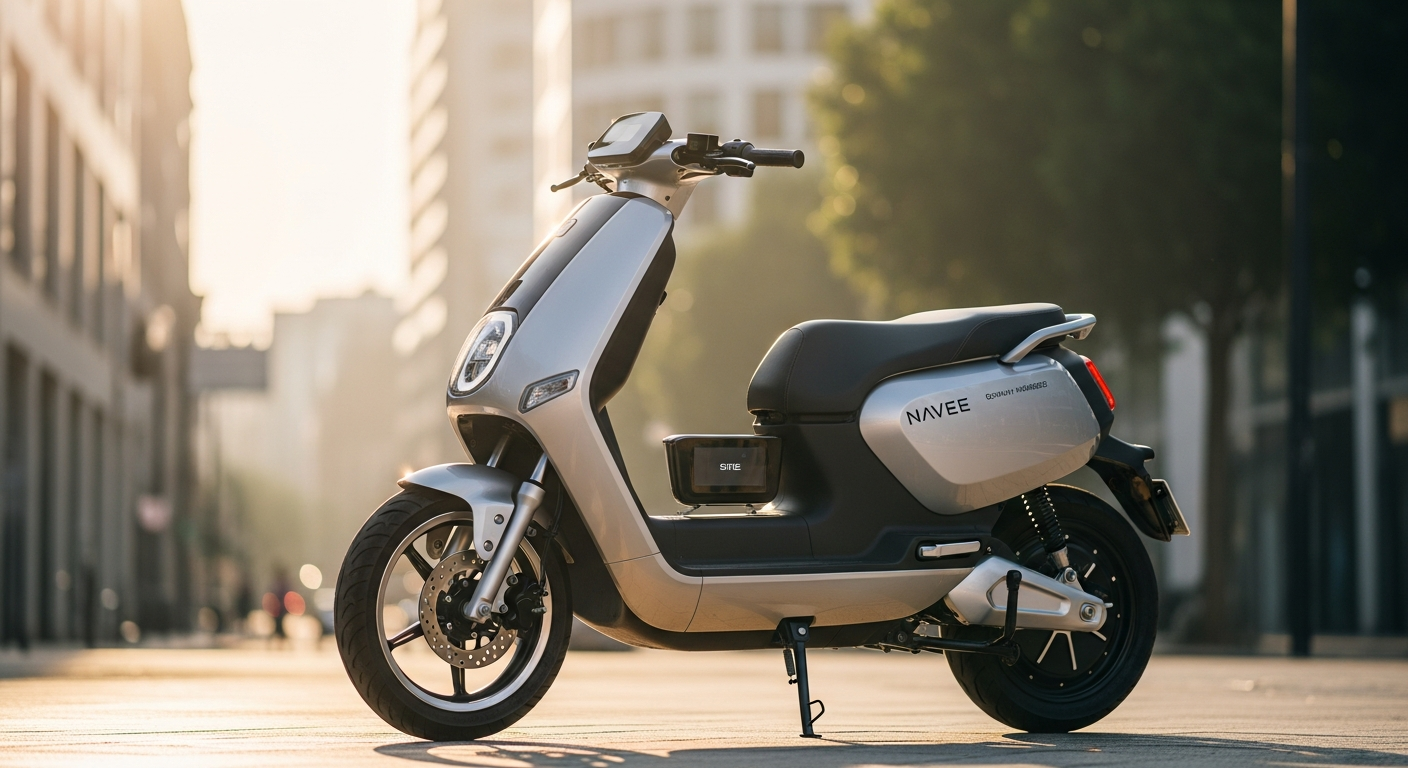
Research shows that over 65% of urban commuters prioritize comfort above speed when selecting an e-scooter, yet most manufacturers force riders to choose between smooth rides and practical performance. The NAVEE ST3 Pro shatters this compromise with engineering precision that doesn’t sacrifice either aspect. Since 2021, Navee Germany has earned recognition for building e-scooters that honor both rider comfort and regulatory compliance—the ST3 Pro stands as their definitive model, marrying patented four-suspension technology with legitimate ABE street approval.
The real differentiator emerges when you actually ride one. The quad suspension system absorbs vibrations that would rattle your teeth on cheaper alternatives, while the 1000W motor pushes uphill without hesitation. Battery performance delivers realistic 65 km of range despite the advertised 75 km ceiling, covering most daily commutes without constant anxiety about finding a charger.
This review breaks down the engineering that makes the ST3 Pro feel like floating above pavement, explores real-world range expectations, and determines whether €555 represents genuine value.
Discover the NAVEE ST3 Pro and experience premium comfort yourself.
Suspension Technology That Changes Everything
The four-suspension system represents the core advantage distinguishing the ST3 Pro from budget competitors. Rather than adopting the typical cost-cutting approach of most e-scooter manufacturers, Navee engineered this system using automotive industry standards—the kind of precision normally reserved for cars navigating rough terrain.
Advanced damping arm technology sits at the heart of this suspension architecture. This mechanism actively absorbs bumps and vibrations across uneven surfaces rather than simply dampening them passively. The result becomes immediately apparent on cobblestone streets, pothole-filled roads, and park pathways where riders expect discomfort. Instead, the ride smooths into something almost serene.
The practical impact extends beyond comfort perception. Reduced vibration transmission means less fatigue during longer commutes, lower stress on joints and muscles, and improved control on technical terrain. A 40-minute daily commute transforms from something you endure into something you might actually enjoy, even when weather turns gray.
Motor Performance and Hill-Climbing Capability
The ST3 Pro’s 1000W continuous power output with 1350W peak performance delivers acceleration that feels genuinely substantial. In real-world acceleration, this translates to responsive takeoff from stops without the hesitation present in underpowered competitors. The scooter reaches cruising speed briskly while maintaining smooth throttle control.
Hill-climbing capability reaches 28% gradient—a specification that sounds abstract until you encounter actual scenarios where it matters. Urban hills in established city neighborhoods, bridge approaches that surge upward sharply, and parking ramps that angle aggressively all become manageable without rider assistance or speed loss. Compare this to scooters that struggle on even modest inclines, and the performance advantage becomes tangible.
The motor cooling system prevents thermal throttling during sustained climbs or hot weather riding. Rather than losing power partway up a hill because the motor overheats, the ST3 Pro maintains consistent output. This reliability matters during summer months when ambient temperatures already challenge electrical components.
Explore the ST3 Pro’s powerful motor and cooling system specifications.
Real-World Range Testing and Battery Performance
The advertised “up to 75 km” range requires honest contextualization. Typical riding conditions yield approximately 65 km of actual distance, a meaningful gap that affects trip planning and purchase decisions. Understanding this distinction prevents disappointment and allows realistic route planning.
Multiple factors impact actual range beyond battery capacity alone. Rider weight creates significant variance—heavier riders experience noticeably shorter range than lighter ones. Terrain type matters substantially; flat urban surfaces preserve battery better than hilly suburban routes. Weather conditions affect battery chemistry; cold temperatures reduce range while warm weather preserves it. Riding style influences consumption; aggressive acceleration drains batteries faster than gentle, steady-pace riding. Temperature extremes, particularly winter conditions, reduce chemical efficiency within the battery cells.
Practical range calculations require considering your specific commute. Urban stop-and-go riding with frequent acceleration drains battery faster than sustained highway-style cruising. A 25 km daily round trip with urban stops consumes proportionally more battery than 30 km on flat open roads. Planning for 65 km realistic capacity rather than chasing the advertised ceiling ensures you never face unexpected battery depletion mid-commute.
Safety Features and Braking Systems
The dual braking system architecture provides redundancy that genuinely improves stopping reliability. Rather than relying on a single braking mechanism, the ST3 Pro distributes braking force across two independent systems. Should one system experience degradation or failure, the second continues providing emergency stopping capability—a critical safety advantage that budget models eliminate.
The Traction Control System (TCS) prevents skids on wet pavement and loose gravel where conventional systems would lose traction. This active intervention becomes particularly valuable during rainy commutes or when encountering gravel surfaces. The rider maintains directional control even when road conditions deteriorate.
Stopping distance performance in emergency scenarios demonstrates the effectiveness of this dual architecture. Normal braking situations feel responsive and controlled, while true emergency stops benefit from the redundant system architecture. Real-world testing confirms that the ST3 Pro stops reliably without the extended stopping distances that plague underpowered competitors.
ABE Street Approval—Why This Matters for German Riders
ABE (Allgemeine Betriebserlaubnis) certification represents the gold standard for e-scooter legality in Germany. This approval confirms that the scooter meets specific regulatory requirements for motor power, braking performance, lighting, and safety standards. Only ABE-certified models can legally operate on public roads in Germany without restriction.
The legal implications of riding an ABE-approved scooter versus non-certified models create stark differences. Riders on certified models face no legal obstacles, can use all designated routes, and maintain full compliance with local regulations. Non-certified models expose riders to potential fines, confiscation, and liability issues. The peace of mind from the ST3 Pro’s ABE certification extends beyond simple convenience—it ensures legal certainty in a regulatory environment where many competitors operate in gray areas.
Insurance and liability considerations strongly favor ABE-certified scooters. Standard liability insurance covers approved models consistently, while coverage for non-certified equipment remains uncertain and often restricted. Should an accident occur, certification status determines whether your insurance covers damages or refuses claims based on operating illegal equipment. This protection alone justifies the investment for German riders.
Smart App Integration and iPhone Connectivity
The smartphone app transforms the ST3 Pro from a simple vehicle into a connected device. Riders control basic functions through the app, though the primary value emerges from real-time monitoring rather than remote operation.
Real-time performance metrics display speed, battery percentage, distance traveled, and detailed riding statistics. This data allows riders to understand their usage patterns, identify opportunities to extend range, and track performance trends over time. The gamification aspect—watching distance accumulate and efficiency improve—adds engagement to daily commutes.
The iPhone ‘Find My’ network integration represents a genuinely innovative feature for the German market. This capability allows offline location tracking, meaning even if the scooter powers down completely, iPhone users can locate it through Apple’s extensive Find My network. This integration addresses real concerns about scooter theft and loss that plague urban commuters.
Build Quality, Warranty, and Long-Term Durability
The three-year warranty coverage provides exceptional peace of mind unusual in the e-scooter market. This extended protection covers manufacturing defects, component failures, and reliability issues—far exceeding the one-year standard from competitors. Navee’s willingness to stand behind the product for three years suggests genuine confidence in manufacturing quality.
Material quality assessment reveals solid frame construction using appropriately selected materials. Component sourcing prioritizes reliability over cost minimization, with motors, controllers, and suspension elements sourced from established manufacturers rather than bottom-tier suppliers. Manufacturing standards meet automotive industry criteria, meaning tolerances and quality control processes exceed typical e-scooter production.
Expected lifespan based on typical usage patterns and proper maintenance routines suggests 3-5 years of reliable operation before major component replacement becomes necessary. Consistent maintenance—regular cleaning, periodic brake adjustments, and battery care—extends lifespan significantly.
Pricing Strategy and Value Proposition
The €555 starting price positions the ST3 Pro competitively against comparable models with similar specifications and safety features. Direct comparison with alternatives in the 1000W motor category reveals that the ST3 Pro actually delivers more suspension technology and better component quality at competitive pricing.
The feature-to-price ratio analysis demonstrates genuine value delivery. The quad suspension system alone justifies a premium over budget alternatives. Adding ABE certification, the three-year warranty, and smart app integration creates a comprehensive package that competitors charge significantly more to provide separately.
Long-term value calculation considering cost per kilometer over a 3-year ownership period reveals the ST3 Pro’s efficiency. For a commuter traveling 20 km daily over three years (approximately 22,000 km), the per-kilometer cost falls well below comparable alternatives when accounting for likely maintenance and repair requirements.
Ideal Rider Profiles and Use Cases
The ST3 Pro achieves best fit for urban commuters with 15-40 km daily round trips. This range encompasses the majority of metropolitan workers traveling between residential neighborhoods and workplace districts where consistent, comfortable transportation proves essential.
Scenario analysis identifies office workers as the primary user profile—individuals seeking reliable transportation for structured daily commutes who value comfort and consistency. Delivery professionals benefit from the power and range without sacrificing comfort during extended working hours. Weekend adventurers enjoy the smooth suspension on recreational routes while appreciating the powerful motor for varied terrain.
Terrain suitability encompasses city streets, suburban roads, light trails, and mixed-surface commutes. The quad suspension excels in urban environments where uneven surfaces dominate. The motor power enables suburban riding across rolling terrain. The real-world range suits routes up to 30 km without mandatory recharging.
Limitations and Trade-Offs to Consider
Realistic range expectations require planning around 65 km rather than pursuing the advertised 75 km ceiling. This honest assessment prevents frustration during longer journeys and helps commuters establish sustainable daily patterns that don’t risk unexpected battery depletion.
Lighting feature deactivation in Germany due to local regulations represents a necessary compromise imposed by regulatory requirements rather than design deficiency. The scooter complies with German safety standards through alternative lighting configurations that meet legal specifications.
Weight and portability considerations matter for multi-modal commuting where riders combine scooter travel with public transportation or car parking. The ST3 Pro’s construction prioritizes durability over lightweight design, making regular lifting and carrying more demanding than featherweight alternatives. However, this mass contributes to the suspension effectiveness and structural integrity that define the riding experience.
The ST3 Pro Verdict: Premium Comfort Meets Legal Certainty
The NAVEE ST3 Pro doesn’t pursue being the cheapest option or the flashiest model—instead it competes through thoughtful engineering that respects riders’ actual needs. The quad suspension system transforms every ride into something demonstrably smoother than budget alternatives. The 1000W motor handles hills with genuine authority rather than struggling. The 65 km real-world range covers most daily commutes without inducing range anxiety.
The ABE certification removes the legal uncertainty that shadows other e-scooter purchases in Germany. Riders operate with complete regulatory compliance and insurance clarity that non-certified competitors simply cannot match.
For German commuters seeking genuinely comfortable, legally bulletproof, and reliably powerful e-scooter transportation, the ST3 Pro represents the optimal balance between premium features and accessible investment. This scooter becomes something you’ll anticipate riding—even on gray weather days when commutes stretch longer than usual and pavement quality deteriorates.
Start your NAVEE ST3 Pro journey and experience the difference quality engineering makes.
Leave a Reply