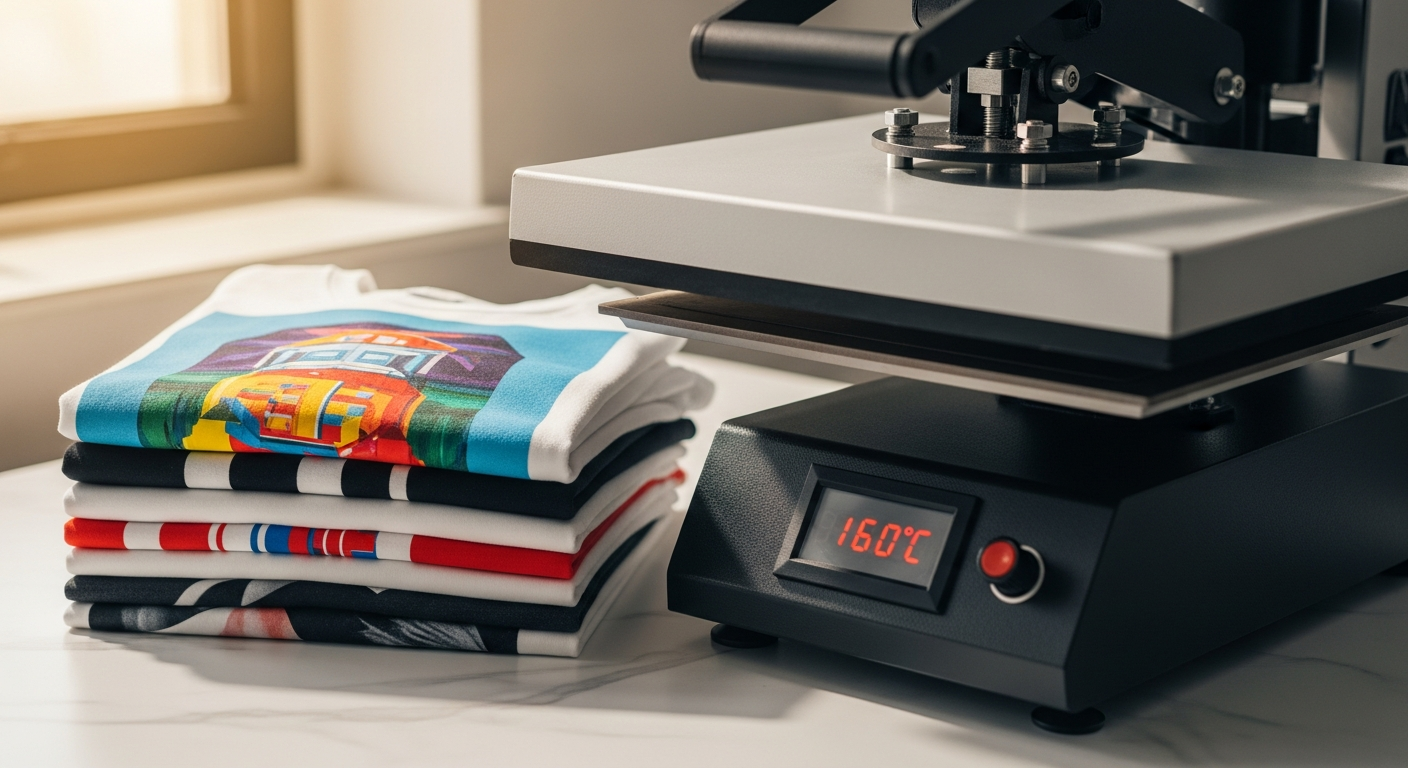
Over 78% of small business owners in the custom apparel industry cite equipment reliability as their top concern—one breakdown during peak season can cost thousands in lost revenue and damaged client relationships. The HTVRONT Auto Heat Press Machine for Crafting changes that narrative by bringing professional-grade heat transfer capabilities to entrepreneurs operating on realistic budgets.
This machine stands out because it combines automation with affordability, removing two major obstacles that prevent most people from starting this business. Whether you're testing the waters with a side hustle or planning a full-scale operation, the HTVRONT delivers the production capability that typically requires much larger investment.
Explore the HTVRONT Auto Heat Press Machine and start your custom apparel business today.
Why the HTVRONT Auto Heat Press Machine Outperforms for Business Scaling
Hands-Free Operation Multiplies Your Capacity
Hands-free automation eliminates the need for constant manual intervention, allowing you to manage multiple orders simultaneously. While the machine completes one transfer, you prepare designs, cut vinyl, or handle customer communications. This capability transforms a solo operator into a lean production team.
Pressure Transducer Technology Guarantees Consistency
The advanced pressure transducer auto-adjusts optimal pressure for materials up to 1 inch thick, ranging from 50 to 170 lbs depending on your model. This means each transfer receives exactly the right pressure without guesswork, whether you're pressing a thin polyester shirt or a thick hoodie. Consistency directly translates to fewer customer complaints and repeat orders from satisfied clients.
Dual-Zone Heating Eliminates Hot Spots
The dual-zone heating engines distribute heat evenly across the entire 15" x 15" heating plate. This prevents the color fading and uneven transfers that plague cheaper machines, ensuring vibrant, long-lasting results that make your work stand out.
Safety Features Protect Your Business
Pull-out drawer design keeps hands away from the heat plate, multiple layers of thermal insulation prevent accidental burns, and the 15-minute auto-off function protects against workplace injuries. These features reduce liability exposure while building confidence in your operation.
Speed Maximizes Revenue Per Hour
Reaching 300°F in under 5 minutes and maximum temperature in about 6 minutes means more orders completed per shift. Each minute of saved heat-up time directly increases billable production hours.
Affordability Accelerates Recovery
At $259–$439.99, the HTVRONT investment recovers within the first 50–100 orders on most product lines. This realistic price point means you're not financing expensive equipment through years of payments—you're achieving profitability quickly.
Setting Up Your Production Workflow for Maximum Profitability
Choose Your Substrate Materials Strategically
HTV, sublimation, and DTF each serve different markets with different margins. Heat Transfer Vinyl (HTV) works best on apparel and costs less but requires more manual cutting. Sublimation delivers photorealistic images on polyester and commands premium pricing. Direct-to-Film (DTF) combines benefits of both. Test each category to identify which materials your market demands and which generate the healthiest profit margins.
Develop a Pre-Press Routine
Establish a checklist for preparing garments, designs, and equipment before each production run. Lay out blank apparel in organized stacks, ensure transfer designs are trimmed precisely, clean the heating plate, and verify temperature and pressure settings. This structured approach minimizes setup time and prevents mistakes that cost money.
Customize Settings by Product Type
T-shirts, hoodies, hats, and specialty items require different temperature, pressure, and timing combinations. Document these settings as your production bible—when you find a configuration that works, write it down. The digital control panel on the HTVRONT allows precise customization, and the Auto Heat Press 2 offers even enhanced modes for complex materials.
Implement Batch Processing
Run similar designs back-to-back rather than switching between completely different products. If you have twenty t-shirts with the same design, process all twenty before moving to the next design. This strategy reduces setup changes and keeps your workflow in rhythm.
Establish Quality Control Checkpoints
Inspect transfers before packaging to catch issues early. Check for color vibrancy, adhesion quality, and proper alignment. This checkpoint prevents unhappy customers and costly returns that damage your reputation and profitability.
Stock Smart for Seasonal Demand
Anticipate seasonal spikes by maintaining inventory of popular blank apparel and transfer materials. During back-to-school season, stock extra t-shirts. Before holidays, add sweatshirts and totes. This preparation enables quick turnaround times that justify premium pricing.
Calculating Your Startup Costs and Break-Even Timeline
Equipment Investment
Your primary expense is the HTVRONT machine itself, ranging from $259–$439.99 depending on model choice. Budget additionally for supporting tools: a heat press cover, vinyl cutter if handling HTV (around $100–$300), design software subscription (free to $20/month), and workspace setup including a sturdy work table and shelving. Total equipment investment typically ranges from $400–$800 for a minimal setup.
Material and Substrate Expenses
Calculate per-unit material costs across your product categories. Blank t-shirts cost $3–$6 depending on quality and volume. HTV runs $0.50–$2 per design. Sublimation paper and ink average $0.30–$0.75 per transfer. DTF materials cost $0.40–$1 per design. Packaging (poly mailers, tissue paper, labels) adds $0.50–$1 per order. For a standard custom t-shirt, total material cost typically ranges $4.50–$10 depending on your choices.
Account for Hidden Costs
Shipping supplies extend beyond packaging—factor in postal fees or carrier accounts. Business licensing varies by location but budget $50–$200 annually. Software subscriptions for design tools, inventory management, or ecommerce platforms add up. Replacement heating elements, vinyl cutting mats, and cleaning supplies create ongoing expenses. Reserve 10–15% of your initial investment for these overlooked items.
Develop Your Pricing Strategy
Calculate your cost per item, then multiply by 3–5x to cover overhead, labor, and profit. A t-shirt costing $7 to produce (materials plus prorated equipment) should sell for $21–$35. This margin accounts for your time, platform fees (Etsy takes 6.5%), and business sustainability. Test pricing with real customers—some will pay premium prices for quality, while others shop purely on cost.
Compare Break-Even Timelines
Etsy sellers processing 50 orders monthly typically break even within 8–12 weeks. Custom order specialists with higher margins recover investment in 4–6 weeks. Wholesale partnerships moving 200+ units monthly achieve break-even in 2–3 weeks but require higher initial investment in inventory. Map your business model, then calculate how many orders you realistically expect in your first 90 days.
Identify Reinvestment Benchmarks
Once revenue exceeds expenses, plan where reinvestment goes. After first 50 orders, reinvest into higher-quality blank apparel to command premium pricing. After reaching $2,000 monthly revenue, consider adding a second HTVRONT machine to double capacity. After $5,000 monthly, hire part-time production support.
Get your HTVRONT Auto Heat Press Machine and start calculating your profitability potential.
Leveraging Automation to Compete Against Established Brands
Gain Production Speed Advantage
Hands-free operation allows solo operators to match larger team output. While competitors spend 2–3 minutes per transfer pressing manually, your HTVRONT completes transfers automatically while you work on the next order. This speed advantage enables you to undercut competitors on turnaround time while maintaining margins through volume.
Use Consistency as Your Differentiator
The advanced pressure transducer delivers results competitors struggle to replicate. Established brands sometimes use manual machines where operator experience varies. Your HTVRONT's intelligent pressure technology ensures every transfer matches the previous one. This consistency becomes your competitive edge—customers notice and return for reliability.
Scale Without Proportional Cost Increases
As order volume increases, per-unit labor costs decrease. Your first 10 orders might cost $15 each in labor time. Your 100th order costs $1.50 in labor. This efficiency advantage allows you to offer better pricing as you grow, undercut established players, and still improve margins.
Command Premium Pricing Through Customization
Mass-market competitors offer standard designs. You offer on-demand customization—personalized names, custom graphics, one-off projects. This customization capability justifies 20–40% price premiums because competitors can't deliver the same flexibility profitably. The HTVRONT's consistent quality ensures these premium-priced custom orders meet expectations.
Build Social Proof Rapidly
Document your work—photograph finished products, collect customer testimonials, create before-and-after comparisons. Early clients who experience your quality and turnaround become brand advocates. Within 30–60 days of consistent production, you'll accumulate enough portfolio pieces to attract additional business through word-of-mouth.
Position in Underserved Niches
Rather than competing head-to-head with established players, identify underserved segments: custom apparel for sports teams, corporate event merchandise, community organization fundraisers. These segments value reliability and customization over lowest price. Your HTVRONT enables exactly what they need.
Troubleshooting Common Production Challenges
Uneven Pressure Application Issues
If transfers show inconsistent adhesion—tight in some spots, loose in others—the pressure transducer might need inspection. Verify that the heating plate sits level and that you're using the correct pressure setting for your material thickness. The auto-adjusting system should compensate, but substrate thickness beyond 1 inch requires manual pressure adjustment or material substitution.
Heat Distribution Inconsistencies
Occasionally, one corner presses better than others, indicating hot spots or cool zones on the heating plate. Clean the heating plate thoroughly first—mineral deposits affect heat transfer. If cleaning doesn't resolve it, contact HTVRONT support, as this suggests a heating element malfunction requiring professional service.
Substrate Thickness and Composition Compatibility
Different materials compress differently. Thick hoodies require higher pressure than thin t-shirt material. Cotton responds differently than poly blends. When testing new substrates, start with conservative temperature settings and gradually increase until you achieve optimal transfer. Document working settings for each material type.
Design Transfer Failures
Temperature, timing, and pressure work together. If designs peel off, temperatures were too low or timing too short. If colors fade or materials scorch, temperatures were too high or timing too long. Moisture on garments causes adhesion problems—ensure blanks are dry before pressing. Pressure settings that don't match material thickness cause partial transfers. Systematically adjust one variable at a time to isolate the issue.
Maintenance Routines Extend Equipment Life
After each production session, clean the heating plate with a dry cloth while warm. Every week, wipe thermal insulation areas to prevent dust accumulation. Monthly, check that the drawer mechanism operates smoothly. These simple routines prevent the degradation that shortens equipment lifespan.
When to Leverage Customer Support
If problems persist after troubleshooting, HTVRONT customer service exists to help. Issues like unresponsive control panels, pressure transducer errors, or heating element malfunctions require professional diagnosis. Don't waste time on problems beyond DIY fixes—reach out to support and get back to production.
Growth Strategies Beyond Your First Machine
Identify Production Volume Thresholds
When your HTVRONT operates 8+ hours daily and you're consistently declining orders due to capacity, a second machine justifies its cost. If you're processing 50+ orders weekly, monthly revenue likely exceeds $2,000. At this volume, a second $300–$400 machine pays for itself in 3–4 weeks while doubling your capacity.
Evaluate Auto Heat Press 2 Enhanced Features
The Auto Heat Press 2 offers customizable modes and enhanced pressure settings up to 170 lbs compared to standard models. If your product mix includes materials requiring varied pressure ranges, the Auto Heat Press 2's flexibility justifies upgrading. Compare your current material portfolio against the enhanced capabilities before deciding.
Diversify Product Offerings
The 15" x 15" plate accommodates tote bags, pillowcases, blankets, and specialty items beyond t-shirts. Expanding into these categories captures additional revenue without equipment limitations. Tote bags often command $15–$25 retail prices with similar production costs, improving margins significantly.
Build Wholesale Channels
Approach boutique clothing stores, corporate gift suppliers, and promotional product companies with bulk capabilities. Wholesale orders of 50–200 units move volume quickly and reduce marketing effort. While unit prices drop 30–40%, the volume and lower customer acquisition cost improve overall profitability.
Scale Beyond Personal Capacity
Hiring part-time production staff or partnering with other crafters allows output expansion without personal burnout. At $15–$18 hourly labor cost, assistants add production without substantially impacting margins on volume orders. This scaling step transforms your operation from solo side hustle into sustainable small business.
Transition From Etsy to Owned Platform
Once revenue justifies investment, building a Shopify store eliminates 6.5% platform fees, improves brand control, and builds customer relationships outside marketplace algorithms. Early profitability from Etsy funds this transition while you maintain Etsy presence. Direct customers through your website while Etsy serves as supplemental traffic.
Taking Your Craft Business to the Next Level
The HTVRONT Auto Heat Press Machine removes the equipment barrier that stops most entrepreneurs from launching profitable custom apparel businesses. With hands-free automation, intelligent pressure technology, and competitive pricing, you're acquiring a production partner that scales with your ambition.
Start by mapping out your first 100 orders—identify which product types you'll focus on, calculate material costs precisely, and test your pricing model with real customers. Run those orders through the HTVRONT and document results. Track turnaround times, quality metrics, and customer satisfaction. This data becomes your foundation for optimization and growth.
The entrepreneurs who succeed aren't waiting for perfect conditions or ideal circumstances. They're starting with realistic equipment, running real orders, and iterating based on genuine customer feedback. They identify what works and double down on it. They recognize what doesn't work and adjust quickly.
Position yourself as a business that delivers quality consistently, meets deadlines reliably, and treats customer relationships as your primary asset. Let the HTVRONT handle the production heavy lifting while you focus on customer acquisition, quality control, and business development.
Start your custom apparel business with the HTVRONT Auto Heat Press Machine today.
Leave a Reply