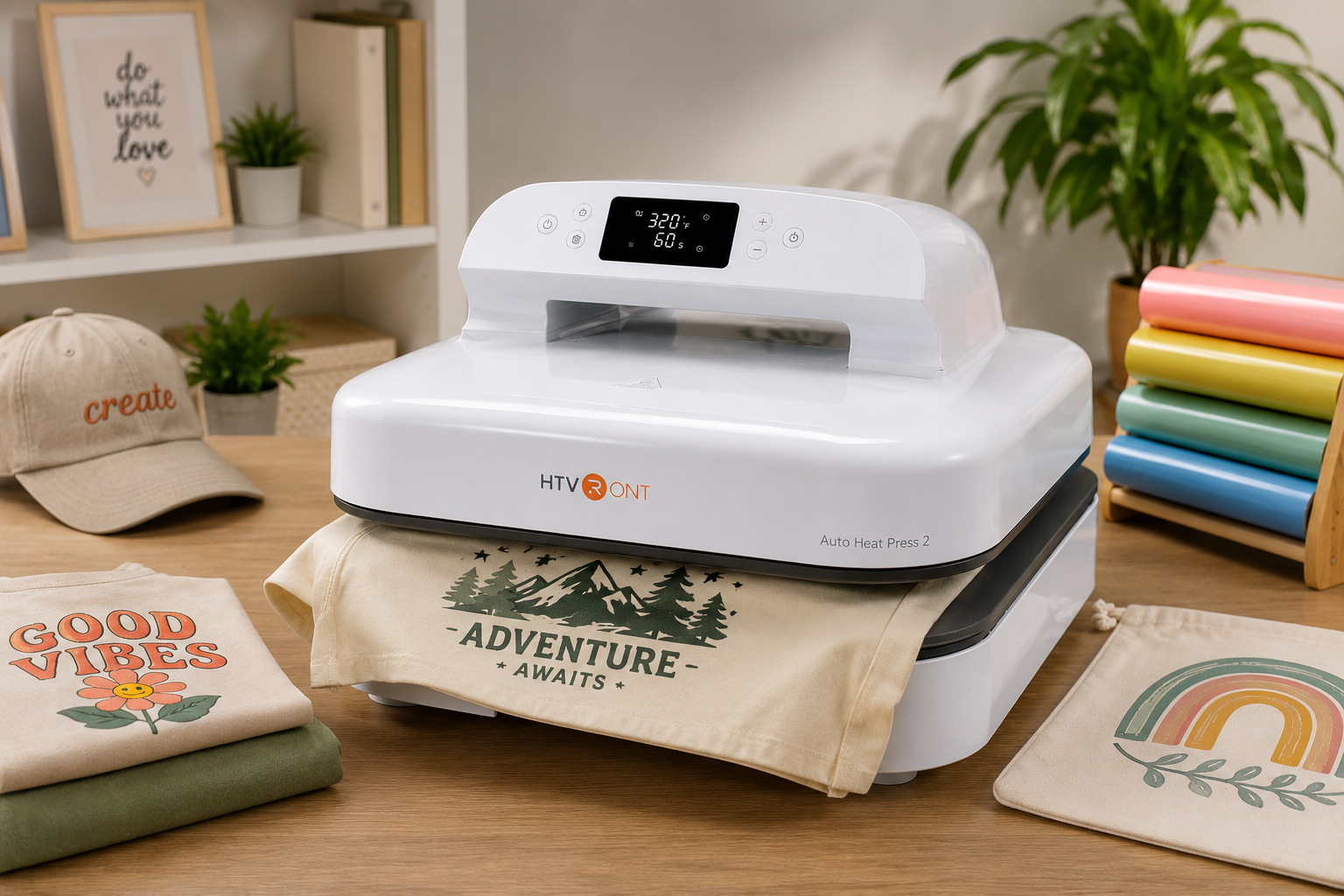
If you're a crafter or small business owner, you've likely noticed the gap between what you need and what you can afford. Over 70% of small craft business owners struggle to find affordable equipment that doesn't sacrifice quality. The HTVRONT Auto Heat Press 2 Machine has quietly changed that equation by delivering professional results at consumer-friendly prices.
The heat press industry has long been dominated by expensive industrial-grade equipment, but HTVRONT disrupted this market by building machines that work for hobbyists and bootstrapped entrepreneurs. Their direct-to-customer model cuts out middlemen, meaning you get commercial reliability without the commercial price tag.
Discover the HTVRONT Auto Heat Press 2 and see why it's a best-seller in the crafting community.
The Pressure Range That Changes Everything
Why Adjustable Pressure Matters for Different Materials
The HTVRONT Auto Heat Press 2 features an adjustable pressure range from 50 to 170 lbs—a critical specification that determines what materials you can work with. This range isn't arbitrary; it's engineered to handle the real-world demands of different fabrics and substrates without requiring you to own multiple machines.
Delicate Fabrics and the 50 lbs Minimum
At 50 lbs of pressure, the machine applies enough force to transfer designs onto delicate fabrics without causing damage. Silk, chiffon, and other lightweight materials require this gentle touch. Push too hard, and you'll melt fibers or create unwanted shine marks. The lower pressure setting lets you work confidently with materials that traditionally posed risks for heat press users.
Thicker Substrates and the 170 lbs Maximum
The 170 lbs maximum pressure setting opens doors to heavier materials. Canvas tote bags, neoprene, and leather alternatives all demand substantial pressure to ensure proper adhesion. Without this upper range, you'd either get incomplete transfers or need to compensate with excessive heat, which damages the material. This maximum pressure gives you the flexibility to take on premium projects that command higher prices.
Pressure Flexibility Versus Fixed-Pressure Competitors
Many budget heat presses lock you into one pressure setting—typically around 100 lbs. This works for basic cotton T-shirts but fails for anything specialized. The HTVRONT's adjustable range eliminates this limitation. You're not forced to choose between a machine that's too gentle or too aggressive; instead, you fine-tune pressure to match each project's requirements.
Real-World Applications Across Fabric Types
Silk projects typically use 50-70 lbs pressure with slightly lower temperatures. Cotton blends work well at 100-120 lbs, the sweet spot for most everyday projects. Canvas and heavier blends need 130-150 lbs to achieve complete ink transfer. Neoprene and specialty synthetics benefit from the full 170 lbs, especially when working with thick substrates. Leather alternatives fall somewhere in the middle, around 110-130 lbs depending on thickness.
Reducing Trial-and-Error Waste
Adjustable pressure dramatically cuts waste during project setup. Instead of running test after test at a fixed pressure, you methodically work through pressure increments. Your first few prototypes might show under-transfer or slight over-compression, but you quickly pinpoint the optimal setting. This precision-tuning saves both materials and time, which directly impacts your bottom line when scaling production.
Pressure Feedback Systems for Precision Control
Some HTVRONT models, including the H10 variant, provide real-time pressure feedback. This feature shows you exactly how much force the machine is applying during each cycle. For users taking their craft seriously, this transparency eliminates guesswork and builds confidence that every press will be consistent.
Automatic Functionality That Frees Your Hands
Auto-Open Features and Manual Intervention
The auto-open mechanism activates once the preset time expires, raising the heat plate automatically. This hands-off operation means you're not standing over the machine counting seconds or manually pulling handles. Instead, you set the parameters, start the cycle, and walk away. For someone managing multiple projects or running a small business, this feature compounds in value as the day progresses.
Multitasking Benefits During Production
While the machine presses one item, you can design the next graphic, fulfill orders, or handle administrative tasks. This parallel workflow transforms what would be idle time into productive business activity. A single operator can now manage more projects per day than would be possible with manual intervention at every cycle. For side hustlers balancing craft work with day jobs, this efficiency is genuinely life-changing.
Temperature Consistency Across All Cycles
The machine maintains precise temperature throughout every press cycle. There's no temperature drift that would require you to re-calibrate partway through the day. This consistency means your 50th press of the day produces results identical to your first, eliminating quality variance that frustrates customers and wastes materials.
Preset Modes Versus Custom Settings
The four preset options handle common scenarios: standard cotton, blended fabrics, synthetic materials, and specialty substrates. These presets accelerate your workflow for routine projects. However, custom setting creation allows you to save configurations for specialized techniques or unique material combinations. You're not limited to presets; they're simply a convenience for frequently repeated work.
Time-Saving Advantages for Batch Production
When pressing 20 identical T-shirts, batch efficiency compounds. Load-press-unload cycles repeat faster without manual intervention. You're also building muscle memory with consistent settings, further streamlining the process. A business operator might handle 30-40 units per day with this machine, compared to 10-15 with purely manual equipment.
Safety Benefits of the Pull-Out Drawer Design
The 15×15-inch pull-out drawer lets you position materials at a comfortable distance from the heat plate during loading. You're not leaning over steaming metal or risking burns from accidental contact. This safety consideration matters more than it initially seems, especially during high-volume days when fatigue affects judgment.
Building Confidence Through Hands-Off Operation
For beginners, the automatic operation removes the intimidation factor. You're not responsible for manually controlling heating, cooling, and plate height. The machine handles the technical heavy lifting while you focus on material preparation and design quality. This confidence-building approach explains why so many users report a smooth learning curve.
Start your heat press journey with the HTVRONT Auto Heat Press 2 today.
The 15×15-Inch Platen: Why Size Matters
Platen Dimensions and Project Compatibility
The 15×15-inch platen defines the working area for heat transfer. This dimension suits approximately 95% of common craft projects without requiring workarounds or creative material positioning. Understanding what fits comfortably within this space prevents frustration and limits failed attempts due to material misalignment.
Custom T-Shirt Pressing: Front, Back, and Sleeves
Standard adult T-shirt fronts fit easily within 15×15 inches, leaving comfortable margins. Back designs work similarly well. Sleeve placements require a different approach—typically pressing the sleeve as a flat section before garment assembly or using side positioning, both entirely feasible. The platen size covers the core T-shirt applications that dominate most craft businesses.
Tote Bags and Canvas Projects
Canvas tote bags with generous front graphics fit within the platen area. However, you'd need to manage seams and bag structure differently than flat materials. The bottom line: the platen accommodates most common tote designs without requiring you to fold or compress the bag unnaturally.
Clearance Advantages for Bulkier Items
The pull-out drawer design provides clearance for bulkier or textured substrates. Towels, textured fabrics, and items with decorative elements fit beneath the heat plate without compression or damage. This clearance height is rarely mentioned in specifications but makes a substantial practical difference.
Comparison with Smaller Platens
Machines with 12×10-inch platens can't handle full-width adult T-shirt fronts. You're forced to position designs off-center or work with smaller designs than the market expects. The 15×15-inch standard represents the minimum size that feels uncompromising for professional work. Going smaller limits your project scope noticeably.
Space Efficiency for Home-Based Studios
The machine's footprint is manageable for home craft studios where space is precious. It's not a sprawling industrial press that requires dedicated floor space. The compact design lets you set up, operate, and store supplies in a corner or spare room without dominating the environment.
Scalability and Upgrading Considerations
For occasional hobbyists, the 15×15-inch platen is permanently sufficient. For growing businesses pressing 50+ items daily, this size becomes limiting within 18-24 months. At that point, you'd consider larger machines to reduce the number of cycles per project. However, for the first few years of business growth, this platen handles your needs completely.
The Digital Interface That Makes Setup Intuitive
Large Digital Display and Labeled Controls
The machine features a clearly visible digital display with distinctly labeled buttons for power, time, temperature, and pressure. Nothing is cryptic or buried in sub-menus. A new user can navigate the interface within minutes, a critical advantage over machines with tiny displays or confusing button arrangements.
Power, Time, Temperature, and Pressure Explained
Power activation is straightforward. Time is measured in seconds and controls how long the heat plate stays engaged. Temperature ranges typically from 200°F to 400°F, calibrated for various heat transfer materials. Pressure is displayed in lbs, directly corresponding to the adjustable range previously discussed. Each function has clear visual feedback showing your current selection.
Four Preset Options and Common Projects
Preset 1 might be optimized for standard polyester heat transfer vinyl on cotton. Preset 2 could be configured for fabric paint applications. Preset 3 might handle sublimation work, and Preset 4 could address specialty materials. These presets save setup time for your most common projects while remaining completely customizable.
Custom Setting Creation for Specialized Work
Beyond presets, you can create and save custom configurations. If you frequently work with a unique fabric blend or specialty substrate, you program those exact settings once and recall them instantly for every subsequent project. This memory feature eliminates repetitive adjustment and reduces mistakes from manual re-entry.
Navigation Flow for New Users
The button sequence follows logical progression: power on, select time, adjust temperature, set pressure, start cycle. This intuitive flow means even users unfamiliar with heat press equipment can operate the machine confidently after reading basic instructions. The learning curve is measured in minutes, not hours.
Visual Feedback During Operation
The display updates in real-time, showing countdown time, current heat plate temperature, and pressure reading. You watch the cycle progress, building confidence that everything is performing as expected. For first-time users, this transparency eliminates anxiety about whether the machine is actually working.
Troubleshooting Common Display Misreadings
Occasionally, users misread pressure displays or confuse Fahrenheit with Celsius. The machine provides consistent feedback that helps identify these errors quickly. Clear labeling and logical progression minimize confusion, though reviewing instructions before your first project prevents most problems entirely.
Building Quality That Outlasts the Hype
Robust Construction Materials and Durability
The HTVRONT Auto Heat Press 2 features solid metal construction throughout the frame and platen assembly. This isn't flimsy plastic with metal accents; the entire structure is engineered for repeated stress and heat exposure. Users consistently report machines operating reliably after months and years of regular use, suggesting durability comparable to machines costing twice as much.
Heat Plate Consistency and Performance
The heating element is engineered to distribute temperature evenly across the platen surface. Hot spots—areas significantly hotter than others—are virtually absent, meaning your transfer quality remains consistent from the platen's center to its edges. This consistency is a hallmark of quality manufacturing that budget machines often struggle to achieve.
Longevity for Casual Versus Commercial Use
For hobby crafters pressing projects occasionally, this machine should function well for 5+ years with basic maintenance. For small business operators running 30-40 projects daily, expect reliable performance for 3-4 years before components might need attention. Either way, the build quality suggests you're not replacing it every two years like cheaper alternatives.
Maintenance Requirements for Optimal Performance
Regular cleaning of the heat plate prevents residual transfer material buildup. Checking that the pressure mechanism moves smoothly and that electrical connections remain secure involves minimal effort. The machine doesn't demand intensive maintenance; basic care keeps it running like new. Manufacturers recommend monthly inspections for high-use environments and quarterly checks for hobby use.
Warranty Coverage and Protection
HTVRONT typically provides manufacturer warranties covering defects in materials and workmanship for a defined period. Warranty specifics vary by retailer, so verify coverage before purchasing. Understanding what's protected—generally mechanical and electrical components—helps you determine whether extended coverage is worthwhile.
User Feedback on Long-Term Reliability
Customer reviews across retailers consistently mention machines operating reliably well beyond the warranty period. Users report minimal issues with heating, pressure mechanisms, or automatic functions failing prematurely. This real-world feedback from hundreds of users suggests the machine delivers on its durability promise.
Build Quality Compared to Competitors
At the $239-$349 price point, the HTVRONT competes with machines made from lighter materials or with less sophisticated control systems. Direct comparison reveals that the Auto Heat Press 2 punches above its weight class in construction quality. You're getting materials and engineering typically associated with machines costing $100-200 more.
Pricing Strategy That Breaks the Commercial Equipment Barrier
Entry-Level Positioning and Price Range
The HTVRONT Auto Heat Press 2 retails at $239.00 to $349.99 depending on the retailer and any current promotions. For context, industrial-grade heat presses start around $1,500 and climb toward $5,000+. This price point positions the HTVRONT as genuinely affordable entry-level equipment without sacrificing essential features.
Direct-to-Consumer Model and Overhead Reduction
HTVRont sells primarily through their own website and select online retailers, bypassing traditional wholesale distribution channels. This direct approach eliminates multiple middlemen who would each add markup. You're purchasing from the manufacturer rather than through distributors, retailers, and resellers, each taking a cut.
High-Volume, Low-Margin Philosophy
HTVRont operates on volume rather than premium pricing. They manufacture at scale, investing in efficient production rather than luxury branding or extensive advertising. This approach makes heat press technology accessible to hobbyists and bootstrapped entrepreneurs who'd otherwise be priced out of the market entirely.
Cost Comparison: HTVRONT Versus Industrial Alternatives
A professional-grade Hotronix or Stahly heat press costs $2,000-3,000 and up. For these prices, you gain larger platens, industrial-strength mechanisms, and warranty support. However, you also gain features and durability unnecessary for casual or small-scale commercial use. The HTVRONT delivers 80% of the performance at 15% of the cost, making it economically rational for most small operators.
Value Proposition and What You're Investing In
For $299, you're purchasing adjustable pressure, automatic operation, a 15×15-inch platen, intuitive controls, and proven build quality. You're not paying for premium branding, industrial certifications, or oversized capacity. This value-to-price ratio explains the best-seller status; the machine delivers exactly what users actually need at prices that justify the investment.
ROI Potential for Side Hustlers and Small Businesses
A machine that costs $299 and helps you press 30 custom T-shirts daily at $15 profit per shirt generates $450 daily revenue. Even accounting for material costs and overhead, payback occurs within weeks or months. For side hustlers looking to validate a business concept before larger investment, the HTVRONT offers low-risk entry into profitable heat press work.
Financing and Payment Plan Options
Some retailers offer installment plans through services like Affirm or Klarna, allowing you to spread the $299-349 cost across several months. Interest rates for these short-term plans are often minimal, making them appealing for businesses looking to preserve cash flow. Verify current financing options with your chosen retailer.
Real-World Applications Across Different Craft Niches
Custom Apparel: T-Shirts, Hoodies, and Performance Wear
The primary application remains custom decorated apparel. T-shirt decorating with heat transfer vinyl or sublimation is accessible to beginners and scales easily for small businesses. Hoodies require slightly different technique due to thickness, but the HTVRONT handles them well. Performance wear with technical fabrics presents more challenging applications but remain entirely feasible.
Home Décor Items and Personalized Creations
Beyond apparel, the machine decorates pillowcases, fabric wall hangings, and textile art. Personalized gifts become practical when you can press custom designs onto blank home goods. These items often command premium prices, making them attractive for business operators targeting gift markets and personalization services.
Personalized Gift Production
The machine complements mug pressing and other personalization work when used in combination with press attachments. Canvas bags, zippered pouches, and fabric accessories all become viable products. This diversification lets you serve customers requesting various personalized items from a single machine.
Small Business Scaling from Hobby to Profit
Many successful crafters started with a single HTVRONT machine and one type of product. As demand grew, they added capacity and diversified product lines, all while the original machine continued producing revenue. The machine's reliability means it's still in use even after upgrading to larger capacity equipment.
Batch Production Workflows and Efficiency
Processing 50 identical T-shirts becomes systematic: cut transfer material, pre-press garments, position transfers, press, cool, peel. The HTVRONT's consistency means every unit meets quality standards. Time management focuses on material preparation and quality control rather than adjusting machine settings.
Material Compatibility and Best Practices
The machine works with heat transfer vinyl, sublimation inks, heat transfer paper, and fabric paint applied via intermediate materials. Understanding which applications work best prevents wasted effort. Cotton and cotton blends are most forgiving; synthetic and specialty fabrics require more precision but absolutely work with proper technique.
Profitability Analysis Across Product Categories
Basic T-shirt transfers might net $3-5 per unit after material and overhead. Personalized canvas bags could yield $8-15 per unit. Custom hoodies might reach $10-20 depending on decoration complexity. Portfolio diversity insulates against market fluctuations while maximizing machine utilization across different customer segments.
What Users Wish They Knew Before Purchasing
Pressure Metric Guidelines and Manufacturer Documentation
Users frequently mention that more detailed guidance on pressure settings would improve first-project success. While the 50-170 lbs range is clear, recommendations for specific fabric types aren't always provided. Consulting heat transfer material manufacturers' guidelines helps bridge this gap—they typically specify optimal pressure for their products.
Learning Curve Expectations for New Users
First-time heat press operators sometimes expect perfect results immediately. Reality involves a learning curve spanning 5-10 projects as you understand temperature, pressure, and timing interactions. Experienced crafters pick this up quickly; complete beginners might need 15-20 projects before achieving consistent excellence.
Common Mistakes and Prevention Strategies
Placing transfer material off-center, using excessive temperature, or applying insufficient pressure are typical early mistakes. The solution is methodical documentation: write down settings for successful projects and reference them for similar work. Testing on scrap material prevents wasted inventory during learning phases.
Material Testing Before Full-Scale Production
Running test batches on new substrates or transfer materials prevents costly mistakes at scale. A single test press costs perhaps $1-2 in materials but provides confidence for a production run of 20+ units. This discipline is the difference between profitability and material waste.
Heat Transfer Material and Substrate Quality Impact
Premium heat transfer vinyl transfers more cleanly and durably than budget alternatives. Cheap blank apparel might have uneven fabric that presses inconsistently. The machine is only as good as the materials flowing through it; quality inputs generate quality outputs.
Ventilation and Workspace Setup
Heat presses generate steam and fumes during operation, especially with certain transfer materials. Adequate ventilation—whether from windows, fans, or dedicated exhaust—prevents uncomfortable working conditions and improves focus. Workspace layout should position the machine for comfortable loading and unloading without awkward positioning.
Support Resources and Community Forums
HTVRONT maintains customer support through their website, and active heat press communities exist on Reddit and Facebook. Connecting with experienced users accelerates your learning curve substantially. These communities share pressure settings, temperature charts, and solutions to common problems that you'd otherwise discover through trial and error.
Comparing to Predecessors and Alternatives
Enhancements from the Original HTVRONT Model
The Auto Heat Press 2 builds on the original with improved pressure adjustment range, better digital display clarity, and refined automatic mechanisms. The original remains functional and reliable, but the Auto Heat Press 2 incorporates user feedback into meaningful upgrades that justify the newer model despite the original's continued availability.
Adjustable Pressure as the Game-Changing Upgrade
The most significant advancement is the transition from fixed pressure to the 50-170 lbs adjustable range. This single improvement expands the machine's versatility dramatically, enabling users to work with materials previously requiring different equipment. This upgrade alone explains much of the newer model's popularity.
Feature-by-Feature Comparison with Budget Competitors
Comparable machines at similar prices might lack adjustable pressure, automatic opening, or the pull-out drawer safety feature. The HTVRONT includes all three plus a larger platen and better digital interface. When you list features side by side, the HTVRONT often offers more capability per dollar than alternatives.
Choosing the Auto Heat Press 2 Versus Alternatives
If your projects exclusively involve standard cotton T-shirts at consistent pressure, a simpler fixed-pressure machine might suffice. However, if you anticipate working with varied materials or want future flexibility, the Auto Heat Press 2's adjustable range justifies its moderate price premium over the most basic options.
Alternative Machines for Different Budgets
The original HTVRONT model costs slightly less while providing most of the same functionality without adjustable pressure. At the higher end, Hotronix and Stahly machines offer larger platens and more industrial durability for users running high-volume operations. At lower price points, you sacrifice either durability or features.
Brand Reputation and Customer Satisfaction
HTVRONT consistently earns positive reviews across retailers, with customer satisfaction focused on reliability and ease of use. Their reputation has grown through direct-to-consumer sales and word-of-mouth from satisfied users rather than extensive marketing. This grassroots credibility suggests their machines deliver on promises.
Future-Proofing: Will This Machine Meet Future Needs?
For casual crafting, the Auto Heat Press 2 will remain adequate for years. For growing businesses, plan for upgraded equipment within 2-3 years as volume increases beyond this machine's daily capacity. However, it won't become obsolete; many users maintain secondary machines or transition them to backup roles even after upgrading.
Getting Started: From Unboxing to Your First Transfer
Package Contents and Additional Purchases
The machine arrives with the press unit, power cord, and basic instruction manual. You'll need to separately purchase heat transfer materials (vinyl, paper, or sublimation inks), blank apparel, and optionally, a cutting machine for vinyl designs. Organizing these supplies before your first project prevents frustrating delays.
Initial Setup and Calibration Steps
Unbox the machine and allow it to rest for several hours if shipped in cold weather—condensation might form internally otherwise. Position it on a stable, level surface near electrical outlets. Plug in and run through a test cycle without material to verify that all mechanical functions operate smoothly. Some machines benefit from a brief break-in period before intensive use.
Safety Precautions and Workspace Preparation
The heat plate reaches 400°F+, so never touch it or place hands near the platen during operation. Ensure adequate ventilation. Keep water and flammable materials away from the machine. Clear surrounding workspace of clutter that might interfere with material placement or create fire hazards from dust.
First Project Recommendations
Start with standard white cotton T-shirts and heat transfer vinyl designs. These materials are forgiving and generate immediate, gratifying results. Avoid delicate fabrics or dark garments for initial projects; these require more precision that comes with experience. Success builds confidence for progressively challenging projects.
Heat Transfer Material Selection and Suppliers
Heat transfer vinyl brands like Siser EasyWeed and 3M Scotchcal are widely available and performer reliably. For sublimation, Virtuoso papers and inks work consistently. Research supplier options in your region; many craft stores stock materials or order them quickly. Online suppliers offer bulk pricing if you're committing to volume.
Temperature and Time Settings for Common Fabrics
Cotton T-shirts typically press at 330-350°F for 8-10 seconds with 110-130 lbs pressure. Light-colored or white blends work well at these baseline settings. Performance synthetics might require slightly lower temperature but comparable pressure. Delicate fabrics drop to 300°F or below with reduced pressure. Document successful settings immediately; you'll reference them repeatedly.
Troubleshooting Early Projects
If vinyl peels prematurely or incompletely, temperature was likely insufficient or pressure too low. If vinyl stretches or distorts, temperature was too high. If adhesion is spotty, pressure varied across the platen—recheck that the machine sits level. These adjustments fine-tune your technique rapidly; five test projects usually resolve most issues.
Why This Machine Earned Its Best-Seller Status
The HTVRONT Auto Heat Press 2 Machine succeeds because it refuses to compromise. You get adjustable pressure that handles everything from silk to canvas, automatic operation that respects your time, and a price point that doesn't require a business loan. The 15×15-inch platen covers 95% of common craft projects, while the intuitive digital interface means beginners aren't intimidated by complicated settings.
This machine has transformed side hustles into legitimate income streams and given hobbyists the confidence to tackle projects they previously thought impossible. The robust build quality means you're not replacing it in two years, and HTVRont's commitment to continuous improvement shows they're listening to what users actually need.
The affordability matters enormously, but it's the combination of features that genuinely justifies the investment. You're not choosing between professional results and budget constraints; the HTVRONT delivers professional results at budget pricing. Whether you're pressing your first custom shirt or scaling production for your growing business, the Auto Heat Press 2 delivers the reliability and flexibility that distinguish wise investments from shortcuts.
Get your HTVRONT Auto Heat Press 2 and join thousands of satisfied crafters and business owners.
Leave a Reply