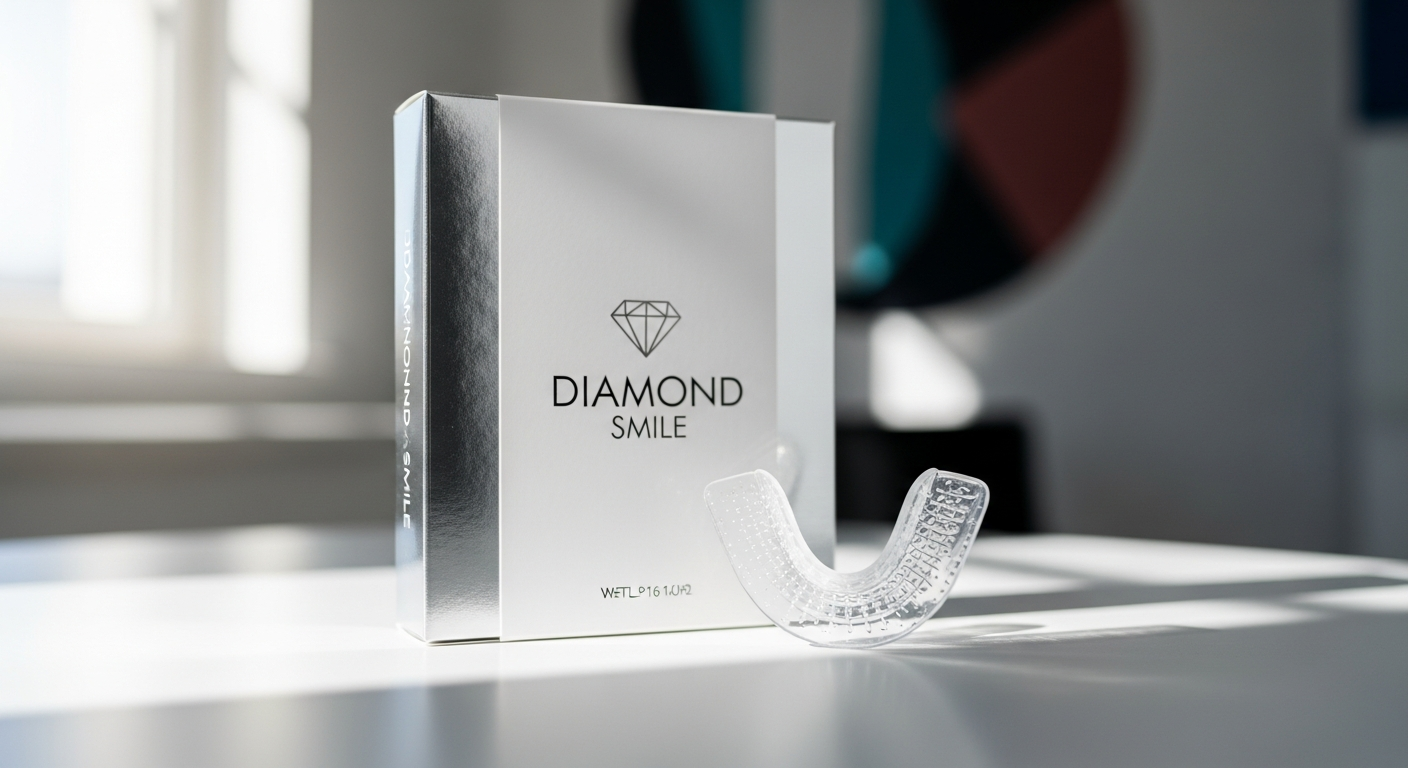
Over 575,000 people purchased the Diamond Smile Professional Home Teeth Whitening Kit before the brand vanished in 2026—yet its Trustpilot score plummeted to just 2.4 out of 5 stars. That's quite the paradox. The product that promised to revolutionize at-home teeth whitening through aggressive social media campaigns became a cautionary tale about the gap between influencer hype and actual results.
Diamond Smile FR, originally founded in Berlin in 2019, built its reputation on peroxide-free dental care with a focus on accessible, professional-grade whitening from home. The kit utilized LED technology and claimed to lighten teeth up to 12 shades in just 10 minutes per application. This combination of speed, convenience, and gentle formulation positioned the brand as an attractive alternative to expensive dental procedures.
How LED Teeth Whitening Technology Works in the Diamond Smile Kit
Overview of LED light activation in peroxide-free whitening formulas
The Diamond Smile kit operated on a straightforward premise: LED light stimulates whitening agents in the gel formula to accelerate the bleaching process. Unlike professional dental lasers, the at-home LED system used lower-intensity light designed for consumer safety. The whitening gel would be applied to custom or universal trays, then inserted into the mouth while the LED activator worked for approximately 10 minutes per session.
The science behind light wavelengths and enamel whitening mechanisms
LED teeth whitening systems typically employ blue light wavelengths (around 460-480 nanometers) to energize the whitening agents. These wavelengths penetrate the outer enamel layer and interact with organic chromophores—the molecules responsible for tooth discoloration. The light energy theoretically accelerates oxidation reactions that break down pigment molecules, resulting in a lighter appearance.
However, scientific debate persists about whether LED light actually accelerates whitening or merely generates heat that aids the chemical process. The Diamond Smile brand marketed its technology as clinically proven, claiming dentist co-development and multiple certifications (CE, FDA, ISO, MSDS).
Why the brand claimed 12-shade results in 10-minute sessions
The promise of 12 shades lighter in 10 minutes represented aggressive marketing positioned squarely at consumers frustrated with slow traditional methods. This claim relied on combining three factors: the peroxide-free whitening gel's chemical potency, the LED light activation, and selective before-and-after imagery that often featured optimal lighting and camera angles. In reality, such dramatic results required multiple applications over several days or weeks, not a single 10-minute session.
Comparison of LED technology versus professional dental whitening lasers
Professional dental whitening employs higher-intensity lasers (often 940-980 nanometers infrared wavelengths) alongside stronger peroxide formulations—typically 35-40% hydrogen peroxide versus the gentler formulas in at-home kits. Dentists apply these treatments under controlled conditions with protective measures for gums and surrounding tissues. Professional equipment delivers results within 30-60 minutes that at-home systems might require weeks to match.
The Diamond Smile kit occupied a middle ground: more powerful than basic whitening strips, less effective than professional treatments, yet positioned as a convenient compromise.
The role of the whitening gel composition in accelerating results
Without peroxide, Diamond Smile's formula employed alternative whitening agents—likely including sodium perborate, calcium peroxide, or other oxidizing compounds. These alternatives offered gentler action on enamel while still breaking down pigment molecules. The gel's effectiveness depended heavily on concentration levels, contact time with teeth, and the LED light's actual contribution to the whitening process.
Limitations of at-home LED systems versus clinical-grade equipment
At-home systems face inherent limitations. Consumer-grade LED devices lack the intensity of professional lasers. Users often experience inconsistent application—some tooth surfaces receiving better gel coverage than others. Custom trays vary in fit quality, and compliance becomes challenging as the novelty wears off. Professional treatments also benefit from a dentist's expertise in identifying which discoloration types respond to whitening (intrinsic stains within the tooth structure respond poorly to any whitening approach).
Peroxide-Free Formula: Safety Claims vs. Real-World Sensitivity Issues
What makes the Diamond Smile formula peroxide-free and vegan
The brand's peroxide-free positioning appealed to consumers nervous about traditional whitening's reputation for sensitivity. This formulation avoided hydrogen peroxide entirely, replacing it with gentler oxidizing agents. The vegan claim meant the formula contained no animal-derived ingredients—no collagen, keratin, or other animal proteins sometimes used as binding agents in dental products.
Ingredients used as whitening agents instead of traditional peroxide
Alternative whitening agents employed in peroxide-free systems include sodium perborate (which releases oxygen when activated), calcium peroxide, and various plant-based extracts. Some formulas incorporate charcoal or abrasive particles, though these risk accelerating enamel wear. Diamond Smile's specific ingredient composition remained partially proprietary, though the brand emphasized natural components and gentle action.
Dental certifications claimed by the brand (CE, FDA, ISO, MSDS)
Diamond Smile marketed multiple certifications to build credibility. CE marking indicated compliance with European product safety standards. FDA classification suggested regulatory approval in the United States. ISO certifications could reference quality management or specific product standards. MSDS (Material Safety Data Sheets) documentation provided ingredient toxicity and handling information. However, these certifications don't automatically guarantee superior whitening results or absence of sensitivity—they primarily confirm safety standards and manufacturing practices.
Why peroxide-free doesn't guarantee zero tooth sensitivity
Tooth sensitivity occurs when whitening agents penetrate the enamel and reach the dentin layer beneath, which contains tubules connected to the tooth's nerve center. Even gentler, peroxide-free formulas can cause sensitivity through prolonged exposure or existing enamel damage. Additionally, the LED light generates heat that can trigger sensitivity in vulnerable teeth. Marketing claims of "gentle, peroxide-free" created unrealistic expectations among consumers with pre-existing enamel weakness.
Customer reports of sensitivity despite marketing claims
Despite the brand's emphasis on a gentler formula, numerous customer reviews on Trustpilot reported tooth sensitivity ranging from mild discomfort to significant pain during and after use. Some users experienced heightened sensitivity to temperature (hot and cold foods triggering sharp sensations). Others reported gum irritation despite the formula's supposedly gentle nature. These reports contradicted the brand's marketing narrative and contributed substantially to the low Trustpilot rating.
The Influencer Marketing Machine Behind Diamond Smile's Viral Success
How TikTok and Instagram collaborations drove rapid brand growth
Diamond Smile FR capitalized on social media's power by partnering with beauty and lifestyle influencers on TikTok and Instagram. These creators posted content showing their whitening journey—unboxing videos, daily application clips, and before-and-after comparisons. The platform's algorithm amplified engaging content, and users drawn to the creators' aesthetic also became curious about the product they endorsed. This organic-feeling promotion proved far more persuasive than traditional advertising.
The role of influencer testimonials in creating unrealistic expectations
When influencers with hundreds of thousands of followers shared glowing reviews, it created social proof that felt authentic. Their audiences trusted these creators' opinions and assumed the whitening results were achievable for anyone using the kit. What viewers didn't see: professional lighting that made teeth appear whiter, selective posting of successful applications while unsuccessful attempts went unshared, and potential financial incentives influencers received for promotion. The influencer testimonials became a filter through which the product appeared far more effective than the average customer experienced.
Why before-and-after content often misrepresents actual results
Professional photographers and videographers optimize lighting, camera angles, and color grading to maximize the appearance of whitening. Natural sunlight hits teeth differently than indoor lighting; professional setups select angles that highlight tooth brightness. Camera filters and post-production editing further enhance results. An influencer might genuinely experience noticeable whitening while the before-and-after content represents an exaggerated version of that improvement. Viewers comparing their own results—photographed on phones in bathrooms with ordinary lighting—inevitably felt disappointed.
The disconnect between paid promotions and authentic customer experiences
Influencer partnerships were undisclosed or minimally disclosed in many cases, creating an ethical gap between promotional content and genuine product experiences. The creators featured in campaigns likely received free kits, payments, or affiliate commissions—motivation to present positive reviews regardless of actual satisfaction. Meanwhile, average customers paying full price (or the discounted €59.99) held no such incentive. Their unfiltered reviews on Trustpilot revealed the gap between influencer hype and reality.
Learn from Diamond Smile's mistakes and make informed decisions about teeth whitening products.
Customer Experience: The 2.4-Star Reality Behind the Marketing
Breakdown of Trustpilot reviews and one-star complaint patterns
The 2.4-star Trustpilot rating represented thousands of customer reviews, with a disproportionate concentration of one-star assessments. Analyzing review patterns revealed recurring complaints: products arriving damaged, whitening results falling short of expectations, difficulty reaching customer support, and overall feeling of having been misled by marketing claims. While some five-star reviews praised quick results and lack of sensitivity, they represented a minority compared to the deluge of negative experiences.
Delivery issues that frustrated customers across multiple regions
Customers reported receiving damaged kits, significant shipping delays, and in some cases, packages that never arrived. The brand operated across Europe, and logistics problems compounded customer frustration. When packages arrived late or damaged, the ineffective customer service response (discussed below) prevented timely resolution. Many customers felt the €59.99 price point didn't justify the delivery hassles they endured.
Customer service failures including slow response times and ineffective support
Complaints about Diamond Smile's customer service dominated negative reviews. Customers reported waiting weeks for responses to support inquiries. When responses came, they often failed to resolve the actual problem—a customer with a damaged kit might receive a generic response rather than a replacement or refund. This service breakdown became particularly damaging because it transformed single negative experiences (a damaged product or underwhelming results) into compounded negative experiences (plus weeks of unresolved support issues).
Discrepancy between advertised results and what most users actually achieved
The gap between "up to 12 shades lighter in 10 minutes" and actual customer results probably represented the biggest disappointment. Most users reported noticing whitening after several applications over days or weeks, rather than dramatic overnight transformation. Some users saw minimal results even after completing full treatment courses. The aggressive marketing claims set expectations impossibly high, ensuring that realistic improvements felt like failures by comparison.
Why Diamond Smile FR Closed in 2026: Connecting the Dots
Timeline of the brand's rise (2019) to closure (July 27, 2026)
Diamond Smile FR launched in Berlin in 2019 with peroxide-free positioning and influencer-driven marketing. The brand experienced explosive growth between 2021-2023 as social media campaigns went viral and the 575,000 customer figure was achieved. However, this rapid expansion outpaced the infrastructure to support it—particularly customer service operations. By 2024-2025, accumulated negative reviews and social media sentiment shifted noticeably. The brand ceased operations on July 27, 2026, after approximately seven years in business.
How customer service failures compounded negative reviews
Each unresolved customer complaint created a cascading effect. A customer with a damaged product who received poor support didn't just leave one negative review—they told friends, posted on social media, and viewed the brand as fundamentally untrustworthy. Bad customer service transformed disappointed customers into active detractors. The Trustpilot score became a self-fulfilling prophecy: new potential customers saw the 2.4 rating, assumed the brand was unreliable, and didn't purchase.
The impact of low Trustpilot ratings on repeat business and referrals
Repeat purchasing and word-of-mouth referrals are the lifeblood of direct-to-consumer brands. When Trustpilot ratings drop below 3 stars, consumer confidence evaporates. Unlike one-time impulse purchases driven by Instagram ads, sustained business requires customer loyalty. The low ratings meant the brand couldn't build a stable customer base—each customer acquisition required expensive influencer partnerships and paid advertising rather than organic referrals.
The unsustainability of influencer-dependent growth models
Diamond Smile's business model relied heavily on influencer marketing for customer acquisition. This approach is expensive and unsustainable without strong customer retention and word-of-mouth momentum. As customer satisfaction declined and Trustpilot ratings reflected that decline, the ROI on influencer partnerships deteriorated. Influencers became less willing to promote a brand with visible evidence of customer dissatisfaction. The model that fueled rapid growth became its weakness once customers began speaking authentically about their experiences.
Safer Alternatives: What to Consider Before Buying At-Home Whitening Systems
Red flags to watch for in at-home whitening kit marketing claims
Be skeptical of promises like "12 shades lighter in 10 minutes"—professional dental whitening requires 30-60 minutes to achieve significant shade changes, so at-home claims of faster results warrant scrutiny. Watch for before-and-after photos with suspiciously perfect lighting or obvious professional photography. Avoid brands making medicinal claims ("removes stains from disease" or "treats dental decay") without pharmaceutical backing. Brands pushing aggressive discounting ($119.99 down to $59.99) often prioritize volume over quality—they're built on customer acquisition rather than satisfaction.
How to evaluate independent reviews versus brand testimonials
Brand websites naturally feature glowing testimonials; these are self-selected and represent happy customers willing to publicly endorse the product. Independent review platforms like Trustpilot, Reddit, and YouTube contain a broader spectrum of experiences—people satisfied enough to recommend alongside those disappointed enough to warn others. Look for patterns across multiple independent sources rather than cherry-picking positive comments. Pay attention to when reviews were posted; recent reviews better reflect current product quality and customer service than testimonials from years ago.
Questions to ask about ingredient transparency and certifications
Request a complete ingredient list and understand what each component does. "Natural" and "peroxide-free" sound appealing but don't automatically guarantee gentleness or effectiveness. Ask whether the brand publishes clinical studies demonstrating their whitening claims, or whether they rely on customer testimonials. Verify certifications independently—CE marking and FDA classification are real but don't equate to superior performance. Contact the brand with detailed questions; their responsiveness and quality of answers indicate whether they prioritize customer education or just marketing.
Why consulting a dentist before at-home whitening matters
Your dentist can assess whether your teeth and gums are healthy enough for whitening. Existing enamel damage, cavities, or gum disease can be exacerbated by at-home whitening systems. Dentists can also identify intrinsic staining (inside the tooth) that whitening cannot address, preventing disappointing outcomes. A pre-whitening consultation ensures realistic expectations and appropriate product selection. Some dentists offer professional whitening or professional-grade kits with proper guidance—potentially better value than consumer brands despite higher upfront cost.
The Diamond Smile Legacy: Lessons for Smarter Whitening Choices
The Diamond Smile Professional Home Teeth Whitening Kit's journey from viral sensation to defunct brand in just seven years tells a compelling story about the teeth whitening industry. The peroxide-free LED technology promised convenience and speed, but delivery delays, poor customer service, and results that fell short of marketing claims ultimately undermined the brand's credibility. That 2.4-star Trustpilot rating didn't appear overnight—it reflected thousands of frustrated customers who felt misled by influencer hype and aggressive promotional tactics.
Aggressive discounting from €119.99 to €59.99, combined with influencer partnerships, created explosive short-term growth but zero long-term loyalty. The brand prioritized customer acquisition over customer satisfaction, and the consequences became inevitable. When customer service failures compounded unmet expectations, the business model collapsed.
If you're considering at-home teeth whitening in 2026 and beyond, the Diamond Smile story offers valuable perspective. Don't chase viral trends or influencer recommendations alone. Instead, prioritize brands with transparent ingredient lists, genuine customer support, and realistic claims about whitening timelines. Read independent reviews on platforms like Trustpilot, consult your dentist, and remember that professional results often require professional treatment. Your smile deserves better than a brand that disappears when the pressure mounts.
Find reliable teeth whitening information and avoid products that don't deliver on their promises.
Leave a Reply