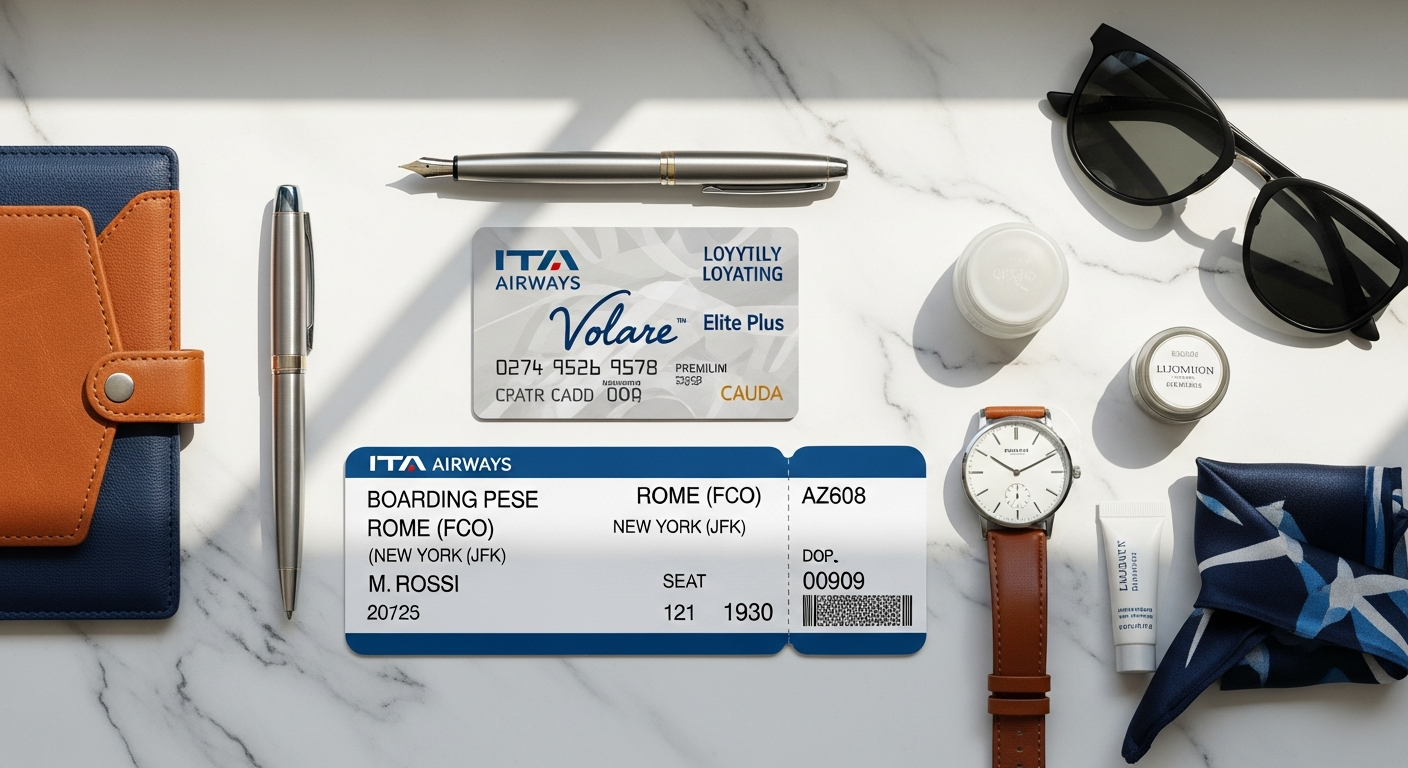
If you're planning your next European escape, you've likely heard whispers about ITA Airways' Volare loyalty program—and there's legitimate excitement behind the buzz. Three million travelers have already committed to this rewards ecosystem, joining one of Europe's fastest-growing airline loyalty initiatives in less than three years since launch. Yet here's the reality: many members accumulate points without truly understanding how to weaponize them, leaving substantial value unclaimed with every booking.
The gap between casual users and strategic optimizers is staggering. One person might redeem 50,000 points for a modest domestic flight, while another uses that same balance for a premium international journey or a portfolio of experiences. ITA Airways designed Volare as a genuinely accessible program—free to join, welcoming both weekend travelers and frequent business flyers, stripped of the unnecessary complexity that plagues legacy airline programs. The real competitive advantage isn't membership itself; it's the knowledge of how to navigate the tiered structure, activate multiplier promotions, and identify which redemption methods deliver outsized returns.
Throughout this guide, I'll reveal the mechanics that separate point hoarders from strategic wealth-builders. You'll understand how to progress through membership tiers, capitalize on point accelerators that can boost earnings by up to 100%, choose between redemption methods that dramatically impact your value, and navigate partner networks most travelers ignore. By the conclusion, you'll have an actionable roadmap for transforming Volare from a passive rewards collector into an active engine for premium travel experiences.
Start building your Volare strategy with ITA Airways today.
Understanding Volare's Tiered Membership Structure
The Four Club Levels Explained
Volare operates through four distinct membership tiers: Smart, Plus, Premium, and Executive Club. Each represents a progression threshold, with escalating benefits that compound your value as you climb. The structure isn't arbitrary—it's designed to reward increasing engagement while keeping the entry level accessible to everyone.
At the Smart Club level, you gain access to the foundational Volare experience: baseline point earning, basic partner access, and entry-level recognition. This tier requires zero annual spending threshold, making it genuinely free-to-join with immediate earning potential from your first booking.
The Plus Club introduces meaningful benefits. Members unlock priority boarding, additional baggage allowances on select routes, access to airline lounges on specific flights, and enhanced earning rates on qualifying routes. Progression typically requires reaching an annual spending threshold around €2,500-€3,000, which many regular travelers hit naturally through their booking patterns.
Premium Club membership delivers tangible perks: guaranteed lounge access on all flights, dedicated customer service lines, higher baggage allowances, seat upgrades based on availability, and accelerated point earning on premium cabin bookings. This tier generally requires €5,000-€7,500 in annual spending, positioning it as the sweet spot for frequent business travelers or those taking multiple yearly trips.
Executive Club represents the pinnacle, reserved for the highest-engagement members. Benefits include unlimited lounge access worldwide, premium seat selection, baggage concierge services, exclusive event invitations, and earning multipliers that can reach 100% on targeted routes. Annual spending typically exceeds €15,000, making this tier accessible primarily to frequent international travelers or business account holders.
Status Rollover and Tier Maintenance
A critical feature often overlooked: Volare offers generous status rollover policies that protect your tier throughout the year. If you achieve Plus Club status in November, you maintain it through the following October, even if you don't hit the annual threshold again immediately. This buffer period prevents members from dropping tiers due to seasonal travel fluctuations.
The rollover mechanics also mean strategic planning matters. Front-load spending early in your membership year when promotions are most aggressive, then coast through lower-spending months while retaining your status. This approach minimizes the pressure to spend unnecessarily just to maintain tier eligibility.
Tier Benefits Compound with Point Earnings
The genius of Volare's structure lies in how tier membership amplifies point accumulation. A Premium Club member earning points at 1.5x multiplier on business class tickets generates significantly more rewards than a Smart Club member earning at standard rates. Over a year of regular travel, this compounding effect can produce 30-40% additional points from the same spending pattern.
Higher tiers unlock exclusive accelerators tied to specific destinations or travel classes. An Executive Club member might earn 100% bonus points (double points) on routes to major business hubs, creating exponential growth in their redemption capacity. These multipliers activate automatically once you're positioned in the right tier, making tier progression itself a wealth-building mechanism.
Strategic Point Earning Across ITA Airways and Partner Networks
Base Earning Rates and Ticket Classes
ITA Airways structures base earning around ticket class and route type. Economy tickets earn points at the standard rate—typically 1 point per euro spent on the ticket base fare. Business class tickets generate earning at 2-3x the economy rate, meaning a €3,000 business ticket could produce 6,000-9,000 base points rather than 3,000.
The nuance matters: points are calculated on the base fare only, not taxes or surcharges. A €1,000 flight with €300 in taxes earns points only on the €1,000 component. Understanding this distinction prevents overestimating your earning potential on heavily taxed routes (particularly short-haul European flights with high aviation taxes).
Domestic routes within Italy typically offer standard earning rates, while international routes and premium destinations trigger bonus multipliers depending on your tier and the route's designation as a strategic focus area.
Point Accelerators: The Hidden Wealth Generator
Accelerators represent Volare's most powerful earning tool, yet most members activate them reactively rather than strategically. These promotional multipliers can boost earning by 50%, 75%, or even 100%—meaning you earn double points on qualifying flights. The triggers vary: destination-specific accelerators (50% bonus to Berlin, 100% bonus to New York), seasonal promotions (holiday periods, summer travel windows), and class-specific boosters (premium cabin multipliers).
The strategy emerges when you recognize which accelerators align with your natural travel patterns. If you're booked for a Paris trip in March, and ITA Airways is running a 75% accelerator on Paris routes, that's a 1.75x multiplier on an already solid earning opportunity. Build your calendar around these promotions rather than booking independently, and you'll accelerate tier progression by months.
Leveraging Commercial Partner Networks
Beyond airline flights, Volare's commercial partnerships unlock diverse earning channels. Hotel bookings through the Volare portal often generate 3-5 points per euro—sometimes higher during promotional periods. Car rental, shopping, dining, and travel services all contribute points, creating a secondary earning stream that compounds your flight-based accumulation.
For frequent business travelers, this becomes substantial. Someone taking 12 annual flights while also booking hotels, rental cars, and corporate dining could earn 40-50% of their annual points from non-flight sources. The portal integration makes earning automatic once you route purchases through partner channels, requiring minimal behavior change beyond conscious partner selection.
Strategic pairing amplifies this further. A business trip that generates 8,000 flight points also produces 3,000+ hotel points and 1,500 car rental points through intelligent booking choices. Over multiple trips, this parallel earning effectively speeds up redemption timelines by months.
Maximize your partner earnings by booking through ITA Airways Volare partners.
Mastering the Art of Redemption: Cash&Points vs. Award Tickets
The Two Redemption Methods
Volare offers two fundamentally different redemption paths: Cash&Points and Award Tickets. Understanding when each delivers superior value is essential to avoiding redemption mistakes that waste points.
Cash&Points combines points with cash payment—you might use 20,000 points plus €150 to book a €400 ticket, effectively valuing your points at roughly €0.0125 per point. This method offers flexibility and lets you partially redeem smaller point balances that wouldn't unlock full award tickets independently.
Award Tickets represent pure points redemption—pay entirely with points, no cash required. However, taxes, surcharges, and fuel charges still apply as cash payments. A €400 flight might require 45,000 Award Ticket points but include €80 in taxes payable separately. This creates the perception of better value (you're redeeming points instead of cash) while masking the reality that you're still paying substantial cash amounts.
Calculating True Redemption Value
The crucial metric is your effective cents-per-point value. If you redeem 50,000 points for a €500 flight (including taxes), you're earning €500 in value across 50,000 points—a €0.01 per point redemption. That seems low until you compare it against alternatives.
Conversely, a business class redemption might require 80,000 points for a €2,400 flight (taxes included), delivering €0.03 per point—three times the value. Premium cabin redemptions almost always outperform economy redemptions point-for-point, assuming availability exists.
The hidden variable: many travelers assume Award Tickets provide better value because they don't see cash leaving their account for the ticket fare. In reality, the tax component often nullifies that advantage. A savvy optimizer calculates both methods for every potential booking, comparing total value delivered rather than assuming one method universally beats the other.
Geographic and Seasonal Redemption Strategy
Volare's redemption landscape tilts heavily toward Italy-based travel. Flights within Italy and short-haul European routes from Italian hubs display abundant availability and reasonable point requirements. Redeeming for a Rome-to-Milan flight or Milan-to-Paris journey typically delivers solid value with minimal point burn relative to ticket cost.
Long-haul international routes present challenges. Premium transcontinental routes (Milan to Tokyo, Rome to Singapore) often show limited award availability and steep point requirements that can exceed 150,000 points for economy—sometimes delivering less value than simply purchasing the ticket outright. This limitation doesn't make Volare worthless for international travel; it means you should approach international redemptions strategically rather than expecting the same value as domestic options.
Off-peak travel windows dramatically alter the redemption equation. Flying Tuesday through Thursday typically shows lower point requirements than weekend travel. Booking mid-morning departures rather than prime evening slots can reduce point costs by 10-20%. These seasonal and timing factors add complexity, but mastering them stretches your points further across genuinely premium experiences.
Point Transfers and Family Account Optimization
The Mechanics of Point Pooling
Volare permits point transfers between members with a minimum threshold typically set at 5,000 points per transfer. This enables powerful family optimization strategies where multiple household members pool points toward larger redemptions none could achieve individually.
A scenario: You've accumulated 35,000 points while your partner has 28,000—neither amount qualifies for premium international award tickets independently. Transfer your partner's 28,000 points to your account, creating a 63,000-point balance that now unlocks transcontinental business class opportunities neither could access separately. The transfer typically incurs a small fee (€15-€25), a trivial cost relative to the value unlocked.
Strategic Family Pooling for Compound Value
Extended family scenarios multiply this advantage. Three family members each with 30,000 points can consolidate into 90,000 points with a single beneficiary, potentially unlocking premium cabins or high-value redemptions that three separate bookings could never achieve. Parents planning a family vacation benefit enormously from this pooling mechanic—children's points combine with parents' balances to create genuinely transformative family travel experiences.
The psychological element matters too. Pooling creates accountability and intentionality. When three people contribute points toward a shared goal (annual family trip), the emotional commitment to maximizing that pooled value increases dramatically. Family members become more engaged with the program, hit tier progression milestones faster, and create reinforcing cycles of engagement.
Transfer Fees and Strategic Valuation
The transfer fee mathematics are straightforward: if you're moving 50,000 points and paying a €25 fee, you're investing 0.05% in transaction costs. Against a typical €0.01-€0.015 per-point value, that fee is negligible compared to the value locked in through pooling. The exception emerges only in minimal transfer scenarios where fees consume disproportionate percentages of the transferred balance.
Evaluate the fee against redemption outcomes. If family pooling enables a €2,000 business class ticket instead of three separate €600 economy bookings, the €25 transfer fee is invisible against the value differential. This mathematical reality means transfer fees should rarely block strategic pooling decisions.
Unlocking Hidden Value Through Commercial Partner Redemptions
The Partner Redemption Catalog
Beyond flights, Volare's commercial partner network offers surprising diversity: hotel night redemptions with luxury properties, restaurant dining vouchers at partner establishments, shopping credits at retail partners, experiences (spa treatments, adventure activities, cultural events), and rental car services. This breadth means your points balance can unlock value far beyond flight bookings.
Hotel redemptions deserve particular attention. A 50,000-point redemption might secure a three-night stay at a four-star property in a major European city—a vacation component worth €600-€800 paid entirely in points. For leisure travelers, these hotel redemptions sometimes deliver superior value compared to flight redemptions alone, particularly when hotel points from other programs have already covered accommodation costs.
When Partner Redemptions Outperform Flight Bookings
The evaluation framework is simple: compare the cost-per-night (for hotels), cost-per-night (for experiences), or cost-per-voucher against equivalent cash prices. If a hotel property shows €200/night rates but a Volare redemption requires 15,000 points, you're achieving €0.0133 per point—solid value. That same points balance applied to a flight might yield only €0.01 per point, making the hotel redemption the superior choice.
Seasonal promotions spike partner value unpredictably. Limited-time offers might temporarily boost hotel valuations or add bonus points to specific partner bookings. Building a redemption calendar that captures these windows—redeeming for flights during airline-focused promotions and switching to partner categories when they're featured—creates a blended strategy that maximizes average value across your redemption portfolio.
Integration with Multi-Leg Trip Planning
The strategic interplay emerges when planning comprehensive trips. Rather than purely maximizing flight points, consider bundling redemptions: 40,000 points for flights, 20,000 for a three-night hotel stay, and 15,000 for dining vouchers creates a complete vacation funded entirely through points, with each component optimized for value. Layering these redemptions means no single booking wastes points on low-value exchanges—each category gets the points allocation it deserves based on real-world value delivered.
Navigating Volare's Limitations and Strategic Workarounds
The Challenge of Premium International Routes
Volare's genuine limitation emerges with long-haul premium cabin availability. Award tickets on transcontinental routes often show restricted inventory, particularly for business and first class travel. A 150,000-point business class redemption to New York might seem achievable until you discover zero award seats exist across your desired travel window.
This isn't unique to Volare—all airline loyalty programs restrict premium cabin awards to preserve revenue—but understanding the limitation prevents frustration. Plan long-haul redemptions with 4-6 month lead times, demonstrate flexibility across multiple dates, and consider economy redemptions as fallback alternatives when premium inventory fails to materialize. Some elite travelers maintain secondary loyalty accounts with Volare partner airlines specifically to access these scarce premium awards through alternative programs.
Why Partner Airline Programs Sometimes Win
Here's the counterintuitive reality: sometimes booking ITA Airways flights through a partner airline's loyalty program delivers better value than Volare. A Star Alliance partner might require 45,000 points for an ITA flight that costs 65,000 Volare points, despite both being redeemable on identical ITA Airways flights. Maintaining supplementary loyalty accounts with key partners (Lufthansa Miles & More, Swiss Miles & More, United MileagePlus) creates optionality that pure Volare engagement cannot match.
This workaround proves most valuable when you're flexible about how you accumulate points. Earning through partner airlines or transferring balance across programs becomes a game when you recognize these arbitrage opportunities. Some sophisticated travelers deliberately mix program enrollments, capitalizing on whichever program shows superior availability for their specific routing.
Geographic Constraints and Creative Booking
Point availability concentrates heavily on routes from Italian hubs. Milan, Rome, and Venice show extensive award inventory; smaller regional airports display limited options. Similarly, intra-European routes show greater availability than intercontinental flights.
The creative workaround: book multi-city itineraries rather than direct flights when award availability constraints appear. If a direct Rome-to-New York award shows zero availability but Rome-to-Paris and Paris-to-New York each display abundant awards, book the two-leg journey. You'll spend more points (two segments instead of one) but gain flexibility and sometimes access better value through strategic stopover routing.
Building Your Personal Volare Optimization Strategy
Assessing Your Travel Patterns and Tier Alignment
Begin with brutal honesty about your annual flight spending. Track your bookings from the previous year: how many trips, average ticket cost, booking distribution across seasons. This historical data reveals which tier aligns naturally with your patterns—no point targeting Executive Club if your annual spending realistically lands at €8,000.
Next, project forward. Will your travel increase? Are you changing jobs to require more frequent business flights? Are you planning a major vacation? Let realistic future patterns inform your tier target, not wishful thinking. Smart Club membership makes sense if you fly 2-3 times annually; Premium Club becomes worthwhile at 10+ annual segments; Executive Club requires genuine frequent traveler status.
Creating Annual Earning Targets and Milestone Goals
Identify one premium redemption goal—not a vague "eventually" but a specific, priced-out objective. "A round-trip business class ticket to New York" becomes quantifiable when you research current Award Ticket requirements (typically 120,000-150,000 points) and calculate the earning runway needed. If you currently earn 25,000 points annually, you're looking at a 5-6 year accumulation timeline unless you accelerate earning through tier progression and multiplier campaigns.
This timeline clarity is powerful because it reveals whether the goal is realistic or requires strategy adjustment. Perhaps you target Premium Club status (hit by year-end) to unlock 1.5x earning multipliers, compressing the redemption timeline from six years to four. Or you concentrate points toward smaller redemptions annually rather than hoarding for one mega-goal, creating psychologically reinforcing victories along the way.
Timing Major Purchases Around Accelerators
Once you understand your earning target, consciously time major bookings around promotional windows. If ITA Airways launches a 100% accelerator on Paris routes in Q2, and you're already planning a Paris trip, book during that window rather than waiting. An accelerator effectively doubles your point return, meaning a €2,000 booking yields 4,000 points instead of 2,000—the difference between reaching a milestone and falling short.
Build a promotional calendar by monitoring ITA Airways' Volare communications and partner announcements. Most airlines follow seasonal patterns (summer promotions in Q2, holiday accelerators in Q4), so predictions become increasingly accurate after observing one or two promotional cycles.
Balancing Earning Velocity with Redemption Flexibility
A subtle tension emerges between maximizing earning speed and maintaining redemption optionality. Aggressive earning strategies (booking premium cabins, pursuing tier upgrades, timing accelerators) can concentrate points toward specific goals, potentially locking you into predetermined redemption paths. If you're earning aggressively toward a business class New York redemption, your points balance might become too depleted for spontaneous weekend trips or family emergencies requiring last-minute travel.
The solution lies in stratified saving: allocate a percentage of earning toward committed redemption goals while maintaining a flexible reserves pool. Perhaps 70% of points target the New York business class goal while 30% stays available for opportunistic redemptions. This approach requires discipline but prevents the frustration of hitting a redemption goal while lacking points for unexpected travel opportunities.
Tracking Points Portfolio and Managing Expiration
Volare's points don't expire through pure account inactivity—as long as you maintain account activity (even a single flight or partner earning) every 24 months, your balance persists. However, points do expire if your account becomes inactive. Set calendar reminders at the 23-month mark to ensure account activity, whether through a small flight booking or a partner hotel or dining transaction. The €50-€100 investment in account maintenance is trivial against losing thousands of dormant points.
Simultaneously, monitor your points balance monthly. Recognize approaching opportunities (accelerators matching your travel dates, partner promotions favoring your preferences) and adjust redemption timing accordingly. Some travelers maintain spreadsheets tracking points balance, known redemption opportunities, and projected earning timelines—perhaps excessive for casual users, but essential discipline for optimizers pursuing specific goals.
Taking Command of Your Volare Journey
The ITA Airways Volare loyalty program delivers genuine rewards—but only when you move beyond passive accumulation into strategic optimization. The mechanics separating engaged members from casual users are concrete: understanding your tier benefits, activating point accelerators aligned with your travel, choosing redemption methods that maximize value, and leveraging partner networks most travelers ignore. Three million members have recognized the program's potential; your competitive advantage emerges from implementing insights the majority never uncover.
Your immediate action plan is straightforward. First, audit your current travel spending and identify which tier you're positioned to reach this year. Calculate the annual spending or segment count required and determine if tier progression aligns with realistic travel patterns. Second, activate point accelerators on your upcoming bookings—check current promotions before finalizing any flight purchase. Third, map out one premium redemption goal with real numbers attached: destination, class of service, estimated point requirement, and earning timeline.
The gap between a modest points balance and a transformative travel experience often comes down to intention and strategy. Whether your goal is a business class upgrade, a family vacation, or a luxury redemption, the path becomes clearer once you reverse-engineer from outcome to earning requirements. Begin implementing these strategies today—the difference in your points velocity will become apparent within your first strategic booking window, and momentum builds from there.
Leave a Reply