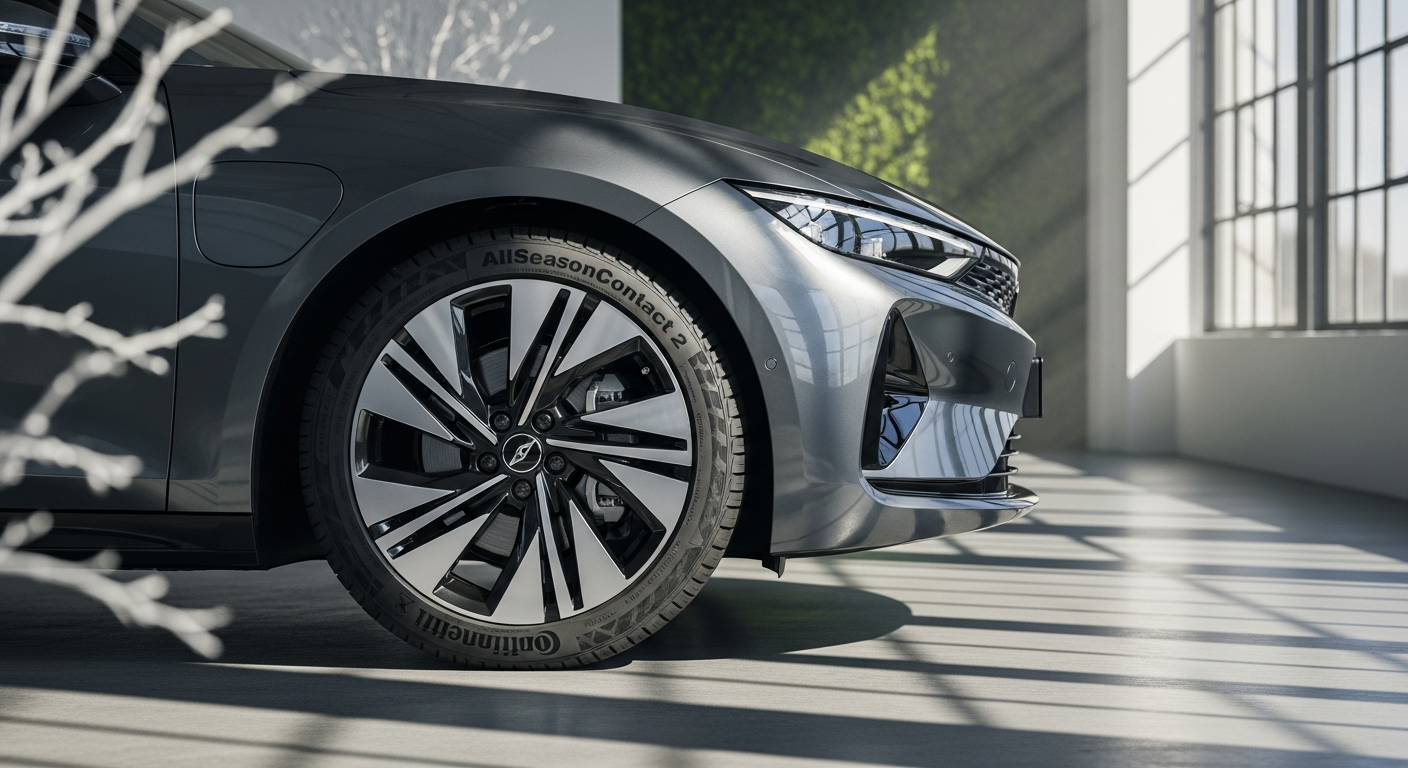
Changing tires twice a year costs time, money, and hassle—yet millions of drivers still do it. The seasonal tire swap has become so routine that few question whether it's actually necessary anymore. What if one tire could confidently handle everything from scorching summer asphalt to icy winter roads?
The Continental AllSeasonContact 2 challenges the conventional wisdom that you need separate seasonal sets, and it's backed by real-world testing to prove it. All-season tires have evolved dramatically over the past decade, with the Continental AllSeasonContact 2 representing the premium end of this category—engineered with advanced high-silica compounds and precision tread patterns that deliver performance across wet, dry, and snowy conditions.
Find Continental AllSeasonContact 2 tires on reifen.at today.
The Engineering Behind Year-Round Reliability
The Continental AllSeasonContact 2 doesn't achieve its all-weather capability through luck or compromise. Instead, it relies on materials science and precision engineering that work together across temperature extremes.
High-Silica Compound Technology
The tire's advanced high-silica compound maintains flexibility even as temperatures plummet in winter, while resisting degradation during scorching summer heat. This formulation ensures the rubber responds consistently whether you're accelerating in July or navigating snow in December. The compound doesn't harden excessively in cold conditions or become overly soft when temperatures rise—a balance that traditional all-season tires struggled to achieve.
Specialized Tread Pattern Design
The tread pattern serves dual purposes simultaneously. It evacuates water efficiently during summer downpours, reducing hydroplaning risk, while simultaneously gripping snow through micro-edges and sipes that bite into winter precipitation. This simultaneous optimization of wet and snowy performance represents a significant engineering achievement compared to earlier all-season designs that typically sacrificed one condition for another.
EU Tire Label Performance Metrics
The Continental AllSeasonContact 2 consistently delivers B-rated fuel efficiency, reflecting its low rolling resistance design. Wet grip ratings typically reach B-class, indicating strong braking and traction in rainy conditions. Noise levels hover around 71 dB, positioning it in the quieter segment of all-season tires. These verified ratings provide concrete performance benchmarks rather than marketing claims.
Winter Performance Comparable to Dedicated Winter Tires
Independent testing frequently reveals that the Continental AllSeasonContact 2's winter traction and snow handling rival dedicated winter tires in real-world scenarios. The high-silica compound ensures the tire maintains grip on ice and packed snow without requiring the specialized compounds found in winter-only alternatives.
Real-World Performance Across Every Season
Engineering specifications mean little without proven performance when you're actually driving. The Continental AllSeasonContact 2's reputation stems from consistent real-world results across changing conditions.
Summer Driving Characteristics
Summer performance delivers wet-road grip that inspires confidence during highway downpours. Braking distances remain short, and aquaplaning resistance protects against hydroplaning on wet surfaces. Drivers report that the tire handles dry pavement with minimal rolling resistance, contributing to fuel efficiency during summer road trips.
Winter Traction and Snow Handling
When snow arrives, the tire provides secure traction on packed snow and slush. Acceleration from complete stops on snow-covered roads demonstrates strong grip without wheel spin. Ice handling remains competent, though—as with all all-season tires—it doesn't match the extreme ice performance of dedicated winter compounds.
Spring and Fall Transition Performance
The tire handles unpredictable temperature swings effectively during shoulder seasons. Variable conditions that cause traditional summer tires to feel uncertain present no significant challenge to the Continental AllSeasonContact 2's design.
Independent Testing Validation
ADAC and AutoBild, two of Europe's most respected automotive testing organizations, have consistently ranked this tire among top performers in all-season categories. These aren't paid endorsements—they're comprehensive, controlled tests that validate the tire's genuine capability.
Long-Term Durability Expectations
The tire is engineered for extended mileage, with many drivers reporting 40,000 to 50,000+ miles of performance before needing replacement. The durable compound resists rapid wear while maintaining grip throughout the tire's lifespan.
The Economics of Going All-Season
The financial case for all-season tires extends far beyond the sticker price of the tire itself.
Direct Pricing Comparison
Individual Continental AllSeasonContact 2 tires range from approximately $70 to $125 per tire depending on size and retailer. A complete set costs roughly $280 to $500. Maintaining separate summer and winter sets typically costs double this investment, requiring both sets to be purchased and stored.
Check current pricing and available sizes on reifen.at.
Hidden Costs of Seasonal Switching
Beyond tire purchase price, seasonal changeovers incur installation labor twice yearly, typically $100 to $300 per service. Tire storage solutions for the off-season set consume space in garages or require paid storage facilities. The time spent scheduling appointments and completing changeovers compounds the inconvenience. Over five years, these hidden costs often exceed $1,000 for drivers maintaining seasonal tire sets.
Fuel Efficiency Financial Benefits
The tire's low rolling resistance reduces fuel consumption compared to heavier winter tires or less-efficient summer alternatives. For drivers covering 12,000 to 15,000 miles annually, this fuel efficiency advantage translates to $100 to $200 in annual fuel savings, depending on current fuel prices and driving patterns.
Resale Value Considerations
Vehicles equipped with all-season tire setups avoid the tire change interval entirely during ownership, preserving consistent tread depth and performance. Prospective buyers appreciate not inheriting immediate tire replacement expenses.
Break-Even Analysis
For most drivers, the all-season investment breaks even within two to three years when accounting for avoided seasonal changeover costs, storage elimination, and fuel efficiency gains. Drivers who keep vehicles longer experience increasingly favorable economics.
Who Benefits Most From This Tire
The Continental AllSeasonContact 2 delivers maximum value for specific driver profiles.
Urban and Suburban Commuters
Drivers with moderate annual mileage on predictable routes in temperate climates find this tire ideal. City commuting and suburban driving typically don't push tires to their performance extremes, allowing the Continental AllSeasonContact 2's balanced engineering to shine.
Fleet Operators and Business Drivers
Companies managing vehicle fleets benefit substantially from single-tire solutions. Simplified inventory management, reduced changeover labor costs, and eliminated storage requirements make all-season tires attractive for fleet economics.
Mild Winter Climate Residents
Drivers in regions where winter brings occasional snow rather than sustained ice and deep snow accumulation find all-season performance entirely adequate. These climates represent the tire's ideal operating environment.
Families Prioritizing Convenience
Households with multiple vehicles and complex schedules appreciate avoiding the seasonal tire-swap ritual. The convenience factor alone justifies the choice for many families seeking to simplify vehicle maintenance.
Storage-Limited Drivers
Apartment dwellers and those without dedicated garage space avoid storage challenges by using one tire set year-round. This practical advantage alone makes all-season tires the only viable option for some drivers.
Where the Continental AllSeasonContact 2 Shows Its Limits
Despite its strong overall capability, this tire does have measurable performance boundaries.
Dry Braking Performance
On perfectly dry pavement, the shortest possible braking distances belong to specialized summer performance tires. The Continental AllSeasonContact 2's dry braking performance trails these dedicated options, though the difference remains modest in real-world conditions. For drivers who spend significant time pushing tires to the limit, this represents a genuine trade-off.
Aquaplaning Resistance
During heavy downpours with standing water, the tire's aquaplaning resistance falls slightly behind the best summer tires. Emergency maneuvers through deep water present slightly higher risk compared to premium wet-weather specialists.
Steering Precision and Feedback
Sports-oriented summer tires deliver sharper steering response and more direct feedback to the driver. The Continental AllSeasonContact 2 offers a softer, more comfortable steering feel that some performance-focused drivers perceive as less precise.
Extreme Winter Climate Performance
In regions where temperatures consistently stay well below freezing and snow accumulation reaches substantial depths, dedicated winter tires with softer compounds specifically engineered for extreme cold deliver superior performance. The Continental AllSeasonContact 2 remains competent in these conditions but doesn't achieve the specialized peak performance of winter-specific designs.
Aggressive Driving and Track Applications
Track driving and aggressive cornering at performance limits reveal the tire's compromise nature. Dedicated summer tires maintain grip and stability better when pushed to extreme lateral forces. This limitation affects essentially no typical drivers but matters for those seeking maximum performance in controlled track environments.
Make Your Tires Work Smarter, Not Harder
The Continental AllSeasonContact 2 represents a genuine shift in how drivers can approach tire management. Rather than viewing all-season tires as a compromise, this particular model delivers measurable performance that rivals dedicated seasonal options in most real-world scenarios. Its consistent recognition as a test winner from respected automotive organizations validates what drivers are discovering—this tire actually performs.
The real advantage isn't just about avoiding the seasonal swap ritual, though that convenience matters significantly. It's about choosing a tire engineered with serious technology that handles wet roads with summer-tire confidence, manages snow with winter-tire competence, and does both while sipping fuel efficiently and keeping road noise minimal. For most drivers in temperate and mild winter climates, that's a compelling combination that justifies the premium price point.
Your decision ultimately hinges on your specific situation. If you live where winter means occasional snow rather than months of ice, drive predictable routes, and value simplicity, this tire deserves serious consideration. If you're in an extreme climate or demand maximum performance in every condition, seasonal switching might still make sense. Either way, the Continental AllSeasonContact 2 has earned its reputation through genuine capability, not marketing alone.
Explore Continental AllSeasonContact 2 options and competitive pricing on reifen.at.
Leave a Reply