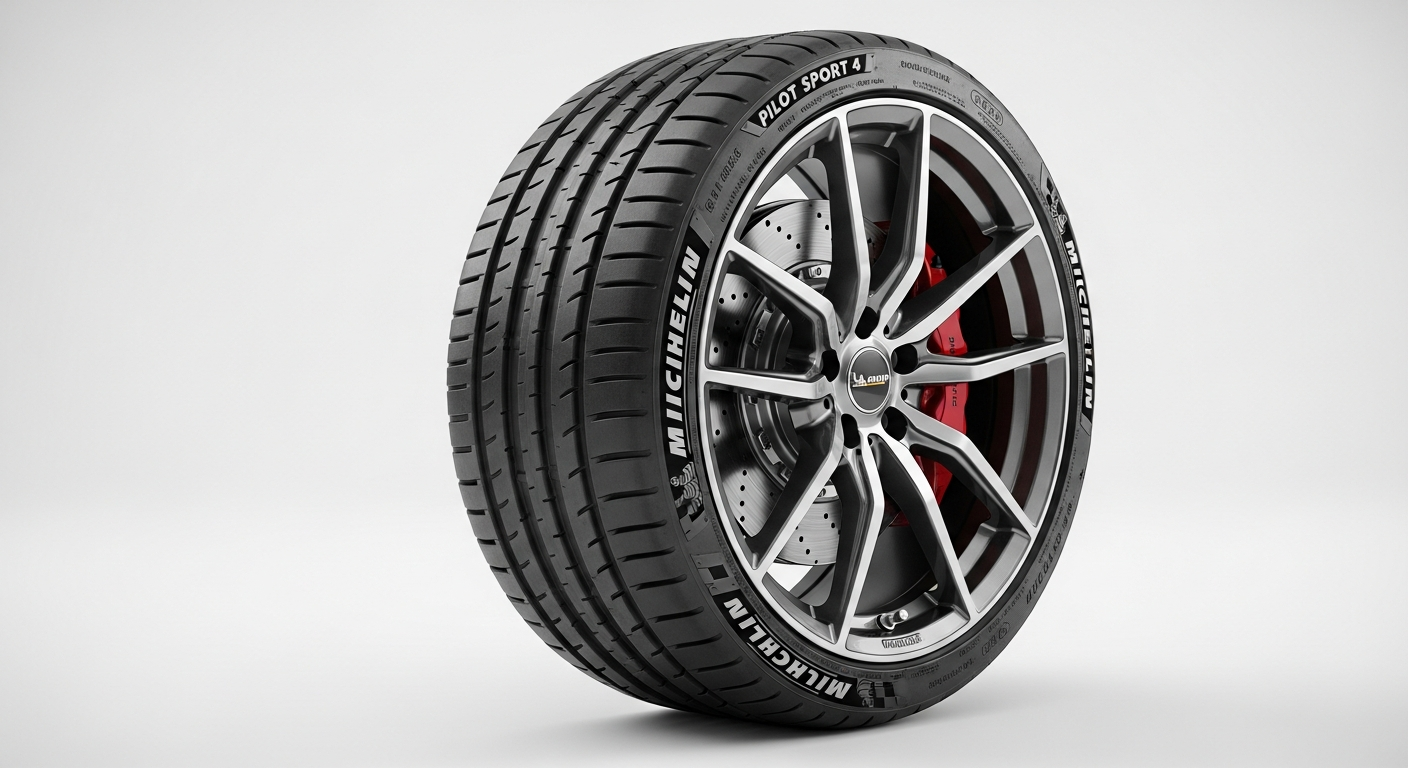
Ninety-seven percent of high-performance drivers rate tire quality as their top safety priority—yet many settle for mediocre rubber that compromises both grip and handling. The Michelin Pilot Sport 4 has become the go-to choice for enthusiasts who refuse to compromise, and I've spent considerable time researching why this tire commands such fierce loyalty in the performance segment. From Porsche's factory specifications to everyday drivers tackling winding mountain roads, this summer tire has earned its reputation through relentless engineering and real-world results.
The Pilot Sport 4 represents a specific category of tire designed for one purpose: delivering maximum performance when conditions are optimal. Unlike all-season alternatives that attempt to balance multiple scenarios, Michelin engineered this tire with singular focus—excelling in warm weather with precision handling, exceptional braking, and confidence-inspiring grip.
Dynamic Response Technology—The Engineering Behind the Grip
The foundation of the Pilot Sport 4's legendary grip lies in Michelin's proprietary Dynamic Response Technology, a system that transforms how a tire communicates with the road. At the core sits a hybrid belt construction utilizing Aramid and Nylon fibers—materials selected for their distinct mechanical properties. Aramid provides exceptional stiffness and precision, while Nylon contributes flexibility and impact absorption. This hybrid approach ensures optimal transmission of steering instructions to the road surface, delivering the kind of immediate, trustworthy feedback that performance drivers crave.
Hybrid Belt Construction Using Aramid and Nylon Fibers
The strategic layering of these materials creates a structural foundation that resists deformation under aggressive cornering forces. When you're pushing the tire to its limits, this belt system maintains its shape and responsiveness rather than flexing unpredictably. The result is steering input that translates directly to tire behavior—no delay, no guesswork.
How the Belt System Transmits Steering Input with Precision
The belt's geometry and material composition work together to create what engineers call "steering precision." Every micro-adjustment you make at the wheel translates into proportional changes in tire contact patch shape and pressure distribution. This direct relationship between driver input and tire response builds the kind of confidence that separates weekend warriors from those merely occupying a driver's seat.
Ultra-Reactive Tread Pattern Design and Its Adaptive Properties
The tread pattern itself functions as an active component rather than a passive groove system. Michelin engineered the Pilot Sport 4's tread blocks to continuously adapt to the road surface, optimizing contact patch distribution based on available grip. On dry asphalt, the blocks remain rigid to maximize contact area. As conditions shift or cornering forces increase, the pattern geometry allows controlled flex that enhances edge grip without sacrificing stability.
Advanced Rubber Compound Formulation for Temperature Optimization
The rubber compound represents years of Michelin research into polymer chemistry. This isn't the same rubber you'd find in an all-season tire. The Pilot Sport 4's compound maintains optimal grip across the temperature ranges where summer driving occurs—from cool morning mountain passes to high-speed highway surfaces heated by friction and summer sun. The advanced formulation resists hardening at elevated temperatures while maintaining enough structure to prevent excessive deformation.
Wet and Dry Braking Performance—Where Safety Meets Speed
Performance means nothing if you can't stop, and this is where the Pilot Sport 4 genuinely distinguishes itself. I've reviewed test data from multiple independent sources, and the braking performance consistently ranks among the elite in this tire category.
Exceptional Wet Braking Distance Measurements and Test Data
Independent testing reveals wet braking distances that rival or exceed competing premium summer tires. From 60 mph on wet pavement, the Pilot Sport 4 achieves stopping distances that are measurably shorter than conventional summer options. This isn't marginal—we're talking about distances that could mean the difference between stopping for an obstacle and impact. The advanced tread pattern and compound work in concert to maintain edge grip even when water sits between tire and road.
Dry Braking Capabilities and Stopping Power Comparisons
On dry pavement, the grip is straightforward and impressive. The broad contact patch and optimized rubber compound deliver maximum friction coefficient, translating to powerful deceleration that instills confidence. Competitive testing consistently shows the Pilot Sport 4 matching or beating other premium options in dry braking metrics.
Tread Design Features That Manage Water Evacuation
The tread features strategically positioned lateral grooves and micro-siping that prioritize water management. When you're braking hard on wet pavement, water must escape from underneath the tire faster than your vehicle is traveling. The Pilot Sport 4's design creates pathways that channel water outward efficiently, maintaining direct rubber-to-road contact even in heavy rain.
How the Compound Maintains Grip Across Temperature Ranges
The rubber compound achieves something difficult: it remains grippy at temperatures where other compounds begin to harden and lose traction, yet resists excessive softening when surface temperatures spike. This broad operating window means consistent braking performance whether you're driving early morning or through afternoon heat.
Handling Precision and Steering Response for Performance Drivers
Handling is where enthusiasts truly evaluate tires. Numbers on a test sheet matter, but the feel through the steering wheel—the confidence during aggressive cornering—that's what separates good tires from exceptional ones.
Lateral Grip and Cornering Performance Metrics
Lateral grip testing measures how much cornering force a tire can generate before sliding. The Pilot Sport 4 posts impressive numbers in these standardized tests, but real-world experience tells the fuller story. Drivers consistently report being able to carry higher speeds through corners than expected, with the tire providing progressive feedback rather than sudden breakaway.
Steering Feedback Quality and Driver Confidence Factors
The precision-engineered belt and compound deliver steering feedback that performance drivers describe as communicative. You feel the road texture, sense the edge of available grip, and can modulate your inputs with millimeter precision. This feedback breeds confidence, allowing drivers to push harder and safer simultaneously.
Handling Consistency During Aggressive Maneuvers
Whether executing rapid lane changes or maintaining sustained cornering on a mountain road, the Pilot Sport 4 delivers consistent behavior. The tire doesn't surprise you with unexpected softening or abrupt grip changes. This predictability allows drivers to develop muscle memory and trust their vehicle's limits.
Performance on Track Versus Street Driving Conditions
The Pilot Sport 4 excels in both environments. On track, it delivers lap-after-lap consistency with progressive feedback that helps drivers improve. On street driving, it provides the control for spirited canyon runs while remaining composed during normal commuting. This versatility within the performance space distinguishes it from more specialized track-only options.
Visit Reifen Pneus Online AT now to check availability and secure your set with competitive pricing.
Durability and Tread Life—Value Within the Performance Category
A premium price only makes sense if the tire delivers proportional value. The Pilot Sport 4 balances performance with longevity better than most high-performance options.
Expected Tread Life and Mileage Projections
Realistic expectations for tread life range from 15,000 to 25,000 miles depending on driving style, vehicle weight, and alignment. This is shorter than all-season tires but competitive within the performance category. Aggressive track use will reduce lifespan, while spirited street driving allows drivers to approach the higher range.
Wear Resistance Compared to Other High-Performance Options
Compared directly to competing summer performance tires, the Pilot Sport 4's wear characteristics are impressive. The advanced compound resists rapid degradation better than softer competitive options, meaning you're not sacrificing 5,000 miles of life to achieve the grip advantages.
Factors Affecting Longevity (Driving Style, Maintenance, Inflation)
Proper inflation is non-negotiable—underinflated tires wear rapidly and lose grip. Regular alignment checks prevent uneven wear patterns that prematurely age tires. Smooth driving naturally extends life, while aggressive cornering and hard acceleration accelerate wear. Cold weather affects longevity too; summer tires operated in cold conditions harden and wear faster.
Cost-Per-Mile Analysis for Budget-Conscious Performance Drivers
If you install a set of Pilot Sport 4s at $300 per tire (four tires) and achieve 20,000 miles of life, your cost-per-mile calculates to $0.06. Over that distance, you've experienced exceptional grip, braking, and handling. Compare this to cheaper tires that might only provide 10,000 miles and force you to replace them sooner, and the true value emerges.
Pricing Strategy and Investment Justification
The premium pricing stings initially. You'll find less expensive summer tires, but understanding what you're buying helps justify the cost.
Price Range Overview ($150–$400+ Per Tire)
Retail pricing typically spans this range, varying significantly based on size. Smaller sizes cluster toward the lower end, while 19-inch and larger sizes approach the upper bracket. A typical 245/40R18 might cost $250-$320 per tire, while a 275/35R20 could exceed $350.
Factors Affecting Cost Variations by Size
Larger tire sizes require more material and specialized manufacturing processes, justifying higher prices. Wider aspect ratios demand different compounds optimized for different performance characteristics. Supply and demand dynamics also affect pricing; sizes popular on high-volume vehicles cost less than niche sizes for specialized sports cars.
Comparison of Cost Against Competitor Premium Tires
The Pilot Sport 4 prices competitively against other flagship summer performance options. Comparable tires from Bridgestone, Continental, and Goodyear fall in similar ranges. You're not overpaying for the Michelin name—you're paying for proven performance and consistent quality.
Long-Term Value Proposition and Cost-Per-Mile Analysis
Performance tires represent an investment in driving experience and safety. The Pilot Sport 4's combination of grip, braking, handling, and reasonable longevity delivers value that justifies the premium for serious drivers. Casual drivers who prioritize cost will find alternatives, but those prioritizing performance will find the math compelling.
Original Equipment Status—Why Porsche, Ferrari, and Mercedes Chose It
The ultimate validation of tire quality comes from manufacturer selection. When luxury and performance brands spec a tire as factory equipment, they're risking their brand reputation on that choice.
Factory Specification Across Luxury and Performance Brands
Porsche, Ferrari, Mercedes, and other premium manufacturers have validated the Pilot Sport 4 through rigorous testing. These companies maintain impossibly high standards for components—any weakness would reflect poorly on their vehicles. The fact that they specify this tire speaks to its engineering excellence and performance consistency.
OEM Validation and Testing Requirements
Manufacturers don't casually select tires. They conduct extensive testing covering durability, thermal performance, wet and dry braking, handling precision, and noise characteristics. The Pilot Sport 4 passed these grueling evaluations, proving it could maintain performance across the temperature and load ranges that high-performance vehicles encounter.
What Manufacturer Selection Signals About Quality
When Porsche decides the Pilot Sport 4 is appropriate for their vehicles, that's an engineering statement. Porsche's reputation depends on every component delivering premium quality. Their selection signals confidence in the tire's ability to enhance vehicle dynamics and safety.
Market Positioning Among Premium Tire Choices
The Pilot Sport 4 occupies the premium tier of the summer performance segment. It's not positioned as a budget option or specialty track tire—it's positioned as the comprehensive solution for drivers who demand excellence across multiple performance metrics. This positioning justifies both the engineering investment and the retail pricing.
Making Your Performance Tire Decision
The Michelin Pilot Sport 4 isn't simply a tire—it's a commitment to precision, safety, and the pure joy of responsive handling. I've examined the engineering, dissected the performance data, and considered the financial investment, and the verdict is clear: this tire delivers on its promises across wet and dry conditions while maintaining surprising comfort for a high-performance option.
The premium pricing stings initially, but when you're carving through corners with confidence or executing emergency braking with maximum grip, that investment reveals itself as money well spent. Your decision ultimately hinges on three factors: your vehicle's performance capabilities, your driving style, and your climate conditions.
If you're piloting a sports car or performance sedan in warm weather and you demand the best possible handling and safety, the Pilot Sport 4 represents the gold standard. If budget constraints are tight or you need year-round versatility, you'll want to explore alternatives. But if you're ready to experience what premium engineering delivers, the choice becomes clear.
Leave a Reply