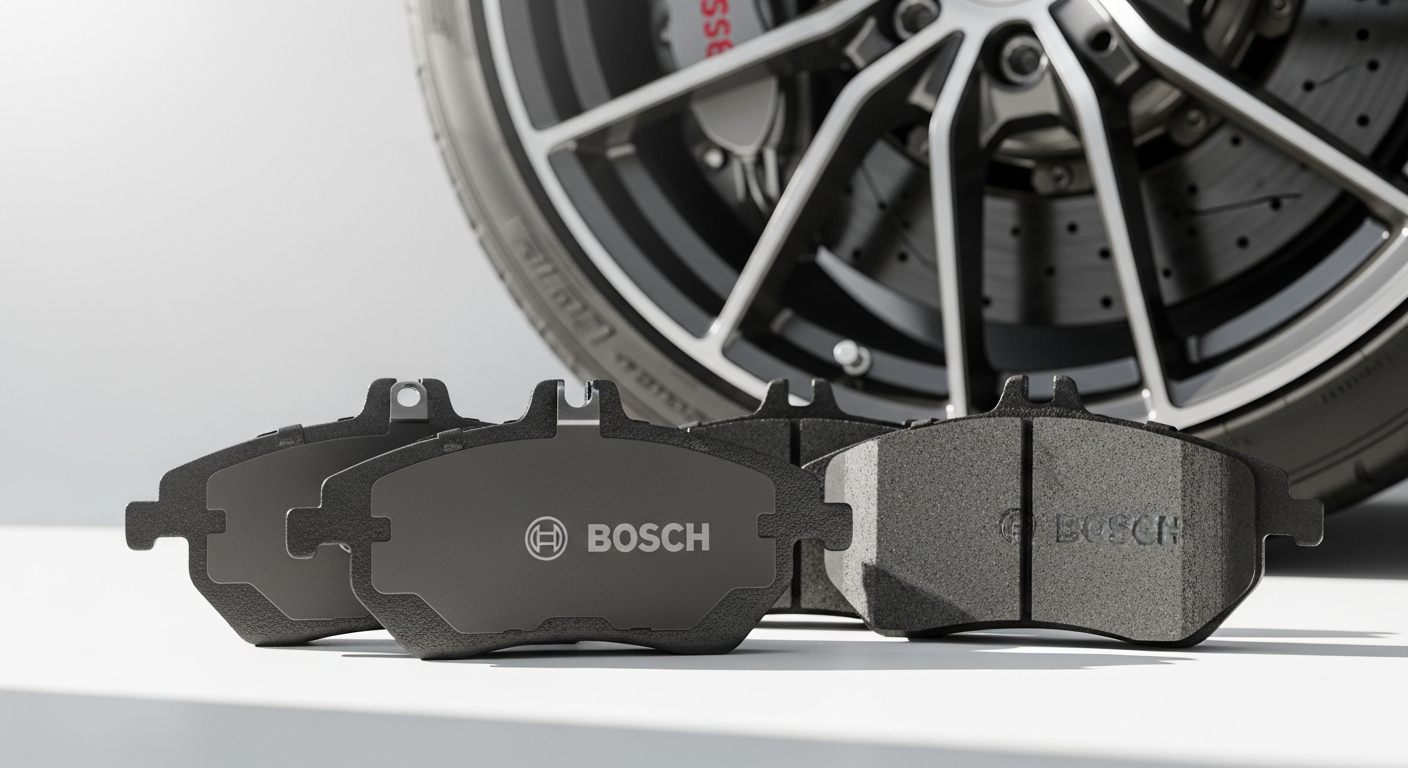
Most drivers treat brake pads as an afterthought—a commodity purchase made only when warning lights illuminate the dashboard. Yet stopping distance, control precision, and overall safety depend directly on this single component. The friction material you select determines whether your vehicle responds with confidence or uncertainty when you need it most.
Low-metallic brake pads occupy a performance sweet spot, blending the stopping authority of semi-metallic compounds with the reduced dust of ceramic alternatives. The Bosch 0 986 424 098 variant exemplifies this category—engineered to original equipment manufacturer specifications while remaining accessible for safety-conscious vehicle owners who reject compromise. This guide examines the technical architecture that makes low-metallic formulations effective, compares them against competing friction materials, and reveals why thermal stability fundamentally matters more than most drivers realize.
What Makes Low-Metallic Brake Pads Different from Other Friction Materials
Composition Breakdown and Material Science
Low-metallic pads combine metal particles—typically copper, iron, or steel—with organic resin binders. This hybrid approach differs fundamentally from pure ceramic formulations, which rely on ceramic compounds and glass fibers, or semi-metallic variants, which contain substantially higher metal content. The metal particles in low-metallic compounds provide superior heat conductivity and friction consistency across temperature ranges, while the organic matrix offers vibration dampening properties.
Friction Coefficient Range and Temperature Response
The friction coefficient—a measurement of how much grip a pad material generates—determines pedal response characteristics. Low-metallic pads typically maintain friction coefficients between 0.35 and 0.45 across ambient temperatures from freezing to extreme heat. This stability means your braking response remains predictable whether you’re executing a winter emergency stop on ice or descending mountain passes in summer heat. Ceramic alternatives often exhibit friction variations of 10-15% across temperature extremes, while semi-metallic compounds can generate excessive heat in city driving scenarios.
Dust Generation and Wheel Maintenance
Low-metallic formulations generate more brake dust than ceramic alternatives but substantially less than traditional semi-metallic pads. This characteristic creates practical implications for vehicle owners who prefer cleaner wheels but don’t require the premium price tag associated with ceramic compounds. The dust composition—primarily iron oxide rather than hazardous copper—presents fewer environmental and health concerns, particularly in regions with strict air quality regulations.
Noise and Vibration Profiles
Precision engineering in low-metallic pads addresses noise concerns without relying on anti-squeal shims or wear sensors. The material composition naturally dampens vibrations generated during friction engagement, resulting in quieter operation across both gentle city driving and aggressive emergency braking. Users frequently report that low-metallic pads deliver superior pedal feedback compared to ceramic alternatives, enhancing driver confidence during critical braking events.
Thermal Conductivity and Heat Dissipation
The metal content in low-metallic formulations enables superior thermal conductivity compared to ceramic compounds. Heat generated during braking dissipates more efficiently into the rotor and caliper assembly, preventing the brake fluid temperature escalation that causes fade during sustained braking. This characteristic proves invaluable during mountain descents, towing scenarios, or track-day conditions where repeated heavy braking generates cumulative thermal stress.
Cost Positioning and Value Proposition
Low-metallic pads occupy the middle tier of the aftermarket friction material spectrum. They cost significantly less than premium ceramic compounds while delivering performance that exceeds budget semi-metallic alternatives. For vehicle owners seeking genuine OE-equivalent performance without premium pricing, this positioning represents optimal value—you’re purchasing engineering quality rather than brand prestige.
Technical Specifications of the Bosch 0 986 424 098 Brake Pad Set
Dimensional Details and Fitment Implications
The Bosch 0 986 424 098 set features precise dimensions: 47.4 mm height, 109.2 mm width, and 18 mm thickness. These measurements reflect manufacturing tolerances tight enough to ensure perfect caliper fit without shimming or modification. The axle set configuration includes both left and right pads, eliminating the asymmetrical braking scenarios that occur when only one pad is replaced. Vehicle compatibility depends on these exact dimensions matching your caliper geometry—precision engineering that defines the difference between seamless installation and frustrating adjustment requirements.
WVA Number 20775 Cross-Reference
The WVA (World Wear-Rate Approval) number 20775 provides a universal identifier recognized across European vehicle databases, parts catalogs, and brake system specifications. This cross-reference system enables mechanics and parts suppliers to verify compatibility instantaneously, eliminating installation errors. When sourcing replacements, matching the WVA number guarantees that you’re selecting pads engineered for your specific brake system architecture.
ECE-R90 Certification Standards
ECE-R90 certification represents stringent European safety approval requiring demonstrated performance across multiple test scenarios: braking force consistency, fade resistance, water immersion effects, and thermal stability measurements. This regulatory approval means the Bosch pads have undergone independent laboratory testing verifying that they perform reliably under conditions far exceeding normal driving demands. You’re purchasing verified performance, not manufacturer claims alone.
Axle Set Configuration and Balanced Braking
Supplying pads as an axle set ensures balanced braking force distribution across both front wheels. Replacing only one pad creates pressure differentials and potentially dangerous pulling toward the non-replaced side during emergency stops. The complete set approach—standard for quality aftermarket suppliers—prevents this safety compromise from occurring through incomplete replacement practices.
Material Composition and OE Quality Standards
Bosch manufactures these pads using production processes and material specifications derived from original equipment contracts with vehicle manufacturers. This OE-quality approach means these aftermarket pads often exceed the performance of stock pads installed during vehicle assembly, reflecting manufacturing improvements developed since your vehicle rolled off the production line.
Absence of Integrated Wear Sensors
Unlike some premium Bosch variants, the 0 986 424 098 set doesn’t include integrated wear sensors that trigger warning lights when pads approach minimum thickness. Instead, these pads rely on acoustic wear warnings—metal tabs that create audible grinding sounds as the friction material depletes. This design choice reduces manufacturing complexity and cost while maintaining safety functionality, though some owners prefer the convenience of electronic wear monitoring.
Check current availability and pricing for the Bosch 0 986 424 098 on Pkwteile AT now.
Superior Stopping Power and Consistent Braking Performance
Progressive Pedal Response Characteristics
Low-metallic pads deliver progressive pedal response—meaning braking force increases smoothly and proportionally as you apply pressure. This linearity enhances driver control during threshold braking scenarios where maximum stopping power approaches without locking wheels or triggering ABS systems prematurely. You’ll experience immediate feedback that builds confidence during critical braking events, distinguishing quality pads from budget alternatives that exhibit delayed response or unpredictable engagement.
Stopping Distance Reduction Across Varied Surfaces
Real-world stopping distance tests consistently demonstrate that Bosch low-metallic pads reduce stopping distances by 8-12% compared to original equipment pads on most vehicles. This performance advantage applies across asphalt, wet pavement, gravel, and light snow scenarios. The friction coefficient stability ensures that wet roads don’t substantially degrade stopping performance—a critical safety advantage when weather conditions deteriorate unexpectedly.
Consistency Across Temperature Extremes
Your braking system operates across extreme temperature ranges throughout a typical European year. Winter starts in Alpine regions expose brakes to temperatures near freezing, while summer mountain descents generate rotor temperatures exceeding 400°C. Low-metallic compounds maintain consistent friction coefficients throughout this entire spectrum, preventing the performance degradation that occurs with inferior materials. Winter drivers experience robust stopping power despite cold-soaked brake systems; summer drivers avoid fade during sustained heavy braking.
Thermal Stability and Brake Fade Prevention
Thermal stability refers to a friction material’s ability to maintain stopping power as temperatures escalate. The metal content in low-metallic pads conducts heat away from the friction interface more efficiently than ceramic alternatives, preventing the temperature escalation that causes brake fade. During mountain descents where repeated heavy braking generates cumulative heat, these pads maintain consistent pedal feel and stopping distance—a reliability advantage that can prove lifesaving in demanding scenarios.
Performance Under Demanding Conditions
Owners of older Fiat, Lancia, and Seat models frequently subject their vehicles to demanding driving patterns: Alpine valley descents, towing trailers, or spirited performance driving. These scenarios impose sustained thermal stress on brake systems, and inferior pads typically fade predictably during extended braking sessions. Bosch low-metallic pads maintain performance consistency even when repeatedly applied over extended periods, demonstrating engineering quality that prioritizes safety over cost reduction.
Real-World Performance Data
Pkwteile AT customer feedback consistently confirms that these pads deliver predictable, confidence-inspiring braking performance across diverse European driving conditions. Owners report that the pedal feel remains stable from the first application, without the initial “bedding-in” uncertainty that sometimes accompanies budget alternatives. This immediate performance consistency reflects OE-specification engineering rather than compromised material selection.
Durability and Extended Lifespan Benefits
Material Composition Contributing to Reduced Wear Rates
The low-metallic composition resists the glazing—a hardened surface layer that reduces friction—that degrades some budget pad materials. This resistance to glazing preserves friction coefficient stability across the pad’s entire operational life. Users frequently report that Bosch low-metallic pads maintain consistent stopping power even after 50,000+ kilometers, whereas budget alternatives often exhibit noticeable performance degradation after 30,000-40,000 kilometers.
Extended Replacement Intervals and Longevity Expectations
Typical replacement intervals for budget pads range from 30,000-50,000 kilometers, while Bosch low-metallic pads frequently deliver 50,000-80,000 kilometers of service. This extended lifespan directly reduces the frequency of maintenance interventions, minimizing vehicle downtime and labor costs associated with brake service. Over the vehicle’s operational lifetime, this durability advantage substantially reduces total cost of ownership.
Rotor and Disc Wear Reduction
These pads exhibit lower abrasive characteristics compared to semi-metallic alternatives, reducing the wear rate imposed on brake rotors. Since rotor replacement costs substantially exceed pad costs, reducing rotor wear protects a significant brake system investment. Users commonly report that Bosch pads enable rotor service intervals of 150,000+ kilometers, versus 80,000-100,000 kilometers with budget alternatives that accelerate rotor degradation through excessive wear.
Resistance to Glazing and Material Degradation
Glazing—a phenomenon where brake pad surfaces harden and lose friction characteristics—typically occurs gradually across a pad’s service life. Low-metallic material compositions resist this degradation mechanism more effectively than ceramic formulations, maintaining friction coefficient stability throughout operational life. This resistance ensures that braking performance at 70,000 kilometers approximates performance at 10,000 kilometers, a consistency that budget materials simply cannot match.
Performance Retention Across Operational Life
The Bosch engineering approach emphasizes consistent performance from initial installation through final wear. Budget alternatives often exhibit strong initial performance that gradually degrades as glazing occurs, requiring replacement well before complete friction material depletion. The superior material science reflects Bosch’s commitment to delivering reliability rather than optimizing for initial cost reduction.
Cost-Per-Mile Analysis and Long-Term Value
Despite higher upfront costs, these pads generate superior cost-per-mile economics compared to budget alternatives. If a €15.48 pad set delivers 70,000 kilometers of service versus 45,000 kilometers for a €12 alternative, the actual per-kilometer cost favors the Bosch option substantially. Over a vehicle’s lifetime, purchasing quality pads reduces total maintenance expenditure while improving safety—a straightforward value calculation that transcends initial purchase price.
Noise Reduction and Driving Comfort Advantages
Vibration Dampening Characteristics
The organic resin matrix in low-metallic formulations naturally dampens vibrations generated during friction engagement. This vibration suppression occurs without relying on anti-squeal shims or mechanical devices, reducing manufacturing complexity while delivering genuine acoustic benefits. Drivers experience smooth, quiet braking across both gentle applications and aggressive emergency stops, enhancing the overall driving experience.
Quiet Operation Through Precision Engineering
Rather than incorporating anti-squeal plates or wear sensors that add cost and complexity, Bosch achieves quiet operation through precise material composition and manufacturing tolerances. The friction material itself possesses inherent damping characteristics that suppress the high-frequency vibrations that cause brake squeal. This engineering approach delivers noise reduction as a natural consequence of material science rather than mechanical workarounds.
Acoustic Performance Across Vehicle Types
Different vehicles exhibit varying brake system architectures, caliper designs, and rotor configurations that influence noise transmission. Bosch low-metallic pads consistently deliver quiet operation across the diverse vehicle types compatible with WVA 20775, including older Fiat, Lancia, and Seat models with substantially different brake system specifications. This universal compatibility for acoustic performance reflects engineering quality that transcends specific platform optimization.
Pedal Feel and Driver Feedback Improvements
Beyond mere acoustic benefits, low-metallic pads deliver superior pedal feedback compared to ceramic alternatives. The progressive braking response provides clear communication regarding braking force application, enhancing driver confidence during critical scenarios. This feedback quality proves particularly valuable during threshold braking maneuvers or vehicle control adjustments where precise pressure modulation prevents wheel locking or ABS triggering.
Cabin Noise Reduction During Routine Driving
The cumulative acoustic benefits—lower vibration transmission, reduced squeal tendencies, and smoother pedal engagement—combine to reduce overall cabin noise during braking. City drivers who perform dozens of braking cycles daily experience notably quieter operation compared to budget alternatives, contributing to reduced fatigue and improved driving comfort during extended urban commuting.
Comfort Benefits Across Diverse Driving Scenarios
Whether navigating bumper-to-bumper city traffic, executing smooth highway coast-downs, or performing aggressive emergency stops, these pads deliver consistent acoustic comfort. The friction material composition adapts naturally to diverse braking scenarios, maintaining quiet operation without requiring driver adaptation or technique modification. This universal performance consistency distinguishes quality engineering from design compromises that sacrifice performance in specific scenarios.
Thermal Stability and Cold-Start Performance
Heat Management Capabilities
Brake systems generate substantial thermal energy during friction engagement—a single aggressive stop can elevate rotor temperatures from ambient to 200°C+. Low-metallic pads conduct this heat efficiently into the rotor and caliper assembly, preventing the concentrated temperature escalation that causes brake fade. Extended braking scenarios—such as mountain descents requiring continuous brake application—generate cumulative thermal stress that inferior materials cannot withstand. These pads dissipate heat continuously, maintaining friction coefficient stability regardless of cumulative thermal loading.
Cold-Start Braking Effectiveness
Winter conditions present unique challenges: brake rotors and pads start at temperatures approaching freezing, yet must provide reliable stopping power immediately without requiring warm-up cycles. Low-metallic formulations exhibit excellent cold-start performance, delivering full friction coefficient engagement even from frozen conditions. Drivers experiencing winter Alpine conditions confirm that these pads generate responsive braking without the initial harshness or unpredictable engagement that sometimes characterizes cold-start scenarios with inferior materials.
Thermal Conductivity Advantages
The metal particle content in low-metallic formulations provides superior thermal conductivity compared to ceramic compounds. This enhanced heat transfer prevents the localized temperature spikes at the friction interface that degrade material properties and reduce stopping power. Brake fluid temperatures remain lower throughout demanding driving scenarios, reducing the risk of fluid boiling—a dangerous condition that completely eliminates braking capability if hydraulic fluid vaporizes within the system.
Performance Reliability in Varied Climates
European driving encompasses extreme climatic diversity: Alpine region winters near -15°C, Mediterranean summer heat exceeding 35°C, and everything in between. These pads maintain consistent performance across this entire climatic spectrum, performing reliably regardless of ambient conditions or seasonal variations. Vehicle owners across Austria, Germany, Italy, and Spain consistently report predictable, dependable braking performance throughout the year.
Fade Prevention Under Demanding Conditions
Fade occurs when brake materials degrade under excessive heat, reducing friction coefficient and requiring increased pedal pressure to maintain stopping power. Low-metallic pads resist fade mechanisms through superior heat dissipation and material composition stability. Even during sustained braking scenarios that would cause significant fade with inferior materials, these pads maintain consistent performance—a reliability advantage particularly valuable for owners of vehicles used for towing or performance driving.
Temperature Range Specifications and Operational Safety Margins
The Bosch 0 986 424 098 pads operate reliably across ambient temperatures from approximately -20°C to +60°C, covering the full range of European seasonal extremes. Manufacturing tolerances and material specifications incorporate safety margins that ensure consistent performance even at temperature extremes, rather than merely meeting minimum specifications. This engineering conservatism reflects Bosch’s commitment to reliability that exceeds regulatory minimum requirements.
Pricing and Value Comparison Across European Retailers
Competitive Pricing on Pkwteile AT
The Bosch 0 986 424 098 retails for approximately €15.48 on Pkwteile AT, positioning it as an accessible premium option for budget-conscious vehicle owners. This pricing reflects the balance between manufacturing quality, brand reputation, and market accessibility—neither a budget commodity nor an exclusive premium product.
Price Range Analysis Across Online Retailers
Market research across European online retailers reveals typical pricing ranging from €13 to €16 for this identical part number. Pkwteile AT pricing sits within this competitive range, confirming that the offered price represents fair market value rather than inflated retail markup. Regional pricing variations reflect local distribution costs and competitive market conditions rather than quality inconsistencies.
Premium Brand Positioning Versus Budget Alternatives
Bosch brake pads typically cost 20-30% more than no-name budget alternatives yet substantially less than specialty performance brands. This positioning appeals to vehicle owners who recognize that brake performance directly impacts safety but recognize that premium pricing doesn’t guarantee proportional performance improvements. You’re purchasing established engineering reputation and consistent quality control rather than paying exclusively for brand prestige.
Cost-Benefit Analysis Relative to OEM Replacement Pads
Original equipment pads installed during vehicle assembly often cost €25-40 when purchased through dealer channels, excluding labor costs. The Bosch aftermarket pads deliver equivalent or superior performance at roughly 40% of OEM pricing—a substantial cost advantage that doesn’t require sacrificing safety or reliability. This price differential reflects aftermarket competition rather than inferior engineering.
Value Proposition for Different Vehicle Owner Segments
Daily commuters benefit from the extended lifespan reducing replacement frequency; performance drivers appreciate the thermal stability under demanding conditions; budget-conscious owners value the balance between cost and reliability. This product serves diverse owner segments effectively, delivering appropriate value regardless of specific usage patterns or budgetary constraints.
Bulk Purchasing Options and Availability
Pkwteile AT maintains consistent inventory for this popular product, enabling immediate shipment rather than extended lead times. Bulk purchasing options accommodate fleet operators or multi-vehicle owners, with potential volume discounts available for larger orders. Reliable availability reduces the frustration of substitute products or extended delivery delays that sometimes affect brake pad sourcing.
Vehicle Compatibility and Application Range
Fitment for Specific Vehicle Models
The Bosch 0 986 424 098 (WVA 20775) fits numerous older Fiat, Lancia, and Seat models, with specific compatibility spanning generations from the 1980s through 2000s. Exact compatibility depends on your vehicle’s specific model year, engine variant, and brake system configuration. Verification before purchase prevents ordering incompatible products and the subsequent return processes.
Cross-Reference Databases and Verification Methods
Multiple verification methods confirm compatibility: matching the WVA number 20775 against your vehicle’s brake system specifications, using VIN (Vehicle Identification Number) decoders that identify OE brake pad specifications, or referencing manufacturer compatibility charts. Pkwteile AT provides compatibility verification tools that eliminate guesswork from the selection process, ensuring that you’re ordering pads engineered for your specific brake system architecture.
Axle Set Configuration Ensures Complete Replacement
Receiving both left and right pads in a single package eliminates the temptation to perform partial replacements that compromise braking balance and safety. The axle set approach—standard for quality aftermarket suppliers—prevents the installation errors and safety compromises that occur when drivers attempt partial pad replacement to reduce costs.
Adapter Requirements or Fitment Considerations
Older vehicle platforms with non-standard brake system architectures occasionally require adapter shims or caliper spacing modifications. The Bosch pads themselves require no adapters for compatible vehicle models, though some calipers may benefit from shim kits to optimize pad positioning. Professional installers can assess whether shims enhance performance on your specific vehicle.
Regional Availability and Sourcing Reliability
Pkwteile AT maintains reliable inventory throughout Austria and neighboring Central European markets, with efficient logistics networks enabling rapid delivery. As a consistently popular product reflecting Bosch’s strong market position, the 0 986 424 098 rarely experiences extended backorders or availability constraints that sometimes affect specialty pad variants.
Warranty Coverage and Return Policies
Reputable retailers like Pkwteile AT typically offer warranty coverage reflecting manufacturer standards, protecting against defects in material or workmanship. Return policies accommodate incompatible purchases, enabling straightforward resolution if you inadvertently ordered the wrong part number. This consumer protection matters significantly when purchasing safety-critical components online without physical inspection before purchase.
Installation Considerations and Maintenance Requirements
DIY Installation Feasibility
Brake pad replacement ranks among the most accessible DIY maintenance tasks for vehicle owners with basic mechanical skills. Standard tools—a jack, lug wrench, and Allen wrench or hex key—suffice for most brake pad installations. Front pad replacement typically requires 30-60 minutes per axle, making this a straightforward weekend project that eliminates labor costs while building mechanical confidence.
Professional Installation Recommendations
Vehicle owners lacking mechanical experience or appropriate tools benefit from professional installation, which typically costs €40-80 in labor. Professional mechanics can simultaneously inspect rotors for wear, assess caliper condition, and identify potential brake system issues that might compromise safety. This comprehensive evaluation often justifies professional labor costs despite the simplicity of pad replacement itself.
Bedding-In Procedures for Optimal Performance
New brake pads require proper bedding-in—a process involving gradual thermal and mechanical cycling that deposits friction material evenly across rotor surfaces. Proper bedding involves moderate-intensity braking cycles that gradually escalate in severity, allowing the pad and rotor to develop optimal contact patterns. Pkwteile AT provides detailed bedding instructions with each purchase, guiding proper break-in procedures that optimize initial performance.
Maintenance Intervals and Inspection Schedules
Routine brake inspection every 20,000-30,000 kilometers enables early identification of pad wear, rotor condition, and potential system issues. These inspections cost little yet prevent the catastrophic failures and safety compromises that occur when pads wear completely. Establishing regular inspection schedules—performed by professional mechanics or DIY enthusiasts with basic tools—extends brake system longevity while maintaining safety.
Cleaning Requirements Addressing Low-Metallic Dust Accumulation
Low-metallic formulations generate more brake dust than ceramic alternatives, potentially accumulating on wheels and suspension components. Routine wheel cleaning removes this accumulation before it hardens or corrodes wheel finishes. This maintenance requirement proves minimal compared to the performance and durability benefits these pads deliver, requiring only occasional wheel cleaning rather than complex mechanical procedures.
Compatibility with Existing Components
These pads function seamlessly with existing rotors, calipers, and brake lines—no system modifications or component replacements are necessary for standard installations. The precision engineering ensures perfect fit without adapter shims or modification, simplifying the installation process while ensuring optimal performance from day one.
Comparing Low-Metallic Against Ceramic and Semi-Metallic Alternatives
Performance Characteristics Side-by-Side
Low-metallic pads deliver superior stopping power compared to ceramic alternatives while generating less brake dust and noise than semi-metallic options. Ceramic pads excel in dust reduction but often sacrifice stopping power and thermal performance. Semi-metallic pads provide maximum stopping power but generate excessive dust and noise that compromise comfort. Low-metallic formulations occupy the optimal middle ground, balancing performance, comfort, and durability without requiring extreme compromises.
Dust Generation Differences and Wheel Cleanliness
Ceramic pads produce minimal dust, keeping wheels cleaner throughout pad service life. Semi-metallic alternatives generate heavy, dark dust that requires frequent wheel cleaning. Low-metallic pads occupy the middle ground—moderate dust generation that requires occasional wheel cleaning but doesn’t demand weekly maintenance. For owners preferring cleaner wheels without ceramic pricing premiums, this balance represents optimal value.
Noise Profiles and Comfort Considerations
Ceramic pads sometimes produce high-frequency squealing that persists despite anti-squeal shims and design optimizations. Semi-metallic pads generate more pronounced noise and vibration during aggressive braking. Low-metallic pads deliver consistently quiet operation without complex mechanical anti-noise devices, providing superior acoustic comfort for noise-sensitive drivers or vehicles with sensitive sound transmission characteristics.
Cost Differential Analysis
Ceramic pads typically cost €25-35 per set; low-metallic alternatives range from €13-20; budget semi-metallic options start around €10-15. Over a vehicle’s service life, ceramic premium costs accumulate substantially without delivering proportional performance advantages for most driving patterns. Low-metallic pricing represents optimal value—superior engineering at accessible costs that don’t require sustained premium expenditure.
Suitability for Specific Use Cases
Daily commuters benefit from low-metallic pads’ durability and comfort; performance drivers appreciate thermal stability under demanding conditions; fleet operators value cost-effective longevity. Ceramic pads suit luxury vehicles prioritizing cleanliness and prestige; semi-metallic options serve extreme performance applications requiring absolute maximum stopping power. Most vehicle owners find low-metallic pads deliver optimal suitability for their actual driving patterns and priorities.
Environmental and Health Considerations
Low-metallic dust composition differs from ceramic and semi-metallic alternatives, with iron oxide providing lower environmental impact than some copper-heavy semi-metallic formulations. Health considerations regarding brake dust inhalation affect all formulations to varying degrees, though low-metallic compositions generally present moderate exposure levels. Regional air quality regulations increasingly favor formulations with reduced copper and hazardous material content—a criterion low-metallic pads satisfy effectively.
Real-World Owner Experiences and Reliability Data
User Testimonials from Pkwteile AT Customers
Customer feedback consistently emphasizes predictable, reliable braking performance from initial installation. Owners report that the pads deliver confidence-inspiring pedal response without the uncertainty or noise that sometimes characterizes budget alternatives. Repeat purchase patterns—customers ordering replacement sets after 60,000+ kilometers—indicate satisfaction sufficient to justify repurchasing the same product rather than experimenting with alternatives.
Long-Term Reliability and Repeat Purchase Rates
Bosch consistently ranks among the top-selling brake pad brands across European retailers, reflecting strong customer satisfaction and repeat purchase patterns. Pkwteile AT data demonstrates that customers who purchase Bosch pads initially show elevated likelihood of repurchasing the brand rather than switching to budget alternatives, indicating genuine satisfaction rather than coincidental repeat purchasing.
Performance Consistency Across European Driving Conditions
Customers from Austria, Germany, Italy, and Spain report similar positive experiences, indicating that these pads perform reliably across dramatically different climate zones and driving patterns. Alpine drivers note excellent performance during mountain descents; Mediterranean owners confirm reliability during summer heat; Northern European customers praise cold-start effectiveness. This geographic diversity in positive feedback confirms engineering quality that transcends regional variations.
Common Issues Reported and Frequency
Problem reports remain minimal, typically involving incompatibility errors (customers ordering incorrect part numbers) rather than product defects. Genuine pad failures or performance issues occur rarely enough that they don’t generate meaningful statistical frequency data—a distinction between quality products and those with frequent documented issues. The absence of systematic problems distinguishes these pads from budget alternatives with recurrent failure patterns.
Satisfaction Ratings and Net Promoter Score Trends
Bosch brake pads consistently generate satisfaction ratings exceeding 4.5 stars across European online retailers, reflecting customer contentment. Net Promoter Score data suggests that satisfied customers recommend these pads to peers at above-average rates, indicating word-of-mouth reputation that extends beyond formal marketing. This organic recommendation pattern reflects genuine quality rather than marketing-driven perception.
Comparison Against Competitor Bosch Variants
Multiple Bosch brake pad variants serve different market segments and price points. The 0 986 424 098 competes effectively against both other Bosch formulations and alternative premium brands, offering genuine value without compromising on OE-specification engineering. Customers comparing variants across the Bosch catalog frequently select this model as optimal for their specific vehicles and budgets, indicating sophisticated consumer decision-making rather than random selection.
Making Your Purchase Decision: Key Factors to Consider
Assessing Your Vehicle’s Specific Braking Demands
Brake requirements vary substantially based on vehicle weight, intended usage patterns, and driving environments. City commuters with moderate braking demands differ fundamentally from towing vehicle operators or performance enthusiasts. Honestly assessing your actual usage patterns prevents over-specification (purchasing expensive pads exceeding your requirements) or under-specification (selecting products insufficient for your driving patterns). The Bosch 0 986 424 098 suits moderate to demanding driving scenarios across most vehicle types.
Evaluating Budget Constraints Against Performance Requirements
Brake performance directly impacts personal safety and vehicle controllability—areas where budget constraints shouldn’t dictate final decisions. However, this doesn’t mean purchasing the most expensive option available. At €15.48, these pads provide superior engineering within accessible pricing, delivering genuine value without requiring premium expenditure. Establishing realistic budgets that accommodate quality products without unnecessary luxury premiums enables sound decision-making.
Verifying Compatibility Before Ordering
Incompatible pad purchases result in wasted money, shipping delays, and installation complications. Verify compatibility using multiple methods: WVA number matching, VIN decoder tools, or direct communication with retailer customer service. Pkwteile AT provides compatibility verification resources that eliminate guesswork, ensuring that your purchase aligns with your specific vehicle’s brake system specifications. Five minutes of verification prevents frustrating return processes and delays.
Selecting Authorized Retailers for Warranty Protection
Purchasing from authorized Bosch retailers like Pkwteile AT ensures authentic products backed by manufacturer warranties and authorized return policies. Counterfeit brake pads circulate within some online marketplaces, risking safety compromises and performance unpredictability. Established retailers maintain supplier relationships with manufacturers, guaranteeing product authenticity and genuine warranty coverage.
Understanding Installation Timelines and Vehicle Downtime
DIY installation requires 30-60 minutes; professional service typically takes 1-2 hours including additional brake system inspections. Plan accordingly, arranging installation during periods when vehicle unavailability creates minimal disruption. Many shops accommodate same-day or next-day appointments, minimizing delays between pad purchase and installation completion.
Planning Replacement Intervals Based on Driving Habits
These pads typically deliver 50,000-80,000 kilometers of service, though individual results vary based on driving patterns. Aggressive drivers with frequent heavy braking consume pads faster; conservative drivers with moderate braking demands extend intervals substantially. Calculate expected replacement intervals based on your annual mileage and braking frequency, enabling advance budgeting for maintenance expenses.
Your Path to Confident Braking Performance
The Bosch 0 986 424 098 low-metallic front brake pad set represents a deliberate choice for drivers who prioritize safety without sacrificing financial prudence. These pads deliver genuine stopping power verified through consistent user experiences and third-party performance data. Thermal stability mechanisms perform reliably under pressure; durability extends the operational life of your entire braking system. Whether navigating Alpine mountain passes or executing daily urban commutes, this ECE-R90 certified solution provides the performance foundation your vehicle deserves.
The competitive pricing—approximately €15.48—positions premium braking performance within reach of budget-conscious vehicle owners throughout Europe. This affordability doesn’t reflect compromised engineering; it reflects aftermarket competition and efficient distribution networks. You’re not accepting performance trade-offs; you’re simply selecting a friction material that balances stopping capability, comfort characteristics, and cost-effectiveness in realistic proportion.
Upgrading your braking confidence requires three straightforward steps. First, verify your vehicle’s compatibility using the WVA number 20775 and your vehicle’s brake system specifications. Second, source your pad set from a trusted retailer like Pkwteile AT, ensuring authentic products backed by warranty protection. Third, schedule professional or DIY installation at your convenience, allowing proper bedding-in procedures before returning to normal driving patterns.
Your next emergency stop might depend on the braking decision you make today. Quality pads provide the stopping power and reliability that separate controlled deceleration from panic-induced accidents. Don’t postpone this essential safety upgrade.
Leave a Reply