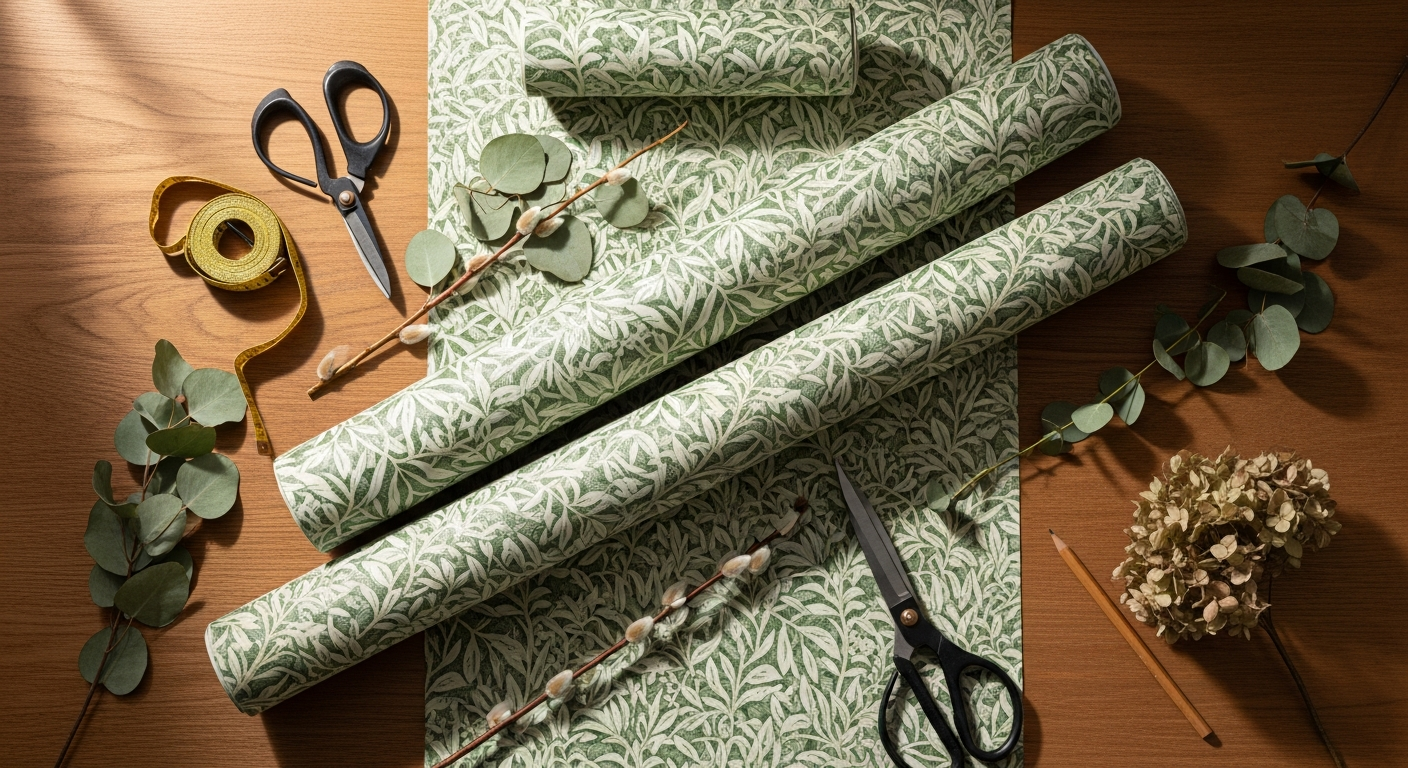
Over 135 years after William Morris first sketched the delicate willow leaves and entwining stems, this wallpaper remains one of the most sought-after patterns in interior design. The Morris & Co. Willow Boughs design hasn’t faded into obscurity—it’s experiencing a genuine resurgence as homeowners rediscover the beauty of Arts & Crafts aesthetics. The Willow Boughs Wallpaper represents far more than a decorative choice; it’s a connection to a movement that championed handcrafted beauty and natural inspiration.
Originally designed in 1887, this pattern captures Morris’s philosophy of bringing the British countryside into domestic spaces through intricate botanical imagery. Today, Wallpaperdirect offers faithful reproductions on premium non-woven paper, making this heritage design more accessible—and more installable—than ever before. The design stands as a powerful reminder that great design transcends time, maintaining relevance across generations of aesthetic movements and cultural shifts.
This guide will help you understand whether Willow Boughs belongs in your home, exploring the design’s historical roots, practical installation details, available colorways, and investment required.
Discover the Morris & Co. Willow Boughs Wallpaper collection at Wallpaperdirect today.
Origins of the Pattern in 1887 and Morris’s Design Philosophy
William Morris created the Willow Boughs pattern during an extraordinarily productive period in his career. The design emerged from his personal observations of nature and his commitment to creating patterns that reflected authentic botanical forms rather than stylized interpretations. Morris believed that honest representation of natural subjects elevated interior spaces, transforming them from mere rooms into curated environments that inspired contemplation and beauty.
Connection to the Arts & Crafts Movement and Rejection of Mass Production
The Arts & Crafts movement represented a deliberate rebellion against industrial manufacturing and the homogenization of design that accompanied it. Morris stood at the forefront of this philosophy, adamantly opposing the soulless mass production that defined the Victorian era. Willow Boughs exemplified his commitment to quality craftsmanship—originally hand-block printed, each iteration carried the subtle variations that proved human touch and careful attention. This rejection of uniformity paradoxically created a design so compelling that it became one of his most reproduced and celebrated patterns.
Morris’s Deep Appreciation for Nature and Botanical Illustration
Nature served as Morris’s primary inspiration and design language. He spent countless hours observing plants, studying their growth patterns, and sketching their forms. Willow Boughs emerged from this intimate relationship with the natural world, capturing the graceful drape of willow branches and the delicate articulation of individual leaves. The pattern reflects Morris’s belief that bringing nature indoors—through authentic representation rather than abstraction—created spaces that nurtured human wellbeing.
How the Pattern Reflects British Countryside Aesthetics
The design draws specifically from the British landscape, with willow trees being particularly emblematic of English waterside scenes and country estates. Morris’s choice of subject matter connected his patrons directly to the pastoral traditions they valued, offering a visual escape from industrial urban centers. The pattern’s composition evokes the feeling of walking through a garden or beside a stream, with the entwining stems creating a sense of natural abundance and gentle movement.
The Significance of This Design Within Morris & Co.’s Broader Catalog
Among Morris’s more than 100 documented designs, Willow Boughs occupies a position of particular prominence. Its balanced composition, universal appeal, and remarkable versatility set it apart from other patterns in the catalog. Some designs skew heavily toward specific aesthetic preferences or interior styles, but Willow Boughs transcends these limitations, functioning equally well in traditional period homes and contemporary minimalist spaces.
Why This Particular Pattern Achieved Iconic Status
The pattern’s iconic status stems from a confluence of factors: superior design composition, authentic botanical representation, and near-universal human resonance with nature imagery. The flowing curves and open spaces prevent the design from feeling busy or overwhelming, while the intricate detail provides visual interest upon closer examination. This balance between simplicity and complexity appeals across diverse taste preferences and design sensibilities.
Evolution From Original Hand-Block Printing to Modern Reproduction Methods
Originally, William Morris personally supervised hand-block printing processes, ensuring each sheet met his exacting standards. Modern reproduction techniques preserve this aesthetic without requiring intensive manual labor. Contemporary surface printing on high-quality non-woven paper captures the botanical precision and tonal subtlety of the original designs while enabling wider accessibility and more straightforward installation.
Botanical Beauty: Understanding the Pattern and Aesthetics
Detailed Description of the Entwining Stems and Willow Leaf Motifs
The Willow Boughs pattern features gracefully curved stems that dance across the surface, creating flowing vertical and diagonal movements. Individual willow leaves branch from these stems with naturalistic variation—some pointing upward, others angling downward, capturing the organic irregularity of actual plant growth. The level of botanical detail is remarkable; each leaf displays distinct veining and individual character rather than repeating identical forms.
How Curved, Organic Lines Create Visual Movement Across Walls
The composition deliberately avoids rigid geometric arrangements. Instead, curved lines guide the eye in continuous, flowing paths across the wall surface. This organic movement creates a sense of vitality and living energy. Spaces adorned with Willow Boughs feel dynamic yet calming, as the eye continuously traces the graceful pathways without encountering visual disruption or jarring angles.
The Naturalistic Quality That Distinguishes Morris Work From Contemporaries
Many Victorian wallpaper designers stylized plant forms, creating highly geometric or fantastical interpretations of nature. Morris approached botanical subjects with naturalistic precision, studying actual specimens and translating their authentic forms onto wallpaper. This commitment to naturalism distinguished his work immediately and continues to set it apart from competing heritage patterns.
Interplay of Positive and Negative Space in the Composition
The design demonstrates masterful balance between patterned and unpatterned areas. The stems and leaves occupy perhaps 40 percent of the surface, while the remaining 60 percent provides visual breathing room. This generous spacing prevents visual overwhelm and allows the pattern to feel sophisticated rather than chaotic, even when applied to entire room walls.
Subtle Tones and Their Contribution to Sophisticated Atmosphere
The available colorways consistently employ soft, muted tones that reflect natural pigments rather than artificial brightness. Traditional greens mimic actual foliage; blues evoke water and sky; neutrals suggest garden paths and stone. These restrained palettes contribute to the design’s calming, sophisticated atmosphere, creating environments that feel refined rather than trendy or decorative.
Versatility of the Design in Both Period and Contemporary Settings
The design’s aesthetic sits comfortably in multiple design contexts. In period homes, it honors historical authenticity while respecting architectural details. In contemporary interiors, it introduces organic richness without feeling historically constrained or kitsch. This remarkable versatility explains much of its sustained popularity across diverse design preferences.
Feature Wall Applications Versus Full-Room Installations
Strategically applying Willow Boughs to a single feature wall creates dramatic focal points while maintaining visual lightness elsewhere. Alternatively, extending the pattern throughout an entire room establishes immersive botanical environments. Both approaches work effectively, with the choice depending on personal preference, room size, and overall design intention.
Colorway Options: Finding Your Perfect Palette
Available Color Variations Across Wallpaperdirect’s Collection
Wallpaperdirect offers an impressive range of Willow Boughs colorways, ensuring options for virtually any design direction. The collection spans traditional palettes developed during the original Arts & Crafts period through contemporary interpretations that surprised even devoted Morris enthusiasts.
Traditional Colorways and Their Characteristics
Classic green versions capture the essence of living foliage and garden imagery, creating restful spaces that feel connected to nature. Rich forest greens establish moody, sophisticated environments, while softer sage tones provide gentler, more ethereal atmospheres. Blue colorways, inspired by water and sky, introduce coolness and visual openness. Neutral versions featuring cream, taupe, and soft gray offer elegant subtlety, allowing architectural details and furnishings to maintain prominence.
Modern Interpretations and Unexpected Color Choices
Recent colorway developments have challenged traditional expectations. Blush and rose tones reinterpret the pattern with contemporary femininity, while charcoal versions create dramatic, contemporary statements. These modern interpretations demonstrate the pattern’s fundamental design strength—it transcends any single colorway, remaining compelling across diverse palettes.
How Different Colorways Affect Room Ambiance and Light
Warm colorways (including rust, ochre, and warmer greens) create enveloping, intimate spaces that feel particularly welcoming in north-facing rooms lacking natural warmth. Cool colorways (blues, cool grays, cool greens) enhance brightness and visual spaciousness, functioning particularly well in smaller rooms or spaces with abundant natural light. Neutral colorways adapt flexibly to both lighting conditions and existing décor.
Matching Colorways to Existing Furniture and Architectural Elements
Consider existing furnishings, flooring, and woodwork tones when selecting your colorway. Rich burgundy velvet furniture pairs beautifully with deeper green or blue Willow Boughs versions. Light oak or natural wood tones complement warmer neutral or sage colorways. Contemporary gray furniture suits cool-toned versions. The pattern’s botanical subject matter generally harmonizes with various styles, but colorway selection ensures cohesive overall design narratives.
Seasonal and Trendy Color Selections
While the design itself transcends trends, colorway popularity fluctuates. Spring typically sees increased interest in soft greens and pale blues. Autumn often brings deeper jewel tones into focus. Contemporary design trends increasingly favor unexpected colors—the rose and charcoal versions appeal to designers seeking heritage aesthetics with modern sensibility.
Viewing Samples Before Committing to Full Installation
Always order physical samples before purchasing full rolls. Wallpaper colors appear dramatically different under various lighting conditions, and samples allow assessment in your actual space. Natural light, artificial lighting, time of day, and wall orientation all influence color perception. Investing in samples prevents costly mistakes and ensures genuine satisfaction with your final selection.
Installation Made Simple: Paste-the-Wall Application
Advantages of Non-Woven Paper Construction
The non-woven paper substrate provides substantial advantages over traditional cellulose wallpaper. Non-woven material resists tearing during application, allowing for more forgiving installation. It doesn’t stretch or shrink as dramatically as traditional paper, reducing pattern alignment complications. The substrate also accommodates minor wall imperfections better, creating more professional finished results without requiring perfectly smooth wall surfaces.
Paste-the-Wall Method Versus Traditional Paste-the-Paper Approach
Paste-the-wall application represents a significant advancement in wallpaper installation convenience. Rather than applying paste to the wallpaper itself (where excess moisture can cause buckling and alignment problems), paste is applied directly to the wall. The wallpaper is then pressed onto the adhesive-covered surface. This method reduces moisture exposure to the wallpaper, minimizes stretching, and facilitates more precise pattern matching.
Step-by-Step Installation Overview for DIY Enthusiasts
The process begins with thorough wall preparation: cleaning surfaces, filling imperfections, and ensuring smoothness. Measure and mark vertical guides using a plumb line to establish straight starting points. Apply wallpaper paste evenly to the wall section using a roller, working with manageable areas. Position the wallpaper sheet, using a smoothing tool to eliminate air bubbles and ensure proper adhesion. Continue with subsequent sheets, matching the pattern repeat precisely. Trim excess at ceiling, baseboards, and corners using a sharp utility knife.
Pattern Repeat Specifications and Matching Requirements
The Willow Boughs pattern features approximately a 24-inch repeat, which remains moderate compared to some heritage designs. This repeat length requires careful measurement and pattern alignment during installation. Understanding repeat specifications allows accurate calculation of required yardage and identification of optimal starting points for visually balanced installations.
Coverage Calculations
A standard double roll provides approximately 56 square feet of coverage. Measure your wall areas precisely and add 10–15 percent for pattern matching waste and contingency. Dividing total square footage by 56 determines required rolls. This calculation proves particularly important with patterned wallpaper, where waste exceeds non-patterned installations.
Dimensional Specifications
Standard double rolls measure 20.5 inches in width and 33 feet in height. Single rolls provide half this coverage. Understanding these specifications facilitates accurate room measurement and yardage calculations, preventing the frustration of insufficient material or excessive overpurchasing.
When Professional Installation Is Recommended
While motivated homeowners with patience and attention to detail can successfully install Willow Boughs, professional installation proves advisable for first-time installers, rooms with challenging architectural features, or premium colorways where perfection is particularly important. Professional installers possess experience managing pattern matching complexities and achieve results that justify their service cost through superior quality and warranty protection.
Tools and Materials Needed for Successful Application
Essential tools include a plumb line or laser level, smoothing brush or squeegee, sharp utility knife, measuring tape, spray bottle with water, paste roller, bucket for paste, sponge for cleanup, and drop cloths for protection. Quality tools make installation noticeably easier and improve finished results. Paste selection matters significantly—use paste recommended for non-woven wallpaper applications specifically.
Browse complete installation guides and product specifications on Wallpaperdirect.
Investment Considerations: Pricing and Value
Price Range and Factors Affecting Cost
The Morris & Co. Willow Boughs Wallpaper typically ranges from approximately $271 to $314 USD per double roll, positioning it firmly in the premium wallpaper category. This pricing reflects multiple factors: the reproduction licensing fees for authentic historical designs, high-quality non-woven substrate materials, sophisticated surface printing techniques, and the brand prestige associated with William Morris and Wallpaperdirect’s reputation for excellence.
Colorway Variations and Their Price Implications
Standard colorways typically occupy the lower to middle price range, while specialty or limited-edition colorways command premium pricing. Exclusive versions developed specifically for Wallpaperdirect may exceed typical pricing. Seasonal releases and collaboration colorways introduce additional variation. Checking current availability and pricing across colorway options ensures you secure preferred colors at optimal price points.
Comparison to Other Premium Wallpaper Options
Premium heritage and designer wallpapers generally range from $200 to $400+ per double roll. Willow Boughs positioning within this range reflects its status as an iconic design without commanding the absolute highest premium prices. Contemporary designer interpretations of botanical themes frequently cost comparable amounts, making Willow Boughs competitively priced within its category while offering the additional value of historical authenticity and proven enduring appeal.
Cost-Benefit Analysis of Quality Materials and Longevity
The premium pricing reflects genuine material quality and manufacturing excellence. Non-woven substrates resist fading more effectively than budget alternatives, maintaining color vibrancy for decades. The sophisticated surface printing preserves botanical detail that budget options sacrifice for speed and cost reduction. A room adorned with Willow Boughs retains aesthetic appeal for 10–15 years or longer, amortizing the initial investment across many years of enjoyment and potentially increasing home value.
Occasional Sales and Seasonal Pricing Opportunities
Wallpaperdirect periodically offers promotional pricing, seasonal sales, and loyalty discounts. Monitoring promotional calendars, signing up for email notifications, and purchasing during sale periods can reduce costs by 10–20 percent. End-of-season inventory reductions occasionally produce significant savings. Patience in timing purchases occasionally yields meaningful financial benefits without compromising product quality or colorway selection.
Professional Installation Costs and Budget Planning
Professional wallpaper installation typically costs $5–$15 per square foot depending on wall complexity, room size, and regional labor rates. A modest bedroom (approximately 300 square feet of wall coverage) might require $1,500–$4,500 in installation costs. Factoring installation expenses into total project budgeting prevents financial surprises and ensures realistic overall cost assessment. For multiple rooms, per-square-foot rates often decrease.
Long-Term Value Proposition for Heritage Design
Heritage designs maintain aesthetic relevance across decades, unlike trendy contemporary patterns that quickly feel dated. Willow Boughs has proven its endurance across 135+ years of design evolution. Investing in a pattern with proven staying power reduces the likelihood of future regret or the desire to replace the wallpaper prematurely. This longevity translates to superior long-term value despite higher initial investment.
Return Policies and Considerations for Special Orders
Standard Wallpaperdirect inventory typically allows returns, but special orders, print-to-order versions, and unsealed rolls often carry limited or no return options. Understanding these policies before purchasing prevents complications if your selection proves unsatisfactory in-room. Always clarify return eligibility when ordering, particularly if significant budget is involved.
Design Compatibility: Room-by-Room Applications
Living Room Transformations with Willow Boughs as Focal Point
Living rooms present ideal opportunities for Willow Boughs applications. Extending the pattern across all walls creates an immersive environment that encourages relaxation and contemplation. Alternatively, treating a single prominent wall as a feature creates architectural interest without visual overwhelming. The pattern’s botanical subject matter naturally pairs with natural materials—wood furnishings, stone accents, and earth-toned textiles—creating cohesive, refined living spaces.
Bedroom Installations for Calming, Naturalistic Atmosphere
Bedrooms benefit particularly from Willow Boughs’s soothing qualities. The gentle curves, organic subject matter, and restrained colorways create inherently calming environments that support restorative sleep. The pattern’s connection to nature facilitates psychological relaxation and stress reduction. Full-room applications establish complete immersion in tranquil aesthetics, while feature wall approaches provide botanical focal points while maintaining visual simplicity elsewhere.
Dining Room Elegance and Sophisticated Entertaining Spaces
Dining rooms adorned with Willow Boughs develop sophisticated, refined character appropriate for formal entertaining. The pattern’s botanical authenticity complements fine dining traditions while its restrained elegance maintains focus on table settings, art, and conversations. The design transcends purely formal aesthetics, functioning equally well in casual dining areas where its natural elements create welcoming, unpretentious sophistication.
Powder Room Impact with Strategic Full-Wall or Accent Approaches
Powder rooms present perfect opportunities for statement applications where the pattern receives focused attention. Full coverage in these smaller spaces creates memorable impressions on guests while avoiding the spatial overwhelming that comprehensive coverage might produce in larger rooms. The pattern’s detail and botanical artistry reward the scrutiny guests naturally direct toward powder room walls.
Blending with Historical Period Homes and Original Architecture
Willow Boughs’s historical authenticity makes it ideal for period homes seeking design continuity with original construction periods. The Arts & Crafts movement emerged as a reaction against industrial design, resonating with architectural philosophies evident in Victorian, Edwardian, and Arts & Crafts-era homes. The wallpaper honors original architectural intentions while introducing contemporary reproduction quality and installation convenience.
Integration into Contemporary Minimalist and Eclectic Interiors
Contemporary minimalist interiors benefit from Willow Boughs’s restraint and open compositional space. The generous negative space prevents the pattern from conflicting with minimalist principles. Eclectic interiors that blend historical and contemporary elements gain cohesion through Willow Boughs, which functions as a unifying design anchor. Modern furnishings and historical wallpaper coexist naturally, creating personality-rich spaces without visual discord.
Layering with Modern Furnishings and Accessories
The pattern’s neutral, naturalistic foundation accommodates diverse contemporary furnishings and accessories. Industrial metal elements, mid-century modern pieces, contemporary minimalist furniture, and bohemian textiles all coexist successfully with Willow Boughs. The wallpaper’s sophistication ensures that modern furnishings feel intentional and design-forward rather than careless or mismatched.
Creating Cohesive Design Narratives Across Multiple Rooms
Extending Willow Boughs across multiple rooms (in the same or different colorways) creates narrative continuity throughout living spaces. Bedrooms, hallways, and living areas unified by botanical imagery develop visual coherence while maintaining individual room character. The flexibility of colorway selection allows tonal variation that prevents monotony while preserving overall design unity.
Quality Assurance: Materials and Durability
High-Quality Non-Woven Paper Composition and Benefits
The non-woven substrate comprises synthetic fibers bonded together without traditional paper pulp, creating a material with superior durability characteristics. Non-woven construction resists moisture infiltration better than traditional cellulose paper, making it suitable for bathrooms, kitchens, and other moisture-prone areas. The substrate’s stability resists stretching and shrinkage, maintaining pattern integrity across temperature and humidity fluctuations. These advantages translate to wallpaper that performs reliably across years of use.
Surface Printing Techniques for Detailed Botanical Reproduction
Contemporary surface printing technologies capture the botanical detail and tonal subtlety original hand-block printing achieved. Multiple ink layers build color depth and nuance, while precise registration ensures pattern alignment across sheets. The printing process imparts texture that replicates the subtle variations characteristic of original Morris patterns, creating depth that flat, digitally-printed alternatives cannot achieve.
Longevity Compared to Budget Wallpaper Alternatives
Budget wallpaper typically demonstrates noticeable fading within 3–5 years and often shows visible wear within 7–10 years. Willow Boughs, constructed with quality materials and sophisticated printing, typically maintains aesthetic excellence for 10–15 years or longer. The superior longevity represents exceptional value despite higher initial cost, as replacement becomes necessary far less frequently.
Fade Resistance and Color Stability Over Time
The high-quality inks and non-woven substrate resist UV fading significantly better than budget alternatives. Rooms with substantial direct sunlight maintain color integrity longer than would be typical for lesser-quality wallpaper. The muted, naturalistic colorways also age gracefully—subtle tones actually develop pleasing patina over time rather than displaying dramatic or unattractive color shift.
Moisture and Humidity Considerations for Various Rooms
While non-woven construction improves moisture resistance, Willow Boughs remains best suited for living rooms, bedrooms, dining rooms, and other areas with moderate humidity. Bathrooms and kitchens with significant moisture exposure present challenges—steam and condensation can eventually damage even premium wallpaper. Strategic application to accent walls rather than moisture-prone areas mitigates these concerns. In high-humidity environments, proper ventilation proves essential regardless of wallpaper quality.
Maintenance Requirements and Cleaning Recommendations
Willow Boughs requires minimal ongoing maintenance. Dust accumulation responds well to gentle vacuuming using a soft brush attachment or careful wiping with a microfiber cloth. Light stains may respond to careful dabbing with a barely-damp cloth, though excessive moisture should be avoided. The pattern’s rich detail somewhat masks minor imperfections, reducing maintenance stress compared to solid-color alternatives.
Warranty Information and Manufacturer Guarantees
Wallpaperdirect typically provides satisfaction guarantees for standard orders, ensuring customer confidence in purchases. Specific warranty terms should be confirmed at purchase, particularly for custom or special orders. Understanding coverage parameters prevents disappointment if issues arise and establishes clear recourse if quality concerns emerge.
Authentic Reproduction Standards and Historical Accuracy
Wallpaperdirect maintains commitments to historical accuracy in its Morris & Co. reproductions, ensuring that patterns faithfully represent original designs. The company’s collaborations with Morris & Co. licensing authorities guarantee that colorways, pattern specifications, and design elements honor historical originals. This authenticity represents genuine value for those seeking heritage designs with cultural integrity.
The Practical Reality: Weighing Pros and Cons
Timeless Design with Proven 135+ Year Track Record
Willow Boughs has survived more than a century of design evolution, maintaining consistent desirability across generations. This proven longevity suggests the design transcends temporary trends, offering genuine assurance that current investment won’t feel dated within a few years. The pattern’s ability to remain relevant across diverse design movements testifies to fundamental design excellence.
Authentic Arts & Crafts Heritage and Historical Significance
Ownership of authentic Morris designs connects homeowners to one of design history’s most influential movements. The cultural and artistic significance extends beyond mere decoration, infusing spaces with connection to a movement that valued craftsmanship, nature, and beauty as integral to human wellbeing. This cultural dimension provides satisfaction beyond typical wallpaper selection.
High-Quality Materials and Craftsmanship
The non-woven substrate, sophisticated printing techniques, and quality control processes ensure durability and aesthetic excellence. Materials matter genuinely—premium substrates resist fading, stretching, and deterioration more effectively than budget alternatives. Quality craftsmanship evident in every aspect justifies premium pricing through superior long-term performance.
Paste-the-Wall Convenience for Easier Installation
The paste-the-wall application method significantly simplifies installation compared to traditional paste-the-paper approaches. This convenience appeals to DIY installers while reducing professional installation complexity. Easier installation doesn’t compromise aesthetic results—in fact, the method typically produces superior outcomes by reducing moisture exposure and pattern misalignment risks.
Versatile Aesthetic Bridging Traditional and Modern Interiors
Few heritage designs function equally well in period homes and contemporary spaces. Willow Boughs transcends stylistic boundaries, fitting naturally in both contexts. This versatility expands the design’s applicability and reduces concerns about aesthetic mismatch with existing décor or architectural style.
Substantial Coverage Per Roll
Each double roll provides 56 square feet of coverage, which represents reasonable yardage. While premium pricing makes per-square-foot costs significant, the substantial coverage per roll minimizes the number of rolls required for typical room applications. This efficiency partially offsets premium pricing for modest-sized projects.
Premium Pricing Relative to Mass-Market Wallpaper Options
At $271–$314 per double roll, Willow Boughs costs substantially more than mass-market alternatives available for $20–$50 per roll. For budget-conscious homeowners, this premium represents genuine financial commitment. The investment requires careful consideration and honest assessment of budget constraints.
Professional Installation Often Recommended for Best Results
While DIY installation remains possible, professional installation ensures optimal results and preserves warranty protections. Installation costs of $5–$15 per square foot add significantly to overall project expenses, potentially doubling total costs. Budget planning must account for these substantial additional expenses.
Not Pre-Pasted, Requiring Additional Materials and Preparation
Willow Boughs requires separate paste purchase and application, adding expense and preparation complexity compared to pre-pasted alternatives. While paste costs remain modest, the requirement for additional materials and preparation prevents purely spontaneous installation. Budget must account for paste, tools, and preparation supplies.
Special Orders or Unsealed Rolls May Have Limited Return Options
Understanding return policies prevents complications if selections prove unsatisfactory. Limited return eligibility on special orders or printed-to-order versions restricts options if issues arise. Careful selection and sample verification minimize these risks, but policy awareness remains important.
Pattern Matching Requires Careful Planning and Measurement
The 24-inch pattern repeat requires precise measurement and matching during installation. Inadequate pattern planning results in waste and potential shortfalls. First-time installers sometimes underestimate the complexity and material waste pattern matching necessitates, complicating budgeting and installation execution.
Higher Overall Project Cost When Factoring Installation Services
Even without professional installation, comprehensive project costs including paste, tools, and contingency materials exceed simple wallpaper purchase prices. With professional installation, total costs can easily reach $3,000–$8,000+ for moderate room applications. Honest assessment of total project economics proves essential before commitment.
Making Your Decision: Is Willow Boughs Right for Your Space?
Assessing Your Design Vision and Aesthetic Preferences
Begin by honestly evaluating whether botanical patterns and Arts & Crafts aesthetics genuinely appeal to you or represent trendy design that might feel dated within years. Browse inspiration galleries featuring Willow Boughs in various settings and colorways. Ensure the design authentically resonates rather than appealing merely because it’s currently fashionable or because others recommend it.
Evaluating Budget Constraints and Long-Term Value Investment
Calculate realistic total project costs including wallpaper, paste, tools, professional installation, and contingencies. Assess whether this investment aligns with your overall design budget and financial comfort. Consider the long-term value proposition—the pattern’s proven 135+ year relevance supports long-term investment thinking. If budget severely constrains options, genuinely consider whether professional installation remains financially viable or DIY installation becomes necessary.
Considering Room Size, Lighting, and Architectural Features
Larger rooms can accommodate the pattern’s visual richness across entire walls without overwhelming sensations. Smaller rooms might benefit from feature wall applications rather than comprehensive coverage. Natural and artificial lighting affects colorway perception significantly—assess how your preferred colorway performs throughout daily lighting cycles. Architectural details, trim styles, and existing finishes influence pattern compatibility.
Testing Colorways in Your Actual Space Before Purchasing
Wallpaper colors appear vastly different under various lighting conditions compared to how they appear in showrooms or on-screen. Order physical samples and observe them in your actual space across multiple times of day and under artificial lighting. Live with samples for several days, allowing psychological adjustment and thorough assessment before committing to full purchases. This investment in samples prevents costlier mistakes.
Consulting Design Inspiration and Mood Boards
Create mood boards combining Willow Boughs samples with existing furnishings, flooring, and architectural elements you’ll maintain. Assess how the pattern integrates with your overall design direction and existing décor. Does the aesthetic align with your personal style, or does it represent design preferences borrowed from others? Authenticity ensures lasting satisfaction.
Calculating Exact Yardage Requirements for Your Project
Measure all wall areas meticulously, accounting for windows, doors, and architectural features. Sketch room layouts noting dimensions. Calculate total square footage, add 10–15 percent for pattern matching waste and contingency, then divide by 56 (square feet per double roll) to determine required rolls. Slight overpurchasing prevents the frustration of running short mid-installation. Precision in calculations minimizes waste and prevents expensive additional purchases.
Exploring Alternative Morris & Co. Patterns If Willow Boughs Doesn’t Fit
Morris & Co.’s design catalog includes numerous patterns beyond Willow Boughs, each offering distinctive character. If Willow Boughs doesn’t perfectly align with your space or preferences, consider alternatives like Acanthus, Strawberry Thief, or Pimpernel. Different patterns might better suit your room’s dimensions, lighting, or existing décor while maintaining Arts & Crafts authenticity.
Planning Installation Timeline and Contractor Coordination
Professional installation requires scheduling coordination and advance planning. Wallpapering typically requires rooms to be cleared and prepared, necessitating logistical planning. Establish realistic timelines, arrange contractor consultations, and secure commitment dates well in advance. Rush installations often command premium pricing. Advance planning reduces costs and ensures availability of preferred contractors.
Lasting Impressions
The Morris & Co. Willow Boughs Wallpaper stands as a testament to enduring design—a pattern that refuses to fade despite shifting trends and centuries of interior design evolution. Whether you’re drawn to its botanical authenticity, its Arts & Crafts heritage, or simply the way those entwining willow leaves catch the light, this wallpaper delivers genuine character to your space. Yes, the investment requires thoughtful consideration, and yes, installation demands attention to detail. But for those seeking to infuse their homes with timeless elegance and natural beauty, Willow Boughs remains an exceptional choice.
The 135+ year journey from William Morris’s original sketches to contemporary reproductions on premium non-woven paper speaks volumes about the design’s fundamental strength. It has transcended multiple design movements, technological shifts, and evolving aesthetic preferences—continuing to appeal because it represents authentic beauty rooted in nature rather than momentary fashion. Choosing Willow Boughs means investing in a design conversation with history, surrounding yourself with botanical artistry that nourishes rather than fatigues.
Ready to transform your walls? Start by ordering a sample in your preferred colorway, and let the pattern speak for itself in your actual space.
Order your Morris & Co. Willow Boughs Wallpaper sample from Wallpaperdirect now.
Leave a Reply