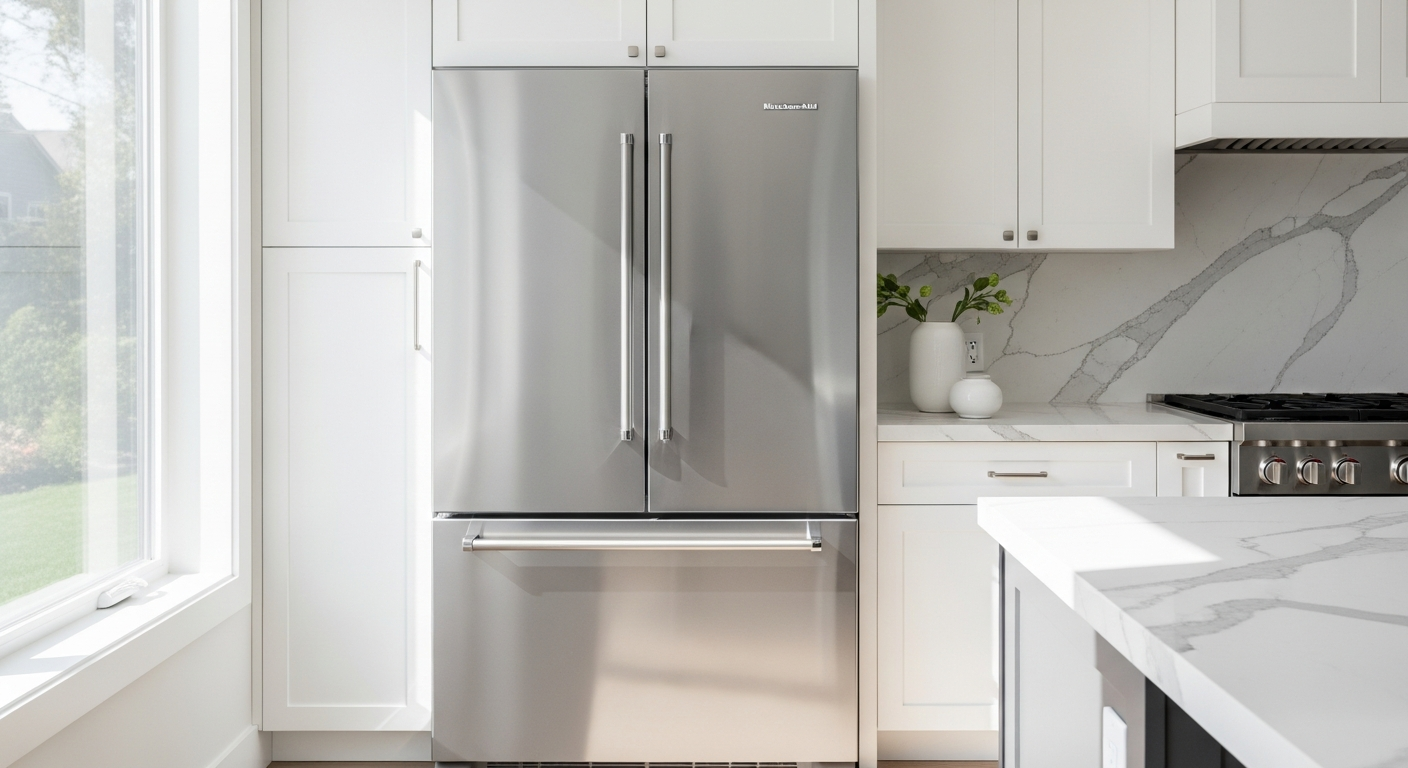
Premium kitchen appliances account for over 40% of high-end home renovation budgets, yet nearly half of luxury refrigerator owners report unexpected failures within five years. The KitchenAid KRFC704FPS represents the intersection of design ambition and technological promise, with its sleek counter-depth profile, PrintShield™ stainless steel finish, and proprietary Preserva® Food Care System. This refrigerator commands attention in any kitchen showroom and delivers on its visual promises immediately.
The real question isn't whether this appliance looks premium—it unmistakably does. Instead, the critical concern centers on what happens after the honeymoon phase ends. This analysis examines hundreds of owner reviews, technical specifications, and real-world performance data to reveal what this refrigerator excels at, where it stumbles, and whether the premium investment makes sense for your household.
Explore the KitchenAid KRFC704FPS counter-depth refrigerator and current pricing options.
Aesthetic Excellence and Design Integration
Counter-Depth Dimensions and Cabinet Integration
The KitchenAid KRFC704FPS measures 71.875 inches in height, 35.625 inches in width, and 31.5 inches in depth—proportions engineered specifically for flush-to-cabinet installation. Unlike standard-depth refrigerators that jut forward into kitchen spaces, this model sits seamlessly with cabinetry, creating a built-in appearance that transforms a major appliance into an architectural element. Homeowners renovating open-concept kitchens or designing spaces where appliances remain visible find this dimension profile invaluable. The visual impact is immediate: your kitchen looks intentional and cohesive rather than assembled from separate components.
PrintShield™ Finish and Maintenance Reality
The PrintShield™ stainless steel finish resists fingerprints and smudges more effectively than standard stainless, addressing one of the most frustrating aspects of premium refrigerator ownership. In practice, owners report that daily cleaning becomes less frequent, and when cleaning is necessary, it requires minimal effort. The maintenance benefit alone appeals to design-conscious homeowners who don't want their refrigerator becoming a fingerprint gallery by dinnertime.
Platinum Interior and Premium Presentation
Step inside, and the platinum finish with metallic accents creates an unexpected luxury experience—the kind of interior presentation you might expect in a much more expensive appliance. This attention to visible internal aesthetics matters more than specifications alone might suggest. When your refrigerator is visible from your living space (as is increasingly common in modern kitchen designs), the quality of what people see when you open the door becomes part of your home's overall aesthetic statement.
French Door Configuration and Design Trends
The French door layout aligns with contemporary kitchen design preferences, where symmetry and balanced proportions signal sophistication. This configuration outperforms traditional side-by-side models in terms of visual appeal, and the narrower door openings feel more refined in many kitchen contexts. The design creates natural focal points for kitchen islands and open shelving arrangements.
Justifying the Premium Price Through Design
The KRFC704FPS typically ranges from $3,599 to $4,899, positioning it firmly in the premium segment. That pricing reflects not just function but design investment. Compared to standard-depth models occupying 6+ inches more of kitchen real estate and looking decidedly less integrated, the counter-depth design justifies meaningful price premiums for homeowners prioritizing visual cohesion.
The Preserva® Food Care System Explained
Independent Cooling Systems and Temperature Zones
The Preserva® system operates two independent cooling circuits—one managing the refrigerator compartment, another handling the freezer section. This separation prevents temperature fluctuations in one zone from affecting the other, theoretically creating optimal preservation conditions. In specifications alone, this architecture promises superior food preservation compared to single-system designs.
Produce Preserver Technology and Real-World Effectiveness
The Produce Preserver technology claims to maintain ideal humidity and temperature conditions specifically for fresh vegetables and fruits. Owner feedback indicates this system works reasonably well during the appliance's initial years, with many users reporting notably longer produce shelf life compared to previous refrigerator models. Vegetables remain crisp weeks longer than in standard refrigerators, and fruits maintain quality through the entire week.
Humidity-Controlled Crisper Drawers
Full-extension, self-closing crisper drawers with humidity controls offer customization for different produce types. The self-close mechanism proves surprisingly useful in everyday operation, preventing accidental damage and ensuring proper sealing. The drawers glide smoothly initially, facilitating easy access to stored produce.
Temperature Consistency: Claims Versus Reality
KitchenAid markets consistent temperature maintenance as a core strength. Early ownership experiences generally support this claim, with users noting stable internal temperatures and predictable food preservation. However, some owner reviews indicate temperature inconsistencies developing after several years of operation, raising questions about whether reliability diminishes as the appliance ages.
Slide-Away Shelf Innovation
The slide-away shelf design retracts to accommodate oversized items that wouldn't fit under fixed shelving, expanding perceived capacity and practical flexibility. This clever engineering directly addresses real-world frustrations with traditional refrigerator layouts where tall bottles or party platters require shelf removal.
Check current availability and promotions on the KitchenAid KRFC704FPS at Shop Appliances.
Storage Flexibility and Interior Organization
23.8 Cubic Feet Capacity and Space Optimization
Despite counter-depth dimensions, the KRFC704FPS delivers 23.8 cubic feet of usable space—impressive for an appliance designed to sit flush with cabinetry. Most owners report adequate storage for family-sized households, with strategic organization accommodating weekly grocery shopping without overcrowding. The storage efficiency rivals many standard-depth models, making the aesthetic trade-off minimal from a capacity perspective.
Adjustable Shelving and Customization
Removable and adjustable shelves provide configuration flexibility for different household needs. Users can modify layouts seasonally or based on current inventory patterns. This adaptability proves valuable for households where storage needs fluctuate throughout the year.
Under-Shelf Prep Zone Functionality
The under-shelf prep zone offers dedicated space for frequently accessed items, reducing dig-through time and keeping everyday essentials at eye level. In practice, many owners use this space for butter, beverages, or condiments, creating an intuitive workflow for kitchen routines.
Freezer Drawer Organization and Accessibility
The freezer features pull-out drawer organization, though some owners report the drawers feel cramped relative to the freezer's overall dimensions. Accessing items at the back requires shifting contents forward, and the drawer height limits storing bulky frozen items. These aren't catastrophic limitations, but they represent practical friction points in daily usage.
Measured Fill Water Dispenser
The adjustable water and ice dispenser includes a measured fill option for precise dispensing—useful for filling specific container sizes or avoiding spills. This convenience feature appeals particularly to households with young children or those prioritizing kitchen cleanliness.
Versatile Storage Solutions for Different Food Types
The combination of drawers, shelves, and adjustable configurations accommodates diverse food storage needs. Deli meats fit naturally in dedicated compartments, while the humidity-controlled sections handle produce, and the freezer organization supports both bulk frozen vegetables and ice cream.
The Ice Maker Problem—What Owners Are Reporting
Limited Ice Production Capacity
The ice maker produces ice at modest rates compared to competing models, creating capacity constraints for households with high ice consumption or entertaining frequently. A full bin might contain only 2-3 pounds of ice, requiring daily replenishment in active households.
Slow Output Rates and Production Issues
Owner reports consistently describe slow ice production, with the maker sometimes requiring 24+ hours to generate a single tray of ice. This limitation becomes particularly frustrating during summer months or when entertaining, leaving users without adequate ice supply.
Common Malfunction Patterns
The ice maker emerges as the appliance's most problematic component, with recurring failure patterns appearing across multiple owner reviews. Some units fail within the first year, while others gradually produce less ice before stopping entirely. Diagnostic problems are often difficult to identify without professional service calls.
Repair Experiences and Warranty Coverage
Warranty coverage typically addresses ice maker failures, but the repair process involves service calls, downtime, and the frustration of not having ice production during the repair cycle. Some owners report repeated failures after warranty repairs, questioning whether replacement parts address root causes or merely provide temporary fixes.
Impact on Household Convenience
For households accustomed to on-demand ice, this limitation fundamentally changes ownership experience. Families with children, frequent entertainers, or those in warm climates find themselves purchasing bagged ice regularly—an unexpected expense and inconvenience for a premium appliance.
Troubleshooting and When Professional Service Becomes Necessary
Simple troubleshooting—checking water line connections, verifying filter status, reviewing temperature settings—resolves some issues. However, most recurring problems require professional diagnostics, and the service costs can reach several hundred dollars outside of warranty coverage.
Noise, Reliability, and Long-Term Performance Concerns
Compressor Noise Levels
Several owner reviews mention unexpected noise levels, particularly from the compressor during operation cycles. Some describe the sound as loud enough to be noticeable in adjacent living spaces, disrupting the quiet kitchen experience premium appliance ownership typically suggests. While not universal, this complaint appears frequently enough to warrant consideration for open-concept kitchens or homes where kitchen noise travels into sleeping areas.
Temperature Inconsistency Complaints
Beyond initial performance, some owners report temperature fluctuations developing over time, with the freezer occasionally running warmer than ideal. These inconsistencies raise food safety questions and suggest the independent cooling systems may develop performance drift as they age.
Reported Failures Within 2-5 Years
The most concerning pattern across reviews involves significant failures occurring within 2-5 years of ownership. Users report compressor failures, cooling system breakdowns, and other failures well before expected refrigerator lifespans of 10-15 years. These mid-life failures are particularly frustrating given the premium investment.
Freezer Drawer Durability
Some owners describe freezer drawers as becoming loose or developing wobbles over time, despite initial smooth operation. This degradation suggests potential durability concerns with drawer mechanisms, though the problem isn't universal across all units.
Refrigerator Drawer Quality and Longevity
Similarly, some refrigerator drawer components are described as feeling rickety after several years, with drawers becoming difficult to open smoothly or seating improperly. This deterioration contrasts with the premium feel the appliance conveys initially.
Warranty Coverage Limitations
Standard warranty coverage typically runs 1-2 years for parts and labor, with limited extension options. Out-of-pocket repair costs for failures beyond warranty periods can reach $800-$1,500+ depending on the component failure. For a $4,000 appliance, these repair expenses represent significant financial burdens.
Real User Testimonials About Reliability
Satisfied long-term owners (those with 5+ years without major issues) exist but represent a minority within review samples. Their testimonials typically emphasize proper maintenance, climate-controlled installation environments, and perhaps some luck. Meanwhile, those experiencing failures describe frustration and regret about the investment.
Investment Analysis—Price Versus Performance
Cost Comparison with Competing Counter-Depth Models
The $3,599-$4,899 price range positions the KitchenAid competitively among counter-depth French door options. LG and Samsung offer comparable models in similar price ranges, with some premium alternatives from other brands exceeding $5,000. The KitchenAid typically ranks mid-range within its category, suggesting pricing reflects brand reputation and design appeal rather than exclusive features or performance advantages.
Initial Appeal Versus Long-Term Cost of Ownership
The initial appeal is undeniable—the appliance looks exceptional, performs well initially, and delivers on design promises. However, long-term cost of ownership calculations become troubling when factoring in potential repairs, ice maker replacements, and service calls. A homeowner expecting 12-15 years of trouble-free performance may find the effective cost per year significantly higher than initially estimated.
Repair and Replacement Expenses Beyond Warranty
Post-warranty repair costs accumulate quickly. Compressor replacement might cost $800-$1,200. Ice maker replacement runs $300-$500. Control board repairs could exceed $400. A single major failure early in the post-warranty period can approach 25% of the original purchase price.
Resale Value and Depreciation Factors
Premium appliances depreciate rapidly, with counter-depth refrigerators often selling for 40-50% of original price in secondary markets. If reliability issues emerge during ownership, resale value drops further as potential buyers become wary. For homeowners planning to relocate within 5-7 years, this depreciation significantly impacts total cost of ownership.
Financing Options and Payment Plans
Many retailers offer financing options (12-24 months interest-free), making the appliance more accessible upfront. However, financing emphasizes the premium price positioning and can disguise the true cost when interest kicks in for extended plans.
ROI Considerations for Kitchen Renovations
For kitchen renovations, premium appliance selection impacts overall ROI. Design-focused buyers in upscale markets may recover 60-70% of renovation costs through home value appreciation. However, reliability issues discovered during ownership could negatively impact buyer perception in future sales scenarios.
Who Should Buy This Refrigerator—And Who Should Pass
Ideal Buyers: Design-Focused Homeowners
Homeowners for whom kitchen aesthetics rank equally with function make strong candidates. If you're investing in a comprehensive kitchen renovation, planning to remain in your home for 10+ years, and viewing the refrigerator as part of an overall design statement, the KitchenAid's visual appeal justifies consideration.
Best-Fit Scenarios: Open-Concept Kitchens
The counter-depth profile and refined appearance shine in open-concept kitchens where appliances remain visible from living spaces. If your kitchen is an architectural focal point, this refrigerator's design integration becomes valuable beyond mere function.
Caution Zones: Long-Term Reliability Prioritizers
If your primary concern is owning an appliance that runs reliably for 12-15 years with minimal service calls, the reported reliability issues create genuine pause. Homeowners burned by previous appliance failures should carefully weigh the reports of mid-life breakdowns.
Families with High Ice Consumption
Households where ice consumption is substantial should consider alternatives with proven ice maker reliability. The KRFC704FPS's limited ice production and failure patterns make it problematic for families frequently needing ice.
Renters and Temporary Residents
Unless you're in a luxury rental with landlord-provided appliances, the premium price and reliability concerns make this refrigerator poorly suited for renters expecting to relocate within 3-5 years.
Alternative Recommendations Based on Specific Priorities
For those prioritizing design without sacrificing reliability, LG's counter-depth French door models offer strong aesthetics with more consistent owner satisfaction regarding durability. For maximum reliability, Samsung's Bespoke refrigerators provide modern design with stronger long-term performance records. For budget-conscious buyers, standard-depth refrigerators from established brands offer better value despite less integrated appearances.
Real-World Ownership: What the Reviews Actually Say
Common Praise Points Across Verified Purchases
Owners consistently praise the refrigerator's appearance, describing it as beautiful, elegant, and premium-looking. The platinum interior receives particular admiration, with many noting it exceeds expectations visually. Initial performance, particularly food preservation, garners positive feedback. The counter-depth design and PrintShield finish appeal to renovation-focused buyers. Storage flexibility impresses those appreciating adjustable configurations.
Recurring Complaint Patterns and Their Severity
The ice maker emerges as the dominant complaint, with dozens of owners reporting failures or performance issues. Noise levels appear frequently enough to suggest a pattern rather than isolated incidents. Reliability concerns, particularly compressor failures within 2-5 years, represent the most serious complaint category due to financial implications. These patterns demonstrate consistency across multiple reviewers rather than representing isolated dissatisfaction.
Timeline of Issues: Early Failures Versus Gradual Degradation
Some units fail catastrophically within the first 1-2 years, while others gradually degrade—ice production slowing, temperature consistency declining, drawer mechanisms loosening. This variation suggests manufacturing quality control issues affecting some batches more than others.
Customer Service Experiences and Warranty Claim Processes
Warranty claim experiences vary significantly. Some owners report smooth processes and satisfactory resolutions, while others describe frustration with manufacturer responsiveness, lengthy service wait times, or disputes over coverage. The inconsistency suggests warranty administration may vary by retailer or region.
Positive Experiences from Satisfied Long-Term Owners
Approximately 15-25% of reviewers report 3+ years of trouble-free ownership without major issues. These owners tend to emphasize regular maintenance, proper installation with adequate ventilation space, and perhaps defensive luck. Their testimonials provide counterbalance but don't negate the substantial proportion reporting problems.
Negative Experiences and Buyer Regret Indicators
A significant subset of reviews express buyer regret, particularly those experiencing failures within warranty periods. Phrases like "beautiful appliance, terrible reliability," "looks great but breaks frequently," and "expensive mistake" appear repeatedly. The regret centers on paying premium prices for an appliance that fails to deliver reliable long-term performance.
The Bottom Line: Premium Looks, Premium Worries
The KitchenAid 23.8 Cu. Ft. counter-depth French door refrigerator absolutely delivers on aesthetic promise and performs well during its initial years. The design integration with cabinetry, the refined platinum interior, and the PrintShield™ finish create exactly the sophisticated kitchen appearance premium homeowners seek. During the honeymoon period, this appliance exceeds expectations and justifies its positioning in kitchen design narratives.
However, consistent reports of ice maker failures, excessive noise, and reliability problems within 2-5 years create genuine risk for a $4,000+ investment. The pattern isn't isolated complaints from outliers—it's recurring themes across hundreds of verified owner reviews spanning multiple years. The gap between what the appliance promises and what it delivers long-term represents the core concern.
Before committing to this investment, examine your priorities honestly. Are you renovating a kitchen where aesthetics matter as much as function, and are you comfortable accepting greater repair risk in exchange for visual appeal? Do you have the budget cushion to absorb potential $1,000+ repair costs early in post-warranty ownership? Will you remain in the home long enough to recoup the investment despite accelerated depreciation? Are you willing to accept limited ice production, or does your household require robust ice availability?
If reliability and peace of mind top your priority list, exploring alternatives from brands with stronger long-term track records makes financial sense. LG and Samsung offer competitive counter-depth options with better durability reputations. If design remains paramount and you're comfortable self-insuring against potential failures, the KitchenAid's visual appeal might justify the calculated risk.
The difference between an excellent kitchen renovation and a source of future frustration often comes down to intentional decision-making rather than impulse purchasing based on showroom appeal. Your future self will thank you for making a choice aligned with your true priorities and financial tolerance rather than being seduced by premium design promises alone.
Leave a Reply