The Architectural Vision Behind Modern Luxury Seating
More than nine decades have passed since Le Corbusier, Pierre Jeanneret, and Charlotte Perriand conceived their revolutionary approach to seating design, yet the LC2 3-seater sofa remains the benchmark for luxury furniture in professional environments. When these three visionaries collaborated in the 1920s, they weren't simply creating another chair—they were establishing a new language where modernist architecture and functional comfort could coexist without compromise. The LC2 represents that pivotal intersection where design theory became tangible, transforming how professionals approach their spaces.
The historical context matters profoundly. The 1920s marked a radical departure from ornamental excess toward geometric purity and structural honesty. Le Corbusier's philosophy centered on "machines for living," a concept that influenced every element of the LC2's construction. Rather than hide its mechanisms beneath upholstery, the sofa celebrates its steel frame as an architectural statement. This transparency of design—revealing rather than concealing its structural logic—established a visual language that remains contemporary across any era.
Today's discerning professionals face a fundamental choice when furnishing executive spaces: follow fleeting trends or invest in pieces with proven staying power. The LC2 addresses this directly by offering timeless sophistication alongside genuine comfort.
The Revolutionary External Frame Structure
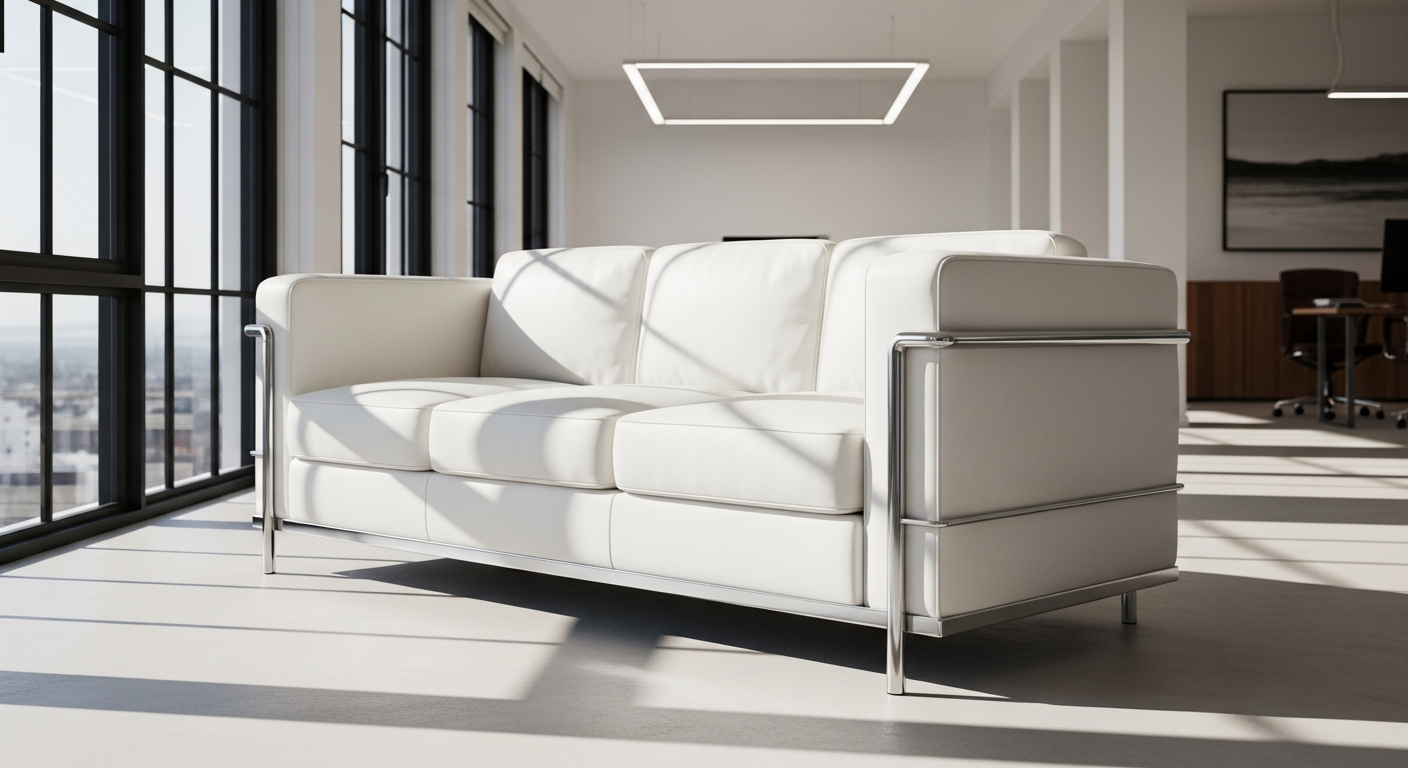
The LC2's defining characteristic lies in its external steel frame—a concept that fundamentally altered seating design. Rather than embedding the structural support within cushioning, the designers positioned a robust steel skeleton on the exterior, creating what appears almost sculptural. This frame doesn't merely support the seat; it cradles it with architectural precision.
This approach solved several problems simultaneously. First, it distributed weight evenly across a minimalist structure, allowing the sofa to remain visually lightweight despite its substantial seating capacity. Second, the external frame provided flexibility for upholstery choices without compromising structural integrity. Third, it created negative space around the sofa, preventing the visual heaviness that plagues traditional furniture designs. In a boardroom or reception area, this spatial breathing room matters considerably—the LC2 occupies physical space while seeming to occupy less visual territory.
The steel frame's revolution extended beyond aesthetics into practical sustainability. Because the frame remains independent from cushioning materials, individual components can be serviced or replaced without replacing the entire piece. This modularity, unusual for the 1920s, anticipated modern manufacturing principles by decades.
The Minimalist Aesthetic That Defies Trends
What separates the LC2 from countless "designer" pieces that fade from relevance is its commitment to minimalist philosophy rather than stylistic flourish. Every element serves a purpose; nothing exists for ornamentation alone. The frame's geometric lines follow functional necessity. The cushion placement corresponds to human ergonomics. The overall proportions reflect mathematical ratios rather than arbitrary dimensions.
This restraint paradoxically ensures longevity. Trend-driven design relies on novelty and eventual obsolescence. The LC2 operates differently—its appeal strengthens with time because it represents principles rather than passing fashion. In professional settings, this distinction carries significant weight. A space furnished with the LC2 communicates stability and considered judgment, not chasing the latest aesthetic whim.
The minimalist approach also provides remarkable flexibility for interior integration. Whether surrounded by mid-century modern aesthetics, contemporary minimalism, or transitional design schemes, the LC2 anchors a space through the strength of its concept rather than fighting against surrounding elements.
Comfort Meets Craftsmanship—What Sets the LC2 Apart
Premium Cushioning and Sustained Comfort
The LC2 resolves a tension that has plagued modern furniture since the 1920s: how to honor architectural purity without sacrificing genuine comfort. The answer lies in exceptional cushioning materials engineered specifically for extended use. These aren't decorative pillows; they're precision-engineered components calibrated to support extended sitting sessions in professional contexts.
The cushioning composition reflects decades of material science development. Dense, resilient foam maintains its structure across years of constant use, resisting the compression and sagging that characterize cheaper alternatives. The covering materials—premium fabrics or leather options available through Bruno Wickart—balance breathability with durability, crucial considerations for spaces where multiple users occupy the sofa throughout business days.
Sustained comfort matters strategically in professional environments. Client meetings conducted on uncomfortable seating create subtle tension that undermines negotiations and presentations. By contrast, exceptional comfort creates an atmosphere of refinement and consideration. When clients sink into the LC2's generous cushioning while resting against its architectural frame, the physical experience subtly communicates that this organization values quality and attention to detail.
Robust Construction for High-Traffic Professional Settings
The LC2's construction techniques reflect principles of industrial design rather than traditional furniture manufacturing. Each component functions as part of an integrated system rather than a collection of separate pieces assembled together. The steel frame undergoes rigorous welding and finishing processes that ensure structural integrity across decades of use.
The joinery between frame and cushioning systems demonstrates engineering precision. Rather than relying on glues or simple fasteners, the LC2 employs connection methods that distribute stress across multiple points, preventing the localized failures that typically initiate furniture deterioration. In high-traffic office environments where multiple users occupy the sofa daily, this engineered approach proves invaluable.
Material selection extends throughout every component. The base feet, often overlooked in casual observation, feature premium finishes that resist wear while maintaining aesthetic consistency. The hardware—bolts, connectors, adjustment mechanisms—utilizes materials selected for longevity rather than cost reduction. This systematic attention to material quality throughout the entire piece distinguishes hand-crafted luxury from mass-produced alternatives.
Distinguishing Hand-Crafted Excellence from Mass Production
The divide between the LC2 and commodity seating extends far beyond price point. Mass-produced furniture prioritizes cost reduction at each manufacturing stage, accumulating savings through material substitution, simplified processes, and accelerated assembly timelines. The LC2 operates according to entirely different principles.
Each piece receives individual attention during construction. Cushions are hand-assembled and precisely fitted to their frames. Welding seams undergo inspection and finishing that would be economically impractical in high-volume production. Upholstery application involves skilled craftspeople who understand how fabric grain, tension, and alignment contribute to both appearance and longevity.
This hand-crafted approach produces perceptible differences. The frame sits perfectly within cushioning systems, with no gaps or misalignments. Upholstery surfaces display even tension without wrinkles or sagging. The overall assembly precision creates an impression of permanence—the sofa appears designed to exist indefinitely rather than survive for a predetermined lifespan.
Positioning the LC2 in Luxury Office and Reception Environments
Strategic Placement in Executive Suites and Boardrooms
The LC2's architectural character makes it particularly suited for executive decision-making environments. In a boardroom, the sofa functions simultaneously as practical seating and as a visual statement about organizational values. When clients or partners encounter the LC2 during important meetings, they absorb information through the space itself—that this organization appreciates design, invests in quality, and maintains long-term perspectives.
Executive suites benefit from the LC2's ability to command a space while maintaining visual lightness. Positioned thoughtfully, the sofa becomes a focal point that doesn't overwhelm. It provides ample seating for informal discussions without the bulk that smaller pieces require. The external frame structure allows visual sightlines through and around the furniture, maintaining spatial openness even in rooms where furnishings tend toward density.
In client reception areas, the LC2 performs a critical branding function. First impressions formed in reception spaces influence entire business relationships. When prospective clients encounter designer seating that unmistakably represents excellence and thoughtfulness, they form immediate conclusions about the organization's standards. The LC2 communicates without words that this is a company that understands quality and commits to delivering it.
Navigating Space-Conscious Professional Layouts
Contemporary office design increasingly emphasizes efficient space utilization without sacrificing aesthetic quality. The LC2 excels in this context because its design vocabulary inherently respects spatial boundaries. The minimalist frame, rather than dense upholstering, maintains visual transparency. The sleek profile prevents the visual clutter that broader, more ornamental pieces introduce.
In open floor plan environments, a strategically placed LC2 can function as a boundary marker and informal meeting space without consuming disproportionate square footage. Its recognizable silhouette creates subtle zoning without requiring physical dividers or walls. The sofa's proportions work equally well in expansive corner offices and more modest collaboration spaces.
The external frame design also simplifies maintenance and cleaning—a practical consideration in professional settings with regular facility service. Unlike traditional sofas where cushioning meets frame in crevices that accumulate dust and debris, the LC2's open structure allows thorough cleaning and remains visually pristine under regular maintenance.
Creating Focal Points in Contemporary Office Design
The LC2 operates as a design anchor in spaces organized around minimalist or contemporary principles. Its geometric clarity and architectural presence allow it to command attention without decorative embellishment. In boardrooms or executive offices where minimalist aesthetics prevail, the sofa becomes a natural focal point—not through ornamentation but through the strength of its concept.
Surrounding elements gain coherence through the LC2's presence. Artwork, lighting, and architectural details align themselves around the sofa's horizontal lines and geometric logic. This organizing principle extends throughout the entire space, creating a sense of intentional design rather than assembled components.
Color selection for the LC2 influences spatial psychology considerably. Neutral upholstery maintains the frame's architectural prominence. Bold leather selections create drama and sophistication. The available customization options through Bruno Wickart allow precise calibration to existing spatial vocabularies and organizational brand identities.
The Investment Perspective—Understanding the Price Point
Premium Pricing Structure and Value Drivers
The LC2 3-seater sofa begins at CHF 11,110.40—a substantial investment that reflects multiple factors working in concert. First, the source material itself commands premium pricing. The steel frame utilizes quality specifications that exceed commodity standards. Cushioning materials derive from suppliers recognized for consistency and longevity rather than cost leadership. Upholstery options range from quality fabrics to genuine leather selections.
Second, the manufacturing process itself justifies significant cost. Hand-assembly and individual quality inspection cannot be automated without degrading the final product. Skilled labor comprises a considerable portion of the production cost—craftspeople who understand how precision assembly contributes to decades of reliable performance. The welding processes, finishing techniques, and upholstery application all require experienced workers operating according to exacting standards.
Third, licensing and heritage costs factor into the price structure. The LC2 remains a protected design, with production rights controlled to maintain quality standards. Authorized manufacturers like those represented through Bruno Wickart pay licensing fees that preserve the design's integrity and ensure only authentic pieces reach the market. This protection prevents the design degradation that occurs when unauthorized producers cut corners.
Fourth, the overhead associated with producing limited quantities differs fundamentally from mass manufacturing. When annual production remains measured in hundreds rather than thousands of units, fixed costs distribute across smaller volumes, increasing per-unit pricing.
Comparative Value Analysis: Designer Luxury Versus Alternatives
Mass-market office seating typically costs one-tenth the LC2's price point, creating an apparent disconnect that disappears under scrutiny. A CHF 1,000 sofa might occupy professional space for five to seven years before visible degradation necessitates replacement. Its cushioning compresses, frame joints loosen, upholstery wears through in high-contact areas. The replacement cycle repeats, accumulating costs across decades.
The LC2 operates according to different mathematics. A 30-year functional lifespan isn't uncommon. Many examples produced in the 1970s remain in active service today, their appearance and functionality virtually unchanged. This durability compounds value across time. When a professional space is furnished once and remains confidently functional for three decades, the annual cost per year of use becomes minimal.
Beyond durability, the LC2 appreciates in certain market conditions. As an authenticated design piece with historical significance, the LC2 maintains resale value that commodity furniture surrenders immediately upon purchase. Should an organization redevelop its space, selling an original LC2 sofa recovers meaningful percentage of the initial investment—sometimes substantially more if particular upholstery combinations become sought-after.
Brand perception value compounds across years. Professional environments furnished with recognized designer pieces signal stability and commitment to excellence. This intangible benefit influences client confidence, employee recruitment, and organizational prestige. While difficult to quantify precisely, these factors demonstrably affect business outcomes.
Long-Term ROI Through Brand Elevation and Durability
The return on investment for the LC2 extends beyond simple financial calculation. Brand elevation represents measurable business value. When prospective clients encounter the LC2 in professional environments, they form immediate conclusions about organizational standards. Over years and decades, these repeated impressions compound into competitive advantage. Organizations recognized for sophisticated, high-quality environments attract better talent, command premium pricing, and inspire greater client confidence.
Employee experience also factors into long-term ROI. Team members who work within environments designed with genuine quality experience subtle but meaningful psychological benefits. Spaces that demonstrate organizational investment in excellence influence how employees perceive their own value and their organization's commitment to them. Over years, this translates into reduced turnover, higher engagement, and improved productivity.
Durability ensures that initial investment yields decades of service without unexpected replacement costs. While the LC2 requires professional cleaning and occasional maintenance, these expenses remain minimal compared to replacement cycles for lesser furniture. The sofa's engineered construction means that even as upholstery styles change, the underlying frame retains structural integrity, allowing selective restoration rather than complete replacement.
Finally, the LC2 functions as a design statement that remains current across decades. Unlike trend-driven furniture that requires periodic replacement to maintain contemporary aesthetics, the sofa's timeless design ensures that organizational spaces never appear dated. This constancy provides both financial and strategic advantage—less frequent redesign investment and more consistent brand presentation.
The Enduring Legacy of Investing in Iconic Design
The Le Corbusier LC2 3-seater sofa transcends typical furniture categorization—it represents a strategic investment in how your professional space communicates value, sophistication, and commitment to excellence. The substantial initial investment pales in comparison to the cumulative benefits: enhanced brand perception, proven durability across decades, and the unmistakable authority that emerges from surrounding yourself with recognized masterpieces of design.
The sofa's 90-year track record provides certainty rarely available in commercial furnishing decisions. Countless organizations have tested the LC2's claims across varied professional environments, and the evidence consistently supports its value. Executive offices, boardrooms, client reception areas, and luxury lounges have all demonstrated how this single furniture piece elevates entire spatial experiences.
Whether you're outfitting an executive office, redesigning a client reception area, or creating an environment that reflects your organization's commitment to excellence, the LC2 delivers on its fundamental promise: the marriage of form with function. The architectural brilliance that emerged from Le Corbusier, Pierre Jeanneret, and Charlotte Perriand's collaboration has proven itself across nine decades and shows no signs of diminishing relevance.
Leave a Reply