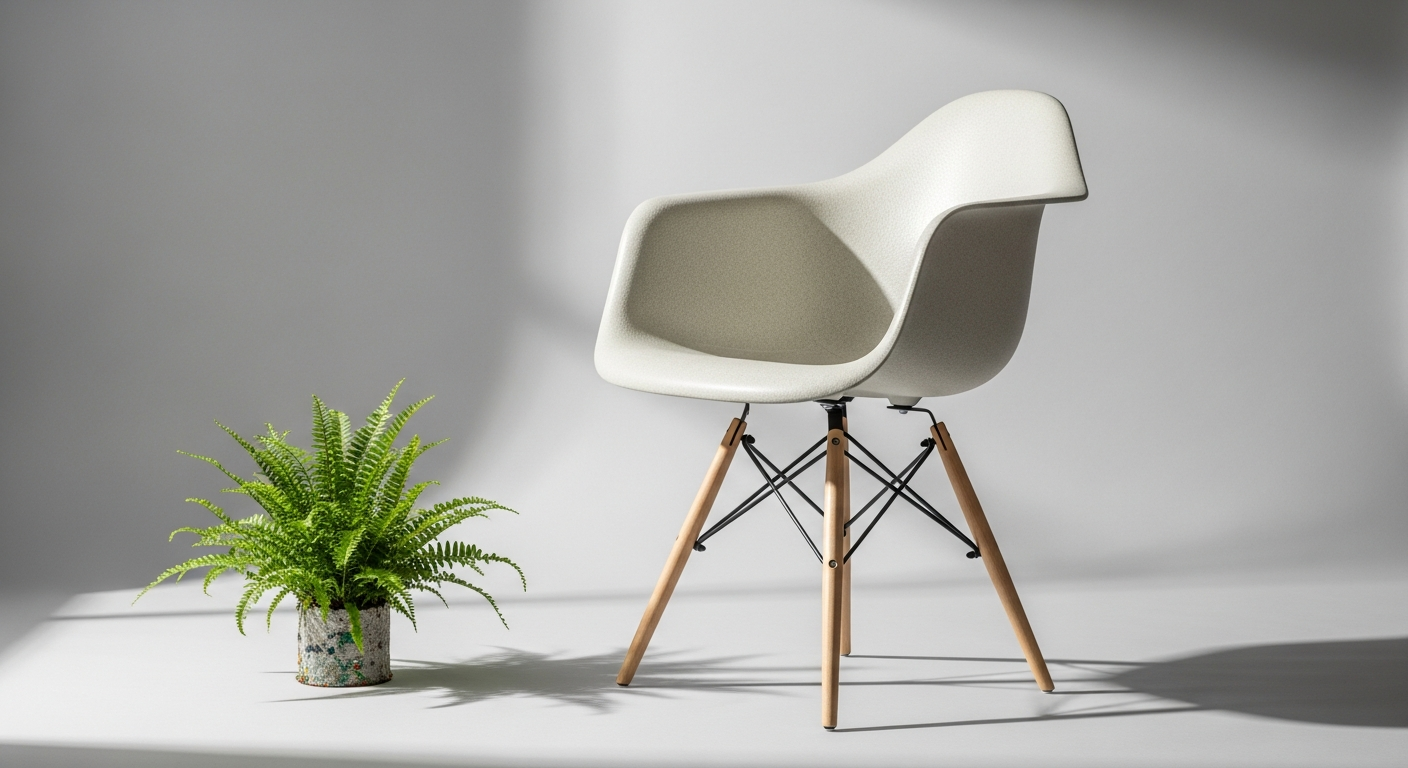
The Legacy Behind the Design: Understanding Eames Innovation
A surprising fact emerges when examining furniture sales data: the same chair design that revolutionized living spaces in the 1950s continues to outsell modern competitors today. The Eames Plastic Side Chair RE DSW isn't just surviving the test of time—it's thriving. When Charles and Ray Eames created this masterpiece, they envisioned furniture that worked as hard as it looked beautiful. Their approach rejected the notion that quality design required luxury pricing or exclusivity.
Fast forward to today, and the RE version—crafted from recycled plastic—proves that legendary design can embrace environmental responsibility without compromise. Vitra's stewardship has preserved the design's integrity across decades, maintaining the exact proportions and engineering that made the original chair revolutionary. The transition from virgin plastic to recycled materials represents evolution rather than departure, honoring the Eames' original commitment to accessible, durable design.
This guide breaks down what makes the Eames Plastic Side Chair RE DSW the go-to choice for spaces ranging from minimalist apartments to corporate boardrooms. You'll uncover the design philosophy behind its enduring appeal, explore its sustainable credentials, understand its practical applications across different interiors, and discover how to make this investment work harder for your space.
Discover the Eames Plastic Side Chair RE DSW at Bruno Wickart CH
Charles and Ray Eames' Revolutionary Approach to Furniture Manufacturing and Accessibility
Charles and Ray Eames approached furniture design with a manufacturing mindset. Rather than creating one-off pieces for wealthy patrons, they asked fundamental questions: How can we make beautiful furniture affordable? What production techniques allow quality without excessive cost? These inquiries led to plastic injection molding—a technique that seemed industrial and cheap to contemporary critics but ultimately democratized modern design.
The original plastic side chair, introduced in 1950, challenged every established convention about what constituted "serious" furniture. Designers worked primarily in wood, metal, and upholstered fabrics. Plastic seemed disposable, temporary, unsuitable for meaningful design. The Eames proved otherwise. Their molded plastic shell offered ergonomic curves impossible to achieve through traditional manufacturing, combined with surprising durability. Within years, the design became ubiquitous in schools, offices, and homes worldwide.
How the Original Plastic Side Chair Challenged Design Conventions in the 1950s
The 1950s design establishment initially dismissed plastic as a material for compromised taste. Yet the Eames Plastic Side Chair's success forced a reckoning. The chair's simple geometry—a seamless molded shell, minimal base, clean lines—proved that industrial materials could achieve sculptural beauty. Its presence in high-end design magazines alongside more traditionally "refined" furniture gradually shifted cultural perception.
The chair's ability to function in diverse settings amplified its revolutionary impact. Institutional buyers appreciated its stackability and durability. Design-conscious consumers loved its aesthetic refinement. Families found it practical and affordable. This democratic appeal—where a single design satisfies multiple constituencies—remains rare in furniture history.
The Evolution From Mass Production to Sustainable Manufacturing Practices
The Eames' original vision emphasized efficiency and accessibility through mass production. Modern manufacturing has retained this philosophy while addressing contemporary environmental concerns. The introduction of the RE designation marks this evolution: recycled plastic replaces virgin material, reducing extraction demands while maintaining structural performance.
This transition required genuine engineering innovation. Recycled plastic contains variable material properties depending on source composition. Vitra's manufacturing process ensures consistent quality by carefully selecting and processing recycled feedstock. The resulting chair performs identically to its virgin plastic predecessor—same ergonomic profile, same durability standards, same aesthetic presence.
Why Vitra's Stewardship Has Preserved the Design's Integrity Across Decades
Vitra acquired manufacturing rights to the Eames furniture line and has functioned as custodian rather than opportunist. Rather than pursuing cost-cutting modifications or stylistic updates that would alienate devotees, Vitra has maintained original proportions, joinery methods, and material specifications. When innovations occur—like the shift to recycled plastic—they enhance rather than alter the fundamental design.
This commitment distinguishes Vitra's approach from countless manufacturers who produce "inspired by" knock-offs. Vitra invests in tooling, certification, and quality control that reflect the original designers' standards. You're not purchasing a reinterpretation; you're acquiring the authentic design, evolved responsibly.
Recycled Materials Without Compromise: The RE Difference
What the RE Designation Means for Conscious Consumers
The RE in Eames Plastic Side Chair RE DSW signals sustainable manufacturing without aesthetic or functional sacrifice. This designation isn't marketing language—it represents measurable environmental impact reduction. The recycled plastic seat shell reduces demand for virgin petroleum-derived materials while delivering identical ergonomic performance and durability.
Conscious consumers increasingly recognize that environmental responsibility requires behavioral change, not just consumption of greenwashed products. The RE version allows you to make an ethical choice without compromising on design quality, comfort, or longevity. This alignment between values and purchase decisions extends beyond environmental impact—it reflects a commitment to thoughtful consumption.
How Recycled Plastic Maintains Structural Integrity and Durability
Skepticism about recycled materials' performance is understandable. Recycled plastic often receives negative associations with degraded quality or shortened lifespan. Vitra's engineering approach contradicts this assumption. Through rigorous material science, recycled plastic can match or exceed virgin plastic performance when properly processed and formulated.
The molded seat shell endures decades of sitting, shifting, leaning, and environmental exposure without cracking or deforming. Temperature fluctuations that would compromise inferior recycled materials have minimal effect on Vitra's engineered formulations. The chair's ability to function in institutional settings—where durability demands exceed residential use—proves the material's genuine performance credentials.
Environmental Impact Reduction Compared to Virgin Plastic Alternatives
The environmental calculus favors recycled plastic substantially. Virgin plastic production requires crude oil extraction, refining, polymerization, and transportation—processes generating significant carbon emissions and resource depletion. Recycled plastic bypasses the extraction and refining stages, reducing energy consumption by approximately 30-40% compared to virgin production.
Over the chair's lifespan—potentially 20-30+ years—this manufacturing impact compounds considerably. A single Eames chair produced from recycled plastic represents multiple kilograms of petroleum extraction avoided. Multiply this across thousands of units annually, and the cumulative environmental benefit becomes substantial. Choosing the RE version means your seating choice supports measurable resource conservation.
Certification and Sustainability Standards Met by Vitra's Manufacturing
Vitra's sustainability commitment extends beyond material selection to encompassing manufacturing processes, supply chain oversight, and end-of-life considerations. The company maintains certifications from recognized environmental bodies and adheres to circular economy principles. This means the chair's design anticipates eventual recycling, with material compositions selected for reprocessing viability.
Documentation of these certifications and standards provides transparency. When purchasing the RE version, you're not relying on brand reputation alone—you're acquiring a product backed by verifiable environmental credentials. This accountability distinguishes responsible manufacturing from superficial sustainability claims.
Explore certified sustainable seating options at Bruno Wickart CH
Anatomy of Comfort: Molded Seat Shell and Structural Engineering
Ergonomic Design Principles Embedded in the Molded Seat Shell
The Eames Plastic Side Chair's ergonomic excellence emerges from deliberate shell geometry, not accidental comfort. Charles and Ray Eames studied human anatomy, sitting posture, and pressure distribution extensively before finalizing the shape. The molded form cradles the body's natural contours, distributing weight across the seat surface rather than concentrating pressure on specific points.
This engineered comfort accommodates diverse body types and sizes. The shell's sidewalls provide subtle lateral support without constraining movement. The seat depth balances thigh support with knee clearance. These proportional relationships—refined through prototyping and user testing—create a chair suitable for extended sitting without fatigue or postural strain.
How the Curved Profile Supports Proper Posture During Extended Sitting
Modern ergonomic research validates what the Eames intuitively understood: seat profile profoundly affects spinal alignment and comfort during prolonged sitting. The chair's curved shell naturally guides the spine toward neutral alignment, reducing the muscular effort required to maintain posture. This passive support proves especially valuable in office settings where workers spend six to eight hours daily seated.
The absence of arms or cushioning might suggest insufficient support. Conversely, the firm shell's shape provides more effective postural guidance than padded alternatives that conform passively without positional cues. Your body settles into the shell's curves, automatically aligning toward a neutral spine position. Extended sitting fatigue diminishes considerably when structure rather than cushioning provides support.
The Role of the Wooden Base and Wire Cross-Strut in Stability
The DSW designation refers to the "Dining Height Side Chair Wood Base." This base contributes far more than visual warmth—it provides structural integrity and subtle aesthetic balance. The wooden legs, angled slightly outward, create a stable four-point foundation that prevents tipping while maintaining lightweight appearance. The wire cross-strut connecting the legs provides diagonal bracing that resists racking forces during movement.
Material contrast between the plastic seat and wooden base creates visual interest while serving functional purposes. Wood's warmth softens the plastic shell's industrial appearance, making the chair suitable for diverse aesthetic contexts. The combination proves more versatile than all-plastic or all-metal alternatives, adapting seamlessly to traditional, contemporary, or eclectic interiors.
Material Quality of the DSW Construction and Weight Capacity Standards
The wooden base utilizes sustainably sourced materials selected for stability and longevity. Joinery methods employed throughout construction reflect traditional craftsmanship standards applied at industrial scale. The result combines precision manufacturing with time-tested construction principles, yielding a base that remains structurally sound across decades of use.
Weight capacity standards for the Eames Plastic Side Chair accommodate diverse user sizes without limitation concerns typical of lighter-duty furniture. The engineering margin exceeds normal residential use substantially, permitting institutional deployment where durability demands peak. This structural confidence translates to genuinely long-term investment—the chair remains stable and functional through multiple ownership cycles and usage contexts.
Versatility Across Interior Spaces: From Dining to Office
Dining Room Applications and How the Chair Complements Table Settings
The Eames Plastic Side Chair's origins trace to dining furniture, and its dining room application remains unsurpassed. Stackability makes setup and storage practical for residential users hosting gatherings. The chair's refined silhouette prevents visual heaviness around tables, maintaining sightlines and spatial openness even when multiple chairs surround dining surfaces.
Color selection enhances dining room integration. Neutral tones—black, white, natural plastic finishes—pair effortlessly with diverse table styles and décor palettes. The wooden base introduces warmth that wooden tables echo and complement. Whether furnishing a minimalist Scandinavian dining space or a more eclectic environment, the chair adapts through subtlety rather than demanding visual accommodation.
Office and Meeting Room Integration for Professional Environments
Corporate environments prize furniture serving multiple functions across varying spatial configurations. The Eames Plastic Side Chair excels in this context. Conference rooms benefit from stackable seating for flexible layout adjustments. Reception areas appreciate the chair's refined aesthetic that conveys design sensibility without ostentation. Individual offices utilize the chair's comfort for extended work sessions without the bulk of traditional office seating.
The design's neutral sophistication ensures professional appropriateness in any corporate setting. The chair reads as intentional rather than economical, communicating thoughtful design choices rather than cost-cutting. This psychological impact matters in client-facing spaces where furniture selections influence perceptions of organizational values and aesthetic standards.
Living Room Styling Possibilities With Different Décor Aesthetics
Living room versatility extends the chair's appeal beyond dining and office applications. Contemporary minimalist interiors benefit from the chair's clean architectural lines and unembellished form. Vintage mid-century spaces celebrate the chair as authentic period piece. Eclectic environments appreciate the chair's ability to coexist with diverse furnishing styles without visual conflict.
Accent colors available through Bruno Wickart CH enable personalization while maintaining design coherence. A jewel-tone plastic shell might introduce unexpected color to neutral environments. Natural finishes harmonize with organic décor aesthetics. Multiple chairs in varying colors create intentional visual interest rather than cluttered appearance, particularly in open-plan living spaces.
Hospitality Design Applications in Restaurants, Cafés, and Reception Areas
Hospitality designers have embraced the Eames Plastic Side Chair for decades. Restaurant and café environments benefit from the chair's stackability, durability, and easy cleaning—practical advantages that don't compromise aesthetic sophistication. The chair's refined appearance elevates casual dining spaces, suggesting intentional design rather than generic seating selection.
Reception areas utilize the chair to create welcoming, design-conscious environments that immediately communicate organizational standards. Hotels and boutique venues appreciate the chair's versatility across diverse interior concepts. The chair's proven track record in high-traffic commercial environments demonstrates durability far exceeding residential use demands, providing confidence in long-term performance across demanding applications.
Design Aesthetics That Bridge Traditional and Contemporary
Minimalist Architectural Shape and Clean Lines
The Eames Plastic Side Chair embodies minimalism's essential philosophy: maximum impact through minimum visual expression. The molded seat shell contains no extraneous details, embellishments, or applied ornamentation. Every curve serves ergonomic or structural purpose. The wooden base employs simple geometry refined through proportion rather than decoration.
This disciplined restraint generates visual impact paradoxically through subtraction. The chair's presence in a room feels substantial despite its lightweight construction and modest profile. The minimalist approach ensures longevity—design based on permanent principles of proportion and function ages more gracefully than aesthetics dependent on trend cycles. The chair remains visually current because it transcends momentary fashion.
Color Options and Finishes Available Through Bruno Wickart CH
Bruno Wickart CH offers the Eames Plastic Side Chair RE DSW in multiple colorways and finishes, enabling personalization while maintaining design coherence. Classic neutrals—black, white, gray—provide sophisticated foundation options suitable for virtually any interior context. Natural plastic finishes reveal the material's texture and warmth, appealing to sustainability-minded consumers who appreciate visible recycled content.
Color selection becomes interior design strategy rather than arbitrary aesthetic preference. A bold-hued chair can punctuate neutral environments with intentional color accent. Multiple chairs in different colors can create rhythm across spaces while maintaining cohesive visual language. This flexibility accommodates personal expression within the design's refined framework.
How the Chair Complements Both Vintage and Modern Décor
The Eames Plastic Side Chair exists at the intersection of mid-century modernism and contemporary design, making it equally at home in period-specific or eclectic environments. Vintage interiors recognize the chair as authentic historical piece, celebrating its original design intent. Modern spaces appreciate the chair's minimal aesthetics and sustainable credentials.
This temporal flexibility stems from the design's fundamental sound principles. When a chair balances form and function through proportion and material honesty, it transcends era-specific styling. The chair looks equally appropriate in 1960s and 2020s interiors because both periods value clarity of design expression. This timelessness ensures your investment remains relevant regardless of evolving décor preferences.
Material Contrast Between Wood Base and Molded Plastic Seat
Material contrast generates visual interest without relying on applied decoration. The warm, organic character of the wooden base juxtaposed against the refined geometry of the plastic shell creates dynamic tension that engages the viewer's attention. This contrast communicates design sophistication—the choice to combine materials reflects deliberate aesthetic intention rather than functional compromise.
The contrast also serves practical purposes. Wood grounds the chair visually and environmentally, preventing the all-plastic aesthetic that might feel sterile in residential contexts. The wood's tonal warmth humanizes the industrial plastic, making the chair suitable for diverse settings. This material combination represents the Eames' genius for balancing modernist principles with livable, welcoming environments.
Price Point and Value Proposition in 2026
Current Pricing Structure From CHF 236.00 Promotional to CHF 295.00 Regular
The Eames Plastic Side Chair RE DSW current pricing reflects genuine value rather than luxury markup. The promotional price of CHF 236.00 represents substantial savings from the regular CHF 295.00 price point, making this iconic design increasingly accessible. These price levels position the chair within reach for residential consumers, small business owners, and institutional buyers.
Understanding the pricing structure requires context. This chair carries the Eames name, backed by Vitra's manufacturing integrity and Eames Office's design stewardship. It incorporates recycled materials meeting rigorous sustainability standards. The engineering, tooling, and quality control standards reflected in the price exceed mass-market alternatives substantially. When evaluated against comparable designer furniture, the price point represents genuine accessibility rather than economy positioning.
Cost Comparison With Designer Alternatives and Mass-Market Knockoffs
Premium designer seating, lacking the Eames' historical significance and refined engineering, frequently commands prices two to three times higher. Mass-market knockoffs selling at fraction of the price sacrifice durability, comfort, and design integrity—often featuring inadequate shell thickness, poor joinery, or uncomfortable proportions. The Eames pricing occupies a sweet spot: genuine design investment without luxury price barrier.
Longevity analysis reveals the true value proposition. Mass-market alternatives may require replacement every five to ten years. Premium designer pieces without proven track records might disappoint after initial aesthetic appeal fades. The Eames Plastic Side Chair, with demonstrated durability across seventy years and multiple ownership cycles, amortizes to minimal per-year cost across its usable lifespan. The initial investment yields long-term economic advantage alongside aesthetic and environmental benefits.
Long-Term Value Through Durability and Timelessness as Investment Factors
Furniture purchases ideally represent investments rather than consumables. The Eames Plastic Side Chair meets investment criteria through durability, timelessness, and design authenticity. A chair purchased today will likely function flawlessly thirty years hence, maintaining aesthetic relevance throughout multiple interior design cycles.
This longevity creates substantial economic advantage. A CHF 236.00 investment yielding thirty years of daily utility costs approximately CHF 8 annually—minimal compared to replacement furniture cycles common with lower-quality alternatives. Beyond economics, timeless design eliminates the psychological burden of aesthetic obsolescence. You're not acquiring something fashionable today that will look dated tomorrow; you're purchasing enduring design that remains appropriate across decades.
Bulk Purchasing Options for Offices and Commercial Spaces
Bruno Wickart CH accommodates volume purchases for organizations furnishing offices, meeting spaces, or commercial environments. Bulk pricing typically offers additional savings beyond promotional rates, making the Eames Plastic Side Chair economically competitive with lower-quality institutional furniture. Organizations recognize that seating influences employee experience, client impressions, and space aesthetics—investments justified through these multiple returns.
Commercial buyers appreciate the chair's standardization and consistency. Ordering fifty identical units ensures uniform quality and appearance across spaces. The chair's proven track record in high-traffic environments provides confidence in durability. Organizations can source seating that communicates design values while meeting practical requirements and budget constraints.
Practical Considerations Before Purchasing
Space Requirements and Dimensional Planning for Various Rooms
Before purchasing, assess available space and intended placement carefully. While the Eames Plastic Side Chair possesses modest footprint compared to upholstered alternatives, dimensional planning remains important. The chair's height works well at standard-height dining tables (approximately 75cm). Clearance around chairs should accommodate comfortable seating and movement without obstruction.
Space planning extends to considering the chair's visual impact. A single chair functions as accent piece in larger rooms. Multiple chairs create rhythm across dining and living areas. The stackability feature enables flexible spatial arrangement, allowing configuration adjustments as needs evolve. Visualizing the chair within your specific environment before purchasing prevents mismatches between expectation and reality.
Maintenance and Cleaning Protocols for Recycled Plastic Surfaces
The recycled plastic seat shell cleans effortlessly with mild soap and water, responding well to standard household cleaning products. The material resists staining from typical food and beverage contact encountered in dining and office environments. This easy maintenance distinguishes the chair favorably from fabric-upholstered alternatives requiring specialized cleaning or accumulating permanent stains.
The wooden base responds to periodic dusting and occasional conditioning with furniture oil, maintaining appearance and longevity. The wire cross-strut tolerates regular cleaning without oxidation concerns if dried promptly after washing. Overall maintenance burden remains minimal—the chair essentially requires only standard household cleaning procedures to maintain appearance and function.
Stain Resistance and Durability Against Daily Wear
The recycled plastic seat shell demonstrates surprising stain resistance. Coffee, wine, and acidic foods that would permanently mark fabric seating wipe away from plastic surfaces. Scratches that might concern some users actually reveal the chair's material authenticity—unlike polished finishes that show every imperfection, slight wear on plastic surfaces integrates naturally into the material's appearance.
Institutional environments—schools, cafés, offices—where wear and staining expectations peak confirm the chair's genuine durability. After decades of institutional use, these chairs maintain functionality and visual presence despite exposure exceeding typical residential conditions. Your home's usage patterns will inevitably prove gentler than these demanding commercial applications.
Shipping, Assembly Expectations, and Customization Options Available
Bruno Wickart CH handles shipping logistics, with considerations for the chair's lightweight construction and stackability enabling efficient transport. Assembly requirements remain minimal—the seat shell arrives complete, with base attachment involving simple mechanical fastening. Most users accomplish assembly within minutes without specialized tools.
Customization options through Bruno Wickart CH enable personalization beyond standard colorway selection. Special finishes or specific color requests merit inquiry, though lead times may extend for non-standard configurations. The chair's design permits customization without compromising authenticity or manufacturing integrity, differentiating it from mass-market alternatives requiring standardization.
The Sustainability Conversation: Why It Matters Now
Consumer Demand for Eco-Conscious Furniture Choices
Contemporary consumers increasingly recognize that purchasing choices reflect values and generate environmental consequences. Furniture, occupying physical space for decades, accumulates significant environmental burden across manufacturing, transportation, and disposal cycles. Consumers prioritizing environmental responsibility seek products balancing aesthetic and functional excellence with measurable sustainability credentials.
The Eames Plastic Side Chair RE DSW addresses this consumer consciousness directly. Purchasing this chair means acquiring iconic design while supporting responsible manufacturing practices. This alignment between consumer values and purchase selection extends satisfaction beyond aesthetic appreciation to encompassing ethical contentment. You're not compromising on quality for environmental responsibility; you're acquiring superior design that happens to prioritize sustainability.
Carbon Footprint Reduction Through Recycled Material Usage
Carbon footprint analysis reveals recycled plastic's environmental advantage substantially. Manufacturing virgin plastic generates 3-4 kilograms of carbon dioxide per kilogram of material through extraction, refining, and polymerization. Recycled plastic production reduces this footprint by approximately 30-40%, lowering per-unit carbon impact measurably.
For individual consumers, the carbon reduction from a single chair might seem modest. Multiplied across thousands of units annually and decades of use, cumulative environmental benefit becomes substantial. The chair's longevity amplifies this advantage—a thirty-year lifespan distributes manufacturing emissions across three decades, yielding minimal annual carbon impact. Choosing the RE version represents a meaningful, concrete decision supporting environmental conservation.
Circular Economy Principles in Modern Furniture Manufacturing
The circular economy model reconceptualizes production and consumption as cyclical systems rather than linear resource extraction-to-disposal pathways. The Eames Plastic Side Chair RE embodies circular economy principles through utilizing recycled content and designing for eventual reprocessing. The material composition anticipates end-of-life recycling, ensuring the chair's plastic eventually cycles into new products rather than accumulating as landfill.
Vitra's commitment to circular economy extends beyond material selection to encompassing supply chain oversight, manufacturing process optimization, and partnership with recycling facilities. This systematic approach distinguishes genuine sustainability from superficial environmental marketing. The chair represents participation in evolving industrial systems prioritizing resource conservation and waste elimination.
How Choosing the RE Version Supports Responsible Production
Purchasing decisions create market signals that manufacturers monitor carefully. When consumers prioritize the RE version over virgin plastic alternatives, they communicate demand for sustainable options. This market feedback incentivizes manufacturers to expand recycled content programs, invest in processing infrastructure, and prioritize environmental responsibility in competitive decision-making.
Your individual chair purchase joins thousands of others sending consistent market signals supporting responsible production. These collective choices influence manufacturing investment, technology development, and industry standards. Choosing the RE version means participating in broader transformation toward sustainable industrial practices, contributing to systemic change through ordinary consumer decision-making.
Why the Eames Plastic Side Chair RE DSW Remains Non-Negotiable for Thoughtful Interiors
The Eames Plastic Side Chair RE DSW represents far more than a seating solution—it's a statement about your values, your taste, and your commitment to quality. This iconic design bridges seven decades of aesthetic evolution while embracing contemporary sustainability standards. The recycled plastic construction proves that environmental responsibility doesn't demand aesthetic sacrifice.
Whether furnishing a corporate headquarters, designing a family dining room, or outfitting a creative studio, this chair delivers ergonomic comfort, visual sophistication, and genuine longevity. At CHF 236.00 to CHF 295.00, you're acquiring a piece of design heritage that will outlast fashion cycles and reward you with daily functionality. The chair's proven track record across diverse environments and ownership experiences confirms its status as enduring design classic rather than momentary trend.
The combination of Eames' legendary design vision, Vitra's manufacturing excellence, and contemporary sustainability features creates compelling investment potential. This chair functions equally effectively in your home today and remains relevant across decades of evolving aesthetics and life circumstances. Your children might eventually inherit this chair, passing along both functional seating and tangible design legacy.
Thoughtful interiors reflect deliberate choice-making rather than default acceptance of available options. The Eames Plastic Side Chair RE DSW invites precisely this thoughtfulness—selecting superior design while supporting responsible manufacturing practices. The investment yields immediate aesthetic and functional returns alongside long-term personal and environmental benefits.
Secure your Eames Plastic Side Chair RE DSW at Bruno Wickart CH today and invest in timeless design
Leave a Reply