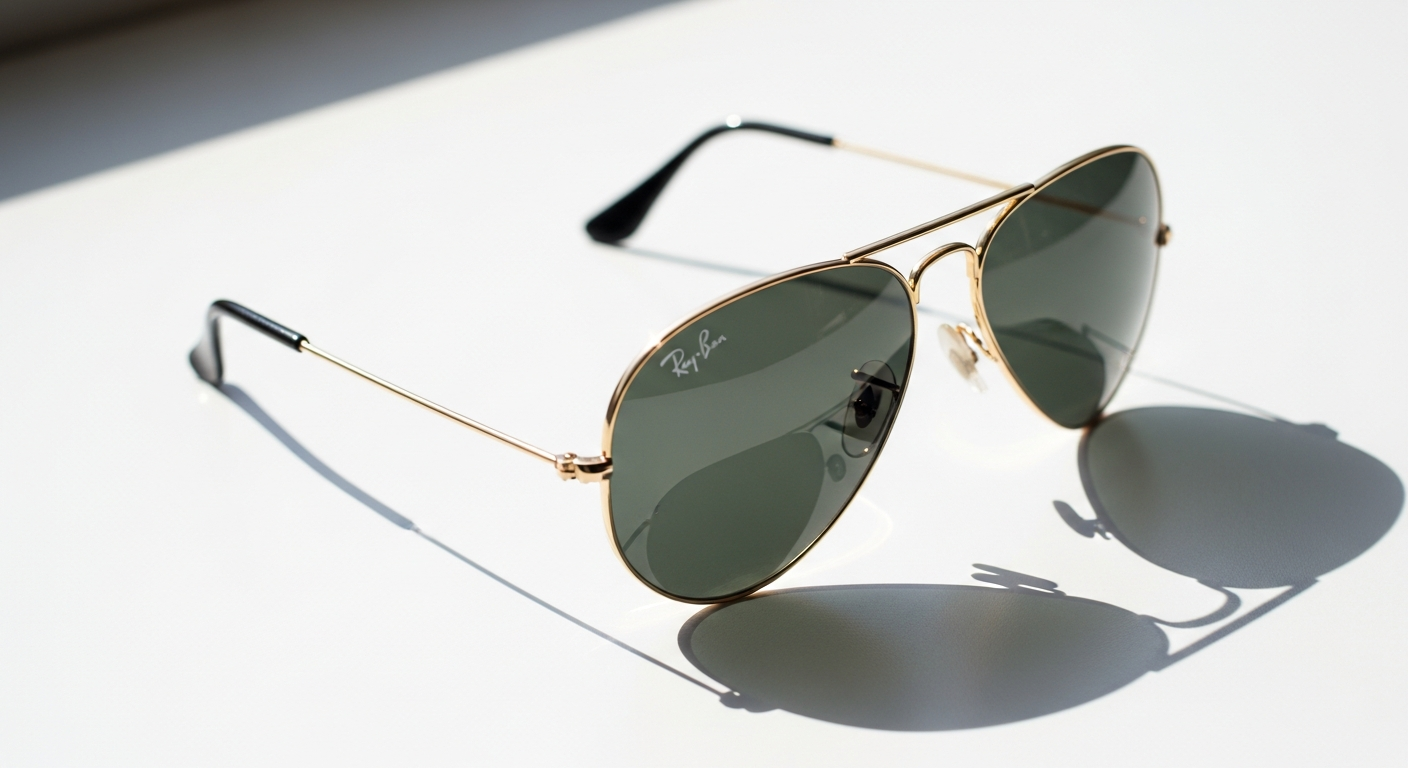
When Ray-Ban Aviators first took flight in the 1930s, they were engineered to solve a specific problem: U.S. military pilots needed superior visibility and glare reduction in the cockpit. What began as functional equipment has since transcended its origins to become one of the most recognizable symbols of cool across nearly a century. The design hasn't fundamentally changed because it worked then and works now—a rare achievement in an industry obsessed with novelty.
The enduring appeal of Ray-Ban Aviator Classic Sunglasses stems from their perfect balance of heritage craftsmanship and modern optical innovation. These frames deliver technical performance that rivals contemporary designs while maintaining aesthetic proportions that refuse to date. Whether you're shopping for your first pair or upgrading from a lesser alternative, understanding what makes Aviators exceptional helps you appreciate the investment.
The Heritage and Design Philosophy Behind Aviator Sunglasses
Origins in aviation: designed for U.S. Air Force pilots in the 1930s for superior visibility and glare reduction
The Aviator's story begins in military necessity. U.S. Air Force pilots faced a specific challenge: sunlight reflecting through cockpit windows created dangerous glare that compromised visibility during critical flight operations. Ray-Ban responded with a design featuring larger lenses that provided extended coverage and a distinctive angular geometry that blocked light from multiple directions simultaneously. The pilot-shaped lens became the defining characteristic—wider at the top, narrower at the bottom—maximizing the field of vision without protruding unnecessarily.
Evolution from functional necessity to fashion staple through decades of cultural influence
The transition from military equipment to mainstream fashion icon happened gradually. By the 1950s and 1960s, Aviators began appearing in Hollywood films and on celebrity faces. When top-tier actors wore them both on-screen and in public, the association with glamour and authority became cemented. The frames moved beyond utility into cultural symbolism, representing adventure, confidence, and timeless sophistication.
Distinctive pilot-shaped lens geometry: larger coverage area with characteristic angular frames
The Aviator's geometry differs substantially from conventional sunglasses. The teardrop-shaped lenses extend across the face at a wider angle, providing peripheral protection that standard frames cannot match. This design choice wasn't purely aesthetic—the larger coverage area reflects the original aviation requirement for maximum visibility. The characteristic angular frames create a distinctive silhouette that remains instantly recognizable across any context.
Thin metal frame construction that balances durability with lightweight comfort
The metal frame construction represents a masterclass in engineering compromise. The frame must be strong enough to withstand regular use, yet light enough for comfortable all-day wear. Ray-Ban achieves this through carefully selected metal alloys that resist corrosion while minimizing weight. The thin profile prevents the temple pressure that causes discomfort during extended use, making Aviators suitable for continuous wear from morning to evening.
Why the design remains virtually unchanged: timeless proportions that transcend trend cycles
Fashion moves in cycles, but Aviators remain constant. This consistency reflects proportions so fundamentally balanced that they resist obsolescence. The lens-to-frame ratio, bridge width, and temple angles all work together to create harmony that transcends specific decades. Unlike trend-dependent designs that feel dated within seasons, Aviators maintain relevance regardless of what runways showcase. This timelessness isn't accident—it's the result of proportions so mathematically sound that they achieve near-universal appeal.
Celebrity endorsements and pop culture integration that cemented their status
Cultural penetration accelerated through strategic visibility. From Tom Cruise in Top Gun to Johnny Depp's casual sophistication, Aviators appeared on the faces of cultural influencers who shaped public perception. This didn't create artificial demand—it simply made visible what consumers already sensed: that Aviators communicated something genuine about style and substance. Pop culture integration reinforced the narrative that Aviators belonged in the life of anyone seeking iconic eyewear.
Universal appeal across age groups, genders, and style preferences
Aviators succeed where many designer products fail: they appeal across demographics. A teenager wearing them signals one interpretation; a business executive signals another; a casual beachgoer signals yet another. The design accommodates multiple identities without requiring different frames. This versatility explains sustained popularity across generations—Aviators fit the style narrative of grandparents, parents, and children alike.
Lens Technology and Optical Performance Explained
G-15 green lens coating: absorbs 85% of visible light while maintaining natural color perception
The G-15 green lens represents optical engineering optimized for real-world vision. Most sunglasses sacrifice color accuracy for darkness—greens become browns, reds flatten into muddy tones. Ray-Ban's G-15 coating absorbs 85% of visible light while maintaining the natural color palette, allowing accurate perception of traffic signals, landscape details, and subtle environmental information. This matters not only for safety but for visual comfort during extended outdoor exposure. Green wavelengths align closely with how human eyes process visual information, making this color choice both scientific and practical.
Blue light filtration benefits: reduces digital eye strain and promotes natural vision clarity
Modern eyewear must address contemporary challenges. Digital screens emit blue light that contributes to eye fatigue, particularly during extended use. G-15 green lenses inherently filter blue wavelengths, making them beneficial for individuals who transition between outdoor and indoor screen-based work. This filtration reduces the contrast shock that occurs when moving from bright sunlight into dimmer office environments, promoting smoother transitions and less overall eye strain.
Polarized lens options: eliminate glare from reflective surfaces (water, snow, pavement)
Polarization represents an upgrade for specific use cases. Where standard lenses reduce overall brightness, polarized lenses specifically target glare—the harsh reflection from water, snow, and pavement. The polarization filter blocks horizontally-oriented light waves that create glare, dramatically improving visibility when engaging in water sports, driving, or snowy activities. This technology transforms experience from manageable to exceptional, though it comes with considerations around LCD screen interference.
High-quality glass construction: superior scratch resistance compared to plastic alternatives
Ray-Ban's commitment to glass lenses distinguishes them from budget competitors. Glass provides superior optical clarity, resists scratching far more effectively than plastic, and maintains its properties indefinitely. A plastic lens gradually develops micro-scratches that degrade vision; glass lenses remain pristine with basic maintenance. This durability directly justifies the premium price point, as replacement costs for damaged Aviators occur far less frequently than for inferior alternatives.
UV protection standards: comprehensive UVA and UVB blocking for long-term eye health
Protection against ultraviolet radiation protects against cumulative damage that causes cataracts and macular degeneration. Ray-Ban Aviators block 100% of UVA and UVB radiation, providing complete defense against the sun's harmful wavelengths. This isn't optional health consideration—it's medical necessity. Extended sun exposure without proper protection accumulates damage that manifests years later as serious vision problems.
Optical clarity advantages: precision manufacturing ensures distortion-free vision
Manufacturing precision separates premium eyewear from mediocre alternatives. Ray-Ban's production processes ensure consistent lens curvature and coating application that minimizes optical distortion. Looking through a pair of Aviators should feel transparent—your vision should feel natural and sharp, not distorted or hazy. This clarity results from precise manufacturing specifications maintained across hundreds of thousands of units, a consistency that requires substantial quality control investment.
Lens width variations (55mm, 58mm, 62mm): accommodate different visual requirements and face proportions
Lens width directly affects field of vision and facial coverage. Smaller lenses (55mm) suit narrower faces and provide lighter weight; larger lenses (62mm) maximize coverage and suit broader faces. The variation allows proper matching between frame size and facial anatomy, ensuring both comfort and aesthetics. A lens too small appears diminished; a lens too large appears oversized. The graduated sizing ensures that every face shape can find an appropriately proportioned frame.
Finding Your Perfect Fit: Sizing and Frame Specifications
Bridge width measurements (typically 14mm): critical for comfort and proper positioning
The bridge—the portion connecting both lenses across the nose—fundamentally affects comfort and positioning. A bridge too wide slides down the nose; a bridge too narrow creates pinching pressure. Ray-Ban's standard 14mm bridge width accommodates most faces, but understanding this measurement ensures you order frames that sit correctly without adjustment. Proper positioning means lenses align with your eyes optimally, maximizing optical clarity and UV protection coverage.
Temple length options (135mm and 140mm): ensure secure fit without pinching or slipping
Temple length determines whether frames sit securely or migrate down your nose during wear. At 135mm, frames accommodate smaller to average head sizes; at 140mm, they accommodate average to larger proportions. A proper fit means frames rest comfortably without pressure at the temples while remaining secure through movement and activity. This seemingly minor specification directly impacts whether you'll comfortably wear your Aviators throughout the day.
Lens width categories: matching frame size to facial proportions for flattering appearance
Lens width coordinates with your face width to create visual harmony. Frame that's disproportionately large or small disrupts facial aesthetics and can trigger instinctive discomfort. Ray-Ban's sizing strategy ensures that every size option pairs lens width with bridge width and temple length in proportional relationships that flatter typical face shapes. This coordination explains why properly-sized Aviators look better than oversized or undersized alternatives.
Face shape compatibility: how Aviators complement oval, square, round, and rectangular faces
Aviators work across face shapes because their angular geometry balances different facial proportions. On oval faces, they add definition to soft features. On square faces, they complement angular geometry without overwhelming it. On round faces, they provide elongating proportions. On rectangular faces, they balance length with width. This universal compatibility reflects the design's fundamental soundness—the proportions work because they're mathematically balanced rather than trendy.
Adjustment considerations: metal frames allow minor customization for personalized comfort
The metal frame allows minor adjustments for personalized comfort. An optician can adjust bridge positioning, temple angle, and nose pad placement to optimize fit. These adjustments transform a good-fitting frame into one that feels custom-designed. If ordering online means accepting standard positioning, knowing that professional adjustment can refine the fit provides confidence that minor size variations won't diminish the ownership experience.
Measurement guidance: how to determine your ideal size before purchasing online
Determining your size involves simple measurements. Existing glasses provide reference points: check the size markings on the temples to understand your typical frame dimensions. If purchasing online without prior Aviators experience, measure your face width and compare against size charts. Vistaexpert FR provides detailed guidance on selecting appropriate sizes, and their return policies ensure that sizing mistakes don't create financial risk.
Return and exchange policies: ensuring proper fit without the risk of commitment
Risk-free try-before-you-buy policies transform online purchasing from gamble into confidence. Knowing you can return incorrectly-sized frames and exchange for proper dimensions removes hesitation. This matters particularly for designer eyewear, where significant investment requires confidence in fit. Retailers like Vistaexpert FR understand that customer satisfaction depends on proper sizing, making accommodating exchanges part of their business model.
Frame and Material Quality That Stands the Test of Time
Durable metal alloy construction: engineered for longevity and resistance to daily wear
Metal alloys selected for Aviator frames undergo rigorous testing to ensure performance under real-world conditions. These alloys maintain structural integrity through thousands of flex cycles—the subtle bending that occurs as frames are put on and removed repeatedly. The material resists metal fatigue that causes cheaper frames to eventually snap at hinges or bridge. This durability explains why decade-old Aviators can continue functioning while cheaper alternatives require replacement after a year or two.
Gold and silver frame finishes: classic colorways that pair seamlessly with multiple lens options
Gold and silver finishes represent more than aesthetic choice—they're practical selections that coordinate with diverse lens colors and personal styles. Gold creates warmth that pairs beautifully with green, brown, and amber lenses. Silver offers contemporary coolness that enhances almost any lens color. The neutrality of these finishes prevents color clashing that occurs with fashion-forward frame colors. This conservatism in frame color selection explains why Aviators never feel dated.
Lightweight design benefits: comfortable for extended wear without temple pressure
Weight matters during all-day wear. Heavier frames create cumulative temple pressure that builds to discomfort by afternoon. Ray-Ban's careful material selection minimizes weight while maximizing structural strength. This balance allows comfortable wear from morning commute through evening leisure without the pressure headaches that inferior frames create. Lightness becomes invisible—you notice only the absence of discomfort.
Corrosion resistance properties: protective coatings extend frame lifespan
Metal exposed to sweat, humidity, and salt air naturally oxidizes. Ray-Ban applies protective coatings that prevent corrosion while maintaining the visual appeal of the finish. This coating system extends frame lifespan substantially, preserving the aesthetic integrity that justifies the premium price. Without this protection, frames would gradually develop oxidative spots and discoloration that would look neglected within months.
Hinge durability: reinforced construction prevents loosening from regular use
Hinges represent the mechanical vulnerability in eyewear design. Thousands of open-close cycles stress hinge mechanisms until they loosen or fail in inferior frames. Ray-Ban's hinge construction uses reinforced engineering that withstands continuous movement. A decade-old pair of Aviators should have hinges that remain secure, a durability that simply doesn't exist in budget alternatives.
Maintenance requirements: simple care routines that preserve structural integrity
Preserving frame longevity requires minimal effort. Daily cleaning with a microfiber cloth removes dust that could scratch lenses or lodge in hinges. Storage in a protective case prevents accidental damage during travel or casual placement. Occasional professional adjustment ensures hinges and bridge remain optimally positioned. These simple routines prevent premature wear that would shorten frame lifespan.
Warranty coverage: manufacturer protection against manufacturing defects
Ray-Ban's warranty protects against manufacturing defects, providing assurance that your investment includes protection against unforeseen problems. While warranties don't cover accidental damage or normal wear, they provide crucial safeguard against discovering that your expensive frames have structural flaws weeks or months into ownership.
Lens Color Options and Their Practical Applications
Classic G-15 green lenses: ideal for everyday wear with natural color perception
G-15 green represents the archetypal Aviator lens. Its combination of brightness reduction and color accuracy makes it suitable for virtually any daytime activity. From urban commuting to outdoor recreation, G-15 lenses perform consistently. The natural color perception allows accurate environmental awareness while reducing eye strain from brightness. For first-time Aviator purchasers, G-15 represents the safest selection that rarely disappoints.
Brown lens alternatives: enhance contrast and reduce eye fatigue in bright conditions
Brown lenses amplify contrast by filtering blue wavelengths more aggressively than green. This enhancement makes details pop, particularly beneficial in bright outdoor conditions. Photographers and outdoor enthusiasts often prefer brown lenses because the enhanced contrast improves environmental perception. The trade-off involves slightly less natural color perception than green, though many users find the contrast enhancement worth this compromise.
Gradient lens variations: stylish option that reduces intensity from top to bottom
Gradient lenses darken from top to bottom, reducing intensity where overhead sun creates maximum glare while maintaining visibility through the lower portion where you read or observe objects below eye level. This variation offers style alongside function, making them popular for fashion-conscious purchasers. The gradual transition eliminates the harsh line that divides some lens types, creating visual continuity.
Photochromic options: adaptive lenses that darken in sunlight for versatile use
Photochromic lenses automatically adjust darkness based on light intensity. Indoors they remain clear; outdoors they darken to appropriate levels. This versatility eliminates the need to alternate between prescription glasses and sunglasses, making photochromic options ideal for people transitioning between indoor and outdoor environments. The technology has improved substantially, responding quickly to light changes without lag.
Polarized vs. non-polarized: understanding the trade-offs for different activities
Polarization eliminates glare but can interfere with digital screens and LCD displays—a significant consideration in our screen-dependent world. Water sports and snowy activities benefit tremendously from polarization; office workers and frequent drivers may find the LCD interference problematic. Understanding your primary use cases informs whether polarization justifies the premium cost and minor screen-viewing complications.
Seasonal considerations: which lens colors perform best in various weather conditions
Seasonal conditions suggest different lens colors. Winter snow demands strong glare reduction, favoring brown or polarized options. Summer beach conditions benefit from green's natural color perception. Overcast conditions may favor brown's enhanced contrast. Purchasing a single pair requires compromising across seasons, though some enthusiasts maintain multiple pairs optimized for different conditions.
Fashion coordination: pairing lens colors with personal style and wardrobe preferences
Beyond function, lens color expresses personal style. Gold frames with green lenses read as classic and timeless; gold with brown creates warmth and sophistication; silver with brown reads contemporary and sharp. Your color palette and typical wardrobe should influence lens selection. The right combination feels effortlessly coordinated; the wrong combination feels slightly off regardless of functionality.
Price Points and Value Assessment for Designer Eyewear
Price range overview: €150–€250 depending on lens type and frame specifications
Ray-Ban Aviator Classic Sunglasses range from €150 for basic models with standard green lenses to €250 for premium variations featuring polarized lenses or specialized coatings. This range reflects legitimate cost variations in materials and production, not artificial price inflation. Understanding what factors drive pricing helps you determine which options justify spending toward the higher end of this range.
Factors influencing cost: lens technology, materials, and special coatings
Polarized lenses add cost due to the additional filtering technology. Scratch-resistant coatings increase durability while adding expense. Frame material variations (standard versus premium alloys) affect pricing. These aren't nickeled-and-dimed additions—they represent genuine value enhancements that justify premium pricing for buyers prioritizing specific performance characteristics.
Polarized premium: price difference between standard and polarized options
Polarization typically adds €30-€50 to the base price, representing tangible technology cost. For water sports enthusiasts or frequent drivers in bright conditions, this premium delivers genuine value. For others, standard lenses provide adequate performance at lower cost. Understanding your use case determines whether this premium makes financial sense.
Promotional opportunities: seasonal sales and discount periods at Vistaexpert FR
Cost-per-year calculation: justifying investment through multi-year durability
A €200 pair of Aviators worn for ten years costs €20 annually—remarkably economical for daily eyewear. Compare this to budget alternatives requiring replacement every two years at €40 each, totaling €200 over the same decade. The premium investment pays dividends through superior longevity and consistent performance across years.
Comparison with generic alternatives: why premium pricing reflects superior quality
Budget sunglasses cut costs by using inferior glass, weak frame construction, and minimal quality control. The result: scratched lenses within months, loose hinges after a year, frames that feel flimsy despite being new. Ray-Ban's premium pricing reflects genuine material and manufacturing superiority that resists these premature failures.
Value retention: Aviators maintain desirability in resale markets
Unlike trend-dependent fashion items that become worthless, Aviators maintain resale value. A pair worn for several years can sell for 50-60% of original retail, offset some ownership cost. This retention reflects sustained demand and timeless design—Aviators never become "last season's frames."
Advantages That Justify the Investment
Universally flattering design: complements virtually every face shape and personal aesthetic
Iconic design achieves what most frames cannot: looking good on almost everyone. Wide faces don't look worse in Aviators; narrow faces don't look worse. Young wearers appear sophisticated; older wearers appear contemporary. This universal flattery creates confidence—you're not fighting against the frame's geometry to look your best.
Exceptional durability: frames and lenses withstand years of daily use without degradation
Unlike disposable eyewear that degrades quickly, Aviators improve with age—developing patina and character while maintaining structural integrity. A five-year-old pair of Aviators from a premium manufacturer typically outperforms a new pair from budget brands. This durability compounds value across years of ownership.
High-quality optics: precision manufacturing delivers superior visual clarity
Through quality Aviators, the world looks sharper, clearer, and more detailed. Colors appear more accurate. Contrast appears enhanced. Your vision feels transparent—the frames disappear and you see the world as it truly is. This optical clarity creates an immediate quality difference that validates premium pricing the moment you first wear them.
Comprehensive UV protection: safeguards against harmful sun exposure and long-term eye damage
Protection against UV radiation accumulates over decades, preventing cataracts and macular degeneration that would otherwise emerge later in life. This health benefit extends beyond immediate comfort into long-term wellness. The cost represents medical investment as much as fashion investment.
Timeless style immunity: rarely fall out of fashion, ensuring lasting relevance
While trends cycle through frames that become embarrassingly dated within seasons, Aviators remain perpetually current. This consistency means you're not investing in frames that will look antiquated in five years. The design's timelessness protects your investment across decades.
Resale value: strong secondary market demand maintains investment value
Strong demand from new buyers seeking vintage or discontinued models means your Aviators retain value. A pair you no longer wear can offset new purchases, making the net investment smaller than the sticker price suggests.
Versatility across occasions: appropriate for casual, professional, and formal settings
Most sunglasses fit specific contexts. Aviators transcend context, working equally well on a beach, in a business meeting, or at a formal event. This versatility means you're not purchasing niche eyewear—you're purchasing frames appropriate for every aspect of your life.
Practical Considerations and Potential Drawbacks
Higher price point: significant investment compared to budget eyewear brands
The €150–€250 investment exceeds casual fashion sunglasses, creating financial commitment that requires confidence in your choice. For price-conscious consumers or those seeking throwaway eyewear they won't worry about losing, this investment creates hesitation.
Thin metal frame vulnerability: susceptible to bending if dropped or sat upon
The thin frame that creates lightness and comfort creates vulnerability to bending from drops or accidental pressure. Accidentally sitting on your frames while they're in your pocket, or dropping them on pavement, can bend them requiring professional adjustment. This vulnerability demands more careful handling than plastic frames can tolerate.
Maintenance commitment: regular cleaning and proper storage preserve condition
Maintaining pristine condition requires discipline. Daily cleaning with microfiber cloths, storage in protective cases, and careful handling preserve the frames' appearance. Users who toss their eyewear casually without protection will eventually see deterioration that impacts aesthetics, if not function.
Counterfeit market risks: importance of purchasing from authorized retailers like Vistaexpert FR
Aviators' popularity created counterfeit market. Fakes proliferate through discount channels, street vendors, and unvetted online sellers. Counterfeits feel cheap, have weak construction, and lack optical quality. Purchasing only through authorized retailers eliminates this risk, guaranteeing authenticity and manufacturer support.
Prescription limitations: standard Aviators not available in all prescription strengths
Ray-Ban offers prescription Aviators, but availability varies by strength. Extremely high or unusual prescriptions may face limitations. Those requiring specialized corrections should verify that their prescription strength is available before committing to Aviators.
Polarization trade-offs: may interfere with digital screens and certain LCD displays
Polarized lenses can create dark spots when viewing LCD screens—dashboards, phones, watches, payment terminals. For frequent drivers or people working with digital displays, polarization creates minor but real friction. This trade-off doesn't disqualify polarization but requires accepting this limitation as the price for glare elimination.
Style saturation: popularity means others may wear identical frames
Aviators' popularity means you're wearing frames millions of others also wear. Those seeking distinctive eyewear that sets them apart visually may view this ubiquity as disadvantage. If uniqueness matters more than iconic status, Aviators may not satisfy that priority.
How to Choose the Right Ray-Ban Aviator Model for Your Needs
Assessing your primary use case: everyday wear, outdoor activities, or professional settings
Your primary use case drives other decisions. Everyday wear suggests balanced performance across conditions, favoring standard G-15 lenses and standard sizing. Outdoor recreation suggests prioritizing polarization for glare elimination. Professional settings suggest coordinating frame and lens color with your typical wardrobe. Understanding your primary context clarifies which features matter most.
Face shape analysis: determining which Aviator size complements your facial features
Honest face shape assessment prevents purchasing frames that don't flatter. If you're uncertain, photograph yourself straight-on and at angles, then compare against sizing recommendations. Vistaexpert FR's team can provide guidance based on photos or measurements you provide.
Lens technology priorities: balancing polarization, color preference, and optical needs
Determining whether polarization justifies cost, and selecting between green and brown lenses, requires considering where you'll wear them most. Daily commuters in bright conditions might prioritize polarization; office workers with outdoor recreation hobbies might prefer standard lenses in green. There's no objectively correct answer—only priorities that matter to you.
Frame color selection: coordinating with skin tone and personal style preferences
Gold frames warm against cooler skin tones; silver complements warm tones, though both work across spectrums. Personal preference matters more than rules. If you prefer gold's warmth, gold is correct for you regardless of skin tone. The frame color should reflect your instinctive preference.
Budget considerations: identifying which features justify premium pricing for your situation
If your budget permits only the €150 base price, that represents appropriate investment—the standard G-15 Aviators deliver excellent performance. If you can stretch to €200, polarized lenses might justify the addition. If €250 is comfortable, considering specialized coatings or gradient lenses adds value. Matching features to budget prevents overpaying for unnecessary technology.
Trying before buying: utilizing virtual try-on tools and return policies
Many online retailers including Vistaexpert FR offer virtual try-on features that approximate how frames appear on your face. These tools provide valuable perspective before ordering. Knowing that returns are accommodated removes risk from virtual purchases, allowing confidence despite not trying physical frames.
Expert consultation: leveraging Vistaexpert FR's customer service for personalized recommendations
Expert customer service provides invaluable guidance for buyers uncertain about selections. Vistaexpert FR's team can answer specific questions about sizing, lens options, and style coordination based on your priorities. This consultation removes guesswork from significant investment.
Authentic Purchasing and Where to Buy with Confidence
Authorized retailer importance: ensuring genuine products with manufacturer warranties
Purchasing through authorized retailers ensures you receive genuine products backed by manufacturer warranty. Authorized retailers maintain relationships with Ray-Ban, guaranteeing authenticity and enabling warranty claims. Unauthorized sellers offer no such assurance, creating risk of counterfeit products.
Vistaexpert FR credentials: specialization in premium brands with competitive pricing
Vistaexpert FR specializes in designer eyewear, curating premium brands and maintaining competitive pricing through volume purchasing power. Their specialization means expertise, not just inventory. Staff understand eyewear subtleties and can guide decisions rather than simply process transactions. Their reputation depends on customer satisfaction, creating incentive to ensure positive experiences.
Authentication markers: identifying genuine Ray-Ban Aviators from counterfeit versions
Genuine Aviators have specific markers: precise engraving on temples, consistent finish quality, perfectly aligned lenses, and solid hinge construction. Counterfeits typically show sloppy engraving, inconsistent finishes, and loose hinges. Purchasing from authorized retailers eliminates concern about authentication—you know what you're receiving.
Fast shipping benefits: reliable delivery without compromising product condition
Reliable delivery ensures your frames arrive intact and promptly. Vistaexpert FR's shipping methods protect frames during transit, arriving ready to wear. Slow shipping through unreliable channels risks frames arriving damaged, adding frustration to acquisition.
Customer service advantages: expert support for sizing, lens selection, and post-purchase care
Quality customer service addresses questions before and after purchase. Pre-purchase consultation ensures you select appropriately; post-purchase support assists with adjustments or concerns. Having a reliable contact for questions creates confidence in your purchase.
Return and warranty policies: protection for your investment
Clear return policies allow risk-free ordering online. Warranty coverage protects against manufacturing defects. Together, these policies ensure that significant investment includes protection against things going wrong. Retailers who stand behind their products inspire confidence through transparent policies.
Price comparison strategies: finding optimal value without sacrificing authenticity
Comparing authorized retailers identifies which offers best pricing on your chosen model. Significant price variations between authorized sellers often indicate promotional periods or inventory clearance. Shopping during sales periods from authorized retailers can reduce cost by 10-20% without sacrificing authenticity or service quality.
Styling Tips and Wardrobe Integration
Classic casual aesthetic: pairing Aviators with jeans, t-shirts, and sneakers
Aviators elevate casual dressing effortlessly. Gold-framed green-lens Aviators with jeans and a white t-shirt reads timelessly casual-cool. The frames introduce sophistication to otherwise simple combinations without appearing overdressed. This versatility explains why Aviators work for casual wear across age groups.
Professional polish: incorporating Aviators into business casual and formal wardrobes
Aviators work in professional contexts when paired thoughtfully. Silver frames maintain contemporary professionalism; gold reads slightly more relaxed but still polished. The key is proportion—Aviators work in business casual or weekend formal wear, not executive boardrooms where different eyewear might read as more buttoned-up.
Summer vacation styling: coordinating with beach wear and resort casual outfits
Aviators embody vacation aesthetic. Paired with lightweight fabrics, resort wear, and vacation context, they communicate relaxation and sophistication simultaneously. Their appearance in vacation photography often becomes the defining image—you'll return from trips remembering yourself through the lens of wearing these frames.
Accessory coordination: complementing watches, jewelry, and other accessories
Metal Aviators coordinate seamlessly with metal accessories—watches, bracelets, and jewelry. Gold frames pair with gold-toned accessories; silver with silver-toned. The frames become part of a coordinated accessory story rather than standing separately. This coordination creates polish that separate elements lack.
Hair and facial hair considerations: how different styles interact with frame placement
Frame positioning interacts with hairstyles. Hair covering temple areas creates visual imbalance; fully visible frames look better with hair pulled back or shorter styles. Facial hair affects how frames sit and coordinate visually. Understanding these interactions prevents styling decisions that inadvertently clash with your eyewear choice.
Photography and video: why Aviators photograph exceptionally well
Aviators are photogenic in a way many sunglasses aren't. Their proportions read well in photographs, the frames themselves photograph clearly rather than disappearing into faces, and they communicate character instantly. This photogenic quality means you'll be happy with how you appear in vacation photos, candid moments, and professional headshots.
Confidence factor: the psychological impact of wearing iconic, recognizable eyewear
Psychology matters in fashion. Wearing something iconic that millions of others recognize creates immediate confidence. You're not wearing obscure frames hoping people appreciate them—you're wearing frames everyone instinctively recognizes as cool. This psychological advantage shouldn't be underestimated; it directly impacts how you carry yourself.
Maintenance, Care, and Longevity Strategies
Daily cleaning routine: proper techniques using microfiber cloths and lens solution
Daily cleaning preserves optical clarity and prevents dust accumulation that could scratch lenses. Using provided microfiber cloths and lens solution takes thirty seconds and prevents irreversible damage. This minimal maintenance habit directly extends the lifespan and enjoyment of your Aviators.
Storage best practices: protective cases that prevent damage during travel
Storing frames in their protective case prevents accidental damage from drops, pressure, or scratches. A case designed specifically for eyewear protects during travel, casual placement in bags, or storage at home. This simple practice prevents most accidental damage that would otherwise shorten frame lifespan.
Frame adjustment: when and how to seek professional adjustment services
Over time, frames may shift slightly from regular wear, hinges may loosen, or bridge positioning may change. Professional adjustment services restore frames to optimal positioning without risk of damage that DIY adjustment might cause. Annual professional attention maintains performance and comfort.
Lens care specifics: maintaining clarity and protective coatings
Protective coatings on lenses can degrade if exposed to harsh chemicals or abrasive materials. Using only recommended lens solution, avoiding extreme temperature exposure, and wiping gently prevents coating degradation. These simple precautions preserve the longevity of specialized lens treatments.
Seasonal maintenance: preparing frames for extreme weather conditions
Extreme heat, cold, or humidity stress frames differently. Preparing frames for seasonal conditions—storing properly during winter, protecting from intense heat during summer—prevents stress-induced damage. This seasonal attention ensures frames perform consistently across annual cycles.
Repair options: addressing minor damage before it becomes structural problems
Minor bends in frames, loose hinges, or small lens scratches warrant professional attention before they become bigger problems. Early repair prevents small issues from cascading into structural damage requiring frame replacement. Many repairs cost negligibly compared to replacement, making preventative action financially sensible.
Lifespan expectations: realistic timeline for when replacement becomes necessary
With proper care, Ray-Ban Aviators typically function excellently for 7-10 years, with some pairs lasting longer. This timeline assumes regular wear and normal accidental exposure. Frames that receive exceptional care might exceed ten years; frames experiencing heavy wear or accidents might require replacement sooner. Planning for eventual replacement—and budgeting accordingly—ensures you're not surprised when frames eventually show age.
The Enduring Legacy of Ray-Ban Aviator Excellence
Ray-Ban Aviator Classic Sunglasses represent far more than a fashion accessory
Leave a Reply