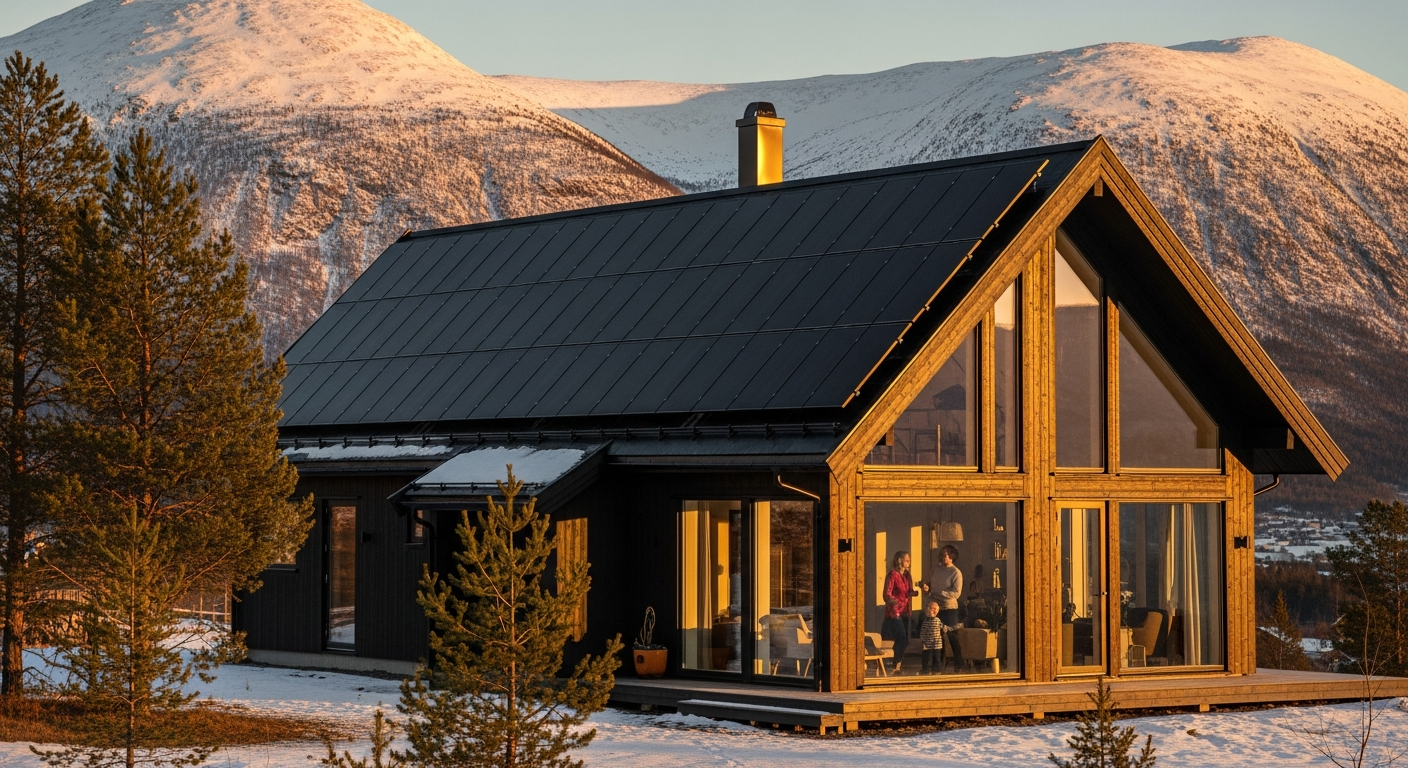
Over 6,000 Norwegian households have already made the switch to solar energy through Otovo—and that number keeps climbing. Yet many homeowners still hesitate, wondering if a residential solar panel system installation truly fits their specific situation, budget, and roof type. The decision to go solar shouldn't feel overwhelming or uncertain.
Otovo has revolutionized how Norwegians access solar energy by operating as a digital marketplace that connects homeowners with quality-assured local installers. Rather than navigating the installation process alone, you're paired with vetted professionals who understand your region's unique climate, building codes, and grid regulations. This approach strips away the complexity that typically surrounds renewable energy adoption.
Start your free Otovo quote today to discover your personalized solar options.
Understanding System Sizing and Your Energy Needs
How Otovo calculates the right system size based on your annual electricity consumption
Your system size directly determines how much solar energy you'll generate and, consequently, how much you'll save annually. Otovo begins by analyzing your recent electricity bills to establish your baseline consumption patterns. This figure—measured in kilowatt-hours (kWh) per year—becomes the foundation for all subsequent sizing recommendations. The platform then factors in your roof's physical characteristics, orientation relative to true south, and any shading from nearby trees or buildings.
The difference between 5.9 kW, 8 kW, and 12 kW systems and which households benefit from each
A 5.9 kW system represents the entry-level option for households with moderate electricity consumption, typically generating enough power to significantly offset daily usage without substantial surplus production. These systems work well for smaller homes, apartments with dedicated roof space, or properties with limited installation area. An 8 kW system bridges the middle ground, serving most standard Norwegian family homes where annual consumption ranges between 15,000 and 20,000 kWh. A 12 kW system caters to larger households, properties with high heating demands, or homes planning to charge electric vehicles regularly. This size maximizes grid export potential, meaning more opportunities to earn money through the pluskunde-avtale agreement.
Premium panel specifications (420-450W output) and what wattage means for your production
Otovo offers Premium panels with individual outputs between 420 and 450 watts. This specification indicates how much power each panel generates under ideal conditions (1,000 watts of solar radiation per square meter). Higher wattage panels produce more electricity per square foot of roof space, which matters when your available installation area is limited. The difference between a 420W and 450W panel translates to roughly 7 percent more annual production per panel, though factors like temperature, angle, and seasonal variation affect real-world performance.
How roof characteristics, orientation, and shading affect system design and output
South-facing roofs in Norway receive the most direct sunlight throughout the year and represent the ideal installation location. East and west-facing surfaces still work effectively, though they capture slightly less midday intensity. North-facing roofs are generally unsuitable. Shading from nearby structures, tall trees, or chimneys can reduce system output significantly—even partial shading on a single panel diminishes production across the entire array in many system configurations. Otovo's local installers assess these factors during the consultation phase, using satellite imagery and on-site analysis to identify the optimal placement. Roof pitch and material also influence both installation feasibility and long-term performance.
Tools Otovo provides to estimate your potential energy generation and savings
Otovo's online platform includes interactive calculators that project your annual energy generation based on system size, roof characteristics, and historical solar irradiance data specific to your region. These tools estimate monthly production patterns, accounting for reduced winter output and increased summer generation. You'll receive forecasted electricity bill reductions, payback period timelines, and 25-year savings projections. The transparency here matters—you're not relying on inflated promises but actual data tied to your exact address and roof specifications.
Why oversizing or undersizing your system can impact long-term ROI
Undersizing your system leaves money on the table. If you install only 5.9 kW when your consumption patterns support 12 kW, you'll still reduce your electricity bills but miss opportunities for substantial surplus generation and pluskunde-avtale earnings. Conversely, oversizing incurs higher upfront costs or higher monthly leasing payments without proportional return, especially if your household consumption remains stable or your roof receives partial shading during peak production hours. The sweet spot aligns system capacity with your actual energy needs plus realistic surplus generation capacity.
Regional considerations for Norwegian homes (latitude, seasonal variation, snow load)
Norway's northern latitude means shorter daylight hours in winter and extended daylight in summer, creating pronounced seasonal production variation. Southern Norway receives roughly 30 percent more annual solar irradiance than northern regions. Snow accumulation on panels reduces winter production, though snow slides off sloped roofs relatively quickly once temperatures rise. Wind loads and snow weight affect structural requirements and installer selection. Otovo's network of local installers understands these regional nuances and designs systems accordingly.
Navigating Otovo's Pricing Models and Financing Options
Complete system costs starting from 39,000 NOK and what's included in that baseline price
An Otovo installation starting at 39,000 NOK includes the solar panels themselves, inverter equipment to convert DC power to usable AC electricity, mounting hardware, electrical wiring, permits and inspections, professional installation labor, and system monitoring software access. This price typically represents a modest 5.9 kW system in regions with straightforward installation conditions. The figure excludes government subsidies, which could reduce your actual investment significantly.
Breakdown of a 12 kW system (approximately 213,076 NOK) and how system size drives pricing
A 12 kW system costs substantially more due to doubled panel quantity, larger inverter capacity, reinforced electrical infrastructure, and extended installation labor. The 213,076 NOK figure represents the full system cost before Enova support. Material costs scale linearly with system size, but installation labor doesn't necessarily double—economies of scale apply. When you factor in Enova grants (up to 32,500 NOK), your net investment could fall to roughly 180,000 NOK, dramatically improving the return-on-investment timeline.
Solar subscription (leasing) model explained: 997 NOK monthly payments with zero upfront investment
The leasing option removes the financial barrier of large upfront capital. You pay a fixed monthly subscription—approximately 997 NOK for a 5.9 kW system—and immediately begin reducing your electricity bills. Otovo handles all maintenance and warranty claims under this model. You benefit from the system's energy production without ownership complexity. After the typical 25-year lease term, the contract concludes and the system remains on your roof (terms vary, so confirm with Otovo). This structure appeals to homeowners without substantial savings, those uncertain about long-term residence, or individuals preferring predictable monthly expenses over lump-sum investments.
Purchase versus lease comparison: long-term financial implications for different homeowner profiles
Purchasing with capital or financing makes sense if you plan to remain in your home for at least 15 years. Over 25-30 years, ownership generates substantially higher total savings because monthly payments end after the loan term, but energy production continues. You also qualify for property tax exemptions on solar installations in some Norwegian municipalities, further improving financial outcomes. Leasing suits those with limited capital, shorter time horizons (7-10 years), or preference for avoiding maintenance responsibilities. The trade-off: leasing costs more over the full system lifespan, but spreads payments predictably and transfers technical risk to Otovo.
How Enova grants (up to 32,500 NOK) reduce your net investment and improve payback periods
The Norwegian government, through Enova, subsidizes residential solar installations to accelerate renewable energy adoption. Grants up to 32,500 NOK offset a substantial portion of system costs. Otovo handles the grant application process on your behalf, simplifying bureaucracy. A 12 kW system costing 213,076 NOK could be reduced to approximately 180,500 NOK after maximum Enova support. This subsidy dramatically shortens payback periods—often from 20+ years to 12-15 years for purchased systems—making solar investment financially compelling even without accounting for electricity bill reductions and surplus sales.
Application process for government support and what Otovo handles on your behalf
Otovo manages the entire Enova grant application, submitting required documentation, property details, and system specifications on your behalf. You'll need to provide proof of residence, recent electricity bills, and roof imagery. The process typically takes several weeks. Otovo tracks the application status and notifies you once approval arrives and funds transfer. This service, included as part of Otovo's offering, saves considerable time navigating bureaucratic channels.
Hidden costs to watch for and questions to ask before committing
Ask explicitly about electrical upgrades required for your specific property—some older homes need panel or wiring modifications, adding to total cost. Inquire whether grid connection fees are included or billed separately. Confirm whether your contract specifies price guarantees or allows installer fee increases during the installation timeline. Request clarity on warranty coverage exclusions and what maintenance you're responsible for under leasing versus ownership. Verify that monitoring software access and technical support costs are included long-term. Ask about insurance requirements and whether your homeowner's policy covers solar installations or requires additional riders.
Request multiple quotes from Otovo's vetted installers to compare pricing and service approaches.
The Pluskunde-Avtale Advantage and Grid Integration
How Norway's plus-customer agreement (pluskunde-avtale) allows you to sell surplus electricity back to the grid
Norway's plus-customer framework enables residential solar generators to feed excess electricity back into the grid and receive compensation. When your system produces more energy than your household consumes—common during sunny afternoons and summer months—that surplus flows to the grid, and you receive credit on your electricity bill. This arrangement transforms your home from a pure consumer to a prosumer, creating a secondary revenue stream from your solar investment.
Real-world examples of monthly electricity bill reductions after surplus sales
A household with a 12 kW system in southern Norway might generate 12,000-14,000 kWh annually. If annual consumption totals 20,000 kWh, the system covers 60-70 percent of needs directly. During summer, production often exceeds consumption by 30-40 percent, sending surplus to the grid. Depending on wholesale electricity rates (which fluctuate), surplus sales might reduce annual electricity bills by an additional 5,000-8,000 NOK beyond direct consumption savings. Winter months show minimal excess production, but annual netting typically results in measurable financial benefit.
How net metering works in the Norwegian context and when you benefit most
Net metering calculates your consumption and production across the billing period, crediting surplus generation against consumption shortfalls. You receive payment for net surplus at prevailing market rates, though specific compensation mechanisms vary by electricity provider. Benefit timing is crucial: regions with high daytime summer consumption (air conditioning, pool pumps, EV charging) maximize surplus sales potential. Conversely, homes with minimal summer usage generate surplus that might exceed year-round compensation limits under some provider contracts.
Integration with smart EV chargers for electric vehicle owners
Otovo offers smart EV charging integration, allowing your solar system to automatically prioritize charging your electric vehicle during peak production hours (typically 10 AM to 3 PM in summer). This optimization maximizes self-consumption and reduces reliance on grid electricity for charging. Smart chargers can shift charging schedules to align with solar generation patterns, further improving economic returns on your installation. For EV owners, solar payback periods improve significantly—sometimes by 3-5 years compared to non-EV households.
Seasonal electricity production patterns and how they align with household consumption
Norwegian solar systems generate roughly 60-70 percent of annual output during May through August, with minimal production during December through February. Most households maintain relatively stable consumption year-round, meaning summer surplus becomes winter deficit. This seasonal mismatch is precisely why pluskunde-avtale agreements matter—you monetize summer surplus and draw grid electricity during winter at standard rates. Understanding this pattern helps you evaluate realistic payback timelines and annual savings projections.
Requirements and regulations for connecting your system to the grid
Your local grid operator must approve system interconnection. Requirements typically include professional installation certification, inverter specifications meeting Norwegian standards, and proper electrical protection devices preventing backflow to the grid during outages. Otovo's installers handle these compliance matters and coordinate with grid operators. Processing typically takes 2-4 weeks after system completion. Documentation includes system photos, electrical schematics, and installer certifications.
Potential earnings from excess production during high-generation months
Peak earning potential occurs in June and July when daily production often exceeds household consumption by 40-50 percent. A 12 kW system might generate 150-200 kWh on clear days, while average household consumption stands at 40-60 kWh daily. That 90-160 kWh surplus daily translates to 2,700-4,800 kWh monthly surplus. At 1.5-2.5 NOK per kWh (typical wholesale rates, subject to market variation), monthly surplus revenue could reach 4,000-12,000 NOK during summer months. Annual averages settle lower due to winter shortfalls, but the seasonal income spike provides tangible financial benefit.
Installation Timeline, Warranty Coverage, and Professional Service
Otovo's streamlined process from quote to installation (typical timeline expectations)
The Otovo process begins with your online quote request—you provide basic property details and recent electricity bills. Within 2-3 business days, local installers respond with customized proposals and system recommendations. After you select an installer and approve the quote, paperwork and grid operator applications commence (2-4 weeks). Installation itself typically occurs within 4-8 weeks of approval, though seasonal demand and scheduling flexibility affect this timeline. Total elapsed time from initial quote to active system: 2-4 months under normal conditions.
The 10-year installation warranty (double the industry standard) and what it covers
Otovo's 10-year installation warranty—double the typical five-year industry standard—covers workmanship defects, equipment failures related to installation quality, and structural issues with mounting systems. This extended coverage provides meaningful peace of mind. The warranty does not cover normal wear, cosmetic damage from weather, or panel degradation beyond manufacturer specifications. Maintenance performed outside Otovo's network voids coverage for affected components.
25-30 year lifespan of solar panels and degradation rates
Premium solar panels maintain 80-85 percent of original output after 25 years, with typical annual degradation around 0.5-0.7 percent. After 30 years, most panels retain 75-80 percent capacity. This extended lifespan means your system generates valuable electricity throughout your ownership period and beyond. Inverters typically require replacement after 15-20 years, an expense you should anticipate if you purchase rather than lease. Otovo's leasing model removes this concern—Otovo replaces aging inverters as needed.
How Otovo's network of local installers ensures quality and accountability
Otovo vets and certifies all partner installers, verifying credentials, insurance coverage, and customer satisfaction ratings. The marketplace model creates competitive pressure—poor-performing installers lose access to customers through Otovo's platform. You can review installer profiles, past customer ratings, and service areas before accepting a quote. This distributed network approach ensures installers possess regional expertise while maintaining Otovo's quality standards through ongoing monitoring and customer feedback mechanisms.
Common installation delays and how to minimize them
Grid operator processing delays represent the most common cause of installation postponement—these bureaucratic timelines vary by region but typically extend 2-6 weeks. Weather conditions may push installation schedules during winter months. Supply chain issues occasionally affect equipment availability. Minimize delays by providing accurate information on your quote, responding promptly to installer communications, and scheduling grid inspections as soon as approval arrives. Clear your installation date with your local grid operator proactively rather than waiting for standard notification timelines.
Maintenance requirements and what's included versus what's your responsibility
Solar panels require minimal maintenance—occasional cleaning to remove accumulated dust, pollen, or bird droppings. In Norway's climate, winter snow naturally slides off pitched roofs. Most systems need professional maintenance checks every 3-5 years to verify electrical connections and inverter function. Otovo's leasing model includes all maintenance. Purchasers are typically responsible for maintenance costs after the warranty period expires, though many systems function reliably for decades with minimal intervention. Your installer provides maintenance guidance and recommended service schedules during installation.
Post-installation support and monitoring tools available through Otovo's platform
Otovo provides online monitoring dashboards showing real-time and historical energy production, consumption comparison, and financial savings tracking. Mobile apps deliver production alerts and performance notifications. Technical support remains available through Otovo's customer service for system-related questions. During the warranty period, Otovo handles claims processing and coordinates repairs through its installer network. Extended support availability varies—confirm post-warranty support options and associated costs before committing.
Weighing the Pros and Cons of Going with Otovo
Simplified, transparent process from initial consultation to grid connection
Otovo eliminates the complexity of coordinating multiple contractors, managing permits, and navigating government applications. The digital platform provides transparent pricing, clear timelines, and straightforward documentation. You're not left wondering about next steps or uncertain about costs—everything is clearly outlined before you commit. This streamlined approach particularly appeals to homeowners uncomfortable with construction projects or those lacking time for extensive research and coordination.
Access to vetted local installers without coordinating multiple contractors
Otovo's network removes the burden of finding qualified solar installers through personal networks or online searches. You receive multiple vetted options, each reviewed by previous customers and quality-assured by Otovo. This saves countless hours researching credentials, checking references, and comparing proposals independently. Local installers understand regional code requirements, weather patterns, and grid integration specifics that matter for Norwegian installations.
Competitive pricing through marketplace competition among installers
Multiple installers competing for your business on Otovo's platform creates natural price competition. You receive several proposals for the same system configuration and can compare pricing directly. This competitive pressure incentivizes installers to offer competitive rates and excellent service—better service and pricing secure bookings. You benefit from this dynamic without having to negotiate aggressively or solicit competing bids independently.
Government grant assistance handled by Otovo's team
Enova grant applications involve complex paperwork and documentation requirements that intimidate many homeowners. Otovo's team manages this entirely, completing applications accurately and promptly. You're not left navigating bureaucratic channels alone or risking incomplete submissions that delay or jeopardize subsidy eligibility. Otovo's experience with the process accelerates approvals and ensures maximum eligible funding.
Strong 10-year warranty and long panel lifespan
The 10-year installation warranty—double the industry standard—provides extended protection against workmanship defects and equipment failures. Combined with 25-30 year panel lifespan and high efficiency maintenance, your system remains a sound investment for decades. Long-term reliability translates to financial confidence and reduced stress about unexpected repair costs during the critical payback period.
Ability to lease systems with minimal upfront costs
The subscription model democratizes solar access for homeowners without substantial capital. Fixed monthly payments (approximately 997 NOK for 5.9 kW systems) eliminate financial barriers and provide immediate electricity bill savings. This flexibility appeals to younger homeowners, those with uncertain long-term plans, or anyone preferring predictable monthly expenses over significant lump-sum investments.
Proven track record with 6,000+ successful installations
Over 6,000 Norwegian households have installed systems through Otovo, demonstrating validated success and customer confidence. This established track record reduces perceived risk—you're not trusting an unproven business model but joining a thriving community of solar users experiencing documented financial and environmental benefits. Customer satisfaction remains high overall, despite occasional service complaints.
Potential drawbacks and notable considerations
Installation delays occasionally occur, particularly during high-demand seasons or in regions with backlogged grid operators. While Otovo streamlines the process, external factors beyond their control sometimes extend timelines. Customer service reviews show mixed experiences—some report excellent support while others experienced communication challenges or unresponsive local installers. As a marketplace middleman, Otovo cannot guarantee identical service quality across all partner installers. Pricing through Otovo's platform, while competitive, may not always undercut direct DIY installations or collective purchasing arrangements in some circumstances. Coordination through Otovo creates a layer between you and installers that some homeowners find inefficient.
Real-World Scenarios: Is Otovo Right for Your Situation?
Scenario 1: Young family with high electricity consumption and limited savings (lease option benefits)
A young family renting or with a mortgage consumes 22,000 kWh annually due to electric heating, high hot water usage, and children's activities. They possess limited capital for a 150,000+ NOK solar investment but want to reduce electricity bills immediately. Monthly lease payments of approximately 1,200 NOK (for an 8 kW system) prove financially manageable, and electricity bill reductions of 400-600 NOK monthly quickly offset subscription costs. Within 4-5 years, accumulated bill savings exceed cumulative lease payments, creating net positive cash flow. If they relocate before 20 years, the lease flexibility prevents being locked into a property-specific asset. The lease option transforms solar from financially impossible to immediately achievable.
Scenario 2: Established homeowner with capital to invest (purchase with Enova support)
An established homeowner planning to remain in their current home for 20+ years has 100,000 NOK in investment capital and strong credit for financing options. They consume 18,000 kWh annually and can afford a 12 kW system purchase of approximately 213,000 NOK. With 32,500 NOK Enova support, their net investment drops to 180,500 NOK. Over 25 years, accumulated electricity bill savings and pluskunde-avtale earnings total 400,000+ NOK. Their total return exceeds 200,000 NOK in profit after accounting for maintenance and eventual inverter replacement. Purchase economics decisively favor capital investment here—leasing would cost substantially more over the full period.
Scenario 3: EV owner seeking to optimize charging costs and grid independence
An EV owner currently spends 4,000-5,000 NOK annually on electricity, with 30-40 percent consumed by vehicle charging. Smart EV charger integration with an 8 kW solar system allows peak charging during 10 AM to 3 PM when production peaks. Summer charging costs drop to near zero, with only winter charging requiring grid electricity. Annual charging costs fall to 1,500-2,000 NOK. A 150,000 NOK system investment (after subsidies) pays for itself in 8-10 years through transportation cost savings alone—faster than standard solar ROI. EV ownership materially improves solar economics.
Scenario 4: Homeowner with complex roof geometry or shading challenges
A homeowner with a complex, multi-slope roof design and partial tree shading during peak hours faces typical system design challenges. DIY solar or less-experienced installers might generate costly errors—oversized systems in shaded areas, suboptimal panel placement, or electrical code violations. Otovo's vetted local installers assess the property comprehensively, accounting for shading patterns, roof structural capacity, and regional wind loads. They recommend conservative sizing, optimal placement strategies, and potentially position panels to minimize shade interference. This expertise prevents costly installation mistakes that would undermine financial returns. The specialized knowledge justifies Otovo's marketplace approach for complex properties.
Scenario 5: Renter or homeowner with uncertain long-term plans (leasing flexibility)
Someone leasing their home or facing potential relocation within 10 years finds system ownership impractical—you cannot remove a rooftop solar system when moving. Leasing provides flexibility: monthly payments continue regardless of residence changes (though you'd cease benefiting from production). Otovo's lease terms typically allow contract termination under specific circumstances. This scenario illustrates leasing's primary advantage—solar benefits without permanent property attachment.
How to evaluate your personal situation against these profiles
Ask yourself: Do I plan to remain in this home 15+ years? Do I have capital for upfront investment or prefer monthly payments? What's my annual electricity consumption? Does my roof face south with minimal shading? Do I own an electric vehicle? Are government subsidies important given my financial situation? Your answers map directly onto these scenarios. Most homeowners align with at least one profile, clarifying whether purchase or lease represents the better choice.
Questions to ask yourself before requesting an Otovo quote
Will I live here for at least 15 years? Can I afford monthly lease payments or preferred financing options? What's my annual electricity consumption (check recent bills)? Is my roof south-facing with minimal shading? Do I want involvement in system monitoring and maintenance, or prefer delegating to Otovo? Am I comfortable with technology and prefer DIY learning, or value simplicity and professional handling? These foundational questions determine alignment between Otovo's offering and your actual needs and preferences.
Getting Started with Your Otovo Installation Journey
Step-by-step walkthrough of Otovo's online quote process
Begin by visiting Otovo's website and entering your property address. The platform requests your roofing type, orientation, and any obvious shading factors. You'll provide recent electricity bills (or estimated annual consumption), contact information, and preferred financing approach (purchase or lease). The online form typically takes 10-15 minutes. Submit, and Otovo's algorithm matches local installers qualified for your project type and region. Within 2-3 business days, you'll receive detailed proposals from multiple installers with customized system recommendations, pricing breakdowns, and projected savings estimates. Each proposal allows you to review the installer's profile, customer ratings, and service area before responding.
Information you'll need ready (roof photos, recent electricity bills, address)
Gather recent electricity bills showing monthly consumption across all seasons—this data drives system sizing recommendations. Photograph your roof from multiple angles, ensuring clear views of dimensions, pitch, surface material, and any shade sources (trees, chimneys, adjacent buildings). Provide your precise address for solar resource data and grid operator coordination. Have this information assembled before starting the quote process to avoid incomplete submissions requiring follow-up requests.
What to expect during the initial consultation with a local installer
After accepting a proposal, an Otovo-coordinated installer contacts you to schedule an on-site consultation. This 1-2 hour appointment involves the installer conducting a physical roof assessment, measuring roof dimensions and pitch, documenting shading patterns, checking electrical panel capacity, and discussing your energy goals and timeline expectations. They'll physically verify that rooftop conditions match satellite imagery and refine system recommendations based on real-world observations. You'll finalize specifics like exact panel placement, inverter location, and electrical work scope. This consultation converts the generic online proposal into a customized, executable plan.
How to compare multiple installer quotes within Otovo's platform
Otovo typically provides 2-4 installer proposals for the same project. Compare pricing directly, but also evaluate:
- Included services (monitoring software, maintenance, technical support duration)
- Equipment specifications (panel models, inverter brands, warranty details)
- Installer experience (years in business, customer ratings, relevant certifications)
- Timeline assumptions (expected installation timeframe)
- Communication responsiveness during quote phase
Avoid selecting solely on lowest price—an installer's reliability, local expertise, and service history matter substantially over 25-30 year system lifespan. A 5,000 NOK savings with a less responsive installer might prove costly if communication breaks down post-installation.
Red flags to watch for and questions that separate quality installers from mediocre ones
Red flags include vague pricing lacking itemization, installers unable to clearly explain system sizing logic, warranty terms you don't fully understand, or unresponsive communication. Question installers on Enova grant experience—experienced installers handle dozens of applications annually and expedite approvals. Ask specifically what "maintenance included" means: does it cover inverter replacement after 15-20 years, or just basic monitoring? Request references from recent installations in your region. Clarify warranty claim processes and typical response timelines. Quality installers answer comprehensively without defensive language or pressure tactics.
Timeline for moving from quote approval to installation scheduling
After accepting a proposal, paperwork and permits typically consume 2-4 weeks. Grid operator applications run concurrently (2-6 weeks depending on regional backlog). Once grid approval arrives, you'll schedule an installation date with your installer. Installation typically occurs within 2-4 weeks of approval. Total elapsed time: 2-4 months from quote acceptance to active system. Some projects move faster (6-8 weeks), while others extend longer due to external delays. Your installer provides realistic timelines during the consultation phase.
Preparation steps for your home before installation day
Clear roof access—remove antennas, satellite dishes, or other roof-mounted equipment that interferes with panel placement. Ensure electrical panel accessibility for inverter connections. Trim tree branches that shade your roof, if applicable and practical. Notify neighbors that installation work will occur (noise, equipment delivery). If you have pets, arrange containment during installation day. Discuss electrical shutdowns with your installer—you may experience brief power interruption during final interconnection. Have a clear work area accessible for equipment delivery and staging.
The Bottom Line on Otovo Solar Installation
Choosing an Otovo residential solar panel system installation isn't just about going green—it's about making a financially intelligent decision that reduces your electricity bills, potentially generates income through surplus sales, and protects your investment with industry-leading warranties. The flexibility to lease or purchase, combined with Otovo's streamlined marketplace approach and government grant support, removes many barriers that have historically kept Norwegian homeowners from adopting solar energy.
That said, this decision deserves careful consideration. Your system size, financing model, roof characteristics, and personal timeline all influence whether Otovo's offering delivers maximum value for your specific situation. The occasional installation delay and mixed customer service feedback suggest that while Otovo excels at simplifying the process, individual experiences can vary based on your assigned local installer.
The real opportunity here? Over 6,000 Norwegian households have already validated that Otovo's model works. Start by requesting a free quote through their platform, review the installer recommendations, and compare the projected 25-30 year savings against your upfront or monthly costs. Your next step is just a few clicks away—and it could reshape your home's energy independence for decades to come.
Leave a Reply