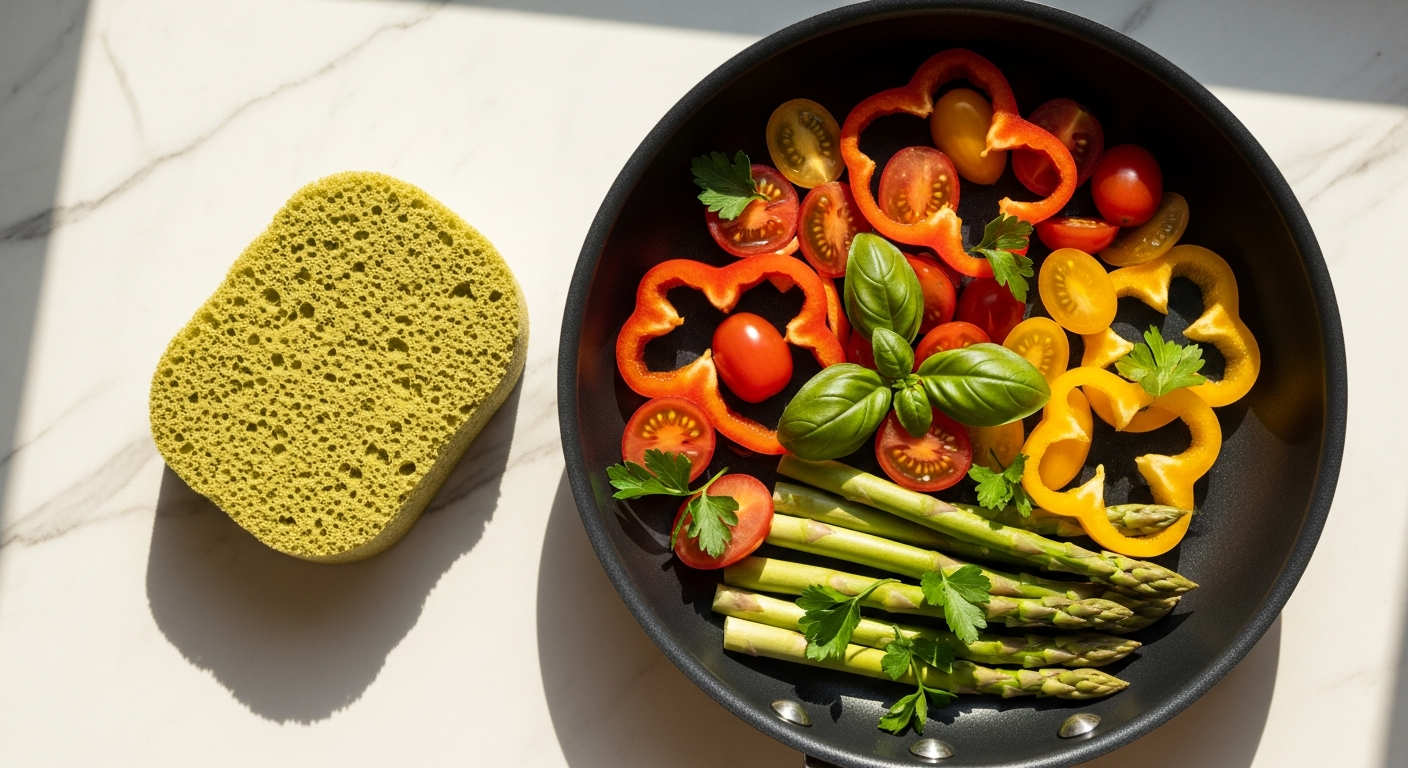
Every year, over 8 billion plastic sponges end up in landfills, taking decades to decompose while releasing microplastics into our soil and waterways. The average household discards roughly 52 sponges annually—a staggering amount of preventable plastic waste that accumulates silently in our homes without much thought.
Sustainable alternatives are finally catching up to conventional products in both performance and affordability. The cleaning sponge market has shifted dramatically as consumers demand products that don't compromise on effectiveness just because they're environmentally responsible. This shift has forced innovation, and brands are rising to meet the challenge with solutions that actually work better than their plastic predecessors.
Seep has revolutionized this category with their compostable scourer featuring a clever dual-sided design that handles everything from gentle wiping to aggressive scrubbing without compromising your cookware.
Why Non-Stick Pans Demand a Different Sponge Solution
The dangers of abrasive scrubbers on PTFE and ceramic non-stick coatings
Non-stick cookware requires special consideration that most households overlook. PTFE and ceramic coatings represent significant investments in your kitchen, yet they're vulnerable to damage from aggressive cleaning. When the protective layer scratches or peels, your cookware loses its non-stick properties permanently, forcing expensive replacements. Abrasive scrubbers directly attack these coatings, creating microscopic cracks that compromise functionality and potentially release particles into your food.
How conventional plastic sponges can still scratch delicate surfaces
Even though plastic sponges feel soft to the touch, their construction contains rough synthetic fibers that can gradually wear away non-stick surfaces. The polymeric materials used in standard sponges don't break down naturally, and their texture remains consistently abrasive across their entire lifespan. Many users discover the damage only after weeks of use, when the non-stick coating has already deteriorated beyond recovery. What feels gentle in your hand may still pose risks to delicate cookware finishes.
The loofah advantage: natural texture that cleans without coating damage
Loofah offers a fundamentally different cleaning experience. Its natural plant-based fibers provide effective scrubbing power while maintaining a gentleness that protects non-stick surfaces. The texture of loofah naturally adapts as it absorbs water, becoming more pliable rather than more abrasive over time. This unique property means you get powerful cleaning action without the risk of coating damage, making it ideal for households that rely heavily on non-stick and ceramic cookware.
Dual-Sided Design Explained—Soft Cellulose Meets Loofah Power
Breaking down the two distinct cleaning surfaces
The Seep scourer features two fundamentally different surfaces working together. One side prioritizes absorbency and gentle cleaning, while the other provides targeted scrubbing power. This design eliminates the need to switch between multiple tools or compromise on either delicate or heavy-duty cleaning tasks. You simply flip the sponge depending on your immediate need, making it adaptable to whatever your kitchen presents.
How the soft cellulose side handles everyday dishwashing
The cellulose surface excels at routine cleaning tasks that make up the bulk of dishwashing. It absorbs water efficiently, allowing you to wring it out and use it repeatedly without losing effectiveness. This side glides smoothly across plates, bowls, and glassware, picking up food residue and soap efficiently. For general wiping of countertops and stovetops, the cellulose side provides the right balance of absorbency and gentleness that keeps your kitchen surfaces pristine without excessive scrubbing force.
What makes the loofah side effective for baked-on residue
The loofah side tackles what cellulose alone cannot handle. Baked-on food, stubborn stains, and crusty cookware meet their match with loofah's natural abrasive texture. Yet despite its scrubbing power, it maintains the gentleness required for non-stick surfaces and other delicate finishes. The loofah fibers create friction without the harshness of synthetic materials, allowing you to clean aggressively without fear of damage. This balance between power and care is precisely what makes this dual-sided design so effective across different kitchen scenarios.
Durability and Longevity—The Hidden Cost Savings
How four-week lifespans stack up against standard plastic sponges
Standard plastic sponges typically degrade within 7-10 days of regular use, becoming breeding grounds for bacteria and losing their structural integrity. The Seep scourer routinely lasts four weeks or more—a four to six-fold increase in lifespan that transforms your household's cleaning economics. Over a year, this means purchasing far fewer replacements and generating significantly less waste. The financial impact compounds when you consider that a typical household goes through 52 sponges annually with conventional products.
Material science: why sustainably sourced cellulose wood pulp outlasts synthetic alternatives
Natural cellulose wood pulp possesses inherent durability that synthetic polymers struggle to match. The molecular structure of sustainably sourced wood pulp allows it to maintain integrity through repeated washing, wringing, and use without degrading as quickly as plastic alternatives. The loofah component adds similar longevity through its natural plant structure. These materials don't break down chemically during normal use the way plastics do, meaning performance remains consistent throughout the entire lifespan. Machine-washing actually helps extend durability by removing trapped debris and bacteria that would otherwise cause premature deterioration.
Machine-washable and dishwasher-safe features
The ability to clean your sponge in the dishwasher or washing machine eliminates a major degradation factor: bacterial buildup. Regular deep cleaning prevents the microbial growth that weakens synthetic sponges and creates unpleasant odors. You simply pop the Seep scourer into your dishwasher alongside your regular dishes, and it emerges sanitized and rejuvenated. This maintenance option extends usability significantly and maintains hygiene throughout the product lifecycle, ensuring your sponge remains fresh and effective until it's genuinely ready for composting.
Experience the durability difference with Seep's long-lasting eco-friendly sponge scourer.
Natural Materials and Compostability—What Happens After Use
The composition of cellulose and loofah and why they biodegrade
Cellulose and loofah share a fundamental advantage over synthetic materials: they're derived directly from plants and return to the earth naturally. Cellulose comes from sustainably sourced wood pulp, retaining the biodegradable properties of its origin. Loofah, a gourd plant fiber, breaks down through the same natural processes that decompose fallen leaves and plant matter in your garden. Neither material persists in the environment or fragments into microplastics—they simply return to organic matter within months under proper composting conditions.
Home composting process: timeline and conditions
Placing a used Seep scourer in your home compost bin initiates complete biodegradation within 90-180 days under typical conditions. The timeline depends on temperature, moisture, and compost pile composition, but the material will break down reliably without any special treatment or intervention. Unlike plastic sponges that remain intact in landfills for decades, your Seep scourer becomes indistinguishable from other compostable matter within a few months. This closed-loop cycle means your cleaning tool completes its journey from purchase to environmental restoration without leaving toxic residue or persistent waste.
What 100% plastic-free actually means in manufacturing
True plastic-free manufacturing extends beyond the sponge itself to include packaging, shipping materials, and supply chain practices. Seep commits to this standard throughout production, eliminating plastic at every stage. The sponges arrive in cardboard packaging rather than plastic wrapping, and the manufacturing process doesn't introduce synthetic materials into the final product. This comprehensive approach distinguishes genuine sustainable products from those that simply market themselves as eco-friendly while relying on plastic in their supply chains. You're purchasing a product that maintains its environmental integrity from factory to compost bin.
Price Point Analysis—Is Premium Eco-Friendly Worth the Investment
Single sponge pricing and multipack savings
A single Seep scourer costs approximately £2.95, which exceeds the price of a standard plastic sponge by roughly 50%. However, multipack options of four sponges typically range from £8.50 to £12.00, bringing the per-unit cost down significantly. The price premium becomes negligible when you account for lifespan differences. Calculating cost-per-week of use reveals that the Seep scourer often costs less than conventional sponges despite the higher purchase price.
Breaking down cost-per-use across extended lifespan
Standard plastic sponges might cost £1.50 each but last only 7-10 days, translating to roughly £0.15-£0.20 per day of use. The Seep scourer at £2.95 lasting four weeks equals approximately £0.10 per day—delivering superior value alongside environmental benefits. When purchased in multipacks at £2.12 per scourer, the daily cost drops even further. This mathematical reality makes switching to eco-friendly options financially sensible even before considering environmental impact.
Hidden savings from reduced replacement purchases
Annual sponge purchasing represents a recurring household expense that most people underestimate. Eliminating 40+ plastic sponge purchases yearly saves money, storage space, and shopping time. Over five years, the cumulative savings become substantial—potentially hundreds of pounds when accounting for both purchase price reduction and the time value of not replacing products constantly. These hidden savings make the Seep scourer increasingly attractive from a purely financial perspective, separate from its environmental credentials.
Surface-Specific Applications—Beyond Just Non-Stick Pans
Safe use on stainless steel, ceramic, and glass cookware
Stainless steel cookware benefits from the loofah side's ability to remove water spots and fingerprints without scratching the surface. Ceramic cookware, whether on stovetop or in oven, responds well to both sides of the Seep scourer without risk of coating damage. Glass baking dishes and mixing bowls clean effectively with the soft cellulose side, while the loofah tackles stubborn dried-on food without creating clouding or scratches. Every major cookware material in your kitchen becomes safer and easier to maintain with a sponge designed for versatility.
Kitchen countertops, cutting boards, and food preparation surfaces
Beyond cookware, the Seep scourer excels on the surfaces where food preparation happens. Natural wood cutting boards benefit from the cellulose side's gentle absorbency, while the loofah addresses stains and marks without damaging the wood grain. Countertops, whether granite, laminate, or tile, clean effectively without the chemical residue that synthetic sponges can leave behind. Food preparation areas demand extra care, and using natural materials eliminates concerns about synthetic fibers or chemical leaching into spaces where you prepare meals.
Delicate glassware and stemware
Fine glassware and delicate stemware require careful cleaning that won't introduce scratches or leave lint residue. The soft cellulose side provides precisely this kind of gentle care, absorbing water without shedding fibers or creating surface imperfections. You can confidently clean champagne flutes, wine glasses, and heirloom stemware without worrying about the sponge causing damage. This versatility across all your kitchen surfaces means one multi-purpose tool replaces multiple specialized cleaners.
The Seep Brand Difference—Ethics Behind the Product
Commitment to ethical sourcing of natural materials
Seep prioritizes transparency in where their materials originate. Sustainably sourced cellulose comes from suppliers who manage forests responsibly, ensuring that wood pulp production doesn't contribute to deforestation or environmental degradation. Loofah suppliers meet similar ethical standards, producing the plant material without exploitative practices. This commitment means your purchase supports businesses that take environmental stewardship seriously throughout their supply chains.
Fair labor practices and community development
The brand extends its ethical commitment to the people involved in manufacturing and supply. Fair labor practices ensure that workers receive appropriate compensation and work in safe conditions. Beyond minimum standards, Seep supports community development initiatives in regions where materials originate, recognizing that sustainable business requires supporting the people and communities involved in production. Your purchase contributes to genuine positive impact beyond environmental benefit.
Plastic-free packaging and supply chain sustainability
From raw material to consumer delivery, Seep eliminates plastic at every stage. Packaging uses cardboard and natural materials, shipping employs minimal waste practices, and the supply chain reflects the same sustainability principles as the product itself. This comprehensive approach demonstrates that genuine sustainability requires systematic change, not just individual product improvements. Companies that genuinely care about environmental impact make infrastructure changes that extend far beyond marketing claims.
Making the Switch—Practical Tips for Transitioning to Eco-Friendly Cleaning
Adjusting your technique when switching from plastic to natural sponges
Natural sponges may feel slightly different than plastic alternatives, requiring minor technique adjustments. The loofah side responds to circular motions and moderate pressure rather than aggressive scrubbing—you'll find that less force achieves better results. The cellulose side's superior absorbency means less water is necessary for effective cleaning. These adjustments become automatic within days as your hands adapt to the new sponge's characteristics. Most users report that the superior performance makes the transition effortless and immediately apparent.
Storage and drying methods that maximize lifespan
Proper storage prevents the bacterial and mold growth that shortens sponge lifespan. Allow your Seep scourer to dry completely between uses by standing it upright on a sink caddy or hanging it in a well-ventilated area. Avoid storing damp sponges in closed containers where moisture becomes trapped. Squeezing out excess water after each use ensures faster drying. These simple practices cost nothing and dramatically extend the four-week lifespan that Seep sponges are capable of achieving.
Setting reminders for composting when sponges reach end-of-life
Once your Seep scourer begins showing wear or loses cleaning effectiveness, composting completes the sustainability cycle. Setting a calendar reminder or adding compostable sponges to your composting routine ensures you don't accidentally throw them away with regular trash. Most people develop a natural rhythm of adding worn sponges to their compost bin alongside other kitchen waste. This final step transforms your cleaning tool into nutrient-rich compost that returns to your garden, closing the loop completely.
The Real Impact of Choosing Sustainable Cleaning Tools
Switching to the Seep Eco-Friendly Compostable Sponge Scourer represents far more than a simple product swap—it's a deliberate choice that compounds over time. When you multiply the impact of one household eliminating 52 plastic sponges annually by millions of conscious consumers making the same decision, the environmental footprint shrinks dramatically. The dual-sided design protects your cookware investment while the extended lifespan delivers genuine financial savings that offset the slightly higher upfront cost.
What genuinely impressed me throughout my research was how this product shatters the myth that eco-friendly means compromising on performance. The loofah-and-cellulose combination actually outperforms many conventional options, particularly for households with non-stick cookware and delicate surfaces. Paired with Seep's transparent commitment to ethical sourcing and community impact, you're not just purchasing a cleaning tool—you're supporting a business model that prioritizes people and planet alongside profit.
Ready to transform your kitchen cleaning routine?
Leave a Reply