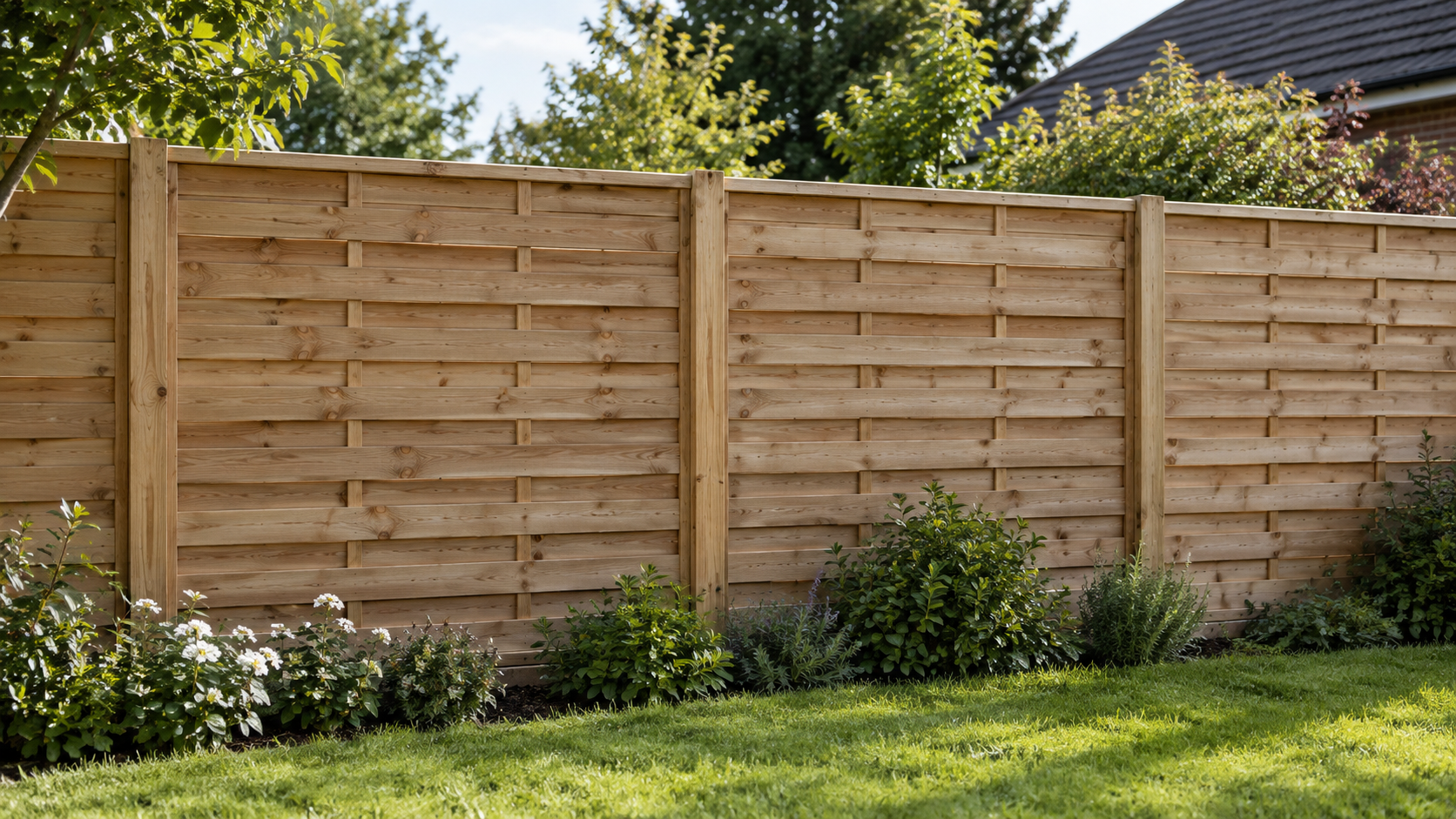
Forest Classic Overlap Fence Panel in garden setting showing wooden construction and privacy coverage

Forest Overlap Fence Panel: Budget Privacy Worth It?

The Forest Classic Overlap Fence Panel represents a time-tested approach to garden fencing that has remained popular for decades. At its core, this design employs traditional overlap construction, where horizontal boards are layered slightly over one another to create a sturdy, weather-resistant barrier. This method differs significantly from other panel styles—such as close board or feather edge designs—by offering a distinctive visual pattern and reliable structural performance.

Traditional Overlap Construction Method and Design Differences

Overlap construction works by staggering each board so it overlaps the one below it, creating a shingle-like effect. This approach provides superior wind resistance compared to some alternatives and naturally sheds water away from the timber. Unlike vertical close board fencing, which requires more complex joinery, overlap panels are straightforward to manufacture and install, which directly contributes to their affordability.

Waney-Edge Board Characteristics and Rustic Appeal

The Forest Classic panels feature waney-edge boards—timber with the natural curved edge of the tree still intact. Rather than being milled into uniform shapes, these boards retain their organic contours, creating an authentic, countryside aesthetic that appeals to gardeners seeking a natural rather than industrial appearance. This rustic quality adds character to garden spaces and blends seamlessly with cottage-style gardens or naturalistic landscaping schemes.

UK-Grown, FSC-Certified Softwood Composition

Each panel is constructed from natural softwood sourced from UK-grown, FSC-certified timber. This sourcing reflects an environmentally conscious manufacturing approach, meaning the timber comes from responsibly managed forests with replanting commitments. The softwood composition means the panels will exhibit natural knots, grain variations, and color differences—characteristics that many gardeners view as adding warmth and personality rather than detracting from appearance.

Rear Battens and Structural Support System

Three battens positioned on the rear of each panel provide essential structural integrity. These horizontal supports prevent the overlap boards from warping or twisting and help the panel maintain its shape when subjected to wind pressure or ground settling. The batten system distributes load evenly across the panel width, a critical design feature for longevity.

Fitted Top Cap Feature

The fitted top cap crowns the panel with a protective, sloped surface that sheds water and provides a finished appearance. Functionally, this cap prevents water from pooling on top of the boards and reduces moisture absorption at the panel’s highest point—a vulnerability area in fence construction. Aesthetically, the cap defines the panel’s upper edge clearly and contributes to an intentional, well-designed look.

Real-World Durability: What the 10-Year Guarantee Actually Covers

Understanding what protection you actually receive requires examining the guarantee’s specifics and the conditions attached to it. The Forest Classic panel comes with a 10-year anti-rot guarantee, a commitment that sounds reassuring until you understand its operational requirements.

Dip-Treatment Process and Initial Rot Protection

The timber arrives dip-treated, meaning it has been immersed in a protective solution that saturates the wood and provides an initial barrier against moisture ingress and fungal decay. This treatment penetrates the outer layers effectively but does not provide permanent protection. Over time, weathering, UV exposure, and water contact gradually diminish this protective coating, particularly on cut edges and areas that experience direct splash-back from rain or ground contact.

10-Year Anti-Rot Guarantee Terms and Conditions

The guarantee covers rot caused by fungal decay under normal garden conditions. However—and this is critical—the guarantee requires annual re-treatment with an appropriate wood preservative to remain valid. Without this annual maintenance, your coverage lapses, leaving you unprotected. This is not a “fit and forget” guarantee but rather a conditional commitment that demands ongoing investment of both time and money.

Annual Re-Treatment Requirements

Maintaining the guarantee obligation means scheduling annual treatment sessions, typically in spring or autumn. You’ll need to purchase wood preservative products, apply them according to manufacturer instructions (usually brushing or spraying), and allow adequate drying time. This annual cycle represents a genuine commitment that extends across the entire lifespan of the fence, not a one-time installation task.

Common Durability Issues Reported by Customers

Customer feedback reveals a pattern of quality concerns that deserve serious consideration. Reported issues include:

  • Buckling: Panels developing a wave-like distortion, typically from uneven moisture absorption or inadequate ground support
  • Twisting: The panel frame rotating slightly, often from wind stress or post settling
  • Warping slats: Individual overlap boards curving or bowing out of plane
  • Snapped battens: Rear support battens fracturing, particularly under wind load or impact

These reports suggest that while the design is sound, the execution at this price point may involve timber quality inconsistencies or manufacturing tolerances that permit these defects. Some customers receive panels that perform reliably for years; others experience problems within months. This variability indicates that panel-to-panel quality control may not be uniformly stringent.

Installation and DIY Suitability for First-Time Fence Builders

The Forest Classic panel’s reputation for being DIY-friendly stems from its straightforward design and manageable installation process. First-time fence builders can reasonably tackle this project with basic tools and moderate physical capability.

Ease of Installation with Basic Tools

Installing these panels requires no specialized equipment. A spirit level, tape measure, saw for cutting, and basic hand tools suffice for most installations. The panels slot between fence posts—typically 4×4 timber or equivalent—and are secured with nails or screws. The overlap design doesn’t demand precise joinery or complex alignment procedures, making the learning curve gentle for beginners.

Panel Weight and Handling Considerations

At 6′ x 6′, these panels are substantial but manageable for two people. A single person can handle installation but will find positioning and securing significantly more challenging. The weight varies depending on moisture content of the freshly treated timber, typically ranging from 35-45 kg per panel. Consider whether you’re physically comfortable lifting this weight repeatedly or whether you’ll recruit assistance.

Compatibility with Standard Fence Posts and Foundations

The panels work with standard fence post systems available at any garden center. Most installers use 4×4 concrete-set posts or metal post systems designed for panel fencing. The standard 6-foot width fits comfortably between posts spaced approximately 6 feet apart, allowing for necessary overlap and adjustment.

Step-by-Step Installation Overview and Common Mistakes

Installation follows a predictable sequence:

  1. Set posts at correct spacing and check for plumb
  2. Ensure posts are level across the top
  3. Position panels between posts, checking for plumb and level
  4. Secure panels using galvanized nails or screws (essential for corrosion resistance)
  5. Space multiple panels consistently along the fence line

Common mistakes include inadequate post depth (causing leaning fences), insufficient fasteners (leading to movement and stress), and failing to account for ground contours (resulting in gaps at the base). Taking time to achieve accurate post alignment prevents cascading problems throughout your fence line.

Browse Forest Classic panels and fencing supplies at Buy Fencing Direct today.

Cost Analysis: Breaking Down the £27.49 Price Point

The headline figure of £27.49 per panel immediately captures attention, but calculating your true total fence investment requires considering multiple cost layers.

Per-Panel Cost Versus Complete Fence Line Expenditure

A single 6′ x 6′ panel costs £27.49. However, your fence requires fence posts, concrete footings, fasteners, and potentially post caps or additional materials. A modest 30-foot fence requires five panels plus six posts (accounting for end posts), concrete for footings, and hardware. Your true panel cost alone totals approximately £137.45, while posts, concrete, and fasteners easily add another £150-250 depending on post quality and concrete choices. Total material cost for this modest fence runs £300-400.

Cost Comparison with Alternative Budget Fence Panel Options

Other budget panel options exist at similar or slightly higher price points. Budget close board panels might cost £35-45 per panel but offer different aesthetics and durability profiles. Feather edge panels range from £25-40 depending on quality. The Forest Classic sits competitively within the budget category, though premium alternatives at £50-70 per panel claim superior durability and less reported quality variation.

Hidden Expenses: Posts, Concrete, Brackets, and Protective Treatments

Budget consciously for:

  • Concrete: £2-3 per post hole, approximately £12-18 per panel width
  • Posts: £15-30 per post depending on timber quality
  • Fasteners: £10-20 for a complete fence line
  • Post caps: £2-5 each if desired (optional but protective)
  • Wood preservative: £15-30 annually for re-treatment across a typical fence

These expenses add meaningful amounts to your total investment and deserve explicit budgeting.

Long-Term Cost Implications of Annual Re-Treatment

Annually treating a 30-foot fence requires approximately £30-50 in preservative plus your time investment. Over a 10-year guarantee period, you’ll spend £300-500 on maintenance alone. This ongoing expense should factor into your value assessment—the low initial panel cost is offset by cumulative maintenance spending.

Privacy and Security Performance in Garden Settings

For many homeowners, privacy ranks as the primary fence installation driver. The Forest Classic panel delivers on this functional requirement, provided the installation quality supports it.

Effective Privacy Coverage at 6′ Height

At 1.83 meters (6 feet) height, these panels provide genuine privacy screening in most residential garden settings. Standard eye level from ground is approximately 5’6″, meaning the panel extends sufficiently above natural viewing angles to block most direct sight lines. In typical suburban gardens with modest-sized properties, this height proves adequate for screening garden activities, outdoor dining, and general domestic spaces from neighboring view.

Overlap Construction’s Role in Preventing Sight Lines

The overlap design inherently prevents sight lines between boards. Unlike some panel designs with small gaps between elements, the shingle-like board arrangement creates a complete visual barrier with no through-gaps. This design feature proves particularly valuable in windy regions where panels can flex—the overlap tolerates slight movement without creating visibility gaps.

Security Benefits for Protecting Garden Contents and Deterring Access

At 6 feet height with solid construction, these panels create a genuine barrier to casual access or observation of garden contents. Prospective trespassers or opportunistic theft targets find less visual information about what lies beyond the fence. The 6-foot height makes climbing significantly more challenging than shorter fencing. While no fence provides absolute security, this height and construction style offer practical deterrence for residential applications.

Maintenance Schedule and Long-Term Care Requirements

Ownership of these panels demands active engagement with maintenance—they are not passive garden elements that require only occasional attention.

Annual Re-Treatment Process, Timing, and Product Recommendations

Spring (March-May) or autumn (September-October) represent optimal re-treatment windows when dry weather is more predictable and growth season patterns are favorable. Choose periods with at least three days of dry weather forecast. Use high-quality wood preservatives—products specifically formulated for garden fencing rather than general-purpose treatments. Brush or spray application according to product instructions, ensuring complete coverage of all surfaces, particularly vulnerable areas like cut ends and ground-contact zones. Budget 4-6 hours for a typical residential fence.

Seasonal Inspection Checklist for Early Damage Detection

Establish a quarterly inspection routine examining:

  • Spring: Check for winter damage, displaced boards, loose fasteners, and waterlogging areas
  • Summer: Inspect for insect damage, checking battens and end grain for bore holes
  • Autumn: Assess overall condition before winter weather, repair any summer storm damage
  • Winter: After severe weather, check for bent posts, shifted panels, or accumulated damage

Early detection of minor issues—a loose batten, a slightly warped slat, a corroded fastener—allows intervention before cascading failure occurs.

Cleaning Methods for Moss, Algae, and Weathering Stains

Over time, shadowed fence areas accumulate moss and algae, particularly in damp climates. Soft-bristle brush cleaning removes surface growth without damaging wood fibers. Pressure washing, while tempting, risks driving water into wood pores and accelerating decay—use only low-pressure settings if pressure washing at all. Commercial fence cleaning solutions exist but require careful application and thorough rinsing. Simple water spray and brush work often proves sufficient for maintenance cleaning.

Repair Options for Minor Damage: Replacing Individual Slats or Battens

Individual overlap boards can be removed and replaced by carefully extracting fasteners and sliding out damaged boards, then inserting replacements. Batten replacement requires removing fasteners and carefully extracting the damaged batten without disturbing surrounding boards. These repairs are feasible for DIY gardeners with basic carpentry skills, making it possible to maintain panels cost-effectively when isolated damage occurs rather than replacing entire panels.

Making Your Fencing Decision: The Bottom Line

The Forest Classic Overlap Fence Panel represents an authentic value proposition for gardeners navigating budget constraints. Its £27.49 price point, traditional aesthetic, and straightforward installation method genuinely lower barriers to entry for DIY fence projects. The FSC-certified timber and 10-year anti-rot guarantee reflect legitimate quality commitments, provided you’re willing to honor the annual re-treatment obligation.

Yet this panel is not a universal solution applicable to every situation. Customer reports of warping, buckling, and structural issues indicate quality inconsistencies that warrant cautious evaluation. The panel performs optimally in protected garden environments—sheltered from extreme winds, with good air circulation, and where ground conditions remain reasonably stable. It suits homeowners genuinely committed to annual maintenance rather than those seeking minimal-effort solutions.

Your decision should hinge on three practical considerations:

Environmental conditions: Does your garden experience strong prevailing winds, persistent dampness, or challenging ground conditions? Protected gardens see fewer problems than exposed sites.

Maintenance commitment: Are you genuinely prepared to schedule and execute annual re-treatment for 10+ years? If this prospect feels burdensome, the low initial cost becomes misleading.

Timeline expectations: Do you envision this fence lasting 10-15 years or more? If you’re installing a temporary solution, the budget-friendly approach makes sense; if you’re planning decades of stability, premium alternatives might prove more cost-effective overall.

For modest gardens in sheltered locations, with owners prepared for active maintenance engagement, this panel delivers genuine value. For exposed sites or homeowners preferring minimal ongoing tasks, investing in premium alternatives merits consideration despite higher upfront costs.

Start your fencing project with Forest Classic panels from Buy Fencing Direct.


Comments

Leave a Reply

Your email address will not be published. Required fields are marked *