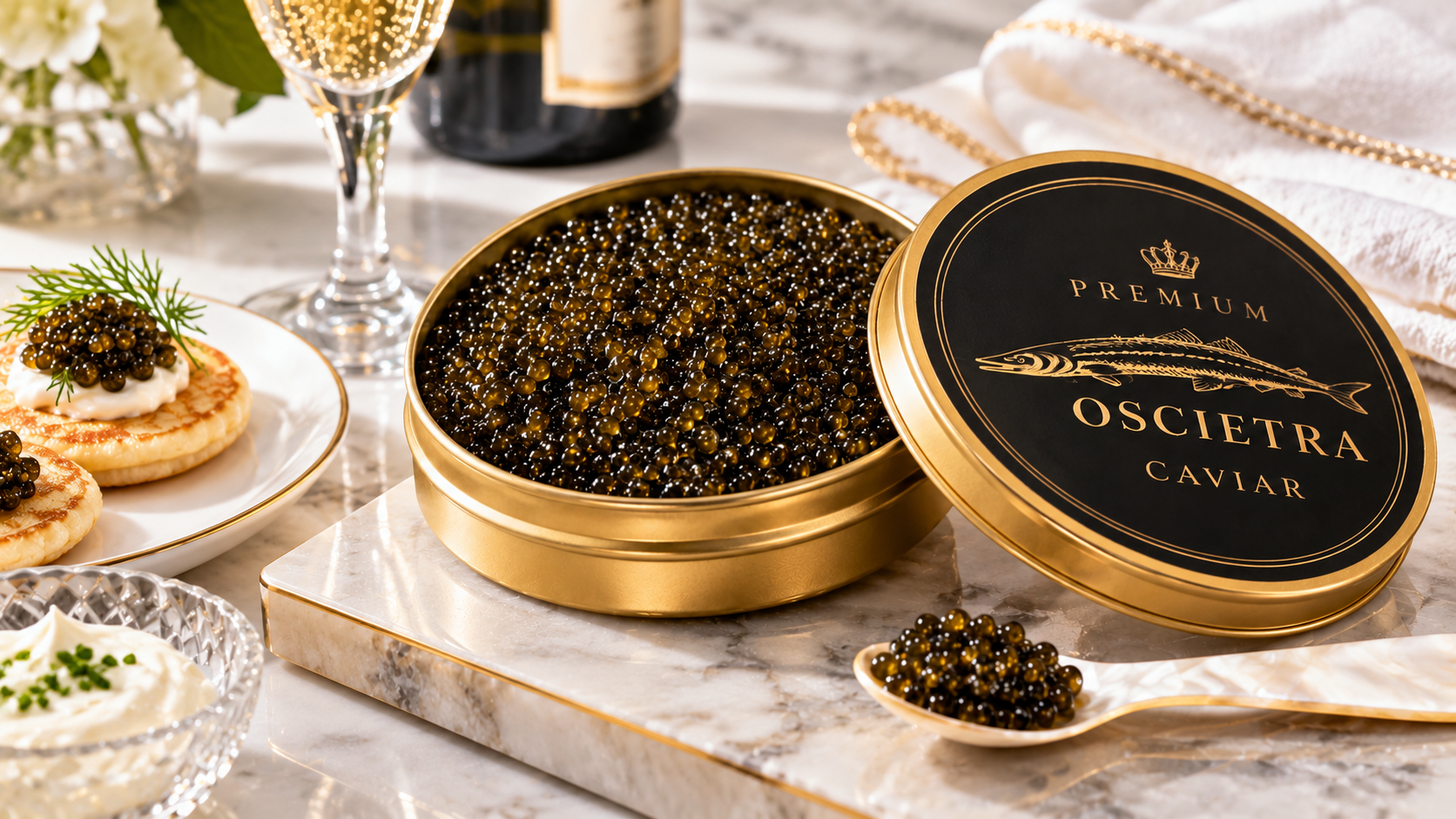
Premium Oscietra Caviar is a popular choice for buyers interested in traditional sturgeon roe, distinctive flavor, and carefully prepared seafood.
Often associated with fine dining and special occasions, this type of caviar is known for its delicate eggs and characteristic savory taste. However, quality can vary depending on the sturgeon species, production methods, processing, and storage conditions.
From evaluating flavor and texture to checking product labels and supplier information, several factors deserve attention before you buy.
What Is Premium Oscietra Caviar?
Premium Oscietra Caviar refers to a high-end category of salted sturgeon roe commonly associated with Russian sturgeon (Acipenser gueldenstaedtii). The name may also appear as Oscietra, Ossetra, or Osetra, depending on the producer and market.
Traditional Osetra sturgeon caviar is appreciated for its characteristic taste and texture. Individual products may vary in color, egg size, firmness, and saltiness, making it important to examine the specific product rather than relying entirely on its name.
The word “premium” generally serves as a commercial quality description. It does not establish a universal grading standard. One producer may use the term to describe selected eggs, while another may associate it with particular processing or appearance characteristics.
For buyers, the most useful information comes from verified species identification, ingredient details, sourcing records, and storage instructions.
What Makes Oscietra Caviar Different From Other Varieties?
Oscietra belongs to the traditional categories of sturgeon caviar, alongside varieties such as Beluga and Sevruga.
Although these names are often associated with particular species, modern retail descriptions may include farm-specific classifications and different commercial naming conventions.
Flavor and Texture
Oscietra is commonly described by sellers as having a savory, buttery, or nut-like flavor. Some products may have a noticeable marine finish, while others taste relatively mild.
These descriptions are subjective. Actual flavor depends on the individual fish, roe maturity, processing, and salt content.
When reviewing caviar tasting notes, look for descriptions that address:
- Saltiness: Is the flavor mild, balanced, or noticeably salty?
- Texture: Are the eggs firm, delicate, or soft?
- Finish: Does the taste remain gentle or become distinctly marine?
- Egg consistency: Does the product have a reasonably consistent appearance?
- Overall character: Is the caviar described as buttery, savory, or nut-like?
Supplier descriptions can help you narrow your options, although they should not be treated as independent evidence of quality.
Color and Appearance
Oscietra eggs can vary in appearance, with colors often described as brown, gray, amber, or golden.
Some sellers associate particular colors with higher product grades. However, color alone cannot establish freshness, authenticity, or overall quality.
An attractive appearance may influence your preference, but species verification and handling information deserve equal attention.
How to Evaluate Premium Oscietra Caviar Quality
Quality assessment involves several characteristics. Understanding how to choose caviar may help you avoid paying a higher price based entirely on attractive packaging or promotional descriptions.
1. Verify the Sturgeon Species
Begin by identifying the species used to produce the roe.
A product labeled Oscietra should provide sufficient information to establish its identity. Look for the scientific species name and relevant traceability details.
For internationally traded sturgeon caviar, CITES labeling requirements establish a system for identifying species, origin, and production records.
2. Examine the Ingredient List
Traditional caviar is prepared using sturgeon roe and salt. Some commercially available products may contain additional permitted preservatives.
Read the ingredient declaration carefully, particularly if you prefer products with a short ingredient list.
Terms such as “traditional” or “premium” should not replace a clear explanation of the product’s composition.
3. Evaluate Egg Condition
The condition of the eggs can influence the eating experience.
When inspecting a product after opening, you may look for reasonably intact eggs, an appropriate aroma, and a texture consistent with the supplier’s description.
Excessive liquid, unusual odors, or visibly deteriorated eggs may indicate quality or handling concerns.
However, appearance alone cannot establish food safety. Proper refrigeration and the manufacturer’s instructions remain essential.
4. Check Processing and Packaging
Caviar is commonly sold in sealed tins or jars intended to protect the product during distribution.
Check the packaging for:
- Product name and species information
- Net weight
- Ingredient declaration
- Country of origin
- Lot or traceability information
- Storage requirements
- Applicable expiration or use-by date
Packaging should be intact, and refrigerated products should arrive under suitable temperature-controlled conditions.
5. Review the Supplier’s Reputation
A reliable supplier should provide clear product details and answer reasonable questions about sourcing, storage, and shipping.
Before ordering, review its handling procedures, delivery arrangements, return policy, and customer service information.
Independent customer feedback may help identify recurring service concerns, although individual reviews cannot establish the quality of every batch.
Understanding Oscietra Caviar Price Differences
The Oscietra caviar price can vary considerably between suppliers and products.
Several factors may influence the amount you pay, including the sturgeon species, production costs, roe selection, processing, packaging, and distribution.
What Influences the Selling Price?
Sturgeon production: Raising sturgeon requires specialized aquaculture facilities, feeding, monitoring, and time before roe can be harvested.
Product selection: Producers may separate eggs according to appearance, size, texture, or other internal grading criteria.
Processing: Salt levels, handling procedures, and packaging methods may influence production costs.
Origin: Farming location, transportation requirements, and import procedures can affect the final retail price.
Brand positioning: Established producers may charge different prices based on their reputation, presentation, and distribution arrangements.
A higher price does not automatically indicate better flavor or superior handling.
How to Compare Caviar Prices Fairly
Rather than comparing package prices alone, calculate the cost per gram.
For example, if one hypothetical product costs $90 for 30 grams and another costs $140 for 50 grams, their unit prices would be:
- Product A: $3.00 per gram
- Product B: $2.80 per gram
These figures are mathematical examples, not verified retail prices.
The second product has a lower unit price, although the better purchase depends on quality, freshness, packaging, and how much caviar you plan to serve.
Comparing identical quantities can make differences between luxury caviar products easier to evaluate.
Why Sourcing and Farming Practices Matter
Sturgeon sourcing deserves attention because wild populations have faced conservation pressures.
Commercial caviar production now includes aquaculture operations that raise sturgeon in managed facilities.
Sustainable caviar farming may involve responsible water management, controlled production, appropriate fish husbandry, and traceable supply chains.
However, farm-raised status alone does not establish that a product meets a particular environmental or animal-welfare standard.
Questions to Ask About Sourcing
Before buying, you may want to know:
- Which sturgeon species produced the roe?
- In which country was the fish raised?
- Is the product farm-raised or wild-sourced?
- Can the supplier provide traceability information?
- Does the producer explain its environmental practices?
- Are sustainability statements supported by relevant documentation?
Clear answers can help you evaluate supplier transparency.
If a seller claims that its product is environmentally responsible, look for supporting records rather than relying solely on promotional wording.
How Premium Oscietra Caviar Compares With Other Caviar Types
Understanding the main categories may help you select a product that suits your preferences.
Oscietra vs. Beluga Caviar
Beluga caviar traditionally comes from the Beluga sturgeon, Huso huso.
It is commonly associated with comparatively large eggs and a delicate flavor. Oscietra is frequently described as having a firmer texture and a distinctive savory or nut-like character.
Individual products can differ, so these descriptions should serve as general guidance rather than guaranteed characteristics.
Oscietra vs. Sevruga Caviar
Sevruga caviar comes from stellate sturgeon, Acipenser stellatus.
It is commonly associated with smaller eggs and a comparatively pronounced marine flavor.
If you prefer a gentler eating experience, you may find certain Oscietra products suitable. However, taste preferences remain personal.
Oscietra vs. Other Farm-Raised Sturgeon Caviar
Caviar from Siberian sturgeon and other farm-raised species may provide alternatives for buyers comparing prices and flavor profiles.
These products can differ in egg size, texture, saltiness, and production methods.
Rather than assuming that one species is automatically superior, compare verified product details and select according to your intended use.
How to Store Premium Oscietra Caviar Properly
Caviar is a perishable seafood product, and temperature control matters.
Always follow the storage temperature and use-by instructions printed on the package.
Before Opening
Keep products labeled for refrigeration at the specified temperature.
If you order online, arrange delivery when someone can receive the package promptly.
Do not assume that every type of caviar has the same shelf life. Pasteurization, packaging, and processing can affect storage requirements.
After Opening
Once opened, caviar should be kept refrigerated and consumed promptly.
USDA food-safety guidance lists two days of refrigerated storage after opening for fresh, non-pasteurized caviar. Product-specific instructions may be stricter.
Use clean utensils and avoid leaving the container at room temperature for extended periods.
Freezing is generally discouraged for the caviar categories covered by USDA’s consumer storage guidance.
If the product arrives warm when it should be refrigerated, or its packaging appears compromised, contact the supplier rather than tasting it to determine safety.
How to Serve Oscietra Caviar
Serving methods can influence how clearly you notice the caviar’s natural characteristics.
For an initial tasting, a small portion served chilled without strongly flavored accompaniments may help you assess its texture and taste.
Simple Serving Ideas
Traditional tasting: Serve a small portion on a suitable spoon to evaluate its natural flavor.
Blinis: Small pancakes can provide a mild base for caviar.
Toast points: Lightly toasted bread may create a pleasant texture contrast.
Potatoes: Plain cooked potatoes can complement the salty, savory characteristics of caviar.
Eggs: Hard-boiled eggs may provide a neutral accompaniment.
If your goal is to compare different caviar varieties, keep the accompaniments consistent.
Avoid serving methods that overpower the product’s natural flavor.
Choosing the Right Serving Quantity
The amount you purchase depends on your guests, serving style, and budget.
A small container may be suitable for tasting, while a larger quantity may be appropriate when caviar is a featured part of a gathering.
Before ordering, calculate the approximate amount you intend to serve per person and account for any other appetizers.
This may help you avoid unnecessary spending and food waste.
Common Questions About Premium Oscietra Caviar
Is Premium Oscietra Caviar Worth Buying?
It may be worth purchasing if you enjoy traditional sturgeon caviar and value its particular flavor and texture.
However, value depends on your preferences, the product’s verified quality, and its price relative to comparable alternatives.
Is Oscietra Caviar Always Expensive?
Oscietra is generally positioned as a premium seafood product, although retail prices differ by producer, package size, and market.
Comparing unit prices and product information can help you judge the cost.
Does Golden Caviar Mean Better Quality?
Not necessarily. Color may influence a producer’s grading system or a buyer’s preference, but it does not independently establish superior quality.
Is Farm-Raised Caviar Authentic?
Yes. Genuine sturgeon caviar can come from farm-raised fish. Authenticity depends on the roe’s species identity and accurate labeling, not on whether the sturgeon was raised in captivity.
Can You Order Oscietra Caviar Online?
Yes, provided a retailer serves your location and complies with applicable trade and food-safety requirements.
Check temperature-controlled delivery arrangements, origin information, and the seller’s policy for shipments that arrive in poor condition.
What to Check Before Purchasing Premium Oscietra Caviar
Before selecting a product, review the following considerations:
- Species authenticity: Confirm the sturgeon species and product description.
- Traceability: Check origin and relevant identification information.
- Ingredients: Review the salt content and any listed additives.
- Flavor preference: Compare descriptions of texture, saltiness, and finish.
- Product condition: Examine packaging and storage instructions.
- Supplier transparency: Look for clear sourcing and delivery information.
- Price comparison: Evaluate cost per gram rather than package price alone.
- Intended use: Select a quantity appropriate for your tasting or event.
You can also compare current Oscietra caviar selections and product details before deciding which option fits your preferences and budget.
Premium Oscietra Caviar may be a suitable purchase when you appreciate traditional sturgeon roe and want a product with clearly documented sourcing and handling practices.
Leave a Reply