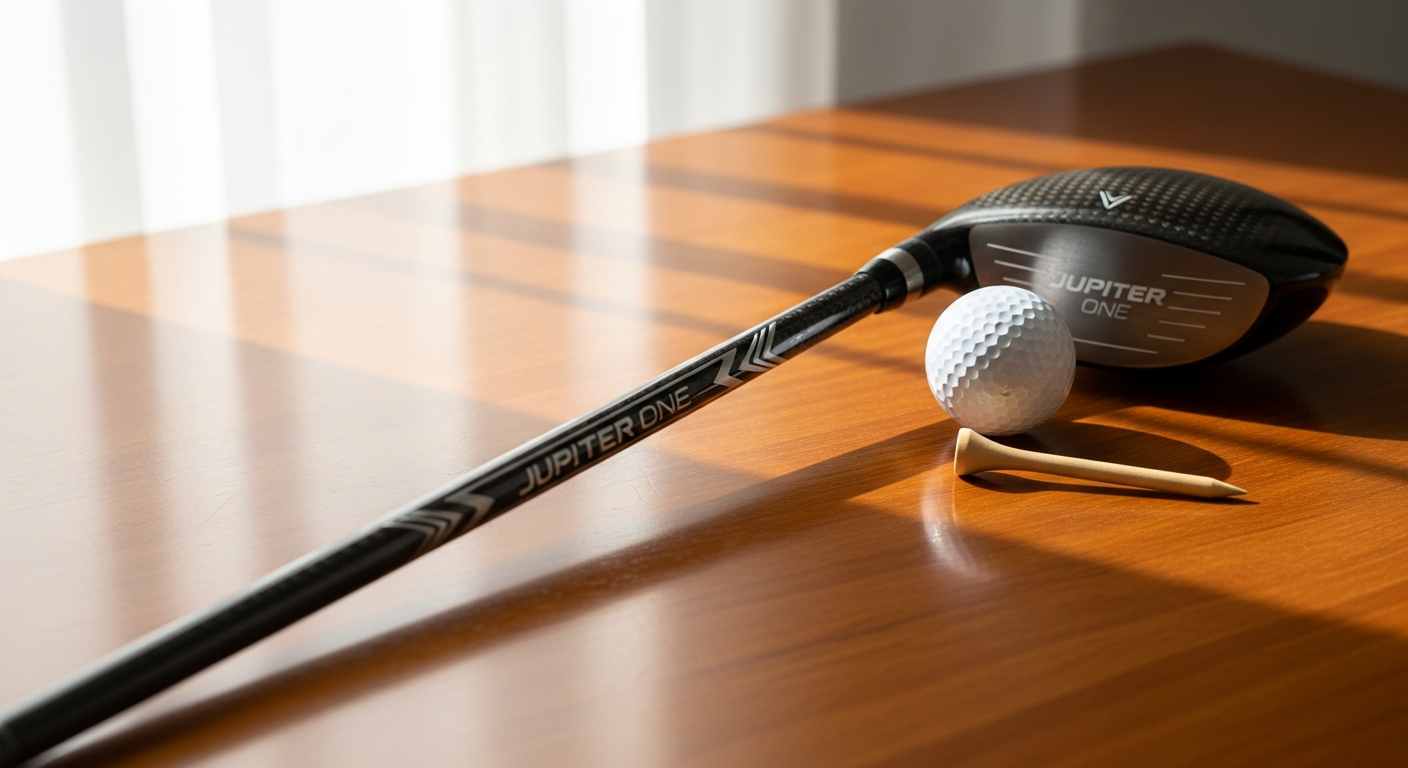
Stock driver shafts cost manufacturers pennies to produce, yet golfers pay hundreds for new clubs that still underperform. The aftermarket shaft market has exploded over the past decade, but most premium options carry price tags that rival the clubhead itself. Steadfast Golf disrupted this space by engineering the Jupiter One Driver Shaft—a tour-quality solution priced at $149.95 that challenges the notion that superior performance requires a premium investment.
This shaft specifically targets the torque and stability issues that plague standard equipment, using advanced carbon fiber construction to deliver measurable improvements in distance and accuracy. Rather than accepting the limitations baked into OEM equipment, you have an alternative that actually works. The engineering behind the Jupiter One isn't theoretical—it's backed by independent testing and real-world results from thousands of golfers who've already made the switch.
Discover how the Jupiter One Driver Shaft can transform your game today.
The Torque Problem: Why Your Driver Shaft Might Be Costing You Yards
Understanding shaft torque and its impact on ball flight
Torque measures how much a shaft twists during the swing, expressed in degrees. A shaft with high torque will rotate excessively at impact, introducing unwanted variables into your shot. The Jupiter One keeps torque below 1 degree—a specification that sounds technical until you see the results on the golf course.
Think of torque like a spinning top that won't stay upright. The more a shaft twists, the harder it becomes to deliver the clubface square to the ball. Even slight variations compound, turning what should be a 280-yard drive into a 265-yard slice into the rough.
The relationship between high torque and increased side spin
When your shaft twists at impact, the clubface opens or closes relative to your swing path. This creates side spin—the primary enemy of accuracy. A golfer with a 1-degree clockwise twist at impact doesn't just hit it slightly right; the ball curves aggressively in that direction.
Stock shafts often exhibit 2-3 degrees of torque. Manufacturers accept this because cost-effective materials and construction methods allow flexibility to reduce manufacturing expenses. The result is a shaft that feels smoother during the swing but betrays you at the critical moment of impact.
Why stock shafts typically have higher torque ratings
OEM manufacturers design shafts to be forgiving rather than precise. A forgiving shaft masks swing flaws temporarily but limits your ceiling for consistency and distance. Standard graphite simply cannot achieve the low-torque specifications that premium carbon fiber delivers without becoming prohibitively expensive through traditional retail channels.
Steadfast Golf's direct-to-consumer model eliminates the middleman, allowing them to use high-grade carbon fiber—the same material found in shafts costing $300+—while maintaining an accessible price point.
Carbon Fiber Engineering: What Makes the Jupiter One Different
High-grade carbon fiber versus standard graphite
Carbon fiber shafts outperform graphite in multiple dimensions. Carbon fibers align in precise patterns, creating directional strength that minimizes unwanted movement. Graphite shafts, by comparison, use a more generalized fiber structure that trades consistency for cost savings.
The Jupiter One's high-grade carbon fiber construction means longer durability and a more refined feel at address and through impact. Golfers consistently report that the shaft feels smoother than both stock equipment and competing aftermarket shafts in the $200-plus range.
Weight balance optimization for easier swings
The Jupiter One employs a deliberately engineered weight distribution pattern. By strategically positioning material throughout the shaft, Steadfast Golf creates a profile that feels lighter during the swing while maintaining the stability needed at impact.
This weight balance optimization serves two purposes: it reduces the effort required to generate clubhead speed, and it naturally promotes a higher ball launch. Combined with the low-torque specification, the result is longer carries without forcing you to change your swing mechanics.
Manufacturing refinements and quality control
Steadfast Golf's commitment to quality distinguishes them in a market crowded with corner-cutting manufacturers. When early versions of the Jupiter shaft experienced durability concerns, the company made an unconventional decision: they paused production entirely to refine their manufacturing processes.
That decision resulted in the Jupiter 1 Plus version—the current standard offering—which addressed early quality control issues and established manufacturing protocols that guarantee long-term reliability. This commitment suggests a company prioritizing reputation over short-term profits.
Experience the refined engineering of the Jupiter One Plus today.
Flex Options and Finding Your Perfect Match
Understanding flex ratings and swing speed correlation
Flex determines how much a shaft bends during the swing. Senior flex accommodates swing speeds below 75 mph, Regular flex handles 75-90 mph, Stiff flex works for 90-105 mph, and X-Stiff supports speeds above 105 mph. The Jupiter One comes in all four options, ensuring you can match the shaft precisely to your characteristics.
Selecting the correct flex isn't optional—it's fundamental to unlocking the shaft's performance potential. A stiff shaft in the hands of a senior golfer will feel unresponsive and actually reduce distance. Conversely, a senior flex shaft in the hands of a golfer with a 95 mph swing speed will feel overly flexible and inconsistent.
The critical importance of proper flex selection
Many golfers choose flex based on ego rather than accuracy. You might believe you have a fast swing, but an honest assessment using a launch monitor tells the truth. The Jupiter One's advantages only manifest when the flex matches your actual swing characteristics.
Flex mismatch undermines the shaft's low-torque benefits. Even if the shaft minimizes twisting, improper flex introduces different forms of inconsistency—shots that balloon high or fail to launch, impacts that feel off-center despite solid contact.
Testing and fitting recommendations
Professional fitting using launch monitors removes guesswork. A qualified fitter measures your clubhead speed, attack angle, and smash factor, then recommends the flex that optimizes your particular swing. Many golf retailers and club-building shops offer this service for modest fees.
Steadfast Golf backs their product with a 100-day risk-free trial, giving you time to determine if your initially selected flex truly suits your swing. If it doesn't, their no-questions-asked return policy ensures zero financial risk.
Performance Gains: Distance, Accuracy, and Confidence
Documented distance improvements
Users of the Jupiter One report consistent yardage gains in the 5-15 yard range, with many experiencing improvements at the higher end of that spectrum. The low-torque specification contributes to longer carries by eliminating the side spin that robs distance and accuracy simultaneously.
When side spin decreases, your ball flight becomes more penetrating and controlled. A drive that previously curved 20 yards right now curves 5 yards right—or flies straight. That consistency translates directly to longer average distance because you're no longer losing length to mishit trajectories.
Shot dispersion reduction and accuracy metrics
Independent testing demonstrates up to a 50% reduction in mishit dispersion when comparing the Jupiter One to several premium shafts costing significantly more. This metric matters profoundly. Dispersion reduction means that even your imperfect swings produce better results.
Imagine hitting your driver 15 times. With a high-torque shaft, your misses scatter across a wide area—some left, some right, some high, some low. The Jupiter One tightens that pattern dramatically. Your misses cluster more closely around your intended target line, translating to better scoring and genuine confidence in your equipment.
Spin rate control and ball flight characteristics
The Jupiter One's engineering promotes optimal spin rates for distance and control. Too much spin balloons shots that fall short; too little produces fliers that sail over greens. The shaft's balance and torque characteristics naturally produce spin rates that maximize carry distance while maintaining control.
Golfers frequently report that their ball flight feels more predictable and penetrating. They know what the ball will do before it lands, eliminating the uncertainty that comes from inconsistent spin characteristics.
Value Proposition: Premium Performance at an Accessible Price
Direct-to-consumer model advantages
Traditional retail golf equipment passes through multiple intermediaries—distributors, wholesalers, retailers—each taking a markup. By selling directly to golfers, Steadfast Golf eliminates these layers, reducing costs substantially. They pass these savings directly to customers.
A typical premium aftermarket shaft through retail channels costs $250-400. OEM shaft upgrades from major manufacturers run $200-300. The Jupiter One delivers comparable performance at $149.95—a pricing structure impossible through traditional retail models but achievable through direct sales.
Competitive pricing against premium alternatives
The value equation becomes clear when you compare performance metrics. A $350 aftermarket shaft doesn't deliver 2.3 times better performance than the Jupiter One. Independent testing suggests minimal, if any, performance differences between the Jupiter One and shafts costing twice as much.
This represents genuine disruption in a market accustomed to premium pricing for premium performance. Steadfast Golf proves that effective supply-chain management and direct customer relationships can deliver tour-quality equipment at democratized pricing.
100-day risk-free trial and satisfaction guarantee
The 100-day trial window—roughly three months of regular play—provides ample time to evaluate whether the Jupiter One transforms your driving. You can test it in various conditions, gather performance data, and make an informed decision with virtually no financial risk.
The lifetime product guarantee signals exceptional confidence in the shaft's durability and performance. Steadfast Golf stands behind their engineering completely, offering peace of mind that extends far beyond the initial purchase.
Who Benefits Most: Matching the Jupiter One to Your Game
Golfers frustrated with stock shaft performance
If you've purchased a new driver expecting a dramatic improvement only to feel disappointed, your frustration likely stems from shaft limitations rather than clubhead quality. Stock shafts represent compromises between cost and performance that leave money on the table for serious golfers.
The Jupiter One directly addresses this pain point. It upgrades the component—the shaft—that controls how your swing translates into ball flight. Golfers frequently report that pairing a quality shaft with their existing clubhead produces performance improvements rivaling a completely new club.
Budget-conscious players seeking premium upgrades
You don't need to spend four figures to upgrade your equipment meaningfully. The Jupiter One delivers premium performance for the cost of a quality putter or a week's worth of range balls. For golfers optimizing equipment budgets, the shaft represents exceptional value.
Maximizing performance improvement per dollar spent means considering components that deliver measurable results at accessible prices. The Jupiter One checks both boxes—it delivers measurable improvements in distance and accuracy while preserving your budget for other aspects of your game.
Mid-handicap golfers chasing consistency
Mid-handicap golfers—those shooting in the 80s and 90s—benefit disproportionately from dispersion reduction. The Jupiter One's primary advantage isn't raw distance; it's consistency. For golfers working to lower their handicaps, consistency matters more than distance.
When your drives land closer to your intended target line, you hit more fairways, position yourself better for approach shots, and experience fewer catastrophic misses that derail a round. The psychological benefit of trusting your equipment compounds the technical advantages.
Potential Limitations and Realistic Expectations
The flex-matching requirement
Selecting the wrong flex negates the Jupiter One's advantages. This isn't a limitation of the shaft—it's a fundamental requirement of any quality equipment. However, it means you must honestly assess your swing speed rather than selecting flex based on what you wish were true.
Launch monitor testing costs $30-50 and provides definitive answers about proper flex. Spending this small amount upfront prevents the frustration of receiving equipment that doesn't suit your swing.
Not a substitute for swing fundamentals
A premium shaft cannot fix fundamental swing flaws. If your driver struggles stem from grip pressure, swing path, or tempo issues, the Jupiter One improves your ceiling but doesn't eliminate the underlying problems. Equipment upgrades work within the constraints of your current skill level.
The shaft maximizes what you can already do—it doesn't teach you to do something completely different. Your swing fundamentals remain paramount; the Jupiter One optimizes the equipment variables within those fundamentals.
Early durability concerns and current status
Historical context matters here. Early Jupiter shaft versions faced durability questions that Steadfast Golf took seriously. Rather than defending inferior products, they paused manufacturing to improve processes. The Jupiter 1 Plus version that resulted established quality standards that remain consistent today.
This history actually builds confidence rather than undermining it. The company prioritized reputation over production volume, a decision that benefits current customers through refined manufacturing protocols and higher quality standards.
Making Your Decision: Is the Jupiter One Right for You?
Evaluating your current driver performance
Begin by identifying specific weaknesses in your current driver. Do you struggle with consistency? Does your dispersion feel wider than you'd expect? Are you achieving the distance you should based on your swing speed?
Establish baseline metrics using launch monitor data or detailed observation. Track your typical miss pattern, average distance, and consistency over a dozen or more shots. These metrics provide reference points for evaluating whether the Jupiter One improves your performance.
Assessing your swing characteristics
Honest self-assessment about swing speed, tempo, and natural shot patterns prevents poor decisions. If possible, visit a qualified fitter for launch monitor testing. This investment pays immediate dividends through proper equipment selection.
Understand your natural tendencies—do you tend to slice or hook? Do you generate high or low launch angles? Understanding these characteristics helps you predict how the Jupiter One's low-torque design will affect your specific ball flight patterns.
Taking advantage of the risk-free trial
The 100-day trial window is generous enough to evaluate performance across different course conditions and seasonal variations. Structure your evaluation period intentionally. Track distance, dispersion, and your own subjective sense of confidence.
Key metrics to monitor include fairways hit, average distance, consistency from shot to shot, and overall scoring. If the Jupiter One delivers measurable improvements in these areas within the 100-day window, you have your answer. If not, Steadfast Golf's return policy ensures you're whole.
The Bottom Line: Transforming Driver Performance Without the Premium Price Tag
The Jupiter One Driver Shaft represents a genuine breakthrough in the aftermarket shaft market—not because it's flashy or trendy, but because it delivers measurable performance improvements at a price point that makes sense for serious golfers. The sub-1-degree torque specification isn't marketing hype; it's engineering that directly translates to straighter shots, tighter dispersion, and the kind of consistency that shaves strokes off your score.
What impresses most about Steadfast Golf is their willingness to pause production and refine their manufacturing processes when early quality issues emerged. That decision signals a company genuinely committed to product excellence rather than quick profits. Combined with the 100-day risk-free trial and lifetime guarantee, you're essentially getting a performance upgrade with virtually no downside risk.
If you've been playing with a stock driver shaft and wondering why your expensive new club doesn't perform like the pros use, the Jupiter One answers that question definitively. The shaft costs less than a dozen premium golf balls, yet delivers performance improvements that rival clubhead upgrades costing three times as much.
Your next step? Determine your swing speed, select the appropriate flex, and experience firsthand why thousands of golfers have made the Jupiter One their go-to driver shaft.
Start your journey to better driving performance with the Jupiter One Driver Shaft.
Leave a Reply