Power outages strike without warning—and when they do, you've got minutes to protect your home's critical systems. According to recent data, the average American household experiences 4-5 power disruptions annually, yet fewer than 15% have a reliable backup power solution in place.
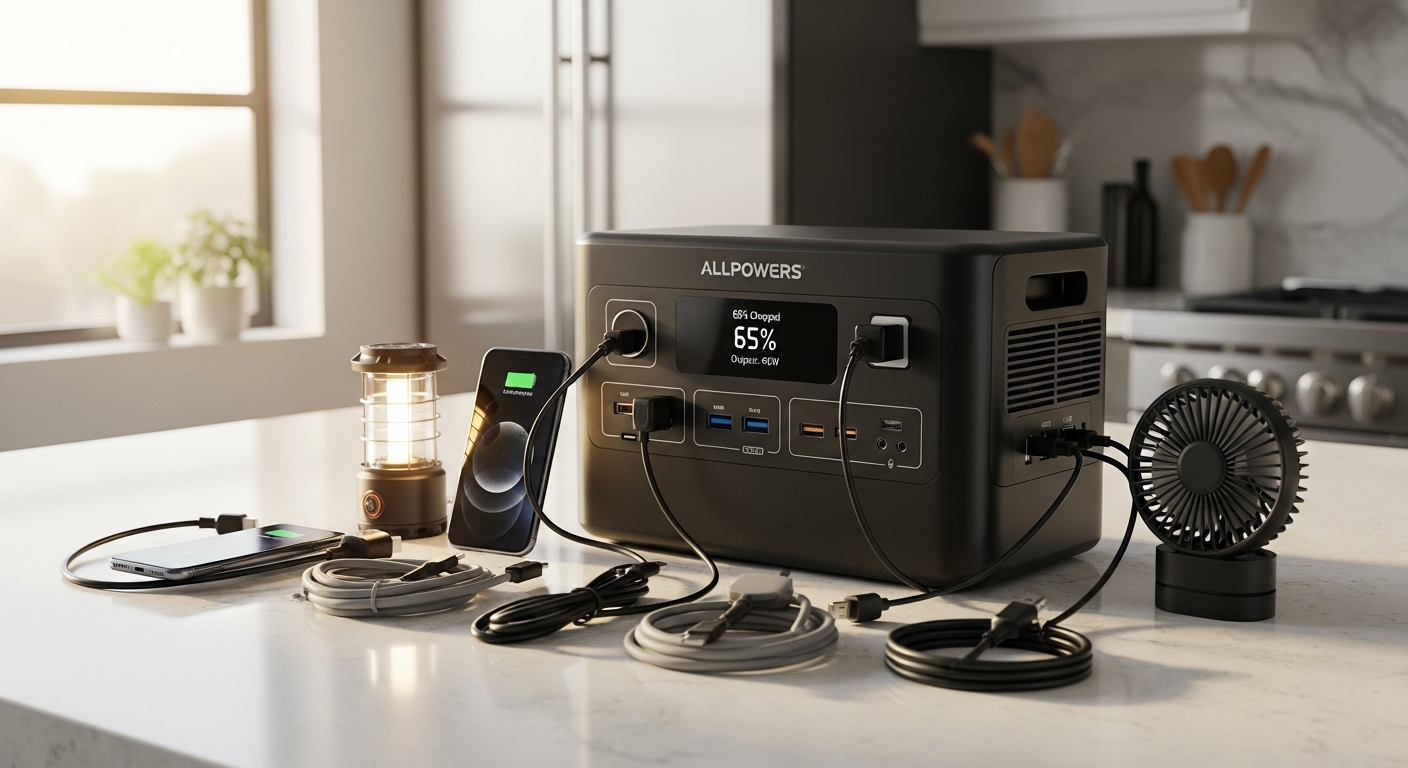
Backup power solutions have evolved dramatically over the past decade, with today's portable power stations delivering enterprise-grade power management in a compact, affordable package. The ALLPOWERS R600 exemplifies this shift, offering homeowners genuine emergency protection without the fuel costs, maintenance headaches, or noise complaints that come with traditional generators.
How the ALLPOWERS R600 Functions as an Emergency Backup System
The R600's emergency capability hinges on its Uninterruptible Power Supply (UPS) functionality—a feature that separates true backup systems from simple charging stations. When grid power fails, the unit switches to battery power in just 10 milliseconds, a transition so rapid that sensitive electronics experience zero interruption.
This automatic activation means you don't need to flip switches or manually intervene during a crisis. Your router keeps running. Your modem stays online. Your refrigerator continues preserving food. The system handles the transition seamlessly while you focus on managing the emergency itself.
Unlike traditional backup generators that require setup time, fuel availability, and manual startup during stressful moments, the R600 sits ready. Real-time monitoring through the ALLPOWERS app lets you track battery status, remaining runtime, and power consumption from your smartphone, delivering peace of mind even when you're away from home during an outage.
Protection for Sensitive Electronics and Network Equipment
Most household devices tolerate brief power fluctuations poorly. Network equipment, medical devices, and computer systems can suffer permanent damage from sudden power loss or voltage spikes. The R600's pure sine wave inverter and UPS switching protect these sensitive systems by maintaining stable, consistent power without the dangerous surges that accompany grid restoration.
Comparison to Traditional Backup Systems
Traditional generators demand ongoing maintenance, regular fuel replacement, and produce noise levels that strain both household comfort and neighborhood relations. They also emit toxic fumes, require outdoor placement, and involve significant upfront costs—often exceeding $3,000 for comparable capacity. The R600's silent operation, zero emissions, and $300 price point fundamentally reshape the economics of home backup power.
Battery Longevity and Long-Term Reliability for Home Use
The R600's LiFePO4 battery chemistry represents a genuine technological advantage over standard lithium-ion alternatives. Where conventional lithium-ion batteries degrade rapidly and pose fire risks, LiFePO4 chemistry delivers 3,500+ complete charge cycles while retaining 80% capacity. This translates directly to approximately 10 years of dependable service with regular residential use.
The cost-per-cycle analysis reveals striking advantages. A traditional generator might last 5-7 years with proper maintenance and regular fuel replacement. The R600's decade-long lifespan, combined with zero fuel costs, minimal maintenance requirements, and no oil changes, dramatically reduces the true cost of ownership. You're not just buying a power station—you're purchasing a decade of reliable backup protection.
Minimal Degradation During Extended Storage
Unlike fuel-based systems that lose effectiveness when stored, the R600 maintains its charge capacity during extended periods without use. This matters for homeowners in regions with infrequent outages who might go months between emergencies. The battery won't mysteriously lose capacity sitting in a closet or garage.
Calibration Considerations for Optimal Performance
Some long-term users report that extended storage periods require occasional charging cycles to maintain calibration accuracy. The occasional full charge-discharge cycle keeps the battery management system properly synchronized with actual capacity. This minor maintenance step ensures you receive accurate remaining runtime estimates when emergencies strike.
Powering Essential Household Devices During Outages
The practical question every homeowner asks: what devices actually stay powered during an outage? The R600's 600W rated output (with 1,200W surge capacity) handles most essential appliances during the critical first hours when utilities struggle to restore service.
A typical refrigerator draws 600-800W during compressor operation, then cycles down to minimal draw during the hold phase. The R600 keeps it running throughout an outage, preserving food and preventing waste. Wi-Fi routers consume only 10-15W, meaning you maintain internet connectivity for hours. Freezers, similarly, cycle between active cooling and standby, remaining functional throughout typical outage durations.
Medical Device Support
For households with medical equipment, the R600 becomes genuinely lifesaving. CPAP machines (50-100W), oxygen concentrators (300-500W), and dialysis equipment all operate safely on the station's stable power. This capability transforms it from luxury to necessity for specific populations.
Communication and Information Access
Laptops consume 60-100W during operation, meaning 6-10 hours of work or communication. Smartphones and tablets charge multiple times. This keeps your family informed, maintains contact with emergency services, and enables remote work during extended outages.
Load Management Strategies
The key to extending runtime lies in prioritization. Run your refrigerator continuously, but avoid powering space heaters or microwave ovens simultaneously. The app's load monitoring feature shows real-time consumption, letting you make intelligent decisions about which devices operate during scarcity. A space heater might consume 75% of available power—knowing this helps you defer non-essential loads.
Charging Speed and Recharge Options for Continuous Protection
The R600 charges from 0-100% in just one hour via standard AC wall outlets, a critical advantage for rapid response preparation. This means a fully discharged unit—perhaps from powering essential devices during an outage—regains full capacity in the time between lunch and dinner.
Solar charging accelerates this further. With a compatible 300W solar panel array, the R600 reaches full capacity in approximately 1.5 hours under optimal sunlight conditions. This opens grid-independent charging possibilities for homeowners interested in true energy resilience.
Dual Charging Capability
The R600 accepts simultaneous AC and solar inputs, intelligently managing both power sources. This hybrid approach lets homeowners with solar installations maintain charge during extended outages without grid dependency. You're building genuine energy independence, not temporary emergency capacity.
Seasonal Considerations for Solar Efficiency
Solar charging effectiveness varies with season and weather. Winter months with shorter daylight and cloud cover produce slower charging rates. Summer installations deliver maximum speed. Understanding these seasonal variations helps homeowners plan their backup power strategy appropriately.
Multi-Port Connectivity for Whole-Home Device Management
The R600's port architecture addresses modern household power needs comprehensively. Two 100W USB-C ports serve laptops, tablets, and modern smartphones simultaneously. Two 18W USB-A ports charge wearables, older phones, and accessories. Two standard 120V AC outlets power appliances, medical equipment, and chargers.
This multi-output design prevents the bottleneck problem that cripples single-port solutions. Your family members charge devices simultaneously without creating conflicts or waiting queues.
DC Output and Specialized Equipment
Two DC output jacks serve specialized equipment—RV appliances, marine systems, or custom installations. The 12V car socket connects directly to vehicle charging systems, useful for emergency situations requiring vehicle-based power solutions.
Wireless Charging Pad
The 15W wireless charging pad eliminates cable clutter while keeping compatible devices powered. Modern smartphones, smartwatches, and earbuds charge simultaneously on this dedicated surface.
Port Prioritization During Limited Power
When battery capacity runs low, the app lets you disable specific ports, directing remaining power toward essential devices. This granular control maximizes the utility of every remaining watt-hour.
Smart Monitoring and Control Through the ALLPOWERS App
The ALLPOWERS app transforms the R600 from a passive power box into an intelligent system you monitor and control remotely. Real-time battery status shows remaining capacity, estimated runtime based on current load, and charging rate. You see exactly how many hours remain before essential devices go dark.
Load monitoring reveals which devices consume the most power, enabling strategic decisions about device usage during shortages. Your space heater might show 800W consumption while your router shows 12W—this visibility drives intelligent load management.
Alert Notifications and Remote Monitoring
Critical battery level alerts notify you when capacity drops below predefined thresholds. Remote monitoring from anywhere via smartphone means you can check the system's status from work, a neighbor's house, or during evacuation without physically present at home.
Scheduled Charging and Discharge Settings
The app allows scheduling charging for off-peak electricity hours if you have time-based utility rates. This optimization reduces charging costs while maintaining full capacity for emergencies.
App Interface Usability
While the app provides powerful functionality, some users note that the interface could benefit from streamlining. Certain features like AC frequency selection appear too prominently, and estimated runtime figures sometimes require manual recalibration after extended charging. These are manageable quirks rather than critical flaws, but worth acknowledging for transparency.
Cost-Benefit Analysis for Home Emergency Preparedness
The R600's $269-$300 price point represents perhaps its most compelling advantage. A comparable gasoline generator with similar output capacity costs $2,500-$4,000. A natural gas whole-home system runs $5,000-$15,000 plus installation. The R600 delivers meaningful emergency protection at a fraction of traditional costs.
Long-term ownership costs strongly favor the R600. Traditional generators require regular maintenance, spark plug replacement, oil changes, fuel stabilizers, and periodic tune-ups. Generator fuel costs $3-$5 per gallon, and extended outages can demand hundreds of dollars in fuel purchases. The R600 charges from your existing electrical infrastructure for mere dollars, and solar pairs eliminate fuel dependency entirely.
Solar Bundle Value
Solar bundles—combining the R600 with compatible 300W solar panels—run approximately $268-$300, delivering complete grid-independent backup charging. This bundle value proposition makes renewable energy integration genuinely affordable for average homeowners.
ROI Based on Regional Outage Frequency
Homeowners in regions with frequent outages (four or more annually) realize ROI within 2-3 years through avoided damage to food, reduced stress, and maintained work continuity. Even single outages lasting 12+ hours across the year justify the investment through prevented food loss alone.
Home Appeal and Resale Value
Backup power systems increasingly influence home value and appeal, particularly in regions prone to climate-driven outages. Having professional-grade backup capability becomes a tangible selling point for modern homebuyers.
Noise Considerations for Residential Environments
The R600's cooling fan activates during charging and heavy power draw, producing audible noise levels that some users find noticeable. While significantly quieter than traditional generators, the fan does create ambient sound that impacts household comfort and neighbor relations.
Placement strategy matters. Locating the unit in a basement, garage, or utility room rather than a central living area minimizes noise impact during charging. Some users employ simple acoustic solutions—soft furnishings or acoustic panels—to further reduce noise transmission.
Thermal management determines when the fan activates. Ensuring adequate ventilation around the unit, avoiding direct sunlight during charging, and allowing breathing space reduces heat buildup and fan activation frequency. These simple practices improve both noise characteristics and overall system efficiency.
Limitations and Realistic Expectations for Homeowners
The R600 represents excellent value but operates within clear boundaries. Its 299Wh capacity cannot power an entire home indefinitely. Heavy draws like electric ranges, air conditioning units, or whole-house heating systems exceed its capacity completely.
The non-removable battery means the entire unit requires replacement if the battery degrades beyond usability—there's no field replacement option. However, the 10-year lifespan and conservative capacity estimates mean most owners will upgrade voluntarily rather than face unexpected failure.
Weight and Portability Trade-offs
At approximately 16 pounds, the R600 is genuinely portable for adults but requires deliberate handling during emergencies. This isn't a grab-and-go device like a flashlight. It needs proper placement and initial setup to function optimally.
App Interface and Feature Accuracy
The app's estimated time-remaining calculations sometimes require manual recalibration, particularly after extended charging or storage periods. This is a minor inconvenience during setup but manageable through occasional full charge cycles that recalibrate the battery management system.
Capacity Constraints for Extended Outages
A 299Wh capacity lasting 10-12 hours of light use will deplete much faster under heavy loads. The unit functions best as a short-term emergency bridge—the critical first 12-24 hours when grid restoration becomes likely. Extended regional outages lasting days require either solar supplementation or strategic load reduction to extremely minimal draws.
When Supplementary Solutions Become Necessary
Homeowners in high-outage regions might pair the R600 with larger capacity units or solar arrays for extended protection. Rural properties where multi-day outages occur regularly should consider the R600 as first-stage backup, not sole solution. The investment remains justified through everyday use as a portable power station beyond pure emergency applications.
The Bottom Line for Home Backup Power
The ALLPOWERS R600 transforms emergency preparedness from a luxury into an accessible reality for homeowners. Its 10-year battery lifespan, intelligent UPS switching, and comprehensive port selection create a genuine safety net when the grid fails. This $300 solution delivers professional-grade backup capabilities—protecting everything from your refrigerator to your Wi-Fi router during critical outages.
The cooling fan will make noise during heavy use, and the 299Wh capacity won't power your entire home indefinitely, but this isn't a whole-home generator replacement; it's a strategic emergency tool that keeps your most essential systems alive during the first critical hours of an outage. If you're a homeowner without backup power, the R600 represents the smartest entry point into energy independence.
Pair it with solar panels for true grid-free charging, monitor it through the app for peace of mind, and rest assured that when the lights go out, your essential devices stay powered.
Leave a Reply