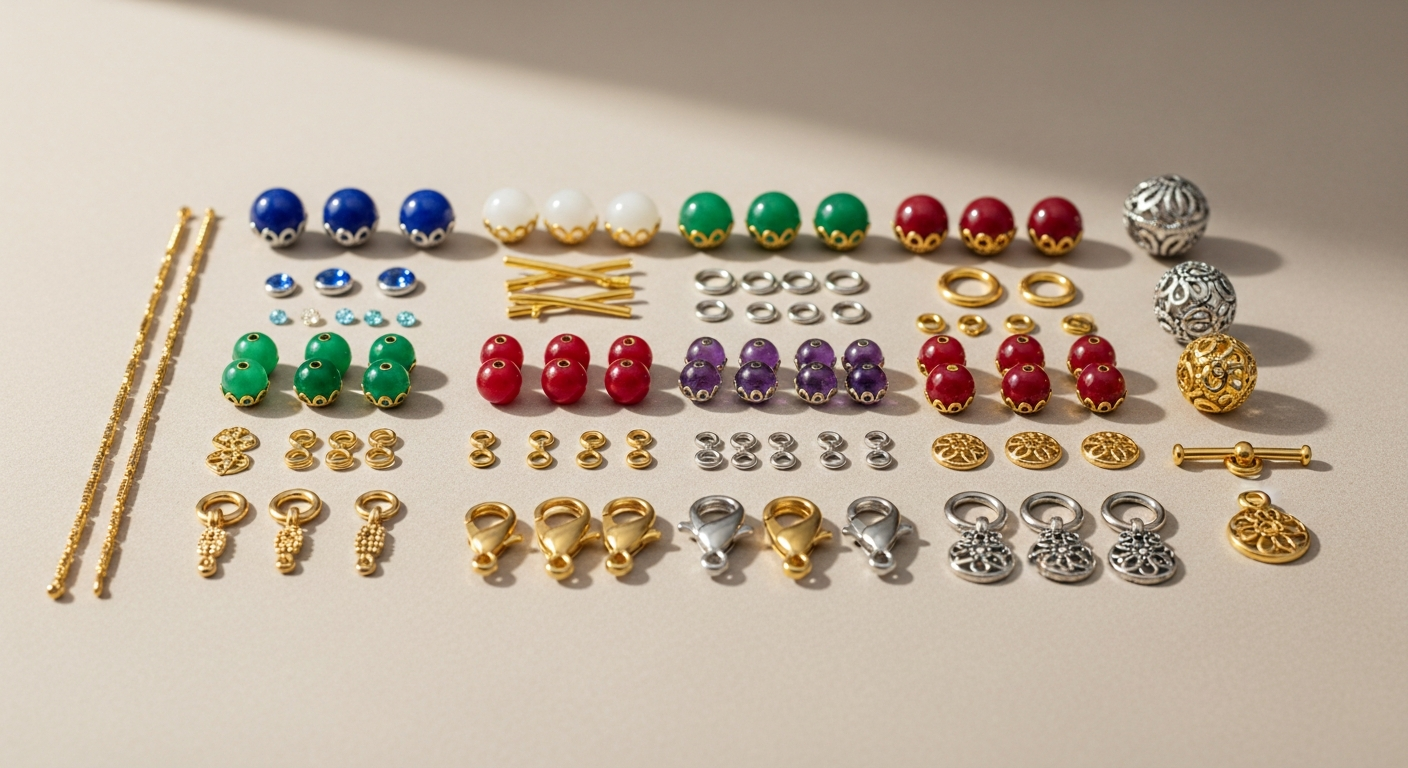
Over 2.3 million people worldwide are actively engaged in jewelry making as either a hobby or income source—and they all need reliable access to quality beads and findings. Whether you're stringing your first bracelet or scaling a thriving Etsy shop, the materials you choose can make or break your creative vision. Jewelry making beads and findings are the backbone of any crafter's toolkit, determining durability, aesthetic, and professional quality.
Wholesale platforms have revolutionized how artisans source materials, offering everything from seed beads to elaborate findings at prices that make bulk purchasing feasible. These platforms serve both hobbyists and small businesses globally, providing a vast selection of materials for creating diverse jewelry pieces without the overhead of traditional retail. What once required visits to multiple specialty shops can now happen from your workspace in minutes.
This guide walks you through the material landscape, pricing strategies, and insider tips for scaling your sourcing strategy whether you're a weekend hobbyist or running a full-fledged jewelry operation.
Explore the extensive bead and findings selection at MyBeadsFindings today.
Material Varieties That Define Your Jewelry Aesthetic
Natural Stones & Premium Gemstones
Natural imperial jasper, turquoise, and other gemstone options command premium pricing for good reason. These materials deliver unmatched authenticity that resonates with customers willing to invest in quality. A strand of Natural Imperial Jasper Beads, for example, runs approximately $13.90 for 5 strands—a price point reflecting both material rarity and quality control. When you choose gemstones, you're choosing pieces with inherent character, subtle color variations, and durability that withstands years of wear.
Glass Varieties for Every Budget
Standard glass beads work beautifully for entry-level projects and high-volume designs. European beads elevate this category with their distinctive shapes and refined finishes, while crystal varieties add sparkle and sophistication. Pearlized Glass European Beads cost around $4.17 for 100 pieces—an economical choice for designers watching their material costs. The difference between these options lies in light refraction, weight, and the visual impact they create in finished pieces.
Artisan & Specialty Glass Options
Lampwork glass beads and clay beads represent the intersection of craftsmanship and creativity. Tibetan-style components bring cultural authenticity and distinctive visual weight to designs. These materials justify higher price points because they're often handcrafted or require specialized production techniques. When your customers wear a piece featuring lampwork beads, they're wearing art—and that translates to premium pricing potential.
Affordable Creative Alternatives
Acrylic, shell, and wood beads provide remarkable creative flexibility without straining your supply budget. These materials work exceptionally well for experimental designs, seasonal collections, or high-volume pieces targeting price-conscious customers. They're also ideal for teaching workshops or creating sample designs before committing to expensive materials.
Finishes That Complete the Vision
The finish you select—frosted, polished, gold-filled, or silver-plated—determines the final aesthetic impact. Frosted finishes create a soft, matte appearance that photographs beautifully. Polished surfaces reflect light and demand attention. Plated finishes offer the luxury look of precious metals at a fraction of the cost, though understanding plating thickness matters for longevity.
Bead Sizes, Shapes & Design Flexibility
Navigating the Size Spectrum
Tiny 2mm seed beads work perfectly for intricate detail work and delicate designs. Substantial 19mm statement beads command attention and can anchor an entire piece. Between these extremes lies endless possibility. Your choice of size affects strand length, visual weight, and how many beads you'll need for each finished piece. Understanding these relationships helps you calculate material needs accurately and avoid costly overages.
Classic Round Beads & Beyond
Round beads remain the foundation of most stringing projects. They work for layering designs, mixed-media compositions, and virtually any jewelry category. Cuboid, faceted, and irregular shapes add visual interest and dimension that transforms a simple strand into something memorable. Faceted beads catch light differently than smooth ones, creating sparkle and movement. Irregular shapes suggest organic authenticity and work beautifully in bohemian or nature-inspired designs.
Matching Dimensions to Jewelry Types
Bracelet designs typically work with 6mm to 12mm beads, depending on whether you're creating delicate wrist candy or bold statement pieces. Necklaces accommodate a wider range, from tiny accents to 15mm+ focal beads. Earrings demand careful consideration of weight—larger beads require sturdy posts and secure findings to ensure comfortable wear. Anklets follow similar logic to bracelets but often incorporate slightly larger beads for visual impact.
Composition & Professional Appearance
Combining multiple sizes creates depth and visual interest. A necklace featuring 8mm round beads interspersed with 4mm accents and 12mm focal pieces develops a composition that feels intentional and professional. Learning to layer sizes effectively distinguishes handmade pieces from mass-produced alternatives and justifies premium pricing.
Essential Findings & Hardware Components
Clasps: Security Meets Aesthetics
Toggle clasps offer ease of use and visual appeal, making them popular for bracelets and casual necklaces. Lobster claw clasps provide maximum security for more valuable pieces. Magnetic clasps suit customers with arthritis or dexterity concerns. Box clasps offer strength and sophistication. Your choice depends on the piece's intended use, the wearer's needs, and the overall design aesthetic. Brass Toggle Clasps and 304 Stainless Steel Lobster Claw Clasps represent reliable options at competitive wholesale prices.
Material Durability & Hypoallergenic Properties
Stainless steel outperforms brass in longevity and hypoallergenic properties, making it ideal for sensitive skin. Brass offers warmer tones and takes plating beautifully but requires understanding that some customers may experience reactions. Nickel content varies significantly between suppliers—verify specifications if nickel allergies concern your customer base. Sterling silver delivers luxury and permanence but commands higher material costs.
Earring Hardware That Ensures Comfort
Stud posts need proper backing support to prevent post migration and wearer discomfort. Huggie hoops work for multiple ear piercings and offer comfortable all-day wear. French wires create classic dangles but require proper gauge selection for secure fit. Brass Micro Pave Cubic Zirconia Huggie Hoop Earrings and Brass Stud Earrings represent popular options that balance quality with accessibility.
Elevating Sophistication Through Findings
Micro pave components and decorative connectors transform functional hardware into design elements. These specialty findings justify premium pricing in finished pieces and create the perceived value that distinguishes handmade from mass-produced. A necklace featuring micro pave spacers and cubic zirconia accents reads as luxury—even when material costs remain reasonable.
Bulk Purchasing & Cost Reduction
Buying findings in quantity reduces per-unit costs significantly. Purchasing 100 clasps costs substantially less per unit than buying 10. Building relationships with suppliers often unlocks volume discounts that improve your margins and make wholesale pricing accessible to smaller operations.
Hallmarks of Reliable Hardware
Dependable findings don't tarnish unexpectedly, break under normal wear, or disappoint customers with poor quality. Test small quantities before committing to large orders. Read customer reviews and supplier ratings. Verify that plating thickness matches your durability requirements. Hardware quality directly impacts customer satisfaction and repeat business.
Wholesale Pricing Breakdown & Budget Optimization
Understanding the Price Spectrum
Materials range from $4.17 per 100 pieces for Pearlized Glass European Beads to $19.03 for 10 Brass Micro Pave Cubic Zirconia Beads. Natural Imperial Jasper Beads cost approximately $13.90 for 5 strands. These variations reflect material rarity, production complexity, and specialization. Understanding what drives pricing helps you make strategic purchasing decisions aligned with your target market and profit margins.
Pre-Stranded versus Loose Calculations
Pre-stranded beads cost more per unit but eliminate stringing labor and reduce breakage risk. Loose beads cost less per piece but require your time and equipment to prepare. Calculate your hourly rate and consider whether the labor savings justify the material premium. For high-volume production, this analysis significantly impacts profitability.
Progressive Discounts & Margin Improvement
Suppliers typically offer tiered pricing: buy 5 units at one price, 10+ at a lower rate, 25+ at better value. These progressive discounts create leverage for scaling. A material costing $10 per unit at 5-unit quantities might drop to $7 at 25+ quantities. That $3 savings multiplies across hundreds or thousands of beads, directly improving your bottom line.
Material Cost Analysis Across Categories
Gemstone materials represent your highest cost per bead. Glass options offer mid-range pricing. Acrylic and specialty materials occupy the economy tier. Building a diverse collection using materials across these tiers allows you to serve customers at different price points while optimizing your material spend.
Strategic Timing & Stock Building
Suppliers often offer peak discounts during specific seasons or when clearing inventory. Building relationships with vendor representatives who alert you to upcoming sales helps you stock intelligently. Maintaining sufficient inventory to handle seasonal demand without carrying excess slow-moving materials requires planning but significantly improves cash flow and pricing power.
Cost-Per-Piece Framework
Calculate the material cost for every finished piece. A bracelet using 20 beads at $0.08 each and findings costing $0.35 totals $1.95 in materials. If you sell that bracelet for $24.95, you've got room for labor, overhead, and profit. Understanding these numbers prevents underpricing and helps you identify which designs justify your time investment.
Discover competitive wholesale pricing on bulk bead orders at MyBeadsFindings.
Sourcing Strategies for Different Crafter Types
Hobbyists: Starting Smart with Essentials
Beginning jewelry makers benefit from curated starter kits and essential basics. These collections introduce material variety without overwhelming choice. Rather than facing thousands of options, beginners receive 20-30 carefully selected materials covering core needs. This approach builds confidence, prevents expensive mistakes, and establishes habits around material selection before scaling inventory.
Small Business Owners: Balancing Inventory & Cash Flow
Running a small business requires different thinking than hobbyist sourcing. You need sufficient inventory to meet customer demand without tying up excessive capital in slow-moving materials. Implement systems for tracking which materials move quickly versus sitting on shelves. Start with smaller quantities across diverse styles, then double down on bestsellers. This approach reduces risk while maximizing turnover.
Bulk Buyers & Resellers: Maximizing Volume Leverage
Wholesale accounts unlock pricing power unavailable to smaller operations. Establishing relationships with suppliers, committing to consistent ordering, and demonstrating reliability often generates exclusive deals and early access to new materials. Resellers benefit from understanding market trends—knowing which materials are gaining popularity allows strategic purchasing before competitors catch on.
Building Supplier Relationships
Consistent ordering and professional communication unlock advantages beyond published pricing. Suppliers appreciate customers who pay on time, communicate clearly, and provide feedback. These relationships generate perks: advance notice of sales, flexibility on minimum orders, and priority service. Investment in relationship-building pays dividends over time.
Reducing Risk Through Multiple Sourcing
Depending on a single supplier creates vulnerability. What happens if they experience supply disruptions, shipping delays, or quality issues? Sourcing from multiple platforms ensures material availability and provides negotiating leverage. Different suppliers excel at different categories—one might offer superior gemstone options while another specializes in unique findings.
Staying Ahead of Market Shifts
Market preferences evolve. Natural materials trend up while synthetics fluctuate. Boho aesthetic dominates one season while minimalist designs take over the next. Following fashion blogs, competitor offerings, and social media trends helps identify which materials deserve your investment attention. Early adoption of emerging styles positions you ahead of market saturation.
Quality Assessment & Avoiding Common Pitfalls
Inspection Before Large Orders
Consistent sizing ensures professional appearance. Proper hole drilling prevents frustration during stringing. Color accuracy matters enormously—ordering 1000 beads only to discover they're slightly different than your sample wastes time and money. Always inspect sample quantities before committing to bulk orders. Request samples before placing large purchases and test them with your actual production methods.
Spotting Genuine Materials
Genuine gemstones exhibit natural color variation and weight consistency. Treated or synthetic alternatives sometimes reveal themselves through examining light refraction or specific gravity. Research characteristics of materials you purchase frequently. Understanding what genuine materials should feel, look, and weigh helps you identify misrepresentation before it becomes a customer problem.
Plating Thickness & Finish Longevity
Thin plating wears away quickly, revealing base metal underneath. Gold-filled and silver-filled materials use significantly thicker layers than simple plating, justifying their premium cost. Verify plating specifications in vendor descriptions. For items customers will wear frequently, investing in superior plating prevents tarnishing and customer disappointment.
Transit Protection
Materials survive shipping through proper packaging. Beads packed loosely rattle and damage. Findings require protection from crushing and bending. Quality suppliers use appropriate packaging methods. If packages arrive with significant breakage, document the damage and contact the supplier immediately. Understanding packaging practices helps identify which vendors prioritize product protection.
Recourse & Return Policies
Clear return policies protect you when materials arrive damaged or misrepresented. Understand what recourse you have within stated timeframes. Maintain detailed records and photos of any damaged shipments. Professional suppliers stand behind their products and handle issues quickly.
International Sourcing Complications
Cross-border purchases introduce customs delays, potential import duties, and extended delivery timelines. Factor these considerations into inventory planning. International suppliers may operate on different business schedules and communication norms. Build extra time into ordering when sourcing from overseas vendors and verify that delivery estimates include potential customs processing.
Building Your Signature Bead & Finding Collection
Establishing Your Creative Voice
Choose complementary materials and colors that reflect your aesthetic. Your collection should feel cohesive—colors working together, materials supporting rather than competing with each other. When customers see your work, materials should reinforce your distinctive identity. A designer known for bohemian pieces stocks different materials than one specializing in minimalist designs.
Creating Flexibility Within Cohesion
Build core collections that work together while maintaining flexibility for custom orders. Your signature collection might include 8-10 core bead types in 15-20 complementary colors, plus essential findings. This foundation allows thousands of combinations while preventing overwhelming inventory bloat. Supplementary materials for custom work expand beyond this core collection.
Tracking Trends & Seasonal Demand
Earthy tones dominate autumn collections while pastels and bright hues rule spring. Incorporating seasonal materials into your sourcing strategy aligns with customer demand and keeps your work feeling current. Maintaining some evergreen materials alongside seasonal selections prevents inventory written off as obsolete.
Identifying Premium Materials Worth Higher Price Points
Certain materials justify elevated pricing. Genuine gemstones, hand-crafted lampwork glass, and specialty findings command premium prices because customers perceive them as luxurious and distinctive. Understanding which materials your customers value most allows strategic investment in pieces that enhance your margins and brand positioning.
Cataloging Methods That Support Creativity
Efficient cataloging systems make material selection effortless rather than overwhelming. Whether you use spreadsheets, databases, or photo-based organization systems, find an approach that works with your brain. When you can instantly visualize available colors and materials, you make better design decisions and complete projects faster.
Using Feedback to Refine Collections
Pay attention to which materials customers request repeatedly. Track which inventory moves quickly versus accumulates slowly. Ask customers what materials inspired their purchases. This feedback reveals which materials deserve prominent placement and restocking versus which might be eliminated. Continuously refining your collection based on data and customer input optimizes both inventory and satisfaction.
Transform Your Sourcing Into Sustainable Growth
The right jewelry making beads and findings aren't just materials—they're the foundation of a thriving creative practice. By understanding material options, mastering wholesale pricing structures, and developing a strategic sourcing approach tailored to your specific needs, you position yourself to create consistently beautiful pieces while protecting your bottom line. The difference between struggling artisans and thriving businesses often comes down to intentional sourcing decisions rather than raw talent.
Start with a clear inventory of your immediate needs. Identify the material categories essential to your current designs and list any gaps in your collection. Test suppliers with smaller orders before committing significant capital. As you identify your preferred materials and vendors, gradually scale your purchasing power. This measured approach prevents costly mistakes while building relationships with reliable suppliers who'll support your growth.
Your future self—and your customers—will thank you for the intentionality you bring to this crucial decision. Each material you select, each supplier relationship you nurture, and each sourcing strategy you implement contributes to a sustainable practice that can grow from weekend hobby to meaningful income source or thriving business. The materials you choose today become the finished pieces your customers treasure tomorrow.
Start building your complete bead and findings collection with MyBeadsFindings wholesale options.
Leave a Reply