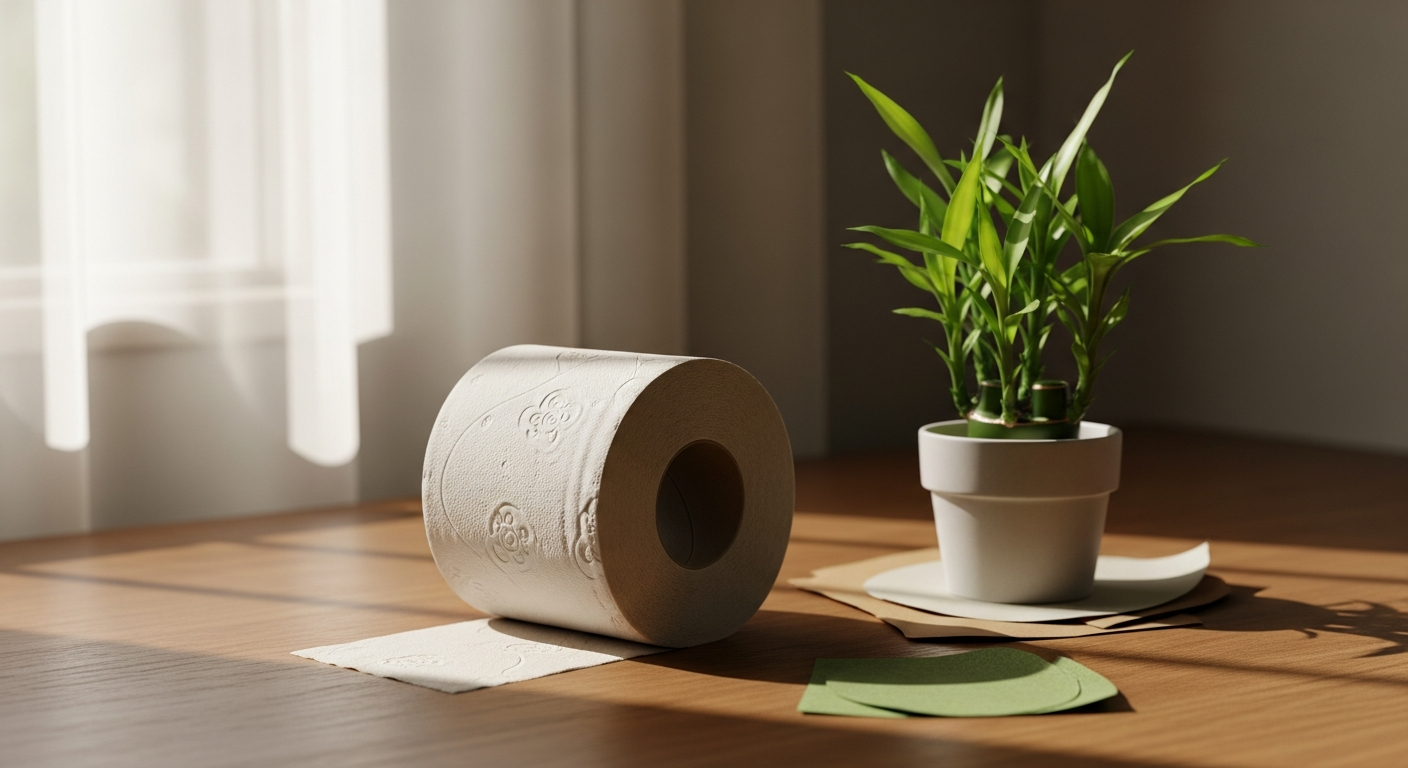
Premium bamboo toilet paper rolls displayed with eco-friendly packaging and sustainable branding elements

Is Who Gives A Crap Premium Bamboo Toilet Paper Worth the Investment? A Sustainability-Focused Buyer’s Guide

Every year, the average person flushes roughly 141 rolls of toilet paper—that's about 50 pounds of paper waste per household annually. The environmental toll compounds when you multiply that across millions of households, all using tissue sourced from virgin tree pulp and wrapped in plastic. Yet what if the most routine part of your morning could transform into a powerful statement about your environmental values and social responsibility?

Who Gives A Crap has disrupted the toilet paper market by proving that premium quality doesn't require forest destruction, plastic packaging, or compromised ethics. The brand funnels 50% of its profits directly into sanitation infrastructure for underserved communities worldwide, turning every bathroom visit into a contribution to meaningful change. Their Premium Bamboo Toilet Paper has become a flagship product for consumers seeking to align their spending with their principles.

Explore Who Gives A Crap's premium bamboo toilet paper to see if it's the right choice for your household.

What Makes Bamboo Toilet Paper a Game-Changer for Eco-Conscious Homes

Bamboo as a Renewable Resource

Bamboo grows at a remarkable pace—35 times faster than traditional hardwood trees. Unlike forests that require decades to regenerate, bamboo reaches maturity in three to five years without replanting, making it one of the most efficient renewable materials available. The environmental advantages extend beyond growth speed: bamboo absorbs approximately 35% more carbon dioxide than equivalent forest stands, actively improving air quality while it grows. This rapid regeneration means manufacturers can harvest continuously without depleting supply or damaging ecosystems.

Zero-Deforestation Impact

Traditional toilet paper production strips virgin fiber from old-growth forests, contributing to habitat loss and biodiversity collapse. Bamboo-based alternatives eliminate this pressure entirely. By shifting demand away from tree pulp, Who Gives A Crap protects forests that took centuries to develop and that countless species depend on for survival. The zero-deforestation model means your bathroom choice actively preserves rather than consumes irreplaceable natural resources.

Rapid Sustainability Credentials

Who Gives A Crap's bamboo products carry PEFC certification, verifying responsible forest management practices. The company makes carbon-neutral manufacturing claims backed by lifecycle assessments showing clear advantages over virgin pulp production. Manufacturing emissions associated with bamboo processing and transport are offset through verified carbon reduction projects, making this a genuinely low-impact choice from raw material through delivery.

Breaking Down the 3-Ply Construction and Performance Claims

Ply Architecture Explained

The three-layer construction simultaneously balances softness, strength, and absorbency—three qualities that typically demand trade-offs. The outer ply provides a soft surface against skin, the middle ply creates structural integrity to prevent tearing, and the inner ply maximizes absorbency. This engineered approach means users don't sacrifice effectiveness for comfort or durability for feel. Each layer serves a specific function, making the 3-ply design a fundamental reason behind the product's reputation for reliable performance.

Sheet Count Per Roll

Who Gives A Crap's extra-long rolls contain significantly more sheets than standard supermarket alternatives. While a typical commercial roll offers around 150-200 sheets, their premium bamboo rolls frequently deliver 300+ sheets depending on the specific product variant. This sheet count translates to fewer roll changes and a longer supply from each package. When calculating cost-per-sheet against mainstream brands, the extended length often makes this premium product more economical over time, despite higher upfront packaging costs.

Durability and Strength Testing

Real-world tear resistance and wet-strength performance determine whether toilet paper delivers value or frustration. Users consistently report that Who Gives A Crap's bamboo option holds together during normal use without excessive tearing or shredding. The 3-ply structure provides wet-strength superior to single or double-ply alternatives, meaning it maintains integrity when exposed to moisture—a crucial performance metric for actual usage. Feedback from thousands of households indicates reliability that matches or exceeds premium conventional brands costing substantially more.

The Plastic-Free Packaging Philosophy and Bathroom Aesthetics

Individual Paper Wrapping Design

Each roll arrives individually wrapped in paper rather than bundled in plastic—a seemingly small choice with significant environmental impact. The paper wrapping protects rolls from moisture and dust while remaining completely compostable or recyclable. This approach eliminates the persistent plastic waste that plague bulk toilet paper purchases from conventional retailers. For households trying to minimize plastic consumption, the packaging philosophy aligns performance with environmental values at every point of contact.

Visual Appeal and Bathroom Décor

Who Gives A Crap's monochrome designs and distinctive branding transform toilet paper from hidden necessity into bathroom décor. Many users keep rolls displayed on open shelving or decorative stands, appreciating the aesthetic contribution alongside functionality. The collectible aspect of different design variants adds a playful dimension to the product, turning bathroom stocking into something resembling curation. This visual appeal matters more than marketing suggests—when products actively improve your space's appearance, you're more likely to feel satisfied with the purchase.

Storage and Display Considerations

Bulk orders require dedicated storage, which presents practical challenges in apartments or smaller homes. However, the individual paper wrapping protects rolls from moisture and dust better than plastic-wrapped alternatives, preserving quality even in less-than-ideal storage conditions. Moisture protection extends shelf-life, meaning you can stock supplies without worrying about degradation. Creative storage solutions—from vertical wall racks to decorative baskets—transform the bulk purchase from logistical hassle into an integrated part of your bathroom design.

Social Impact and the 50% Profit Donation Model

Global Sanitation Initiatives

Who Gives A Crap directs half of its profits toward building toilets and improving sanitation infrastructure in developing countries. This isn't token corporate charity—the company has contributed millions to projects across Southeast Asia, Central America, and Africa. Geographic focus areas include communities where open defecation remains common and waterborne illness dominates childhood mortality statistics. Each project combines toilet construction with community education and maintenance training, creating sustainable improvements rather than one-off installations.

Charitable Verification

Third-party auditing of donation claims provides transparency that distinguishes Who Gives A Crap from corporations making vague sustainability promises. The company publishes detailed reports on project locations, beneficiary numbers, and completion timelines. These metrics allow consumers to verify actual outcomes tied to their purchases. The B Corp certification requires independent verification of social and environmental impact, adding credibility beyond simple self-reporting.

Consumer Impact Multiplier

Individual purchases accumulate into community-level change through the collective purchasing power of millions of households. A household buying toilet paper monthly contributes meaningfully to sanitation projects when combined with thousands of other purchases. Documented case studies show how toilet access improvements correlate with increased school attendance, reduced waterborne disease, and improved dignity and safety—particularly for women and girls. Understanding this connection transforms a routine purchase into participation in measurable human progress.

Join the mission by purchasing Who Gives A Crap's premium bamboo toilet paper and contribute to global sanitation access.

Cost Analysis: Is the Premium Price Tag Justified?

Bulk Pricing Structure

A 24-roll package retails around $44, while the 48-roll option costs approximately $68—prices that admittedly sting compared to grabbing a four-pack for $8 at the supermarket. However, subscription pricing provides meaningful discounts, often reducing costs by 15-20% on regular deliveries. Understanding the bulk pricing structure requires shifting perspective from individual purchase to monthly expenditure. Most households spending $15-25 monthly on toilet paper find the premium option financially comparable when accounting for extended roll length and subscription advantages.

Cost-Per-Sheet Calculations

Breaking down cost-per-sheet reveals the economics beneath sticker shock. A standard supermarket roll of 200 sheets at $2 costs one penny per sheet. Who Gives A Crap's bamboo rolls with 300+ sheets at approximately $1.80 per roll cost less than a penny per sheet—undercutting conventional options on pure mathematics. When compared to premium toilet paper brands like luxury alternatives, Who Gives A Crap's cost-per-sheet advantage becomes even more pronounced. Twelve-month usage calculations show savings of $50-100 annually for households committed to the subscription model.

Subscription Model Advantages

Automatic delivery eliminates the friction of remembering to purchase, making the product genuinely convenient for busy households. Subscription pricing locks in discounts and removes uncertainty around cost fluctuations. Most importantly, subscription flexibility allows adjusting delivery frequency without penalty—households can receive orders monthly, bimonthly, or quarterly based on actual consumption patterns. This flexibility transforms the bulk purchase from an all-or-nothing commitment into a customizable arrangement matching your lifestyle.

Practical Considerations Before Making the Switch

Storage Space Requirements

A 48-roll package occupies roughly the volume of a large storage bin, requiring dedicated bathroom or closet space. Apartment dwellers or those with limited storage may need creative solutions, from under-sink organization to stackable shelving. However, the individual paper wrapping protects rolls better during storage than plastic-bundled alternatives, meaning quality doesn't degrade even if stored in less-than-ideal conditions. Vertical wall racks or decorative baskets integrate bulk storage into your bathroom design rather than relegating it to hidden corners.

Bulk Ordering Logistics

Delivery options typically range from monthly to quarterly, allowing customization based on household consumption. Orders can be modified or paused without penalty, providing flexibility if circumstances change. Delivery speed varies by location, but most households receive packages within one to two weeks of ordering. This logistics approach removes the urgency to stockpile excessively, allowing ordering patterns matching actual usage rather than buying in fear of running out.

Sensitivity Testing

The absence of inks, dyes, and scents makes this option particularly suitable for households with sensitive skin or existing irritation. However, introducing any new product requires caution if you have known sensitivities. Patch testing with a small quantity before committing to bulk orders minimizes risk. The product is confirmed BPA-free and manufactured without harsh chemical processing, but individual reactions vary. Starting with a smaller initial order allows assessing compatibility with your skin and plumbing before enrolling in subscription delivery.

The Bottom Line: Premium Bamboo Toilet Paper as a Conscious Choice

Who Gives A Crap's Premium Bamboo Toilet Paper transcends being merely a bathroom staple—it represents a deliberate choice to align daily habits with environmental and social values. The 3-ply construction delivers genuine performance that rivals premium conventional brands, while the plastic-free packaging and 50% profit donation model create tangible impact beyond your household.

Yes, the upfront investment stings compared to grabbing a pack at the supermarket, but the cost-per-sheet economics, extended roll length, and subscription discounts make the math work for committed households. The real question isn't whether this toilet paper is worth it in isolation—it's whether the combination of superior environmental credentials, social responsibility, and solid performance justifies a shift in your purchasing habits.

For eco-conscious families, those with sensitive skin, and consumers who want their spending to reflect their values, the answer typically leans toward yes. The zero-deforestation impact, rapid renewable sourcing, and verified charitable contributions distinguish this product from greenwashing alternatives. Performance that matches or exceeds premium competitors removes any compromise between environmental responsibility and household comfort.

Start with a trial order to assess how this product fits your household's needs, and consider enrolling in the subscription service once you're confident.


Comments

Leave a Reply

Your email address will not be published. Required fields are marked *