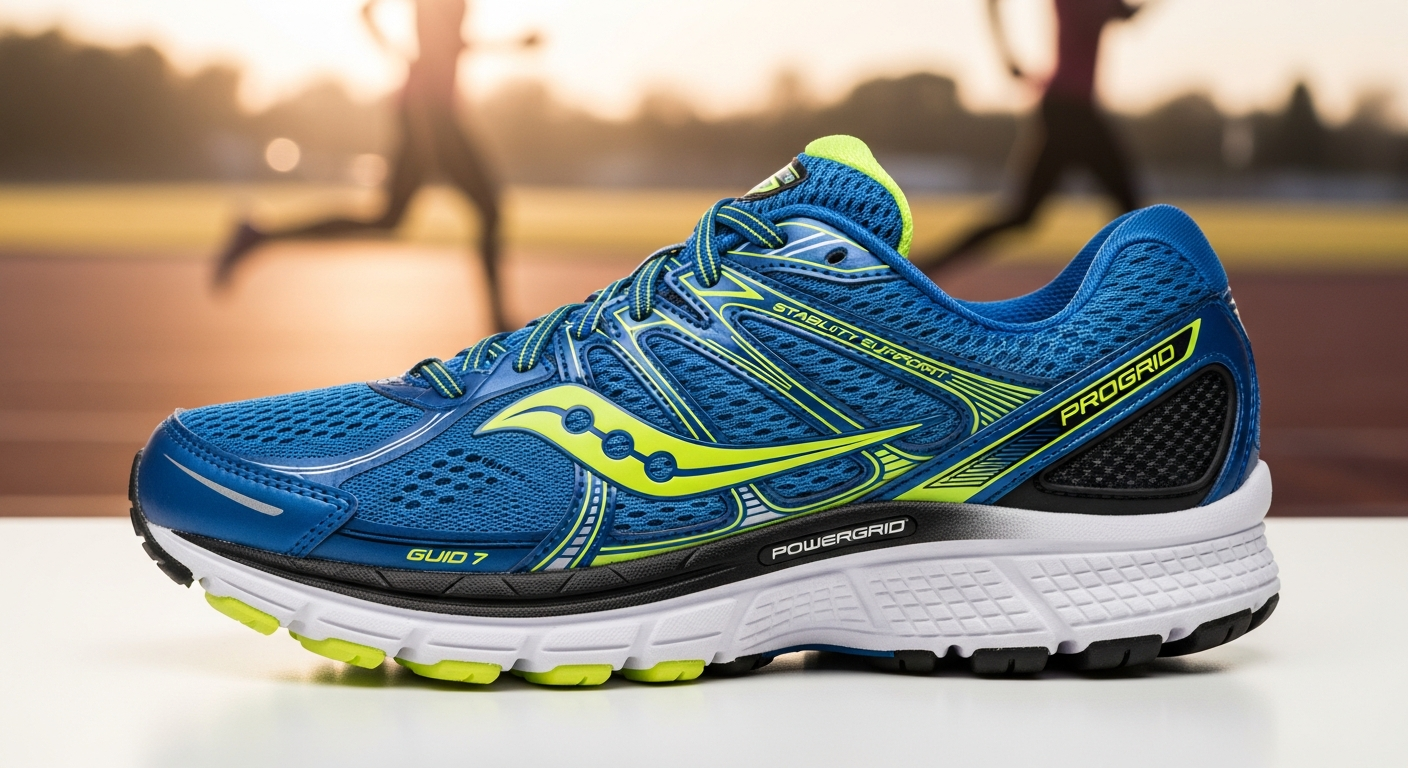
The Saucony Progrid Guide 7: A Legendary Stability Shoe Returns
When a sneaker earns the title of "most widely awarded stability shoe," it doesn't disappear quietly into history. The Saucony Progrid Guide 7 spent over 15 years building its reputation as a performance powerhouse before vanishing from mainstream consciousness. Now, more than a decade and a half after its original debut, Saucony has brought this icon back—not as a nostalgic replica, but as a genuinely refined lifestyle sneaker that respects its technical heritage.
The original Progrid Guide 7 emerged in the early 2000s as a performance running shoe engineered to handle pronation with precision. Stability was the priority, comfort was paramount, and the shoe earned its place in running communities worldwide. What makes this re-release extraordinary is that Saucony didn't simply repackage nostalgia. The company addressed the fit complaints that plagued earlier iterations, expanded the toe box, and refined the overall construction while preserving the PowerGrid cushioning technology and structural support that made the shoe legendary in the first place.
The result is a sneaker that feels authentically retro without abandoning modern performance standards. Whether you're drawn to the early 2000s aesthetic, seeking reliable arch support for daily wear, or hunting for a stability shoe that actually delivers on its promises, the Progrid Guide 7 warrants your attention.
Discover the Saucony Progrid Guide 7 on Sneakin FR today.
PowerGrid Cushioning Technology: The Engineering Behind the Comfort
Advanced Shock Absorption at Work
The PowerGrid cushioning system stands at the heart of what makes the Progrid Guide 7 exceptional. Rather than relying on standard EVA foam that compresses uniformly, PowerGrid distributes impact forces across the entire foot through a sophisticated lattice structure. Every step sends energy through a network of cushioning zones rather than concentrating stress on a single point. This approach fundamentally changes how the shoe performs during extended wear, whether that's a morning run or a full day of errands and walking.
The 8mm Heel-to-Toe Drop Advantage
The 8mm drop—the difference in height between the heel and forefoot—plays a crucial role in how the shoe guides your natural gait. This specific measurement encourages a midfoot strike rather than the heel-first landing pattern that can transmit shock directly up the legs. For runners accustomed to stability shoes, this drop feels intuitive. For casual wearers, it translates to a more natural rolling motion that reduces fatigue during extended standing or walking.
Cushioning Progression and Long-Term Performance
The foam formulation used in the re-release maintains consistent responsiveness throughout the shoe's lifespan. Unlike softer cushioning that compresses and loses effectiveness within months, PowerGrid resists bottoming out. Users consistently report that the shoe feels nearly as cushioned after a full year of regular wear as it did out of the box. This durability directly impacts value—a $120 shoe that maintains performance for two years offers significantly better economics than cheaper alternatives that require replacement annually.
Personalization Through the Removable Footbed
The cushioned foam footbed removes completely, opening possibilities for orthotic compatibility. Anyone dealing with arch concerns or custom insole requirements can integrate their preferred support system without compromising the shoe's overall cushioning profile. This flexibility distinguishes the Progrid Guide 7 from many lifestyle sneakers that treat their insoles as permanent fixtures.
Stability Features That Make the Progrid Guide 7 a Pronation Game-Changer
Why Saucony's Original Claim Holds Weight
The designation as Saucony's "most widely awarded stability shoe" wasn't marketing hyperbole. The shoe earned recognition from running publications, podiatrists, and athletes specifically because its stability system actually functioned as promised. The synthetic overlays on the upper don't just create visual interest—they form structural support zones that control excessive foot motion during the pronation cycle. This distinction matters: many modern lifestyle sneakers mimic the look of stability shoes without delivering the biomechanical features.
Layered Upper Construction and Lateral Stability
The breathable mesh base is reinforced with strategically placed synthetic overlays that guide the foot's natural motion. This layering accomplishes two goals simultaneously: adequate ventilation through mesh panels and controlled support through synthetic support zones. The result prevents the excessive inward roll that characterizes overpronation while allowing the foot to function naturally. Users with mild to moderate pronation frequently report that they need no additional support inserts—the shoe's engineering handles the job.
Outsole Design and Traction Reliability
The durable rubber outsole extends beyond mere grip. Its pattern and placement prevent excessive rolling at ground contact, while the material composition maintains traction across varied surfaces—whether wet pavement, dry gym floors, or textured trails. The outsole's design complements the upper's support structure rather than working independently, creating a unified stability system from ground to ankle.
Real-World Stability Comparisons
Positioned against contemporary stability sneakers costing $150 or more, the Progrid Guide 7 performs impressively. Modern stability shoes often prioritize aesthetic trends over proven support mechanics. The Progrid Guide 7, by contrast, commits to functional architecture. This doesn't mean newer shoes lack merit—some excel in specific areas. But for straightforward, reliable pronation control at a reasonable price point, the Progrid Guide 7 consistently earns preference among users comparing options.
User Experiences with Pronation Concerns
Community feedback reveals a consistent pattern: users with pronation issues report that the shoe reduces joint stress compared to neutral shoes. Many specifically mention feeling more stable during transitions—the moment when overpronation typically becomes most problematic. Some users initially skeptical about stability shoes discovered that the Progrid Guide 7 addressed discomfort they'd previously attributed to other factors.
Explore the stability features of the Progrid Guide 7 and find your size on Sneakin FR.
Design Evolution: From Performance Running Shoe to Lifestyle Essential
Authenticity in Retro Aesthetics
The early 2000s running shoe aesthetic doesn't exist in a vacuum—it represents a specific era when function visibly dictated form. The Progrid Guide 7's retro design doesn't simply reference that period; it genuinely captures the proportions, layering, and visual language that made those shoes distinctive. The overlays appear chunky by modern minimalist standards, but this "excess" reflects the shoe's actual structural purpose. Collectors and retro enthusiasts recognize this authenticity immediately.
Breathable Mesh and Synthetic Balance
The mesh panels allow air circulation while maintaining durability for regular wear. Synthetic overlays provide support without creating a stiff, uncomfortable upper. This balance prevents the common retro re-release problem where brands sacrifice function for nostalgia. The Progrid Guide 7 breathes adequately for warm-weather wear while remaining sturdy enough for daily demands.
Reflective Detailing and Practical Visibility
Beyond aesthetics, the reflective elements serve a genuine purpose for anyone wearing the shoe during low-light conditions—early morning runs, evening walks, or commutes. The placement doesn't overwhelm the design; it enhances visibility subtly while maintaining the retro aesthetic.
Addressing Historical Fit Issues
The original model occasionally suffered from a narrow toe box that required significant break-in. Saucony recognized this complaint and expanded the forefoot space in the re-release, creating more immediate comfort without sacrificing the shoe's structural integrity. Users comparing original and current versions consistently note that the updated fit feels less punitive out of the box.
Break-In Reality and Timeline
Despite improvements, the shoe retains some initial stiffness—a characteristic of quality construction where materials haven't yet compressed. A typical break-in requires three to five wears, after which the shoe adapts to individual foot contours. This timeline is normal and unexceptional; budget-conscious alternatives often feel broken-in immediately because they start with minimal structural integrity.
Colorway Versatility and Styling Range
The re-release offers multiple colorway options extending from classic monochromatic schemes to accent-rich combinations. This variety enables genuine styling flexibility—the same shoe can anchor athletic-casual outfits, pair with vintage-inspired streetwear, or complement clean, minimalist aesthetics depending on colorway selection. Such versatility justifies keeping the shoe in regular rotation rather than treating it as a niche piece.
Resonance Across User Demographics
Sneaker collectors appreciate the shoe's historical significance and refined re-release execution. Casual wearers simply want comfortable, attractive shoes that don't require constant maintenance. The Progrid Guide 7 satisfies both constituencies simultaneously, which explains its consistent best-seller status across diverse retail platforms.
Comfort Performance Across Different Use Cases
All-Day Casual Wear Capabilities
Walking through a full day—errands, shopping, navigating crowded spaces—tests comfort in ways that short wear periods never reveal. The Progrid Guide 7 demonstrates impressive staying power. The PowerGrid cushioning resists fatigue typically associated with hard outsoles, while the arch support prevents the foot strain that accumulates during extended standing. Users frequently describe the shoe as feeling fresher at day's end compared to alternatives, even after eight-plus hours of continuous wear.
Light Running and Cross-Training Application
While the re-release targets lifestyle wear, its engineering supports light running and cross-training activities. The stability features protect against midfoot collapse during directional changes, and the cushioning absorbs impact without feeling mushy. Distance runners pursuing serious mileage likely want shoes optimized specifically for running, but those alternating between casual wear and occasional workout sessions find the Progrid Guide 7 surprisingly capable.
Arch Support Without Performance Obsession
Many lifestyle sneaker buyers specifically reject high-performance running shoes because they feel too specialized and uncomfortable for non-athletic wear. The Progrid Guide 7 occupies the ideal middle ground: substantial arch support without the aggressive pronation control systems that can feel constraining during casual activities. This balance appeals to individuals who want genuine support without sacrificing walkability or aesthetic flexibility.
Comfort Improvements in Current vs. Original Versions
Side-by-side comparisons reveal meaningful progress. The expanded toe box dramatically improves comfort during the initial wear period. The updated mesh breathes slightly better, and the overall padding feels more considered. None of these improvements fundamentally transform the shoe's character, but collectively they eliminate historical discomfort points while preserving the engineering that made the original special.
Fit Refinement and Toe Box Reality
The roomier toe box accommodates average to slightly wide feet comfortably. Those with particularly narrow feet might experience slightly excess volume, while individuals with very wide feet might still find some constraint. Most users report that the fit feels appropriately generous without appearing sloppy or oversized.
Temperature Regulation and Seasonal Wear
The mesh-and-synthetic combination performs adequately in warm conditions, preventing excessive heat buildup. Winter wear works acceptably as well, though the shoe offers no insulation advantage—it's equally appropriate for cool weather as any unlined sneaker. The breathability means moisture escapes rather than accumulating, reducing the fungal conditions that plaggy, poorly ventilated shoes encourage.
Pricing, Value, and Where to Find the Best Deals
Original MSRP and Market Positioning
Saucony originally positioned the Progrid Guide 7 at $120, a mid-range price point reflecting its stability credentials without entering premium territory. This pricing reflected the shoe's engineering quality and manufacturing standards. Understanding this baseline helps evaluate current pricing across retailers.
Retail Availability and Geographic Pricing
Sneakin FR maintains consistent availability with pricing from €140.00 regular to €107.59 on sale—approximately $150 to $115 USD depending on currency fluctuations. This positions the shoe competitively against comparable stability sneakers from major brands. International buyers should note that European pricing occasionally includes VAT, which affects the final cost calculation.
Discount Opportunities and Price Floors
The shoe occasionally drops to $50 at select retailers during clearance events, though such dramatic reductions typically occur when inventory must move quickly. Realistic discount expectations range from 15-30% off regular retail, occurring during seasonal sales or when new colorways launch. Setting up price alerts on major sneaker platforms helps capture these opportunities without constant checking.
Value Proposition Against Competing Stability Sneakers
Comparable stability sneakers from New Balance, ASICS, or other Saucony models often cost $130-180. The Progrid Guide 7 delivers similar or superior arch support, comparable cushioning technology, and arguably superior aesthetic appeal at the lower end of that range. For value-conscious buyers prioritizing stability, the shoe offers legitimate competitive advantage.
Seasonal Sales Patterns and Purchase Timing
Back-to-school promotions (August-September) frequently feature stability sneakers at discount. Post-holiday clearance sales (January-February) provide additional opportunities. New year fitness resolutions also drive sales activity, occasionally resulting in competitive pricing as retailers promote athletic footwear. Conversely, limited-edition colorways often hold value or increase slightly, suggesting that collectors should purchase special releases immediately rather than delaying.
Currency Considerations for International Buyers
European buyers purchasing from Sneakin FR pay in EUR, while North American shoppers typically transact in USD. Shipping costs to international addresses should factor into total price calculations. For buyers outside traditional retail zones, the ability to access the shoe internationally through Sneakin FR provides significant value, even accounting for shipping premiums.
Long-Term Durability and Resale Potential
The shoe maintains structural integrity through extended use, suggesting that investing $100-120 results in 18-24 months of reliable daily wear. Resale markets for popular Saucony models remain reasonably active—the Progrid Guide 7's best-seller status suggests steady demand. While not commanding premium resale prices, the shoe typically fetches 30-50% of original purchase price when sold used, providing a modest cost-of-wear offset compared to disposable fashion sneakers.
Potential Drawbacks and Who Might Want to Look Elsewhere
Initial Stiffness and Break-In Requirements
The shoe exhibits noticeable stiffness out of the box—materials feel structured rather than immediately pliable. A three-to-five-wear break-in period is standard before the shoe truly conforms to individual foot shapes. Individuals who prioritize immediate comfort or expect sneakers to feel soft from first wear might interpret this as a deficiency. In reality, this stiffness indicates quality construction; the shoe doesn't compress prematurely because materials are engineered to retain structure.
Subjective Aesthetic Considerations
The retro aesthetic won't appeal universally. Individuals preferring contemporary minimalist designs or fashion-forward silhouettes might find the Progrid Guide 7 visually dated despite its intentional retro positioning. The chunky overlays and prominent branding resonate with specific style communities but don't suit everyone's aesthetic preferences. This is neither a flaw nor an oversight—simply a design choice that succeeds with target audiences and misses others.
Width Accommodation and Fit Specificity
While improved compared to the original, the shoe still fits best with average to slightly wide feet. Those with particularly narrow feet should verify fit through return-friendly retailers, and individuals with very wide feet might find better accommodation elsewhere. Brands like New Balance explicitly offer width options that Saucony doesn't provide for this model.
Performance Limitations for Distance Running
The shoe handles light running admirably but wasn't engineered for serious distance training. Runners pursuing 20-30 mile weekly mileage or marathon training would benefit from shoes optimized specifically for that purpose. The Progrid Guide 7 works best when paired with dedicated running shoes rather than serving as a primary training tool.
High-Impact Activity Concerns
Sports requiring explosive movement—basketball, volleyball, tennis—expose the shoe's lifestyle-first design orientation. While stable, it lacks the ankle support and court-specific engineering that dedicated athletic shoes provide. The shoe performs better during lower-impact activities than high-intensity sports.
Color Availability and Customization Constraints
Saucony offers multiple colorways but doesn't provide extensive customization options like some competitors. Buyers seeking unique, personalized versions might find the standard offerings limiting. Return options for dissatisfied purchasers should be verified before buying, particularly when specific colorways aren't readily available for direct comparison.
Honest Assessment of Mismatch Scenarios
The Progrid Guide 7 isn't appropriate for everyone. Individuals with severe pronation requiring aggressive control architecture, those pursuing competitive distance running, or anyone prioritizing ultra-modern minimalist aesthetics would benefit from exploring alternatives. Recognizing these limitations prevents disappointment and ensures that recommendations target appropriate audiences.
The Sneaker Community Verdict: Why It's a Best-Seller
Cult Following Among Enthusiasts and Collectors
The sneaker community recognizes the Progrid Guide 7 as a legitimate icon rather than a nostalgic cash-grab. This distinction matters enormously—collectors distinguish between re-releases honoring heritage and cynical trend-chasing. The updated construction demonstrates respect for the original while acknowledging that 2000s footwear, while excellent, benefits from contemporary refinement. Sneaker forums consistently celebrate the re-release as thoughtfully executed rather than dismissing it as lazy nostalgia.
Authenticity of Heritage Honoring
The shoe maintains proportions, silhouettes, and design languages from the original era without simply photocopying the past. The mesh-and-synthetic combination, the layering approach, and the overall proportions reflect genuine design philosophy from the early 2000s, not artificial recreation. This authenticity resonates across communities because it represents evolution rather than exploitation.
Community Reviews and Rating Consistency
Major sneaker platforms consistently rate the Progrid Guide 7 highly—typically 4.3-4.6 out of 5 stars across large user bases. The consistency across different platforms suggests that satisfaction isn't driven by isolated enthusiasm but reflects genuinely reliable performance. Negative reviews rarely address fundamental design flaws; instead, they typically reflect personal preferences regarding break-in tolerance or aesthetic taste.
Positioning Within Current Saucony Lineup
Saucony maintains a diverse contemporary roster, yet the Progrid Guide 7 consistently outsells newer models. This suggests that consumers aren't simply buying Saucony products indiscriminately—they're actively choosing the Progrid Guide 7 specifically. That preference indicates genuine competitive advantage against both the company's own offerings and external alternatives.
Influencer Coverage and Media Momentum
Sneaker media outlets and influencers have documented the Progrid Guide 7's return positively, generating awareness without manufactured hype. This organic coverage indicates genuine appreciation rather than paid promotion. When respected voices in the community endorse a product authentically, it influences purchasing behavior differently than traditional advertising.
Best-Seller Status and Retail Consistency
Sneakin FR maintains the Progrid Guide 7 in consistent stock despite its popularity—a clear indication of reliable demand. Retailers stock inventory based on sales data; consistent availability across multiple seasons indicates sustained consumer interest rather than momentary viral attention.
Dual-Appeal Across Runner and Casual Communities
Few shoes genuinely satisfy both dedicated runners (even at light distances) and casual lifestyle wearers. The Progrid Guide 7 achieves this unusual balance through its engineering foundation and aesthetic versatility. Runners appreciate the stability features and cushioning quality, while casual wearers enjoy the comfort and retro aesthetic without performance-oriented compromises.
Making Your Decision: Is the Progrid Guide 7 Right for You?
Ideal Candidate Profile
The Progrid Guide 7 suits individuals seeking reliable arch support, comfortable daily-wear shoes that don't sacrifice performance engineering, and anyone drawn to authentic early 2000s aesthetics. Runners incorporating occasional easy runs into lifestyle-focused shoe rotations find the shoe particularly well-suited. People with mild pronation seeking stability features in a lifestyle package discover that this shoe addresses their needs effectively.
Lifestyle Compatibility Assessment
Consider your typical weekly activities. If your routine emphasizes standing, walking, and casual movement, the Progrid Guide 7's all-day comfort becomes a major selling point. Add occasional jogging or athletic activities, and the stability features justify selection. Conversely, if your activities rarely exceed light exercise and you prioritize trendy aesthetics above performance features, other options might feel more aligned.
Comfort versus Aesthetic Preference Balancing
Recognize whether you're willing to prioritize comfort engineering over current aesthetic trends. The shoe looks retro deliberately—it doesn't masquerade as contemporary. If that visual positioning appeals to you, the comfort features feel like bonuses. If you need a shoe that looks aggressively modern, the Progrid Guide 7's design won't satisfy you regardless of comfort excellence.
Pronation Assessment and Feature Relevance
If you experience ankle rolling, foot fatigue during extended standing, or joint stress in lower legs, the stability features warrant serious consideration. Conversely, if neutral shoes serve you well and you experience no pronation concerns, the stability architecture becomes unnecessary. Honest self-assessment regarding whether you actually benefit from pronation control prevents paying for features you won't utilize.
Budget Flexibility and Value Expectations
The shoe delivers clear value at $100-120 price points. At $120+ regular price, you're paying for quality construction and proven technology—a reasonable investment but not a bargain. At $80-100 on sale, the value proposition strengthens considerably. Below $60, the shoe represents genuine economy regardless of your needs. Determine your budget range and shop strategically to align cost with expectations.
Sizing Guidance Based on Communal Feedback
The shoe fits true to size for average-width feet. Those with wide feet often upsize by half a size for comfort. Narrow-footed wearers occasionally downsize or size true but should prioritize trying on before purchasing. The expanded toe box of the current version accommodates normal foot widths without excess volume—a genuine improvement over the original.
Alternative Consideration and Evaluation
If the Progrid Guide 7 doesn't align with your needs, explore alternatives systematically. New Balance's 990 series offers comparable stability with different aesthetic sensibilities. ASICS' Gel-Lyte models provide retro appeal with different cushioning approaches. Brooks and Saucony's own contemporary models serve different purposes. Identifying specific reasons why alternatives might suit you better (aesthetic preference, different width accommodation, specific cushioning feel) makes comparison meaningful rather than arbitrary.
The Lasting Legacy of a Retro Stability Icon
The Saucony Progrid Guide 7 Retro Sneaker represents something exceptionally rare in footwear: a genuine comeback that honors heritage while delivering contemporary performance. The PowerGrid cushioning technology remains as impressive as when Saucony first pioneered it, and the 8mm heel-to-toe drop continues supporting natural running mechanics that more aggressive drops abandon. The shoe bridges an unusual gap—serious enough for runners but comfortable enough for casual daily wear, retro enough for aesthetic appreciation but refined enough for practical use.
What distinguishes the Progrid Guide 7 from typical re-releases is its refusal to compromise. The company could have simplified the construction, cut costs, and released a nostalgia product banking on brand recognition. Instead, Saucony improved the fit, refined the materials, and preserved the engineering principles that originally made the shoe significant. This thoughtful approach transforms what could have been exploitation into genuine homage.
The consistent best-seller status across retailers like Sneakin FR reflects more than marketing success. Real people consistently choose this shoe, recommend it to friends, and maintain it in their regular rotation. Parents buy it for their children. Runners pair it with performance-focused training shoes. Collectors appreciate its historical positioning. Each group finds genuine value, suggesting that the shoe's appeal transcends narrow demographics.
If you've been considering investment in quality stability footwear that genuinely bridges performance and lifestyle, the Progrid Guide 7 deserves serious evaluation. The shoe delivers on its technical promises, looks authentically retro without feeling dated, and commands competitive pricing against comparable alternatives. Whether driven by early 2000s nostalgia, specific stability needs, or simply the desire for genuinely comfortable daily-wear shoes, the Progrid Guide 7 offers a decision you're unlikely to regret.
Shop the Saucony Progrid Guide 7 on Sneakin FR and experience the legendary stability for yourself.
Leave a Reply