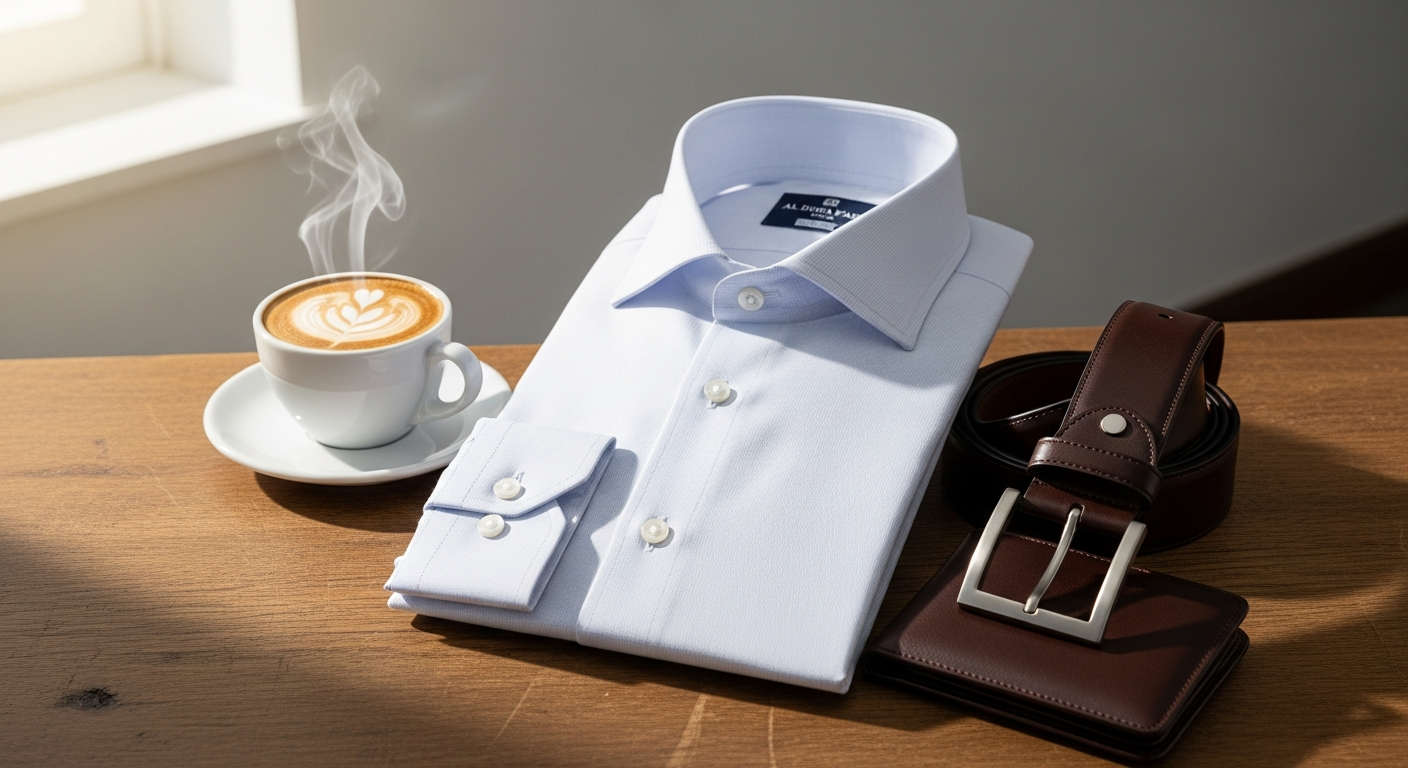
The average professional owns just five dress shirts—yet spends more time searching for the right one than actually wearing them. That changes when you discover a shirt crafted with the precision of Italian artisans who've perfected their craft over more than a century. The Al Duca d'Aosta private label shirt isn't just another addition to your closet; it's a statement about understanding quality.
Al Duca d'Aosta emerged from Venice in 1902 as a men's shirt fabric specialist near the Rialto Bridge, and that heritage runs deep. While the retailer has become renowned for curating over 100 luxury designer collections, their private label remains an insider's secret—a collection that channels the brand's original DNA of Italian sartorial excellence. These shirts embody the philosophy that true luxury whispers rather than shouts, combining premium materials with meticulous construction that justifies every euro.
Throughout this guide, you'll uncover what makes these private label shirts worthy of their €150–€400 price range, explore the specific fabrics and construction techniques that set them apart, and discover whether they belong in your wardrobe. You'll walk through the design philosophy, understand the fit options, and learn how to style them across different occasions—so you can make an informed decision about investing in pieces that last.
The Heritage Behind Al Duca d'Aosta's Private Label Craftsmanship
Origins as a Venice-based men's shirt fabric specialist
In 1902, Al Duca d'Aosta began its story near the Rialto Bridge in Venice, not as a grand department store but as something far more specific: a men's shirt fabric shop. This origin matters because it shaped everything that followed. The founders understood textiles at a molecular level—how different weaves behave, which materials breathe, which last. They didn't sell finished shirts initially; they sold the raw materials to discerning tailors and gentlemen who knew what they wanted.
Evolution from fabric merchant to luxury retailer
The transition from fabric specialist to luxury retailer happened gradually, preserving rather than abandoning the original craft. As the twentieth century progressed, Al Duca d'Aosta expanded its physical presence and began curating collections from the world's finest designers. Yet the private label remained, rooted in those early principles. The brand understood that becoming a curator of luxury didn't require abandoning the artisanal traditions that built its reputation.
Why a century-old heritage matters
A hundred years in the same business means something specific: consistency, expertise tested across generations, quality standards that have survived economic cycles and fashion upheavals. When you wear an Al Duca d'Aosta shirt, you're wearing the accumulated knowledge of artisans who've made these garments through wars, fashion revolutions, and technological changes. That continuity is not nostalgic—it's practical. It means the brand knows what works.
The brand's philosophy of understated Italian elegance
Italian fashion divides itself roughly into two camps: the showmen and the minimalists. Gucci and Versace announce themselves loudly. Al Duca d'Aosta whispers. The private label belongs entirely to the minimalist tradition, reflecting a philosophy that believes the wearer's confidence should speak louder than the garment's branding. A perfectly constructed collar, Egyptian cotton that feels like touching clouds, mother-of-pearl buttons that catch light without demanding attention—these are the vocabulary of understated elegance.
How private label offerings reflect retailer values
The existence of a private label at a multi-brand luxury retailer reveals something about the company's identity. Al Duca d'Aosta could have relied entirely on designer collections. Instead, they create their own pieces because they believe they can express their values better than anyone else. The shirts function as a mission statement: this is what we believe quality looks like, unfiltered by another brand's marketing or interpretation.
Premium Fabrics That Define Luxury Shirting
Egyptian cotton provides breathability and longevity
Egyptian cotton ranks among the finest natural fibers available, prized for its longer staple length—the individual fibers themselves are longer and stronger than standard cotton. This translates to softness that doesn't diminish after washing, breathability that actually improves over time, and exceptional longevity. An Al Duca d'Aosta shirt in Egyptian cotton can age beautifully for years, becoming softer rather than deteriorating.
Sea Island cotton offers rarity and superior hand-feel
Sea Island cotton represents the pinnacle of cotton luxury, grown in limited quantities in the Caribbean and other specific regions. The name itself signals exclusivity. These fibers possess unmatched smoothness and a subtle luster that Egyptian cotton approaches but doesn't quite match. The rarity means higher costs, but the durability and hand-feel justify the premium for those who understand what they're touching.
Linen blends deliver seasonal versatility
Pure linen breathes exceptionally but wrinkles with character and requires specific care. Blending linen with cotton creates something more practical: fabric that maintains linen's temperature-regulating properties while gaining the stability and lower-maintenance profile of cotton. Seasonal collections featuring linen blends provide genuine versatility—these shirts perform differently in summer than winter, adapting to your body's needs rather than forcing you to adapt to the fabric.
Silk blends add sophistication and subtle sheen
Silk blended into cotton or linen introduces sophistication at a material level. The blend adds a subtle sheen that catches light differently than pure cotton, creating visual interest without appearing shiny or costume-like. Silk also introduces a hand-feel—that tactile quality—that separates a shirt from merely being functional to being pleasurable to wear and own.
How fabric specifications impact wearability
Thread count and weight matter, but not in the way marketing departments suggest. A thread count of 200–400 represents luxury territory; beyond that, improvements become marginal or even counterproductive. Fabric weight determines how the shirt drapes and how it performs seasonally. A lighter fabric breathes more but shows body contours more readily; heavier fabric provides structure and formality. Understanding these specifications allows you to choose based on your actual lifestyle rather than numerical claims.
Explore the specific fabric collections available through Al Duca d'Aosta's private label selection.
Construction Excellence: The Details That Matter
Single-needle stitching represents precision and durability
Single-needle stitching means exactly what it suggests: each seam uses one needle rather than multiple needles operating in parallel. The result is slower production but greater precision. Stress is distributed differently along the seam, creating durability that exceeds mass-market alternatives. Single-needle stitching is also visible from the outside—it's a hallmark that separates luxury from ordinary, and it's one you can verify by examining any shirt you consider purchasing.
Reinforced seams at stress points ensure longevity
The armholes and side seams experience constant stress during wear and washing. Luxury shirting reinforces these points with additional stitching or bartacks—small cross-stitches that prevent seams from separating under pressure. This construction detail determines whether a shirt lasts three years or ten years, whether it remains wearable or becomes an embarrassing relic with torn seams.
Mother-of-pearl buttons provide durability and beauty
Mass-market shirts use plastic buttons. Mother-of-pearl costs more and requires specific manufacturing care. The benefit extends beyond aesthetics—mother-of-pearl buttons resist breaking, they age beautifully, and they're easily replaceable if one breaks decades into ownership. The slight iridescence catches light naturally, adding visual interest that plastic buttons simply cannot match.
Collar construction methods influence occasion suitability
Collar styles—classic point, spread, cutaway—aren't arbitrary choices. Classic point collars suit narrow faces and create visual lengthening; spread collars work better for rounder faces and pair with ties more easily. Cutaway collars push formal boundaries, working for business-casual more easily than traditional business formal. Understanding your face shape and intended occasions guides which collar variations make sense for your wardrobe.
Placket and cuff reinforcement prevents deterioration
The placket—the front opening where buttons attach—and cuffs experience wear unlike any other part of a shirt. Reinforcement here means using thicker fabric, additional layers, or precise stitching that prevents fraying and button-pull damage. This detail separates shirts that maintain appearance through years of wear from those that develop visible wear patterns after months.
Seam finishing separates luxury from mass production
Running your fingers along the inside seams reveals construction philosophy instantly. Mass-market shirts often have raw seams that fray and look unfinished. Luxury construction employs seam finishing techniques—flat-felled seams, French seams, or bound seams—that create smooth interiors. This detail matters because it determines comfort against skin and signals the care taken throughout construction.
Fit Options and Silhouette Choices
Slim fit offers modern aesthetics and versatility
Contemporary slim-fit shirts follow the body closely without restricting movement. This aesthetic works across multiple body types when properly sized, and it suits modern tailoring—slim-cut blazers and trousers. The silhouette photographs well, works in professional settings that have relaxed dress codes, and transitions to smart-casual contexts more easily than classic fits.
Classic fit delivers timeless appeal and comfort
Classic fit provides more room through the chest and waist, creating a silhouette that dominated menswear from the 1950s through 2000s. This cut suits broader shoulders, allows for layering without bunching, and offers a more forgiving fit across body types. The aesthetic feels less trendy, aging more gracefully in your closet without looking dated as fashion cycles shift.
How collar styles impact overall appearance
Collar choice affects proportions and occasion-appropriateness more than most wearers realize. A wide spread collar demands a certain confidence and suits larger tie knots; a narrow point collar creates visual elongation and works with smaller knots. The relationship between collar width, neck circumference, and face shape determines whether you look put-together or mismatched.
Sleeve length customization ensures proper proportions
Sleeve length matters more than most realize. Properly proportioned sleeves show approximately half an inch of shirt cuff beyond the blazer cuff, creating visual balance. Too-short sleeves look cheap regardless of quality; too-long sleeves undermine even excellent construction. Having sleeves tailored to your specific arm length removes one variable that separates polished from merely acceptable.
Shoulder seam placement affects comfort and silhouette
The shoulder seam should align with the actual point of your shoulder, not slope down the arm or sit too far toward your neck. This placement determines whether you can move comfortably, whether the shirt looks proportionate, and whether you'll develop wrinkles from fabric bunching. Mass-market sizing often places this seam incorrectly; luxury shirting tends to get this detail right.
Choosing between fit options based on lifestyle and preference
Your choice between fit options should consider your daily activities, your existing wardrobe, and your body proportions—not current trends. Someone whose days involve sitting at a desk might prefer classic fit; someone who moves frequently might choose slim fit. The right choice is the one you'll actually wear repeatedly rather than the one fashion magazines suggest.
Styling the Al Duca d'Aosta Private Label Shirt Across Occasions
Business formal styling with tailored pieces
A white or light blue Al Duca d'Aosta shirt in classic fit forms the foundation of business formal dressing. Pair with tailored wool trousers in charcoal or navy, a structured wool blazer, and quality leather shoes. Accessories remain minimal: a silk tie in a complementary solid color or subtle pattern, a simple metal watch, perhaps cufflinks if the cuffs are French-cuffed. The shirt's quality means it speaks for itself without requiring loud accessories.
Smart-casual approach combines relaxation with refinement
Smart-casual unleashes more creativity. Wear the same shirt untucked or loosely tucked with chinos in khaki, navy, or grey. Layer with an unstructured blazer or a quality knit cardigan. Skip the tie, but keep accessories intentional: a leather belt, quality watch, perhaps suede shoes rather than polished leather. The shirt's premium fabrics and construction shine when layered with less formal pieces, creating contrast that elevates both.
Elevated weekend wear showcases the shirt as a statement piece
Worn alone on a weekend, an Al Duca d'Aosta shirt becomes the outfit. Pair with dark jeans in a quality denim and loafers or leather sneakers. Choose a color with personality—pale pink, subtle stripes, understated patterns. The shirt carries the weight of the outfit, so quality matters more here than in layered looks. Rolling the sleeves slightly, leaving the top button undone, and adopting a relaxed bearing transforms the shirt from workwear to weekend style.
Monochromatic dressing maximizes versatility
Building outfits entirely in one color family creates visual coherence and makes shirts more versatile. A pale blue shirt paired with navy trousers and a darker blue blazer creates sophisticated simplicity. This approach works across settings, simplifies decision-making, and highlights the shirt's quality rather than distracting with color combinations.
Color palette building for cohesive wardrobe foundations
Start with neutrals: white, light blue, soft grey, pale pink. These pair with virtually everything in your closet and work across all settings. Add understated patterns: fine stripes, subtle checks. Only then consider bolder colors. This approach means each shirt works with multiple trousers and blazers, multiplying outfit combinations without accumulating excess pieces.
Accessory pairings enhance the overall presentation
Quality accessories amplify shirt quality. A silk tie in a neutral color with a subtle pattern, a simple metal watch, leather accessories—these choices signal that you've thought about proportion and coordination. Avoid overwrought accessories; let the shirt's craftsmanship speak. A pocket square in a tonal shade adds character without requiring boldness.
Investment Value and Long-Term Wardrobe Planning
The €150–€400 price range reflects genuine value
The €150–€400 range positions these shirts as luxury without approaching haute couture pricing. This range covers material costs (Egyptian cotton costs more than standard cotton), construction costs (single-needle stitching takes longer), and the value of heritage and reputation. A €200 shirt from a Venetian retailer with 120+ years of history represents different value than a €200 shirt from a fast-fashion brand that emerged five years ago.
Cost-per-wear analysis demonstrates exceptional economics
A €250 shirt worn two hundred times across five years costs €1.25 per wear. Worn three hundred times across seven years, it costs €0.83 per wear. Consider that context: a cheaper €50 shirt worn fifty times before deteriorating costs €1 per wear without lasting. Quality compounds. The investment that seems expensive upfront becomes economical through years of reliable service.
Durability expectations span decades with proper care
An Al Duca d'Aosta private label shirt should remain wearable for ten years or longer if properly maintained. This assumes reasonable washing (cold water, gentle cycle, air drying or low-heat drying), proper storage, and basic care like prompt stain treatment. The mother-of-pearl buttons might need replacement; the cuffs might fray eventually; but the body of the shirt retains integrity and appearance indefinitely.
Building a rotation system extends longevity
Wearing the same shirt repeatedly strains the fibers. Rotating between multiple shirts allows fibers time to recover between wears. A rotation of five shirts means each rests fourteen days between wears; a rotation of three means only five days. This simple practice extends visible lifespan and prevents accelerated wear patterns that make shirts look dated before they actually deteriorate.
Fabric care practices preserve the investment
Proper washing matters significantly. Cold water and gentle cycles preserve color and structure better than hot water and vigorous agitation. Air drying protects fibers more thoroughly than machine drying. When machine drying becomes necessary, low heat prevents shrinkage and damage. Prompt stain treatment prevents sets that become permanent. These practices require minimal effort but compound into substantially extended lifespan.
Prioritizing quality over quantity in strategic wardrobe building
The mathematics of wardrobe building suggest that five excellent shirts used intentionally surpass ten mediocre shirts that compromise through overuse and accelerated deterioration. Strategic purchasing—selecting pieces that work with your existing wardrobe, that suit your lifestyle, that align with your aesthetic—concentrates resources on items you'll actually wear repeatedly rather than dispersing them across pieces that remain unused or become embarrassing after months.
The Al Duca d'Aosta Advantage: Why Private Label Matters
Direct access to a retailer's quality standards
When you buy from a private label, you're getting the retailer's direct interpretation of quality without intermediaries. Al Duca d'Aosta cannot blame a designer for poor decisions; they own the quality directly. This accountability means private label offerings reflect the retailer's actual standards rather than a brand's marketing narrative. You're accessing the retailer's internal benchmark for excellence.
Absence of brand markup that accompanies designer labels
Globally recognized designer brands charge significant premiums for branding itself. The same quality construction, materials, and fit cost more when it bears a famous designer's name. Al Duca d'Aosta's private label provides similar quality without that markup. You're not paying for a recognizable logo; you're paying purely for materials and construction. The economics shift dramatically in your favor.
Connection to 120+ years of retail reputation
A private label from a retailer with over a century of history carries weight that a new brand cannot match. Al Duca d'Aosta's reputation for curating quality across 100+ designer collections extends to their own offerings. Customers who trust the retailer's selections trust their private label implicitly. That earned trust becomes part of what you acquire when you invest in these shirts.
Consistency with the retailer's overall aesthetic
Buying from Al Duca d'Aosta's private label means you're acquiring pieces that complement their curated designer collections. The aesthetic alignment across the store suggests that these shirts will coordinate with other luxury pieces in your wardrobe. This consistency matters for building cohesive collections that multiply through combination.
Exclusivity factor prevents mass-market saturation
These shirts are not sold through multiple retailers or produced in massive volumes. You won't encounter another professional wearing the identical shirt because it's not distributed widely. This exclusivity matters less in objective terms but psychologically signals that you've invested in something unavailable to everyone. The limited distribution means your investment maintains distinctiveness.
Insider knowledge of collection releases and special offerings
Purchasing from Al Duca d'Aosta connects you to insider information about upcoming collections, special releases, and seasonal variations. Regular customers learn about new fabrics and designs before general distribution. This access transforms shopping from transactional to relational—you're building a connection with a retailer rather than simply making purchases.
Considerations Before Making Your Purchase
Budget alignment determines purchasing wisdom
Be honest about whether the €150–€400 investment fits your overall budget and wardrobe strategy. A single shirt at this price point makes sense if you wear dress shirts regularly; it becomes excess if you work exclusively in casual environments. Your budget should accommodate multiple pieces (so rotation extends longevity), or your purchase strategy should shift toward accumulating more gradually.
Fabric sensitivities and care requirements match your lifestyle
Different fabrics demand different care. Sea Island cotton requires more careful handling than Egyptian cotton blends. Linen demands specific drying to minimize wrinkles. Silk blends need delicate washing. Consider honestly whether your lifestyle accommodates these requirements. If you travel frequently and need permanent-press shirts, these premium fabrics might frustrate you despite their quality.
Fit testing importance when purchasing luxury items
Luxury items purchased online without trying on create risk. Shoulder seam placement, sleeve length, and overall proportions vary between brands. Consider ordering multiple sizes or styles to test, even if return shipping costs money. The expense of returns pales compared to investing €250 in a shirt that doesn't fit correctly. Many luxury retailers accommodate this testing for significant purchases.
Return policies and exchange options provide purchase security
Before purchasing, verify Al Duca d'Aosta's return policy and exchange options for private label items. Understanding what happens if you receive something that doesn't match expectations provides security. Some retailers offer free returns; others impose costs. These policies should factor into your final decision.
Seasonal availability and collection rotation affect timing
Private label collections rotate seasonally. Spring might introduce lighter fabrics; fall brings heavier weights. If you want specific fabrics or designs, understanding the collection calendar helps you purchase at the right time. Missing a seasonal release might mean waiting an entire year for specific options.
Personal style alignment ensures long-term satisfaction
The most technically excellent shirt won't serve you if it contradicts your personal aesthetic. If you dress primarily in casual contexts, formal business shirts don't align with your lifestyle. If you prefer bold colors and patterns, classic neutral options might disappoint. Invest in pieces that excite you emotionally, not just functionally.
The Enduring Case for Italian Sartorial Investment
The Al Duca d'Aosta private label shirt represents something increasingly rare in contemporary fashion: a garment where heritage, craftsmanship, and materials converge without compromise. From the Egyptian cotton that feels like a second skin to the mother-of-pearl buttons that catch light with understated elegance, every element serves a purpose. This isn't about owning a recognizable logo—it's about understanding that true luxury lives in the details, in the precision of a single-needle stitch, in the knowledge that Venetian artisans have perfected this craft across generations.
Whether you're building a professional wardrobe that demands versatility, seeking pieces that transcend seasonal trends, or simply ready to invest in quality that compounds over time, these shirts deliver. The €150–€400 price range stings initially, but dissolves when you calculate the cost-per-wear across three, five, or ten years of regular rotation. You're not just purchasing a shirt; you're acquiring a foundation piece that elevates everything it touches—your confidence, your appearance, your understanding of what well-made actually means.
Start with a single piece in a neutral tone that aligns with your existing wardrobe. Pay attention to the fit, the fabric weight, and how it feels against your skin. Then, if it resonates, build intentionally. The Al Duca d'Aosta private label collection rewards those who approach dressing as a long-term investment rather than a temporary transaction. Your future self—the one who reaches for these shirts repeatedly, season after season—will thank you.

Leave a Reply