Luxury fashion today faces an uncomfortable truth: most premium accessories come with a hidden cost to the environment and workers. The glossy marketing promises ring hollow once you start asking where the materials came from and who actually made your purchase. Yet PURSCHOEN has cracked the code by proving that exceptional quality and ethical responsibility aren't mutually exclusive—they're the foundation of true luxury.
PURSCHOEN, a German brand with deep roots in traditional Nepalese craftsmanship, has built its reputation on creating accessories that feel as good as they look, without exploiting people or planet. Their cashmere scarves represent more than just a fashion statement—they embody a philosophy that quality transcends trends. Each piece tells a story of meticulous hand-felting, premium Mongolian and Tibetan cashmere, and certified ethical production standards.
The Art of Hand-Felting: How PURSCHOEN Creates Its Signature Texture
The hand-felting process that defines PURSCHOEN's cashmere scarves isn't something that happens on an assembly line. Instead, it requires skilled artisans repeating a meticulous sequence of washing and felting—a labor-intensive approach that takes genuine expertise to execute properly. This elaborate technique creates what most mass-produced scarves simply cannot achieve: a unique transparent and light structure that feels impossibly soft against the skin.
The Traditional Method Behind the Magic
When cashmere fiber arrives from Mongolia and Tibet's high plateaus, it begins a transformation that honors centuries-old craftsmanship. The repeated washing cycles remove impurities while the hand-felting process compresses and interlocks fibers in a way that machinery cannot replicate. This isn't rushed. This takes time, patience, and artisans who understand their craft intimately.
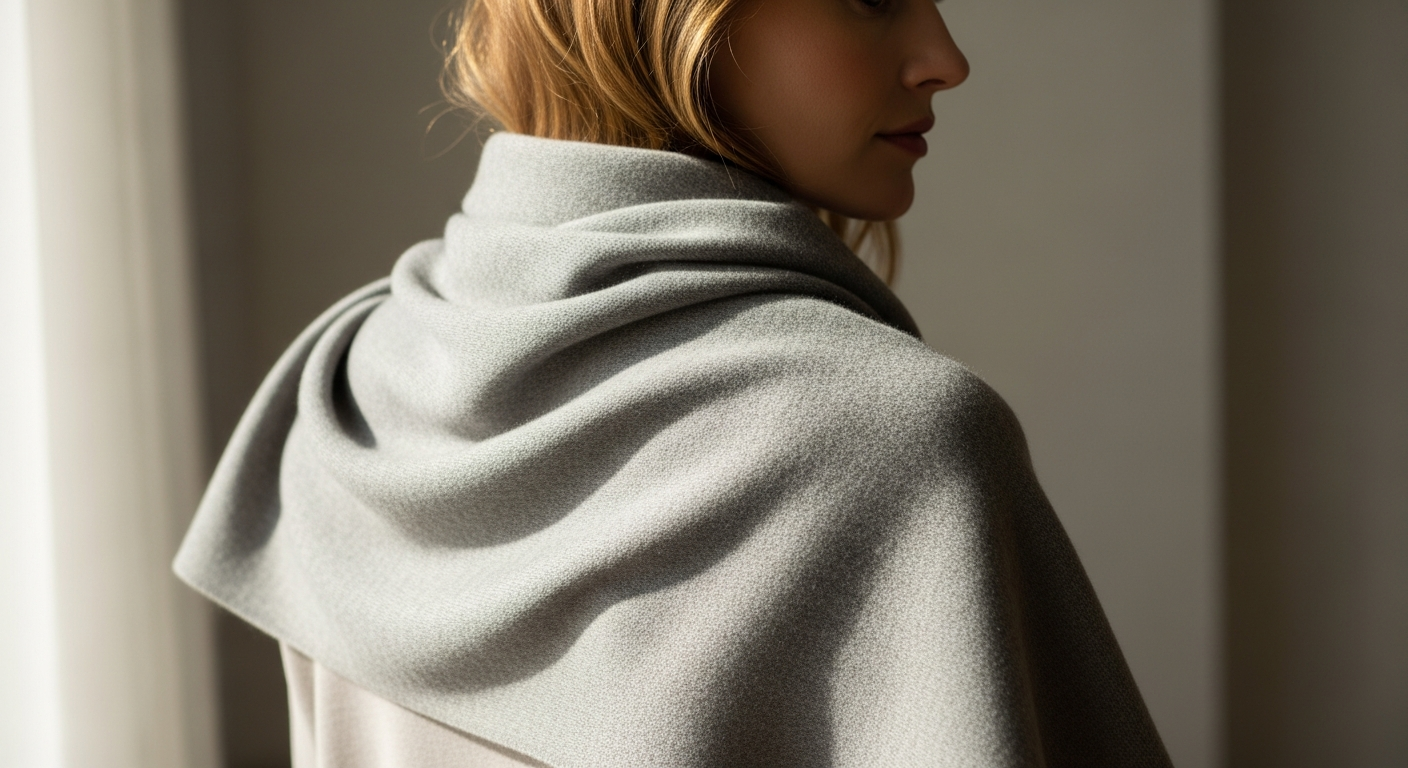
The result is a scarf with an exceptional, almost weightless quality—something that drapes beautifully and feels luxurious without heaviness. Mass-produced cashmere alternatives typically skip these steps entirely, opting instead for chemical treatments and industrial processing that may feel soft initially but lack the lasting quality and distinctive character PURSCHOEN achieves.
Why This Labor-Intensive Approach Matters
Hand-felting delivers something tangible: superior softness that persists through years of wear, durability that improves with age, and a texture that becomes more familiar and comforting with each use. The labor-intensive nature isn't a drawback—it's the entire point. You're paying for human skill, precision, and the refusal to cut corners in pursuit of profit margins.
Sourcing Excellence: Mongolian and Tibetan Cashmere Fiber Origins
The geography of cashmere production matters far more than most consumers realize. Mongolia and Tibet's high plateaus create unique environmental conditions—cold winters, sparse vegetation, and challenging terrain—that naturally produce the finest cashmere fibers in the world. Goats raised in these regions develop longer, finer fibers as an adaptation to extreme climate conditions.
High-Altitude Advantage
Cashmere sourced from the world's highest regions possesses inherent qualities that lower-altitude alternatives cannot match. The fineness of the fiber, its softness, and its natural luster all reflect the demanding environment where these goats thrive. PURSCHOEN selects from these premium sources deliberately, understanding that the foundation of a superior scarf begins with superior raw materials.
When you hold a PURSCHOEN scarf, you're handling cashmere that began its journey on some of the world's most remote and challenging landscapes—filtered through a supply chain that prioritizes quality and ethical sourcing at every step.
The Good Cashmere Standard®: What Certification Really Means
Certifications in the luxury goods market often function as marketing tools, stamped onto products with minimal verification. The Good Cashmere Standard® by AbTF operates differently. This rigorous certification framework actually traces production practices, verifies animal welfare, and ensures fair compensation throughout the supply chain.
More Than a Label
PURSCHOEN's commitment to having a significant portion of their cashmere wool certified by The Good Cashmere Standard® means real oversight. The certification covers animal welfare standards—verifying that herding practices prioritize goat health and prevent unnecessary suffering. It examines working conditions and ensures that artisans and producers receive fair wages for their labor, not the poverty wages that plague much of the fashion industry.
When you purchase a PURSCHOEN scarf, you're not relying on the brand's word alone. Independent certification backs their ethical claims, creating accountability that extends from Mongolian herds through Nepalese workshops to your closet.
Shop PURSCHOEN and invest in certified ethical luxury cashmere.
Design Versatility Meets Timeless Elegance
PURSCHOEN understands that a luxury accessory must work across multiple contexts and styles. Their collection reflects this sophistication, ranging from understated neutral palettes to bold statement prints, with bandana styles offering yet another dimension of versatility.
Building a Scarf Wardrobe
Neutral-colored cashmere scarves pair seamlessly with both casual and formal wardrobes. A classic cream or grey scarf worn with jeans and a sweater creates effortless elegance, while the same scarf elevates an evening outfit without competing for attention. This adaptability extends the practical value of each piece—one scarf becomes many outfits across multiple seasons.
Intricate prints—like the Bengal Tiger or Himmelsflug designs—offer something different. These patterns make a clear statement without overwhelming an ensemble. A printed PURSCHOEN scarf transforms a basic outfit into something memorable, providing personality without requiring the wearer to commit to a bold wardrobe overhaul.
Durability and Longevity: The True Cost Per Wear
The premium price of a PURSCHOEN handcrafted cashmere scarf begins to look reasonable when you consider the expected lifespan. These aren't accessories destined for landfills after a season or two. Properly cared for, a PURSCHOEN scarf functions as a wardrobe staple for decades.
The Math of Quality
A scarf priced around €229 worn regularly for fifteen years amounts to less than €16 per year. Contrast this with fast-fashion alternatives—often €30-50—that shed fibers, lose shape, and require replacement every couple of years. The cost-per-wear calculation shifts dramatically when you account for actual durability and longevity.
Cashmere improves with age in ways that synthetic materials cannot. It develops character, becomes even softer, and forms to your body in a way that feels increasingly personal with time. Each wear becomes part of the scarf's history, adding to its value rather than diminishing it. This transformation over time represents something that fast fashion simply cannot offer.
Unpacking the Premium Price Point
Understanding why PURSCHOEN scarves command premium pricing requires transparency about where your money actually goes. This isn't arbitrary luxury markup—it reflects genuine material costs, ethical compensation, and uncompromised craftsmanship.
Breaking Down the Investment
Materials sourced from Mongolia and Tibet's high plateaus cost more than lower-grade cashmere alternatives. Labor compensation for artisans in Nepal reflects fair wages rather than exploitation, a principle that adds cost but upholds human dignity. The Good Cashmere Standard® certification requires independent verification and ongoing compliance monitoring. Hand-felting and repeated washing processes take time—real artisan time—and cannot be accelerated without sacrificing quality.
Mass-market cashmere achieves lower prices through compromises: lower-quality fiber sourced more cheaply, minimal labor compensation, chemical shortcuts replacing traditional techniques, and absence of ethical certifications. When a scarf costs €50, someone along the supply chain is absorbing that loss—usually the people making it or the animals providing the fiber.
PURSCHOEN's positioning in the luxury market reflects a different calculation: actual value delivered, honest transparency about production, and refusal to exploit workers or environmental systems for profit margins.
Making the Shift to Conscious Luxury
Choosing a PURSCHOEN handcrafted cashmere scarf means stepping into a different relationship with fashion altogether. You're not simply purchasing an accessory; you're investing in transparency, supporting artisans, and voting with your wallet for a more ethical industry. The premium price reflects genuine craftsmanship, certified ethical production, and materials sourced from the world's finest cashmere regions—not marketing hype.
What strikes most about PURSCHOEN's approach is their refusal to compromise on quality, certifications, fiber sourcing, or production methods. The brand's success stems not from aggressive marketing but from delivering exactly what they promise: exceptional softness achieved through traditional techniques, materials that genuinely come from the regions they claim, and certifications that carry real meaning. Conscious consumers have increasingly recognized that true luxury demands integrity.
If you've been searching for luxury that aligns with your values, PURSCHOEN handcrafted cashmere scarves deserve serious consideration. Once you experience the distinctive softness and timeless elegance firsthand, you'll understand why these pieces become non-negotiable investments in both wardrobes and principles. The scarf becomes a tangible representation of what you value—quality that lasts, beauty that doesn't fade, and ethics that hold firm.
Discover PURSCHOEN's complete collection of ethical handcrafted cashmere scarves.
Leave a Reply