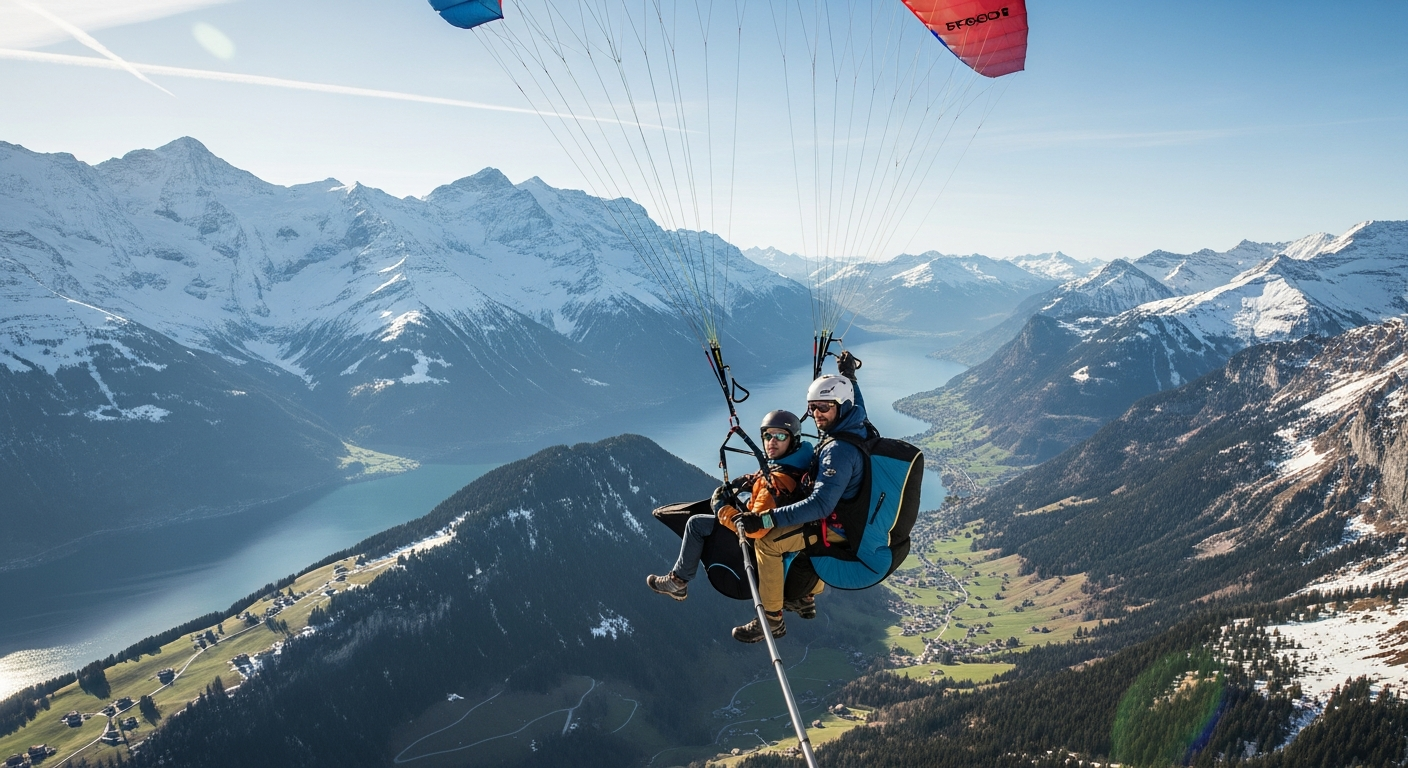
Over 50,000 adventure seekers launch into the Swiss skies each year for tandem paragliding, and Interlaken's Beatenberg and Grindelwald's First have become the world's most coveted takeoff points. The sheer volume of people willing to strap into a harness and trust a stranger with their safety tells you something powerful: this experience transcends the typical bucket list activity. It's the kind of memory that rewires how you see mountains forever.
Tandem paragliding in the Interlaken and Grindelwald regions represents the sweet spot where accessibility meets adrenaline. Unlike mountaineering or BASE jumping, you don't need years of training or exceptional fitness. Platforms like Swissactivities CH have made booking these flights as simple as clicking a button, which explains why tandem paragliding consistently ranks as the top-selling adventure experience across Switzerland. The combination of world-class safety standards, professional certified pilots, and genuinely breathtaking scenery has created an activity that appeals to families, solo travelers, and thrill-seekers alike.
Discover tandem paragliding flights and book your Alpine adventure today through Swissactivities CH.
This guide walks you through everything that makes this experience special—from the exact moment you launch from the mountains to how you'll actually feel soaring past the Eiger, Mönch, and Jungfrau. You'll learn what to expect during your flight, how much it costs, what safety measures protect you, and the honest trade-offs to consider before booking. By the end, you'll have the clarity to decide whether this Alpine adventure belongs on your Swiss itinerary.
Why Interlaken's Tandem Paragliding Stands Apart from Other Alpine Experiences
Geography Creates the Perfect Storm for Scenic Flight
The Interlaken region's positioning between two pristine glacial lakes—Thun and Brienz—with the dramatic Alps as backdrop creates conditions you simply won't find elsewhere. This isn't coincidental. The unique topography naturally channels air currents that make for ideal flying conditions, while the contrast between turquoise water, green valleys, and snow-capped peaks delivers views that photography struggles to capture.
Paragliding vs. Other Swiss Adventures
Helicopter tours offer speed and coverage, but they come with engine noise and sealed windows. Mountain biking provides adrenaline and control but keeps you grounded. Via ferrata climbing delivers a sense of accomplishment but limits your perspective to immediate surroundings. Tandem paragliding uniquely combines the thrill of flight, the meditative silence of soaring, and expansive views that encompass the entire Alpine landscape—all without requiring specialized training.
Professional Density and Safety Culture
The Interlaken region hosts a high concentration of professional paragliding operators, which creates natural competition for safety standards and customer satisfaction. These operators hold international certifications and maintain equipment to standards that exceed basic requirements. The region's reputation as an adventure capital means operators understand they're competing not just on price, but on the quality of their safety protocols and the professionalism of their pilots.
The Accessibility Advantage
This activity doesn't demand mountaineering skills, climbing experience, or exceptional fitness levels. You show up, receive a brief orientation, and fly. That simplicity is deceptive—it masks the complexity of what experienced pilots manage during your flight. Their expertise is the invisible safety net that makes this accessible to an 8-year-old and an 80-year-old with equal confidence.
Weather Patterns Favor Frequent Flights
The Interlaken region's specific geography creates more frequent optimal flying conditions compared to other Alpine zones. Wind patterns, thermal activity, and visibility tend to align more consistently here, meaning your chances of actually getting airborne on your scheduled date are higher than elsewhere in the Alps.
The Psychology of Silent Flight
Powered aircraft create a barrier between you and the environment—enclosed cabins, engine noise, vibration. Paragliding strips all that away. You're suspended in relative silence, feeling the air currents, hearing the wind around you, existing in direct contact with the mountain environment. That sensory immersion creates a fundamentally different psychological experience, one that many people describe as meditative despite the initial adrenaline.
Instagram-Worthy Moments Are Genuinely Stunning
The region's natural composition doesn't create photo opportunities by accident. The framing of the Eiger against turquoise lakes, the geometry of valleys spreading below, the play of light on glaciers—these perspectives are authentically jaw-dropping. You're not paying for manufactured beauty; you're gaining access to it.
The Tandem Flight Experience: What Happens from Briefing to Landing
Pre-Flight Briefing and Safety Procedures
Your pilot will cover body positioning, breathing techniques, and what to expect during launch. They'll explain how to keep your legs extended during takeoff and how to relax during flight. The briefing typically lasts 10-15 minutes and addresses safety procedures thoroughly, including what happens if equipment requires adjustment mid-flight.
Transportation to Launch Sites
You'll travel to either Beatenberg (above Interlaken) or First (near Grindelwald). These journeys reveal the scale of the landscape you're about to fly through. The drive itself becomes part of the experience, building anticipation while you see the terrain from ground level before experiencing it from the air.
Equipment Fitting and Security Checks
Your pilot will help you into a harness, checking security at multiple points. A helmet goes on next, then a windbreaker jacket and gloves for comfort during flight. These equipment checks aren't theatrical safety theater—they're actual verification that everything that needs to be secure is secure. You'll feel the reassurance in your pilot's methodical approach.
The Launch Moment
When your pilot counts down and you step off the mountain, the first 30 seconds feel like freefall. Your stomach catches. Your legs instinctively want to run. Then the parachute catches air, and you realize you're not falling—you're flying. That transition from terror to exhilaration happens in moments.
In-Flight Dynamics and Thermal Currents
Experienced pilots continuously read the air around them, searching for thermals—rising columns of warm air that lift the paraglider higher and extend flight time. Your pilot might circle over specific areas, climb 200-300 meters using these currents, then glide toward scenic peaks. The flight becomes an active dance with invisible air currents rather than a simple descent.
The Silent Gliding Sensation
The quiet is what stays with you. No engine, no rotor blades, just wind and your own breathing. That silence combined with motion creates a sensation that's difficult to categorize—part meditation, part exhilaration. It's profoundly different from helicopter or small plane experiences.
Scenic Highlights
You'll pass near iconic peaks at eye level (or slightly below, depending on thermals). The Eiger appears massive and immediate. Lake Thun's turquoise water spreads beneath you. Valley floors reveal roads and houses as toys. The perspective fundamentally shifts how these landscapes register in your mind—from distant mountains on a postcard to an environment you've actually inhabited, even temporarily.
Landing Procedures
Your pilot guides the paraglider toward a designated landing field, descending gradually. The touchdown is gentler than most first-time flyers anticipate—a few quick steps and you're down. The adrenaline surge of the experience often masks how smoothly the landing actually occurred.
Post-Flight Debriefing
After landing, your pilot will help you out of the harness and brief you on what you experienced during the flight. They'll answer questions about what they noticed in the air, discuss any thermal activity they exploited, and help you process the intensity of what just happened. This conversation often becomes the moment where the experience crystallizes into memory.
Flight Duration, Altitude, and Route Options Explained
Standard Flight Duration
Most tandem flights last between 10 and 20 minutes. Several factors determine your specific flight length: thermal activity (rising air that extends the flight), weather conditions that day, and the operational procedure of your specific operator. A flight with strong thermals and clear conditions might reach 20 minutes. Calm air with fewer rising currents might be closer to 10-12 minutes.
How Altitude Affects Your Experience
Typical flights begin from launch points around 1,300-1,400 meters elevation. Pilots then use thermals to climb higher, often reaching 2,000-2,500 meters or more depending on conditions. The higher you climb, the more expansive your view becomes. At 2,000+ meters, you see beyond the immediate Interlaken basin into the broader Alpine landscape.
Route Variations by Operator
Different operators offer slightly different routes. Some prioritize proximity to specific peaks. Others focus on the turquoise lake perspectives. Seasonal weather patterns influence available routes—summer typically offers more flexibility, while spring and fall routes might be more conservative based on wind patterns.
Thermals as Flight Duration Determinants
Thermals are the difference between a 12-minute flight and a 20-minute flight. When your pilot finds strong rising air, they circle within it, climbing higher and extending the experience. Good thermal conditions aren't guaranteed; they depend on weather patterns that day. This unpredictability is both a source of disappointment and genuine adventure.
Altitude Gain During Flight
Starting from 1,300+ meters, experienced pilots regularly climb to 2,000-2,500 meters using thermals. Some exceptional conditions create even higher flights. This altitude gain extends your view to encompass the entire Interlaken valley and surrounding peaks. The higher you climb, the more you understand the geography of the region.
Seasonal Route Variations
Summer flights (June-August) tend to be longer, with stronger thermals and more stable weather. Shoulder season flights (May, September) offer beautiful conditions but might be slightly shorter. Winter flights are rarer and only available on exceptional weather days. Spring flights often feature unpredictable wind patterns that limit duration.
Sunrise and Sunset Flight Options
Some operators offer premium sunrise and sunset flights where available. These flights combine the technical experience with the visual spectacle of Alpine light during these times. The colors at these hours create photography opportunities that midday flights simply don't offer. These premium experiences typically cost more but deliver something genuinely special.
Weather-Dependent Route Adjustments
Wind direction and velocity influence which routes are safe on any given day. Your operator will communicate route changes based on morning weather assessments. A flight you booked for Beatenberg might switch to First if wind patterns favor one location over the other. This flexibility protects both safety and flight quality.
Safety Standards, Equipment, and Pilot Certification in Swiss Paragliding
International Safety Certifications
Interlaken region operators typically hold DHVSHV certification (German safety standards), which is more stringent than international minimums. Some hold FMRA certification (Swiss standards) or equivalent European certifications. These certifications guarantee equipment standards, pilot training hours, and safety protocol compliance. When researching operators, verify their current certifications.
Equipment Specifications and Inspection
Parachutes undergo inspection schedules mandated by certification bodies—typically every 200-250 flight hours or annually, whichever comes first. Harnesses meet specific breaking strength standards and are inspected before each flight. Helmets meet EN 966 standards (European safety ratings). These aren't theoretical requirements; operators document compliance and can show you their maintenance logs.
Pilot Training and Certification Requirements
Swiss paragliding pilots require a minimum of 200+ flight hours before they're cleared for tandem flights. They undergo additional training specifically for tandem flying, including emergency procedures, communication with passengers, and weight management. Compared to some countries with looser requirements, Swiss standards are genuinely rigorous.
Regular Equipment Maintenance Protocols
Documentation of equipment maintenance is meticulous. Each parachute has a logbook tracking flight hours, inspection dates, repairs, and modifications. Harnesses are inspected and tested. Helmets are replaced on schedule regardless of visible condition. This systematic approach to maintenance is what allows operators to confidently put passengers in their equipment.
Weight Restrictions and Why They Matter
Weight restrictions (typically 20-100 kg) exist because paraglute performance is calculated for specific weight ranges. Going outside that range affects how the parachute opens, how quickly the glider responds to pilot input, and landing distance. These aren't arbitrary limitations; they're safety boundaries based on equipment physics.
Health Screening and Medical Clearance
Operators ask about existing health conditions because some situations contraindicate paragliding. Recent back surgery, severe heart conditions, or pregnancy typically require medical clearance or exclusion. These aren't barriers designed to reduce bookings; they're genuine safety considerations based on how G-forces and pressure changes affect your body during flight.
Backup Systems and Emergency Procedures
Modern paragliders carry reserve parachutes designed to deploy if the main chute fails. Pilots train extensively for emergency procedures, including how to handle equipment malfunction, passenger panic, and difficult landing situations. These backup systems and trained responses create layers of protection.
Insurance Coverage and Liability
Most operators carry liability insurance protecting passengers. Many also recommend participants carry personal travel insurance that covers adventure activities. Your existing health insurance might not cover paragliding injuries, making this gap an important consideration. Check your policy before booking.
Safety Records and Regional Comparison
The Interlaken region's safety record is exceptionally strong compared to international paragliding standards. Serious injury rates are remarkably low given the volume of flights. This track record reflects both the professionalism of operators and the quality of regional equipment and training standards.
Weather Monitoring and Cancellation Decisions
Your operator monitors weather patterns continuously and cancels flights when conditions fall outside safety parameters. These cancellations are frustrating when they disrupt your plans, but they reflect a safety-first approach. Some operators are more conservative with cancellation decisions than others; this attitude toward weather risk is worth evaluating when choosing which operator to book with.
Pricing Breakdown: What's Included and Where Hidden Costs Hide
Base Flight Costs
Standard tandem paragliding costs between CHF 170-250 per person. This typically includes the flight with a certified pilot, all safety equipment (harness, helmet, parachute), transportation to the launch site, and a post-flight debrief. The variation depends on operator reputation, launch location, and flight duration expectations.
Transportation and Launch Site Logistics
Most operators include transportation from town to the launch site (Beatenberg or First). Some charge separately for this service, particularly if you're booking a single-person flight rather than a group. Factor this into your calculation when comparing operators—a CHF 170 flight plus CHF 30 transportation is actually CHF 200.
Equipment Rental Costs
Equipment (harness, helmet, windbreaker) is included in standard packages. Some operators specify this explicitly; others assume it's understood. Verify this when booking—most professional operators include everything necessary for the flight in their base price.
Photo and Video Packages
Professional photographer or GoPro footage packages cost CHF 30-50 additional. The difference between these options matters: a professional photographer has experience framing shots from paragliders, knows camera settings for the lighting conditions you'll encounter, and captures images you couldn't take yourself. GoPro footage means you get video but with limited composition control.
GoPro Footage Versus Professional Photography
GoPro footage provides continuous video documentation of your experience. Professional photography from an accompanying photographer (sometimes on the same flight, sometimes through the operator's portfolio) typically yields higher-quality images suitable for printing or large-format sharing. The choice depends on whether you prefer quantity (GoPro) or quality (professional).
Group Discounts and Per-Person Costs
Booking multiple people sometimes yields per-person discounts. A group of 4-5 participants might negotiate CHF 190 per person versus CHF 220 for solo bookings. However, this discount structure varies significantly between operators. Ask explicitly about group rates when considering your booking.
Seasonal Pricing Variations
Peak season (July-August) typically commands higher prices. Shoulder season (May-June, September) offers lower rates. Winter and early spring have reduced pricing if flights are available at all. Booking during shoulder season can reduce costs by 15-20% compared to peak summer rates.
Comparison Shopping on Swissactivities CH
The platform displays multiple operators side-by-side, allowing you to compare base prices, what's included, and customer reviews. However, the lowest price doesn't always represent the best value. An operator charging CHF 180 might have lower safety ratings or less experienced pilots than one charging CHF 220.
All-Inclusive Packages Versus Hidden Charges
Some operators market "all-inclusive" experiences that actually require separate payment for photos, video, or transportation. Others quote a single price covering everything. Read package descriptions carefully and confirm via email what's included in the price you're quoted. The difference between advertised and actual costs can be substantial.
Travel Insurance and Adventure Activity Coverage
Your existing travel insurance might exclude adventure activities like paragliding. Some policies cover it; others require paid upgrades. Swiss paragliding operators might offer optional insurance add-ons (CHF 10-20) that provide accident coverage. Check your existing coverage before assuming you're protected.
The Honest Pros and Cons: When Tandem Paragliding Delivers and When It Disappoints
Unmatched Scenic Beauty
No other activity provides this specific perspective of the Swiss Alps. You're not viewing mountains from their base or their summit; you're flying through the airspace at their level. The Eiger, Mönch, and Jungfrau appear as massive, immediate presences rather than distant landmarks. Turquoise lakes spread below in their full geography. This view delivers on the promise in ways that exceed most people's expectations.
Zero Experience Barrier
Children as young as 8 (with parental consent) and people in their 80s successfully complete tandem paragliding flights. You don't need climbing experience, mountaineering fitness, or prior adventure activity background. If you can walk and follow basic instructions, you can paraglide. This accessibility means the experience isn't gatekept by specialized training.
The Silent Flight Advantage
The absence of engine noise creates a contemplative quality that powered flight experiences don't offer. That silence combined with motion creates something almost meditative. People frequently describe it as the most peaceful adrenaline experience they've had.
Professional Safety Records
The Interlaken region boasts operators with exceptional safety records and high customer satisfaction ratings. You're not taking an unusual risk; you're participating in a well-established activity with proven safety protocols.
Time Efficiency
A 10-20 minute flight fits easily into a busy travel itinerary. You're not committing an entire day to this experience. Even travelers with packed schedules can accommodate it.
Memorable Storytelling Value
This experience becomes a story you retell. Not every vacation activity achieves that status. The experience's lasting impact on perspective is profound—mountains stop being abstract landmarks and become places you've actually inhabited, even briefly.
Photo Opportunities Without Equipment Investment
Professional-quality Alpine photography typically requires expensive camera equipment. Paragliding places you in positions where standard smartphone photography captures genuinely impressive images. The operator's professional photos provide material you couldn't create independently.
Weather Dependency and Cancellation Risk
Your scheduled flight might get canceled due to wind, poor visibility, or other weather factors. This happens frequently, particularly in shoulder season. For travelers on tight schedules, this uncertainty is genuinely frustrating. You might book a flight expecting a specific date only to have it postponed multiple times.
Escalating Costs with Extras
The base price looks reasonable until you add photo packages (CHF 30-50), transportation (if not included), and potentially travel insurance (CHF 10-20). A CHF 200 flight becomes CHF 280 when you include the elements that make the experience complete.
Motion Sickness Potential
While rare, some people experience mild nausea during the circular motions pilots use to catch thermals. This typically occurs in only 2-3% of flyers, but it's a genuine possibility if you're sensitive to motion or altitude changes.
Flight Duration Brevity
Despite the buildup and adrenaline, the actual flight lasts 10-20 minutes. Some people find this duration surprisingly short given the preparation and anticipation. You're aloft just long enough to acclimate to the sensation before descent begins.
Booking Platform Limitations
Swissactivities CH occasionally creates communication gaps between operators and participants. Confirmation processes sometimes lack clarity. Cancellation and rescheduling communication could be more seamless. Direct booking with operators sometimes avoids these platform limitations.
Seasonal Availability Variations
Winter flights are extremely limited. Early spring flights might be unavailable. Peak season flights book weeks in advance. If your travel dates don't align with available windows, you might not be able to book at all.
Physical Discomfort During Launch
The moment of stepping off the mountain triggers physical reactions—adrenaline, acceleration sensations, pressure on your harness as the parachute deploys. This 30-second window can feel uncomfortable for some people, though most describe it as exciting rather than painful.
Peak Season Crowds
During July-August, the experience loses some exclusivity. Multiple paragliders in the air simultaneously, shared launch areas, and crowded landing zones can diminish the feeling of private adventure. Shoulder season flights offer more solitude.
Booking Your Interlaken Tandem Paragliding Flight: Timing, Operators, and Logistics
Navigating Swissactivities CH Platform
The platform filters for "tandem paragliding" in the Interlaken category. Results show multiple operators with pricing, availability calendars, and customer reviews. Read recent reviews specifically—they indicate current operator quality and service levels. Compare at least 3-4 operators before deciding.
Peak Season Versus Shoulder Season
Peak season (July-August) offers maximum availability but commands premium pricing and comes with crowds. Shoulder season (May-June, September-October) provides excellent weather for flying, lower prices, and fewer other flyers in the air. If your schedule allows flexibility, shoulder season offers better value and experience quality.
Advance Booking Recommendations
During peak season, book 2-3 weeks in advance to secure preferred dates and times. Shoulder season allows more flexibility—1-2 weeks advance booking typically suffices. Last-minute bookings are possible if the operator has capacity, but you're at their mercy regarding available times.
Operator Selection Criteria
Read reviews focusing on pilot communication, safety explanations, and post-flight photo quality. Check certifications listed on their Swissactivities CH profile. Contact operators directly with questions about their specific safety protocols. Choose based on professionalism and communication quality, not just lowest price.
Group Booking Advantages
Booking 4+ people together often triggers group discounts (10-15% off per-person costs). Solo travelers don't receive priority or discounts; they sometimes pay a premium. If you're traveling with others, book together to maximize savings.
Cancellation Policies and Rescheduling
Understand operator cancellation policies before booking. Most offer free rescheduling if weather cancels your flight, but the rescheduling date might not match your itinerary. Some charge fees if you cancel; others offer full refunds. These terms vary significantly—verify them before committing.
What to Wear and Pack
Wear comfortable athletic clothing and sneakers. Layer despite warm temperatures—altitude creates temperature drops and wind chill. Avoid loose items that might fall during flight. Leave your phone and valuables with the operator (they'll provide secure storage). Sunscreen is essential despite morning or afternoon timing.
Transportation From Interlaken to Launch Sites
If your operator doesn't provide transportation, rent a car or book a taxi. Beatenberg is 20 minutes from Interlaken town. First (near Grindelwald) is 30-40 minutes. Transportation times add to your total time commitment. Account for this when scheduling your flight around other activities.
Timing Your Flight Within Your Itinerary
Morning flights (6-10 am) offer calmer winds and clearer visibility. Afternoon flights (12-4 pm) sometimes benefit from thermals that extend flight time. Avoid scheduling paragliding the day before or after other strenuous activities—your legs and core will be tired from harness pressure during flight. A recovery day before or after is ideal but not essential.
Communication Expectations from Operators
Expect confirmation emails with timing, location, and weather contingency details. Most operators send morning updates on weather conditions and confirm whether your flight is proceeding. Some provide updates via WhatsApp for last-minute changes. Confirm communication preferences when booking.
Making the Most of Your Scenic Flight: Preparation and Perspective
Mental Preparation for Pre-Flight Nerves
Nervousness before launch is universal and completely normal. Your pilot expects it and knows how to guide you through it. Breathing techniques matter—controlled, slow breaths calm your nervous system. Your pilot will coach you through the launch moment. Trust their experience and remember that thousands of people complete this flight daily.
Physical Conditioning Considerations
You don't need specialized fitness. Basic cardiovascular health and the ability to walk without significant pain suffice. Strong core muscles make harness pressure more comfortable, but they're not required. If you've been sedentary, a week of light walking before your flight helps, but intensive training isn't necessary.
Breathing Techniques During Launch
Your pilot will remind you to breathe deeply during the launch moment. Your instinct will be to hold your breath and tense your muscles. Fight this. Deep, controlled breathing calms your nervous system and makes the launch feel less jarring. The physical sensation is intense, but it's brief.
Camera Settings for Your Own Device
If you bring a camera or phone, use a wrist strap to prevent dropping it. Selfie sticks and handheld filming are risky during tandem flight. Your hands need to be available for the harness if your pilot needs to make adjustments. Most people find the experience more enjoyable without documenting it simultaneously. The operator's photos or video capture the experience better than you could.
Positioning for Optimal Views
Your pilot controls your trajectory and altitude, so positioning is limited. However, communicating your preferences helps. Tell your pilot you're interested in specific peak proximity or lake views. They'll adjust their route and thermal searching accordingly, within safety and weather constraints.
Communicating With Your Pilot
Before launch, mention any concerns (fear of heights, motion sensitivity, previous trauma) and any specific experience preferences. During flight, signal if you're uncomfortable or want a different perspective. Your pilot communicates by voice when air pressure permits. They're experienced at reading passenger comfort levels and adjust accordingly.
Documenting Beyond Photos
Immediately after landing, spend 5-10 minutes voice recording your impressions while emotions are fresh. Describe specific moments, how your body felt, what surprised you. These audio notes often capture details that written journaling later might miss. The raw emotion and immediate observation create richer memory material.
Comparing to Other Adventures
You've probably skied, hiked, or experienced other adrenaline activities. Paragliding offers a fundamentally different sensation—sustained flight combined with scenery and silence creates something unique. Rather than categorizing it as "better" or "worse" than other adventures, recognize it as a distinct experience in its own category.
Processing Emotional Impact
Many people find this experience more emotionally affecting than expected. Floating silently above mountains creates perspective shifts that stick with you. Pause after the experience to sit with these feelings rather than immediately moving to your next activity. The experience's impact deepens if you allow time to process it.
Sharing Authentically
When you tell others about it, be honest about both excitement and brevity. Share that the safety protocols are rigorous, that the scenery exceeds expectations, and that the flight duration is shorter than anticipated. Authentic sharing is more valuable to friends considering the experience than overselling it as life-changing (even if it was).
Alternatives and Complementary Alpine Adventures Near Interlaken
Helicopter Tours as Powered Flight Alternatives
Helicopter tours provide scenic views similar to paragliding but with engine noise, sealed cabins, and a more detached perspective. They cover more territory faster and offer guaranteed flight times unaffected by thermals. However, they lack the intimate connection with the environment that silent paragliding provides. The choice depends on whether you prefer coverage and certainty or quiet immersion.
Paragliding Courses for Progression Beyond Tandem
If tandem flights spark interest, some operators offer progression courses. A 5-day course (CHF 800-1200) teaches solo flying fundamentals. After certification, you can fly independently. This path appeals to people who want to develop actual paragliding skills beyond the tandem experience.
Skydiving Experiences
Skydiving offers freefall sensations that paragliding doesn't—brief moments of genuine weightlessness before parachute deployment. The experience is shorter (5-15 minutes total), more intense, and distinctly different from paragliding's sustained floating. Both activities appeal to different adventure preferences.
Hiking Routes With Similar Scenic Views
Multi-day hikes in the Bernese Oberland (Eiger Trail, Lauterbrunnen Valley walks) provide similar Alpine scenery without the flight component. These hikes are more time-intensive but offer solitude, exercise, and the experience of moving through the landscape rather than above it.
Mountain Biking Descents
Downhill biking from First or Schilthorn provides adrenaline and scenic descents without leaving the ground. These rides appeal to people wanting adventure without the altitude experience. The speed and technical challenge create different but equally engaging sensations.
Via Ferrata Climbing
Via ferrata routes use cables and fixed rungs to make climbing more accessible. They provide adventure, altitude exposure, and problem-solving engagement without paragliding's passivity. These activities appeal to people wanting active participation in their mountain experience.
Combining Paragliding With Other Activities
A comprehensive Alpine adventure might include tandem paragliding for the aerial perspective, a cable car ascent of Jungfrau for the summit experience, and a valley hike for the intimate landscape connection. Each activity offers distinct perspectives on the same environment.
Seasonal Alternatives When Weather Prevents Flying
If weather cancels your paragliding flight, consider alternatives: the Jungfrau railway offers mountain access regardless of weather, the Interlaken museums provide cultural content, the lakes enable boat tours, and the Adventure Park offers physical challenges. These alternatives won't replace paragliding, but they provide valuable experiences if flying becomes impossible.
Budget-Friendly Activities Capturing Similar Beauty
Cable car ascents (Harder Kulm, Schilthorn) offer excellent views for CHF 30-50, much cheaper than paragliding. Valley walks through Lauterbrunnen or Oeschinen Lakes provide stunning scenery for only the effort cost. These budget alternatives provide panoramic perspectives without the expense or complexity of paragliding.
Multi-Day Adventure Packages
Some operators bundle paragliding with hiking, canyoneering, or via ferrata experiences into multi-day packages. These comprehensive adventures provide diverse activities while reducing per-activity costs through bundling. They appeal to visitors wanting to maximize their Alpine experience beyond single-activity focus.
Ready to Experience the Alps from Above: Your Next Steps
Tandem paragliding in Interlaken isn't just another Swiss tourism checkbox. It's the rare activity that genuinely delivers on its promise—the scenery surpasses expectations, the safety standards deserve your confidence, and the experience fundamentally shifts how you relate to mountains. The technical details, honest trade-offs, and practical logistics I've covered are designed to support your decision-making with complete clarity rather than marketing hype.
The weather will sometimes force cancellations. The cost will feel steep when you're budgeting. The flight duration might surprise you with its brevity. Yet thousands of people return home from Interlaken with this experience as their trip's defining memory—not because they were thrill-seekers, but because they trusted the process and showed up ready to be amazed.
The Eiger, Mönch, and Jungfrau look entirely different from 1,000 meters above the ground. Your next move is straightforward: check your available travel dates, assess your budget including optional photo packages, and evaluate your comfort level with weather-dependent activities. Most importantly, recognize that this experience offers something genuinely distinctive—a perspective on the Alps you can't access any other way.
Leave a Reply