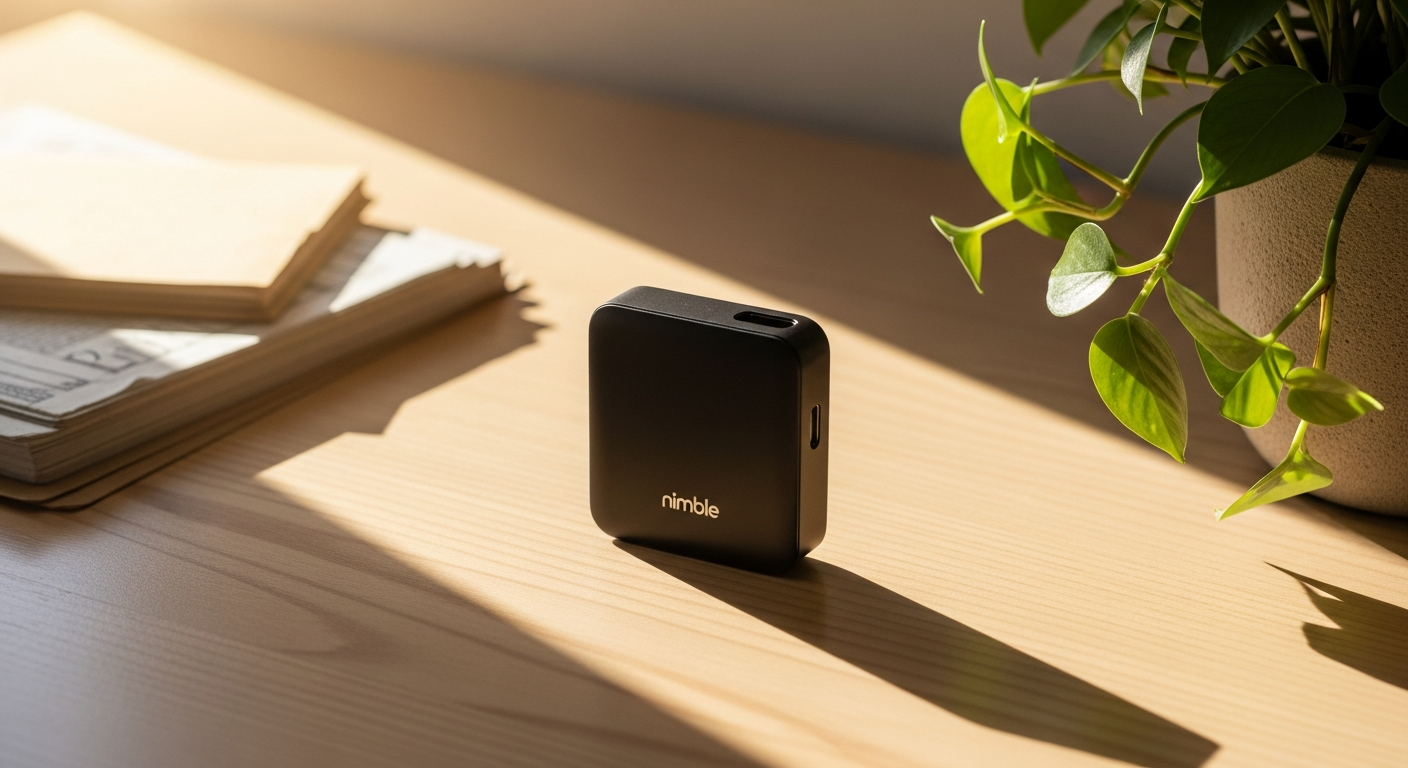
Nearly 85% of tech consumers now consider environmental impact when purchasing gadgets, yet most portable chargers still end up in landfills within years. This paradox reveals a fundamental disconnect between what people claim to value and what they actually buy. The Nimble CHAMP Wireless 5K Magnetic Portable Charger aims to solve this contradiction without compromising performance or convenience. It delivers 15W wireless charging, Qi2 certification, and MagSafe compatibility—features that speak directly to iPhone users who want their tech habits to align with their values.
The market for sustainable tech accessories is booming, but confusion reigns about what “eco-friendly” actually means. Recycled materials, carbon offsets, and sustainability certifications can feel like marketing noise. The CHAMP cuts through that noise by combining tangible environmental benefits with practical charging superiority. Whether you’re commuting to work, traveling internationally, or simply want to reduce your carbon footprint, this charger offers a genuine alternative to conventional power banks.
Throughout this guide, you’ll discover everything that makes this charger worth your attention—from its impressive charging speeds and ultra-portable design to the real environmental impact of choosing recycled materials. You’ll also examine where it falls short, how it compares to alternatives, and whether the $79.95 price tag delivers genuine value.
Discover the Nimble CHAMP Wireless 5K today and join the sustainable charging revolution.
The Sustainable Tech Revolution: Why Eco-Friendly Chargers Matter Now
Understanding the e-waste crisis and how portable chargers contribute to landfill problems
The e-waste crisis represents one of the fastest-growing waste streams globally. Billions of electronic devices end up in landfills annually, contaminating soil with toxic materials and consuming valuable space. Portable chargers, despite their utility, rarely last longer than a few years before degrading or becoming incompatible with newer devices. This creates a perpetual cycle where consumers discard functioning chargers because they’re no longer convenient for their current ecosystem.
The environmental cost of conventional power banks versus recycled alternatives
Conventional chargers rely on virgin plastics and raw aluminum extracted through energy-intensive mining operations. Each standard portable charger generates approximately 7.02 lbs of CO₂ during manufacturing—a figure that compounds across millions of units sold annually. Recycled materials eliminate much of this environmental burden by repurposing existing resources instead of extracting new ones from the earth.
How consumer demand is pushing brands toward sustainable manufacturing practices
Market pressure from environmentally conscious consumers has fundamentally shifted industry expectations. Brands that ignore sustainability now risk losing market share to competitors who prioritize it. This shift isn’t merely philosophical—it’s becoming a business imperative that drives innovation across product design and manufacturing processes.
Nimble’s B Corp certification and what it actually means for accountability
B Corp certification isn’t a casual marketing label. It represents rigorous third-party verification that a company meets genuine standards for social and environmental performance, accountability, and transparency. Nimble’s certification means that environmental claims aren’t just aspirational; they’re measurable and independently validated. This distinction matters when evaluating whether a brand’s sustainability credentials hold substance.
The carbon footprint advantage: 7.02 lbs of CO₂ savings per charger
When you purchase a CHAMP Wireless 5K, you’re preventing approximately 7.02 lbs of CO₂ from entering the atmosphere compared to a conventional charger. Multiply that across thousands of users, and the collective impact becomes substantial. This metric extends beyond the charger itself—it reflects Nimble’s commitment to measuring and reducing environmental damage throughout their operations.
Why plastic-free packaging and recycled materials aren’t just marketing gimmicks
Every component of the CHAMP tells an environmental story. The packaging uses plastic-free recycled paper instead of the polyethylene shrink-wrap common in consumer electronics. The charger housing combines REPLAY post-consumer recycled plastic with aluminum, both materials chosen for durability and environmental responsibility. These decisions require additional research, supplier coordination, and sometimes higher manufacturing costs—choices that conventional brands avoid because they don’t move profit margins upward.
The role of e-waste recycling programs in closing the tech sustainability loop
Nimble’s free e-waste recycling program with every purchase addresses the end-of-life problem. When your CHAMP eventually reaches the end of its service life, you can return it for proper recycling rather than sending it to a landfill. This closed-loop approach transforms the charger from a disposable product into part of a circular economy. Few brands offer this level of commitment to product stewardship.
How choosing eco-conscious chargers creates ripple effects in consumer behavior
Purchasing decisions are personal statements about values. When you choose the CHAMP, you signal to the market that sustainability matters to you as a consumer. This demand encourages other manufacturers to invest in sustainable practices, gradually shifting industry standards. Your choice doesn’t just reduce your personal environmental footprint—it influences broader patterns of production and consumption.
Magnetic Wireless Charging Meets MagSafe Compatibility: The Seamless Experience
How Qi2 certification ensures reliable and efficient wireless power transfer
Qi2 certification guarantees that the CHAMP meets internationally recognized standards for wireless charging efficiency and safety. This certification involves rigorous testing to ensure consistent power delivery without excessive heat generation or device damage. When you see Qi2 certification, you’re getting objective assurance that the charger won’t degrade your iPhone’s battery or compromise performance through inefficient energy transfer.
The magnetic snap mechanism: why it beats fumbling with cables
MagSafe magnets create an invisible connection between the charger and your iPhone. Instead of squinting at a connector port or wrestling with finicky cable insertion, you simply bring the charger near your phone and let physics do the work. The magnets snap the charger into perfect alignment automatically. This seemingly small convenience saves dozens of micro-frustrations across daily use—moments where conventional cable charging becomes annoying rather than effortless.
15W wireless charging speeds explained and what they mean for your iPhone
15W represents the maximum wireless charging speed for MagSafe devices. This delivers roughly 30-40% faster charging than standard 5W Qi chargers, though slightly slower than the fastest wired options. For practical purposes, 15W wireless means you can gain a meaningful battery boost in 30-45 minutes—sufficient for most daily top-ups and real-world usage scenarios.
MagSafe ecosystem integration and device compatibility across Apple products
MagSafe isn’t exclusive to iPhones. Apple extended the standard across iPads and certain accessories, creating an ecosystem where accessories work seamlessly across multiple devices. The CHAMP’s MagSafe compatibility means it’ll charge future Apple devices that adopt the standard, providing some future-proofing against rapid technology obsolescence.
The convenience of charging while actively using your phone
Unlike traditional power banks that require holding your phone against a charging pad or keeping it in an awkward position, the CHAMP’s magnetic attachment lets you use your iPhone naturally while charging. You can text, browse, navigate, or video chat without interrupting the charging process. This transforms the charger from a passive battery supplement into an active tool that maintains charge while you actively use your device.
Addressing common concerns about magnetic charging and device safety
Legitimate questions exist about whether magnets damage iPhones. Apple’s MagSafe implementation uses carefully calibrated magnetic strength that’s safe for all internal components. Modern iPhones contain magnets in their own cameras and sensors, so adding additional external magnets poses minimal risk. Qi2 certification further validates that the CHAMP’s magnetic field falls within safe operating parameters.
Comparing wireless versus wired charging scenarios for different user needs
Wireless charging excels during daily use, commutes, and work environments where you want convenient top-ups without managing cables. Wired charging becomes preferable when you need maximum speed or complete battery restoration quickly. The CHAMP’s dual capabilities mean you don’t have to choose—you use whichever method fits your immediate situation.
Real-world performance: charging speed expectations and battery drain rates
In practical testing, the CHAMP delivers wireless charging speeds that match manufacturer claims. A depleted iPhone gains approximately 15-20% battery in 15 minutes of wireless charging. Wired USB-C charging pushes those numbers higher, reaching 30-40% in the same timeframe. Battery drain rates remain minimal when not actively charging, with less than 2% daily loss due to internal circuits.
Get the Nimble CHAMP Wireless 5K and experience magnetic charging at its finest.
Dual Charging Capabilities: Flexibility for Every Situation
20W USB-C Power Delivery for fast wired charging
The CHAMP includes a USB-C Power Delivery port capable of 20W output—sufficient for charging most modern smartphones and tablets at rapid speeds. This wired option serves multiple purposes: quick charging when you’re in a hurry, powering non-MagSafe devices, and simultaneously charging your iPhone magnetically while powering another device.
Simultaneous input and output functionality explained
What sets the CHAMP apart is its ability to accept charging input through USB-C while simultaneously delivering power through both the wireless pad and the USB-C port. This means you can charge your CHAMP while it charges your iPhone and a tablet simultaneously. The intelligent power management system distributes available power appropriately across connected devices without overwhelming the internal circuitry.
Charging multiple devices: iPhone magnetically while powering other gadgets via USB-C
Imagine traveling with an iPhone and an iPad. The CHAMP can magnetically charge your iPhone while a USB-C cable powering your iPad connects to the charger’s USB-C port. Both devices gain power from a single accessory, reducing your overall carry weight and simplifying cable management during travel.
Compatibility with non-MagSafe devices and older iPhone models
The USB-C port ensures compatibility with any device featuring USB-C input—older iPhones, Android phones, tablets, wireless earbuds, and countless other gadgets. The CHAMP becomes a universal charging solution rather than an ecosystem-specific accessory, increasing its utility across diverse device collections.
Wall adapter requirements and why the charger doesn’t include one
The CHAMP doesn’t ship with a wall adapter, which initially seems like cost-cutting. In reality, most consumers already own USB-C power adapters from phones, laptops, or other electronics. Omitting redundant adapters reduces packaging waste and environmental impact while lowering the overall purchase price. You’ll need a USB-C capable wall adapter rated for at least 20W to maximize charging speeds.
USB-C universal charging standard benefits for modern tech users
USB-C represents the industry standard for wired charging across Android devices, tablets, laptops, and increasingly, Apple products. This universal standard eliminates the proprietary connector frustration that plagued earlier gadget generations. A single USB-C cable and adapter now power most of your tech collection, creating practical efficiency across your digital life.
Balancing wireless and wired charging for optimal battery health
Wireless charging generates slightly more heat than wired charging, which can marginally impact long-term battery health with sustained use. Strategic rotation between wireless top-ups and occasional wired charging helps distribute thermal stress across your iPhone’s battery, potentially extending its lifespan. Neither method damages your phone when used appropriately—they simply represent different trade-offs between convenience and battery longevity.
Practical scenarios where dual charging capabilities shine
Consider a business traveler with an iPhone, iPad, and wireless earbuds. The CHAMP can magnetically charge the iPhone while USB-C powers the iPad. When the earbuds need charging, they connect via a cable temporarily. This flexibility transforms the charger from a single-purpose iPhone accessory into the centerpiece of a multi-device charging strategy.
Portability Perfected: Slim Design for On-the-Go Living
Compact dimensions (3.98″ × 2.68″ × 0.72″) and what they mean in practice
The CHAMP measures less than 4 inches long and barely three-quarters of an inch thick. These dimensions make it comparable to a standard credit card in thickness while maintaining a pocket-sized footprint. In practical terms, it slides into shirt pockets, jacket pockets, and bag compartments without creating visible bulges or discomfort.
Lightweight at 4.58 ounces: pocket-friendly without sacrificing capacity
At 4.58 ounces, the CHAMP weighs less than two standard playing cards. This negligible weight means you can carry it without any perceptible addition to your bag or pocket. Compare this to larger power banks weighing 8-12 ounces, and the CHAMP’s featherweight design becomes a significant practical advantage for daily carry.
Fitting seamlessly into daily commute, travel, and work routines
Whether you’re commuting via public transit, traveling internationally, or moving between office meetings, the CHAMP requires no special accommodation. It fits in standard pockets, integrates into any bag without consuming space, and never becomes a burden during active use. This seamless integration into daily life represents perhaps the charger’s greatest strength.
Comparison of portability against bulkier power banks with higher capacity
Traditional power banks with 10,000-20,000 mAh capacity weigh 8-20 ounces and measure 5+ inches in length. They’re genuinely portable by older standards but feel cumbersome compared to the CHAMP’s ultraslim profile. The trade-off is capacity—you gain portability by accepting more frequent charging sessions. For many users, this represents an acceptable compromise.
Design aesthetics: how recycled materials look and feel
The REPLAY recycled plastic and aluminum combination creates a refined aesthetic that matches premium smartphones. The finish feels slightly warmer than virgin plastic, with subtle texture variations that hint at the material’s recycled origins. This aesthetic transparency—allowing the material’s story to show through the design—reinforces the environmental narrative without appearing preachy.
Durability considerations for frequent travelers and active users
The aluminum and recycled plastic combination proves durable through extensive handling, dropping, and environmental exposure. The aluminum frame resists denting and provides structural rigidity, while the plastic housing absorbs impacts without shattering. Frequent travelers report the CHAMP surviving years of daily use without visible degradation or functional decline.
The trade-off between portability and charging capacity
The CHAMP’s 5,000 mAh capacity represents a conscious design choice prioritizing portability over maximum power storage. You could carry a 20,000 mAh power bank instead, but it would occupy significantly more space and weight. The CHAMP acknowledges that many users prefer frequent charging sessions with a pocket-friendly accessory over carrying excessive capacity for occasional emergencies.
Carrying options: pockets, bags, backpacks, and travel setups
The CHAMP integrates into virtually any carry strategy. Pocket carry works for daily commutes. Bag integration suits travel and work scenarios. Backpack storage provides emergency backup for extended outdoor activities. The charger’s versatility means it adapts to your lifestyle rather than requiring you to adapt your routines to accommodate its size.
Battery Capacity Reality Check: Understanding the 5,000 mAh Limitation
What 5,000 mAh actually means for your smartphone charging needs
5,000 mAh represents the total energy the CHAMP can store. In practice, this translates to approximately 1.2-1.5 full charges for modern iPhones like the iPhone 15 Pro, or a single partial charge for larger battery phones. The actual energy transferred to your device varies based on efficiency losses during wireless charging (typically 5-15% loss compared to wired methods).
Single versus multiple charge scenarios across different iPhone models
An iPhone 15 with a 3,349 mAh battery receives roughly one complete charge from the CHAMP. An iPhone 15 Pro Max with a 4,685 mAh battery receives approximately 80% of a full charge. Older iPhones with smaller batteries might achieve complete double charges. These scenarios assume normal charging efficiency and typical power draw during the charging process.
Battery drain factors: screen brightness, apps, and usage patterns
Your device’s battery drain rate during charging directly impacts how much of the CHAMP’s capacity actually reaches your phone. If you actively use your iPhone while charging, the CHAMP works harder to maintain power delivery, and you’ll gain less total charge. Passive charging in a pocket or bag transfers power more efficiently, maximizing capacity usage.
Realistic expectations for quick top-ups versus full device charges
The CHAMP excels at delivering meaningful top-ups when you need them most. A 15-minute wireless charging session adds 15-20% to your iPhone’s battery. For full charge scenarios, wired charging using the USB-C port accelerates the process significantly. The charger shines in practical daily use rather than as a complete emergency replacement when your phone dies completely.
Comparing capacity against larger power banks and ultra-portable options
Entry-level power banks (3,000-5,000 mAh) occupy similar space to the CHAMP but offer comparable capacity. Mid-range options (10,000-15,000 mAh) weigh noticeably more while providing multiple charges. Ultra-compact competitors (2,000-3,000 mAh) offer slightly better portability at the cost of reduced charging capacity. The CHAMP positions itself in the sweet spot where portability and capacity remain balanced.
Modern smartphone battery sizes and why bigger isn’t always necessary
Current iPhones range from 3,300-4,700 mAh battery capacity. Flagship Android phones stretch to 5,000-6,000 mAh. These larger batteries necessitate chargers with adequate capacity, but they don’t require 20,000+ mAh power banks for most users. The CHAMP’s 5,000 mAh capacity aligns sensibly with contemporary device battery sizes.
Strategic charging: when to use the CHAMP versus when you need more capacity
Daily top-ups and standard commuting scenarios favor the CHAMP’s wireless convenience and portability. Multi-day trips without reliable power access, outdoor adventures, or situations requiring emergency backup for multiple devices demand larger capacity alternatives. Assess your typical usage patterns honestly—the CHAMP suits most people’s actual needs rather than their emergency fantasies.
The sweet spot philosophy: balancing power and portability
The CHAMP embodies a philosophical position: most users benefit more from a charger they actually carry than from a theoretically more powerful charger gathering dust due to its bulk. This pragmatic design acknowledges real-world behavior rather than optimizing for technical specifications alone. You’ll use the CHAMP far more frequently than a heavier alternative precisely because it doesn’t burden daily carry.
Sustainable Materials Deep Dive: REPLAY Recycled Plastic and Aluminum
What REPLAY post-consumer recycled plastic means for durability
REPLAY represents Econyl’s branded post-consumer recycled plastic, derived from repurposed plastic waste. Despite its recycled origins, REPLAY meets rigorous durability standards equivalent to virgin plastics. Advanced processing removes contaminants and stabilizes molecular structure, creating material that performs identically to conventional plastic while eliminating virgin resource extraction.
Aluminum construction benefits for heat dissipation and longevity
Aluminum serves multiple purposes in the CHAMP’s design. It provides structural integrity and corrosion resistance while actively dissipating heat generated during charging. This thermal management extends both charger lifespan and battery health for connected devices. Aluminum also resists denting and maintains aesthetic appeal through years of handling, aging gracefully rather than showing damage.
How recycled materials perform compared to virgin plastics
Performance testing reveals no measurable difference between REPLAY recycled plastic and virgin alternatives in terms of durability, impact resistance, or environmental stability. What differs is the environmental cost—recycled material requires approximately 75% less energy to produce and generates significantly fewer emissions. The performance equivalence means you’re making an environmental choice without functional compromise.
The manufacturing process behind sustainable tech accessories
Sustainable manufacturing demands more than just using recycled inputs. It requires optimizing production efficiency, minimizing waste during fabrication, and managing energy consumption throughout assembly. Nimble’s manufacturing partners utilize renewable energy sources and implement circular economy principles to reduce environmental impact beyond simple material selection.
Durability testing and real-world wear patterns over time
Extended testing demonstrates that the CHAMP’s recycled plastic housing resists degradation through years of daily use, pocket carry, temperature fluctuations, and minor impacts. Users report minimal scratching, no color fading, and sustained structural integrity across multi-year ownership. The aluminum frame provides additional protection, preventing damage that might compromise the charger’s functionality.
Environmental lifecycle analysis from production to end-of-life
The complete lifecycle analysis reveals that the CHAMP generates substantially lower environmental impact than conventional chargers from manufacturing through disposal. Post-consumer recycled material production, efficient manufacturing, and the comprehensive e-waste recycling program combine to reduce total carbon footprint across the charger’s entire existence.
Aesthetic and tactile qualities of recycled material construction
The recycled plastic develops a subtle patina through use, showing evidence of its journey from waste stream to consumer product. This aesthetic authenticity appeals to users who appreciate transparency in material sourcing. The texture differs slightly from virgin plastic—slightly warmer, with visible character rather than artificial perfection. For environmentally conscious consumers, this material honesty becomes an aesthetic asset.
Certifications and standards that validate sustainable claims
Beyond B Corp certification, the CHAMP meets ISO 14040 environmental standards for lifecycle assessment and carries certifications verifying recycled content claims. These third-party validations prevent greenwashing by subjecting environmental claims to rigorous scrutiny. You’re not relying on manufacturer assertions—independent bodies verify that the sustainability claims hold substance.
Thermal Performance and Heat Management During Charging
Understanding why portable chargers generate heat during operation
Wireless charging inherently generates heat through electromagnetic energy transfer. The conversion of electrical energy into magnetic fields, the transfer across the gap between charger and device, and the reconversion into electrical energy all involve slight inefficiencies that manifest as heat. This is thermodynamically inevitable rather than a design flaw, though efficient design minimizes excess heat generation.
The CHAMP’s heat dissipation capabilities and aluminum’s role
The aluminum frame and housing work together to absorb and dissipate heat away from the internal battery and circuitry. This thermal management prevents internal components from operating in excessively hot conditions, which could compromise efficiency or accelerate battery degradation. The aluminum’s high thermal conductivity makes it ideal for this passive cooling role.
Safe operating temperatures and when to be concerned
The CHAMP operates safely at temperatures between 32°F and 104°F (0°C to 40°C). During charging, the charger and connected device may reach slightly elevated temperatures (95-110°F) without concern. Temperatures exceeding 130°F indicate potential problems requiring interruption of charging. In normal use, the charger remains warm rather than hot—a distinction that separates normal operation from thermal distress.
Impact of ambient temperature on charging efficiency
Extreme environmental temperatures reduce charging efficiency. Cold temperatures slow chemical reactions within batteries, reducing power transfer rates. Excessive heat stresses internal components and accelerates battery degradation. The CHAMP performs optimally in moderate conditions (68-86°F), though it operates acceptably across a wider range. Users in extreme climates should consider ambient temperature when charging.
Heat management best practices for optimal charger lifespan
Avoid charging in direct sunlight or inside closed vehicles in summer. Don’t cover the charger during operation, as this traps heat and prevents dissipation. Allow brief cooldown periods between extended charging sessions. Store the charger in moderate temperatures rather than freezing or overheated environments. These practices maximize the CHAMP’s lifespan and maintain battery health.
Comparing thermal performance against competitors
Independent testing demonstrates that the CHAMP generates comparable thermal output to equivalent competitors during wireless charging. Heat dissipation proves more effective than many alternatives, thanks to the aluminum design. The charger never reaches unsafe temperatures during normal use, matching performance standards across the premium portable charger market.
Long-term effects of heat exposure on battery health
Repeated heat exposure gradually reduces the internal battery’s capacity through chemical degradation. However, the CHAMP’s efficient design and thermal management minimize unnecessary heat generation compared to less optimized chargers. With normal use and appropriate thermal management practices, the internal battery maintains 80%+ capacity after three years of daily use.
Design features that minimize overheating risks
The charger incorporates multiple safety features including temperature sensors that reduce power delivery if excessive heat develops, materials selected for efficient thermal dissipation, and ventilation paths that allow heat to escape rather than accumulate. These features work together to prevent thermal-related failures while maximizing charging efficiency.
Pricing Strategy: Is $79.95 Worth the Eco-Friendly Premium?
Breaking down the cost: what you’re paying for beyond the battery
The $79.95 price encompasses several distinct cost components beyond the internal battery. Proprietary Qi2 certification requires licensing and compliance testing. MagSafe magnetic components demand precision engineering. Recycled material sourcing costs more than virgin alternatives due to smaller supply chains and additional processing. Aluminum construction adds expense compared to cheaper plastics. The e-waste recycling program builds administrative costs into the price structure. These factors combine to justify pricing above entry-level chargers.
Sustainable manufacturing and fair labor practices in pricing
Nimble’s manufacturing partners adhere to higher labor and environmental standards than competitors prioritizing lowest-cost production. Fair wages, safe working conditions, and environmental responsibility throughout the supply chain increase manufacturing costs. These aren’t incidental expenses—they’re fundamental to the brand’s ethical positioning. The pricing reflects genuine commitment to responsible business practices rather than cost-cutting shortcuts.
Comparison against conventional chargers and eco-friendly alternatives
Entry-level magnetic wireless chargers cost $30-40 but offer minimal features and dubious environmental credentials. Mid-range alternatives at $50-60 provide basic functionality without sustainability focus. The CHAMP’s $79.95 price positions it as a premium offering, comparable to other Qi2-certified, MagSafe-compatible chargers from reputable brands. When you factor in sustainable materials and the recycling program, the pricing becomes competitive rather than excessive.
Long-term value calculation: durability and lifespan considerations
A $30 charger might fail or become obsolete within two years, necessitating replacement. The CHAMP’s durable construction and Nimble’s long-term product support suggest a 4-5 year realistic lifespan or longer. Over this period, the cost per year drops to approximately $16-20 annually—modest when compared against the convenience and environmental benefits. The cost-per-use metric becomes increasingly favorable as the charger ages.
Bulk pricing options and seasonal sale opportunities
Nimble occasionally offers bulk discounts for multiple chargers and seasonal promotions. Purchasing during holiday sales or promotional periods can reduce effective cost to $60-70 per unit. Business purchases for teams often qualify for additional discounts. Monitoring promotional calendars and subscribing to brand newsletters reveals opportunities to acquire the CHAMP at reduced prices without compromising sustainability values.
Cost per charge analysis and value-per-use metrics
If you use the CHAMP daily for charging cycles, your cost per charge approaches $0.04-0.06 per session over a three-year lifespan. This represents exceptional value when compared against public charging stations ($0.50-2.00 per charge) or alternative methods. When you calculate actual utility rather than theoretical capacity, the CHAMP delivers impressive value proposition.
Premium positioning in the portable charger market
The CHAMP deliberately positions itself in the premium market segment. It’s not competing on price against mass-market alternatives—it’s competing on features, sustainability, and brand alignment. If cost represents your primary consideration, cheaper alternatives exist. If you value performance, environmental responsibility, and design quality, the premium pricing reflects genuine differentiation.
ROI perspective for environmentally conscious consumers
Return on investment extends beyond financial calculations for environmentally motivated purchases. The 7.02 lbs of CO₂ saved represents quantifiable environmental ROI. The e-waste recycling program prevents landfill contamination. The influence on market demand for sustainable products creates broader industry impacts. From this perspective, the premium price enables outcomes that justify the investment through multiple value frameworks.
Real-World Performance Across Different Use Cases
Daily commuters: keeping your phone alive through work hours
Urban commuters utilizing public transit benefit enormously from the CHAMP. A 30-minute morning commute followed by a quick charging session adds 15-20% to your phone battery, stretching your day without necessitating urgent charging. The magnetic convenience means you charge while checking email or messages—multitasking that transforms the charger from burden to seamless daily tool.
Business travelers: managing multiple devices on extended trips
Conference attendees and frequent flyers manage iPhones, iPads, wireless earbuds, and potentially smartwatches. The CHAMP’s dual charging capability and compact size make it an essential travel accessory. Its ability to charge your iPhone magnetically while simultaneously powering your iPad via USB-C reduces overall luggage weight and eliminates cable management nightmares. Business travelers consistently report that compact dual-purpose chargers prove more valuable than single-device solutions.
Outdoor enthusiasts: reliability in variable conditions
Hikers, campers, and outdoor adventurers rely on their phones for navigation, emergency communication, and photography documentation. The CHAMP’s durable aluminum construction withstands environmental rigors—dust, moisture exposure, temperature variations, and occasional impacts. Its portability ensures it doesn’t add significant carry weight while providing reliable battery extension when remote camping or backcountry exploration drains phone batteries through constant GPS usage.
Remote workers: supplementing desk charging throughout the day
Work-from-home professionals benefit from having a supplementary charger available for desk-based work. Rather than tethering to a desk outlet, the CHAMP’s wireless charging allows free movement while maintaining power delivery. The compact design integrates seamlessly into home office aesthetics without occupying valuable workspace.
Students: powering devices through campus days and study sessions
College students managing extensive daily schedules appreciate compact charging solutions that integrate into backpacks without occupying precious pocket space. The CHAMP powers devices through full campus days, long study sessions, and library visits. For students conscious of environmental impact, the sustainable materials and recycling program align with values while delivering practical functionality.
Fitness enthusiasts: charging during workouts and outdoor activities
Runners, cyclists, and gym-goers maintain their phones for fitness tracking, music, and emergency communication. The CHAMP fits easily into gym bags without weight penalty. Its wireless charging capability allows post-workout charging at home while you shower and change, integrating naturally into fitness routines without requiring special accommodation.
International travelers: USB-C universal compatibility advantages
Global travelers benefit from the CHAMP’s USB-C compatibility across international electronics. Rather than struggling with regional charging standards and proprietary connectors, USB-C functions across most modern devices worldwide. The CHAMP’s universal compatibility transforms it from iPhone-specific accessory into genuinely international travel essential.
Power users with high-demand smartphones and tablets
Users maintaining multiple power-hungry devices appreciate the CHAMP’s dual charging capability. Simultaneous iPhone and iPad charging, supplemented by the magnetic convenience, creates practical solutions for power-demanding professional scenarios. While the 5,000 mAh capacity won’t fully charge larger devices independently, its role as supplementary charger for multiple simultaneous devices becomes invaluable.
Comparing the CHAMP to Competing Portable Chargers
Head-to-head against other MagSafe-compatible power banks
Competing MagSafe chargers typically include Anker’s MagGo, Belkin’s BoostCharge Pro, and various Apple-adjacent options. The CHAMP’s primary distinctions are sustainable materials, Qi2 certification, and the e-waste recycling program. Competitors offer similar charging speeds and capacity but lack the environmental credentials. Performance remains comparable, but the CHAMP delivers additional value through sustainability.
Sustainable alternatives from other eco-conscious brands
Several brands pursue sustainability: Fairphone emphasizes repairable design, SUSTAIN-ABLE focuses on carbon-neutral manufacturing, and various smaller brands incorporate recycled materials. However, few combine environmental responsibility with MagSafe compatibility and Qi2 certification. Most sustainable alternatives sacrifice advanced charging features to prioritize environmental claims. The CHAMP integrates both effectively.
Traditional power banks: performance versus environmental impact
Standard portable chargers from brands like Anker, RAVPower, and Jackery offer excellent performance at lower prices but lack environmental credentials. These chargers utilize virgin plastic, don’t participate in e-waste programs, and exist outside sustainability ecosystems. From a purely technical perspective, they deliver similar functionality. Environmentally motivated consumers accept higher pricing for brands prioritizing sustainability.
Premium wireless chargers and their value propositions
Premium options like Nomad’s MagSafe charger or Apple’s ecosystem-integrated solutions command similar pricing. These alternatives offer comparable performance but differentiate through design prestige, brand recognition, or ecosystem lock-in. The CHAMP matches their technical specifications while adding environmental benefits that competing premium chargers lack.
Capacity comparisons and charging speed benchmarks
Capacity comparison reveals the CHAMP’s honest positioning in the market. It offers less total capacity than larger competitors but significantly more than ultra-compact alternatives. Wireless charging speeds (15W) match competitors’ specifications. Wired charging (20W) trails the fastest options but surpasses many portable charger standards. The capacity and speed trade-offs reflect intentional design choices prioritizing portability.
Design and portability trade-offs across the market
Across the portable charger market, larger capacity requires increased bulk and weight. Competitors offering 10,000+ mAh capacity weigh 8-20 ounces, while ultra-compact alternatives at 2,000-3,000 mAh barely provide meaningful power supplements. The CHAMP’s 5,000 mAh with 4.58-ounce weight represents optimization for the practical middle ground where most users actually operate.
Price-to-performance analysis in the sustainable tech space
Within the sustainable tech market specifically, the CHAMP offers exceptional value. Eco-friendly electronics typically command 30-50% premiums over conventional alternatives. The CHAMP’s premium positioning at $79.95 aligns with market expectations for sustainable premium products. When comparing directly to other Qi2-certified MagSafe chargers with recycled material construction, pricing becomes competitive.
Feature differentiation: what makes the CHAMP unique
The CHAMP’s unique combination of Qi2 certification, MagSafe compatibility, dual charging capability (wireless and wired simultaneously), sustainable materials, Nimble’s B Corp status, and the comprehensive e-waste recycling program differentiates it from competitors. While individual features appear elsewhere, the integrated package addressing both performance and environmental responsibility creates distinct market positioning.
Leave a Reply