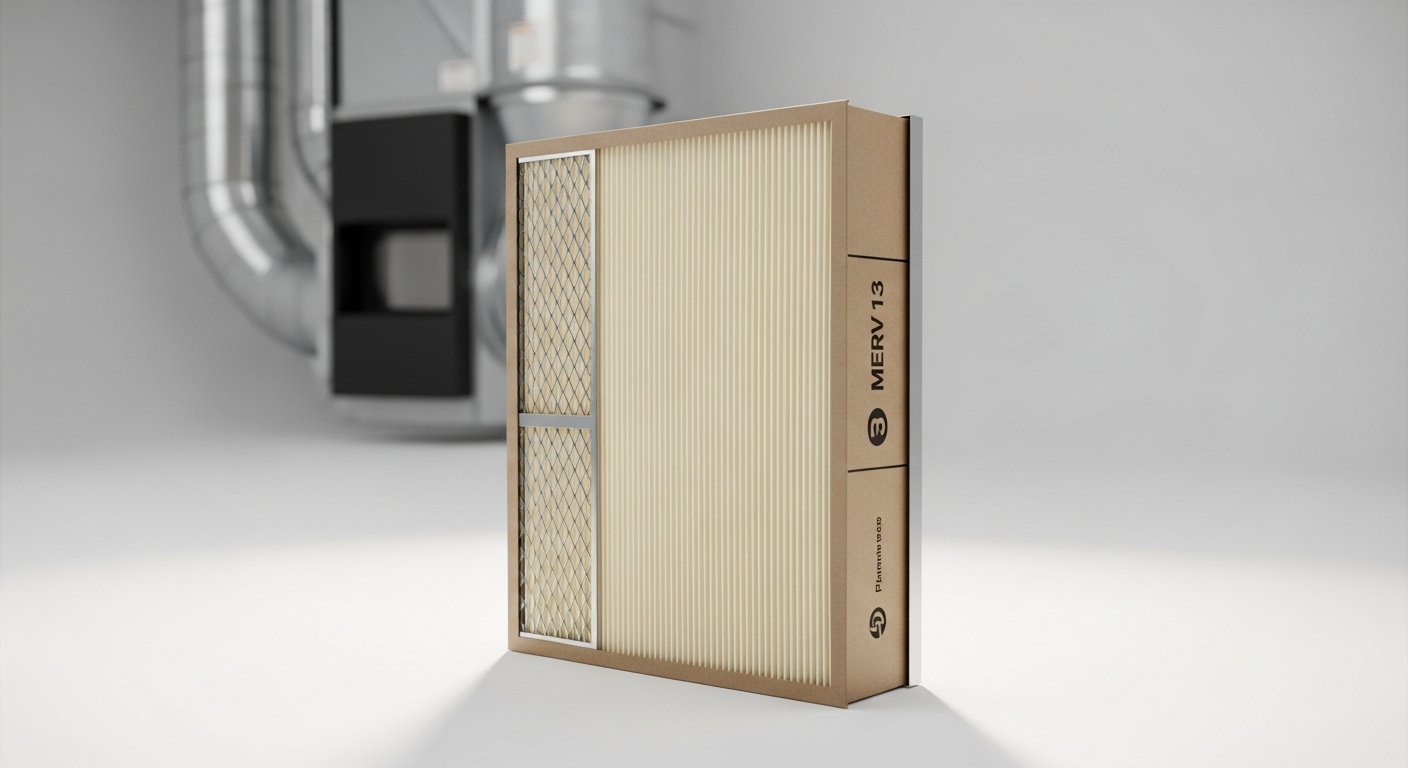
Roughly 30% of homeowners struggle to find air filters that actually fit their HVAC systems. Whether you own an older unit, have non-standard ductwork, or operate a commercial system with unique specifications, standard filters often fall short. This frustration leads to compromised filtration, air leaks around poorly-fitting filters, and indoor air quality that deteriorates over time.
Custom-sized MERV 13 air filters represent a fundamentally different approach to solving this problem. Rather than forcing your system into a one-size-fits-all mold, these filters are engineered to your exact specifications—capturing up to 99.97% of airborne particles as small as 0.3 microns. The result is cleaner air, improved HVAC efficiency, and peace of mind that your system is truly protected.
Discover how custom-sized MERV 13 filters can transform your indoor air quality today.
Why Standard Air Filters Fail Non-Standard HVAC Systems
The Limitations of One-Size-Fits-All Dimensions
Standard air filters come in predetermined sizes: 16x25x1, 20x25x4, and a handful of other common dimensions. This approach works fine if your HVAC system happens to match one of these specifications. But for homeowners with older units, commercial facilities with custom ductwork, or anyone with non-standard requirements, standard filters become an exercise in frustration.
The real problem isn't just about finding a filter that's close enough. When a filter doesn't fit properly, it creates gaps around the edges—spaces where unconditioned air bypasses the filter entirely. You might have a premium filter rated at MERV 13, but if air is leaking around it, that rating becomes meaningless.
How Air Bypass Compromises Filtration Effectiveness
Air follows the path of least resistance. If your filter doesn't seal perfectly against your ductwork, air will flow around it rather than through it. Even small gaps—gaps that seem insignificant—allow dust, pollen, and other contaminants to bypass the filter media entirely and circulate throughout your home or building.
This phenomenon, known as air bypass, undermines the entire purpose of upgrading to a higher MERV rating. You're essentially running an unfiltered system while believing you have premium filtration in place. The particles that matter most to your health—allergens, mold spores, pet dander, and bacteria—slip through unimpeded.
Common HVAC Configurations Requiring Custom Solutions
Older homes built before standardization often feature HVAC systems with unique ductwork dimensions. Commercial buildings frequently have specialty systems designed for specific square footage and airflow requirements. Industrial facilities may operate equipment that predates modern filter standards entirely.
These systems share a common characteristic: they need filters that fit perfectly, but standard options simply don't exist. A homeowner with a vintage 1970s unit might need a 20x20x2 filter, while a small commercial office could require a 24x30x1 custom configuration. Without custom sizing, these facilities are stuck with either makeshift solutions or systems running without adequate filtration.
The Cost of Inefficient Filtration
When your HVAC system runs with air bypass issues, the entire unit works harder. Your furnace or air conditioning system must push air through gaps around a poorly-fitting filter, increasing energy consumption and strain on mechanical components. Over time, this translates to higher utility bills and accelerated wear on your equipment.
A system that should last 15-20 years might deteriorate significantly faster when forced to operate with inadequate filtration and bypass leakage. The cost of replacing an HVAC unit far exceeds the investment in properly-fitted, custom filters.
Understanding MERV 13 Filtration Efficiency and Particle Capture
What MERV 13 Means in Practice
MERV stands for Minimum Efficiency Reporting Value, a standardized scale that rates air filter effectiveness. The scale ranges from 1 to 16, with higher numbers indicating better filtration. A MERV 13 filter sits comfortably in the upper-middle range—more efficient than common MERV 8 filters (typically found in standard residential units) but less restrictive than MERV 15 or MERV 16 filters (usually reserved for hospital or laboratory environments).
The practical distinction matters. A MERV 8 filter captures approximately 70% of particles between 3 and 10 microns. A MERV 11 filter improves that to roughly 85%. MERV 13 jumps to 90%, while also beginning to capture particles smaller than 3 microns. This represents a meaningful leap in filtration capability without significantly restricting airflow through your HVAC system.
The Science Behind 0.3 Micron Particle Capture
MERV 13 filters can capture particles as small as 0.3 microns with up to 99.97% efficiency. To understand the significance, consider what occupies this size range: individual dust particles, pollen grains, pet dander fragments, mold spores, bacteria, and even some viruses. These microscopic particles represent the true threat to indoor air quality and respiratory health.
The filtration mechanism combines three principles: interception (particles following air streams come within one radius of a fiber and stick), impaction (larger particles slam into fibers and adhere), and diffusion (smallest particles bounce randomly and eventually contact fibers). MERV 13 media is engineered with fiber density and arrangement optimized for all three mechanisms, creating a comprehensive capture system.
Why 99.97% Particle Capture Matters for Health
The difference between 90% and 99.97% capture efficiency might seem like a small percentage. In practice, it's substantial. If a MERV 11 filter removes 90% of particles, 10% still circulates through your home. Over the course of a day, week, or month, that remaining 10% accumulates, degrading air quality progressively.
MERV 13's 99.97% efficiency reduces this remaining fraction dramatically. For allergy sufferers, asthma patients, and immunocompromised individuals, this difference translates directly into fewer respiratory irritations, reduced medication needs, and improved quality of life. The particles that trigger allergic reactions and respiratory problems are captured before they can be inhaled.
MERV 13 Performance for Allergen Reduction and Respiratory Health
Standard MERV 8 filters allow most common allergens to pass through. Dust mites, pet dander, and pollen grains—particularly problematic for allergic individuals—are captured at relatively low rates. MERV 13 filters change this equation entirely, capturing these allergens with high efficiency before they reach living spaces.
For asthma patients particularly, indoor air quality directly impacts symptom severity. Studies consistently show that higher-efficiency filtration reduces asthma exacerbations and improves lung function in susceptible individuals. MERV 13 also captures some bacteria and certain viruses, offering additional respiratory protection beyond traditional allergen concerns.
The Custom Sizing Advantage: Perfect Fit, Maximum Performance
How Custom Dimensions Eliminate Air Gaps and Bypass Leakage
The fundamental advantage of custom sizing is absolute: your filter fits perfectly. No gaps, no compromises, no air taking the easy route around the filter media. When a filter seals completely against your ductwork, 100% of the air your HVAC system processes must pass through the filter media itself.
This perfect seal transforms the efficiency equation. A MERV 13 filter that sits loosely in your ductwork might achieve only 70-80% effective filtration due to bypass. The same filter, perfectly sized and sealed, delivers its full 99.97% capture efficiency. Custom sizing doesn't just add convenience; it unlocks the true performance potential of premium filtration.
Measuring Your HVAC System Correctly for Custom Filter Orders
Ordering a custom filter requires accurate measurements of your filter housing or ductwork opening. Most HVAC systems have clearly marked filter dimensions somewhere on the unit, often printed directly on the housing frame. If not visible, measuring the existing filter (length x width x depth) or the physical opening provides the needed dimensions.
For systems with multiple filters or non-rectangular openings, custom filter providers typically offer guidance on photographing and submitting specifications for verification. Precision matters here—a custom filter built to the wrong dimensions won't solve the problem. Taking time to measure correctly ensures your investment delivers the expected performance.
Compatibility with Vintage Units, Commercial Systems, and Specialty Configurations
Vintage HVAC equipment from the 1950s through 1980s operated with specifications that don't match modern standards. Similarly, commercial systems designed for specific buildings often feature custom dimensions that no standard filter manufacturer addresses. Industrial or specialty applications—server rooms, clean rooms, pharmaceutical facilities—frequently require filters that exist nowhere on store shelves.
Custom sizing eliminates these compatibility barriers entirely. Whether your system is decades old, purpose-built for a specific commercial space, or designed for unique industrial requirements, a custom filter can be engineered to fit perfectly. This versatility makes high-efficiency MERV 13 filtration accessible to facilities that previously had no practical options.
Cost-Benefit Analysis: Initial Investment Versus Long-Term System Protection
Custom-sized MERV 13 filters cost more than standard options. The custom manufacturing process, smaller production runs, and made-to-order nature of these filters necessarily increase price compared to mass-produced alternatives. However, the long-term calculus favors custom solutions decisively.
Your HVAC system represents a substantial investment—often $5,000 to $15,000 or more for residential units, significantly more for commercial equipment. Allowing contaminants to bypass filtration through poorly-fitting filters accelerates component degradation and shortens system lifespan. Protecting this major investment with properly-fitted, high-efficiency filtration makes financial sense. Additionally, improved indoor air quality produces health benefits—fewer sick days, reduced allergy medication costs, better sleep and respiratory function—that extend beyond pure HVAC considerations.
Making the Switch to Custom-Sized MERV 13 Filtration
Investing in a custom-sized MERV 13 air filter addresses one of the most overlooked aspects of home and commercial air quality: actually achieving a perfect seal between your filter and your system. Standard filters force compromises. Custom filters eliminate them entirely. You're not just upgrading to a higher MERV rating; you're solving the fundamental problem of air bypass that renders even premium filters ineffective.
The numbers speak for themselves. Capturing 99.97% of particles as small as 0.3 microns means real health improvements for allergy sufferers, asthma patients, and anyone concerned about indoor air quality. Your HVAC system deserves a filter that actually fits. Whether you're managing an older home with non-standard dimensions, operating a commercial facility with unique specifications, or simply tired of compromising on air quality, custom-sized MERV 13 filters deliver the precision and performance your system needs.
Get your custom-sized MERV 13 filter from Custom Filters Direct today and breathe easier tomorrow.
Leave a Reply