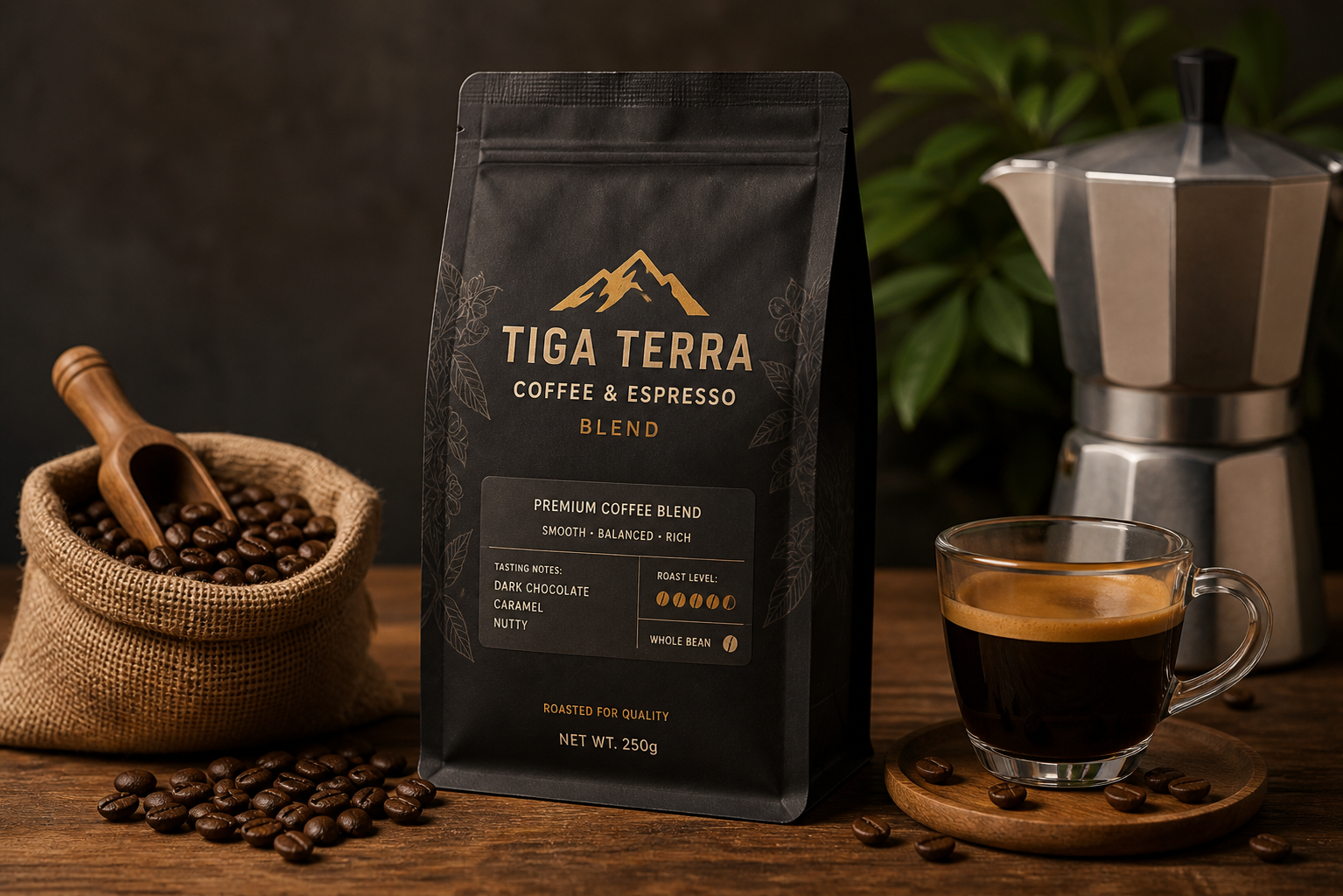
The fully automatic coffee machine market has exploded over the past decade, yet most coffee enthusiasts still struggle to find a blend that truly performs in these convenient brewers. Machine owners frequently settle for mediocre results, unaware that their equipment demands a specifically engineered coffee formula to unlock its full potential. This gap between expectation and reality is precisely where the Tiga Terra Coffee & Espresso blend steps in.
Coffee Circle’s Tiga Terra blend represents a deliberate shift in how specialty roasters approach the automatic machine segment. Rather than treating these brewers as an afterthought, the roasters have engineered this 60% Arabica and 40% Robusta combination to maximize crema density, flavor extraction, and consistency—three factors that most standard blends overlook. The result is coffee that transforms daily brewing from a frustrating compromise into a genuinely rewarding ritual.
The Anatomy of Tiga Terra—Bean Selection and Roasting Philosophy
Origin Story: Brazil, Indonesia, and Guinea Sourcing
The Tiga Terra blend pulls beans from three distinct coffee-growing regions, each contributing its own character to the final product. Brazilian beans bring sweetness and body, Indonesian beans add earthy depth and structure, and Guinean beans contribute complexity and balance. This geographic diversity creates a multi-layered foundation that single-origin coffees simply cannot match, especially when consistency matters for automatic machine brewing.
The 60/40 Arabica-Robusta Ratio
This specific blend proportion exists for a reason. Arabica comprises 60% of the mix, delivering smoothness and nuanced flavor development. Robusta makes up the remaining 40%, and this higher-than-typical Robusta content serves a critical function in automatic machines. Robusta’s natural oils and denser cellular structure create the conditions necessary for thick, visually striking crema—the golden-brown foam layer that coffee enthusiasts crave. In automatic machines where pressure and temperature consistency matter, this ratio performs where lighter blends fail.
Dark Omni-Roast Profile
The dark roasting technique employed for Tiga Terra develops the signature dark chocolate and walnut notes that define the blend. “Omni-roast” means the beans are roasted to a consistent level that works across multiple brewing methods rather than optimizing for a single technique. This philosophy directly addresses the reality that Coffeemakers.de customers use various equipment—some brew in fully automatic machines, others prefer traditional espresso makers or moka pots. The roasting profile stays stable enough to deliver quality across all these applications.
Crema Science: The Robusta Advantage
Robusta’s role in crema formation cannot be overstated. Its higher caffeine content and natural oil composition create the dense, persistent crema that signals a well-executed espresso. For automatic machine users, crema density often signals successful extraction and proper grind sizing. When customers praise this blend for its “beautiful crema,” they’re responding to the Robusta component’s chemistry—not subjective taste preference.
Whole Bean Advantage
Purchasing Tiga Terra in whole bean form, available in 250g and 1kg packages, preserves flavor complexity that pre-ground coffee surrenders within days. Whole beans maintain their volatile aromatic compounds until you grind them minutes before brewing. For a blend engineered to perform in automatic machines, this freshness advantage directly translates to better extraction and more consistent results.
Coffee Circle’s Roasting Standards
Coffee Circle maintains transparency throughout their roasting process, a commitment visible in how they document their sourcing and handling practices. Quality control standards ensure that each batch meets consistent specifications, which matters enormously for automatic machine performance. Machines rely on predictable grind behavior and extraction rates—variations in bean quality would undermine that consistency.
Performance Across Brewing Methods—Beyond Just Automatic Machines
Fully Automatic Machine Optimization
Fully automatic machines handle grinding, dosing, tamping, and extraction automatically. Tiga Terra’s grind consistency adapts well to the fine particles these machines require. The blend’s balanced density ensures proper water flow through the puck without channeling or under-extraction. Customers report that their machines reach proper pressure within the designed time frame and produce shots with the expected volume and crema quality.
Traditional Espresso Machine Excellence
Manual espresso machines require more operator skill but offer greater control over temperature and pressure. Tiga Terra performs excellently in this context because its blend composition supports the wider pressure ranges that skilled operators apply. The Robusta component ensures crema even when pressure fluctuates slightly during the pull.
Moka Pot Brewing
Stovetop moka pots operate at lower pressures than true espresso machines, typically producing around 1-2 bars of pressure. Tiga Terra’s full body and dark roast characteristics shine in this brewing method, creating rich, concentrated coffee without the acidity that lighter roasts would emphasize over extended heat exposure.
Comparison with Single-Origin Alternatives
Single-origin coffees highlight the unique characteristics of beans from a specific region and farm. However, single origins often exhibit inconsistency when used in automatic machines because their flavor development depends heavily on precise temperature and pressure ranges. The Tiga Terra blend’s engineered proportions compensate for automatic machine limitations, making it fundamentally more reliable than single origins in this context.
Grind Size Recommendations
For fully automatic machines, a fine grind similar to powdered sugar works best. Traditional espresso machines benefit from a slightly coarser setting that allows for a 25-30 second pull time. Moka pots perform optimally with a medium-fine grind. These aren’t rigid rules—rather, they represent starting points for adjusting variables to match your specific equipment.
Water Temperature and Pressure Variables
Tiga Terra adapts across the temperature range of 85-95°C that most espresso equipment operates within. At lower temperatures (85-88°C), the blend emphasizes darker chocolate notes. Higher temperatures (92-95°C) bring forward more of the spice and nutmeg undertones. The Robusta content ensures crema formation remains stable across this range, whereas more delicate blends might suffer at temperature extremes.
Shop Tiga Terra now and find your ideal brewing parameters across all your equipment.
Flavor Profile and Tasting Notes—What You’ll Experience in Your Cup
Primary Flavor Characteristics
Dark chocolate and walnut emerge as the dominant tasting notes in every cup of Tiga Terra. These aren’t subtle background flavors—they form the core of the experience. The dark roasting technique develops these characteristics naturally as complex sugars caramelize during the roasting process. In your cup, expect a forward, unmistakable chocolate character that doesn’t taste artificially enhanced or flavored.
Secondary and Tertiary Notes
Beyond the chocolate and walnut foundation, spice, cacao, and nutmeg complexity unfolds as the coffee cools slightly. These secondary notes prevent the blend from tasting one-dimensional or heavy. A sip at 75°C reveals different flavor layers than a sip at 55°C, rewarding you for paying attention to your coffee as it evolves.
Low Acidity Advantage
The low acidity profile matters significantly for people with sensitive stomachs or acid reflux issues. Dark roasting naturally reduces acidity compared to lighter roasts, where more original chlorogenic acids remain. For morning drinkers who suffer from digestive discomfort after coffee, Tiga Terra offers genuine relief without sacrificing flavor intensity.
Mouthfeel and Body
The full-bodied character you’ll notice immediately distinguishes this blend from lighter alternatives. Mouthfeel describes how the coffee physically feels in your mouth—its viscosity and texture. Tiga Terra’s mouthfeel registers as rich and substantial, coating your palate in a way that signals quality and careful bean selection. This fullness carries across automatic machines, espresso makers, and moka pots equally well.
Crema Quality Impact
Crema isn’t just visual appeal—it directly affects taste experience. The oils suspended in crema carry aromatic compounds and contribute to the overall flavor impression. Dense, persistent crema from the Tiga Terra blend traps these compounds longer, allowing more flavor integration with each sip. Thin or disappearing crema would undermine the entire tasting experience.
Sweetness and Balance
The interplay between Robusta boldness and Arabica smoothness creates natural sweetness without any added sugar or processing tricks. Robusta brings assertion and structure, while Arabica contributes rounded smoothness. Together, they achieve balance that satisfies without overwhelming your palate.
Consistency Across Batches
Customers consistently report that flavor reliability remains stable from one bag to the next. This reliability stems from Coffee Circle’s quality control standards and consistent sourcing from the same three regions. For a blend engineered for automatic machines, batch-to-batch consistency is essential—you need to trust that your equipment’s performance will remain stable over months of regular brewing.
Sustainability and Ethical Sourcing—Coffee with a Conscience
Coffee Circle’s €1-Per-Kilogram Commitment
Coffee Circle commits €1 per kilogram of coffee sold directly to sustainability projects in coffee-growing regions. For a 1kg bag of Tiga Terra, that’s a €1 contribution. For a 250g bag, it’s €0.25. This transparency about impact allocation appeals to consumers who want to understand exactly where their ethical premium actually goes rather than relying on vague “fair trade” claims.
Sustainable Cultivation Practices
These funds support farmers in Brazil, Indonesia, and Guinea in adopting sustainable growing methods. Sustainable cultivation reduces chemical fertilizer dependency, protects water resources, and preserves soil health for future generations. Supporting these practices indirectly benefits the coffee quality itself—healthier farms produce healthier plants and better beans.
Education Initiatives
Roaster contributions improve farming knowledge and techniques among coffee-growing communities. Farmers gain access to training on processing improvements, pest management, and crop rotation strategies. These educational investments compound over time, creating lasting change rather than temporary relief.
Clean Water Projects
Access to clean water remains a critical need in many coffee-growing regions. The sustainability funding directly supports well construction, water filtration systems, and maintenance infrastructure. Clean water improves both quality of life and agricultural productivity—it’s a foundational investment that benefits entire communities.
Fair Trade Alignment
While Tiga Terra may not carry a traditional fair trade certification, Coffee Circle’s sourcing practices align closely with fair trade principles. Direct relationships with farmers, transparent pricing, and long-term purchasing commitments ensure that farmers receive fair compensation rather than being squeezed by commodity market fluctuations.
Environmental Impact
Sourcing from sustainable farms produces coffee with a reduced carbon footprint compared to mass-market alternatives. Additionally, darker roasts sometimes receive criticism for higher energy consumption, but Coffee Circle’s roasting efficiency and sourcing practices offset these concerns through their sustainability commitment.
Consumer Responsibility
Purchasing Tiga Terra represents an informed choice to support responsible coffee production. Every bag you purchase directly funds the €1-per-kilogram commitment. This direct connection between your consumption and real-world impact distinguishes ethically sourced premium coffee from greenwashing alternatives.
Pricing, Value Proposition, and Where to Buy
Cost Breakdown
Tiga Terra is priced at €12.90 for a 250g package, translating to €51.60 per kilogram. This pricing positions it firmly in the specialty coffee category rather than mass-market segment. For context, standard supermarket coffee typically costs €8-12 per kilogram, while premium specialty coffees often range from €45-70 per kilogram. Within this competitive range, Tiga Terra’s pricing reflects its quality level and sustainability commitment accurately.
Comparison with Mass-Market Alternatives
Mass-market coffee brands compete primarily on price, often sourcing from multiple origins without consistency controls and using minimal sustainability investment. The premium you pay for Tiga Terra covers documented ethical impact, controlled roasting standards, and engineered performance for specific brewing methods. It’s genuinely not the same product category.
Packaging Options
The 250g package works perfectly for testing whether this blend matches your preferences and equipment before committing to larger quantities. Once you’ve confirmed compatibility, the 1kg package becomes more economical and ensures consistent supply over several months of regular consumption. Most households brewing one or two cups daily consume 1kg in approximately 30-40 days.
Coffeemakers.de Availability
Tiga Terra’s bestseller status on Coffeemakers.de means the product remains consistently in stock. Ordering directly from Coffeemakers.de guarantees freshness since the beans are roasted specifically for their distribution rather than sitting in warehouse inventory. This direct sourcing advantage is significant for maintaining the flavor quality that makes this blend special.
Cost Per Cup Calculation
A typical espresso shot uses 18-20g of beans. One kilogram contains approximately 50-55 shots. At €51.60 per kilogram, each shot costs approximately €0.94-1.03. A double shot americano uses 36-40g, bringing the cost to roughly €1.90-2.05 per serving. Compare this to specialty coffee shop pricing (€3.50-5.00 per drink), and home brewing with Tiga Terra becomes financially compelling while delivering superior quality.
Value Beyond Price
Quality, sustainability, and machine compatibility factors justify the premium pricing. You’re purchasing predictable performance in your specific equipment, ethical impact you can track, and flavor complexity that improves your daily ritual. These intangible benefits compound over time as consistent, satisfying morning coffee becomes a reliable part of your routine.
Storage and Shelf Life
Whole beans maintain optimal freshness for approximately 4 weeks after roasting when stored properly in airtight containers away from light and heat. Tiga Terra’s dark roast profile actually maintains quality slightly longer than lighter roasts due to reduced volatile compound evaporation. Freezing whole beans extends storage life to several months without degrading flavor quality, provided they’re sealed in airtight, moisture-proof containers.
Customer Experiences and Real-World Results
Bestseller Status on Coffeemakers.de
The fact that Tiga Terra maintains bestseller status reflects repeat purchases and customer satisfaction. Customers don’t return to mediocre products—repeat purchasing behavior signals that this blend delivers on its promises consistently.
Crema Quality Testimonials
What customers praise most often is the crema quality that they achieve in their automatic machines. Users report dense, persistent crema that appears within seconds of extraction and lasts throughout the shot. For many, this visible sign of quality validates their investment in specialty coffee.
Taste Satisfaction Ratings
The dark chocolate and walnut notes resonate strongly with customers who enjoy bold, full-bodied coffee without brightness or acidity. Reviews consistently mention satisfaction with the flavor profile and the lack of sourness that they experienced with previous blends.
Machine Compatibility Feedback
Automatic machine owners reporting consistent results is perhaps the most significant endorsement. These customers often mention that switching to Tiga Terra required minimal machine adjustment—the grind setting they’d use for standard coffee worked equally well or better with this blend. This compatibility translates to immediate improvement without frustration.
Low Acidity Benefits
Customer reports from those with acid sensitivity frequently highlight that they can drink multiple cups of Tiga Terra without experiencing digestive discomfort. For people who love coffee but struggle with acidity, this benefit alone justifies the premium price.
Versatility Stories
Users successfully brewing across multiple equipment types—their automatic machine at home, a manual espresso machine at a friend’s house, a moka pot for camping trips—report that Tiga Terra performs reliably in every context. This versatility appeals to coffee enthusiasts who own multiple brewing devices.
Sustainability Appeal
Ethical consumers choosing Coffee Circle specifically mention the documented sustainability impact as a decision factor. The €1-per-kilogram commitment resonates with customers who want their purchasing decisions to align with their values.
Who Should Choose Tiga Terra—And Who Might Look Elsewhere
Ideal for Automatic Machine Owners
The primary audience comprises fully automatic machine owners seeking consistent, high-quality coffee. If you own one of these machines and want to move beyond standard blends, Tiga Terra was engineered specifically for your situation. The compatibility between blend design and machine capabilities ensures you’ll notice immediate improvement in shot quality and crema formation.
Perfect for Espresso Enthusiasts
Those seeking dense crema and full-bodied shots will find Tiga Terra delivers reliably. The blend’s Robusta content and dark roast profile align directly with espresso preferences, whether you’re using automatic machines, manual espresso makers, or any equipment in between.
Great for Acid-Sensitive Drinkers
Low acidity functions as a genuine health-conscious choice for people with acid reflux, sensitive stomachs, or digestive issues triggered by coffee. If you’ve avoided coffee entirely because of acidity concerns, Tiga Terra warrants serious testing before assuming all specialty coffee will cause problems.
Sustainability-Focused Consumers
Ethically conscious buyers prioritizing impact will appreciate Coffee Circle’s transparent sustainability model. Purchasing Tiga Terra directly supports documented environmental and educational projects in coffee-growing regions.
Not Ideal for Light Roast Preferences
The dark roast profile limits this blend’s appeal to customers seeking lighter, more nuanced, or fruitier flavors. If your preferences lean toward bright, acidic, or delicate coffee characteristics, single-origin light roasts would serve you better than Tiga Terra’s bold, chocolate-forward profile.
Budget-Conscious Buyers
When financial constraints are paramount, mass-market coffee options at €8-15 per kilogram genuinely make more economic sense than specialty blends. That said, the per-cup cost calculation might surprise you—the quality increase per dollar spent often exceeds what budget alternatives deliver.
Flavor Preference Assessment
Quick self-assessment: Do you enjoy dark chocolate, walnut, and deep roasted flavors? Do you drink coffee primarily in the morning or want consistency across multiple cups daily? Do you own a fully automatic machine or prefer equipment that produces thick crema? If you answered yes to these questions, Tiga Terra deserves consideration. If you prefer bright, fruity, tea-like qualities in your coffee, look toward lighter roasts instead.
Brewing Tips and Optimization Strategies
Automatic Machine Settings
Start with the grind level your machine recommends for standard coffee, then adjust finer by one setting. Brew a shot and observe extraction time—aim for 25-30 seconds of water flowing through the coffee bed. If extraction completes too quickly, adjust the grind finer; if it’s sluggish and slow, go slightly coarser. Set your water temperature to 90°C if your machine allows adjustment. These baseline settings provide a starting point that typically works well with Tiga Terra.
Storage Best Practices
Keep beans in airtight containers—glass or opaque plastic work equally well provided they seal completely. Store containers in a cool, dark place away from direct sunlight, heat sources, and humidity. The pantry or cupboard beats the countertop or refrigerator. Avoid storing beans in the freezer unless you’re planning extended storage beyond 4-6 weeks, and if you do freeze them, keep them sealed and use them directly from frozen rather than thawing.
Grinding Timing
Grind immediately before brewing, ideally within 30 seconds of starting your machine. Once ground, aromatic compounds begin evaporating and oxidizing. Grinding ahead of time—even by 10-15 minutes—noticeably dulls the flavor experience. For fully automatic machines, you’ll typically add whole beans to the grinder hopper, so this happens automatically, but the principle remains: minimize time between grinding and brewing.
Water Quality Impact
Hard water with high mineral content can create scale buildup in your machine, degrading performance and affecting extraction quality. Soft water extracts too quickly, potentially under-extracting the blend’s full flavor potential. Water with moderate mineral content (around 100-200 PPM total dissolved solids) creates optimal extraction conditions for Tiga Terra. If your tap water is extremely hard or soft, consider a water filter or bottled water designed for espresso brewing.
Maintenance for Automatic Machines
Descale your machine according to manufacturer recommendations, typically every 200-400 shots depending on water hardness. Mineral buildup impedes water flow, creating extraction inconsistency that undermines even excellent beans like Tiga Terra. A properly maintained machine and quality coffee form a partnership—neglecting maintenance wastes your investment in specialty beans.
Experimentation Approach
Adjust variables systematically one at a time: temperature first, then grind size, then dosage. Make one change, brew a shot, evaluate the result, then adjust the next variable. This disciplined approach reveals which factors affect your experience and prevents overwhelming yourself with simultaneous changes. Keep notes about settings and results—you’ll develop a personal map of your machine’s preferences with Tiga Terra.
Troubleshooting Common Issues
Weak shots with thin crema typically signal under-extraction from too coarse a grind or too little coffee. Increase either the grind fineness or the dose amount. Shots that extract too quickly (under 20 seconds) need finer grinding. Shots that extract slowly or stop flowing entirely need coarser grinding. Bitter, ashy taste suggests over-extraction—try coarser grinding or lower water temperature. These adjustments address 90% of automatic machine issues with specialty coffee.
Your Next Exceptional Espresso Awaits
The Tiga Terra Coffee & Espresso blend occupies a rare space in the specialty coffee market—it delivers genuine performance improvements for automatic machine owners while maintaining the flavor complexity and ethical standards that conscious consumers demand. The blend’s engineered 60/40 Arabica-Robusta ratio, dark omni-roast profile, and sourcing from three distinct origins create a product that simply outperforms generic alternatives in the equipment where most coffee drinkers actually brew their daily cup.
The bean origins, roasting philosophy, flavor nuances, and sustainability commitments that make this blend stand out work together as a complete package. What really matters, though, is whether this coffee aligns with your specific brewing setup and flavor preferences. If you own a fully automatic machine and crave rich chocolate and walnut notes without the acidity that disrupts your mornings, this blend warrants serious consideration.
The €51.60-per-kilogram investment translates to roughly 40-50 cups of exceptional coffee, making the per-cup cost genuinely reasonable for specialty-grade beans with documented ethical impact. Start with a 250g package to test compatibility with your equipment before committing to the 1kg size. Pay attention to the crema density, the flavor development as your cup cools, and how your machine handles the specific grind profile.

Leave a Reply