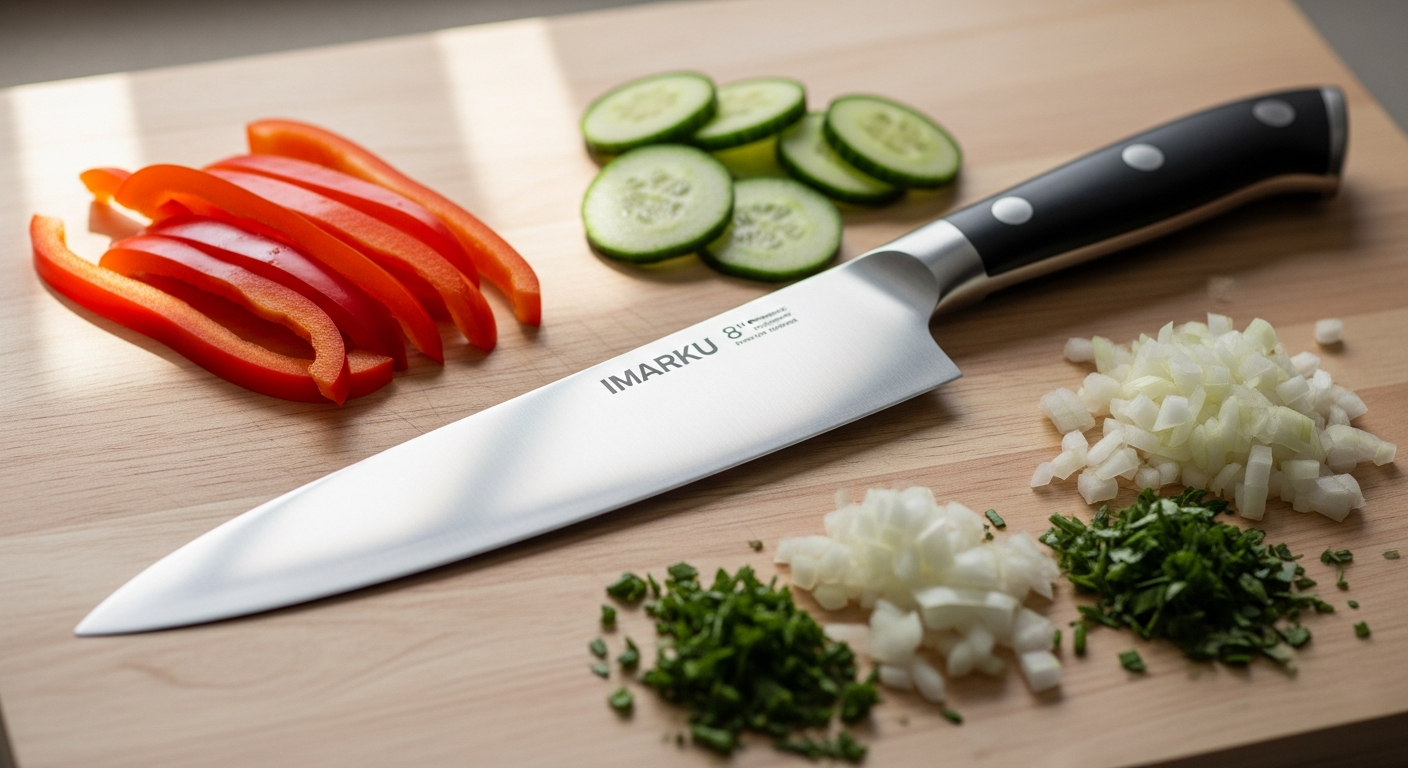
Most home cooks spend between $100 and $300 on their first quality chef knife—only to discover they overpaid. A sharp, reliable blade doesn't require a premium price tag anymore. The knife market has fundamentally shifted, with thoughtfully engineered alternatives now delivering the sharpness, durability, and control that once justified premium costs.
The Imarku 8-inch high-carbon chef knife represents this shift perfectly. This knife has become the brand's most popular product, earning recognition as an ideal all-rounder for both beginners and seasoned home cooks. It challenges the assumption that professional-grade cutting performance requires a three-digit investment.
Understanding what makes this knife work means examining the engineering beneath the surface, testing how the handle performs during real meal prep, and honestly assessing where it delivers and where it requires adjustment. This guide walks through the construction that creates its razor-sharp edge, how its ergonomic design reduces kitchen fatigue, what daily users actually report after months of regular work, and whether it genuinely competes with knives costing significantly more.
Discover the Imarku 8-inch chef knife and transform your kitchen today.
The Engineering Behind the Edge—High-Carbon Stainless Steel Explained
The blade composition determines everything about how a knife cuts and how long it stays sharp. The Imarku uses German-style high-carbon stainless steel, a construction designed specifically for durability and corrosion resistance. This material selection matters because it prevents the rust and discoloration that plague cheaper knives while maintaining the hardness needed for precise cutting.
Hand-Polished Edge and Angle Precision
The blade arrives with a 15-18 degree hand-polished edge, sharpened to a level that most home cooks never achieve with their own maintenance attempts. This angle is crucial—it's steep enough to hold an edge through extended use but shallow enough to bite through food cleanly. From unboxing, the knife cuts with a responsiveness that justifies the purchase immediately.
Full-Tang Construction for Balance and Durability
Full-tang construction means the blade extends completely through the handle rather than stopping partway. This design creates superior balance and structural integrity. You feel the difference in how the knife handles—there's no flex, no disconnect between blade and grip. The knife becomes an extension of your hand rather than a tool you're holding.
Edge Retention Through Daily Use
High-carbon steel maintains sharpness through repeated use on different food types. The steel resists the micro-chipping that occurs when cheaper blades encounter harder vegetables or bones. Slicing tomatoes in week one delivers the same clean cuts as slicing them in week eight. The edge eventually dulls through normal use—that's inevitable—but the rate of dulling is considerably slower than budget alternatives.
Comfort Meets Performance—The Pakkawood Handle Advantage
The handle transforms this knife from merely functional to genuinely pleasant to use during extended prep sessions. Pakkawood offers a wood-like aesthetic with superior durability and moisture resistance compared to actual wood. It looks professional on your countertop while delivering the comfort that synthetic materials sometimes sacrifice.
Ergonomic Design and Wrist Tension Reduction
Ergonomics aren't just marketing language here—they affect whether your hand aches after preparing vegetables for thirty minutes. The Pakkawood handle is contoured to fit the natural grip position, reducing wrist tension that accumulates during repetitive cutting motions. Many users report noticeably less hand fatigue compared to their previous knives, even when working continuously through meal prep.
Weight Distribution and Control
The balanced weight distribution enhances control and minimizes hand fatigue. This knife doesn't feel top-heavy like some cheaper models or require constant grip adjustment. The balance point sits naturally in your hand, so you guide the blade rather than fighting its weight. This control matters most when you're dicing dozens of garlic cloves or working through a case of onions.
Grip Security and Surface Texture
The textured surface prevents slipping even when your hands are wet or oily from cooking. You maintain absolute control without consciously gripping harder, which further reduces hand fatigue during extended use. The grip stays consistent whether you're working at a leisurely pace or moving quickly through prep work.
Experience the precision and comfort of the Imarku chef knife with your next meal.
Real-World Kitchen Performance—What You Can Actually Do With This Knife
The true test of any chef knife happens in actual kitchens, not on marketing pages. The Imarku performs exceptionally across the full range of cutting tasks that define daily cooking.
Slicing Capabilities
Precision cuts through proteins, vegetables, and fruits come naturally with this blade. Whether you're slicing a chicken breast into cutlets or papering thin tomato slices, the sharp edge bites cleanly without crushing or tearing. The blade length handles both small delicate items and larger food pieces without requiring constant adjustment of technique.
Dicing and Mincing
Fine blade control allows uniform cuts in onions, garlic, herbs, and other ingredients where consistency matters. The sharp edge means you can use a rocking motion without the blade bouncing or slipping sideways. Your knife work becomes more efficient, and the results look more professional.
Chopping Versatility
This knife handles both delicate herbs and tougher vegetables with equal competence. From basil to butternut squash, the construction and sharpness adapt to whatever you're cutting. You don't need separate knives for different tasks—this becomes your primary go-to blade.
User Testimonials and Daily Experience
Home cooks who use this knife daily consistently praise its exceptional sharpness, the comfortable and durable handle, and its ability to perform across the range of kitchen tasks. The common thread through user feedback is surprise at the quality-to-price ratio. People report that it performs comparably to premium knives they've owned, often exceeding expectations for the price point.
The Value Proposition—Premium Performance at Budget Prices
The Imarku typically sells for under $50, with frequent sales dropping it to around $39. Compare this to Imarku's own 8-inch Japanese Chef Knife listed at $69.99 USD, regularly discounted from $139.99 USD. The pricing strategy is straightforward: you're paying for engineering and quality rather than brand prestige.
Cost-Per-Use Analysis
Affordability translates to actual kitchen value over months and years. If you use this knife five days per week for three years, you're spending roughly $0.15 per use—an amount so small it barely registers. Even if you replace it after five years, the cost-per-use remains negligible. Most home cooks will sharpen it occasionally and use it for a decade, making the actual daily cost virtually nothing.
Comparison to Premium Brands
Performance gaps between this knife and options costing $150 or more exist, but they're narrower than the price gap suggests. Premium knives offer refined fit and finish, harder steels that hold an edge longer between sharpenings, and established brand reputations. For home cooks, however, the difference in actual cutting performance is minor. You get approximately 80% of the performance for 30% of the cost.
Gift-Giving Appeal
The attractive packaging and quality construction make this an excellent present for people building their kitchen toolkit. It arrives ready to cut, looks professional, and performs well enough that recipients actually use it rather than tucking it away. The price point also feels thoughtful without appearing extravagant.
The Bottom Line—Why This Knife Deserves a Spot in Your Kitchen
The Imarku 8-inch high-carbon chef knife delivers sharp, responsive cutting performance that feels satisfying every time you pick it up. The ergonomic Pakkawood handle won't leave your hand aching after an hour of prep work. The price tag feels almost guilty when you consider what you're actually getting—professional-grade cutting capability at a fraction of premium costs.
This knife won't match knives costing three times as much in refined fit and finish. You'll likely sharpen it more frequently than premium alternatives made from harder steel. The construction is primarily Chinese-made, which matters to consumers seeking true Japanese craftsmanship. Despite these considerations, the knife performs exceptionally well for home cooks building their kitchen arsenal without financial strain.
The real question isn't whether this knife is perfect—it isn't. The question is whether you're willing to spend another $150 to $200 chasing incremental improvements when this knife does everything you actually need. For those hesitating over whether to invest in a quality chef knife, this is your signal to stop waiting and start cooking with something that actually works.
Get the Imarku 8-inch chef knife now and upgrade your cooking experience.
Leave a Reply