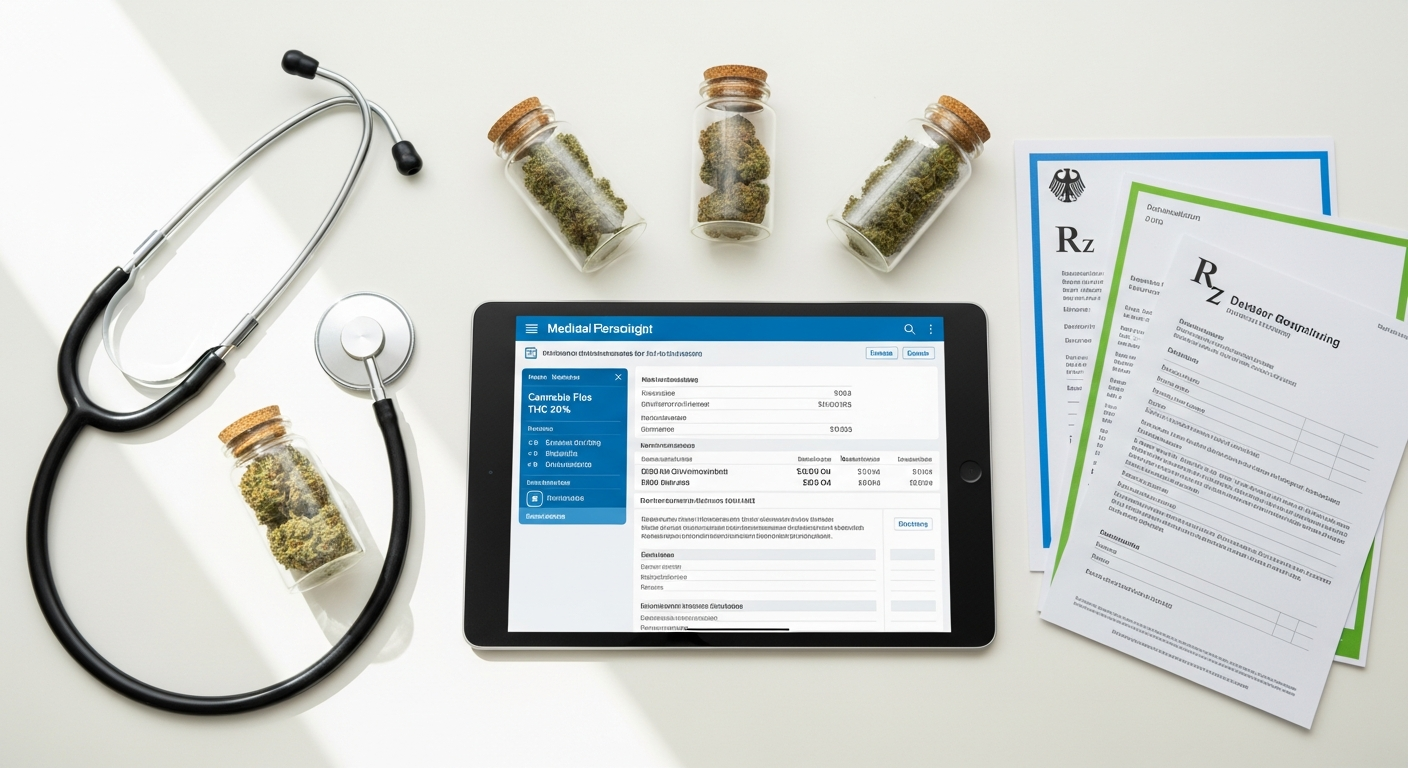
Medical cannabis flowers displayed with digital prescription on computer screen showing online access

How to Access Medical Cannabis Flowers Online: Germany’s Digital Prescription Guide for 2026

The landscape of medical cannabis access in Germany has transformed dramatically. Over 230,000 patients now rely on telemedical platforms to obtain medical cannabis flowers, with that number climbing steadily as traditional healthcare barriers continue to crumble. What once required navigating bureaucratic medical systems, lengthy waiting periods, and in-person appointments has shifted into something fundamentally different—a streamlined digital experience that meets patients where they are.

Germany’s regulated medical cannabis market operates under rigorous pharmaceutical standards, yet modern telemedical services have stripped away the complexity that once made access feel impossible. The regulatory framework ensures quality through GMP (Good Manufacturing Practice) certification, but the process itself has become remarkably straightforward. The platform specializes in connecting eligible patients with experienced doctors and partner pharmacies that stock diverse medical cannabis strains, each with distinct therapeutic profiles.

Start your journey toward accessible medical cannabis access today. This guide walks you through how the digital consultation process works, how to navigate strain selection using live inventory tools, what you can expect to pay, and which conditions qualify for treatment. By the end, you’ll have a clear roadmap for obtaining medical cannabis through Germany’s most efficient telemedical channels.

The Digital Consultation Process: From Application to Prescription

How online questionnaires and video consultations assess patient eligibility

The entry point into telemedical cannabis access begins with an online questionnaire that gathers essential medical history. This digital form asks about your current health conditions, previous treatments, medications, and specific symptoms. The questionnaire isn’t bureaucratic paperwork—it’s a clinical assessment tool designed to give specialized doctors the information they need to evaluate your case.

Following questionnaire submission, eligible candidates schedule video consultations with doctors trained specifically in cannabis therapeutics. These aren’t generic telehealth appointments; the physicians conducting them have expertise in cannabinoid therapy and understand how different strains address specific conditions. During the video consultation, the doctor reviews your medical history, discusses your symptoms in detail, and determines whether medical cannabis flowers represent an appropriate treatment option for your situation.

What medical conditions qualify for medical cannabis flower prescriptions

Chronic pain ranks among the most common qualifying conditions. Patients managing back pain, neuropathic pain, arthritis-related discomfort, and other persistent pain conditions frequently receive approval for medical cannabis flower prescriptions. The approach differs from traditional pain management—cannabis flowers address pain through multiple cannabinoid and terpene compounds rather than targeting a single pain pathway.

Migraines and tension headaches represent another major qualifying category. Patients who experience frequent migraines, especially those who haven’t responded well to conventional preventive medications, often find success with specific cannabis strains. The cannabinoids in medical cannabis flowers can both prevent migraine onset and provide relief during acute episodes.

Sleep disorders, including insomnia and sleep disturbances related to chronic conditions, qualify for cannabis flower treatment. Certain strains with specific cannabinoid and terpene profiles promote deeper, more restorative sleep without the dependency concerns associated with pharmaceutical sleep aids.

ADHD symptom management through balanced cannabinoid profiles represents an emerging but increasingly recognized application. Patients managing attention difficulties, hyperactivity, and executive function challenges may receive prescriptions for strains formulated to address these symptoms.

Depression and anxiety-related conditions also fall within the qualifying spectrum. The interaction between cannabinoids, terpenes, and the endocannabinoid system can influence mood regulation and emotional balance.

Timeline expectations: how quickly you can receive approval with typical turnaround times

The speed of telemedical cannabis access represents one of its defining advantages. Most patients complete their initial questionnaire within 15-30 minutes. Scheduling a video consultation typically occurs within days of questionnaire submission, often within 48-72 hours for initial availability.

The video consultation itself lasts 20-40 minutes, depending on case complexity. Following the consultation, doctors usually provide approval or further assessment requirements within one business day. This means eligible patients can receive their digital prescription within 3-5 business days of submitting their initial application—a timeline that would take months through traditional medical channels.

Once you receive your prescription, partner pharmacies fulfill orders rapidly. Most patients report receiving their medication within 2-7 business days of prescription approval, though this varies based on strain availability and delivery address.

Documentation requirements and what to prepare before your consultation

Gathering relevant medical documentation before your consultation accelerates the approval process. Previous diagnostic reports, imaging studies, specialist letters, and current medication lists all strengthen your case and provide context for the doctor’s evaluation.

You’ll need to prepare a list of treatments you’ve already tried and their effectiveness. This helps the doctor understand why medical cannabis flowers might address your symptoms where other approaches have fallen short. If you’ve worked with other specialists—neurologists for migraines, pain management specialists for chronic pain, sleep medicine doctors for insomnia—having those notes available supports a stronger application.

Current medication information, including dosages and duration of use, helps doctors assess potential interactions and whether cannabis flowers represent an appropriate complementary or alternative approach.

How specialized telemedical doctors evaluate your case without in-person visits

Telemedical doctors trained in cannabis therapeutics gather comprehensive information through the questionnaire and video consultation, then apply clinical judgment refined through their specialized training. They assess symptom severity, previous treatment responses, medical contraindications, and the specific cannabinoid and terpene profiles most likely to help your situation.

The video consultation format allows doctors to observe patient presentation, ask clarifying questions in real-time, and discuss treatment expectations. This personal connection, conducted digitally, often provides more nuanced understanding than a standard checklist-based approval process.

Doctors also consider your medical history holistically. They evaluate whether medical cannabis flowers complement your existing treatment plan or represent a standalone approach. This individualized assessment is what distinguishes specialized telemedical cannabis doctors from generic practitioners unfamiliar with cannabinoid therapy.

What the Live-Bestand feature reveals about available cannabis strains

The Live-Bestand (live stock) feature provides real-time visibility into currently available medical cannabis strains across partner pharmacies. Rather than selecting from a limited, static menu, patients see exactly which strains are in stock, their specific cannabinoid profiles, and availability status. This transparency transforms strain selection from guesswork into informed decision-making.

The live inventory shows strain names, origin information, and exact THC and CBD percentages. You’re not ordering based on general strain categories—you’re selecting specific products with measurable cannabinoid contents. This precision matters tremendously when treating conditions where cannabinoid ratios directly influence therapeutic outcomes.

How to read THC/CBD ratios and what they mean for your treatment

THC and CBD percentages determine the strain’s therapeutic character and psychoactive properties. A strain listed as “18% THC / 0.5% CBD” contains significantly higher THC relative to CBD, producing more pronounced psychoactive effects and stronger analgesic properties. These high-THC strains work well for patients managing pain or seeking uplifting effects.

Balanced strains might show “10% THC / 8% CBD,” offering therapeutic effects from both cannabinoids while moderating psychoactivity. These balanced profiles suit patients who want symptom relief without substantial psychoactive sensation or those managing multiple conditions benefiting from both cannabinoids.

High-CBD strains, conversely, contain minimal THC with substantial CBD—perhaps “2% THC / 16% CBD.” These strains provide anti-inflammatory, anxiolytic, and neuroprotective effects without significant psychoactivity. Patients managing anxiety, inflammation, or neurological conditions often prefer these profiles.

Understanding your condition’s requirements helps you select appropriate ratios. Pain conditions often respond better to higher-THC strains, sleep disorders may benefit from balanced or high-THC formulations, while anxiety and inflammation frequently improve with higher-CBD options.

Terpene profiles explained: how specific compounds affect therapeutic outcomes

Terpenes are aromatic compounds in cannabis flowers that contribute both to the plant’s flavor profile and its therapeutic effects. Myrcene, one of the most abundant terpenes, promotes sedation and pain relief—making myrcene-rich strains ideal for evening use and pain management. Limonene provides uplifting, mood-enhancing effects. Pinene supports memory and focus. Linalool contributes calming, anxiolytic properties.

The specific terpene composition within a strain determines how the cannabinoids interact with your endocannabinoid system—a phenomenon sometimes called the “entourage effect.” Two strains with identical THC and CBD percentages can produce different therapeutic outcomes based on their distinct terpene profiles.

The live inventory tools display terpene compositions, allowing you to match strains to your symptom profile and time-of-day needs. An evening strain for sleep might emphasize myrcene and linalool. A daytime strain for focus might highlight pinene and limonene. This granular selection process ensures you’re not just choosing cannabis flowers generally, but selecting specific chemotypes optimized for your therapeutic goals.

Indica-dominant strains for sedation and pain relief applications

Indica-dominant strains typically contain higher myrcene concentrations and produce more sedating, body-focused effects. These strains excel at reducing pain perception, promoting muscle relaxation, and facilitating sleep. If you’re managing chronic pain with an evening dose or treating insomnia, Indica-dominant strains with high THC and myrcene represent your optimal selection.

The sedative properties of Indica strains derive partly from their cannabinoid profile but also significantly from their terpene composition. Myrcene-rich Indicas create that characteristic “couch-lock” sensation where physical relaxation predominates over mental stimulation. For pain conditions, this deep physical relaxation directly reduces pain signaling and muscle tension.

Pricing Breakdown: What Medical Cannabis Flowers Actually Cost

Per-gram pricing structure ranging from €5.69–€9.29 with VAT included

Medical cannabis flower pricing in Germany’s telemedical channels ranges from approximately €5.69 per gram at the lower end to €9.29 per gram at the higher end, with all prices including VAT. This transparency means you’re never surprised by hidden fees—the price you see per gram is what you’ll pay.

The per-gram structure allows flexible ordering. A patient might start with a 5-gram trial batch to assess strain effectiveness, costing roughly €28-€47 depending on the specific strain selected. As you determine which strains work best for your condition, you can adjust order sizes and selections accordingly.

How pricing varies by strain potency and cannabinoid content

Higher-potency strains—those with elevated THC or CBD percentages—typically command higher per-gram prices. A strain with 22% THC might cost €9.29 per gram, while a lower-potency strain at 12% THC could cost €6.29 per gram. This pricing structure reflects the cultivation requirements and yields associated with higher-cannabinoid strains.

Premium or specialty strains, particularly those with distinctive terpene profiles or limited availability, may occupy the higher price range. Standard, widely-available strains typically fall into mid-to-lower price categories. The live inventory clearly displays each strain’s price, so cost comparison happens transparently before you select your product.

Consultation fees: when you pay €0 versus when video consultations carry charges

Some telemedical platforms offer initial consultations at no cost, recovering their service revenue through pharmacy partnerships and ongoing care fees. Other platforms charge for video consultations with specialized cannabis doctors, ranging from modest fees to €100+ depending on the service level and doctor expertise.

The cost differential often reflects the doctor’s specialization level and consultation length. A €0 consultation might involve a standard assessment, while a paid consultation might include extended time, detailed treatment planning, or ongoing follow-up support. Platforms typically display consultation fees upfront, allowing you to factor costs into your decision.

Compare consultation options and find the right fit for your budget and needs. Many patients find even paid consultations cost-effective compared to multiple traditional doctor visits required to obtain medical cannabis prescriptions through conventional channels.

Bulk ordering discounts and package options for long-term patients

Patients committing to regular medical cannabis flower therapy can often access bulk ordering discounts. Ordering 30 grams rather than 5 grams from a single strain frequently reduces the per-gram cost by 10-15%. For long-term patients, monthly or quarterly ordering patterns create significant cumulative savings.

Some platforms offer subscription-based models where patients receive regular shipments at discounted rates. These arrangements work particularly well for patients managing chronic pain, sleep disorders, or ADHD where consistent dosing supports optimal therapeutic outcomes.

Discrete Delivery and Pharmacy Partnerships

How partner pharmacy networks ensure reliable product fulfillment

Telemedical platforms partner with licensed pharmacies across Germany that specialize in medical cannabis flower distribution. These pharmacies maintain GMP-certified inventory, proper storage conditions, and compliance with all regulatory requirements. The network approach means your prescription can be fulfilled by whichever partner pharmacy has your selected strain in stock, accelerating delivery.

Partner pharmacies are vetted for their reliability, storage standards, and customer service. The platform’s reputation depends on these partnerships delivering consistent quality and timely fulfillment, so partners maintain high operational standards.

Discrete packaging standards protecting patient privacy during delivery

Discrete packaging represents a critical feature for patients concerned about privacy. Pharmacies ship medical cannabis flowers in unmarked packages with no external indication of contents. Your name appears on the package as the recipient, but nothing suggests the package contains cannabis products or medications of any kind.

This privacy protection removes a significant barrier for patients hesitant about neighbors, family members, or roommates knowing about their medical cannabis therapy. Discrete delivery demonstrates that legitimate medical cannabis access doesn’t require public disclosure or shame.

Typical delivery timeframes from prescription approval to your doorstep

Most patients receive their medical cannabis flowers within 2-7 business days of prescription approval, depending on strain availability and delivery address. Urban areas often experience faster delivery—sometimes within 2-3 business days—while rural regions may require additional time.

The pharmacy fulfills your prescription, prepares discrete packaging, and ships via standard postal or courier service. Once shipped, tracking information typically becomes available, allowing you to monitor your order’s progress.

Tracking systems for monitoring your order status in real-time

Platforms typically provide tracking numbers and regular status updates so you know exactly when to expect your delivery. This transparency reduces uncertainty and allows you to plan for package receipt. You’re not left wondering whether your order shipped or when it might arrive—the system keeps you informed throughout.

Medical Conditions Treated with Online-Accessed Cannabis Flowers

Chronic pain management and how specific strains target pain pathways

Chronic pain represents one of the most compelling cases for medical cannabis flower therapy. Persistent pain from back injuries, arthritis, fibromyalgia, or post-surgical complications significantly impacts quality of life, and conventional pain management often involves medications with substantial side effects or dependency risks.

Medical cannabis flowers address pain through multiple mechanisms. THC activates CB1 receptors in the central and peripheral nervous system, reducing pain signal transmission. CBD provides anti-inflammatory effects that address pain originating from inflammation. Terpenes like myrcene and beta-caryophyllene directly contribute analgesic properties.

High-THC strains often provide the strongest acute pain relief, while balanced THC/CBD strains offer pain reduction with clearer mental function. Patients managing chronic pain typically find that specific strains, identified through their cannabinoid and terpene profiles, deliver superior pain relief compared to others.

Migraine prevention and acute migraine relief through cannabinoid therapy

Migraines affect millions of people with traditional preventive medications offering variable effectiveness and significant side effects. Medical cannabis flowers show promise both for preventing migraine onset and providing acute relief during migraine episodes.

The mechanisms appear multifaceted. Cannabis flowers influence serotonin and dopamine regulation, both implicated in migraine pathophysiology. Cannabinoids modulate neuroinflammation and vascular function. Some patients report that consistent use of specific strains reduces migraine frequency and intensity, while others find that taking cannabis flowers during migraine onset rapidly alleviates pain and associated symptoms.

Strain selection matters significantly for migraine management. Patients often identify specific strains that work best for their migraine profile through the live inventory trial-and-selection process. High-CBD strains appear particularly useful for prevention, while balanced or high-THC strains provide acute relief.

Sleep disorders: which strains promote restful sleep without dependency risks

Insomnia and sleep disturbances, whether primary or related to chronic pain, anxiety, or other conditions, often improve dramatically with appropriate medical cannabis flower therapy. Unlike pharmaceutical sleep aids with dependency potential and morning grogginess, cannabis flowers promote sleep through natural endocannabinoid system modulation.

Indica-dominant strains with high myrcene content produce the most pronounced sleep-promoting effects. Evening use of these strains helps patients fall asleep faster, sleep more deeply, and wake with greater refreshment. The sedative properties derive from both cannabinoid and terpene profiles—creating a synergistic effect that conventional pharmaceuticals cannot replicate.

Patients with sleep disorders often benefit most from consistent evening dosing with the same strain, allowing them to establish reliable sleep patterns without the escalating tolerance or dependency concerns associated with sleep medications.

ADHD symptom management using balanced cannabinoid profiles

ADHD symptom management with cannabis flowers represents an emerging but increasingly recognized application. Balanced cannabinoid profiles—strains with moderate THC and moderate-to-high CBD—appear to support focus, reduce impulsivity, and improve executive function for some patients.

The mechanism likely involves cannabinoid effects on dopamine regulation and attention networks. Rather than the stimulant approach of conventional ADHD medications, cannabis flowers influence neurotransmitter balance through endocannabinoid system modulation. This alternative mechanism suits patients who don’t tolerate or respond well to traditional ADHD medications.

Daytime strains with terpenes supporting alertness—pinene and limonene—typically work better for ADHD management than evening sedative strains. Many ADHD patients report that their preferred strains enhance sustained attention and reduce the time needed to initiate tasks.

Advantages of Telemedical Cannabis Access Over Traditional Routes

Eliminating long waiting lists at conventional medical practices

Traditional medical cannabis access in Germany requires seeing a doctor with cannabis prescription authority, often after previous treatment attempts and specialist referrals. Waiting lists for these specialized doctors stretch months. Many patients experience extensive delays before securing even an initial appointment, let alone receiving a prescription.

Telemedical platforms eliminate these waiting periods entirely. You complete your questionnaire today, potentially schedule a consultation within 48 hours, and receive your prescription within days. What would take 4-6 months through traditional channels completes in less than a week through telemedical services.

No travel requirements: consultations happen from your home or office

Video consultations mean you’re not traveling to doctor’s offices, potentially multiple times for various assessments and appointments. Whether you live in a rural area with no nearby cannabis-specialist doctors or in an urban center with limited availability, telemedical consultations happen from your current location.

This geographic flexibility removes a major barrier for patients with mobility limitations, transportation challenges, or simply the inconvenience of scheduling office visits. Your consultation happens when and where you’re ready, without geographic constraints.

Specialized expertise: access to doctors trained specifically in cannabis therapeutics

Telemedical platforms employ doctors with actual specialization in cannabis therapeutics—not general practitioners suddenly prescribing medical cannabis without specific training. These doctors understand cannabinoid pharmacology, strain selection principles, and therapeutic applications in depth.

This expertise translates to more effective treatment. A specialized doctor immediately recognizes which strains suit your conditions, understands terpene significance, and can answer detailed questions about cannabinoid interactions and optimal dosing. You’re not dealing with a doctor learning medical cannabis on your case—you’re working with trained specialists.

Speed of service: faster approval and prescription fulfillment cycles

The entire process, from initial questionnaire to prescription approval to pharmacy fulfillment, completes in days rather than months. Once you have your prescription, partner pharmacies fulfill orders rapidly. This speed means patients can begin treatment quickly rather than enduring months of delays while suffering with untreated symptoms.

The speed advantage particularly matters for acute conditions like migraines or pain flare-ups. Patients who can obtain their medical cannabis flowers within a week of recognizing their need experience symptom relief far faster than those navigating traditional medical systems.

Getting Started: Your Step-by-Step Action Plan

Creating your account and completing the initial online questionnaire

Begin by visiting a telemedical platform and creating your patient account. This process typically involves providing basic contact information, creating login credentials, and verifying your identity. Account creation takes less than 10 minutes.

Once your account is established, you’ll access the online questionnaire. Complete this form thoroughly and honestly. The questionnaire asks about your medical conditions, previous treatments, current medications, symptoms, and why you believe medical cannabis flowers might help your situation. Spend adequate time answering—the information you provide directly influences the doctor’s evaluation.

Scheduling your video consultation with a telemedical doctor

After submitting your questionnaire, the platform processes your information and makes available consultation time slots. Review available appointments and select a time matching your schedule. Most platforms allow appointments within 48-72 hours of questionnaire submission.

Before your consultation, prepare any relevant medical documentation—previous test results, specialist letters, medication lists. Having this information readily available during your video call allows the doctor to evaluate your case thoroughly without requiring follow-up information.

Preparing medical documentation to streamline the approval process

Gather copies of diagnostic reports, specialist letters, imaging studies, and prescription lists relevant to your condition. If you’ve seen neurologists, pain specialists, or sleep medicine doctors, their assessment letters strengthen your application significantly.

Prepare a brief summary of treatments you’ve already attempted and their outcomes. This summary demonstrates that you’ve pursued conventional approaches and establishes medical cannabis flowers as a reasonable next step. Patients who present clear documentation and thoughtful context accelerate their approval timeline.

Selecting your preferred partner pharmacy and choosing your initial strain

After approval, you’ll have access to the live inventory system showing currently available strains across partner pharmacies. Review the cannabinoid profiles, terpene compositions, and pricing. Your first selection doesn’t require perfection—you’re establishing baseline information about which strains work for your condition.

Many patients start with a smaller order (5-10 grams) to assess strain effectiveness before committing to larger quantities. This trial-and-evaluation approach allows you to refine your preferences based on actual experience rather than theoretical prediction.

The Path Forward: Making Online Medical Cannabis Access Work for You

Accessing medical cannabis flowers online through Germany’s telemedical platforms represents a genuine breakthrough for patients tired of bureaucratic delays and limited options. The combination of specialized doctors, live strain inventory, transparent pricing, and discrete delivery creates a treatment pathway that simply didn’t exist five years ago. Patients who would have struggled for months navigating traditional medical systems now access prescriptions within days.

The beauty of this system lies in its transparency. You’re accessing GMP-certified, pharma-grade cannabis flowers through legitimate medical channels with professional guidance throughout. The live inventory systems reveal exactly what you’re purchasing—specific cannabinoid percentages, terpene profiles, and real-time availability. The pricing structure contains no hidden fees or surprise costs. The consultation process involves doctors trained specifically in cannabis therapeutics, not generalists unfamiliar with cannabinoid treatment.

If you’ve been struggling with chronic pain that conventional medications can’t adequately address, migraines that incapacitate you monthly, sleep disorders that leave you exhausted, or ADHD symptoms that medication-resistant, the friction that once kept you from trying medical cannabis therapy has essentially vanished. The barriers—waiting months for appointments, traveling to distant specialists, enduring bureaucratic documentation processes—have been systematically dismantled by telemedical innovation.

The next step requires simple action: research platforms available in your region, gather your medical documentation, and schedule that initial consultation. Your journey toward better symptom management could begin this week.

Take the first step toward accessible medical cannabis access now.


Comments

Leave a Reply

Your email address will not be published. Required fields are marked *