Workplace fires devastate businesses each year, consuming millions in property damage, recovery costs, and operational disruption. Beyond the financial toll, these incidents threaten employee safety and can result in regulatory penalties that compound the initial loss. The stakes have never been higher for facilities managers and safety directors tasked with protecting their workplaces.
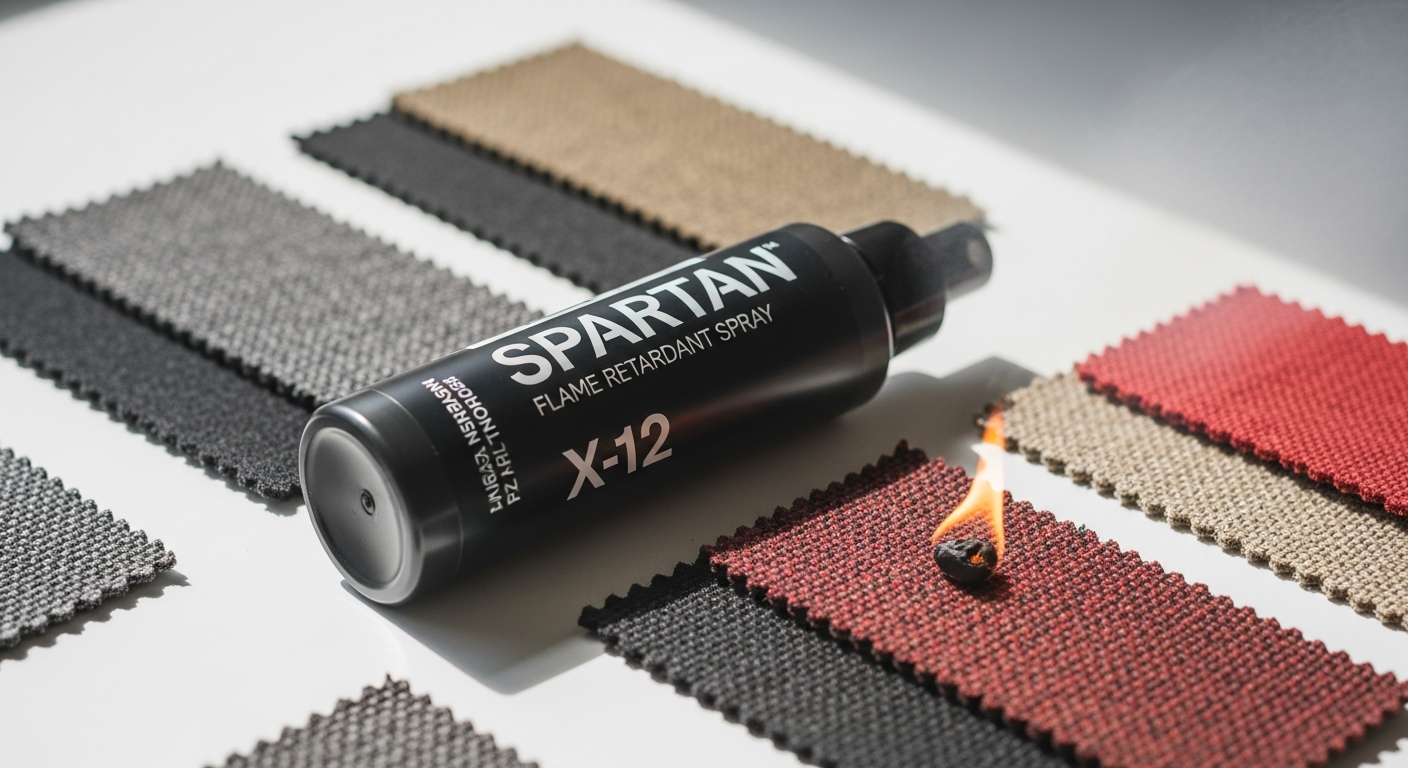
Spartan X-12 Flame Retardant Spray represents a fundamental shift in commercial fire protection strategy. Rather than relying on traditional chemical-based retardants that raise health concerns in occupied spaces, this solution delivers certified fire protection with a non-toxic formulation. The product carries an impressive array of industry certifications—from CalFire and NFPA standards to GSA and VA approvals—making it engineered specifically for environments where employees, customers, and visitors spend their days.
This guide examines how Spartan X-12 stands apart in protecting commercial facilities. You'll discover the reasoning behind its growing adoption, how its dual-format application system works, what its extensive certifications actually mean, and how to evaluate whether it's the right fit for your specific facility needs.
Explore Spartan X-12 options for your facility today
Why Commercial Facilities Are Turning to Non-Toxic Flame Retardants
Health and Safety Concerns in Occupied Workspaces
Traditional flame retardant sprays have relied on chemical formulations that raise legitimate health concerns when applied in spaces where people work daily. Employees exposed to certain chemical compounds over extended periods face potential respiratory issues, skin sensitivities, and long-term health complications. Facility managers increasingly recognize that fire protection shouldn't compromise the wellbeing of the very people they're trying to protect.
Regulatory Pressure and Compliance Requirements
OSHA regulations and state fire marshals have intensified scrutiny of hazardous materials in commercial environments. Facilities must now document their fire safety measures and demonstrate that protective treatments meet current safety standards. Non-compliance can result in fines, facility closures, or mandated re-treatment with approved products. This regulatory landscape has made products with extensive third-party certifications the preferred choice for risk-conscious organizations.
Insurance and Liability Advantages
Insurance carriers actively incentivize businesses that implement certified, non-toxic fire protection measures. Facilities using products with documented compliance records often qualify for premium reductions or improved coverage terms. Additionally, the liability exposure decreases substantially when using solutions backed by rigorous third-party testing and government approvals. These financial and legal protections make non-toxic formulations more attractive from a business operations perspective.
Decoding Spartan X-12's Industry Certifications and Compliance Standards
CalFire Registration and California Operations
CalFire Registration #C-06900 carries significant weight for any facility operating in California or subject to California fire codes. This registration indicates that Spartan X-12 has undergone rigorous testing and meets the stringent standards set by the California Department of Forestry and Fire Protection. For California-based operations, this certification streamlines compliance efforts and demonstrates adherence to state-specific requirements.
NFPA 701 & 702 Compliance Standards
NFPA 701 and 702 standards measure how materials perform when exposed to flame, establishing ratings for flame spread and smoke development. These tests simulate real-world fire conditions and provide quantifiable data on fire performance. Spartan X-12's compliance with these standards means treated materials have been tested to withstand specific flame exposure scenarios commonly encountered in commercial environments.
ASTM E-84 Testing and Fire Performance Measurement
ASTM E-84 represents the standard test method for surface flammability of materials. This test evaluates how quickly flame spreads across a treated surface and how much smoke develops during exposure. Facilities treating their materials with Spartan X-12 can reference ASTM E-84 results when demonstrating fire safety performance to inspectors, insurers, or regulatory bodies.
GSA and VA Approvals for Government Facilities
GSA (General Services Administration) and VA (Veterans Affairs) approvals indicate that Spartan X-12 meets federal standards for use in government buildings and veteran facilities. These approvals require particularly rigorous testing and documentation, making them valuable credentials for any facility seeking the highest assurance of product reliability and performance.
Application Methods: Liquid vs. Powder Formulations for Different Needs
Ready-to-Use Liquid Spray Advantages
The liquid formulation arrives ready for immediate application without mixing or preparation. This format works exceptionally well for targeted treatments—protecting specific furniture pieces, fabric sections, or localized materials that require quick turnaround. Facility managers can deploy liquid spray solutions rapidly when addressing problem areas or responding to specific fire safety concerns without waiting for product preparation.
Concentrated Powder Benefits for Large-Scale Treatments
The concentrated powder option provides substantial advantages for facilities treating extensive surface areas. A single container of powder can treat significantly more material than equivalent volumes of liquid spray, making it economical for industrial settings or large office complexes. The powder format also offers flexibility in concentration—facilities can adjust mixing ratios based on specific material requirements or treatment depth preferences.
Water-Mixing Flexibility and Custom Concentrations
The ability to mix powder with water at custom concentrations gives facility managers precise control over treatment intensity. Different materials and applications may benefit from varying concentration levels, and the powder option accommodates these nuanced requirements. This flexibility eliminates waste from one-size-fits-all liquid solutions and allows optimization based on actual facility conditions.
Cost-Effectiveness Analysis: Liquid vs. Powder
When comparing total cost of ownership, the powder formulation typically delivers better value for large-scale operations. The concentrated form reduces shipping costs, storage space requirements, and application waste. For smaller facilities or targeted treatments, the ready-to-use liquid may prove more economical since it eliminates mixing time and equipment needs. Assessment of your facility's treatment area and application frequency determines which format delivers superior value.
Contact Spartan X-12 distributors for pricing and application consultations
Real-World Applications: Where Spartan X-12 Makes the Difference
Office Buildings and Commercial Spaces
Corporate office buildings contain numerous materials requiring NFPA compliance—upholstered furniture in reception areas, fabric partitions, carpeting in common areas, and paper-based materials throughout administrative spaces. Spartan X-12 addresses these diverse materials with a single, non-toxic solution. The clear-drying formula ensures treated furniture and fixtures maintain their original appearance, avoiding any aesthetic disruption to professional environments.
Healthcare Facilities and Patient-Occupied Spaces
Hospitals, clinics, and medical facilities present unique fire safety challenges. Patient rooms, waiting areas, and diagnostic facilities all contain materials requiring fire protection, yet healthcare workers and vulnerable patients cannot be exposed to toxic chemical treatments. Spartan X-12's non-toxic formulation makes it ideal for these sensitive environments where occupant health is paramount. The product's compatibility with healthcare standards provides peace of mind that fire protection won't compromise patient care.
Educational Institutions
Schools and universities must protect classrooms, dormitories, libraries, and administrative areas while maintaining safe learning environments. Spartan X-12 enables administrators to treat upholstered seating, fabric wall coverings, and paper storage areas without introducing chemicals that could affect student or staff health. Educational facilities benefit particularly from the product's versatility—a single solution addresses the diverse materials found throughout campus buildings.
Government and Federal Facilities
Federal buildings require GSA and VA compliance certifications that not all products possess. Facilities managing government contracts or operating as federal properties can confidently specify Spartan X-12, knowing it meets the stringent requirements federal inspectors enforce. The extensive documentation backing the product streamlines compliance verification and reduces administrative burden for facility managers.
Making the Decision: Is Spartan X-12 Right for Your Facility?
Assessment Checklist for Fire Protection Needs
Begin evaluating your facility's requirements by examining current fire safety measures and identifying gaps. Consider your building's occupancy type, local fire codes, insurance carrier recommendations, and any regulatory requirements specific to your industry. Document existing fire protection measures and determine where additional treatment would reduce risk most effectively. This foundational assessment guides all subsequent decisions about whether and where Spartan X-12 fits into your comprehensive fire safety strategy.
Material Inventory and Treatment Analysis
Conduct a thorough inventory of materials requiring fire protection. Identify all upholstered furniture, fabric wall treatments, carpeting, draperies, paper storage areas, and wood surfaces that could benefit from flame retardant treatment. Assess which materials are in high-traffic areas or present the greatest fire risk. This detailed material mapping enables more accurate cost estimates and helps determine whether the liquid spray or powder formulation better serves your needs.
Regulatory Requirements and Industry Standards
Research fire codes and regulations specific to your facility type and geographic location. Consult with your local fire marshal's office about requirements for your industry. Review your insurance policy to understand any fire safety measures that qualify for coverage benefits or premium reductions. Gather documentation about certifications and standards your facility must maintain. This regulatory groundwork ensures your fire protection investments achieve compliance and maximize insurance advantages.
Next Steps: Contacting Authorized Distributors
Once you've assessed your facility's needs and determined that Spartan X-12 aligns with your requirements, reach out to authorized distributors who can provide site-specific guidance. Discuss your material inventory, building layout, and timeline for treatment. Request pricing based on your facility's scope and learn about application services available in your area. Distributors can answer technical questions and help develop an implementation plan that fits your operational schedule and budget.
Securing Your Facility's Fire Safety Future
Fire protection represents an ongoing commitment that Spartan X-12 transforms into a manageable, affordable reality. The product bridges the critical gap between effective flame retardancy and workplace health—delivering certified protection without the chemical concerns that burden traditional alternatives. The extensive certifications backing Spartan X-12 aren't marketing claims; they represent rigorous third-party testing confirming genuine performance in commercial environments.
Whether your facility requires treatment of upholstered furniture in corporate offices, protective measures for materials in manufacturing environments, or compliance solutions for government buildings, Spartan X-12 provides the flexibility and reliability your operation demands. The non-toxic formulation means you protect your facility without creating new health risks for the people inside it. The dual-format application system—ready-to-use liquid and concentrated powder—accommodates everything from targeted spot treatments to large-scale industrial applications.
Fire safety doesn't wait, and neither should your action plan. The financial consequences of inadequate fire protection far exceed the investment in certified treatments. The liability exposure from preventable fires dwarfs the cost of implementation. Most importantly, the human cost of a workplace fire cannot be measured in dollars.
Leave a Reply