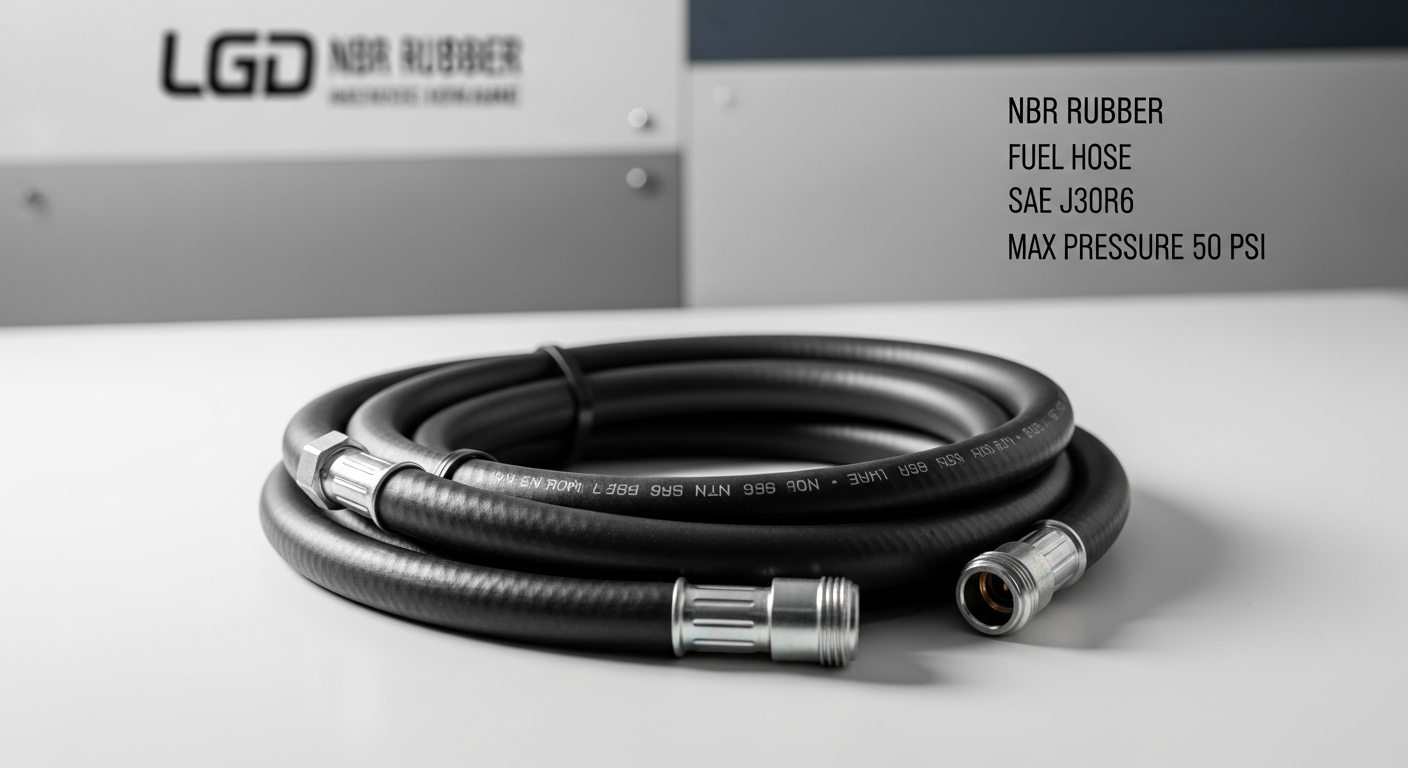
A dependable fuel hose is an important part of any automotive fuel system. Whether you’re replacing an aging line, working on a restoration, or modifying a vehicle, you need a hose that can handle fuel exposure while remaining flexible enough for practical routing.
The EVIL ENERGY 3/8″ Fuel Hose uses NBR rubber and is designed for automotive applications where compatibility, durability, and straightforward installation matter. Its 3/8-inch inner diameter also makes it suitable for a variety of fuel-system configurations, provided its specifications match your vehicle and intended application.
NBR Rubber Construction for Fuel Applications
NBR, or nitrile butadiene rubber, is commonly used in automotive applications because of its resistance to petroleum-based fluids. That makes the material particularly useful for components that regularly come into contact with gasoline, diesel, oil, and related fluids.
For a fuel hose, material selection is important because prolonged exposure to incompatible fluids can contribute to swelling, cracking, softening, or deterioration.
The EVIL ENERGY hose’s NBR construction is intended to provide the flexibility needed for routing while supporting use with compatible automotive fluids. However, you should always verify the hose specifications against the exact fuel you plan to use.
Understanding the 3/8-Inch Size
The hose features a 3/8-inch inner diameter, a common size used in many automotive fuel applications.
Correct sizing matters because your fuel line needs to support the required flow while connecting securely to the appropriate fittings. Before ordering, check the diameter of your existing line and the fittings used throughout your fuel system.
You should not assume that 3/8 inch will work simply because it is widely used. Vehicle configuration, engine requirements, fuel pressure, and other modifications can influence the appropriate hose size.
Flexibility Can Make Routing Easier
One practical advantage of rubber fuel hose is its flexibility. Automotive fuel systems often require lines to travel through relatively tight spaces, making a flexible hose easier to position than rigid alternatives in certain installations.
Flexible construction may also simplify custom routing during restoration or modification projects.
That flexibility does not eliminate the need for careful installation. Avoid sharp bends, excessive tension, contact with moving components, and routing near extreme heat sources. The hose should follow a path that minimizes unnecessary stress and abrasion.
NBR Versus PTFE Fuel Hose
Choosing between NBR and PTFE depends largely on your application.
NBR can be a practical choice for compatible conventional fuels and many everyday automotive projects. It combines flexibility with resistance to petroleum-based fluids, making it useful for a broad range of fuel-line applications.
PTFE hose is different. It is often selected for applications involving more aggressive fuels, higher-performance systems, or situations requiring greater chemical resistance.
Neither material is automatically appropriate for every vehicle. Your fuel type, pressure requirements, temperature exposure, fittings, and overall system design should determine which option makes sense.
Check Fuel and Fitting Compatibility
Before installing the EVIL ENERGY 3/8″ Fuel Hose, verify compatibility throughout your fuel system.
Pay attention to:
- The type of fuel being used
- Required working pressure
- Hose and fitting dimensions
- Operating temperature
- Fitting compatibility
- Routing and clearance
Connections should be secure and appropriate for the specific hose and application. Fuel leaks can create a serious fire hazard, so installation should never rely on guesswork.
If you’re uncertain about the correct hose or fittings, consult the vehicle manufacturer’s specifications or a qualified automotive professional.
Inspect Your Fuel Lines Regularly
Even a properly selected fuel hose should be inspected periodically.
Look for cracking, swelling, unusual softness, abrasion, leaks, or deterioration around connection points. Engine-bay heat, vibration, chemical exposure, and age can eventually affect automotive hoses.
Routine inspection is particularly worthwhile on older vehicles and modified fuel systems where components may operate under conditions different from the original factory configuration.
Replacing a questionable fuel hose early is preferable to waiting until deterioration becomes a leak or another fuel-system problem.
Is the EVIL ENERGY 3/8″ Fuel Hose Right for Your Project?
The EVIL ENERGY 3/8″ Fuel Hose combines NBR rubber construction, a flexible design, and a commonly used 3/8-inch inner diameter, giving you an option to consider for compatible automotive fuel-system projects.
Its suitability ultimately depends on your specific setup. Before buying or installing it, confirm the required hose size, fuel compatibility, pressure and temperature requirements, and fitting specifications for your vehicle.
If those specifications align with your application, the EVIL ENERGY fuel hose can provide a practical way to replace or update part of your fuel delivery system. Careful installation and regular inspection can then help you maintain a secure, dependable setup over time.
Leave a Reply