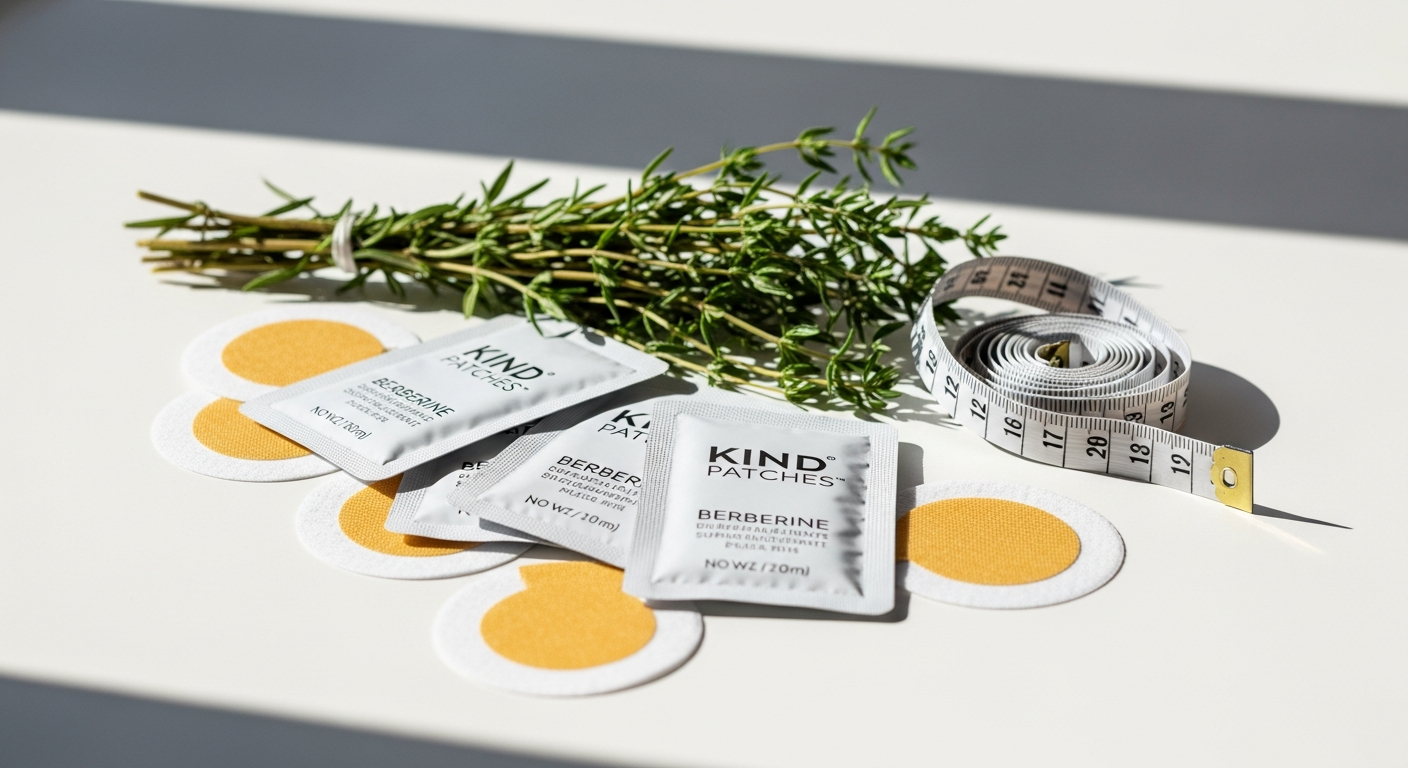
The weight loss patch market has exploded in recent years—with consumers spending billions on wearable solutions that promise to curb cravings and boost metabolism without the hassle of daily pills. Kind Patches Berberine patches have captured significant attention, landing on best-seller lists and attracting thousands of customer reviews. But here's the catch: the science behind transdermal weight loss delivery remains deeply contested, and the marketing claims surrounding these patches often outpace the evidence.
These stick-on patches position themselves as a convenient alternative to GLP-1 medications, featuring berberine and botanical ingredients designed to work through your skin. The appeal is undeniable—a discreet, low-effort approach to weight management that fits seamlessly into your daily routine. Priced around £12-£15 per month's supply, they're positioned as an accessible option for anyone curious about appetite support.
What Are Kind Patches Berberine Patches and How Do They Work?
Kind Patches Berberine patches represent a modern take on an ancient ingredient category. At their core, these are transdermal delivery systems—adhesive patches applied directly to clean, dry skin. Unlike oral supplements that travel through your digestive tract, transdermal patches theoretically deliver active compounds directly through the skin barrier into the bloodstream.
The Core Ingredient: Berberine
Berberine sits at the center of these patches' formulation. This alkaloid compound has a long history in traditional Chinese and Ayurvedic medicine, traditionally used to support digestive health and metabolic function. Modern wellness enthusiasts have become fascinated with berberine's potential role in supporting glucose metabolism and appetite regulation, making it a natural candidate for weight management products.
Supporting Botanical Ingredients
Beyond berberine, Kind Patches formulations incorporate additional botanical ingredients. Pomegranate provides antioxidant support, cinnamon has traditionally been linked to metabolic wellness, and L-glutamine is an amino acid often associated with muscle maintenance and digestive health. Together, these ingredients create a blend aimed at multiple pathways involved in weight management.
The 8-Hour Release Mechanism
Each patch is engineered for an 8-hour steady-release delivery, meaning users would need to apply one patch daily to maintain continuous ingredient exposure. This consistent, controlled release forms part of the appeal—no need to remember multiple daily doses or navigate pill bottles. Simply apply and wear throughout your waking hours.
The Transdermal Delivery Promise—What Science Actually Says
The transdermal delivery mechanism forms the foundation of Kind Patches' marketing narrative. Understanding how this technology actually works—and where it falls short—is essential before deciding whether these patches merit your investment.
How Transdermal Patches Theoretically Deliver Compounds
Transdermal delivery bypasses the digestive system entirely. Rather than compounds being broken down by stomach acid and processed through liver metabolism, they theoretically pass directly through the skin into capillaries beneath the surface. This pathway could theoretically increase bioavailability—the amount of active ingredient your body actually uses.
The Skin Barrier Problem
Medical reality collides with marketing promise at one critical point: the skin barrier. Your skin evolved to protect your body by preventing unwanted substances from entering. Large, water-soluble molecules like most weight loss compounds struggle to penetrate this protective layer at meaningful concentrations. Berberine and the botanical compounds in these patches face this fundamental challenge.
Medical experts consistently point out that the skin's outermost layer, the stratum corneum, acts as an impenetrable wall for most larger molecules. While transdermal technology works brilliantly for certain medications (nicotine patches, hormone replacement patches, pain relief patches), these are carefully formulated compounds that have undergone extensive pharmaceutical development. Even with sophisticated formulation techniques, many weight loss ingredients simply cannot cross this barrier in quantities sufficient to produce significant metabolic effects.
Expert Consensus on Berberine Bioavailability
Research in pharmaceutical science indicates that berberine has poor transdermal penetration properties. Medical professionals acknowledge that while berberine shows promise as an oral supplement at therapeutic dosages (typically 500-1500mg daily in clinical studies), the amounts that can realistically absorb through skin patches fall far short of these evidence-based doses. Consequently, the patches may deliver only a fraction of what would be needed to produce measurable metabolic effects.
Transdermal Versus Oral: A Direct Comparison
When comparing delivery methods directly, oral berberine supplements allow for precise dosing of established amounts. Quality oral supplements can deliver therapeutic quantities tested in clinical research. Transdermal patches, by contrast, offer unproven delivery amounts of unclear bioavailability. For anyone seriously considering berberine supplementation, oral forms with standardized dosages represent the more scientifically grounded approach.
The GLP-1 Comparison Problem—Why 'GLP-1 Patches' Mislead Consumers
Perhaps the most troubling aspect of Kind Patches marketing is the positioning of Berberine patches as "GLP-1 patches" or "Upgraded GLP-1" alternatives. This framing creates a fundamental misunderstanding that deserves close examination.
Understanding Actual GLP-1 Medications
GLP-1 (glucagon-like peptide-1) medications are prescription drugs that replicate or enhance your body's natural GLP-1 hormone. Medications like semaglutide and tirzepatide work by activating GLP-1 receptors throughout your nervous and digestive systems, triggering genuine physiological changes: reduced appetite, slower gastric emptying, improved blood sugar regulation, and increased feelings of fullness. These effects occur at the hormonal and neurological level and have been validated through rigorous clinical trials involving thousands of participants.
The Critical Gap: No Actual GLP-1 Hormone
Kind Patches Berberine contain zero GLP-1 hormone. This isn't a minor distinction—it's the fundamental difference between a pharmaceutical intervention and a botanical supplement. Without the actual hormone, these patches cannot activate GLP-1 receptors or produce the cascade of metabolic effects that make prescription GLP-1 medications effective for weight loss.
How Berberine Differs Mechanistically
Berberine operates through entirely different pathways than GLP-1. It may support glucose metabolism and have mild effects on certain enzymes involved in fat storage. Pomegranate, cinnamon, and L-glutamine each have their own biochemical profiles. None of these work as GLP-1 receptor agonists, which is how actual GLP-1 medications achieve their well-documented appetite suppression and metabolic effects.
Regulatory and Marketing Concerns
Marketing patches containing berberine and botanical ingredients as "GLP-1 patches" or "GLP-1 alternatives" blurs critical lines for consumers. It capitalizes on the public's awareness of legitimate, prescription GLP-1 medications—drugs that genuinely transform appetite regulation—while delivering something mechanistically different. This framing risks leading consumers away from proven treatments toward unproven alternatives, creating what medical professionals call an "opportunity cost" in weight management care.
Explore Kind Patches Berberine options to weigh the evidence against your personal health goals.
Customer Reviews and Real-World Experience Reports
What are actual customers reporting when they try Kind Patches Berberine? The feedback paints a complicated picture that reveals the gap between marketing promise and everyday reality.
The Mixed Review Landscape
Across various review platforms, Kind Patches Berberine consistently receive mixed feedback. The brand maintains a significant number of customer ratings due to their best-seller status, but these ratings span the full spectrum from enthusiastic endorsements to disappointed reports of no noticeable effects.
Positive Reports: The Placebo Question
Some customers report reduced appetite, increased energy, and modest weight loss they attribute to the patches. These testimonials highlight the appeal of the product—a simple, low-effort intervention that fits into daily life. However, researchers note an important consideration: without controlled trials separating placebo effects from genuine physiological changes, positive reports cannot definitively prove the patches themselves produce the results customers describe. Expectations are powerful, and belief in a treatment can genuinely influence perception of appetite and energy levels.
Negative Reports: The Majority Experience
Many customers report no noticeable effects whatsoever despite consistent patch application. Others describe expectations that go unmet—hoping for appetite suppression comparable to what they've heard about GLP-1 medications, only to find the patches produce no meaningful changes to hunger or cravings.
Physical Complaints: Adhesion and Skin Reactions
Beyond efficacy concerns, practical issues surface regularly. Common complaints include patches failing to stay adhered to skin, leaving red marks or irritation upon removal, and in some cases, triggering allergic reactions. For a product relying entirely on skin contact for delivery, adhesion failures represent a critical malfunction. Skin irritation and reactions further diminish the appeal of daily patch application.
The Bottom Line—Are Kind Patches Berberine Worth Your Money?
The reality is straightforward: Kind Patches Berberine patches operate in a gray zone between genuine wellness products and marketing-driven hype. The transdermal delivery mechanism that forms the foundation of their appeal faces significant scientific pushback—the skin barrier simply doesn't allow weight loss compounds to absorb in meaningful quantities. Medical experts consistently reinforce this limitation, yet the patches continue to be marketed with claims that stretch beyond available evidence.
The GLP-1 branding creates particular concern. These patches contain zero actual GLP-1 hormone and cannot replicate the metabolic effects of prescription medications that have undergone rigorous clinical trials. Calling them "GLP-1 patches" capitalizes on consumer awareness of legitimate medications while delivering something fundamentally different.
Customer reviews tell a mixed story—some report positive experiences (potentially placebo-driven), while many describe no noticeable effects, adhesion problems, and skin irritation for their £12-£15 monthly investment. If you're genuinely interested in weight management support, your money will stretch further with evidence-backed approaches: prescription GLP-1 medications under medical supervision, oral berberine supplements at therapeutic dosages, or behavioral modifications with professional guidance.
Kind Patches Berberine might appeal to those seeking a low-commitment experimental option, but approaching them as a serious weight loss tool would be premature given current scientific understanding.
Leave a Reply