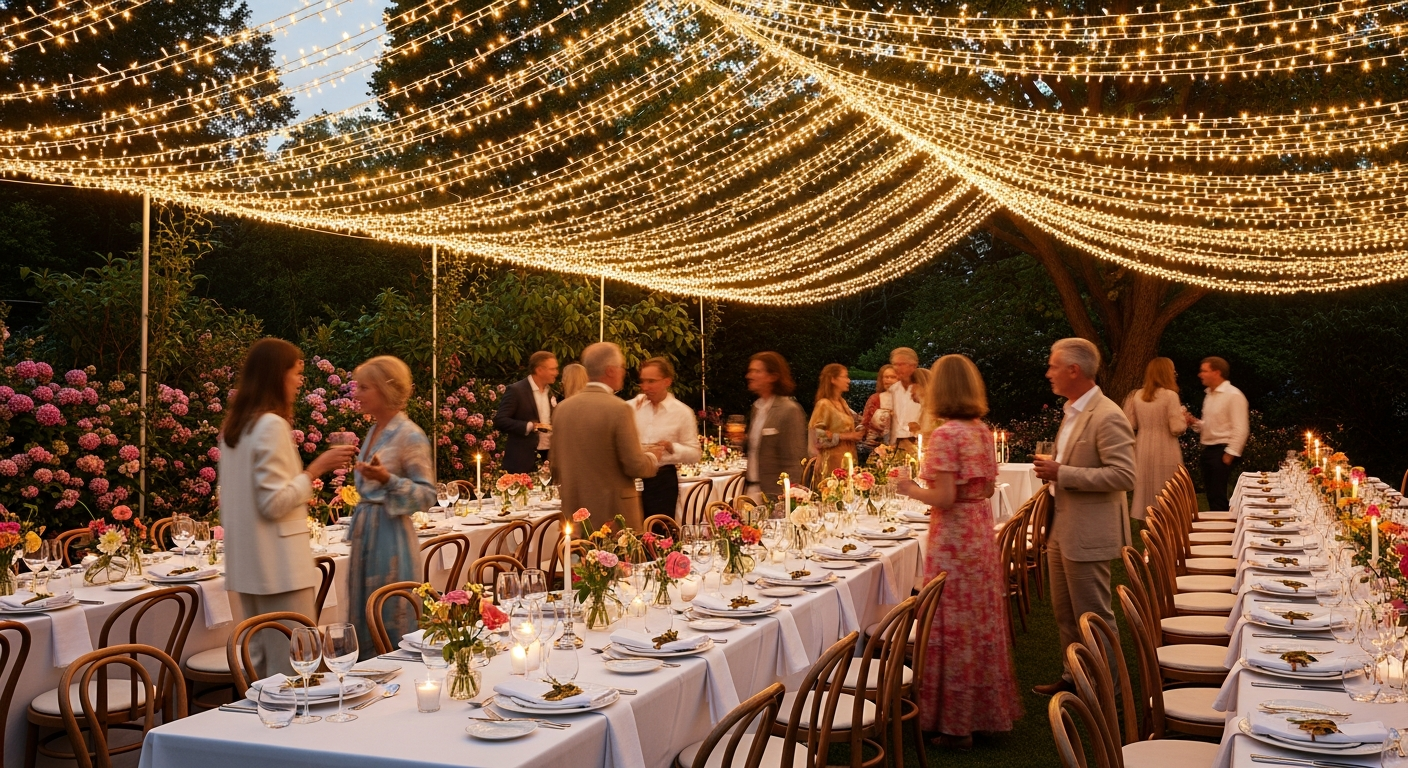
A well-lit outdoor space can make evening dinners, parties, and casual gatherings much easier to enjoy.
LED Outdoor Party String Lights give you a practical way to illuminate patios, decks, gardens, and entertainment areas without installing permanent fixtures.
Still, not every set provides the same durability, brightness, bulb spacing, or weather protection.
Before buying, you should check how the lights are powered, where they can be installed, and how well their construction fits your intended setup.
This guide covers the main factors that can help you compare your options.
LED Outdoor Party String Lights: Key Features to Compare
The right lights depend heavily on where and how you plan to use them. A small balcony has different lighting requirements from a large backyard or covered patio.
When comparing outdoor string lights, pay attention to:
- Total strand length
- Number of bulbs and bulb spacing
- Light output and color temperature
- Weather resistance
- Bulb material
- Power source
- Dimming compatibility
- Connectable strand limits
- Replacement bulb availability
- Installation requirements
Checking these details before ordering can help prevent common problems such as insufficient coverage, excessive brightness, or incompatible power connections.
How Much Length Do You Need?
Start by measuring the area where you plan to hang the lights. Avoid buying based solely on the straight-line distance between two mounting points because most installations require some slack.
For example, a patio measuring 15 feet across may require considerably longer strands if you plan to create a zigzag or overhead pattern.
Posts, trees, fences, pergolas, and exterior walls can all change the required length. You should also check the usable illuminated length.
Some products include extra lead wire between the plug and first bulb, meaning the advertised total length may not represent the entire illuminated section.
Check Bulb Spacing and Light Output
Bulb spacing affects both appearance and practical illumination. Closely spaced bulbs generally provide consistent lighting across smaller spaces.
Wider spacing can work well across larger patios where decorative illumination is the main goal.
Many LED patio lights use low-wattage bulbs that consume less electricity than traditional incandescent alternatives.
Individual LEDs may use little power, yet a full strand can still provide useful illumination for dining tables, seating areas, and walkways.
Look at lumens when the manufacturer provides them. Wattage measures energy consumption rather than brightness, so it should not be your only comparison point.
Choose a Suitable Color Temperature
Color temperature is measured in Kelvin (K) and affects how the light looks.
Warm-white lighting, commonly around 2,200K to 3,000K, produces a yellowish tone often used for patios and entertainment spaces. Higher Kelvin ratings create a cooler, whiter appearance.
Your choice depends on the atmosphere and visibility you want. Warm lighting can suit dining and seating areas, while cooler lighting may provide clearer visibility in functional outdoor spaces.
If adjustable lighting matters, look for dimmable models and confirm that the strand works with the dimmer or controller you plan to use.
Weather Resistance Matters
Outdoor lighting should be designed for exposure to environmental conditions. When comparing waterproof string lights, check the manufacturer’s stated IP rating instead of relying only on descriptions such as “weather-resistant.”
An IP rating indicates protection against solid particles and moisture. Higher protection can be useful for exposed patios, gardens, and other locations that regularly encounter rain or dust.
Remember that the bulbs are only part of the system. Plugs, extension connections, controllers, and power adapters may have separate weather-protection requirements.
Follow the manufacturer’s placement instructions, particularly around outlets and extension cords.
Plastic vs. Glass Bulbs
Traditional decorative string lights often use glass bulbs, while many newer outdoor models use plastic or shatter-resistant materials.
Plastic bulbs can be practical for frequently used outdoor areas because they are less likely to break if a strand falls during installation or encounters strong movement.
Glass can provide a traditional appearance, though it requires careful handling.
For hanging outdoor lights installed above seating or walking areas, durable bulb construction can reduce maintenance and the risk associated with broken glass.
You should still secure the strand properly rather than relying on bulb durability alone.
Plug-In, Solar, or Battery-Powered?
Power source can significantly affect where you can install your lights.
Plug-in lights work well when an outdoor-rated electrical outlet is nearby. They can provide consistent operation without depending on sunlight or battery capacity.
Solar lights can work in areas without accessible outlets. Their runtime and brightness can depend on battery capacity, solar panel placement, and daily sunlight exposure.
Battery-powered lights provide flexible placement for temporary decorations and smaller spaces. Regular battery replacement or charging can make them less convenient for nightly use.
For frequently used patios and entertainment areas, plug-in LED models are often the simplest option when suitable electrical access is available.
Can You Connect Multiple Strands?
Large patios and gardens may require several strands. Some models allow end-to-end connections, letting you cover a larger area from one power source.
Do not assume every strand can support unlimited connections. Manufacturers typically specify a maximum number of strands or maximum total wattage.
Exceeding those limits can create electrical and performance issues.
If you plan to install backyard string lights across a large area, calculate your required coverage first and check the manufacturer’s connection limit before buying multiple sets.
Look for Replaceable Bulbs
Replaceable bulbs can extend the practical lifespan of a lighting setup. Instead of replacing an entire strand because one bulb becomes damaged, you may be able to install a compatible replacement.
Check whether replacement bulbs are readily available and confirm their voltage, wattage, base type, and compatibility.
Some LED strands use integrated bulbs that cannot be replaced individually. These designs may require less maintenance at first, though failure of certain components can make repairs difficult.
Installation Hardware Can Make a Difference
String lights should be supported by suitable mounting hardware rather than their electrical cords alone.
Depending on your installation, you may need:
- Outdoor-rated hooks
- Screw eyes
- Guide wire
- Cable ties
- Clips
- Poles
- Anchors
Long spans may benefit from a support cable that reduces tension on the electrical strand.
Avoid hanging lights where bulbs or wires can regularly strike doors, branches, fans, or other moving objects. Always follow the manufacturer’s mounting and electrical safety instructions.
Energy Use and Long-Term Costs
LED technology typically consumes less electricity than comparable incandescent decorative lighting.
This makes energy-efficient outdoor lighting useful when your lights operate for several hours each evening.
Still, energy consumption varies by product. Check the total wattage of the full strand rather than focusing only on the wattage of an individual bulb.
Timers and compatible smart plugs can help limit unnecessary operating hours. Any accessory used outdoors should be rated for its intended environment.
What Should You Check Before Buying?
A quick buying checklist can make product comparisons easier.
- Measure your space: Calculate the approximate routing distance rather than only the width of the area.
- Check illuminated length: Find out how much of the cable actually contains bulbs.
- Review bulb spacing: Choose spacing appropriate for your preferred lighting density.
- Check weather protection: Look for clearly stated outdoor ratings and usage instructions.
- Compare brightness: Use lumen information when available.
- Review color temperature: Pick warm or cool lighting based on the intended setting.
- Check dimming support: Confirm compatibility before purchasing a separate dimmer.
- Review connection limits: Follow the manufacturer’s maximum strand or wattage limits.
- Check bulb construction: Decide between glass, plastic, replaceable, and integrated designs.
- Plan mounting hardware: Make sure your installation method can safely support the strand.
Are LED Outdoor Party String Lights Worth Buying?
LED string lights can be a practical purchase if you regularly use a patio, deck, garden, balcony, or backyard after dark.
They provide decorative illumination while giving you several installation choices.
Your best option depends on your available power source, required coverage, exposure to weather, preferred brightness, and installation location.
Focus on specifications rather than appearance alone.
A strand with suitable weather protection, durable bulbs, appropriate spacing, and enough length for your setup can be easier to install and maintain over time.
Picking the Best Setup for Your Outdoor Area
Before ordering LED Outdoor Party String Lights, measure the installation area and decide how you want the strands arranged.
Then compare usable length, bulb spacing, brightness, power requirements, weather ratings, and connection limits.
For permanent or frequent outdoor use, prioritize durable construction and clearly documented outdoor ratings. For occasional parties or temporary decorating, portability and easy installation may matter most.
Matching the specifications to your actual space can help you choose lighting that works well for both everyday evenings and special gatherings.
Leave a Reply