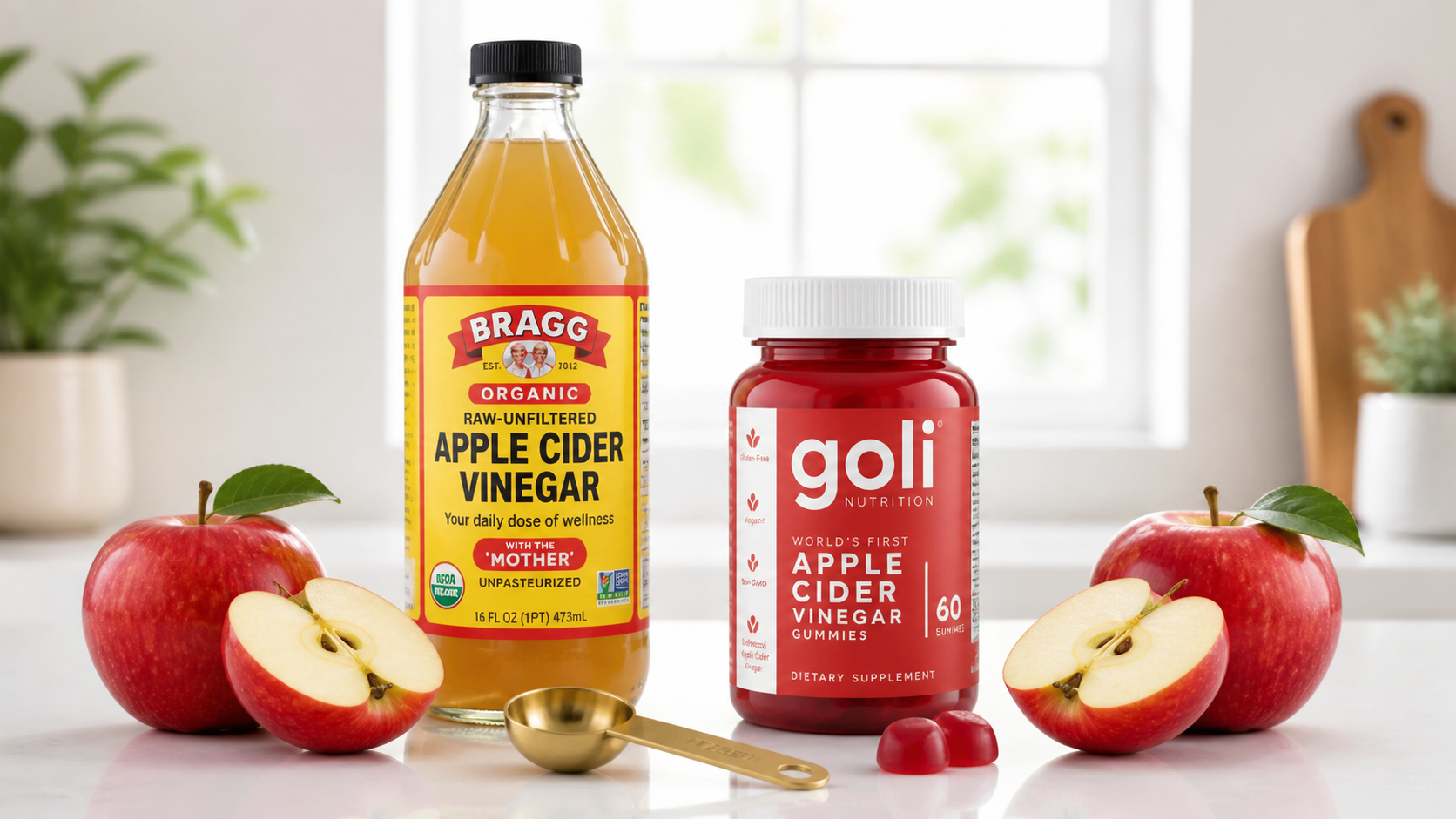
Over 70% of people who try apple cider vinegar abandon it within the first month due to its brutal, mouth-puckering taste. The experience is visceral—that sharp, acidic burn that makes your face contort involuntarily. For anyone serious about wellness supplementation, this taste barrier represents a genuine obstacle to consistency.
Goli Apple Cider Vinegar Gummies emerged as a direct response to this problem. The brand recognized that people wanted the genuine benefits—digestive support, metabolism boosting, and overall wellness maintenance—without enduring the punishment that comes with liquid vinegar. By converting the supplement into a sweet-and-tart gummy format, Goli created something that actually tastes good while delivering the same functional ingredients.
This guide examines whether Goli gummies truly deliver on their promise or if they’re simply clever marketing. You’ll understand the real costs, compare them against liquid alternatives, review what’s actually in the formula, and determine whether this format genuinely fits your wellness routine and budget.
Start exploring Goli Apple Cider Vinegar Gummies today to see if they’re right for you.
How Goli Apple Cider Vinegar Gummies Compare to Liquid ACV Supplements
Taste and Palatability Differences Between Gummy and Liquid Formats
The fundamental difference comes down to sensory experience. Liquid apple cider vinegar hits your palate with an aggressive sharpness that many people find unbearable. The acetic acid content creates an immediate, intense sensation that lingers and can even cause discomfort for sensitive mouths.
Goli gummies mask this harshness through sweetening agents and fruit flavoring while maintaining the functional acetic acid. Users describe the taste as pleasant—a sweet-and-tart combination that approximates a gummy candy more than a supplement. This isn’t just about enjoyment; it fundamentally changes adherence rates. When a supplement tastes acceptable, people actually take it consistently.
Convenience Factor: Portability, No Mixing Required, No Measuring Needed
Liquid ACV demands ritual. You need a glass, water, measuring capability, and time. You have to remember to dilute it properly, which adds friction to the daily process. Goli gummies require nothing but popping them into your mouth.
This simplicity matters more than it initially appears. Portability becomes genuine—you can take gummies at your desk, in your car, or while traveling. No spill risk, no smell lingering on your hands or in your space. The measuring is already done for you: one to two gummies per day, depending on the specific formula. This predictability removes decision-making from your routine.
Absorption Rates and Bioavailability of Gummy vs. Liquid Formulations
The acetic acid content in Goli gummies remains bioavailable, meaning your body can still access and utilize the active compound. The gummy format doesn’t significantly degrade the functional component. However, the presence of pectin and other binding agents means the acetic acid travels through your digestive system in a slightly different pathway than liquid vinegar would.
Liquid ACV enters your system more directly and can interact with stomach acid immediately. Goli gummies release their active ingredients gradually as the gummy dissolves and digests. For most people, this difference is negligible in terms of overall effectiveness. The slight delay in absorption doesn’t eliminate benefits; it simply distributes them across a longer timeframe.
Speed of Results: Timeline Expectations for Each Format
Realistic expectations matter here. Neither format produces overnight results. Most users report noticing changes—improved digestion, subtle energy shifts, or appetite changes—within two to three weeks of consistent daily use. This timeline applies to both liquids and gummies.
The key variable isn’t format; it’s consistency. Someone taking gummies daily will see results faster than someone sporadically using liquid ACV. The palatability advantage of gummies actually creates better results because better taste encourages better adherence.
Ease of Daily Integration Into Morning and Evening Routines
Goli gummies integrate seamlessly into existing habits. Take them with breakfast, keep them on your nightstand for evening use, or pack them in your work bag. The small bottle fits anywhere. Many users report that gummies feel less like medicine and more like a habit, which paradoxically makes them easier to remember.
Liquid ACV requires more conscious integration. You have to deliberately prepare it each time. This extra step means the supplement is always top-of-mind, which some people find helpful for consistency. Others find it burdensome and use that friction as an excuse to skip days.
Discover how Goli gummies simplify your daily wellness routine compared to liquid alternatives.
Breaking Down the True Cost: Goli Gummies vs. Traditional Apple Cider Vinegar
Price Per Serving Comparison ($15-$25 Per Bottle Breakdown
A standard bottle of Goli Apple Cider Vinegar Gummies contains approximately 60 gummies, with a typical serving being one to two gummies daily. At the standard price range of $15 to $25 per bottle, your per-serving cost ranges from about $0.25 to $0.42 per gummy, or $0.50 to $0.84 for a full daily serving.
Traditional liquid apple cider vinegar costs significantly less per ounce. A gallon of quality liquid ACV runs between $8 and $15. If a typical dose is one to two tablespoons diluted in water, a gallon provides roughly 64 servings. This breaks down to approximately $0.12 to $0.23 per serving. The liquid format offers a substantial financial advantage on a pure per-serving basis.
Cost-Effectiveness of Multi-Pack Bundles and Subscription Options
Goli frequently offers multi-pack bundles that reduce the per-bottle cost. Buying three or four bottles together typically offers 15-20% savings compared to individual purchases. Subscription options can provide even deeper discounts—often 10-15% off regular pricing when you commit to regular deliveries.
For someone truly committed to consistent daily use, subscription bundles can narrow the financial gap between gummies and liquid vinegar. A subscription at $12-18 per bottle makes the per-serving cost more competitive while maintaining convenience. However, even at these discounted rates, liquid ACV remains the more economical choice for the budget-conscious consumer.
How Liquid ACV Stacks Up Financially (Bulk Vinegar Pricing)
Bulk liquid ACV purchasing amplifies the financial advantage. Restaurant supply stores and wholesale retailers offer organic apple cider vinegar in gallon quantities at $6-$12 per gallon. This pushes per-serving costs down to under $0.10 per dose. For someone willing to buy in bulk and handle the unpleasant taste, traditional vinegar is unbeatable financially.
The tradeoff becomes explicit: spend significantly less money enduring an unpleasant experience, or spend more for convenience and palatability. This isn’t a hidden cost calculation; it’s a straightforward exchange.
Added Ingredients That Justify Premium Pricing (Vitamins, Pectin, Etc.)
Goli gummies contain additional ingredients beyond the base apple cider vinegar. B vitamins support energy metabolism and overall cellular function. Vitamin C contributes to immune support. Pectin and other binding agents enable the gummy format itself. Pomegranate and other fruit ingredients provide flavor and additional phytonutrients.
These additions have genuine value. If you purchased comparable B vitamin and vitamin C supplements separately, you’d spend money on additional products. Goli consolidates these into one supplement, providing functional justification for the premium pricing. The cost isn’t purely for the vinegar; you’re also paying for the added micronutrients and the convenience of consolidated supplementation.
Long-Term Investment: Monthly and Annual Expense Calculations
Using Goli gummies at the recommended daily dose, consuming a 60-gummy bottle takes roughly one to two months depending on serving size. At $20 per bottle, you’re looking at $120-240 annually for a mid-range purchase price. With subscription discounts, this might drop to $100-180 annually.
Liquid ACV at the same effective dosage costs roughly $30-50 annually when purchased in bulk. The annual difference between formats is substantial—potentially $70-190 per year. Over a five-year period, this compounds to hundreds of dollars in additional spending for the gummy format.
Whether this expense differential matters depends entirely on your financial situation and your priority valuation. For many people, the premium isn’t enormous enough to outweigh the convenience and taste advantages.
What’s Actually Inside: Goli Gummies Ingredient Breakdown and Nutrition Facts
Primary Ingredient: Apple Cider Vinegar Content Per Serving
Each Goli gummy contains apple cider vinegar as the primary active ingredient. The gummies contain the actual vinegar solids, not just flavorings that mimic vinegar taste. This matters because it means you’re getting the acetic acid content—typically around 5% acidity, matching standard food-grade vinegar.
A serving of one to two gummies provides roughly 500mg of apple cider vinegar solids, delivering the acetic acid content comparable to a tablespoon of liquid vinegar. This consistency ensures that you’re not simply taking a candy product; there’s legitimate functional content backing up the supplement claim.
Added Vitamins and Minerals (B Vitamins, Vitamin C, Etc.)
Goli gummies include B-complex vitamins—typically B6 and B12—which support energy metabolism and nervous system function. Vitamin C appears in most formulations to support immune function and collagen synthesis. These aren’t trivial additions; each vitamin serves a recognized physiological role.
The specific vitamin content varies slightly between Goli product lines, but the standard formula includes amounts that contribute meaningfully to daily intake without exceeding safe upper limits. Someone taking Goli gummies receives a modest boost toward meeting daily vitamin requirements, particularly for people whose diets run slightly low in these nutrients.
Sugar Content and How It Compares to Liquid ACV
Here’s the honest trade-off: Goli gummies contain added sugar to achieve palatability. A serving typically includes 2-3 grams of sugar, depending on the specific formula. Liquid apple cider vinegar contains essentially zero sugar; you’re just getting vinegar and water.
For people managing blood sugar or following low-sugar diets, this represents a meaningful consideration. Two gummies twice daily would add 8-12 grams of sugar to your daily intake. That’s not excessive compared to many supplements or food products, but it’s a genuine difference from liquid ACV. The gummy format literally requires sugar to taste acceptable; it’s impossible to eliminate this tradeoff.
Pectin and Binding Agents Used in Gummy Production
Pectin provides the gummy’s texture and structure. It’s a natural fiber derived from fruit, making it a food-grade ingredient rather than a synthetic compound. Pectin itself provides fiber content, which supports digestive health—adding functional benefit rather than merely serving as a filler.
Other binding agents like gelatin or pectin derivatives help maintain shelf stability and chewiness. These are all recognized food additives with established safety profiles. Nothing in Goli gummies involves questionable or controversial ingredients; the formulation prioritizes mainstream food-grade components.
Allergen Information and Dietary Restrictions (Vegan, Gluten-Free Options)
Goli offers multiple formulations to accommodate dietary restrictions. Vegan options exist using pectin instead of gelatin. Gluten-free versions are available for celiac disease and gluten sensitivity. The standard formula is non-GMO, and options exist for people avoiding specific allergens.
This diversity matters because it means people with dietary restrictions can access the convenience of gummy supplementation rather than being forced to endure liquid vinegar. Someone following a vegan diet can still enjoy Goli gummies; they’re not relegated to liquid alternatives as their only option.
The Science Behind Apple Cider Vinegar Gummies for Digestion and Metabolism
How Acetic Acid Supports Digestive Health and Gut Function
The active component in apple cider vinegar is acetic acid, a short-chain fatty acid that influences digestive processes. Acetic acid stimulates stomach acid production and enzyme release, theoretically supporting more efficient food digestion. It also influences the pH of the digestive tract, potentially creating an environment more favorable for beneficial bacteria.
Research shows that acetic acid does have measurable effects on digestive processes. Studies demonstrate that vinegar consumption improves gastric emptying rates and enhances nutrient absorption. These aren’t placebo effects; they’re measurable physiological changes. The gummy format delivers this acetic acid just as effectively as liquid vinegar, though on a slightly delayed timeline.
Metabolism-Boosting Claims: What Research Actually Supports
Here’s where marketing often outpaces science. Claims about metabolism-boosting properties exist, and there is legitimate research examining these effects. Studies show that acetic acid consumption can modestly increase calorie burning and improve insulin sensitivity in people consuming high-carbohydrate meals.
However, the effect size is modest. Research indicates approximately 4% improvement in metabolic rate under specific conditions. This translates to roughly 20-40 additional calories burned daily—meaningful over months but not a game-changer. Anyone expecting dramatic weight loss from Goli gummies alone will be disappointed. The supplement works best as one component of a broader health strategy, not as a standalone solution.
Blood Sugar Regulation and Weight Management Potential
Acetic acid demonstrates genuine effects on blood sugar stability. Studies show that consuming vinegar with meals reduces blood sugar spikes in people eating high-glycemic carbohydrates. This occurs because acetic acid slows stomach emptying and delays glucose absorption.
For weight management, this matters because blood sugar stability influences hunger hormones and energy levels. When blood sugar remains stable, people typically experience fewer cravings and more consistent energy. This creates indirect benefits for weight management rather than direct calorie burning. Someone taking Goli gummies while maintaining otherwise poor eating habits won’t see weight loss, but someone using it as part of an improved diet protocol might experience enhanced results compared to diet alone.
Appetite Suppression Mechanisms and Satiety Effects
Acetic acid influences appetite regulation through multiple pathways. It affects ghrelin and peptide YY—the hormones controlling hunger and fullness signals. Studies indicate that vinegar consumption produces feelings of increased fullness and can reduce subsequent calorie intake by 5-15% in people eating meals following vinegar consumption.
Additionally, the gummy format itself provides chewing and oral satisfaction that liquid vinegar lacks. This sensory component isn’t scientifically revolutionary, but it contributes meaningfully to appetite management because eating and chewing trigger satiety signals. Someone who enjoys taking Goli gummies might derive genuine appetite-suppressing benefits from the ritualistic and sensory aspects beyond the pure biochemistry.
Clinical Studies on ACV Effectiveness in Gummy Form
Research specifically examining apple cider vinegar gummies in gummy format remains limited compared to general ACV research. Most clinical studies involve liquid vinegar or concentrated acetic acid. The gummy format presents a potential absorption variable that hasn’t been exhaustively studied.
However, the available evidence suggests that gummy formulations deliver comparable acetic acid bioavailability to liquid formats. The pectin and other gummy components don’t significantly interfere with acetic acid absorption or utilization. Practically speaking, if liquid ACV produces measurable effects, Goli gummies should produce comparable effects, with the main variable being dosing consistency and individual variation.
Real User Experience: Pros, Cons, and Honest Expectations
Taste and Flavor Appeal Across Different User Preferences
User feedback on taste clusters into two camps: people who find Goli gummies genuinely enjoyable and people who find them acceptable but not exciting. No one reports that gummies taste bad; the worst feedback describes them as “fine” or “tolerable.” The best feedback describes them as tasty enough to actually look forward to taking them.
Flavor preferences vary. Some users prefer the fruit-forward taste; others describe it as overly sweet. The specific flavor formulation varies across Goli’s product line, so someone who dislikes one variety might prefer another. The consistent theme across reviews is that gummies taste infinitely better than liquid vinegar, which is precisely the point of their existence.
Ease of Remembering Daily Supplementation With Gummies
The convenience creates a psychological advantage for adherence. Gummies feel less like medicine and more like a habit similar to taking a vitamin. Many users report that keeping gummies visible—on their nightstand or desk—creates automatic recall. The accessibility removes friction from the daily routine.
Some users struggle with remembering gummies specifically because they don’t feel like medicine. The lack of unpleasant taste means there’s no negative reinforcement encouraging daily use. Someone might easily forget a supplement that tastes fine compared to one that tastes terrible and therefore creates memorable ritual around avoidance. This is a minor consideration for most people, but for some, the lack of negative feedback actually hurts adherence.
Digestive Side Effects and Adjustment Period Considerations
New ACV users, regardless of format, often experience digestive adjustment. Common effects include increased bowel movements, mild stomach discomfort, or changes in digestion patterns. These typically resolve within one to two weeks as the digestive system adapts.
Goli gummies produce these effects at comparable rates to liquid ACV when adjusting to acetic acid for the first time. Starting with a single gummy rather than the full recommended dose helps minimize adjustment symptoms. Most users who experience initial discomfort report that it resolves quickly and that benefits emerge once adaptation completes.
Energy Levels and Metabolism Changes Users Report
Subjective reports of energy changes are common among Goli users. Some report noticeable improvements in sustained energy and reduced afternoon slumps. Others report no meaningful difference. This variation reflects both the genuine but modest effects of acetic acid on blood sugar stability and the strong placebo effect operating in supplement use.
For users experiencing genuine energy improvements, those benefits typically emerge gradually over two to four weeks rather than appearing immediately. This timeline suggests adaptation to physiological changes rather than psychological response alone. However, without formal controlled trials, it’s impossible to separate genuine biochemical effects from placebo response with certainty.
Realistic Expectations vs. Social Media Hype
Instagram and TikTok present Goli gummies as transformative wellness solutions. Influencers suggest dramatic results occur rapidly. Social media representation dramatically overstates typical results. Reality involves modest improvements in digestion, slight metabolism enhancement, and improved appetite management for many people—but not dramatic weight loss or energy transformation.
The brand’s mainstream popularity reflects genuine utility and satisfaction, not social media fabrication. Real people genuinely do prefer gummies to liquid vinegar. Real people do experience digestive improvements. The issue isn’t that benefits are fake; it’s that marketing amplifies and accelerates the timeline for results. Honest expectation-setting suggests modest but genuine benefits emerging gradually over weeks, not dramatic transformations within days.
Making Your ACV Choice: A Practical Decision Framework
The Goli apple cider vinegar gummies phenomenon isn’t just social media noise—there’s genuine substance behind the popularity. These gummies deliver real convenience, actually taste good, and integrate seamlessly into wellness routines that liquid vinegar simply can’t match. Your decision ultimately hinges on three factors: your budget flexibility, how much you prioritize taste and convenience, and whether you’re genuinely committed to a daily supplement routine.
Choose Goli gummies if taste represents a barrier to your consistency. If previous attempts with liquid ACV failed because the taste was unbearable, gummies genuinely solve that problem. The palatability advantage directly translates to better adherence. If you’ve abandoned liquid ACV before, Goli gummies represent a legitimate game-changer.
Choose liquid ACV if financial optimization is your priority and you can tolerate the taste. The cost difference is substantial over months and years. If budget concerns dominate your decision-making, traditional vinegar remains superior from a pure economic perspective.
Start with a single bottle rather than committing to bulk bundles. This protects against the possibility that gummies don’t work for your specific body or that you don’t maintain consistency. Give yourself at least 30 days of consistent daily use before evaluating results. Track how you feel—digestive changes, energy patterns, appetite shifts—to determine whether the investment aligns with your actual results.
Leave a Reply