Over 70% of DIY car builders skip fuel system upgrades because they think quality braided lines come with a premium price tag. That's where Evil Energy changes the game. I've watched countless enthusiasts transform their engine bays with affordable, reliable fuel line kits that perform like components costing three times as much.
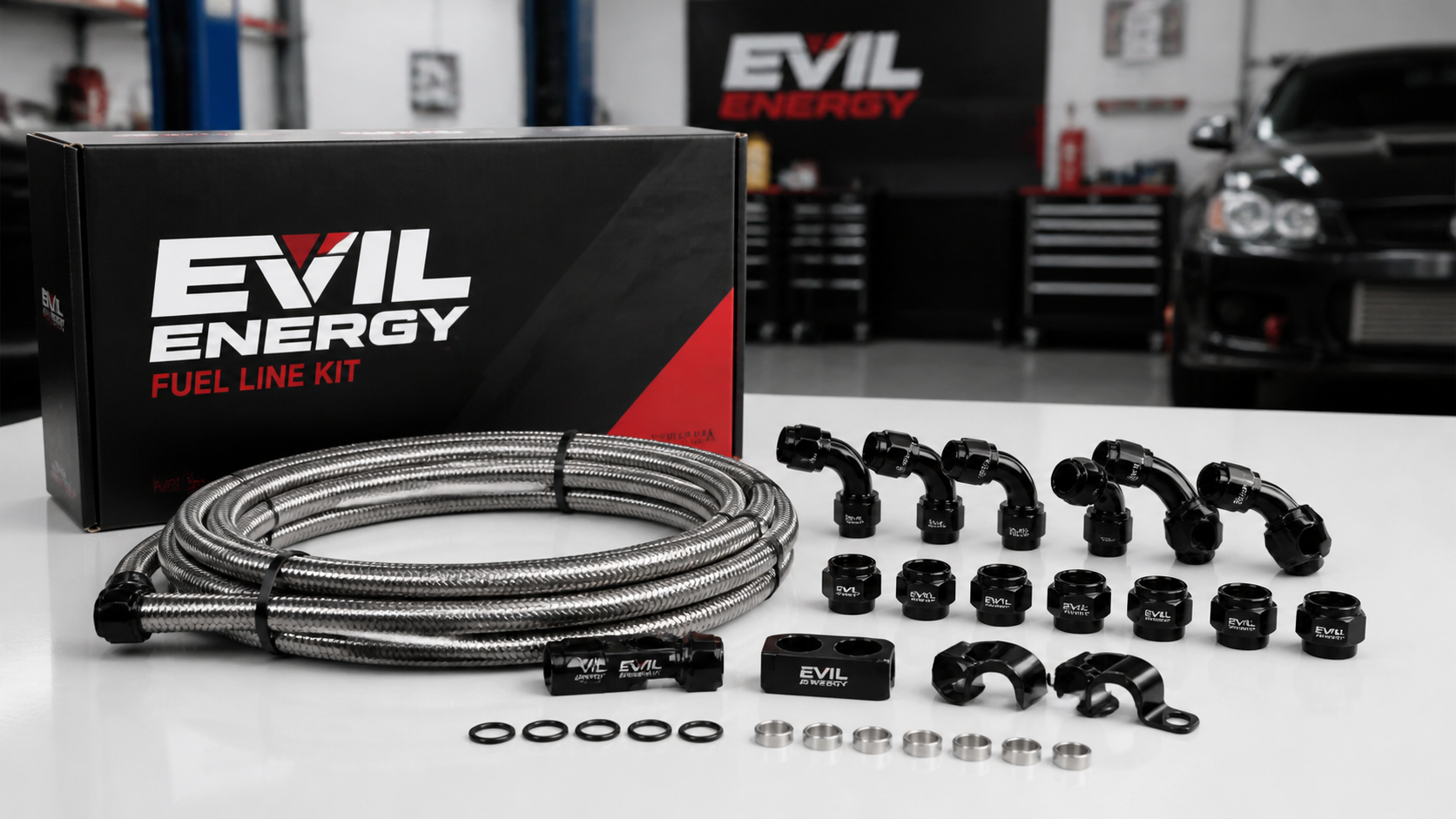
The Evil Energy Fuel Line Kit has become a staple in the custom automotive community, particularly among turbo builders and performance tuners working with limited budgets. These stainless-steel braided AN-style hoses deliver the durability and aesthetic appeal of high-end motorsport components while maintaining accessibility for garage builders. Whether you're replacing deteriorating factory lines, installing a custom fuel system, or adding oil cooler lines to your setup, this kit offers genuine versatility without the boutique brand markup.
Understanding Evil Energy Fuel Line Kit Specifications
The Evil Energy lineup centers on stainless-steel braided construction designed to handle pressure resistance and durability across multiple applications. The flexible inner liner works with fuel, oil, and coolant—giving you flexibility beyond just fuel delivery. This versatility makes a single kit useful for various custom builds without needing multiple product lines.
AN-style sizing runs through the entire collection, with AN6, AN8, and AN10 options available to match different flow requirements. Hose length variations span from 3-foot to 20-foot sections, accommodating everything from compact engine bays to complex fuel cell installations. Most kits arrive with matching fittings and adapters included, reducing the need for separate purchases and simplifying your assembly process.
Temperature and pressure ratings suit both naturally aspirated and boosted applications, so whether you're running a stock fuel pump or pushing 25 PSI of boost, these lines handle the demand. The color options maintain a stainless appearance with that signature braided finish—giving your engine bay the custom look without expensive boutique branding.
AN Hose Sizing Explained—Choosing the Right Fit for Your Build
AN6 hose sizing works best for lower-flow applications and smaller displacement engines where fuel demand stays modest. I typically recommend AN6 for naturally aspirated four-cylinders or classic car restorations where flow requirements max out around 60 GPH.
AN8 emerges as the most versatile option for mid-range turbo setups, handling everything from street turbo builds to weekend track cars. This size balances flow capacity with reasonable component pricing, making it the default choice for most DIY builders stepping into forced induction for the first time.
AN10 sizing is designed specifically for high-flow applications and twin-turbo builds where fuel demand exceeds 100 GPH. If you're running dual fuel pumps or pushing serious boost numbers, AN10 ensures flow restriction never becomes your bottleneck.
Calculating fuel system requirements starts with your fuel pump's GPH rating and engine displacement. Cross-reference these specs against standard sizing charts—undersizing restricts flow and kills power delivery, while oversizing adds unnecessary cost without performance gain. Adapter options exist for transitioning from factory fittings to AN standards, though selecting the correct adapter type requires knowing your fuel rail connection style.
Why DIY Tuners Choose Evil Energy Over Premium Alternatives
The price-to-performance ratio immediately separates Evil Energy from boutique motorsport brands. While premium alternatives run $150 or more, Evil Energy delivers comparable quality at $20–$80 depending on length and fitting inclusion. That price difference scales dramatically across a full fuel system upgrade.
Broad application compatibility means one kit potentially serves multiple projects. Fuel systems, oil coolers, and custom builds all benefit from the same stainless-steel braided construction. This versatility eliminates the need to stock different product lines for different applications.
Aesthetic appeal matters more than many performance builders admit. The braided appearance elevates engine bay visuals compared to plain rubber hoses, giving your custom work a finished, professional appearance without paying for exotic branding. Durability holds up across multiple seasons and aggressive driving conditions, so your budget investment doesn't become obsolete after one year of use.
Turbo builder popularity speaks volumes—if you're active in forced-induction forums or local car meets, you'll consistently see Evil Energy kits in serious builds. This widespread adoption creates a valuable community knowledge base and validates long-term reliability through real-world testing.
Installation Challenges and How to Navigate Them
Time investment typically demands more labor than OEM-style plug-and-play components. Where factory fuel lines snap into place, braided AN-style hoses require careful routing, fitting selection, and secure connections. Plan for a full weekend if you're tackling this for the first time.
Hose routing complexity demands planning to avoid heat sources and moving parts. Proximity to exhaust manifolds or alternator pulleys can damage hoses from heat or abrasion. Map your fuel system path before cutting any hose sections, using existing factory line routing as your starting reference.
Fitting selection accuracy determines whether your connections seal properly or leak fuel into your engine bay. Swaged fittings crimp onto hose ends and can't be removed without destroying the fitting, while reusable fittings allow hose removal if you need to service components later. Choose based on how permanent your installation needs to be.
Leak prevention depends on proper tightening sequences and thread sealant application. I recommend applying a small amount of PTFE tape to AN male threads before connecting, then tightening with two wrenches—one holding the fitting body and one turning the hose end. This prevents twisting the braided jacket.
Adapter compatibility issues arise when transitioning from factory fuel rail connections to AN standards. Verify your fuel rail's specific port thread size before ordering adapters, then test-fit everything dry before final assembly. Common installation mistakes like overtightening fittings (which crushes the hose) or bending the hose too sharply (which restricts flow) can derail an otherwise solid project.
Testing procedures should include pressure testing your complete fuel system before engine startup. Pressurize to your fuel pump's rated pressure, then inspect every fitting for weeping. Visual inspection under the hood after a few miles of driving catches any slow leaks before they become problems.
Real-World Applications—Where Evil Energy Kits Excel
Turbo and supercharger builds represent the primary use case. When boost pressure increases fuel demand, your factory fuel lines become a liability. Evil Energy kits handle boost pressure reliably while maintaining the aesthetic upgrades turbo builders want.
Fuel system upgrades replacing restrictive factory lines with high-flow alternatives improve fuel delivery across the board. Many older vehicles shipped with undersized fuel lines that choke performance potential even on naturally aspirated builds. Upgrading to braided lines opens up that restriction.
Oil cooler installations benefit from the flexible inner liner that handles oil temperature requirements without degradation. These applications often demand custom routing through tight engine bay spaces where rigid steel lines won't fit.
Custom fuel cell setups require reliable connections between aftermarket fuel cells and engine bay components. Braided hose flexibility simplifies the routing complexity that custom fuel cell installations typically present.
Vintage car restorations upgrade aging rubber lines with modern braided alternatives, eliminating the risk of fuel leaks from deteriorated original equipment. Classic cars deserve fuel systems they can rely on during long drives.
Track day preparations improve fuel system reliability for performance driving. If you're hitting the track, braided hose durability under sustained boost pressure and aggressive driving justifies the upgrade before anything fails during a session.
Budget-conscious performance projects maximize horsepower gains without expensive investments. When your tuning budget is limited, spending it on fuel system reliability rather than boutique component branding produces measurable results.
Durability, Maintenance, and Long-Term Value
Stainless-steel resistance provides corrosion protection compared to standard rubber hoses. Even in saltwater environments or harsh climates, the braided jacket protects the inner liner from UV exposure and atmospheric degradation.
Braided reinforcement longevity prevents deterioration that affects rubber hoses over time. Temperature cycling, UV exposure, and fuel contact all degrade standard rubber within years. Evil Energy's construction resists these aging factors across multiple seasons of use.
Pressure cycle endurance handles repeated fuel pump cycles without weakening or cracking. The inner liner remains flexible while the outer braiding maintains structural integrity—a combination that standard rubber simply cannot match.
Visual inspection protocols identify wear indicators before failure occurs. Look for fraying in the braided jacket, discoloration of the inner liner visible through transparent fittings, or any obvious damage from abrasion or heat. Catching problems early prevents fuel leaks during critical moments.
Replacement intervals vary between normal driving and aggressive racing conditions. Street-driven vehicles might see 5+ years from a single hose, while track cars pushing sustained boost pressure may need replacement every 2-3 years. Build this into your maintenance schedule.
Cost-per-year analysis reveals the long-term value proposition. Even if you replace Evil Energy hoses more frequently than premium alternatives, the total annual cost remains significantly lower. Your investment pays dividends across the life of your build.
Warranty considerations include Evil Energy's coverage and customer support options. Research the specific warranty terms for your kit before purchase, then register your components if the manufacturer offers extended coverage through documentation.
Potential Drawbacks and Realistic Expectations
Installation time trade-off requires acknowledging that this isn't a bolt-on upgrade. You'll invest hours measuring, routing, and connecting components. If you're paying for professional installation, factor labor costs into your project budget.
Fitment precision demands selecting the exact hose size and fittings for your specific fuel system. There's no one-size-fits-all solution, so homework is mandatory. Ordering incorrect sizes means additional waiting and re-ordering.
Learning curve exists if you're new to custom fuel systems and AN sizing conventions. Understanding the relationship between AN numbers and actual hose diameter, recognizing different fitting types, and knowing which adapters bridge your connections takes time to absorb.
Limited pre-assembled options mean you'll likely need custom cutting or adapter sourcing. Some kits arrive as bulk hose with fittings included, requiring you to assemble everything yourself rather than receiving pre-built fuel line sections.
Professional installation costs significantly increase total project expense. If you don't have the mechanical skills or tools to do this work yourself, budget accordingly for shop labor rates.
The kit isn't a complete solution—you'll need additional components like a fuel pump, fuel regulator, and potentially filters or check valves depending on your specific build. Evil Energy supplies the hoses and fittings, not the entire fuel system architecture.
Aesthetic considerations require thoughtful routing to look intentional rather than cluttered. Poor hose routing can undermine the visual upgrade you're seeking, so plan your fuel line path as carefully as your component placement.
Comparing Evil Energy to Competing Fuel Line Brands
Premium motorsport brands offer higher cost with only marginal performance gains. Aeromotive and Fragola command premium pricing based on brand reputation and motorsport pedigree rather than measurable performance differences in most applications.
OEM fuel line alternatives lack customization and aesthetic appeal. Factory equipment works fine until it doesn't, leaving you vulnerable to aging rubber and limited sizing options for upgraded fuel systems.
Mid-range aftermarket competitors offer similar pricing to Evil Energy with varying quality levels. Russell Performance and other mid-tier brands exist in the same market space, though Evil Energy's broad availability and positive community feedback give it an edge in real-world reliability reports.
Performance per dollar consistently favors Evil Energy across most comparison scenarios. When evaluating cost-to-performance ratio, Evil Energy outperforms premium alternatives for typical DIY builds.
Customer satisfaction metrics show strong reviews across automotive enthusiast communities. Evil Energy consistently receives positive feedback regarding reliability, fitment accuracy, and customer service responsiveness.
Warranty and support comparing Evil Energy's customer service reveals reasonable response times and helpful technical guidance. The company backs its products with warranty coverage and willingness to assist with sizing questions.
Application-specific advantages favor Evil Energy for budget-conscious builders, while premium brands justify higher pricing primarily through brand association and racing heritage rather than measurable performance differences in street or amateur track applications.
Step-by-Step Selection Guide for Your Specific Build
Assessing fuel system requirements begins with determining your fuel pump's GPH rating and engine displacement. These two numbers drive every sizing decision downstream.
Measuring existing fuel lines determines hose length needed for your specific engine bay layout. Run a measuring tape from your fuel tank through pump and filter to fuel rail, adding extra length for routing around obstacles. It's better to have excess hose than to fall short.
Identifying connection points from fuel tank through fuel pump to fuel rail establishes where your hoses physically connect. Document each fitting type—some use JIC threads, others use NPT, and fuel rails often feature unique port designs requiring specific adapters.
Selecting appropriate AN size matches hose diameter to fuel flow demands. Cross-reference your pump's GPH against AN sizing charts; most street turbo builds settle on AN8, while high-flow twin-turbo setups demand AN10.
Choosing fitting types between swaged and reusable ends depends on your preferences and budget. Swaged fittings cost less but require specialized tools, while reusable fittings cost more but allow hose replacement without replacing fittings.
Adapter matching bridges factory connections to AN standards without introducing leaks. Verify your fuel rail's specific threaded port size, then order adapters matching both your existing connections and your chosen AN size.
Creating a parts list bundles all components needed to avoid multiple orders. Document hose lengths, AN sizes, fitting types, adapter specifications, and any additional components like fuel filters or check valves before placing your order.
Getting the Most Value from Your Evil Energy Investment
Bulk purchasing strategies apply if you're planning future projects. Buying multiple kits or longer hose sections in a single order often qualifies for volume discounts, reducing per-unit cost.
Seasonal maintenance inspecting lines before track season or aggressive driving catches potential issues before they fail. A quick visual inspection takes minutes but prevents fuel system failures during critical moments.
Upgrade pathway planning uses Evil Energy as foundation for future enhancements. Install quality fuel lines now, then upgrade your fuel pump or fuel cell later—the braided lines remain compatible with virtually any future configuration.
Documentation and labeling tracks hose sizes, fittings, and adapter types for future reference. When you eventually need to service or modify your fuel system, knowing exactly what you installed saves troubleshooting time.
Community knowledge sharing contributes your installation experience to other builders. Post your build thread, answer sizing questions for newcomers, and help others avoid the mistakes you've already made.
Resale value consideration recognizes that upgraded fuel systems increase buyer interest when selling a completed build. Custom fuel systems signal serious mechanical work and reliability attention—factors that potential buyers recognize and value.
Preventative replacement upgrades factory lines before they fail, avoiding breakdowns during drives. Factory fuel lines typically last 10-15 years before degradation becomes serious. Installing braided alternatives before problems arise keeps your build reliable.
Take Control of Your Fuel System—The Evil Energy Advantage Awaits
The Evil Energy Fuel Line Kit represents exactly what budget-conscious builders need: proven reliability, genuine versatility, and the freedom to customize without financial strain. I've seen countless projects transform when enthusiasts stop compromising on fuel system quality and start investing in components that deliver real performance.
Yes, installation demands more patience and precision than plug-and-play alternatives. Yes, selecting the correct AN size and fittings requires homework. But the payoff—a professional-grade fuel system that handles turbo boost, looks incredible under the hood, and costs a fraction of premium options—makes every minute worthwhile.
Whether you're building your first turbo setup, replacing aging factory lines, or adding oil cooler plumbing to an existing engine bay, Evil Energy's braided hose kits prove that affordability doesn't mean settling for mediocrity. The stainless-steel construction, flexible inner liner, and included fittings eliminate the guesswork from custom fuel system upgrades. Your fuel system deserves components that match your ambition—and Evil Energy delivers exactly that without breaking your budget.
Ready to upgrade? Start by identifying your fuel system requirements, measure your engine bay carefully, and select the AN size that matches your fuel pump's GPH rating. Order your Evil Energy Fuel Line Kit today, block out a weekend for installation, and join thousands of DIY builders who've already discovered that premium fuel system performance doesn't require premium pricing.
Leave a Reply