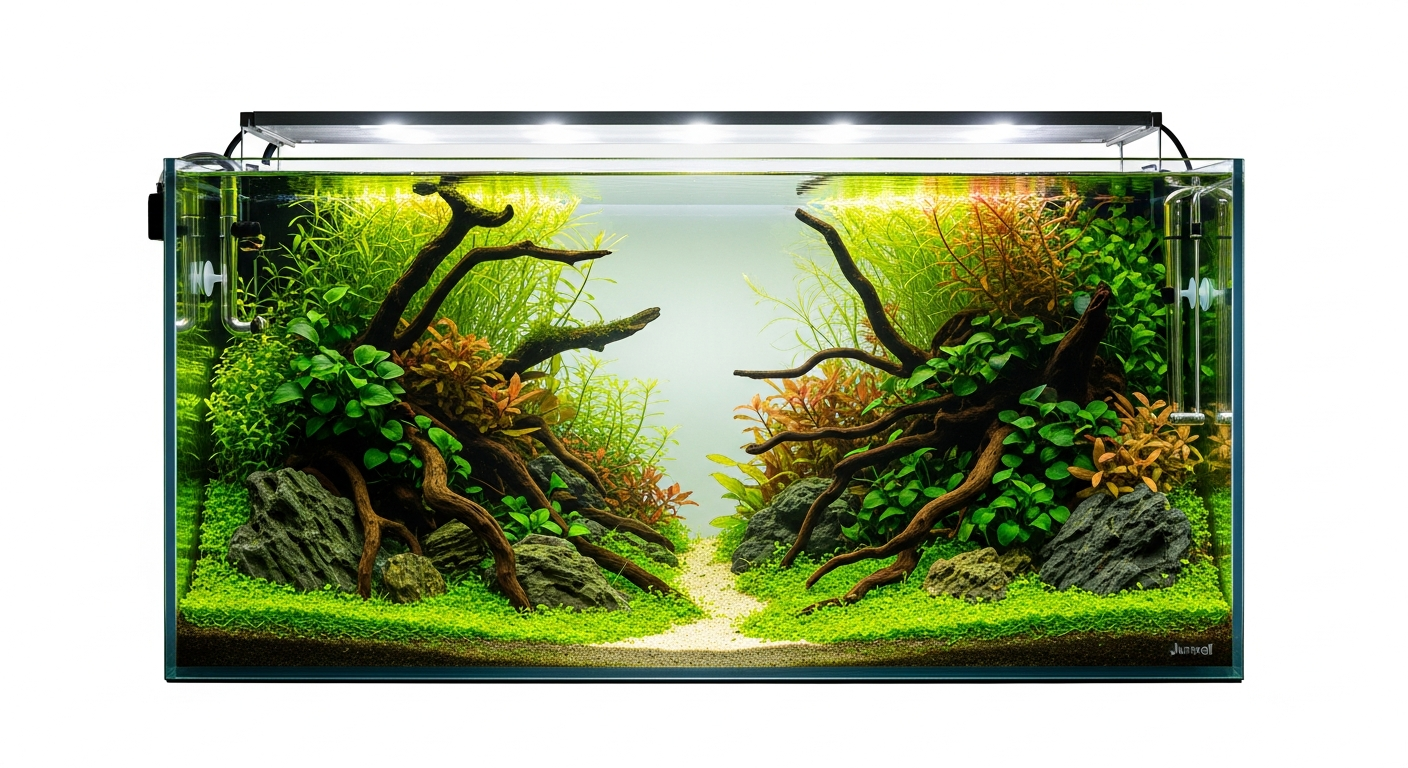
Setting up a planted aquarium shouldn't mean juggling multiple vendors, incompatible components, and endless compatibility questions. Yet countless aquarists spend weeks researching which light, filter, and heater actually work together. The friction is real—and the Juwel Rio 240 LED Combination eliminates it entirely by bundling everything you need into one cohesive ecosystem.
What makes this system stand out isn't just convenience; it's the thoughtful integration of German engineering with practical aquarium science. The MultiLux LED lighting, Bioflow M filtration, and temperature control work in concert, creating conditions where aquatic plants flourish and fish thrive.
Explore the Rio 240 LED Combination on Olibetta DE today.
Why Planted Tank Setups Demand Integrated Lighting Solutions
Spectrum and Photosynthesis: The DAY vs. NATURE Advantage
Planted aquariums live or die by light quality. The dual 29W LED tubes—one DAY spectrum, one NATURE spectrum—aren't arbitrary choices. The DAY tube drives photosynthesis during peak hours, while the NATURE tube extends the usable light spectrum into wavelengths that trigger specific growth responses in stem plants and carpet species. This dual-tube approach mimics natural conditions far more effectively than single-spectrum alternatives.
Light Penetration and Plant Growth Performance
The 1047mm length of each LED tube distributes light evenly across the 121cm aquarium length, preventing dark corners where slower-growing species languish. Compared to traditional T5 fluorescent tubes, the MultiLux LED configuration delivers superior light penetration at the substrate level—critical for supporting carpeting plants like Glossostigma and Eleocharis. Users report visible growth improvements within the first three weeks, particularly in stem plants that respond aggressively to consistent, quality lighting.
Energy Efficiency Without Compromise
A 50% power reduction compared to T5 tubes translates to meaningful savings over months and years. The LED system consumes roughly 58 watts total versus 110+ watts for equivalent T5 setups. More importantly, the energy efficiency doesn't sacrifice PAR values; measurements at substrate level remain sufficient for high-demand species like Ludwigia and Rotala without creating algae pressure through excess intensity.
Safety Through Waterproof Design
The ultrasound-sealed light unit prevents water intrusion during routine maintenance. This engineering detail matters more than casual aquarists realize—traditional light fixtures with marginal sealing create genuine electrical hazards during water changes and filter cleaning. The Rio 240 LED eliminates that risk entirely.
The Bioflow M Filter System: Designed for Planted Tank Stability
Five-Stage Media Configuration for Planted Environments
The Bioflow M doesn't just remove particles; its five-stage media configuration creates zones optimized for different filtration tasks. Mechanical stages capture debris before it decays and produces excess organic load. Biological stages colonize nitrifying bacteria essential for converting fish waste into plant-available nitrogen. This separation prevents the common problem of biological and mechanical media competing for space in smaller filters.
Eccoflow 600 Circulation and Nutrient Distribution
The Eccoflow 600 pump pushes approximately 600 liters per hour through the filter, creating turnover roughly 2.5 times per hour in the 240-liter aquarium. This flow rate distributes fertilizers evenly, prevents dead zones where anaerobic decay can occur, and ensures consistent oxygen levels throughout the water column. Aquarists report that nutrient uptake by plant roots improves noticeably once the filter establishes stable circulation patterns.
Gentle Flow Protection for Delicate Stems
Despite its power, the Bioflow M's internal design features gentle exit flow that doesn't tear delicate plant stems or uproot newly positioned hardscape. The filter intake draws water from the bottom, cycling it through media before returning it via a diffuser tube. This design prevents the chaotic turbulence that external canister filters sometimes create at their return points.
Unified Temperature Management Integration
The 200-watt adjustable heater slots directly into the Bioflow M housing, eliminating the need for separate heater equipment. This integration means the heater's output warms water passing through the filter, distributing heat evenly before it re-enters the aquarium. The result is superior thermal stability compared to free-standing heaters, which create localized hot spots.
Heating and Temperature Control for Tropical Plant Species
200-Watt Capacity for 240-Liter Volumes
A 240-liter aquarium in a standard room environment requires reliable heating to maintain tropical plant temperature ranges of 24–28°C. The 200-watt heater provides sufficient output to raise room-temperature water to target levels and maintain stability through natural heat loss. In cooler climates or uninsulated rooms, this capacity prevents the gradual temperature creep downward that stresses plants and slows growth.
Adjustable Thermostat for Species-Specific Requirements
Different plant species thrive at different temperatures. Stem plants from Southeast Asia prefer 26–28°C, while some carpeting plants perform adequately at 24–25°C. The adjustable thermostat allows fine-tuning between these ranges without requiring multiple heater purchases or complex manual controls. Users appreciate the simplicity—set the dial, verify temperature readings over several hours, and move forward.
Thermal Stability and Nutrient Uptake Rates
Consistent water temperature directly influences plant metabolic rates and nutrient uptake efficiency. Fluctuating temperatures force plants to divert energy toward osmoregulation rather than growth. The integrated heater's placement within the filter system creates remarkably stable temperature profiles, with minimal variance between day and night cycles.
Dimensions, Space Planning, and Room Integration for Planted Displays
Aquarium Footprint and Aquascaping Flexibility
The 121 x 41 x 55 cm dimensions create a landscape-oriented canvas ideal for traditional aquascaping layouts. The 121cm length accommodates multiple hardscape focal points—driftwood pieces, rock formations—without creating visual fragmentation. The 41cm depth provides enough water column for layered planting schemes, allowing foreground carpets, mid-ground stem clusters, and background taller species without overlap or shading conflicts.
Cabinet Height and Viewing Angles
The base cabinet stands 73 cm, bringing total setup height to approximately 128 cm. This height aligns well with standard seated viewing from couches or eye-level viewing from standing positions. The aspect ratio prevents the "looking down into a hole" sensation that deeper tanks sometimes create, instead offering a more theatrical, immersive viewing experience.
Aesthetic Integration Across Interior Styles
Four color options—black, grey, light wood, and white—address diverse design preferences. The black cabinet works seamlessly in modern minimalist spaces, while light wood variants complement traditional or Scandinavian decor. The matching cabinet base ensures the entire assembly appears intentional and integrated rather than ad-hoc equipment stacked together.
Real-World Performance: What Planted Tank Owners Actually Report
Customer Satisfaction and Rating Analysis
The 4.9/5 rating across 53 verified purchases on Olibetta DE represents genuine consensus, not marketing hype. Owners consistently praise the ease of setup, aesthetic appeal, and reliable component integration. Negative reviews cluster around specific issues—occasional LED failures, plastic lid durability—but represent outliers rather than systemic problems.
Success Stories from High-Tech Aquascapers
Users report successful high-tech planted setups with this system, including those growing demanding species like Ludwigia, Rotala, and Glossostigma. One consistent observation: the complete integration reduces setup time to days rather than weeks, allowing aquarists to focus energy on actual aquascaping rather than troubleshooting equipment compatibility.
Documented Plant Growth Rates
Stem plants typically achieve 1–2 cm weekly growth under optimal Rio 240 LED conditions, consistent with high-end planted tank lighting. Carpeting plants like Glossostigma and Eleocharis establish runners within 3–4 weeks. Slower-growing species like Anubias and Cryptocorynes progress predictably without the stunted growth patterns sometimes seen under marginal lighting.
Filter Reliability and Maintenance Feedback
Long-term users report the Bioflow M maintains consistent performance with routine maintenance—rinsing filter media every 2–3 weeks, replacing mechanical media as needed. The lack of moving parts outside the pump itself contributes to durability. Noise levels remain below 40 dB under normal operation, low enough not to distract in living spaces.
Building Your Planted Tank Budget: The Rio 240 LED Value Proposition
Current Pricing and Component Sourcing Comparison
At €509.99, the Rio 240 LED bundles four essential systems: the aquarium structure (approx. €80–100 sourced separately), the MultiLux LED lighting (€120–150 standalone), the Bioflow M filter system (€80–100 separately), and the matching cabinet with heater integration (€150–200). A realistic à la carte assembly totals €430–550 before accounting for compatibility testing, potential returns, and shipping from multiple vendors. The bundle pricing essentially eliminates assembly costs while guaranteeing compatibility.
Cost Breakdown Across System Components
The cabinet and aquarium structure represent roughly 40% of the total value. The LED lighting accounts for approximately 25%, filtration 20%, and heater integration 15%. Understanding these proportions helps clarify what you're actually purchasing—a premium lighting and filtration setup paired with attractive cabinetry, not a budget generic tank with extras.
Long-Term Ownership Costs
LED tube longevity typically spans 30,000–50,000 hours, translating to 8–12 years under normal use. Filter media requires periodic replacement (mechanical media every 6–12 months, biological media every 2–3 years). Electricity consumption remains modest at €15–25 annually compared to traditional lighting setups that might cost €40–60. These operating costs favor the Rio 240 significantly over alternative systems.
Planted Tank Setup Workflow: From Unboxing to First Plant Insertion
Assembly Sequence and Operational Timeline
Assembly begins with cabinet placement and leveling—critical for long-term structural integrity. The aquarium seats on the cabinet base, followed by light unit installation and filter placement. The entire assembly process requires 45–90 minutes depending on experience. Initial water filling takes another 30 minutes, bringing total setup time to under three hours before the system can begin cycling.
Substrate Preparation for Planted Success
A layered substrate approach maximizes plant growth potential. Start with nutrient-rich base layer (3–5 cm)—specialized aquarium soil or nutrient-enriched gravel—followed by root tabs placed beneath intended hardscape focal points. Cap this with 2–3 cm of neutral grain, creating an aesthetically appealing surface without exposing nutrient layers. This stratification provides long-term nutrient availability while maintaining water clarity.
Water Conditioning and Bacterial Colonization
Fill the aquarium with dechlorinated water and run the filter continuously. Add bacterial starter cultures to accelerate nitrifying bacteria colonization. Monitor ammonia and nitrite levels daily; expect visible reduction after 5–7 days. Full bacterial colonization typically requires 3–4 weeks, during which no livestock or plants should be introduced. Some aquarists add small amounts of fish food to establish nutrient cycling without stocking fish.
LED Acclimation and Algae Bloom Prevention
Begin with reduced light intensity—perhaps 30–40% of full output—for the first 5–7 days. Gradually increase intensity as the biofilm that prevents algae blooms establishes itself. This ramping prevents the explosive algae growth that often follows when intense light meets early-cycle nutrient spikes. By week three, you can confidently run full-intensity lighting with minimal algae pressure.
Check availability and current pricing for the Rio 240 LED on Olibetta DE.
Addressing the Drawbacks: Is the Rio 240 LED Right for You?
LED Unit Failure: Frequency and Warranty
Occasional LED unit failures do occur, with reports suggesting roughly 2–3% failure rates among purchased units. These failures typically manifest as one tube losing brightness or ceasing to function entirely. Juwel's warranty covers equipment failures during the first year; replacement units arrive within 2–3 weeks. After the warranty period, replacement tubes cost €60–80, a reasonable expense given the lighting system's performance. Most failures occur within the first month, making early detection manageable.
Plastic Lid Durability Concerns
The flexible plastic lid that comes standard with the Rio 240 LED feels somewhat flimsy compared to glass alternatives. Users report that, over 2–3 years, the plastic can develop minor warping or cracking from handling and heat exposure. Aftermarket glass canopy replacements exist (€30–60) and address this limitation effectively. It's not a critical issue, but budget-conscious buyers should anticipate eventual lid replacement.
Internal Filter Fixed Design and Upgrade Limitations
Once the Rio 240 LED is fully established with substrate, hardscape, and planted, removing the internal Bioflow M filter for an external canister replacement becomes genuinely difficult without dismantling the entire aquascape. Aquarists who anticipate wanting to upgrade to systems like Eheim or Fluval FX canister filters should plan carefully. The Bioflow M is genuinely effective, but some experienced hobbyists prefer external filter flexibility.
Pump Noise and Vibration Management
The Eccoflow 600 pump operates quietly under normal conditions, but occasional vibration transmission through the cabinet frame can be audible in silent rooms. Rubber isolation pads beneath the filter intake tube (€10–15) eliminate vibration noise effectively. This is a minor issue resolved through simple intervention rather than a fundamental design flaw.
Comparing the Rio 240 LED Against Modular Alternatives
All-in-One Convenience vs. Component Flexibility Trade-Offs
The Rio 240 LED trades maximum customization for genuine convenience. You can't swap the heater for a different model or the filter for your preferred canister system without significant disruption. Conversely, you avoid months of research, multiple vendor relationships, and the perpetual uncertainty about whether components truly work together. For first-time planted tank builders, this trade-off favors the all-in-one approach. Experienced hobbyists often prefer component flexibility despite added complexity.
Lighting Comparison: MultiLux LED vs. Aftermarket Alternatives
The MultiLux LED performs comparably to mid-range aftermarket brands like Fluval and exceeds budget alternatives. Specialized brands like Kessil and Chihiros offer superior spectral customization and dimming flexibility, justifying their €300–500+ price tags for demanding aquascapers. For the Rio 240's price point, the included lighting represents excellent value rather than a premium solution. Growth results don't differ meaningfully between MultiLux and quality aftermarket alternatives when properly calibrated.
Filtration Alternatives and Planted Tank Demands
The Bioflow M represents internal filtration at its most refined, but external canister filters like the Eheim Professional or Fluval FX series offer greater flow capacity, easier media access, and upgrade potential. They typically cost €150–300 separately. For the 240-liter volume, the Bioflow M remains sufficient; external filters become advantageous primarily for heavily stocked aquariums or extremely demanding filtration demands.
Cost Differential: Bundle vs. À La Carte Assembly
Sourcing components separately for a comparable setup costs €430–550, while the Rio 240 LED retails at €509.99. The bundle offers better value even before considering compatibility risk elimination and assembly time savings. However, if you specifically want external filtration or premium aftermarket lighting from the outset, à la carte assembly might ultimately cost less despite higher individual component prices.
Maximizing Plant Growth Potential Under Rio 240 LED Conditions
Light Intensity and PAR Measurement
The MultiLux LED delivers approximately 35–45 PAR at substrate level, 50–60 PAR at mid-water, and 60–75 PAR at canopy height. These values support most aquarium plants effectively. High-demand stem plants and carpeting species thrive in the 50–75 PAR range; slower-growing species adapt well to the 35–50 range. Measuring PAR with a dedicated meter (€80–150) helps optimize plant placement relative to light availability, though most users succeed through observation and adjustment over weeks.
Photoperiod Recommendations for Balanced Growth
An 8–10 hour daily photoperiod balances plant growth with algae suppression. Many successful aquarists use a 9-hour photoperiod: lights on at 10 AM, off at 7 PM. This interval provides sufficient light for robust photosynthesis while preventing the excessive light that encourages algae. Timers (€15–30) automate this cycle, removing daily manual switching while ensuring consistency.
Fertilization Strategy Complementing LED Spectrum
The MultiLux spectrum drives photosynthesis but doesn't directly provide nutrients. A balanced fertilization approach includes macronutrient dosing (nitrogen, phosphorus, potassium) twice weekly and micronutrient dosing (iron, boron, manganese, etc.) twice weekly. Many aquarists use commercial all-in-one fertilizers (€15–25 per bottle, lasting months) rather than mixing individual compounds. The specific fertilizer matters less than consistency and avoiding overdosing.
Plant Species Selection Aligned with LED Output
High-demand species like Ludwigia, Rotala, and Glossostigma thrive under Rio 240 LED conditions without supplementation. Moderate-demand species like Alternanthera and Bacopa perform excellently. Low-light tolerant species like Anubias, Cryptocoryne, and Java fern succeed easily but won't exhibit the vibrant coloration and rapid growth they might under premium lighting. Plant selection should align with light intensity available at each depth zone.
Making Your Decision: Is the Rio 240 LED Your Next Planted Tank Home?
The Juwel Rio 240 LED Combination Set excels at what it was engineered to do—deliver a complete, reliable, and visually cohesive planted aquarium experience without forcing you to become an equipment specialist. The integrated MultiLux LED system genuinely supports plant growth, the Bioflow M filtration maintains stability, and the 240-liter volume provides meaningful aquascaping real estate.
This system shines brightest for aquarists who value simplicity and aesthetics over maximum customization. If you want to spend your energy on aquascaping, plant selection, and watching your hardscape mature rather than troubleshooting equipment compatibility, the Rio 240 LED removes genuine friction from your hobby. The 4.9/5 rating and bestseller status on Olibetta DE reflect genuine user satisfaction, though occasional LED unit failures and plastic lid durability concerns deserve acknowledgment.
At €509.99, you're paying for convenience and integrated quality. Whether that premium aligns with your budget and priorities requires honest self-assessment. First-time planted tank builders typically find the value proposition compelling. Experienced aquarists with specific component preferences may find greater flexibility elsewhere. The decision ultimately hinges on how much you value simplicity versus customization.
Start your planted tank journey—shop the Rio 240 LED Combination on Olibetta DE now.
Leave a Reply