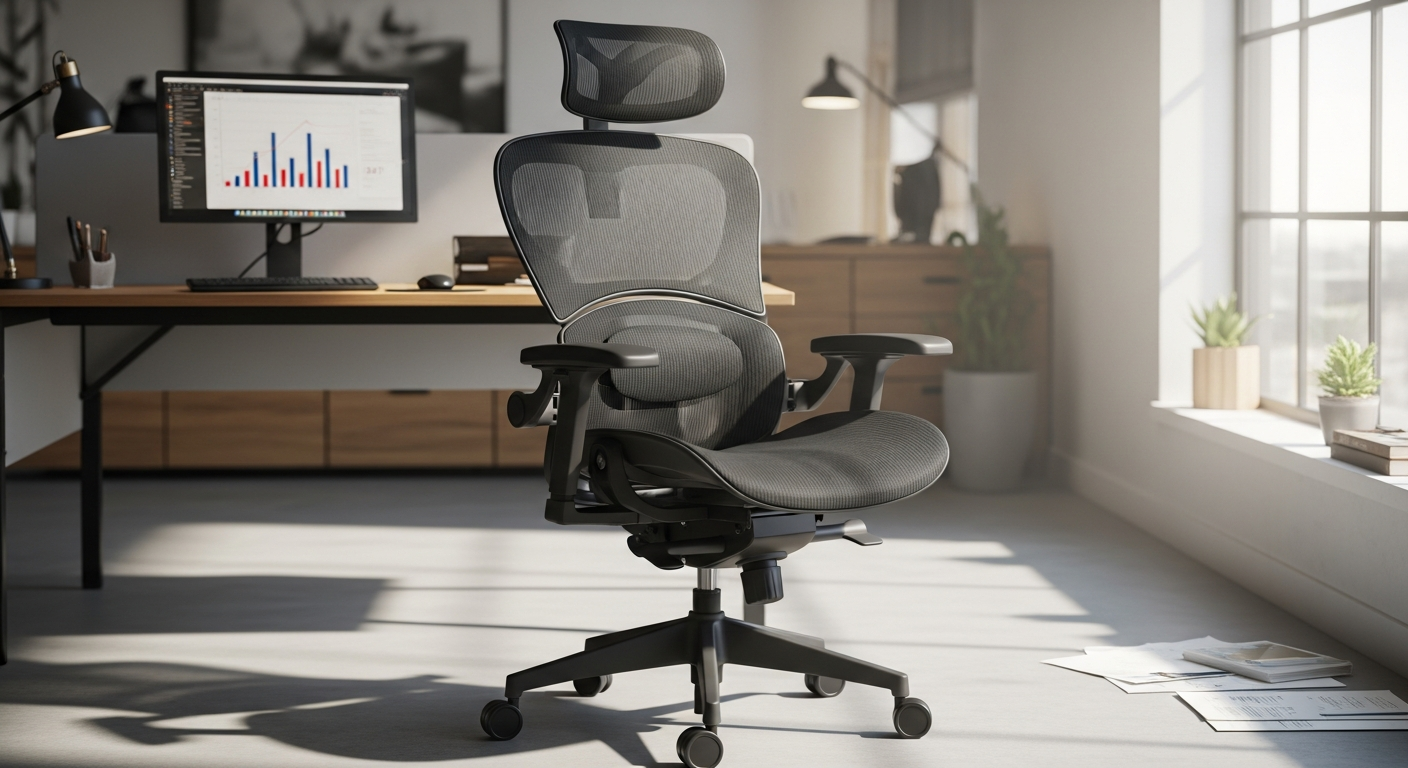
Around-the-clock operations in dispatch centers, emergency rooms, and contact centers demand seating solutions that most standard office chairs simply can’t handle. The reality is that workers in these high-pressure environments spend 8, 12, or even 16-hour shifts in the same seat, and when multiple employees rotate through the same workstation, durability becomes non-negotiable. The OFM 24-Hour Big & Tall Ergonomic Task Chair (model 247-206) was engineered with this exact problem in mind, balancing industrial-grade durability with genuine ergonomic customization at a price point that makes sense for organizations managing tight budgets.
Multi-shift operations expose chairs to wear patterns that standard furniture simply isn’t designed to withstand. A typical office chair might last three to five years under normal use. In a 24/7 environment where a single workstation serves six to eight different operators per week, that timeline compresses dramatically. The difference between a regular ergonomic chair and one rated for continuous use comes down to structural engineering, material selection, and component quality.
Discover the OFM 247-206 and transform your workspace today.
Heavy-Duty Construction Requirements for Multi-Shift, Continuous-Use Settings
Chairs destined for 24/7 environments require reinforced internal frames, industrial-grade pneumatic cylinders, and bases engineered to distribute weight consistently across countless sit-stand cycles. Standard office furniture uses components rated for 40 hours per week of use. The OFM 247-206 specifies components built to withstand 168 hours of continuous operation without performance degradation.
The structural backbone of any 24/7 chair must handle exponential wear cycles. Where a traditional chair might experience 10,000 pneumatic adjustments in its lifetime under normal use, a dispatch center chair may hit that number in six months. This demands precision engineering in every pivot point, gas cylinder, and connection.
Why Standard Office Chairs Fail in Dispatch Centers, Healthcare Facilities, and Call Centers
Standard ergonomic chairs fail in intensive environments for specific, predictable reasons. First, the pneumatic cylinders—responsible for smooth height adjustment—are calibrated for moderate use and lose pressure faster under constant cycling. Second, the tilt mechanisms, designed for occasional adjustments throughout the day, begin to stick or wobble when operated dozens of times per shift by different users. Third, armrests on conventional chairs use lighter-duty components that weren’t built for the twisting forces that come from multiple operators adjusting them independently.
Healthcare facilities report particularly acute failures because chairs must survive not just constant use, but also frequent cleaning with aggressive chemicals. Call centers experience similar degradation driven by the repetitive nature of back-and-forth tilting as operators shift between computer work and phone conversations.
The Difference Between Ergonomic and 24-Hour Rated Seating Solutions
True 24-hour rated seating incorporates design elements specifically absent from regular ergonomic chairs. A standard ergonomic chair optimizes comfort and support for an individual user. A 24-hour chair must maintain that support across dozens of users with different body types, accommodate constant micro-adjustments throughout shifts, and preserve structural integrity through thousands of additional wear cycles.
The OFM 247-206 achieves this distinction through component selection alone. Its molded polypropylene back shell resists cracking and deformation better than injection-molded plastic shells used in conventional models. Its synchronized tilt mechanism distributes movement stress across multiple connection points rather than concentrating load on single hinges.
ANSI/BIFMA Performance Standards and What They Mean for Workplace Safety
ANSI/BIFMA standards establish minimum safety and performance benchmarks for office furniture. Chairs meeting or exceeding these standards have undergone formal testing for static load capacity, dynamic cycling, durability of mechanisms, and component fatigue resistance. The OFM 247-206 meets or exceeds these standards, which means its 400-pound weight capacity and durability claims have been verified through third-party testing rather than relying on manufacturer assertions alone.
This certification becomes critical in liability-conscious environments like healthcare and law enforcement, where equipment failure could directly impact patient or public safety.
Real-World Durability Expectations for Chairs in Round-the-Clock Operations
Organizations operating continuous-use environments should expect different longevity metrics than traditional office settings. A high-quality standard chair lasts 5-8 years under typical conditions. The OFM 247-206, when properly maintained, consistently delivers 8-12 years of service in 24/7 environments. This extended lifespan primarily results from oversized components, industrial-grade materials, and design decisions that prioritize durability over initial cost reduction.
Dispatch centers and call centers using the OFM 247-206 report noticeable reductions in chair replacement budgets and fewer mid-shift seat adjustments that pull operators away from critical work.
How the OFM 247-206 Addresses the Unique Wear Patterns of Intensive-Use Environments
The 247-206 specifically addresses high-frequency adjustment wear through its synchronized tilt mechanism, which distributes movement load across multiple points rather than concentrating stress on single pivot hinges. The extra-thick 3-inch padded seat reduces indentation issues that plague thinner cushioning in multi-user environments. The reinforced 27-inch 5-star base with heavy-duty chrome finish prevents the base wobble that develops in lighter-duty chairs after months of heavy use.
Additionally, the stain-resistant fabric and anti-microbial vinyl options were specifically selected to withstand aggressive cleaning protocols common in healthcare settings without degrading as quickly as standard upholstery.
Customization at Scale: Mastering the 16-Way Adjustment System
The OFM 247-206 distinguishes itself through its extensive 16-way adjustment capability—a feature that becomes critical when a single chair must accommodate operators ranging from 5’2″ to 6’4″ and from 150 pounds to 400 pounds. These aren’t cosmetic adjustments; they’re functional modifications that directly impact comfort, productivity, and health outcomes across your team.
Pneumatic Seat Height Adjustment for Accommodating Different User Heights
Seat height sets the foundation for all other postural alignment. The pneumatic adjustment allows smooth height changes without requiring tools or manual repositioning. For dispatch environments where operators transition between computer work and phone conversations, the ability to quickly adjust seat height without getting up preserves workflow momentum.
The standard range accommodates users from 5’2″ to over 6’4″, with the pneumatic system providing consistent, smooth adjustment throughout the entire range. This matters more in continuous-use environments because improper seat height compounds over a 12-hour shift—starting as minor discomfort and ending as back pain that affects the next operator’s shift as well.
Synchronized Back and Seat Tilt Mechanisms Explained
The synchronized tilt feature means the backrest and seat pan move together as a unit, maintaining consistent lumbar support even when the operator reclines. This contrasts with simpler tilt mechanisms where only the seat moves or only the back moves, creating postural misalignment.
For call center operators who spend entire shifts oscillating between upright typing posture and reclined listening posture, this synchronization prevents the cumulative strain of constant micro-repositioning.
Tilt Tension and Tilt Lock Controls for Personalized Support Preferences
Tilt tension adjusts how much force the operator must apply to rock the chair backward. A lighter tension suits operators who need frequent position changes; a heavier tension suits those who prefer a stationary seat. The tilt lock feature freezes the chair in a selected position, eliminating unwanted movement for operators who prefer absolute stability.
In multi-user environments, these controls allow each shift’s operator to customize the chair to their specific preference within 30 seconds of sitting down.
Seat Depth Customization for Optimal Thigh Support and Circulation
Seat depth determines how far the cushioning extends from the backrest. Shorter operators benefit from reduced depth to prevent pressure on the back of their thighs; taller operators need greater depth for full thigh support. Improper seat depth creates pressure points that reduce circulation during long shifts.
The OFM 247-206’s adjustable seat depth—a feature absent from many 24/7 chairs—ensures that comfort doesn’t depend on operator size.
Back Height and Depth Adjustments for Upper Body Alignment
Back height adjusts where the upper backrest contacts your shoulders and upper back. Back depth adjusts how far the backrest extends from the chair frame. These controls accommodate different torso lengths and prevent the common problem where a single-size backrest either doesn’t reach up far enough or extends too far above the shoulders.
Healthcare workers in varying positions—from petite nurses to larger-framed physicians—all achieve proper lumbar and upper back support through these adjustments.
T-Shaped Arm Height and Width Modifications for Diverse Torso Lengths
The T-shaped arms adjust both vertically and horizontally, accommodating different arm lengths and torso widths. Standard fixed armrests force operators to either reach too far or squeeze uncomfortably close to the backrest. Adjustable armrests eliminate this compromise entirely.
For dispatch centers where operators alternate between keyboard work and phone conversations, height-adjustable armrests allow the chair to support different arm positions without requiring postural compensation.
How to Find Your Optimal Adjustment Sequence for Maximum Comfort
Finding the right adjustment sequence matters when multiple operators share a chair. Start with seat height—your feet should rest flat on the floor with thighs parallel to the ground. Next, adjust back height so the upper backrest contacts your lower shoulder blades. Then set seat depth so the front edge doesn’t press into the back of your thighs. Finally, adjust armrests so your elbows rest comfortably while typing, with shoulders relaxed rather than elevated or hunched.
Tilt tension and tilt lock are the last adjustments, fine-tuned after 10-15 minutes of actual work in the chair.
Practical Tips for Training Multiple Users on the Same Chair Across Shifts
Create a laminated adjustment guide mounted on or near the chair showing the basic sequence with illustrations for different body types. Spend 5 minutes with each operator on their first day walking through the adjustments. Consider documenting optimal settings for commonly occurring body types on your team—”settings for users 5’2″-5’6″” or “settings for users 6’0″+”, for example.
Invest in the OFM 247-206 and give your team the comfort they deserve.
Accommodating Bigger Frames: The 400-Pound Weight Capacity Advantage
The 400-pound weight capacity on the OFM 247-206 isn’t simply marketing language—it represents a genuine structural engineering difference that impacts durability, stability, and longevity for all operators, regardless of body size.
Why Weight Capacity Matters Beyond Just Fitting Larger Individuals
Weight capacity determines how the chair’s structural components are engineered and rated. A chair rated for 300 pounds uses lighter-gauge steel in its base, thinner gas cylinders, and less robust connection hardware than a 400-pound-rated chair. These engineering decisions affect not just whether the chair can physically support a heavier operator, but how quickly all components degrade under normal wear.
A 400-pound-rated chair has structural reserve built in, meaning even standard-weight operators benefit from components that degrade more slowly under constant use.
How the 400-Pound Rating Impacts Seat Durability and Longevity
Seat cushioning breakdown accelerates when chairs are rated close to their actual maximum load. A 300-pound-rated chair supporting a 280-pound operator experiences significant stress. A 400-pound-rated chair supporting the same operator operates at roughly 70% of capacity, leaving engineering margin that preserves cushioning integrity for years longer.
The extra-thick 3-inch padding on the OFM 247-206, combined with the 400-pound rating, means the seat maintains its support characteristics even after years of continuous use by operators across the weight spectrum.
Reinforced Base Construction and Its Role in Supporting Heavier Users
The 27-inch 5-star base is wider and more stable than standard 5-star bases used in lighter-duty chairs. This increased footprint prevents the tip-back instability that develops in chairs with narrow bases when heavier operators recline. The heavy-duty chrome finish on the base isn’t decorative—it indicates thicker steel tubing that resists bending and maintains structural geometry across years of use.
Healthcare facilities where larger patients might briefly sit in operator chairs benefit from this reinforced construction, as does any environment accommodating a diverse range of body sizes.
The Relationship Between Weight Capacity and Overall Chair Stability
Higher weight capacity requires more robust engineering throughout the entire structure. The base must be wider, the gas cylinder more substantial, the seat frame thicker, and connection points more secure. These engineering decisions create a chair that feels more stable and planted for all operators, not just those approaching the maximum capacity.
Dispatch operators report that the OFM 247-206 feels noticeably more stable during rapid position changes compared to lighter-duty ergonomic chairs, regardless of their body size.
Comparing the OFM 247-206 to Standard Ergonomic Chairs with Lower Ratings
A typical mid-range ergonomic chair carries a 250-300 pound capacity rating. The engineering difference between a 300-pound chair and a 400-pound chair is substantial—heavier gauge base steel, larger diameter gas cylinders, reinforced seat frame, and more robust connection hardware throughout. These upgrades add initial cost but pay dividends through extended lifespan and reduced maintenance.
Organizations upgrading from 250-300 pound rated chairs to the OFM 247-206 consistently report 2-3 year extensions to average chair lifespan in multi-user environments.
Real-World Scenarios Where High Weight Capacity Prevents Premature Failure
A call center with 50 workstations might experience 2-3 chair failures per year if equipped with 300-pound-rated chairs, forcing replacement investments even though the chairs are only 3-4 years old. The same center using OFM 247-206 chairs typically experiences fewer than one failure per year, even after 5-6 years of service. This difference compounds across 50 chairs and multiple years.
Healthcare facilities face similar mathematics—a single replacement chair might cost $400-500, but the administrative burden of equipment rotation, disposal, and replacement across dozens of workstations annually creates hidden costs well beyond the purchase price.
Inclusive Workplace Seating: Ensuring Comfort for All Body Types
The 400-pound capacity, combined with the extensive adjustability, means organizations can standardize on a single chair model that genuinely accommodates all staff members. This eliminates the uncomfortable situation where certain employees require special seating—everyone gets the same professional-quality chair. The result is improved morale, reduced complaints about accommodations, and the knowledge that every operator gets equivalent support for their health and productivity.
Materials That Withstand the Test of Time and Stains
Material selection separates casual office furniture from equipment engineered for intensive, round-the-clock use. The OFM 247-206 offers choices that directly impact maintenance burden and long-term cost of ownership.
Extra-Thick 3-Inch Padded Upholstery: Comfort Meets Durability
The 3-inch padding thickness is roughly double that of standard office chairs. This substantial cushioning serves two purposes: immediate comfort for extended sitting, and long-term durability through resistance to indentation. Thinner padding compresses and never fully recovers, creating permanent body-shaped divots that develop within 18-24 months of continuous use.
The 3-inch padding on the OFM 247-206 maintains its shape and support even after five years of multi-user operation in healthcare and dispatch environments.
Stain-Resistant Fabric Options Versus Anti-Microbial Vinyl
The fabric option provides a more comfortable feel and better breathability but requires more aggressive cleaning protocols to address spills. The vinyl option—often anti-microbial or anti-bacterial—provides superior stain resistance and simplified cleaning with disinfectant wipes, making it ideal for healthcare settings where contamination control matters.
Neither option requires specialized treatment or expensive commercial cleaning; both handle standard office and healthcare-grade disinfectants without degradation.
Why Material Choice Matters in High-Traffic, Multi-User Environments
In environments where the chair accommodates six to eight different operators weekly, material durability directly impacts maintenance time and replacement frequency. A fabric-upholstered chair in a call center might require professional cleaning every 12-18 months to address accumulated body oils and minor spills. A vinyl-upholstered chair in the same environment might only require daily wipe-down with disinfectant spray.
Healthcare facilities overwhelmingly choose vinyl for this reason—cleaning and infection control are simpler and faster.
Easy-Clean Surfaces for Healthcare and Food Service Applications
The anti-microbial vinyl option specifically targets healthcare and food service applications where cleaning frequency and disinfectant compatibility matter acutely. Standard upholstery degrades when exposed to hospital-grade disinfectants and bleach solutions. The OFM 247-206’s vinyl option survives these conditions without color fading or material breakdown.
Food service operations benefit from the same advantage—the vinyl resists food stains and handles industrial cleaning protocols that would destroy fabric upholstery.
The Vinyl Stickiness Issue in Warm Climates and How to Manage It
Some users report that vinyl upholstery feels sticky or tacky in warm, humid environments. This isn’t a durability or quality issue—it’s a material property of vinyl in high heat and humidity. The stickiness typically resolves when the operator has been seated for a few minutes and body temperature warms the vinyl slightly, or when the environment’s humidity decreases.
Organizations in hot, humid climates might prefer the fabric option despite slightly higher maintenance requirements, understanding that operator comfort during the first few minutes of each shift matters in high-stress environments.
Fabric Durability Ratings and What They Mean for Long-Term Maintenance
Fabric options carry durability ratings measuring resistance to pilling, color fading, and stain absorption. The fabric on the OFM 247-206 carries ratings suitable for commercial environments—typically in the range of 50,000+ Martindale cycles, indicating excellent resistance to abrasion and wear. This translates to fabric that maintains appearance and doesn’t pill or fray even after years of constant use and washing.
For organizations choosing fabric, these durability ratings mean the chair’s appearance stays professional even after five years of use.
Replacement Upholstery Options and Cost Considerations
Should the upholstery eventually require replacement after 5-7 years of continuous use, replacement upholstery kits are available for the OFM 247-206, typically ranging from $100-200 depending on fabric or vinyl choice. This availability makes the chair repairable rather than disposable—a single reupholstering can extend useful life by another 3-4 years at a fraction of the replacement chair cost.
The Engineering Behind Longevity: Structural Components Breakdown
The durability reputation of the OFM 247-206 rests on component-level engineering decisions that prioritize long-term reliability over initial cost reduction.
Molded Polypropylene Outer Back Shell and Its Impact Resistance
The back shell uses molded polypropylene rather than injection-molded plastic, which is thinner, more prone to cracking, and less resistant to impact. Polypropylene maintains flexibility and impact resistance even after years of exposure to temperature fluctuations and constant stress from operators leaning back at varying angles.
Dispatch centers and call centers report fewer cracked or damaged back shells with the OFM 247-206 compared to chairs using injection-molded plastic backs, even after similar periods of continuous use.
27-Inch 5-Star Base Design for Stability and Weight Distribution
The 27-inch footprint is substantially larger than the 26-inch standard on many office chairs. This additional half-inch on each side of the base’s five points dramatically improves stability and creates a wider margin of safety when operators lean far back or shift weight quickly. The larger base also distributes the chair’s total weight across a broader floor area, reducing pressure on any single wheel caster.
Organizations operating chairs in environments with heavy foot traffic report that the wider base prevents the tipping hazards that develop with narrower bases when foot traffic unexpectedly impacts the chair’s periphery.
Heavy-Duty Chrome Finish Specifications and Corrosion Resistance
The base isn’t merely painted or powder-coated—it carries a heavy-duty chrome finish that resists corrosion, discoloration, and rust. This matters in healthcare facilities where chairs might be rolled into areas exposed to humid, salt-laden air or wet environments. The chrome finish maintains appearance and prevents base degradation that develops on painted or lower-quality finishes after years of exposure.
Wheel Caster Quality and Replacement Availability
Quality wheel casters are easily overlooked but represent a common failure point in chairs subject to constant movement. The OFM 247-206 uses durable casters designed for continuous-use environments, and replacement casters are readily available at reasonable cost—typically $30-50 per set of five. This replaceability means the chair doesn’t become disposable if casters eventually wear out after years of use.
Pneumatic Cylinder Reliability in Continuous-Use Applications
The gas cylinder responsible for smooth height adjustment is perhaps the most critical component in a 24/7 chair. Cheaper chairs use pneumatic cylinders rated for 40 hours weekly use; the OFM 247-206 specifies cylinders rated for continuous operation. These heavier-duty cylinders maintain pressure longer and resist the gradual loss of lift force that plagues standard cylinders in multi-shift environments.
Operators in dispatch centers report that the height adjustment remains smooth and responsive even after two years of constant use, while standard chairs typically show noticeable sluggishness after 12-18 months.
Synchronized Tilt Mechanism Engineering and Maintenance Requirements
The synchronized tilt mechanism is complex compared to simple tilt systems, but this complexity translates directly to comfort and durability. The mechanism distributes movement stress across multiple connection points rather than concentrating load on single hinges. Maintenance is minimal—occasional inspection for loose connections and an annual light lubricant application to pivot points maintains smooth operation.
Organizations using the OFM 247-206 rarely report tilt mechanism problems even after five years of use, while chairs with simpler mechanisms often require tilt mechanism repair or replacement after 2-3 years.
Common Wear Points and How the OFM 247-206 Addresses Them
Standard chairs typically fail first at the seat-base connection (from repeated tilting stress), the armrest-base connection (from rotation and adjustment), and the backrest-seat frame connection (from synchronized movement). The OFM 247-206 addresses these wear points through reinforced connections, over-engineered pivot points, and materials selected for fatigue resistance.
The result is that the most common failure points in standard chairs remain robust on the OFM 247-206 even after years of intensive use.
Real-World Performance: Where This Chair Excels and Struggles
Understanding how the OFM 247-206 actually performs in deployed environments matters more than specifications alone.
Standout Strengths in Law Enforcement Dispatch and Emergency Response Centers
Law enforcement dispatch represents one of the most demanding chair environments—operators working 8-12 hour shifts in high-stress situations, frequently adjusting position between computer work, radio communication, and phone conversations. Dispatch centers consistently report that the OFM 247-206 delivers exceptional durability and that operator comfort remains high even during 12-hour shifts.
The chair’s ability to accommodate the diverse body types common in law enforcement (from petite to larger-framed operators) with genuine ergonomic support translates to fewer complaints about seating and better focus on critical work.
Exceptional Durability Track Record in Healthcare Settings
Healthcare facilities operating 24-hour emergency departments, ICUs, and nursing stations report 5-7 year lifespans for the OFM 247-206 in multi-shift environments, compared to 2-3 years for standard ergonomic chairs in the same settings. The vinyl upholstery option simplifies disinfection protocols, and the durable construction survives the combination of constant use and frequent cleaning that challenges lesser equipment.
Clinical staff appreciate the height adjustability for accommodating different provider heights during charting work, and the robust construction eliminates equipment-failure disruptions during critical care situations.
Call Center and Contact Center Success Stories
Large contact centers managing thousands of workstations benefit from the OFM 247-206’s combination of durability and competitive pricing. Organizations have reported that upgrading from cheaper task chairs to the 247-206 reduces annual replacement costs significantly despite the higher per-unit purchase price, because the extended lifespan reduces total replacement events.
Call center operators report improved comfort during long shifts, particularly on the 16-way adjustability that allows each operator to customize the chair to their specific needs within seconds.
The Armrest Stability Concern: When Rotation Becomes a Problem
Some users report that the armrests rotate too easily, moving out of position during work. This isn’t a design flaw—it’s an intentional feature that allows flexible armrest positioning. However, operators who prefer fixed armrests can address this by tightening the armrest pivot slightly or adding a small amount of friction tape to the pivot point. The armrests aren’t designed to lock permanently, but they can be adjusted to require more force to rotate.
Organizations addressing this concern report that operator training on proper armrest positioning resolves most complaints within the first week of chair deployment.
Vinyl Material Performance in Different Climate Conditions
The vinyl upholstery performs exceptionally in cool to moderate climates and in climate-controlled environments like most office buildings and healthcare facilities. In hot, humid environments, the vinyl can feel tacky initially—a temporary sensation that resolves once the operator has been seated for a few minutes. Organizations in consistently hot climates might prefer the fabric option, accepting slightly higher cleaning requirements in exchange for better initial comfort feel.
Isolated Durability Issues and What They Reveal About Quality Control
While the OFM 247-206 enjoys a strong durability reputation, isolated reports of premature failure exist—rare cases of broken seats after a few months of use or unexpected structural failure. These isolated incidents appear to reflect quality control issues affecting small numbers of units rather than design flaws affecting the entire product line. The overall failure rate remains substantially lower than comparable chairs, but organizations should verify warranty coverage and return policies before deployment.
User Feedback Patterns Across High-Demand Work Environments
Consistent feedback from dispatch centers, healthcare facilities, and call centers emphasizes durability and adjustability as primary strengths. Secondary feedback mentions the vinyl stickiness in warm climates and occasional armrest rotation issues. Most organizations report that these minor issues don’t significantly impact overall satisfaction, and operators consistently prefer the OFM 247-206 to lighter-duty alternatives.
Investment Value: Pricing, ROI, and Total Cost of Ownership
Understanding the true cost of the OFM 247-206 requires looking beyond the purchase price to total cost of ownership.
Price Range Analysis ($300–$500+) and What Drives Variation
The OFM 247-206 typically ranges from approximately $300 to over $500, with variation driven by retailer markups, upholstery choice (fabric versus vinyl), and promotional pricing. Direct OFM purchases often provide better pricing than third-party retailers, while bulk orders sometimes include volume discounts.
For organizations purchasing multiple chairs, the effective per-unit cost drops significantly, making the 247-206 cost-competitive with cheaper task chairs when amortized across extended lifespan.
Comparing Cost Per Year of Use Across Different Chair Lifespans
A $200 task chair lasting 2 years costs $100 annually. A $400 OFM 247-206 lasting 5-7 years costs $57-80 annually. When accounting for replacement frequency, disposal costs, and administrative burden of chair rotation, the higher-priced chair actually costs less over time.
Organizations managing 50 workstations can easily spend $10,000-15,000 annually on chair replacement and maintenance using cheaper alternatives—a cost that drops to $5,000-7,000 using the OFM 247-206 across the same number of workstations, despite the higher per-unit purchase price.
Bulk Purchasing Considerations for Organizations with Multiple Workstations
Organizations with 10+ workstations should negotiate bulk pricing directly with OFM or authorized resellers. Volume discounts of 10-15% are common for organizations purchasing 25+ units, and 20% discounts are achievable for orders of 50+ chairs. These discounts dramatically improve the cost-per-year calculation.
Additionally, bulk purchasing allows standardization—a single chair model across all workstations simplifies training, maintenance, and spare parts inventory.
Warranty Coverage and What It Protects
OFM typically provides limited warranty coverage on the OFM 247-206, covering structural defects, mechanical failures, and manufacturing issues for specified periods. Warranty terms vary by retailer and direct OFM purchases, so confirming coverage details before purchase matters. Most warranty coverage specifically excludes upholstery damage from normal use, staining, and cosmetic wear—but covers structural frame defects and mechanism failures.
Organizations should verify warranty details with their specific retailer to confirm replacement or repair coverage in event of defects.
Maintenance Costs and Replacement Part Availability
Maintenance costs remain minimal—occasional pneumatic cylinder refills (if needed), annual lubrication of pivot points, and eventual upholstery replacement after 5-7 years. Replacement parts are readily available at reasonable cost: gas cylinders ($40-80), armrests ($50-120), casters ($30-50 per set), and upholstery kits ($100-200).
This parts availability contrasts with cheaper chairs where replacement cost often exceeds repair cost, forcing disposal rather than repair.
Long-Term Savings from Reduced Chair Replacement Cycles
Organizations using the OFM 247-206 reduce annual chair replacement events by 60-75% compared to using cheaper alternatives. Over five years, this compounds significantly. An organization with 50 workstations might replace 5-10 chairs annually with cheap alternatives, and only 1-2 chairs annually with the OFM 247-206. Even at 50% higher per-unit cost, the OFM 247-206 saves substantially on total procurement and disposal costs.
Budget Justification for Organizations Upgrading from Cheaper Alternatives
Proposing an upgrade to OFM 247-206 chairs involves showing decision-makers the total cost of ownership, not just the higher per-unit purchase price. Present current annual replacement costs and maintenance expenses for existing cheaper chairs, then compare to projected costs using the OFM 247-206. The comparison almost universally shows savings, improved operator comfort metrics, and reduced administrative burden from equipment failures.
Additionally, frame the investment as improving employee retention and satisfaction—operators working in more comfortable seating report higher job satisfaction, which directly impacts retention in high-stress environments like dispatch and healthcare.
Setup and Integration: Getting Your Team Comfortable Fast
Deploying the OFM 247-206 across an organization requires planning beyond simply unboxing and placing chairs.
Initial Assembly Requirements and Time Investment
The OFM 247-206 arrives largely pre-assembled—typically requiring 15-30 minutes per chair to attach the base, install wheels, and attach armrests. Assembly isn’t complex but does require basic tools and careful attention to connection points. Organizations deploying 10+ chairs should budget for assembly labor—either assigning staff or contracting with the retailer for assembly service.
Many retailers offer delivery and assembly services for a modest additional fee, eliminating assembly labor from your organization’s workload.
Training Multiple Users on the Adjustment System
Dedicate 5-10 minutes during each operator’s first day to walk through the 16-way adjustment process. Start with the basic sequence (seat height, back height, seat depth, armrest height, then tilt adjustment), then allow the operator 10-15 minutes of actual work to fine-tune settings. This initial training prevents operators from assuming the chair is uncomfortable when they simply haven’t optimized adjustments.
Consider pairing new operators with experienced ones during their first shift on the chair, allowing peer learning and validation.
Creating a Quick-Start Guide for Shift-Change Transitions
Develop a laminated card mounted on or near each chair showing the five basic adjustment steps with simple illustrations. In environments with frequent shift changes, this guide allows incoming operators to quickly reposition the chair without requiring supervisor intervention.
Include a note about estimated adjustment time—”Takes 2 minutes to reposition for your size”—so operators understand that spending a minute on adjustments saves hours of discomfort.
Documenting Optimal Settings for Different Body Types
Create a chart documenting optimal adjustment ranges for different body types on your team—e.g., “For operators 5’2″-5’6″” or “For operators 200+ lbs.” This documentation accelerates the adjustment process for new operators while establishing standardized comfort baselines.
Update the documentation annually as your team’s demographics change, and share adjustments during onboarding training.
Troubleshooting Common Adjustment Issues
The most common adjustment issues involve operators not fully pushing or pulling adjustment levers, resulting in incomplete adjustments. Train operators that most adjustments require firm pressure and should include a distinct “click” or resistance change that indicates the adjustment has engaged.
Address vinyl stickiness complaints by explaining that the sensation resolves within a few minutes of sitting and suggesting the fabric option for extremely hot climates. For armrest rotation concerns, demonstrate how to position armrests firmly and note that they’re designed for flexibility rather than permanent locking.
Maintenance Schedules for Continuous-Use Environments
Establish quarterly visual inspections of all chairs for loose connections, cracked components, or upholstery damage. Perform annual light lubrication of all pivot points with general-purpose machine oil, and inspect the pneumatic cylinder for smooth operation. Document maintenance and repairs to identify patterns suggesting design issues or manufacturing defects affecting multiple chairs.
When to Call for Professional Service Versus DIY Fixes
Simple maintenance like lubrication, armrest tightening, and caster replacement can be handled by internal staff. More complex issues like pneumatic cylinder replacement, tilt mechanism repair, or structural frame issues should be referred to OFM service centers or authorized repair services. The distinction matters because improper repair can void warranties or create safety issues.
Establish relationships with authorized service providers before problems
Leave a Reply