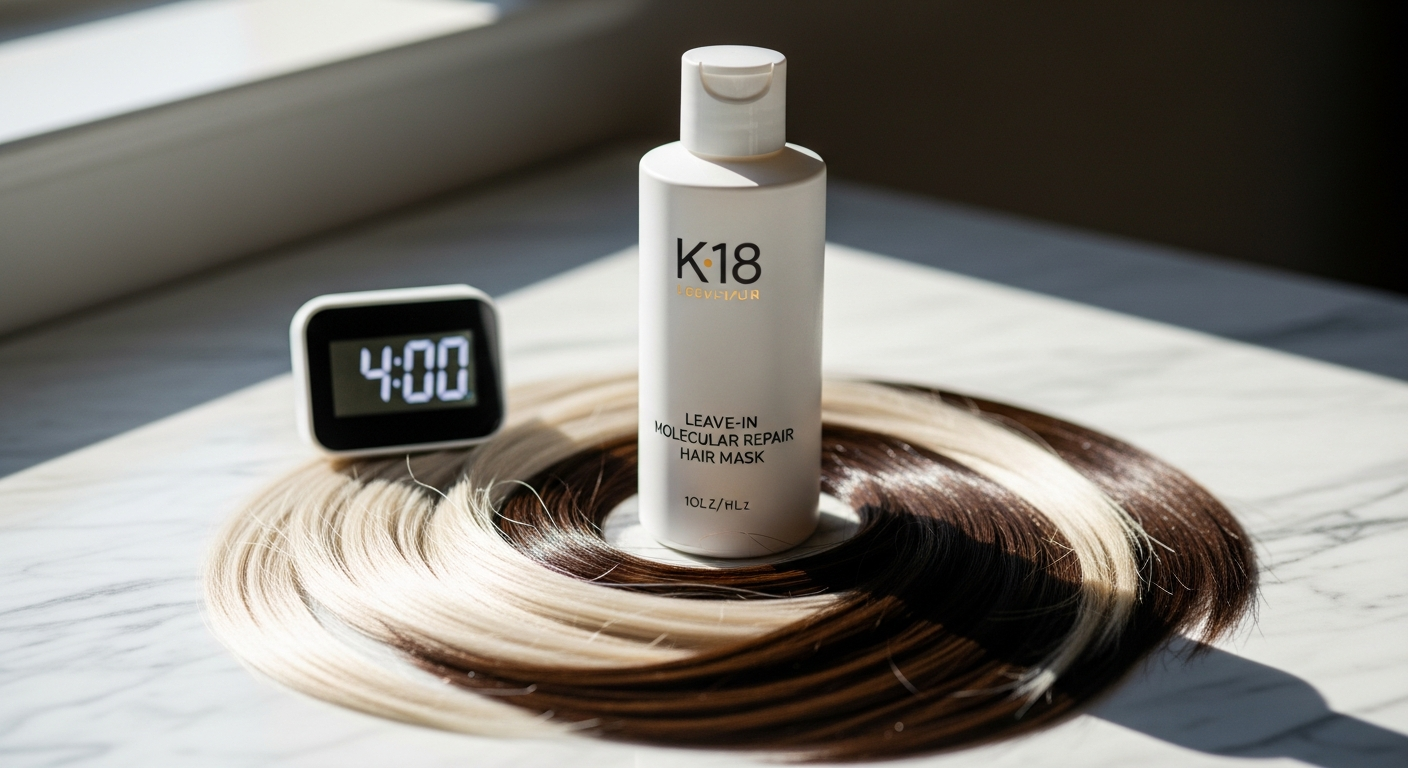
Over 70% of people who color or bleach their hair report visible damage within weeks of treatment. The strands become brittle, prone to breakage, and lose their natural shine. Most people reach for conditioning masks, but these products sit on the hair’s surface and wash away with your next shampoo, offering only temporary relief.
K18 isn’t your typical conditioning mask. This treatment uses patented K18Peptide™ technology to work at the molecular level, actually reconnecting broken keratin chains that chemical services destroy. Rather than coating damaged strands, it rebuilds them from within, creating repairs that persist through multiple wash cycles.
Discover K18’s molecular repair technology at Oz Hair & Beauty today.
How K18Peptide™ Technology Actually Repairs Damaged Hair
Understanding Biomimetic Science and Molecular Structure
The K18Peptide™ complex mimics the hair’s natural protein structure. Hair consists of keratin chains linked together in a precise arrangement. When bleaching, coloring, or heat styling damages hair, these chains break apart, leaving gaps and weak points throughout the strand. Traditional masks attempt to fill these gaps temporarily with oils or silicones, but they wash away.
K18’s biomimetic approach works differently. The formula contains peptides designed to match the exact molecular signature of keratin. When applied to hair, these peptides recognize broken chain segments and bridge the gaps, chemically bonding to reconnect the structure. This isn’t a coating—it’s a reconstruction.
The Mechanism of Reconnecting Broken Keratin Chains
The science centers on peptide bonds, the same chemical connections that naturally hold keratin chains together. K18’s proprietary peptides form new bonds where old ones have fractured, essentially gluing the broken pieces back together. This process occurs at the molecular level, within the hair’s cortex, rather than on its outer cuticle.
The repair happens remarkably fast. Clinical testing showed that four minutes of application time is sufficient for the peptides to locate broken chains and establish stable bonds. This speed comes from the formula’s molecular design, which allows peptides to penetrate deeply into damaged areas without requiring extended processing time.
How K18 Differs From Traditional Conditioning Masks
Conventional masks rely on coating agents like silicones, oils, and proteins. These ingredients sit on the hair’s surface, temporarily smoothing the cuticle and filling microscopic gaps. The results look impressive immediately after application, but shampoo dissolves these coatings during the next wash.
K18 operates on a different principle. Instead of coating, it rebuilds. The peptides integrate into the hair’s actual structure, forming permanent chemical bonds. Shampooing won’t remove these bonds because they’re not surface applications—they’re structural repairs. Once the keratin chains are reconnected, they remain connected.
Clinical Evidence and the Four-Minute Timeline
Independent clinical testing documented K18’s repair capacity. Researchers measured hair strength, elasticity, and damage levels before and after treatment. The results consistently showed significant improvements within the four-minute application window.
The rapid timeline reflects the formula’s efficiency. Peptides don’t need to slowly diffuse through the hair—they’re designed to locate and bond with broken keratin chains immediately upon contact. This is why four minutes delivers results that other treatments require 15 or 20 minutes to achieve.
Why Molecular Repair Doesn’t Wash Away
Chemical bonds persist through shampooing because water alone cannot break peptide bonds. The reconnected keratin chains are now chemically integrated into the hair’s structure, just like natural, undamaged keratin. Shampoo removes surface residue and oils, but it cannot dissolve the internal molecular repairs.
This permanence distinguishes K18 from every competitor. Users don’t need to reapply the treatment weekly to maintain results. The repair happens once and stays, though additional treatments can address new damage as it occurs.
Molecular Repair Versus Protein Coating Approaches
Protein-based conditioning masks, often containing keratin or collagen, work by depositing these proteins onto the hair’s surface. They temporarily fill gaps in the cuticle and can make hair feel smoother. However, these proteins are foreign materials sitting atop the hair, not integrated into its structure.
K18’s approach targets the actual structural damage rather than masking it. Protein coatings eventually flake away or wash out. Molecular repair, by contrast, restores the hair’s original architecture. For severely damaged hair, this distinction matters considerably—repair produces longer-lasting, more dramatic results than protein deposition alone.
Best Hair Types and Damage Scenarios for K18 Treatment
Ideal Candidates: Bleached, Color-Treated, and Chemically Processed Hair
K18 performs best on hair that has endured significant chemical processing. Bleaching, permanent coloring, relaxers, and chemical straightening treatments all create the exact molecular damage K18 is designed to address. Users with lightened hair report the most dramatic transformations—strands that felt straw-like become noticeably softer and more resilient after treatment.
Color-treated hair benefits substantially as well. Beyond the structural damage from the coloring process itself, repeated color applications compound the problem. K18 addresses this accumulated damage, restoring elasticity and reducing the brittleness that develops with multiple color cycles.
Heat-Damaged and Environmentally Stressed Strands
Heat styling creates damage patterns similar to chemical processing, though typically less severe. Repeated blow-drying, flat ironing, or curling damages the hydrogen bonds that give hair its structure. K18’s peptides can address this thermal damage, though results tend to be less dramatic than with chemically processed hair.
Environmental stressors—sun exposure, pollution, chlorine, salt water—also compromise hair structure gradually over time. K18 can repair some of this environmental damage, particularly when combined with protective practices going forward.
Performance on Fine, Thin, and Delicate Hair Textures
Fine and thin hair requires careful product selection because heavy formulas weigh strands down. K18’s leave-in formula is lightweight enough for delicate textures. It won’t leave hair feeling limp or greasy the way thicker conditioners might.
Delicate hair often shows dramatic improvement with K18 because the repair works at the molecular level without adding surface bulk. Strands become stronger and more elastic without appearing thicker or heavier.
Results for Medium-Thickness and Straight Hair Types
Medium-thickness straight hair represents an ideal use case for K18. These textures have sufficient density to benefit visibly from molecular repair without the complications that curly or textured hair can present. Results are typically outstanding—noticeable softness and smoothness emerge after a single application.
Straight hair also allows users to assess the product’s effectiveness clearly. Without natural texture patterns to account for, the transformation in smoothness and shine becomes immediately apparent.
Considerations for Thick, Curly, and Afro-Textured Hair
Thick, curly, and Afro-textured hair presents a more complex relationship with K18. These textures have unique moisture requirements. The repair mechanism works effectively on the molecular level, but some users report their curls feel less hydrated or more brittle after treatment if they don’t supplement with additional moisturizing products.
The issue isn’t that K18 damages curly or textured hair—it doesn’t. Rather, K18 is a repair product, not a hydrating product. Curly and textured hair often needs both repair and hydration in careful balance. Using K18 alone may leave these textures feeling stiff without follow-up hydrating treatments.
Determining If Your Hair Damage Warrants K18 Repair
Assess your hair’s current condition. If strands feel brittle, snap easily when stretched, lack shine, or feel rough to the touch, molecular repair could help significantly. If your hair has received recent bleaching or frequent coloring, K18 addresses the specific damage these treatments cause.
Conversely, if your primary concern is dryness or lack of hydration rather than structural breakage, a moisturizing conditioner might serve you better initially. K18 repairs damage; it doesn’t necessarily hydrate parched strands.
Combination Approaches for Curly and Textured Hair Users
Users with curly or textured hair achieve optimal results by pairing K18 with a hydrating leave-in conditioner. Apply K18 first for the molecular repair, then follow with a moisture-rich product. This combination addresses both the structural damage and the hydration needs that textured hair requires.
Some users alternate K18 treatments with hydrating-focused products throughout the week rather than using both simultaneously, allowing their curls to receive repair benefits without moisture compromise.
Leave-In Application and Integration Into Your Routine
Step-by-Step Application Instructions and Timing
Begin with clean, damp hair. Distribute K18 evenly throughout, focusing on mid-lengths and ends where damage typically concentrates. Work the formula through with your fingers or a comb to ensure even coverage.
Set a timer for four minutes. The formula works most effectively during this window. After four minutes have passed, you’re finished. Unlike traditional masks, K18 requires no rinsing. Simply style your hair as usual—blow-dry, air-dry, or use other styling tools as you prefer.
The entire process takes roughly five minutes from start to finish, making it considerably faster than traditional rinse-out treatments that require 15 to 20 minutes.
How to Use K18 Without Rinsing or Additional Steps
The leave-in application is K18’s primary advantage for busy schedules. There’s no rinse step, no waiting around with product in your hair, no extra conditioning step unless you choose to add one. Apply, wait four minutes, then proceed with your normal routine.
Some users style their hair while the product processes, blow-drying or air-drying as the timer runs. Others prefer to let it sit undisturbed. Both approaches work equally well.
Clarification on Conditioning Before or After Treatment
The instructions can create confusion around whether to apply conditioner. K18 itself is not primarily a conditioner—it’s a repair treatment. The question becomes whether to use additional conditioner alongside it.
For most hair types, K18 alone is sufficient. For curly, textured, or naturally dry hair, applying a lightweight leave-in conditioner after K18 treatment can provide additional hydration without weighing strands down. Apply K18 first, allow the four minutes to complete, then apply conditioner.
If you’re using K18 as a weekly or bi-weekly intensive treatment, you might not need additional conditioner on K18 application days. On other days, your regular conditioning routine continues unchanged.
Frequency Recommendations Based on Damage Severity
For severely bleached or repeatedly color-treated hair, weekly applications work well initially. Once visible damage diminishes, reduce frequency to every two weeks or monthly for maintenance.
For moderate heat damage or environmental stress, biweekly application may be sufficient. Users with minimal damage might need K18 only monthly or even less frequently.
Adjust frequency based on your hair’s response. If you notice continued improvement, maintain the current schedule. If results plateau, spacing out treatments slightly won’t hurt—the repair from previous applications persists even as you reduce frequency.
Compatibility With Color-Treated and Chemically Processed Hair
K18 is explicitly color-safe. The formula doesn’t interact with hair dye molecules or cause fading. In fact, by repairing the structural damage that color treatments cause, K18 can help color-treated hair maintain its vibrancy longer by reducing breakage that might otherwise expose lighter, faded layers underneath.
For chemically processed hair receiving relaxers, straightening treatments, or perms, K18 addresses the structural changes these processes create. Users report that combining professional chemical treatments with regular K18 application results in healthier, more manageable hair overall.
Time-Saving Benefits Compared to Traditional Rinse-Out Masks
Traditional rinse-out masks typically require 15 to 20 minutes of processing time, plus application and rinse time. The total commitment reaches 20 to 30 minutes per treatment.
K18 cuts this down to approximately five minutes total. For people juggling busy schedules, this dramatic time reduction makes intensive hair repair actually feasible within a normal routine. Weekly K18 treatments become realistic in ways that weekly intensive rinse-out masks don’t.
Best Practices for Maximum Absorption and Results
Apply K18 to damp hair rather than soaking wet. Excess water can dilute the formula slightly, potentially reducing effectiveness. Similarly, apply to hair that’s genuinely damp rather than completely dry—moisture helps distribute the peptides evenly.
Section your hair into manageable portions during application to ensure even coverage. Hair that doesn’t receive adequate K18 contact won’t experience the molecular repair benefits.
Pricing Breakdown and Size Comparison
5ml Size: Cost Per Application and Best Use Cases
The 5ml size retails at Oz Hair & Beauty for approximately $13.56 to $16.95. This compact size contains roughly one to two full applications for shoulder-length hair, possibly more for shorter styles.
The 5ml is ideal for testing whether K18 works for your hair type before committing to larger sizes. It’s also perfect for travel, fitting easily into carry-ons or gym bags. Cost per application runs relatively high compared to larger sizes, but the convenience and low commitment make it worthwhile for initial exploration.
15ml Size: Value Proposition for Regular Users
The 15ml bottle costs approximately $42.36 to $52.95 at Oz Hair & Beauty. This size provides roughly 7 to 10 applications depending on hair length and density.
For users planning weekly or biweekly applications, the 15ml size offers better value than the 5ml while still allowing relatively frequent repurchasing. This size suits people who want to commit to K18 without buying such large quantities that the product expires before use.
50ml Size: Cost-Effectiveness for Professional Use
The 50ml bottle ranges from $91.96 to $114.95, providing approximately 25 to 35 applications. For salon professionals or people using K18 very frequently, this size delivers the lowest cost per application.
The 50ml makes sense for professional settings where multiple clients receive K18 treatments, or for individuals treating their entire family’s hair regularly. The extended shelf life of the larger bottle also means less concern about expiration.
Price Range and Cost Per Treatment Across Sizes
Breaking down costs per application: the 5ml works out to roughly $7 to $17 per treatment, the 15ml to approximately $4.50 to $7.50 per treatment, and the 50ml to about $3 to $4.50 per treatment.
Larger sizes provide significantly better value, but only if you’ll actually use the product before it expires. Many people find the 15ml size strikes the right balance between economy and practical usage.
Investment Comparison: K18 Versus Professional Salon Treatments
Professional repair treatments at salons typically cost $40 to $100 per session for similar benefits. K18 at roughly $5 to $7 per application represents a fraction of professional pricing while delivering comparable molecular-level repair.
Even accounting for the initial investment in the product, treating your hair weekly at home with K18 costs substantially less than monthly professional treatments. Over a year, the savings become significant while results remain strong.
Budget-Friendly Strategies for Maximizing Product Longevity
Use less product than you might initially think necessary. K18 is concentrated—a quarter-sized amount covers shoulder-length hair adequately. Resist the urge to use more in hopes of better results; the four-minute processing time remains constant regardless of product quantity.
Apply strategically to damaged areas rather than coating every strand. Mid-lengths and ends typically need treatment more than roots. This targeted approach stretches each bottle further while still delivering noticeable results.
Store the bottle in a cool location away from direct sunlight to preserve the formula’s integrity throughout its shelf life. Proper storage prevents premature degradation that might reduce product lifespan.
Real Results and Realistic Expectations
Dramatic Improvements in Hair Softness and Smoothness
Users consistently report that their hair feels noticeably softer after K18 treatment. This softness isn’t a temporary coating effect—it reflects the actual improvement in hair structure. Strands feel smoother to the touch, and that smoothness persists through multiple wash cycles.
For people accustomed to rough, brittle hair from bleaching or coloring, this tactile improvement represents a genuine transformation. Hair that felt like straw can become genuinely silky within a single application.
Enhanced Elasticity and Reduced Breakage Rates
Damaged hair loses elasticity—strands snap when stretched or styled. K18 restores this elasticity by rebuilding the keratin structure that provides flexibility. Users notice their hair can stretch without breaking and bends without snapping.
Breakage reduction becomes apparent over time. Hair that previously shed excessively during brushing sheds noticeably less after K18 treatments. This reduction in breakage makes hair appear thicker and fuller as fewer strands break away during daily handling.
Texture Transformation Visible After Single Application
Many users notice immediate texture changes after their first K18 treatment. Hair appears smoother in photographs, feels different when running fingers through it, and styles more easily. This isn’t subtle—the transformation is visible and tangible enough that people around you might comment on your hair’s improved appearance.
The single-application results motivate continued use. Unlike products requiring weeks of consistent application to show benefits, K18 delivers something meaningful after just one treatment.
Timeline for Noticing Results: Immediate Versus Cumulative Benefits
Immediate results occur after the first application. Softness and smoothness emerge within minutes of the four-minute processing period. These instant improvements justify the treatment even if you never use the product again.
Cumulative benefits develop with repeated applications. Hair becomes progressively stronger, healthier, and more resilient. After several treatments spaced over weeks, users notice their hair’s overall health has improved substantially. Split ends become less prominent, shine increases, and manageability improves.
Before-and-After Scenarios for Various Damage Levels
Severely bleached hair shows the most dramatic transformation. Strands that feel almost crystalline in texture become soft and manageable. The visual change is often striking enough to prompt questions from friends and family.
Moderately damaged hair shows noticeable improvement without the dramatic shift. Softness increases, shine returns, and texture becomes more pleasant. The change is real and satisfying, though perhaps less visually shocking than with severe damage.
Minimally damaged hair might show subtle benefits. If your hair is already in decent condition, K18 maintains that health and prevents further deterioration rather than creating obvious transformation.
What Users Report About Manageability and Shine
Improved manageability consistently appears in user feedback. Hair that required extra effort to style and control becomes easier to work with. Blow-drying is faster, curling holds better, and straightening requires less effort. This practical improvement makes K18 worthwhile regardless of appearance changes.
Shine increases noticeably as the hair structure repairs. Light reflects more evenly from smooth, undamaged cuticles. Even people with naturally dull hair types report their hair looking shinier after K18 treatments.
Limitations: What K18 Does and Doesn’t Do
K18 repairs molecular damage from chemical processing, heat styling, and environmental stress. It doesn’t create permanent curl, add volume to thin hair, or change hair color. It won’t transform naturally dry hair into hydrated hair unless paired with additional moisturizing products.
K18 also won’t address severe damage that has already broken strands off. If you have split ends, they require cutting—K18 prevents new ones from forming by strengthening the structure but can’t magically fuse already-severed hair back together.
Understanding these limitations prevents disappointment. K18 is a focused repair treatment, not a miracle solution for every hair concern.
Honest Drawbacks and Who Might Want to Skip It
Cost Consideration Relative to Product Amount Received
The most common complaint centers on price. Bottles are small, and costs per application, while reasonable when calculated monthly, feel high when purchasing. Spending $15 for a 5ml bottle can sting, even if that amount provides adequate product for several treatments.
The small bottle size also creates frequent repurchasing requirements if you use K18 regularly. Some people find constant reordering inconvenient, preferring larger bottles that need less frequent replacement.
Why Thicker, Curlier, and Afro-Textured Hair May Feel Brittle
K18 is a repair treatment, not a hydrating treatment. Curly and textured hair thrive when both repair and hydration are balanced carefully. Using K18 without adequate hydration can leave these textures feeling dry or brittle despite improved structure.
The issue arises particularly when K18 is used frequently without accompanying hydrating products. Curly hair needs consistent moisture; repair alone leaves it feeling parched and prone to frizz.
The Need for Supplementary Hydrating Products for Certain Hair Types
Users with curly, coily, or very dry hair often need additional leave-in conditioners alongside K18. This means purchasing multiple products, which increases total investment. For people hoping K18 alone would solve their hair problems, this additional requirement becomes frustrating.
The products aren’t expensive individually, but purchasing K18 plus a hydrating conditioner costs more than a single all-in-one product might.
Confusion Around Conditioning Protocols and Application Instructions
The instructions don’t explicitly clarify whether to use conditioner before or after K18. Some users struggle to figure out the optimal approach, leading to either ineffective application or purchasing products they don’t ultimately need.
This confusion, while solvable, creates friction for people who prefer straightforward product instructions that don’t require additional research or experimentation.
K18 as a Repair Treatment, Not a Primary Hydrating Product
Marketing sometimes emphasizes K18’s softening effects without clarifying that softness comes from repair, not hydration. Users expecting a deeply moisturizing treatment sometimes feel disappointed when K18 doesn’t provide the hydration they need.
This distinction matters for product selection. If your hair needs hydration more than repair, K18 isn’t the right primary choice, though it could work alongside hydrating products.
Moisture Balance Concerns for Naturally Dry Hair Textures
People with naturally dry hair (regardless of texture) should approach K18 carefully. The product addresses damage but doesn’t add moisture. Using K18 without simultaneously maintaining hydration can actually make naturally dry hair feel worse despite improved structure.
For these users, pairing K18 with a rich leave-in conditioner or oil is essential, not optional.
When to Pair K18 With Additional Leave-In Conditioners
If your hair feels dry, brittle, or parched after K18 treatment, immediately add a hydrating leave-in conditioner. Apply the conditioner after K18 has processed, allowing both products to work together.
Alternatively, use K18 less frequently—perhaps every two weeks—alternating with hydrating treatments on other weeks. This approach allows your hair to receive repair benefits without moisture depletion.
Vegan, Color-Safe, and Cruelty-Free Credentials
Confirmation of Vegan Formula and Ingredient Sourcing
K18 is explicitly vegan, containing no animal-derived ingredients. The formula achieves repair effectiveness through biomimetic peptides rather than animal proteins like keratin from horns or hooves.
For vegans and people avoiding animal products, K18 aligns with their values while delivering results equivalent to or better than animal-derived alternatives.
Color-Safe Certification and Protection for Dyed Hair
K18 is formulated specifically to be color-safe. The peptides work only on protein structures, not on dye molecules. This means the treatment won’t fade color, strip dye, or alter hair tone.
For people with color-treated hair, K18 actually helps maintain color vibrancy by repairing the structural damage that coloring causes, which often exposes lighter, faded layers underneath when strands break.
Cruelty-Free Standards and Ethical Production Practices
K18 maintains cruelty-free certification, meaning no animal testing occurs during product development. The formula is also produced without animal testing at any stage.
For conscious consumers prioritizing ethical beauty products, K18 meets these standards while delivering legitimate scientific innovation.
Suitability for Environmentally Conscious Beauty Consumers
The vegan, cruelty-free formula appeals to environmentally and ethically minded consumers. The product focuses on repairing existing damage rather than requiring frequent replacement, reducing overall consumption and waste.
Small bottle sizes mean less packaging relative to product content compared to some competitor offerings, though the repeated purchasing does create some packaging waste.
Compatibility With Various Hair Color Types and Tones
K18 works equally well on all hair colors—blonde, brunette, red, black, gray, and everything between. The color-safe formula doesn’t interact with any dye type or tone.
For people with multiple colors, highlights, or balayage, K18 treats all sections uniformly without affecting any particular color differently.
Long-Term Color Vibrancy and Fade Prevention
By maintaining hair structure and preventing breakage, K18 helps prevent the visible fading that occurs when hair becomes too fragile to hold dye molecules effectively. Well-maintained hair holds color better and longer.
Users often report that color lasts longer and remains more vibrant when paired with regular K18 treatments, since the repaired structure doesn’t break as readily.
Alignment With Modern Beauty Values and Sustainability
K18 represents modern beauty’s direction toward efficacy-focused, ethically produced products. The brand aligns with consumer expectations for transparency, sustainability, and genuine effectiveness rather than marketing hype.
For people seeking beauty products matching their values around ethics, sustainability, and actual results, K18 fits this profile well.
The Bottom Line: Is K18 Worth Your Investment?
K18’s Leave-In Molecular Repair Mask delivers exactly what it promises: genuine molecular repair that transforms damaged hair in four minutes. The science is solid, the results are real, and the time investment is minimal. If your hair has suffered from bleaching, coloring, or aggressive heat styling, this treatment absolutely works and produces noticeable improvements you’ll feel and see immediately.
The format is perfect for busy schedules. No rinsing, no extended processing time, and no complicated steps—apply, wait four minutes, and move on. The permanence of the repair means results don’t wash away with your next shampoo, making this a genuinely efficient investment in hair health.
That said, this product isn’t perfect for everyone. The price is genuinely steep when purchasing smaller sizes, and anyone with naturally curly or textured hair needs to pair K18 with hydrating conditioners to prevent brittleness. The product is a repair treatment, not a hydrating treatment, and that distinction matters for curly and dry hair types.
For most people with chemically processed or heat-damaged straight and medium-textured hair, K18 represents an excellent investment that outperforms traditional conditioning treatments and costs substantially less than professional salon repair services. Start with the 5ml size to test compatibility with your specific hair type and routine, then move to larger sizes if results justify the ongoing expense.
Leave a Reply