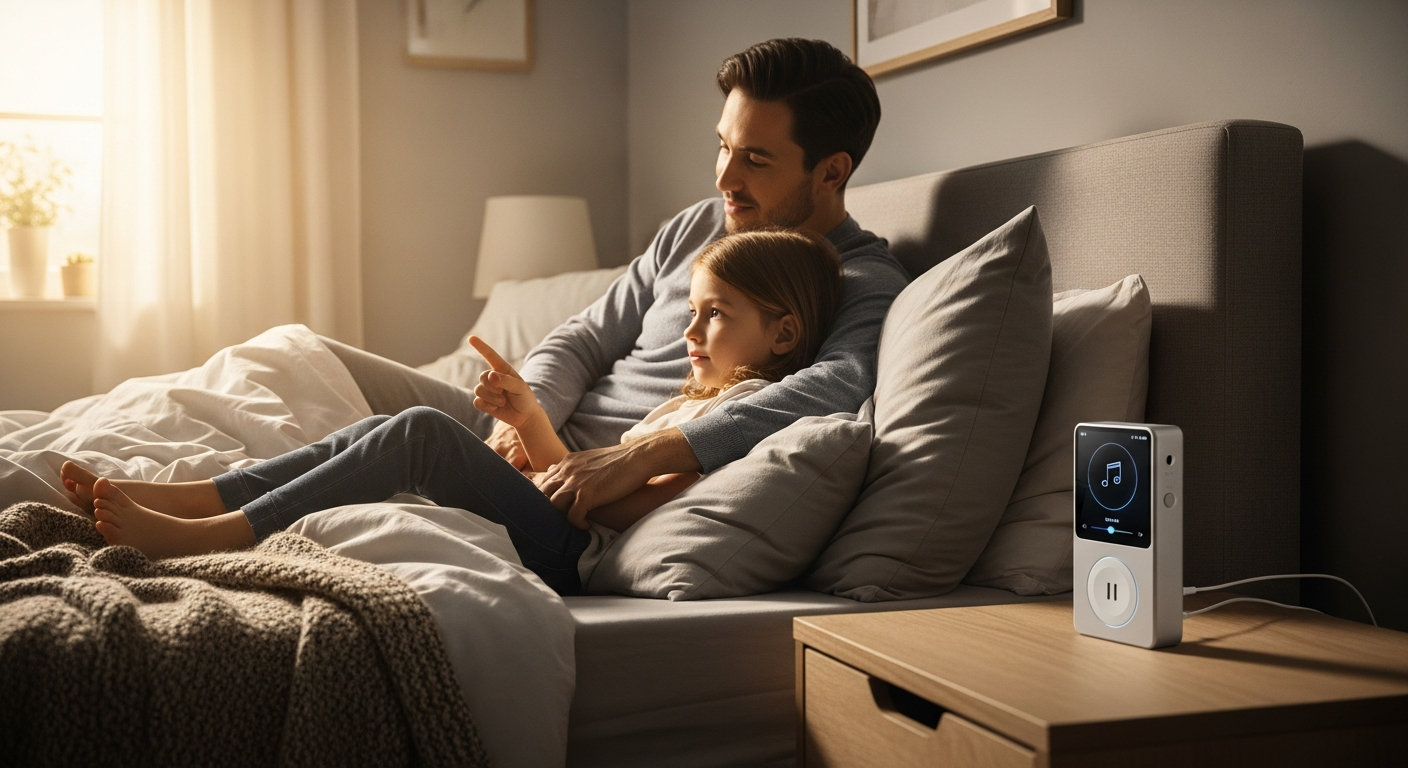
Nearly 30% of children struggle with sleep issues, leaving parents searching for solutions that genuinely work. The Rock my Sleep Personalized Music Box isn't your grandmother's lullaby player; it's a modern answer to an age-old parenting challenge. What makes this product truly innovative is its flexibility—you can upload your own recordings, mix in current hits, or include audiobooks that captivate your child's imagination while they drift off peacefully.
This guide walks you through everything needed to build the ultimate sleep playlist for your child, covering which genres work best for different ages, how to leverage the platform's built-in library, technical setup for uploading custom content, and real strategies that parents are using to maximize this tool's potential. You'll discover how to create a personalized sleep experience that works for your family's unique needs.
Start exploring the Rock my Sleep Personalized Music Box today.
Understanding Your Child's Audio Preferences: Why One-Size-Fits-All Doesn't Work
How different age groups respond to various music genres and audio content
Newborns and infants respond most strongly to soft, rhythmic sounds that mimic the womb environment—think ambient textures and gentle instrumental pieces. As children move into toddlerhood, their brains develop capacity for pattern recognition, making slightly more structured melodies appealing. By preschool age, many children gravitate toward recognizable songs and storytelling, while older kids often surprise parents by enjoying contemporary instrumental versions of pop and rock hits they've heard in everyday life.
The psychology behind why personalized playlists create stronger sleep associations
Your child's brain forms neural pathways around consistent sensory experiences. When the same carefully chosen sounds precede sleep night after night, those audio cues become powerful triggers for relaxation and drowsiness. A generic lullaby collection, no matter how high-quality, doesn't create this personalized neurological response. Your child's specific playlist—crafted around their preferences and family context—becomes a sleep anchor that strengthens over time.
Why instrumental versions of popular songs outperform traditional lullabies for modern kids
Today's children grow up saturated with contemporary music. An instrumental version of a song they've heard at the grocery store or in a video carries familiarity without the cognitive stimulation of lyrics. Traditional lullabies, while beautiful, lack this connection to their daily world. The combination of recognizable melodies paired with the sleep-inducing qualities of instrumental arrangements creates an optimal environment for rest.
How to identify your child's natural preferences through observation and testing
Start by noticing which sounds make your child pause and listen. Does the guitar riff in a particular song catch their attention? Do they calm down during piano pieces? Use the Rock my Sleep platform to experiment with small playlists—perhaps three to five tracks—and observe behavioral responses over several nights. Adjust based on what you notice: increased relaxation, faster sleep onset, or longer continuous sleep.
The role of familiarity versus novelty in building effective bedtime routines
A bedtime playlist needs consistency to work its magic, yet complete monotony breeds resistance. The sweet spot involves a core of familiar favorites (songs your child knows and loves) mixed with carefully introduced new tracks. This balance prevents boredom while maintaining the neurological anchoring that consistent music provides. Refresh your playlist every two to three weeks with new additions while keeping favorite tracks in rotation.
Why audiobooks and storytelling complement musical content for deeper relaxation
Music creates the atmospheric foundation for sleep, while spoken-word content engages the mind in a gentle, focused way that actual sleep thoughts cannot. Audiobooks and bedtime stories transition your child from active wakefulness to passive receptivity. The combination of musical underscore (if available) plus narrative content works synergistically—one soothes the body while the other quiets the busy mind.
Building Your First Playlist: Genre Selection and Content Curation
Exploring the Rock my Sleep music store's extensive catalog and filtering options
The Rock my Sleep music store offers thousands of tracks organized by age group, mood, and genre. Begin by browsing the curated collections for your child's age range. These pre-built selections provide proven starting points without requiring you to make every choice from scratch. Filter by instrumental versions to access contemporary hits in sleep-friendly formats.
Balancing instrumental tracks, ambient sounds, and spoken-word content
A well-rounded sleep playlist typically follows this ratio: 60% instrumental music, 20% ambient/nature sounds, and 20% spoken-word content (audiobooks or stories). This balance provides musical structure while introducing variety that maintains interest across multiple nights. The ambient component offers texture without demanding attention, while storytelling gives the mind something specific to follow as consciousness fades.
Incorporating pop, rock, and contemporary hits in instrumental form
Many children respond surprisingly well to instrumental arrangements of songs they've encountered in real life. The Rock my Sleep catalog includes instrumental versions of contemporary hits—tracks that feel modern and relatable rather than nursery-style. These instrumentals maintain the melodic appeal your child recognizes while removing the lyrical stimulation that can prevent sleep.
Creating themed playlists for different moods (wind-down, deep sleep, early morning)
Consider building separate playlists for different purposes. A wind-down playlist (played during dinner or bath time) uses slightly more upbeat instrumental music to signal transition toward bedtime. A deep sleep playlist features slower tempos and ambient elements designed for sustained rest. An early morning option includes gentle, gradually energizing music if your child wakes at night or for morning routines.
Mixing licensed tracks with your own uploaded recordings and family audio
This is where personalization becomes powerful. Upload recordings of a grandparent's voice telling a familiar story, a parent singing a special lullaby, or a treasured family message. These personal elements create emotional connection and comfort that no licensed track can replicate. The combination of professional music library selections with intimate family audio creates a uniquely resonant experience.
Determining ideal playlist length based on your child's sleep timer preferences
Most young children sleep eight to twelve hours nightly, but playlists don't need to match this duration. A forty-five to ninety-minute playlist plays multiple times across a full night. This repetition strengthens the sleep association—your child's brain learns to recognize these specific sounds as sleep signals. Check Rock my Sleep's adjustable sleep timer to understand how long the device will play before automatically stopping.
Strategies for seasonal playlist updates to keep content fresh and engaging
Every six to eight weeks, introduce three to five new tracks while keeping five to seven established favorites. This refresh prevents the playlist from becoming background noise that your child no longer consciously registers. Seasonal themes work well—adding slightly different ambient sounds or instrumental arrangements as the months change.
Browse the complete Rock my Sleep music store and start building your custom playlist.
Technical Setup: Uploading and Managing Custom Content
Step-by-step guide to connecting the removable music player via data cable
The music player removes easily from the plush toy's interior. Using the provided data cable, connect the device to your computer. The player appears as a removable storage device, similar to a USB drive. You can now drag and drop files directly into the designated music folder. No special software is required—the process is straightforward and intuitive.
How to upload personal recordings, family messages, or custom audiobooks
Record audio using any standard device (smartphone, computer, or digital recorder) and save as an MP3 file. Transfer these files via the data cable just as you would licensed tracks from the Rock my Sleep store. Family voice messages, bedtime stories narrated by grandparents, or even recordings of your child's favorite songs from a parent become part of the device's content library.
Organizing files and managing storage capacity on the device
Create folders within the device's memory for different playlist categories. Name files clearly (for example, "Nighttime-WindDown-01" or "Grandma-Bedtime-Story"). The device's storage capacity accommodates substantial content libraries, but checking available space before major uploads prevents complications.
Troubleshooting common upload issues and file format compatibility
MP3 remains the most universally compatible format. If files don't appear after uploading, verify they're saved as MP3 and that the file names don't contain special characters that the device doesn't recognize. Disconnect and reconnect the data cable if the player doesn't register on your computer. Rock my Sleep's customer support team responds quickly to technical questions.
Creating backup playlists for travel, grandparent visits, or changing routines
Before major schedule changes, duplicate your current playlist and save it separately. Create a specific "travel" version with slightly shorter tracks if heading somewhere with limited quiet time. This approach ensures your child's familiar soundtrack remains available even when routines shift temporarily.
Best practices for naming and categorizing tracks for easy navigation
Use consistent naming conventions that make sense to your family. Include time-of-day indicators ("Morning-Wake-Up") or emotional states ("Calm-Focus," "Deep-Sleep"). Clear organization matters more when searching for specific tracks during bedtime—you want to adjust content quickly without fumbling with unclear file names.
Understanding battery life implications when using different content types
Music alone consumes less battery than music combined with frequent audiobook playback. Three AAA batteries typically last two to four weeks depending on nightly usage duration. Rechargeable AAA batteries work well for families planning long-term use, though the device doesn't charge via the data cable—recharging happens externally.
Maximizing the Music Box's Safety and Durability Features
How the volume limiter protects developing ears while maintaining audio quality
The built-in volume limiter caps sound at levels safe for young ears while still delivering excellent audio clarity. This protective feature means you never have to worry about volume creeping up or sudden loud sounds damaging hearing. You can set the volume once to a comfortable, safe level and trust that it remains consistent.
Setting the adjustable sleep timer to match your child's typical sleep duration
Test different sleep timer settings over several nights to find what works for your child's patterns. Some children sleep through forty-five minutes of music without waking, while others need longer playlists. Once you identify the optimal duration, the timer setting becomes another automatic part of bedtime structure.
Caring for the plush toy: machine-washing guidelines and maintenance schedules
The removable music player means you can safely wash the plush toy itself at up to 30 degrees Celsius, maintaining hygiene without worrying about water damage to electronics. Remove the player before washing, allow the toy to dry completely before reinserting it, and wash monthly or as needed depending on your family's usage patterns.
Why the removable music player design extends product lifespan
Separating the electronic components from the washable plush toy prevents water damage that would otherwise require replacement. This design choice dramatically extends the device's functional life and makes the product genuinely durable through multiple childhood stages.
Battery management: AAA versus rechargeable battery options and cost considerations
Standard AAA batteries offer simplicity and reliability, with a two to four-week lifespan depending on usage. Rechargeable AAA batteries reduce long-term costs for families planning extended use. Maintain a small stockpile of spare batteries to avoid bedtime disruptions when power runs low.
Protecting the device during travel and storage between uses
The plush toy naturally protects the music player during transport and casual play. For extended storage, keep the device in a cool, dry location with batteries removed if storing for more than a few weeks. This preventative approach maintains functionality across months or years of intermittent use.
Addressing rare technical issues with Rock my Sleep's customer support
The brand's customer service team responds promptly to technical questions or concerns. Most issues resolve quickly through email communication, and the company stands behind its product quality with genuine support.
Growing with Your Child: From Infant to Older Kids
How newborns and infants respond differently to the music box's features
Newborns respond primarily to rhythm and tone rather than melody or narrative content. White noise, ambient soundscapes, and simple instrumental music suit this developmental stage. The plush toy itself becomes a comforting sleep companion through tactile familiarity rather than active musical engagement.
Transitioning content as your child develops (infancy through toddlerhood)
As infants grow into toddlers (six months to three years), gradually introduce recognizable melodies and gentle storytelling alongside ambient music. Toddlers develop preferences and can express what they enjoy, making this the perfect time to start experimenting with slightly more varied content selections.
Using the device as a storytelling tool for preschoolers and early readers
Preschoolers (three to five years) benefit from narrative content that occupies the mind as they transition to sleep. Uploaded family stories, simple audiobooks, or recorded bedtime tales become central to their evening routine. The music box becomes less about sleep aid and more about nightly ritual and connection.
Engaging older children with podcasts, audiobooks, and music discovery
By early elementary school age, children often develop distinct musical tastes and enjoy discovering new content. The Rock my Sleep platform's flexibility allows older kids to explore age-appropriate audiobooks, podcasts, or instrumental versions of current hits they've heard in school or online.
Leveraging the music box for educational content alongside entertainment
As children mature, use the device for educational audiobooks or language learning content during wind-down periods. The music box becomes a learning tool that supports both entertainment and development.
Creating independence by allowing kids to select their own playlists
Older children benefit from playlist ownership. Let them choose new tracks from the Rock my Sleep library or help create themed collections. This autonomy increases their engagement while maintaining parental oversight of appropriate content.
Long-term value: why this investment pays dividends across multiple childhood stages
A single Rock my Sleep music box serves a child from infancy through elementary school and beyond. The customization capacity means the device grows genuinely useful alongside your child's developing preferences and sleep needs. This longevity transforms the purchase from a temporary baby product into a multi-year investment.
Real Parent Experiences: Playlist Strategies That Deliver Results
Success stories from families who've solved chronic sleep resistance
Parents report remarkable transformations when introducing personalized playlists. Children who previously resisted bedtime or woke repeatedly often settle more easily and sleep longer once familiar, preferred music signals sleep time. The combination of familiarity and safety creates conditions where rest comes naturally rather than through struggle.
Popular playlist combinations that parents recommend most frequently
The most successful combinations typically pair instrumental pop or rock hits with ambient background sounds and occasional storytelling elements. Parents often report that their children specifically request particular songs or stories, indicating genuine engagement with the personalized content.
How mixing genres (classical, ambient, pop instrumental) creates optimal results
Genre variety prevents monotony while maintaining the neurological sleep-triggering effect. A playlist featuring soft classical piano, instrumental indie rock, ambient nature sounds, and gentle story excerpts keeps the experience fresh while delivering consistent sleep support. The genre mix appeals to different parts of the brain simultaneously—emotional response through familiar music, ambient calm through non-demanding soundscapes, and mental focus through narrative.
Using family recordings and parental voice messages for comfort and connection
Perhaps the most powerful playlist elements come from personal recordings. A parent's voice reading a bedtime story, a sibling singing a silly song, or a grandparent's recorded message transforms the music box from a device into a family connector. These intimate audio elements often become treasured favorites that children request repeatedly.
Adapting playlists when sleep challenges emerge or routines shift
Experienced parents adjust their playlists when sleep patterns change—adding shorter, more energizing tracks if bedtime resistance emerges, or introducing deeper, slower content if anxiety surfaces. This flexibility allows the device to support evolving sleep needs across childhood.
Tips from parents who've used the device across multiple children
Families with multiple children often create personalized playlists for each child while maintaining some shared favorites. Older siblings sometimes help younger ones select or create playlists, turning the device into a bonding experience. The flexibility to customize means the same physical toy serves completely different purposes across children with different ages and preferences.
Common mistakes to avoid when first building your child's sleep playlist
Beginning with overly long playlists creates decision fatigue—start with ten to fifteen carefully chosen tracks. Avoid including high-energy music that stimulates rather than settles. Don't introduce too many new elements simultaneously; instead, test changes gradually so you can identify what genuinely helps sleep. Finally, resist the urge to adjust playlists constantly; consistency matters more than perfection.
Comparing Price to Long-Term Value: Is It Worth the Investment?
Breaking down the cost per use over your child's early childhood years
While the Rock my Sleep music box carries a higher price point than basic sleep devices, calculating cost per use across five to ten years of nightly use dramatically changes the financial picture. A single device used consistently from infancy through elementary school works out to mere pennies per night—comparable to or less expensive than many lower-quality alternatives purchased repeatedly.
Quality craftsmanship and durability compared to cheaper alternatives
Budget sleep devices often fail or require replacement after months of use. The Rock my Sleep box's durable construction, removable washable toy, and solid electronics mean it genuinely lasts through multiple children or many years with a single child. The quality justifies the initial investment through longevity that cheaper alternatives cannot match.
The hidden value of customization versus generic sleep products
Customization isn't merely a nice-to-have feature; it's genuinely functional. A personalized playlist aligned with your child's preferences outperforms generic lullaby collections, meaning fewer sleep struggles and better actual rest. This effectiveness translates to healthier sleep and less parental stress—value that extends beyond the device itself.
How the 'grows with your child' feature extends ROI significantly
Most baby products have a narrow developmental window. The Rock my Sleep box remains relevant as a music player for a toddler, a storytelling device for a preschooler, and a music discovery tool for an older child. This multi-stage functionality multiplies the device's practical value compared to products with limited applications.
Warranty, customer service, and support included in your purchase
Rock my Sleep provides responsive customer support and stands behind product quality. This service dimension adds value beyond the physical device, ensuring issues resolve quickly and concerns receive serious attention.
Ideal gifting occasions: newborns, baptisms, birthdays, and milestone celebrations
The device's high quality and multi-stage utility make it an exceptional gift for major childhood milestones. Parents consistently report receiving compliments and gratitude for gifting a Rock my Sleep music box, indicating that recipients genuinely value the investment.
When the investment makes sense for your family's specific sleep challenges
If your child struggles with sleep resistance, anxiety at bedtime, or inconsistent sleep patterns, the Rock my Sleep investment becomes particularly justified. For families where sleep challenges create broader household stress, the personalized approach and proven effectiveness make the purchase a wise decision. Similarly, families planning multiple children benefit significantly from a device designed to serve each child individually.
Your Child's Best Sleep Starts with the Right Soundtrack
Creating a personalized sleep experience for your child transforms bedtime from a battle into a beautiful ritual. The Rock my Sleep Personalized Music Box gives you the tools to craft exactly that—a custom soundtrack that speaks to your child's unique preferences, age, and personality. Whether you're building playlists around instrumental pop hits, weaving in family recordings, or discovering the perfect balance of music and storytelling, you're not just playing background noise. You're building sleep associations that stick, establishing routines that work, and investing in a tool that evolves alongside your child.
The technical setup is straightforward, the customization possibilities are genuinely endless, and the results speak for themselves through countless parent testimonials. Yes, the price point sits higher than budget alternatives, but the quality, durability, and genuine impact on sleep quality make it a choice that families rarely regret. Start with one playlist, test what resonates with your child, and refine from there.
Ready to transform your child's sleep routine? Begin with the Rock my Sleep music store, explore what calls to you, and don't hesitate to upload those personal touches that make the experience truly yours. Your child's peaceful nights—and your mornings filled with well-rested kids—are waiting on Rock my Sleep.
Leave a Reply