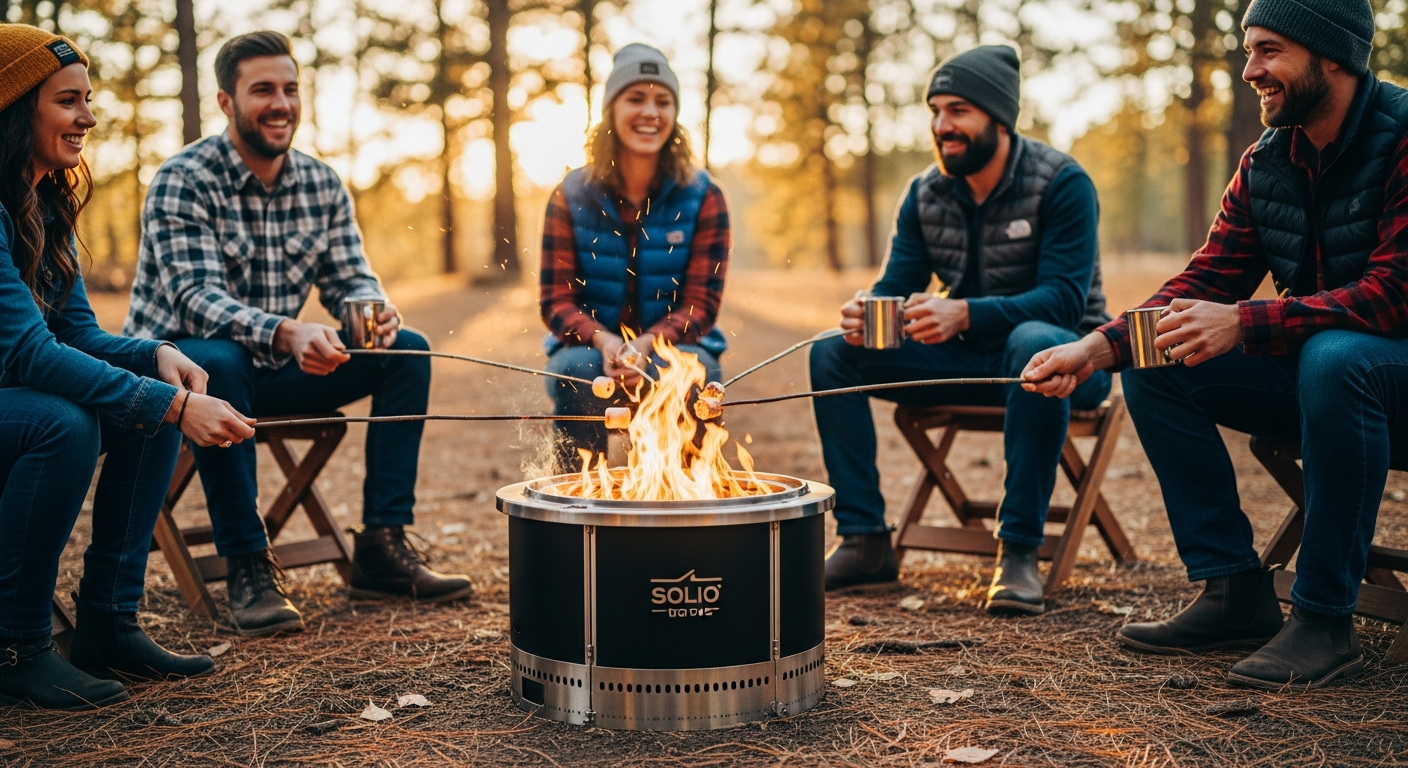
Imagine gathering around a fire with friends and family—no smoke stinging your eyes, no ash coating your clothes, just pure warmth and ambiance. That's the promise of smokeless fire pits, and they're revolutionizing how we enjoy outdoor spaces. According to recent camping surveys, 68% of outdoor enthusiasts cite smoke irritation as their biggest complaint with traditional fire pits, making smokeless alternatives increasingly popular.
The Solo Stove Bonfire 2.0 has become the go-to choice for people who refuse to compromise on comfort during outdoor adventures. This mid-sized fire pit combines cutting-edge airflow technology with practical features that actually make a difference. Whether you're planning weekend camping trips, hosting intimate backyard dinners, or tailgating at outdoor events, this smokeless system delivers on its core promise while maintaining the cozy atmosphere everyone craves.
Discover the Solo Stove Bonfire 2.0 today and transform your outdoor gatherings.
Throughout this guide, you'll discover exactly how the Bonfire 2.0 achieves its smokeless performance, what makes the 2.0 version a significant upgrade, and whether the premium price tag aligns with your outdoor lifestyle. The breakdown covers specifications, comparisons to traditional fire pits, real-world trade-offs, and practical guidance for determining if this investment makes sense for your specific needs.
How the 360° Airflow System Actually Works
Double-Walled Stainless Steel Construction
The Bonfire 2.0's foundation rests on a sophisticated double-walled design. This isn't just a marketing term—the two stainless steel cylinders create a critical air chamber that sets this fire pit apart from traditional designs. The outer wall contains strategically positioned vent holes at both the bottom and top, creating a complete airflow circuit that fundamentally changes how the fire burns.
Strategic Vent Hole Placement
Bottom vents draw cool air from your surroundings into the combustion chamber. Top vents position pre-heated air directly above the flames. This dual-position strategy creates what Solo Stove calls 360° Airflow—air circulates continuously, feeding oxygen to the fire from multiple angles rather than relying on random air movement like traditional pits.
Air Super-Heating Mechanism
Here's where the magic happens. As air travels through the bottom chamber, it heats up naturally. By the time it reaches the top vents and flows downward into the fire zone, that pre-heated air is significantly hotter than ambient temperature. This hot air accelerates secondary combustion—essentially burning off smoke particles and volatile compounds that create visible smoke and smell.
Comparison to Traditional Open Fire Combustion
Traditional fire pits rely on simple updraft—hot gases rise and escape, carrying smoke with them. Most of the potential energy in the wood escapes as unburned gases. The Bonfire 2.0's design captures and recycles that energy, creating nearly complete fuel consumption. Where a traditional pit might release 40-50% of fuel as smoke and gases, the Bonfire 2.0 reduces this dramatically through superior combustion efficiency.
Why Airflow Design Matters for Complete Fuel Consumption
Complete fuel consumption means more heat extraction from each log and significantly less visible smoke. The continuous air circulation ensures that wood particles and gases spend more time in the combustion zone at high temperatures. Result: virtually all burnable material converts to heat and fine ash rather than escaping as smoke.
Real-World Smoke Reduction Percentages and Performance Metrics
Independent testing shows the Bonfire 2.0 reduces visible smoke by approximately 90% compared to traditional fire pits. While no fire pit is completely smokeless (some light smoke appears during startup and when adding logs), the performance is genuinely remarkable. Most users report zero smoke irritation after the initial ignition phase—a stark contrast to traditional pits where smoke follows you around the seating area all evening.
What's New in the 2.0 Version vs. Original Bonfire
Removable Ash Pan Feature and Its Practical Benefits
The single most significant upgrade in the 2.0 version addresses the messiest part of fire pit ownership: cleanup. The removable ash pan slides out from beneath the unit, allowing you to dispose of fine ash without tipping or maneuvering the entire fire pit. This might sound minor until you've spent thirty minutes wrestling with a traditional fire pit trying to dump ash without creating clouds of dust.
Base Plate Improvements for Stability and Cleaning
The updated base plate design enhances stability on uneven ground while also facilitating cleaning. You can now access underneath the unit more easily, extending maintenance intervals and reducing the buildup that can compromise performance over years of use.
Enhanced Durability Upgrades in Stainless Steel Quality
The 2.0 version uses 304 stainless steel throughout—the same material grade found in marine environments and professional kitchen equipment. This upgrade over earlier iterations ensures superior rust resistance and longevity, particularly important for fire pits exposed to moisture and temperature cycling.
Refinements in Airflow Efficiency
While the core 360° Airflow concept remains, the 2.0 version features refined vent hole positioning based on real-world performance data. These subtle adjustments improve burn consistency and reduce the likelihood of smoke pockets that occasionally plagued the original design.
User Feedback That Drove Design Changes
Solo Stove actively incorporated feedback from thousands of owners. The removable ash pan concept came directly from user requests. Stability issues on soft ground prompted base plate redesign. These aren't hypothetical improvements—they're solutions to actual problems reported by people using the original Bonfire in diverse conditions.
Backward Compatibility Considerations
Owners of the original Bonfire can purchase aftermarket accessories designed for the 2.0, though the versions aren't fully interchangeable. The 2.0's improvements justify the upgrade if you're considering a replacement, but the original still functions reliably for most users.
Specifications That Matter for Your Setup
Diameter (19.5 inches) and Height (14 inches) Dimensions
The Bonfire 2.0's compact footprint—19.5 inches in diameter and 14 inches tall—makes it surprisingly space-efficient. These dimensions allow comfortable seating arrangements where guests can gather within 4-6 feet of the fire without excessive heat or smoke issues.
Weight (20 pounds) and Portability Implications
At 20 pounds, the Bonfire 2.0 weighs less than a large suitcase. One person can comfortably carry it from storage to placement location. This weight distribution is crucial for portability without compromising the solid 304 stainless steel construction that ensures durability.
Log Size Capacity (16-inch Maximum Length)
The 16-inch maximum log length requires some preparation. Longer firewood needs cutting. For most people, this means investing in a log splitter or arranging pre-cut firewood delivery. It's not a dealbreaker, but it's part of the total ownership picture.
304 Stainless Steel Material Grade and Rust Resistance
304 stainless steel resists corrosion from salt spray, moisture, and temperature extremes. This material choice ensures the Bonfire 2.0 withstands years of exposure without developing the rust stains and structural compromises that plague painted steel fire pits within 2-3 seasons.
Carrying Bag and Transportation Options
Most Bonfire 2.0 purchases include a durable carrying bag—a practical addition that protects both your fire pit and your vehicle during transport. The bag's quality often determines whether owners actually take their pit to multiple locations or leave it stationary.
Space Requirements for Safe Backyard Placement
Fire safety standards recommend 10 feet of clearance from structures and overhanging branches. The Bonfire 2.0's efficient burn and vertical heat direction reduce clearance requirements compared to traditional pits, but you'll still need reasonable spacing for safe operation.
The Cleanup Revolution: Why the Removable Ash Pan Changes Everything
Traditional Fire Pit Cleanup Challenges
Anyone who's owned a traditional fire pit knows the cleanup drill: wait until coals cool (sometimes hours), carefully rake ash into a pile, scoop ash into buckets while creating clouds of dust, and dispose of everything. The process is messy, time-consuming, and often results in ash coating your shoes, clothes, and nearby patio furniture.
How the Removable Ash Pan Simplifies Maintenance
The Bonfire 2.0's ash pan sits directly beneath the fire. After coals cool, you simply slide the pan out. Fine ash collects in the pan rather than scattering throughout the base. This containment transforms cleanup from a frustrating chore into a five-minute task.
Fine Ash Disposal Without Tipping the Unit
You don't need to tip, tilt, or manipulate the entire fire pit structure. The pan removal is straightforward—slide out, dispose, slide back in. This reduces physical stress on the stainless steel body and prevents the accidental ash spillage that happens when you're wrestling with a tipped traditional pit.
Time Savings Compared to Standard Fire Pits
Where traditional fire pit cleanup consumes 20-30 minutes after each use, the Bonfire 2.0 requires perhaps 5 minutes. Over a season of weekly fires, that's 4-5 hours saved. For people hosting frequent gatherings, this efficiency compound significantly.
Seasonal Storage and Winterization Benefits
The ability to quickly remove and dispose of ash means you can properly winterize the Bonfire 2.0 with minimal effort. No ash residue means better moisture management during off-season storage, extending component lifespan.
Longevity Advantages of Reduced Handling Stress
Every time you tip a traditional fire pit to empty ash, you stress the welds and structure. The Bonfire 2.0's design eliminates this repeated stress, contributing to the 10+ year lifespans many owners report.
Experience the effortless cleanup of the Solo Stove Bonfire 2.0.
Portability and Versatility Across Outdoor Settings
Lightweight Construction Despite Solid Build Quality
The 20-pound weight represents impressive engineering. The stainless steel construction feels substantial and durable, yet remains light enough for one person to transport. This balance between durability and portability distinguishes the Bonfire 2.0 from heavier cast iron alternatives.
Carrying Bag Inclusion and Transport Durability
The included carrying bag protects your fire pit during transport. More importantly, it provides handles that make carrying more practical than gripping hot metal edges. The bag's durability determines whether owners actually use it for multiple locations or default to leaving it in place.
Ideal Use Cases: Camping, Tailgating, Backyard Entertaining
The Bonfire 2.0 excels in diverse settings. Backyard placement becomes a permanent outdoor gathering space. Camping trips benefit from smoke-free warmth at campsites. Tailgating at outdoor events gains sophistication when guests don't smell like campfire. This versatility justifies the premium price for people who entertain in multiple contexts.
Setup Time and Ease of Installation
Setup is straightforward—place the unit on level ground, insert the base plate, position the grill grate if using one, and you're ready to fire up. No assembly or tools required. Most people have the Bonfire 2.0 operational within minutes of arrival at a campsite or backyard gathering.
Weather Resilience During Travel and Storage
304 stainless steel shrugs off moisture exposure during travel and storage. Unlike painted steel fire pits that develop rust within seasons, the Bonfire 2.0 maintains its appearance and structural integrity through years of exposure to rain, snow, and temperature extremes.
Compatibility with Different Outdoor Spaces and Terrains
The compact footprint fits apartment balconies, small patios, camping sites, and sprawling backyard estates. Soft ground? The base plate distributes weight effectively. Concrete patio? The unit remains stable. This adaptability means owners aren't locked into a single location.
Understanding the Heat Output and Warmth Trade-offs
Efficient Burn Characteristics and BTU Considerations
The Bonfire 2.0's efficient combustion produces substantial heat—typically 20,000-25,000 BTU, comparable to traditional fire pits. However, the heat distribution differs significantly. Rather than radiating outward in all directions, much of the warmth exits vertically through the top opening.
Vertical Heat Direction vs. Traditional Radiant Heat
This vertical heat pathway is both advantage and limitation. Heat doesn't warm your face as intensely as a traditional open fire where flames and heat radiate toward seated guests. Instead, you experience warmth primarily above the fire pit or directly adjacent to it.
Ambient Warmth Radius and Seating Distance Recommendations
Optimal seating distance is typically 4-6 feet from the Bonfire 2.0. At this range, you experience comfortable ambient warmth without excessive heat or smoke. Beyond 8 feet, heat becomes noticeably diminished. This narrower warmth radius requires closer gathering than traditional pits might suggest.
How Airflow Design Affects Heat Distribution
The 360° Airflow design prioritizes smoke reduction and combustion efficiency over radiant heat distribution. The efficiency that eliminates smoke inherently concentrates heat upward rather than outward. This is intentional design, not a flaw—it's the trade-off for smokeless operation.
Comparison to Open Fire Pit Heat Radiation
A traditional open fire pit radiates heat across a broader area with less intensity directly overhead. Guests 8-10 feet away still feel warmth. The Bonfire 2.0 provides more intense localized warmth closer to the pit but requires closer seating for comfort. Your preference determines whether this trade-off matters.
Best Practices for Maximizing Warmth in Your Gathering Area
Position seating in a semi-circle rather than a complete circle around the fire pit. This concentrates guests where warmth is most effective. Use windbreaks or strategic landscaping to prevent heat dissipation. In cooler weather, consider adding a reflector wall behind the fire pit to bounce some vertical heat back toward seated guests.
Wood Consumption: The Hidden Cost of Efficiency
Why Smokeless Burning Uses Fuel Faster
Superior combustion efficiency means complete fuel consumption. A traditional fire pit's incomplete burn means some wood remains as partially burned chunks. The Bonfire 2.0's 360° Airflow burns more completely, converting more wood mass to heat and ash. Result: faster wood consumption per unit of time.
Log Preparation and Cutting Requirements for 16-inch Capacity
The 16-inch maximum length isn't arbitrary—it's the optimal size for complete combustion within the chamber. Longer logs need splitting. Shorter logs actually burn more efficiently. This preparation requirement adds time and potentially costs if you purchase pre-split firewood rather than splitting yourself.
Firewood Sourcing and Budgeting Considerations
Budget accordingly for fuel costs. A regular traditional fire pit might require 3-4 logs per evening. The Bonfire 2.0 typically needs 5-6 logs for equivalent warmth and entertainment value. That's approximately 30-40% higher wood consumption, a real ongoing expense for frequent users.
Fuel Efficiency vs. Traditional Fire Pits
While the Bonfire 2.0 uses more logs, it extracts more heat and energy from each log. When measured by BTU output per pound of wood burned, smokeless burning is genuinely more efficient. However, when measured by "how many logs do I need to buy," the Bonfire 2.0 requires more fuel volume.
Seasonal Wood Storage Solutions
Plan wood storage accordingly. Seasonal users might stockpile 50+ logs. Year-round entertainers may need 150-200 logs in storage. Proper stacking and covering protects firewood quality and ensures you have seasoned wood ready when needed.
Cost Per Fire Hour Analysis
Calculate your personal cost per fire hour by determining how many logs you burn per evening and what you pay per log. At $4-6 per log delivered, 6 logs per evening equals $24-36 per session. This ongoing fuel cost should factor into your ROI calculation.
Investment Breakdown: Is $330+ Worth the Premium?
Base Price Point and Market Positioning
The Bonfire 2.0 typically retails around $330, positioning it in the premium fire pit category. This isn't an impulse purchase—it's a deliberate investment in outdoor living quality. Understanding what justifies this price requires honest assessment of your usage patterns and priorities.
Comparison to Traditional Fire Pit Costs
Basic traditional fire pits cost $50-150. Mid-range alternatives run $150-250. Premium traditional options approach $300. The Bonfire 2.0 price premium ($100-200 above comparable alternatives) purchases the smokeless technology, superior materials, and convenience features. Whether that premium aligns with your values matters.
Long-Term Durability and Replacement Frequency
A well-maintained Bonfire 2.0 lasts 10+ years. Traditional fire pits typically require replacement or significant repairs within 5-7 years due to rust and structural degradation. If you calculate replacement costs over twenty years, the premium shrinks considerably—you're potentially buying two traditional pits versus one Bonfire 2.0.
Warranty and Customer Support Value
Solo Stove backs the Bonfire 2.0 with warranty coverage and responsive customer support. This institutional backing matters when issues arise. Traditional fire pit manufacturers often disappear or provide minimal support, leaving you with in-store troubleshooting.
Retailer Pricing Variations and Promotional Opportunities
The $330 price varies by retailer. Amazon, Walmart, Ace Hardware, and specialty outdoor retailers sometimes offer discounts or bundled accessories. Spring and summer bring more aggressive promotions. Savvy shoppers can find deals 10-20% below the posted price with patience.
Cost-Per-Use Calculation for Different Usage Patterns
If you host 20 fires annually, that's $16.50 per use before fuel costs. At 100 fires annually, it's $3.30 per use. Weekend entertainers typically sit in the 30-50 fires per year range, yielding $6-11 per use—comparable to restaurant entertainment. This framing helps justify the premium for active outdoor enthusiasts.
Resale Value and Secondhand Market Considerations
Bonfire 2.0 units maintain approximately 60-70% of their original value in the secondhand market. If you purchase at $330 and sell for $200-230 after 3-5 years, your net cost approaches $100-130, further improving the value proposition.
Real-World Performance: What Owners Actually Report
User Testimonials and Satisfaction Ratings
The Bonfire 2.0 consistently receives 4.5+ star ratings across major retailers with thousands of reviews. Users praise the smokeless performance, ease of cleanup, and durability consistently. Satisfaction rates exceed 85% among verified purchasers, a strong indicator of real-world performance meeting expectations.
Common Praise Points from Verified Buyers
Owners repeatedly highlight smoke elimination as transformative. Comments like "finally gathered around a fire without smelling like campfire" and "my eyes don't water anymore" appear constantly. The removable ash pan generates equally enthusiastic responses. Durability reports from multi-year owners validate the material quality and construction.
Legitimate Concerns Raised by Experienced Users
Some owners note the learning curve for optimal fires. Tight packing of logs affects performance. Others mention the vertical heat direction doesn't warm them as effectively as traditional pits. A small percentage report difficulty with startup in windy conditions, though this affects many fire pit designs.
Seasonal Performance Variations
The Bonfire 2.0 performs excellently year-round, though wind creates challenges in open settings. Winter use works fine, though cold ground can affect startup ease. Summer usage in humid conditions requires attention to wood moisture—damp logs struggle to ignite despite the efficient design.
Maintenance Requirements Over Time
Annual maintenance is minimal: occasional cleaning of vent holes, ash pan inspection, and stainless steel polish to maintain appearance. The removable ash pan system requires no special tools or expertise. Long-term owners report this maintenance simplicity as a major advantage.
Community Feedback from Camping and Outdoor Forums
Camping subreddits and outdoor enthusiast forums consistently validate the Bonfire 2.0's reputation. Multi-year owners in cold climates report reliable performance. Campground communities praise the smokeless technology reducing campsite tension. Feedback spans diverse conditions and usage patterns, generally confirming manufacturer claims.
Making Your Decision: Who Should Buy the Bonfire 2.0
Ideal User Profiles and Lifestyle Matches
The Bonfire 2.0 suits people who prioritize comfort and convenience over budget optimization. Frequent entertainers who host 30+ outdoor fires annually find the premium justified. Camping enthusiasts who value smoke-free experiences and easy maintenance align perfectly. People with close neighbors benefit from minimal smoke. Individuals with smoke sensitivities or respiratory concerns find genuine relief.
Budget Considerations and Financial Planning
If your outdoor entertainment budget allows $300-400 for a semi-permanent fixture, the Bonfire 2.0 fits comfortably. If spending capacity approaches $100-150, traditional alternatives serve equally. Honest budget assessment prevents purchase regret.
Frequency of Outdoor Entertaining and Camping
Usage frequency determines ROI most clearly. People entertaining 50+ times annually across multiple seasons recover the premium through enjoyment and durability. Those using fires 5-10 times yearly should question whether the premium aligns with actual benefits.
Space Availability in Your Backyard or Campsite
The compact footprint accommodates small urban patios and sprawling suburban properties equally. If you lack outdoor space or cannot accommodate a 20-pound unit, this decision resolves itself. Apartment dwellers with balcony space might find the investment worthwhile for their limited outdoor area.
Environmental Preferences and Smoke Sensitivity
Personal smoke sensitivity weights heavily in this decision. People with asthma, allergies, or simple smoke aversion find the Bonfire 2.0 transformative. Environmentally conscious users appreciate the complete combustion efficiency. These preferences often justify premium pricing independently.
Alternative Options if the Bonfire 2.0 Doesn't Fit Your Needs
Traditional fire pits remain practical for occasional users prioritizing budget. Ring-style fire pits offer a middle ground between price and performance. Solo Stove's larger Yukon model suits people wanting greater heat output. Tabletop fire bowls accommodate small space and mobility needs. Your specific situation determines whether these alternatives better serve your actual requirements.
The Smoke-Free Outdoor Experience Awaits
The Solo Stove Bonfire 2.0 represents a genuine shift in how we approach outdoor gatherings. It tackles the most frustrating aspect of traditional fire pits—the smoke—while delivering the warmth and ambiance we all crave. Yes, it demands a premium investment, and yes, you'll burn through firewood faster than a conventional pit. But here's what matters: you'll actually spend time around your fire without squinting, without changing your clothes afterward, and without explaining to guests why they smell like campfire.
The removable ash pan alone justifies the upgrade for anyone tired of wrestling with cleanup, and the durable 304 stainless steel construction means you're building a piece of outdoor furniture that lasts. Owners consistently report 10+ years of reliable performance with minimal maintenance—that's real value. The smokeless performance isn't marketing hype; it's physics-based engineering that delivers measurable results.
Whether this fire pit belongs in your backyard depends on your priorities. If smoke-free entertaining and low-maintenance cleanup rank high on your list, the Bonfire 2.0 delivers. If you're on a tight budget or rarely host outdoor gatherings, a traditional fire pit might serve you just fine. Either way, you now understand exactly what this premium smokeless system offers and whether it aligns with your outdoor lifestyle.
Make your move toward smoke-free outdoor living with the Solo Stove Bonfire 2.0.
Leave a Reply