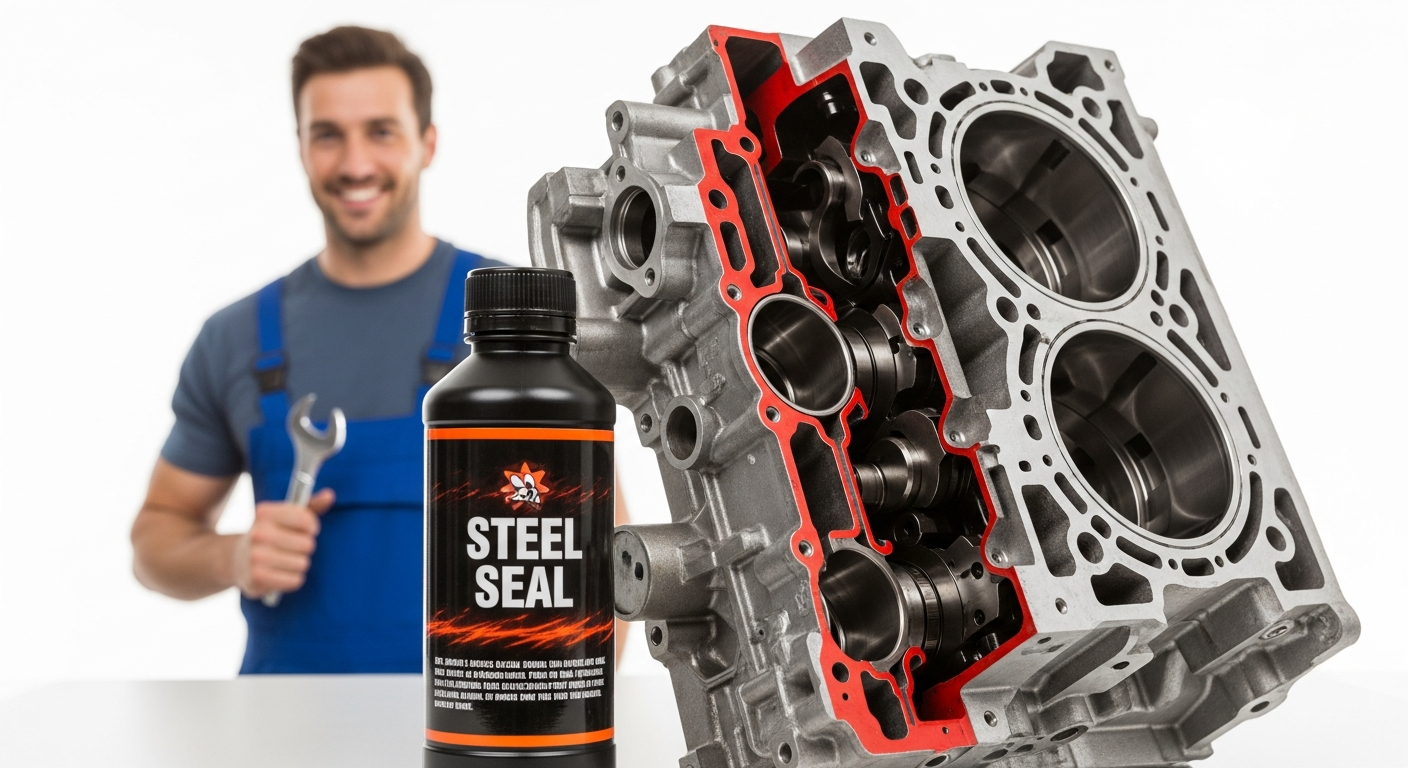
A blown head gasket hits hard—engine overheating, white smoke pouring from your exhaust, and coolant vanishing faster than you can refill it. These symptoms signal one of the most expensive mechanical failures a vehicle owner can face, with repair bills routinely ranging from $1,500 to $3,000 depending on your vehicle's make and model. For many drivers, this price tag represents a financial crisis that forces impossible choices: sink thousands into a repair or watch their vehicle become a expensive paperweight.
Since 1999, Steel Seal has fundamentally challenged this narrative by introducing a chemical-based alternative that works at the molecular level rather than relying on traditional mechanical repair. Over one million bottles have been sold worldwide, and the product consistently earns "Best Product" and "Best Supplier" awards from prestigious automotive retailers. This isn't a new or unproven concept—it's a quarter-century of real-world application backing a genuinely different approach to engine sealing.
This article breaks down how the solution actually works, which symptoms it addresses most effectively, what the real success rates look like beyond marketing claims, and exactly what the application process demands. More importantly, you'll understand the genuine limitations and scenarios where Steel Seal falls short, so you can make an informed decision before your next engine crisis hits.
How Steel Seal's Chemical Formula Creates Permanent Engine Seals
The mechanics of Steel Seal rely on a reactive compound chemistry fundamentally different from traditional gasket replacement. When you pour the solution into your cooling system, it circulates passively through your engine's water jackets and passages. The real action begins when engine temperature exceeds 160°F—at this threshold, the chemical compounds activate and react with the engine's heat environment.
As the engine runs and builds pressure during combustion cycles, the formula undergoes pressure-triggered hardening. This reaction strengthens under the compression and pressure cycles that define normal engine operation. Unlike particle-based fillers used in some competitor products, Steel Seal's approach avoids the risk of clogging cooling passages, which can create secondary problems worse than the original leak.
The formula's permanent bonding mechanism creates a hardened, durable seal that doesn't wash away with coolant circulation or degrade under thermal stress. This permanence distinguishes Steel Seal from temporary patches that might buy you time but fail within months.
Compatibility represents another critical advantage. The product works with all antifreeze types—green, orange, pink, and universal formulas—eliminating the need to drain and replace your cooling system fluid before application. Whether your vehicle runs gasoline or diesel, whether it's a car, truck, motorcycle, tractor, or commercial vehicle, the chemistry adapts to your specific engine environment.
Blown Head Gasket Symptoms Steel Seal Actually Addresses
Steel Seal targets the specific symptoms that indicate internal cooling system or combustion chamber leaks. White or blue-gray exhaust smoke represents the most visible warning sign—this smoke appears when coolant enters the combustion chambers and burns off during the fuel ignition process. If your exhaust has shifted from clear to visibly smoky, you're likely dealing with coolant intrusion into areas where it shouldn't be.
Engine overheating patterns accompany most head gasket failures. Your temperature gauge climbs higher than normal, and you're adding coolant far more frequently than standard evaporation would explain. Under sustained highway driving, these symptoms often intensify, making highway trips riskier than city driving where engine loads remain lower.
Persistent coolant loss without visible puddles under your vehicle points directly to internal leakage. Your reservoir drains faster than normal water evaporation, and you can't find external leak sources through visual inspection.
Several additional symptoms signal internal problems Steel Seal can address: rough idle or misfiring caused by compression loss affecting cylinder performance, milky oil appearance indicating coolant mixing with engine oil from internal leaks, and a sweet-smelling coolant odor from antifreeze leaking into combustion or pooling under the vehicle.
Real-World Success Rates and User Outcomes
Steel Seal publishes a claimed 99% success rate based on their internal testing and documented statistics. This figure needs context. Thousands of verified user testimonials exist showing cases where the product permanently stopped leaks—vehicles that returned to normal operation after a single application and remained problem-free for years.
However, real-world results show greater complexity than marketing claims suggest. Some users report complete failure on severe cracks or multiple damaged areas simultaneously. Engine size substantially influences outcomes—smaller engines consistently show higher success rates than larger diesel engines where the volume of coolant and pressure differentials create more demanding sealing conditions.
The timeframe for success matters. Most successful repairs hold permanently or for years of continued operation. Others represent temporary fixes lasting six to twelve months before symptoms return. This variance reflects differences in damage severity, cooling system condition, and application precision across individual vehicles.
The money-back guarantee and lifetime replacement warranty reduce financial risk significantly. If the product fails to address your leak, you receive a 100% refund. If the seal fails after initial successful application, you receive free replacement bottles—a lifetime commitment that acknowledges the possibility of variable outcomes.
Check Steel Seal's guarantee and warranty terms to understand your protection as a buyer.
The Application Process: What You're Actually Getting Into
Steel Seal's simplicity attracts DIY users, but the process demands precision and patience. Before application, you must flush your cooling system thoroughly to remove sediment and old sludge. This mandatory step ensures the formula can circulate freely without obstruction—skipping this step significantly reduces success probability.
After flushing, the actual application requires no special tools or engine disassembly. You pour the measured dose directly into your radiator or coolant reservoir—truly a pour-in simplicity that appeals to drivers without mechanical expertise. The required amount varies by engine displacement, with larger engines needing proportionally more product to achieve adequate concentration.
Your engine must run during and after application so the product circulates through your cooling system while heat activates the chemical reaction. This isn't a top-off-and-forget situation; the solution needs active engine operation to reach all damaged areas.
Cure time expectations extend beyond immediate application. Full hardening occurs gradually over multiple engine cycles, typically requiring 100-200 miles of driving before the seal reaches maximum strength. This slow cure time means you're driving a partially repaired vehicle during the hardening period—manageable for minor leaks but risky for severe failures.
The solution's thicker viscosity creates another consideration. Slow flow through tight cracks and narrow passages means the formula requires extended circulation time to find and seal all problem areas. Temperature cycling accelerates the sealing process; repeated heating and cooling cycles strengthen the seal better than continuous idle operation.
Cost Analysis: When Steel Seal Makes Financial Sense
Single bottle pricing typically ranges from $100-150 per bottle depending on your retailer and location. Larger engines or severe leaks often require two to three bottles, pushing total costs to $300-450. Even at maximum expense, this remains dramatically cheaper than the $1,500-3,000 mechanic bills for traditional head gasket replacement.
Vehicle age dramatically influences the return on investment calculation. For vehicles with five or more years of remaining useful life, Steel Seal offers exceptional value—you're potentially extending your vehicle's operational window by years at a fraction of replacement cost. For vehicles nearing the end of their practical life, the calculus shifts; even affordable repairs may not justify extending ownership.
DIY application eliminates labor costs entirely, making your total investment just the product price. A professional mechanic repair includes substantial labor charges on top of parts and materials. By doing this yourself, you capture those labor savings—often $500-800 in avoided mechanic shop fees.
Beyond direct costs, Steel Seal eliminates expensive secondary expenses: towing fees for vehicles that won't drive safely, rental car costs during extended repair shop visits, and opportunity costs from vehicle downtime. These indirect costs mount quickly when your only vehicle sits disabled at a repair shop for days or weeks.
The money-back guarantee and lifetime warranty reduce risk-adjusted costs further. You're not gambling blindly—you have financial protection if the solution fails or produces only temporary results.
Limitations and Scenarios Where Steel Seal Falls Short
Understanding when Steel Seal fails matters as much as knowing when it succeeds. Severe structural damage with large cracks or complete gasket separation exceeds the product's sealing capacity. The chemical reaction can't bridge massive physical damage—it addresses small to moderate failures, not catastrophic engine damage.
Multiple simultaneous leaks present a significant challenge. When several damaged areas compete for the seal compound simultaneously, effectiveness diminishes. The formula concentrates where damage is most severe, potentially leaving secondary leaks unaddressed.
High-mileage engine blocks with worn or pitted surfaces may not hold the hardened seal permanently. Surface degradation at the microscopic level prevents ideal bonding conditions, reducing success probability and increasing the risk of short-term fixes rather than permanent repairs.
Previous failed repair attempts complicate matters. If residual sealant or other repair compounds already coat the damaged area, Steel Seal's formula may struggle to bond effectively. Incompatible repair history essentially prevents proper contact between the chemical compound and the problem surface.
Cooling system contamination from rust, sediment, or old sludge interferes with product circulation. If your system hasn't been flushed properly, the formula can't reach all problem areas, undermining its effectiveness.
Extreme engine modifications including heavy turbocharging or supercharging push pressures beyond the seal's tolerance limits. Performance-modified engines operate at pressures the product wasn't designed to withstand, increasing failure probability.
Inconsistent results occur in the real world despite positive statistical claims. Some users report the product working initially then failing after weeks or months, suggesting the seal degraded under specific usage conditions their particular vehicle experienced.
Steel Seal vs. Alternative Head Gasket Repair Products
Steel Seal generally prices higher than some competitor brands but cheaper than others in the market. This mid-range positioning reflects its product quality and brand reputation relative to cheaper alternatives.
Chemical approach differences distinguish Steel Seal from competitors. Many alternative products use particle-based formulas with suspended fillers that theoretically block leak paths. Steel Seal's reactive compound approach creates bonded hardened seals rather than particulate barriers—a fundamentally different mechanism with different advantages and limitations.
Success rate claims position Steel Seal favorably. The published 99% rate exceeds most competitors, which typically claim 85-95% effectiveness. Whether these claims reflect real-world results varies, but Steel Seal's data appears more aggressive than industry standards.
Warranty strength represents a significant differentiator. The lifetime replacement warranty exceeds many competitor offerings—most alternatives provide limited warranties or none. Steel Seal's willingness to back their product with lifetime replacement suggests confidence in durability.
Brand reputation longevity builds credibility that newer competitors can't match. Over 25 years in the market with 1 million-plus bottles sold establishes Steel Seal as an established player rather than a flash-in-the-pan product. This longevity doesn't guarantee superiority, but it signals staying power and proven track record.
Technical support availability varies across brands. Steel Seal offers customer service assistance that not all competitors provide—valuable support when questions arise during application.
Antifreeze compatibility serves as a key differentiator. Universal compatibility with all antifreeze types eliminates the complex requirement to match specific formulas—a practical advantage reducing application complexity.
The Bottom Line: Making Your Head Gasket Decision
Steel Seal Head Gasket Repair Solution represents a genuine turning point for vehicle owners facing expensive engine repairs, with chemistry that works and a track record proven by over a million users worldwide successfully extending their vehicles' lives by years. Your success hinges on three critical factors: the severity of your leak, the condition of your cooling system, and your willingness to follow the application process precisely.
If you're dealing with a small to moderate head gasket leak in a vehicle worth saving and can't afford a $2,000+ repair right now, Steel Seal deserves serious consideration. The 99% success rate, money-back guarantee, and lifetime warranty shift risk substantially in your favor. Start by confirming your diagnosis through a mechanic's inspection, flush your cooling system thoroughly before application, follow the instructions exactly, and give the seal time to cure through multiple engine cycles.
At a fraction of the cost of traditional repair, you're making a calculated bet on your engine's future with remarkably favorable odds.
Start your head gasket repair journey with Steel Seal today.
Leave a Reply